
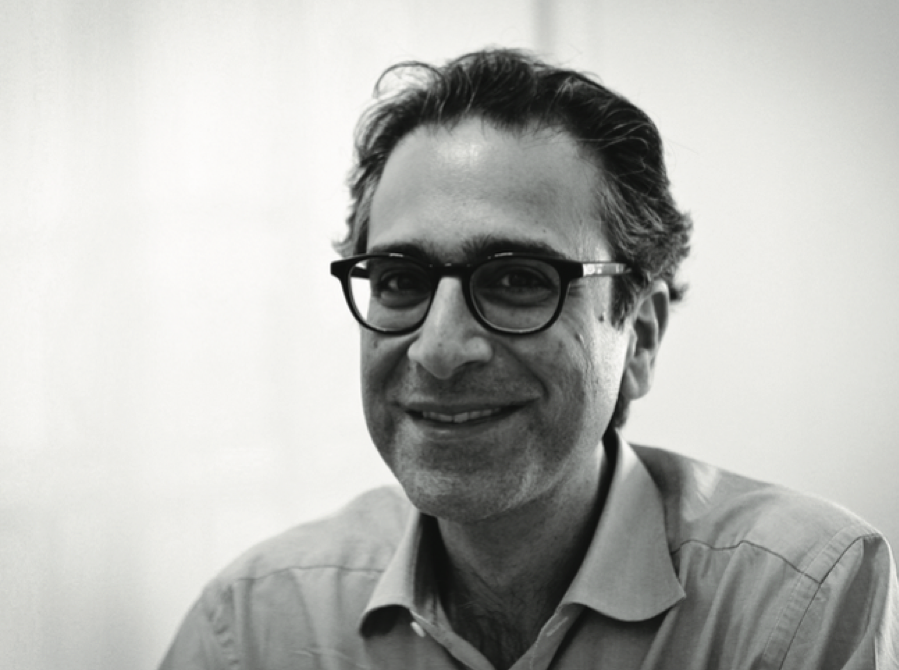
Founder of BREI sarl Karim Bassil has been stirring up some heated debates in real estate. His Beirut Convivium series, which features seven developments and 14 buildings, deflates many of the common justifications other developers and architects site for building sky high towers that have drawn significant criticism from Beirutis. Bassil says he has been striving to “add value to the area [he] builds in,” and others are now following suit. He says he aims to put the social value of his projects above their commercial price tag. Executive sat down with him to find out more about his unique perspective on real estate.
- What is your development philosophy?
If I don’t feel I am adding value to an area, I don’t build. I have always had a conviction to improve things around me. It’s not a question of one building with beautiful architecture; it’s a question of integration. For example, the architect for Convivium 6 in Gemmayze proposed a tower. Although the style of the tower was art deco, I refused it, because a building of that height just didn’t fit in well with the surrounding area. I asked him to spread out the building over the plot, to reduce its height to complement the other structures beside the project. I am happy with the result.
- How do you feel about towers?
I would build a tower, but never in a historical area or a place where they don’t integrate well within the existing environment. I would never destroy my heritage. Building towers in historical areas destroys the charm. Towers do not exist on a human scale — they make you forget about the people living in the area. There is no interaction, and human interaction is part of what makes heritage, low-rise areas cultural places. Towers are too individualistic. They scream “me, me, me!” with no real community value. It becomes an ego game of who can build the highest tower, and it becomes like a trophy for some people, to show everyone that they built such a huge thing.
- Many developers claim that they must build towers to benefit from their full exploitation factor, but your projects maximized your exploitation factor. How did you do that?
Instead of building higher, I build wider. For example, instead of constructing one big tower, you can build several shorter buildings with courtyards and common spaces in between. It’s not about building in an old style, but about integrating and creating convivial living. You can do something modern that integrates. For Convivium, I used between 80 and 100 percent of my exploitation factor, and they all sold out very fast. In cases where I sacrificed exploitation factor, it was often for green space.
- Did you sacrifice any profit? What is the financial benefit of building this way?
I could’ve made a bit more money with towers, sure, but it would have been boring for me and for everyone living around it. Also, the speed at which I sold out the projects compensated for this, making for an acceptable IRR [internal rate of return]. When you get the money back faster, it’s like selling at a higher price over more time; the faster you regain your investment the more the money is worth: the sooner you can re-invest it in another project. Also, what I am doing is building a brand, which has value in the long run. When you have a reputation that people recognize you sell faster. I just saw proof of this with my last project, Edelweiss, which sold out 50 percent in two weeks.
- Can you tell us about Edelweiss?
Oh, Edelweiss is fun. It will be the heart of the village in Faqra Club. When you go up to this area now, there is nowhere central to go. You ski and you just go to some restaurant. Edelweiss will fill this gap with a public space of small streets, shops, cafes, restaurants, cultural venues and plazas, and there will be some chalets between 100 and 120 square meters. I am modeling it after the village centers in Europe, like in Switzerland. I had the opportunity to build a complex of villas in an area near there, but I didn’t want to do that because it was too lonely and boring, doomed to become a ghost village without any real life happening there.
- How did you first become inspired to do your projects?
Gemmayze has always inspired me, and thanks to Lady Cochrane we still have a few nice old houses left. She inspired me with what she preserved. Solidere also has a good example of a master plan, with certain areas set aside for low-rise districts that combine residential and commercial real estate.
- Who is to blame for the destruction of Beirut’s architectural heritage?
We cannot blame the architects and developers for it; they are working within the law. If we had a stronger government with time to focus on urban development and setting strict regulations that block off certain historical areas, then it would be different. There are good people like Salim Warde, but they can’t advance much with the political situation in the country. It’s a shame what’s happening in Beirut.
- How can this problem be solved? How have you tried to contribute through any of your projects?
I think these towers should be transferred to other areas; they are destroying the picture of Beirut and turning it into something completely incoherent. We need a good master plan [to be] imposed. The transfer of development rights referred to in the architectural heritage preservation draft law in Parliament is a good solution. With my projects, I didn’t save any old buildings, but I tried to preserve the character of the areas I built in. I don’t claim my projects are beautiful, I just can say that they blend in. If everyone did that, then we’d have a much sexier Beirut.
- What kind of feedback have you received about your projects?
Very mixed. Some developers and architects don’t like it, but in general, everyday people do. People felt that the apartments must be very expensive, and they were pleasantly surprised to find out that they were going at market price. As I said, the projects sold out fast, and mainly to people who are culturally refined, artistic, and sensitive to a certain type of values.
But there are also people who don’t share those values. These people want something straightforward. Heritage makes you dream, and my customers like this. I even had several customers from the Gulf who fell in love with it. I’m not selling sea views; I am selling the authentic charm of living in a neighborhood, a community.
- Is anyone following in your footsteps?
Well I don’t know if I would put it that way, but yes, I think my projects had an impact. The high ceilings characteristic of traditional Lebanese houses are becoming very popular again, and high ceilings were an important aspect of my projects. There are some other developments coming up in a new old style… they realized there is a demand for this, and it matches with the areas where they are building.
- Will we be seeing any more of your projects in Beirut?
I don’t think so. The market in Beirut is saturated and has so much oversupply. Developers in this city should really consider being a bit more reasonable and lowering their prices. Buying today and building at today’s prices would force you to sell at double, and I am not interested in that. I am going back to my roots in Jbeil to develop new projects for a different market that I cannot talk about right now. It will be innovative and exciting… but for now, it is still a secret.
- Why do you continue to work as you do?
Because more money comes in the long run, and I am enjoying making a positive difference in the meantime. I love my job and money is not the only thing I care about. I am having fun.
“I don’t claim my projects are beautiful, I just can say that they blend in. If everyone did that, then we’d have a much sexier Beirut”
