
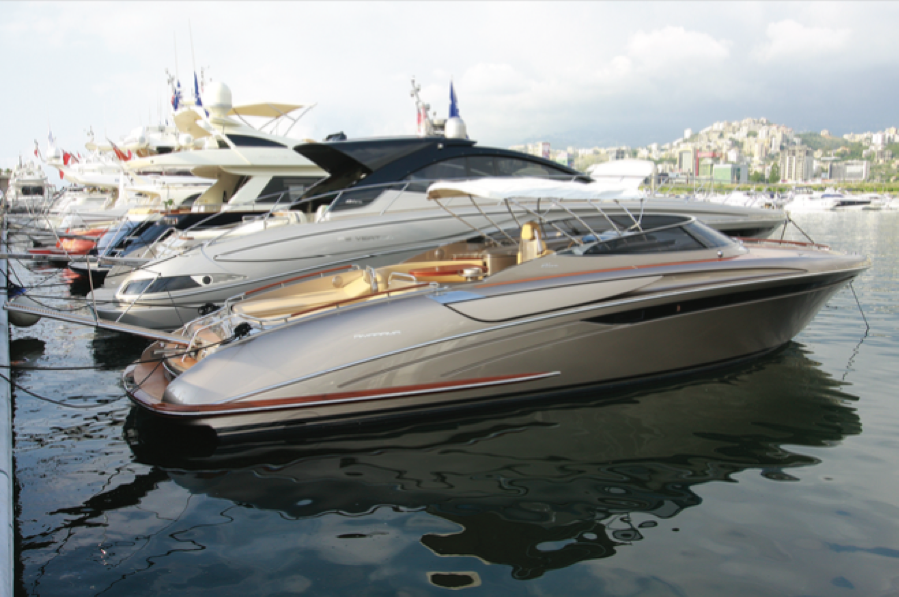
It hasn’t been smooth sailing for the region’s luxury yachting industry for some time now. Even before the global financial fiasco in the Middle East, shipyards had to contend with the exorbitant cost of oil that makes up most of the resin-based raw material costs of the industry.
“A lot of companies had to adjust their prices according to how much sellers were selling raw materials, and the price of a lot of boats soared,” said Camille Chamoun, chairman and chief executive officer at Lenco Marine, a Lebanon-based boat manufacturer. “You just had to adjust, you couldn’t do anything else.”
Nonetheless, the consumer appetite that was driving oil prices higher and filling up the coffers of regional governments kept the industry afloat. In turn, manufacturers continued to maintain high levels of supply to the market that ultimately proved to be unrealistic.
“The brands that built many boats and accumulated excess stock have really been hit hard,” said Alain Maaraoui, chairman and chief executive officer of Sea Pros Yachts, a yacht service and sales company with outlets in Lebanon, Kuwait, Egypt and the Emirates.
“Boats that were being produced for clients who had financial problems and had to cancel their order. The companies [producing the boats] are now contacting us to try to sell some of their boats.”
The cloud’s silver lining
That push, coupled with the plummeting price of oil and, by extension, raw materials for yacht makers, translated into a window of opportunity for anyone who loves the smell of the sea, and had a few million dollars to spare. But initially, it did not seem like the fish were biting. Even Saddam Hussein’s former luxury yacht, which includes a submarine, a helicopter landing pad and golden bathroom faucets, failed to entice yacht buyers when it was put on sale back in January, according to an Iraqi government spokesperson.
There are signs, however, that demand may be returning. The downturn resulted in boat valuations hitting all time lows as the rules of oversupply have pushed prices down, all but quashing the margins of boat-makers. Manufacturers are now looking to get rid of their excess stock and reposition themselves for better times.
“After the downturn you found a lot of beautiful yachts that were selling at half price,” said Chamoun. “A lot of boats were being sold at cost price.”
Many in the yacht industry agree that the time to make a buy is now, but it won’t last forever. The coming summer season means high-season for yachting and vacationing in the region. That will inevitably have a positive effect on sales in a region where boat shows still feature the latest, newest and glitziest products, albeit with a few less exhibitors. For instance, this year’s Dubai International Boat Show, the biggest annual boat show in the Middle East and one of the top five in the world, attracted 721 exhibitors from 50 countries at the Dubai International Marine Club. The event suffered only an 11 percent decrease in the number of exhibitors from the year before.
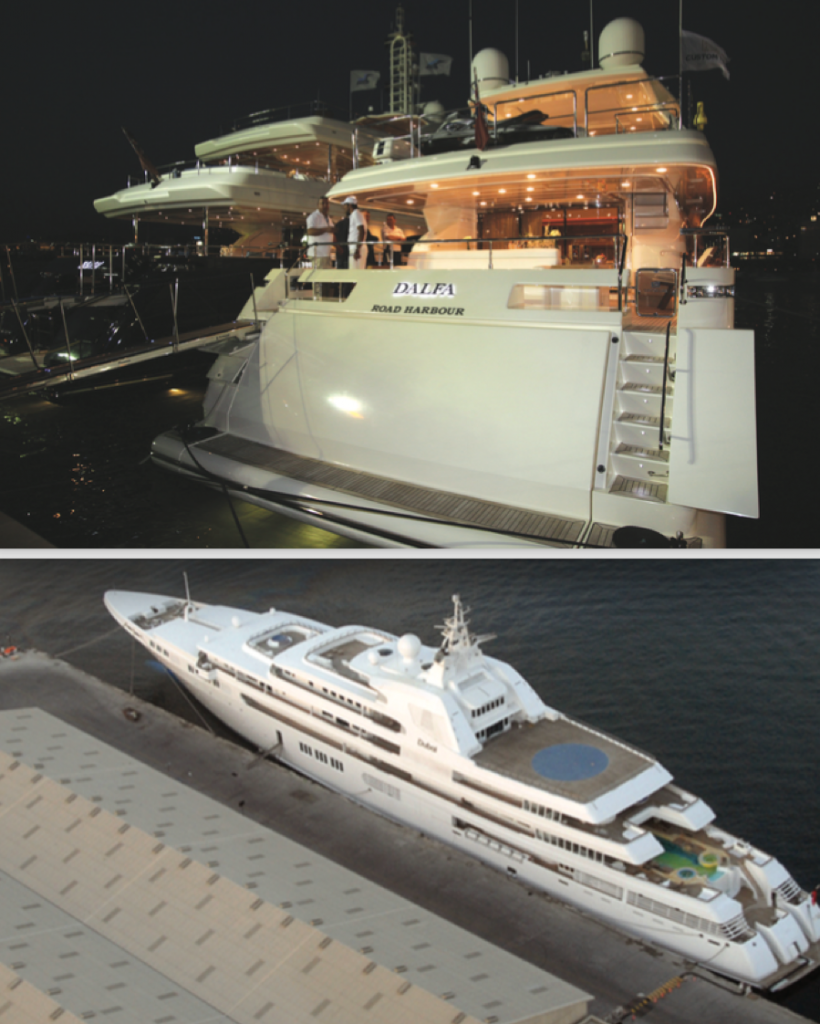
Fewer and fatter
The industry itself also looks to be consolidating as companies attempt to make themselves less vulnerable to the ongoing downturn.
“All the companies are restructuring, and there have been several mergers abroad, which means they have lowered production costs because of economies of scale,” Chamoun said.
The regional industry focus also seems to be shifting away from traditional markets, such as the Emirates, toward more liquid areas in the region.
“Abu Dhabi, Dubai and Kuwait have been hit hard but Lebanon has not been affected at all and there is a lot of demand, especially after the elections,” Maaraoui said.
The region’s largest economy, Saudi Arabia, also looks well positioned to harbor much of the excess supply being placed on markets, because the effects of the crisis there have been “marginal,” Chamoun said. “They are booming and building lots of marinas because there is a lot of cash flow out there.”
Today the chance to get a good deal still persists as excess stocks have not yet been depleted.
“The production that was available will be done in a month or two after the summer is over,” Maaraoui said. “There is a gap until the end of the summer at the most, so today there is an opportunity to buy.”
