• Donate
  • Our Purpose
  • Contact Us
Executive Magazine
  • ISSUES
    • Current Issue
    • Past issues
  • BUSINESS
  • ECONOMICS & POLICY
  • OPINION
  • SPECIAL REPORTS
  • EXECUTIVE TALKS
  • MOVEMENTS
    • Change the image
    • Cannes lions
    • Transparency & accountability
    • ECONOMIC ROADMAP
    • Say No to Corruption
    • The Lebanon media development initiative
    • LPSN Policy Asks
    • Advocating the preservation of deposits
  • JOIN US
    • Join our movement
    • Attend our events
    • Receive updates
    • Connect with us
  • DONATE
Finance

Bank BEMO – Samih Saadeh (Q&A)

by Soraya Darghous August 1, 2009
written by Soraya Darghous

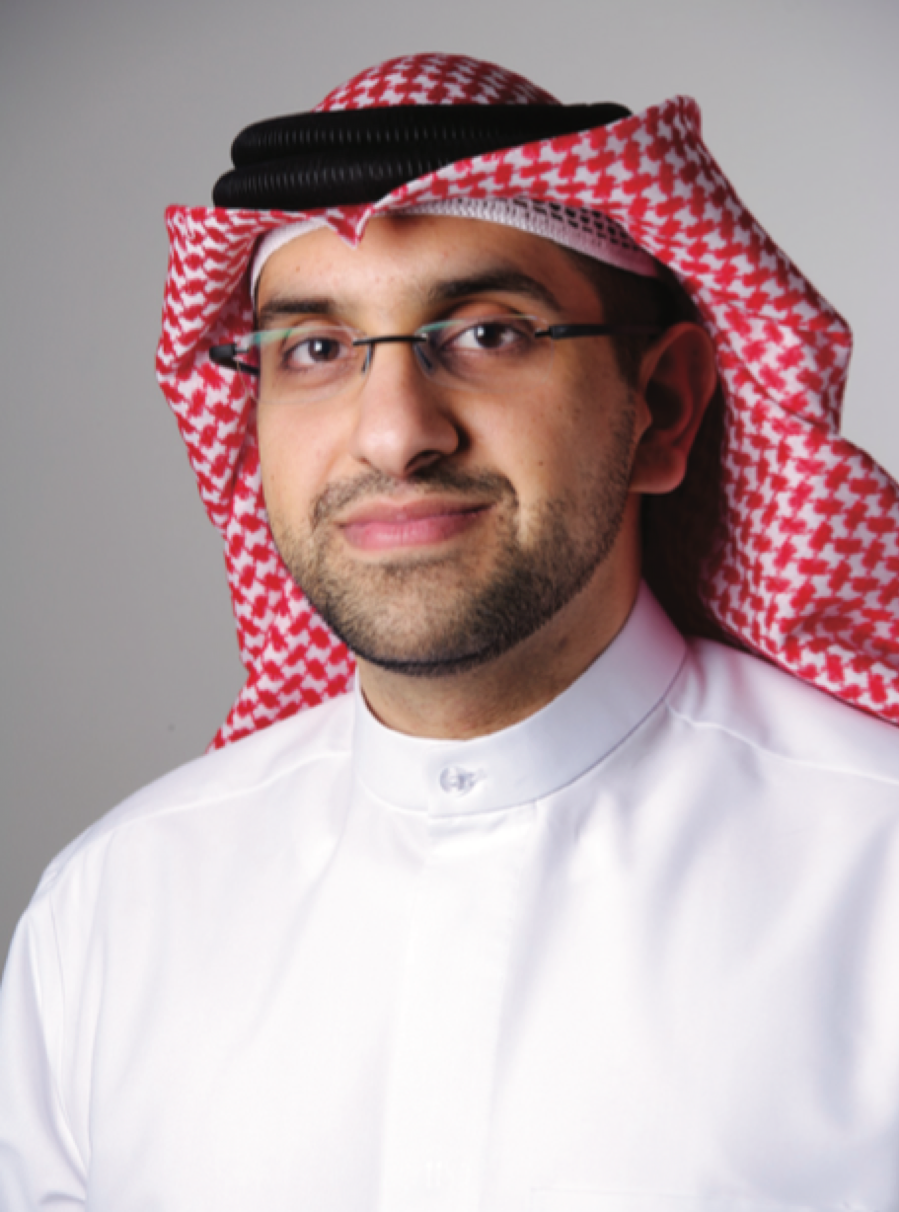
Samih Saadeh is general manager of Lebanon’s 18th largest bank, Banque BEMO, and has been with the bank since 2003. He started working in the banking industry in 1978 and has been a senior executive at American Express Bank-Beirut, Bank of Beirut and ABN AMRO Bank.
Bank BEMO has total assets of $1.05 billion, and if the bank’s Syrian affiliate is included, some $3 billion. In the first half of 2009, the bank’s total assets grew by 15.6 percent.  Executive sat down with Saadeh to talk about his bank’s success and gain insight into the role smaller banks play in Lebanon today.

Samih Saadeh

E As a medium sized “beta” bank, how does your strategy differ from an alpha bank? What are the top priorities on your agenda?

This is a board decision, it’s the oversight of the bank. We compare our private banking to Bank Audi Saradar sometimes, yes, [but] on a smaller case though, because they have larger capital and client base. Certainly when you have a universal bank you have a larger client base, which allows you to make more money and to be more exposed.

What we’re trying to do on a smaller scale is have a boutique bank, instead of having a universal bank. I respect everybody’s strategy, I probably agree with other’s strategy sometimes — because it’s faster to make money and grow — and you come to BEMO and you see it’s very little and a bit slower.

If you want to be a private bank in this country, you really have to have political stability. If people want to believe in putting money with you, you don’t have to rely on the locals. I hope one day the political stability arrives, but this is one of the missing links in the chain to complete the services of Lebanon as a financial center. All of the potential that Lebanon has is not prospering because of the political instability. People want to trust this bank in 10 or 20 years, and this is what we are betting on. We want to build this; we want to complete this closed chain in Lebanon.

E Now, how to survive? Bank Audi, for example, has built a lot of things around their vision and one of them is private banking.
Corporate banking and retail banking need a lot of capital. You need to either open capital or get other investors. Private banking, in reality, doesn’t need a lot of capital. It needs a lot of know-how, conservatism and trust.

E What kind of customers do you cater to?
We as BEMO have a different strategy than Lebanese banks. We don’t want to play volume. We would like to grow, certainly, but if you want to grow you have to have large capital and to possibly go into retail banking. You also have to have a strategic vision for the bank, which allows you to be like any other bank. In Beirut, we’re very specialized. Our motto is ‘corporate and private banking.’ We don’t do retail banking — we do to an extent though.

Recently we started to buy some Lebanese government sovereign paper. If you want to collect deposits and you don’t put it in a sovereign bank, you have to lend it. You are bound by ratios as well, on how much you lend. There is a limitation to how large we can grow in volume. So we always look at how much we can grow in fee income, not how much we can grow in volume. Even if I get a large deposit today, I lose a lot of money. Either you put it in the government, outside, or with the central bank. Even if the central bank pays for you half a point — you lose a lot of money.

Originally Lebanese banks collected deposits — they lent around 50 percent and placed with the government and the central bank up to 55 percent. We, on the contrary, have 25 percent with the central bank, and with the government we have 3 percent to 5 percent, not more. This is why growth is a limitation to us. If you compare us to the rest, we are a beta bank in volume, but our strategy forbids us from being an alpha bank, even if we wanted to.

E How has the bank’s strategy changed since the global financial crisis struck and now after?
Banque BEMO has always had the strategy to grow to be a private bank whereby we would be acting as a financial advisor for every high net worth individual throughout their life — no matter what stage they are in. If you want to act as a financial advisor, you need to build the reputation. Building this reputation takes decades actually. We’re building on the heritage the Obegi family has, for the last 50 years. Now we have another decade to work on, to earn this trust from the people. Also, we use a business model of relationships. That means every client has his own financial advisor or relationship manager.

When the financial crisis came — and this is an approach to private banking — people stopped dealing and we make a lot of money on people making deals. So part of our income was hurt… Now, it’s catching up, thank God, the trust is starting to be rebuilt. People are getting into the market.

On the corporate side, we didn’t suffer at all. We had a certain amount of money lent, and we had lent it. In percentage, we are the highest lent bank to corporates in the country. We are lending around 45 percent of our total assets to corporates. We don’t go into the government too much.

Private banking income was a little bit on a standstill. We hope that it will catch up again.
We didn’t change our strategy, it stayed the same… we just weren’t aggressive in pursuing it in the last year. But the board decided that strategically this is what they want. They want to stay as a private, corporate bank.

E Since the financial crisis, how has your advice to your clients changed? What are the most common investments you tell them to make?
Frankly it’s not easy to let them come back. Everybody lost, depending on the extent of the loss — nobody can claim they didn’t lose… If they bought their portfolios five, 10 years ago or two years ago they probably didn’t lose — the starting point is most important [factor]. We are inviting them to come back because the markets are starting to pick up, there’s a lot of opportunity. But, be prudent at least. You have the safe investments, if you go into medical and commodities. There are aggressive and risky investments like financials. Depends on your profile. We always split our client base into categories.

E Recently, the International Monetary Fund said Lebanon’s economy could grow much faster than their previous projection of 4 percent. But, the IMF emphasized that the top priority for Lebanese banks should be dealing with the public debt. What is your take on this?
This is quite a thorny issue. Who is right? Imagine if the banks didn’t give money; what would have happened? Also, imagine that we didn’t have this flagship of the economy — the banking sector — nobody would have heard of it. The economy is built on the financial sector.

Certainly, the financial sector is benefitting from lending to the government, but it’s also to the benefit of all stakeholders. We were saved from the financial crisis because our debt was local. Lebanese banks cannot stop financing the government; it’s in their interest now.
For me, the public debt is the least thing we should worry about. If we spent the same time talking about the debt on increasing productivity, the GDP of the country would soar.

Recently, Lebanon’s GDP increased to $33 billion; it could be $50 billion! This year we have a growth of 6 percent, when everyone else around the world is suffering negative growth. Imagine if there was political stability; the growth could be far higher.
Debt is not a problem as long as you generate productivity!

August 1, 2009 0 comments
0 FacebookTwitterPinterestEmail
Lebanon

Forestry – Firefighting reinforcements

by Executive Staff August 1, 2009
written by Executive Staff

The first week of July saw an unprecedented number of wild fires rage across the country: 185 in three days. The Lebanese authorities struggled to contain the unexpected fires; the three firefighting Sirkosky helicopters, acquired this year, still weren’t ready to be used so early in the dry summer season.

From Beirut, smoke from two fires could be seen billowing off the Chouf and Metn, leaving black scars in its wake. From Zgharta to Tebnin, the fires burnt fruit groves, olive trees, grassland and pine forest. The damage costs farmers and others millions of dollars per year — up to $10 million to replant 2,000 hectares of land. The fires are suspected of being started by farmers, charcoal collectors, trash burners or campers, despite a law that comes into effect every summer banning fires in rural areas.

It was the same in 2007, when fires destroyed 4,031 hectares of forest and agricultural land, or more than triple the annual average of 1,200 hectares. To the Lebanese government, this number symbolized far more than just the immense physical and fiscal damage that the fires caused. This time, change needed to happen.

“The fires of 2007 following the damages caused by the summer war of 2006 brought to light not only to the Lebanese citizens, but also to the government, the rapid decrease of forestry in Lebanon,” said Dr. George Mitri, research and development program coordinator at the Association for Forests, Development and Conservation (AFDC), a Lebanon-based non-governmental organization collaborating with the government to find a more effective long-term solution to Lebanon’s forest fire problem.

“In 1965, the percentage of forestry in Lebanon, and we’re talking about mostly pine trees, was at 35 percent of the country. Today, 34 years later, it’s at only 13 percent,” continued Mitri. According to an AFDC report, 5.6 percent of Lebanon is at high risk of fires and 25 percent at medium to high risk.

When forests are lost, ecosystems are destroyed. Certain species of plants, animals and different kinds of wildlife continue to be classified as endangered in Lebanon. Forests act as somewhat of a ‘filter’ for air. With less forests, the effects of pollution are more severe. Additionally, forests serve economic benefits, with the average hectare of forest in Lebanon generating gross benefits of $381 per year according to the AFDC. This figure rises when fruit trees are included. For instance, one hectare of oilve trees generates an estimated $13,300, according to the World Bank. Overall, the total gross losses of the October to November 2007 fires were estimated at $31.1 million.

So when the smoke cleared, plans were put in place to develop a new strategy to better manage and combat forest fires in Lebanon. ‘Lebanon’s National Strategy for Forest Fire Management’ was introduced this spring as the new official tool to combat forest fires in the future. The most important aspect of the strategy, according to Mitri, was that it signified the first time the Ministries of Interior, Environment and Agriculture were to collaborate jointly, alongside the Civil Defense and a number of local and international NGOs.

The working plan
Lara Samaha, head of the Department of Ecosystems at the Ministry of Environment, believes that the strategy is a positive first step and can succeed in effectively bringing down the annual damage caused by fires in the long term.

She says the strategy specifies what needs to be done to combat forest fires in Lebanon, as well as “determines for each national action, on all levels, the concerned and appropriate administration for its implementation.”

The strategy emphasizes the three important steps of forest fire management: prevention, combating the fires, and restoration and rehabilitation of the land. Within the strategy are the detailed responsibilities of each ministry, and the best method for each to execute its role.

The hurdles that the new strategy must overcome, however, remain immense. The Lebanese climate is often compared to that of California, where pine tree forest fires prove to be a consistent and difficult problem. In California, the average loss of forest has been 105,000 hectares per year over the last five years.

“When the committee was put together to come up with the new national strategy, we went to California to speak to experts in the field, knowing that we were going to need to learn more,” said Samaha.

Year after year
Thousands of fires threaten Lebanon’s forests every year, and the Civil Defense’s fire fighters — up to 4,000 of them unpaid volunteers — struggle to contain the destruction  during the dry summer months, between late May through September. Among the most difficult factors in combating forest fires is their unpredictability once the flames are out of control.

“Some of the factors contributing to spreading forest fires are wind speeds and distances from the nearest Civil Defense stations,” explained Mitri. “As long as the Civil Defense can make it to the area of the fire within the first 20 minutes, they can probably contain it before it grows.”

George Abi Musa, the head of operations at the Department of Civil Defense, agreed that getting to the fire early is key to properly managing and combating it, but adds that this is often difficult.

“When you have 15 or 20 fires which are burning at the same time, it’s nearly impossible to get to all of them in proper time,” explained Abi Musa. “In late June, did you know that there were 683 fires in a span of five days, with 45 of them coming in a two-hour span?”

Abi Musa believes that the Civil Defense has one of the largest, if not the largest role to play in managing forest fires in Lebanon, and is excited about the three new Sirkosky helicopters purchased by the Ministry of Interior to be used by the Civil Defense. The helicopters, which can carry up to 3,500 liters of water per trip, are estimated to have cost a total of $13 million, according to The Daily Star, and are the first such helicopters to be owned and used by Lebanon.

“I’ve been with the Civil Defense for 25 years now, and up until this point, owning such helicopters was just a dream,” said Abi Musa. “Now we can reach the fires which were previously nearly impossible to reach.”

Armed with the new strategy, confidence within the Lebanese government is high in regards to managing forest fires, but Mitri, Samaha, and Abi Musa all insist that none of what is to be accomplished can be done without the help of every Lebanese citizen in aiding the government to protect the forests of Lebanon.

“When you have a single fire, then that could have been started by natural causes. But when you have 50 or 60, it means that these are started by people, whether harm is intended or not,” said Abi Musa.
All three spoke of the need for citizens to contact the Civil Defense in cases where they see a fire, or anyone about to start one.

Additionally, finances are an important part of any effective fire-management system, with some $1.4 million spent firefighting in 2007. Replanting is a further cost, estimated at $6,300 per hectare. Sufficient funds are a luxury the Lebanese Civil Defense does not have. Support has trickled in more consistently since the fires of 2007, the year when the problem was recognized globally. Much of what can be accomplished with the new strategy will depend on the continued support of other countries, as well as local and international contributions.

Ultimately, time will tell whether or not Lebanon’s new national strategy will effectively counter the forest fire problem, but for once, there’s optimism in the government that they are one step closer to finally snuffing out the flames.

August 1, 2009 0 comments
0 FacebookTwitterPinterestEmail
Companies & Strategies

Samsung – Sunny Hwang (Q&A)

by Executive Staff August 1, 2009
written by Executive Staff

Samsung, the South Korea-based electronics manufacturing giant, announced the official launch of its regional Levant office this summer, to be based in Amman, Jordan. Executive was invited to attend the opening of the office on an all-expenses-paid trip, and had the opportunity to speak with Sunny Hwang, the President of Samsung’s new Levant Operation Office.  

E Why did you decide on a regional office?
The Samsung brand in the global market is at this moment pretty much enjoying its status. So we are doing very well in the TV businesses and the cell phone businesses and all other business areas. For example, in the TV business we have been in the number one position since 2006 and our position is getting stronger. But in the Levant area, Samsung’s business compared to our global standard is very weak. Lebanon is a little bit stronger than any other Levant area. We are devoted to our weakest point and we want to attack it, and actually at this moment this is just the beginning. We put our head office here and by next month we will open an office in Damascus, and in the first quarter of next year we will also open an office in Beirut. That is our target. 

E How can you evaluate the regional market given the current circumstances?
Before I came, I worked in Sweden, in the Nordic area. And it was the first region hit by the recession. So I know what the global recession is and I know what can be influenced by the global recession in our operations. But I feel that the Levant area is the least affected. If I want to divide by country, I think that Jordan is hit the most.

E What about internationally? How are you affected as Samsung?
In the last quarter last year, we made a big loss. The important thing is that we also expected the first quarter to be terrible. But when the results came, it proved that we had already recovered. It didn’t show a strong profit, but in the first quarter we turned the direction to profit. The market is recovering at a very slow pace. Nobody is expecting the market to recover within this year — it will very slowly recover until the end of next year. When the Korean-Asian financial crisis came in 1999, we restructured everything, and Samsung stood very tall at the time. So thanks to that we could make this very strong foundation. During most of this time we did restructuring and all the changes helped. So we did a lot of changes since the second half of last year. We restructured ourselves and strengthened our organization.

E Now in the region, what challenges are you facing to keep clients?
What I found in the last four months when I came here is that the only problem is that we did not communicate successfully with the consumers, so they do not know what Samsung is, and what Samsung products can give them. So the lack of knowledge about Samsung products is why there is so much of a gap between the global level and the level in the Levant.

E What is your strategy? What are the steps that you are planning to take in the near future?
We had great difficulty to communicate because we did not have our organization here. So what we could do before is to rely on our partners. But by nature, their interest is to sell and make profit. They do not [want] to put money [into] the Samsung brand [to see benefits] over the next 10 years, so it is a short-term profit. Only Samsung as an owner of the brand can work for 10 or 20 years later. That is why we have not done the right marketing communication or investment in the last 10 years.  This is the first time we are marketing and public relations will be managed by Samsung ourselves. So we can carry our investment for the long term.

E What is your current share of the market in the Levant region, compared to Nokia?
When we are talking about mobiles, Nokia is about 70 percent, and Samsung is about 20 percent. And Sony-Ericsson is getting weaker and weaker.

E What about other regions?
In some countries, Samsung’s share can be less. But in most countries it is about 25 percent.

E Are you focusing on certain products here in the region?
We have many groups, and we cannot neglect any part of it. We have audio, video, flat screen TV, and the LSA TV is the most important one. And as you might know, we had a very good launching a week ago in Beirut in Skybar, so that is the new field of the flat screen TV market. We are creating the market at the moment. LCD flat panel TV is the strongest point and we should push that, and we should utilize it, air conditioning also. In cell phones we are number two in the world after Nokia, but we should be a stronger number two. Already in France, Samsung has been number one for the last four years. We beat Nokia in France. Benelux states are to lead, Russia also and many other countries, so why not here in the Levant?

E Last quarter demand decreased and you ended up in the red. Has this affected your pricing structure and what have you changed since?
We cannot change the pricing, because then we will be out of the market. I do not think we increased the price, but we did a lot in cost cutting, like all the executives of Samsung had to decrease their salaries by 30 percent — every executive. Instead of firing people, we chose to decrease the benefits. Today we can only travel by [economy] class.

E What are the products that were the most affected… TVs or mobiles?
It is not a certain product that is affected. We have to [differentiate between the] consumer section and business-to-business section. The global crisis immediately attacked the [latter] section, because every company is holding its purchases. So in our products there are a lot of business-to-business products like monitors and printers. They are also selling to consumers but we are talking about corporate. Consumer sales have not been affected that much, like TV sales.
People are cutting their traveling costs. So, because they are staying at home, they need a TV!

E How many people are you going to hire for this office?
That totally depends on the performance and the sales results. There will be no fixed amount of people. It will depend on the operation size. When I was in Sweden, our turnover was $1 billion, and I had 300 people. 

E Here, what do you expect the turnover to be?
In three to four years our target is to reach $1 billion. [Today], for the Levant, it is around $200 million. Next year our target is $500 million.

E What are your expectations for the Levant market?
Well, my dream and my mission in the Levant is to be first in one year’s time from today, to reach the global average in TV sales and all sales, and also brand. Our branding in the Levant is quite low because we haven’t invested that much, but we will do our best to reposition ourselves. That means bringing brand preferences. Sales wise, next year will be about two times growth. And every year two times growth. That is a possibility in this market, because it is a virgin market.

August 1, 2009 0 comments
0 FacebookTwitterPinterestEmail
Lebanon

Reconstruction – Rebirth begins

by Executive Staff August 1, 2009
written by Executive Staff

The rehabilitation of downtown Beirut’s Magen Avraham synagogue will begin this summer, according to sources in the Jewish community. Once the largest synagogue in the Middle East, the Lebanese Civil War and the Israeli invasion of 1982 left the synagogue in ruins, a state it’s remained in for more than 20 years; but, funds have now been raised for its reconstruction.

The architect in charge of the Magen Avraham synagogue’s renovation confirmed to Executive that reconstruction is imminent. With work expected to begin in August, the site will be cleared of the trees and weeds that have grown in the partially destroyed structure.

The architect, who spoke on condition of anonymity, stated that the money for reconstruction has been raised by expatriate Lebanese Jews and private donations and will cost a total of $2 million to complete.

“The synagogue will eventually be restored to exactly how it was,” the architect said. “I will be reconstructing the synagogue using old techniques, hand-cutting the stone and so on. Currently all the ceiling, woodwork and iron work needs to be replaced. The original façade will remain but we will have to check if we need to re-do the structure.”

The Magen Avraham Synagogue Facebook group also posted an announcement that reconstruction of the synagogue would occur. This announcement was accompanied by a chorus of “Mazel tovs” and “Mabrouks” (congratulations). However, not all on the group were celebratory. David Avraham Daoud, a member of Facebook’s Israel network, wrote that the reconstruction issue is still delicate.

“I just hope it doesn’t become a death trap for the Jewish community in Lebanon,” he wrote.

Others were more positive about the synagogue’s re-development. “Let’s enjoy the integration and multi-ethnicities in our beautiful Middle East,” wrote Zainab Khalil, while Lebanese Boudi Saleh was “excited to hear that it will be renovated.” The plans for the synagogue include a museum documenting the history of the Lebanese Jewish community.

August 1, 2009 0 comments
0 FacebookTwitterPinterestEmail
Companies & Strategies

Ogilvy Group – Ralph Clementson (Q&A)

by Executive Staff August 1, 2009
written by Executive Staff

Ralph Clementson is the general manager for the advertising agency Ogilvy and Mather, in Europe, Africa, and the Middle East. He is also on the board of Memac Ogilvy, the company’s Middle Eastern partner. Clementson was in Beirut last month for the Memac Ogilvy management meeting, and he spoke with Executive about the opportunities and challenges of new technologies and why the future lies in Iraq.

E It seems like the mood at Memac Ogilvy has been pretty upbeat. I’m surprised to hear that.
It is upbeat! The environment is tough, but this is a high growth region compared to France or Germany, or even the States.

E Why is that? Because there’s so much untapped potential?
It’s because of a number of things. The first thing is there are a number of markets which are still about to open up, which as yet are untapped potential. If you think of North Africa, Algeria is opening up for marketing very fast, and Libya is going to be the next market which opens up. And then if you think about the Middle East itself, Syria is opening up fast, and the next one will be Iraq. Think of the untapped potential that will be out there. It’s huge.

E Iraq, really? Are there any ad agencies there now?
They’re starting up. There are now several ad agencies in Iraq, and they’re supporting clients who are beginning to think what they can do to market their products over there. Cigarettes are still sold over there, and beers, and so on, so there’s plenty of potential there. It’s just everybody is getting onto the map, it’s still a little bit early, but give it another three years, that’s a huge potential.

So, if you look at this region, there’s a potential for development through opening up the markets, but it’s not just that. We’ve also got reasonable levels of inflation. Inflation is running at five to eight percent in quite a bit of the region, and inflation actually means growth if you think about it. The difficulty is delivering profit, for the revenues will grow as well as the costs.

E In other words, you think longt-erm.
Right. You think long-term.
The third reason is we’ve not got great penetration in various disciplines. If you just take the technology aspect, the Gulf is hugely interested in technology. I mean the number of people with two mobile phones here is enormous.

E Is technology the answer? Is that what everybody in advertising is talking about?
Yes. Every discipline of communications is interested in the impact of the digital world on their businesses. It’s changing the medium. And so, given that you’ve got a high level of technology, particularly in the mobile environment, it represents some really exciting opportunities. And in fact, probably, this Middle East world is more sophisticated in terms of its technological understanding, and particularly the youth population, than in quite a few of our western European markets.

The real problem, though, is that it’s a new technology, and it’s safe to say that to date the commercial model supporting the mobile environment is not fully worked out. So when you’re talking about communications in this space, it’s still got to be developed in a significant way, but this’ll be one of the regions in the world where it is developed.

E What do you mean that the commercial model isn’t worked out yet?
If the kids are watching their little iPhones and they’re watching their films on the iPhones, you no longer have commercial breaks necessarily. They’re no longer watching TV.
So what you’ve got is change in viewing habits, and the quest then is how do people make their money in pushing content out into this environment?

E Not a lot of people realize that YouTube doesn’t turn a profit, for instance. 
People have got to get the commercial model worked out. They still haven’t. But what’s interesting is that the Gulf is going to be at the forefront of this, and it’s going to make for an exciting environment in the next five years.

E Are you saying, though, that the advertising world hasn’t figured out what to do with the Internet at all? 
No, not at all. What I’m talking about is mobile TV. In the very specific area of mobile TV, I think the commercial model is still being developed. And that’s really the only area of technology that’s not been developed. And because in the Gulf there’s a lot of mobile telephones, this is actually quite important. But the digital, the interactive world, is very well developed, and we’re leading in that.

Obviously, with iPhones and the like, as the Internet and the mobile become one and the same, we’ll be partnering all our clients as they evolve into that new space. But it is a new space and it’s going to be very important here, and exciting.

E Who are the big losers in all this?
Well if we talk about the disciplines of marketing, I think what’s quite clear is traditional advertising is on its way down, because spending is shifting. The traditional advertising and offline direct mail is losing out, and interactive activity is going up. Now it’s all part of the same discipline: instead of doing an offline direct mail to someone’s house, you’re putting things online which previously would have gone in the mail.

And also, especially in the current economic environment, it’s evident that what’s going to be seen is a move towards promotional activity, where people are making cost offers on their products. So it’s those sort of moves — slightly less on advertising and direct mail, and more online and more informational type activity.

E Sometimes I wonder, with all this talk about technologies and delivery-methods, isn’t there nothing better than a clever 30-second spot? Isn’t that still the pinnacle of advertising?
The pinnacle of advertising remains the ad that sells, rather than the one that makes you laugh. It may be that one is the other, but actually the pinnacle remains the ad that sells. Particularly with clients today. They’re more and more focused on the return they’re getting from the money they’re spending. No marketing director today can go to his board and claim loads of money unless he’s able to go back and say, “Here’s the return on what you’re investing in.”

August 1, 2009 0 comments
0 FacebookTwitterPinterestEmail
Lebanon

Nightlife – The party parade

by Executive Staff August 1, 2009
written by Executive Staff

The festival season is in full swing. American rapper Snoop Dogg is scheduled to play Beirut in August. Visits by Michael Bolton and Paris Hilton, despite one’s personal feelings for the crooner or the spotlight-hungry heiress, are indicators that Lebanon’s summer season is, so far, the most secure since 2004.

The country is expecting “the best tourism season we have ever seen,” says Nada Ghandour, director general at the tourism ministry. According to figures released earlier this year by the ministry, the total number of tourists in 2009 is expected to reach two million, with the majority arriving in the summer months. And Lebanon’s political stability translates not just into a party, but also into cash flowing into the coffers of the country’s quickly expanding nightlife industry.

“Given the amount of people that there are going to be [in Lebanon], everybody will benefit from the season, that’s for sure,” says Oliver Gasnier-Duparc, co-owner and manager of Behind the Green Door, a popular lounge bar in Beirut.

Bars and nightclubs began lighting up Beirut’s nightscape in the mid-1990s on one particular street on the fringes of Beirut’s central district, Monot Street. The allure of untapped market space supplemented by the unquenched thirst of a city without a vibrant nightlife was the perfect recipe for an industry boom. Monot came of age around the turn of the century, with new bars and nightspots sprouting almost weekly.

The phenomenon gave birth to a business model that has been replicated by entrepreneurs looking to make a quick buck.

“You would have a group of five to 10 friends who were ambitious and party animals, and thought ‘let’s each put in $10,000 and open our own bar, and if each one of us brings in just five people every day we will fill up and make money,’” says Ziad Kamel, co-owner of bars Gauche Caviar and Cloud 9 in Beirut’s trendy Gemmayze district. “You see a lot of these kinds of places shutting down and selling off.”

The bars eventually closed and the Monot of today is a skeleton of the once lucrative nighttime hotspot.

“Monot boomed around 1999 to 2000 and now there are only a couple of places left which were the original ones,” says Mark Mouraccade, a long-time bar manager and co-owner of Ferdinand’s bar in Beirut’s Hamra district.

The neighbors were one reason the district ceased to be the epicenter of Beirut’s nightlife — noise complaints forced many clubs to shut down. And then there was the nightlife migration to an older, quainter neighborhood a few blocks away: Gemmayze.

Gemmayze was once a quiet residential area but now has more than 90 bars and restaurants operating in the district. Makram Zeen, president of the Gemmayze Development Committee (GDC), a collective of bars and restaurants in the district, estimates that total yearly revenues of all the bars and restaurants in the area comes to $36 million, or around $400,000 a year for each venue. Zeen, who also owns Le Gardel pub and La Estancia restaurant in Gemmayze, claims the hospitality sector in the district has created between 1,200 and 1,400 jobs and has generated $15 million to $16 million in investment.

The total revenue generated by the nightlife industry in Lebanon is currently not available. When Executive asked Paul Aris, head of the association of restaurants, bars and pastry shops for figures relating to the industry, he laughed and said, “Figures? You must be joking. Even the Ministry of Tourism waits for General Security to give it figures.”

Real estate on the rise
While the nightlife industry has become a welcome addition to Lebanon’s economy, the economics of proximity have also galvanized the real estate sector in areas like Gemmayze and Mar Mikhael. Property in the Gemmayze area is being sold at around $3,000 to $3,500 per square meter, a significant increase from a few years ago, according to research conducted by real estate consultants RAMCO.

“Real estate in the area was being sold for peanuts,” says Zeen. “Now, because of us, the real estate value has increased three-fold.”

While the rising price of property may be one reason most bar owners in Lebanon prefer to rent rather than own, there are other more technical issues to consider. “It’s very complicated to buy properties because usually a building is owned by 15 or 16 people,” says Paddy Cochrane, a bar owner whose family also owns property in Gemmayze.

Sensible or not, the inability or reluctance to buy property has left bar and restaurant owners grappling with soaring rental costs by landlords eager to capitalize on the industry boom. A source who advises bar and restaurant owners on administrative issues said that when one of his clients wanted to renew their rent in Gemmayze, the landlord increased the yearly rate from $40,000 to $120,000.

“There are no rent ceilings imposed by the government,” says Kamel, who is also the treasurer and head of marketing at the GDC. “So if you rented five years ago in Gemmayze for $200 per square meter per year — which you could have easily done — now that your five years are up, the landlord can say ‘you know what I want is $800 to $900.’ [Rent] goes up 400 to 500 percent and all of a sudden it is not feasible for you to run your business.”

The other Gemmayzes
At present the cost of renting a venue for a bar or restaurant in Gemmayze can be “over $900 per square meter [per year],” according to Zeen. As a consequence many entrepreneurs looking to open a nightspot are opting for the adjacent district of Mar Mikhael. “The place was cheap,” says Gasnier-Duparc of Behind the Green Door, who opened last December at the beginning of the Mar Mikhael district. “Most of the people opening up here are doing so because it is cheaper.”

Right now the going rate for a bar or restaurant venue in Mar Mikhael sells at around $450 per square meter per year according to various sources in the nightlife industry.
Another up-and-coming venue for new bars and nightlife is the Hamra district, which housed many bars and restaurants before and shortly after the Lebanese Civil War.

“I ran away from Gemmayze to open here,” says Ferdiand’s Mouraccade. Despite having to pay less rent than bustling Gemmayze, Mouraccade opened his bar in Hamra because he believes the area is “experiencing a revival” and offers a more sustainable business model than other locations. “Hamra is different from the rest because you don’t feel the effect of high season or low season as much,” he says.

Haytham Nasr, who owns and manages the Juniper bar in Gemmayze, believes that because of the district’s increasing costs, entrepreneurs looking to enter the market are now considering other areas. “Any bar owner should maintain their rent at a maximum of 5 to 10 percent of annual revenue and make the initial investment back in a year,” he says. “I don’t see how they are going to profit in Gemmayze.”

Nasr’s new project, called “myBar,” is set to open on the outskirts of Gemmayze around the end of this year. The project is unique in Lebanon because of its business model, operating somewhat like a private equity fund or a public company whereby investors buy “barnotes” that are valued between $2,000 and $20,000 and carry dividends of 0.2 to 2 percent. Nasr’s expected return on investment for co-owners is 274 percent. So far the project has raised more than $650,000 and intends to raise $1 million. “We are very confident that we will reach the $1 million and we are closing off funding in six to eight weeks,” Nasr says.

Saturation point
Although the nightlife industry is currently booming, not all the news coming out of the sector is good. The sheer number of venues opening up has created a substantial increase in the supply of nightspots while rising costs are forcing weaker business models out of the market space.

“Lots of people see that the market is booming, they think it’s easy, open up, and after six months they see that they are not making money and they sell it,” says Mouraccade. Chafic el-Khazen, co-owner and manager of Sky Bar, one of Beirut’s most prestigious sea-side rooftop venues, agrees.

“You know the Lebanese: It’s all about ‘copy-paste’ so there is no creativity,” he says. “The market is over-saturated because it is a lucrative business and everyone will try to get into this industry to make more [than] a little money.”

When a bottle at Sky Bar costs a patron between $200 and $3,000, more than ‘a little money’ becomes a lot of money. Still, Khazen insists that the prices are not unreasonable given the costs he has to cover, which include “over $750,000 a year on fireworks and entertainment.”

For now the alcohol and the money seems to be flowing in Lebanon. However, the industry’s growth is highly volatile and connected to the political situation in the country. “If I showed you a graph of my businesses, in terms of sales and revenues, it looks like a heartbeat,” says Kamel. “Every single time there is a dip, the reason for that dip is political instability and that is true of all the businesses here.”

If the political situation in the country remains relatively stable however, the growth of the industry will show no sign of abating. “It really doesn’t matter who is in power as long as there is stability, security and both parties are in agreement, then everyone benefits,” says Kamel. “This is what the Lebanese have to get into their heads.”
 
Neighborhood party
But the sector could benefit from an overhaul of regulations that have caused problems as the nightlife sector has blossomed.
“Gemmayze is a residential area” read the signposts that line the streets of Beirut’s Gemmayze district, where some bars and restaurants operate till the early hours of the night.

The loud music, gridlock and rude valet-parking attendants have pitted angry and politically connected Gemmayze residents against equally connected bar owners. The result is that no one has the connections to trump the other, and the law is weak: the regulations regarding the nightlife industry date back to the early 1970s. Thus, a multi-million dollar industry that is a major pillar of the all-important tourism sector suffers from ineffective regulation at almost every level.

“There is nothing in Lebanese law that constitutes a bar and this is where the issue lies,” says Juniper bar’s Nasr.

Now that the nightlife industry is booming and entrepreneurs are eager to enter the market, the economic growth seems to have overstepped the ability of local authorities to effectively regulate the sector within the confines of the old laws.
“You have so many places that open without any licenses and don’t abide by any regulations or law,” says Sky Bar’s Khazen.

Nobody’s law
The existing law that governs the restaurant sector classifies establishments as either restaurants or nightclubs. The law also prohibits nightclubs from opening in residential areas or within 100 meters of a religious building. As a consequence, many bars located in residential areas operate using a restaurant license without actually serving food but having to fulfill all the requirements of Lebanon’s antiquated restaurant laws. What’s more, this also places the establishments at the mercy of the evaluation of inspectors from the tourism ministry or the municipality.

“It’s very hard to meet the requirements that were set in the 1970s for a restaurant,” says Gauche Caviar and Cloud 9’s Kamel. “You are in this gray area which allows the government to blackmail you to decide whether you are legal or not, which results in corruption, bribery, bad regulation and places being shut down that thought they were safe.”

One of the main causes of these ailments is the process by which restaurants obtain their licenses. Licensing proceeds in stages with the first stage constituting a “feasibility study,” says Nada Ghandour, director general of Lebanon’s tourism ministry, one of the government bodies charged with regulating the sector. Bar owners apply to the ministry in order to receive a first stage license on the condition that they will actively seek a second stage license to make them completely legal.

“The first stage [license] is pretty easy to get but almost nobody has the second stage [license] and nobody knows why,” says Ferdinand’s Mouraccade. “We apply and we wait and wait.”

The official line
Tourism ministry Director General Ghandour says that it is not the ministry’s fault that establishments do not receive their final licenses, and lays the blame on Lebanon’s building code implemented by local municipalities and the intransigence of owners.

“They take the first stage license… open and say ‘merci, au revoir ministry of tourism. We don’t need you anymore’,” she says. “The [other] major problem in Gemmayze and Beirut is the building law, because the places that are open in the old buildings are not places that were made to become restaurants.”

In order to “help” the establishments, Ghandour has in the past given out “temporary secondary licenses.” A legal expert who spoke on condition of anonymity says the practice goes against legal procedures. “The secondary license is your final permit so legally it cannot be temporary,” says the source. “The first stage is ‘temporary.’”

 Local municipalities also regulate the health and safety of Lebanon’s bars and nightclubs. However, even these important issues seem to have been neglected.

“The law states that the straws at the bar must be protected but nobody does it and for fire, nobody checks,” says Gasiner-Dupar of Behind the Green Door. “They always find something, but after that you deal with them [financially].”

The lack of adequate legislation and enforcement to regulate the sector finally culminated in the ongoing dispute between Gemmayze’s local residents, bar owners and government authorities. After several protests in April 2008, one of which featured residents in pajamas blocking traffic and demanding their right to sleep peacefully, the former Tourism Minister Joe Sarkis finally acted, issuing a decree imposing a curfew on all bars and restaurants. The move required many establishments to close during some of their most profitable hours of operation, substantially hurting their businesses.

 Kamel claims that the law was completely illegal because it was only applied in one area of the country and was enforced without the consent of the interior ministry and the municipalities, who are responsible for imposing closing times.

“These fanatic residents got together and lobbied against the minister,” says Kamel. “The main people who are bothered are the people on old rent and not benefiting [from the establishments]. If the real residents of Gemmayze, who are the landlords, are bothered then why are they renting the space to everyone?”

During that time, many bars and restaurants were forced to close or threatened with punitive action because they lacked second stage licenses or didn’t have any licenses to begin with. The curfew lasted for around two weeks and eventually dissipated, much to the distress of many local residents and organizations.

“We managed to calm them down for a week or so but they just come back and its worse,” complains Georges Abi Khalil, head of management and coordination at the Gemmayze Development Association (ADG), a local non-governmental organization that works on the preservation and development of the Gemmayze district.

Earlier this year, the current tourism minister, Elie Marouni, along with Interior Minister Ziad Baroud, issued a joint decree reinstating the curfew across Lebanon.
The move set off a wave of protests from local bar, restaurant and nightclub owners who blamed the lack of law enforcement in Gemmayze by local police.

No controls
“The street is the busiest street in Lebanon and we don’t even have one security officer in the street, not one traffic cop,” Kamel says of that time. “We don’t have the support of the government to stop double parking or cars going up one way streets and these are all causes of noise.”

After the curfew was reinstated, a delegation of nightlife industry owners visited the interior and tourism ministers and pleaded with them to reconsider. Reports then surfaced about the interior minister standing on the main road in the Gemmayze district asking party goers to reduce their noise levels.

“We saw him stopping cars, himself,” says Kamel. “Imagine the minister of interior peeps in your window and asks you to lower the music. People apologized to the minister and put their music down.”

Around two weeks after the reported policing by Minister Baroud, the interior ministry issued a clarification to the decree stating that the curfew did not apply to establishments that sound-proofed their bars and restaurants. The party was on again, but the problems didn’t disappear entirely.

On July 10 some residents of the Gemmayze district staged another protest in the main street demanding tougher regulation of establishments.

Problems to solve
“A decision has been taken by the Ministry of Tourism and the Ministry of Interior to let them [entrepreneurs] open as many bars as they like,” claims Fadia Kiwan, a local Gemmayze resident who took part in last month’s protests. The protest eventually turned violent when another local resident, Hadi Souaid, claims he was attacked and beaten by the entire staff of a local bar in Gemmayze. “When the police arrived they did nothing,” says Souaid.

In an attempt to pacify the situation, the Gemmayze Development Committee (which represents the bar owners) has issued a 15 point plan to address the issues facing the district. One of the most important of these is the problem of parking an estimated 1,800 cars that enter the district on any given night. To address the problem, the GDC and the tourism ministry have been lobbying to open the Charles Helou station’s three-floor parking lot and turn it into parking space for Gemmayze’s residents and visitors. Minister of Transport Ghazi Aridi has agreed to the proposal in principle but bar owners say the ministry of transport has yet to act.

“All we hear is talk and empty promises,” says GDC president and local bar owner Makram Zeen.

For now the regulation of the industry remains in disarray and, from the lengthy list of reforms Lebanon’s post-war governments still has to implement, it doesn’t seem likely the sector will receive much attention from any new government. “We are in Lebanon,” says Khazen. “Before [improving the regulation of] this industry, there are so many other things that are [so] much more essential that [Lebanese] need to do.”

August 1, 2009 0 comments
0 FacebookTwitterPinterestEmail
Comment

Resolved to no resolution

by Nicholas Blanford August 1, 2009
written by Nicholas Blanford

The series of subterranean explosions that shook Khirbet Selim in mid-July merely seemed to confirm what everyone knew but preferred to ignore — that Hezbollah has amassed arms and munitions in the border district patrolled by the United Nations Interm Force In Lebanon, despite UN Security Council Resolution 1701.

There had been past hints. In May 2008, an armored patrol of Italian peacekeepers came across a tractor and trailer driving between the villages of Jabal Butom and Siddiqine in the south in the middle of the night. When the patrol turned around to follow the truck, two Mercedes overtook the UN vehicles and stopped between them and the fleeing tractor, blocking the road. A tense stand-off ensued until the Lebanese army arrived on the scene, by which time the mysterious tractor had disappeared.

The Khirbet Selim explosions apparently emanated from an underground Hezbollah bunker stuffed with weapons and ammunition. Hezbollah said the blasts were from old Israeli munitions dumped inside the building, although no explanation was given why the arms were being stored in the first place rather than destroyed by the Lebanese army. What triggered the blast is unknown, but it is not the first time that a suspected Hezbollah arms dump has accidentally exploded. One blew up in a garage outside a village near Tyre in 2004, apparently caused by a short circuit in the building’s electrical wiring. A year earlier, a huge explosion rocked the eastern Bekaa when a suspected arms cache exploded. Hezbollah said that it was a controlled blast of old Israeli land mines collected from the south.

The Israelis, predictably, seized upon the Khirbet Selim explosions to demand a tightening of Resolution 1701 to grant UNIFIL authorization to search at will buildings suspected of containing weapons. Presently, UNIFIL’s principal mandate is to support the Lebanese state in implementing Resolution 1701, rather than acting unilaterally. Although the resolution leaves some wiggle room for UNIFIL to undertake some independent action, the tone of the document calls for the peacekeepers to assist the Lebanese army in fulfilling the provisions of 1701. And that is how it has been interpreted by UNIFIL itself.

“We are here to help the Lebanese army implement Resolution 1701, for the interest of the southerners,” UNIFIL spokesperson Yasmina Bouziane told Al Balad newspaper.
The Khirbet Selim incident doubtless will feature in the UN secretary general’s next report on the implementation of Resolution 1701, but the Israelis will not get their way.

There are two reasons for this. First, UNIFIL, frankly, does not want the headache that comes with the authority to search houses in its area of operations. Such a step will bring it into direct confrontation with Hezbollah and the local people of the south. The throwing of stones at French peacekeepers who attempted to search the facility that blew up in Khirbet Selim is just a small taste of what UNIFIL could expect if its mandate was strengthened. UNIFIL is able to operate in south Lebanon because of the goodwill of local residents. That has been the case since the UN mission arrived in Lebanon back in 1978. If UNIFIL loses the support of the local population, it might as well pack up its bags and go home. It does not mean that UNIFIL has to compromise to the extent that it overlooks the obligations of 1701, but it does require a healthy dose of realism when it comes to finding the best means of fulfilling its mandate.

Secondly, it is hard to take seriously Israeli grievances with Hezbollah’s alleged violations of 1701 when Israel continues to flout the resolution on a near daily basis with its overflights in Lebanese airspace and its continued reluctance to withdraw from the northern end of Ghajar, the border village split by the Blue Line.

The bottom line, which Hezbollah and the Israelis tacitly recognize in each other despite the accusatory rhetoric, is that neither side is going to allow a UN resolution to impede preparations for what both believe will be an inevitable future conflict. That’s why the Israelis still fly drones and jets over Lebanon, cling to northern Ghajar and ignore advice to pull out of the Shebaa Farms.

After all, Hezbollah can argue — with some justification — that it was not Resolution 425 of 1978 that finally forced the Israelis to leave south Lebanon, but the actions of the resistance. Similarly, Resolution 1701 will not prevent a fresh war from erupting if such circumstances arise.
Any preparations Hezbollah is undertaking, both south and north of the Litani, are in line with its conviction that another war with Israel is inevitable, if not imminent.
“As an Islamic Resistance, we underline the importance of preparedness due to our belief that Israel is treacherous and always plans wars when it has the opportunity,” Sheikh Naim Qassem, Hezbollah’s deputy leader, told me in a recent interview.

The Israelis have learned the lessons from the 2006 war and are finding new means of dealing with the threats posed by Hezbollah. Hezbollah, too, has undergone a post-action assessment and drawn up new battle plans which it hopes will keep it one step ahead of its Israeli foe.
“Hezbollah has been absorbing the lessons of the July [2006] war,” Qassem said. “We have developed the positive aspects [of the military performance in 2006] and dealt with its negative aspects. I can say that the preparations of Hezbollah today, at all levels, are much better than they were before and during the July aggression.”

Nicholas Blanford is the Beirut-based correspondent for The Christian Science Monitor and The Times of London

August 1, 2009 0 comments
0 FacebookTwitterPinterestEmail
Lebanon

Prostitution – The business of sex

by Ben Gilbert August 1, 2009
written by Ben Gilbert


Lebanon’s beaches, nightclubs and hotels are packed this summer with visitors spending cash and enjoying all the country has to offer, including the sexual services of women.
One of the main outlets for such activity is the ubiquitous super nightclub business. There are around 130 licensed super nightclubs in Lebanon, where women from the Ukraine, Russia, Morocco and the Dominican Republic work as “artists.” Lebanese women are prohibited from working in these establishments, and “families” are not allowed to enter — meaning Lebanese women cannot enter, even as customers, although foreign women can.

The nightclubs’ owners characterize their sector as a legitimate and legal business model that presents entertainment and brings women and men together. The super nightclub business is regulated by the government, with permits given by the Ministry of Tourism and oversight by General Security. The super nightclub owners are represented by a lobbying group that includes other, more benign sectors of the tourism industry: the Syndicate of Restaurants, Cafes and Pastry Shop Owners.

But super nightclubs also serve as a platform for prostitution outside the venue’s walls — sometimes only as far away as an adjacent hotel. The club may or may not take a direct role in arranging and profiting from their female employees’ illegal activity.

How it works

In mid-July, a 21-year-old prostitute from the Dominican Republic danced onstage at a super nightclub in the Maamaltein district of Jounieh. She wore white denim-shorts cut just below the crotch, stiletto heels and a tight t-shirt that stopped just above her navel. She also wore braces on her teeth. Let’s call her Julia.

Men are not allowed to speak with artists like Julia at super nightclubs unless they pay for it. Customers pick the woman they want to talk to by walking through the club or seeing the woman dance or perform on stage. Many clubs offer a “cabaret” beginning at midnight, where women perform dance routines to European and Arabic music and swing on polls dressed in a variety of tight, low-cut and short-skirted costumes.

In order to speak with one of the female artists, a customer must order “champagne” or “picolot,” and select the woman he wants to sit at his table. The champagne has nothing to do with a bottle of alcohol: the term is merely super nightclub-speak for having one of the artists sit at a customer’s table for exactly an hour and a half. A “picolot” is similar “code” for having a woman sit with a customer for a half hour. Champagne usually costs around $60 to $80, and a picolot around $30 to $35.

A customer may negotiate one or two drinks to be included in the cost of the champagne. A picolot usually includes one drink. The super nightclubs are not cheap places to grab a drink without sitting with a woman: an Almaza beer costs $11.

Once the women are ordered, they arrive at the customer’s table, sit down and strike up conversation. A waiter brings drinks. Few of the women speak English, but as one of the female “artists” at a super nightclub said, “many Lebanese speak Russian.”

Often the women immediately initiate physical contact with a customer by putting a hand or arm on the man’s leg. Kissing is permitted in super nightclubs, as is light petting, but anything beyond that is strictly prohibited by most clubs, since it could get them in trouble with General Security.

But with the purchase of “champagne,” a customer also purchases the right to make a “date” with the woman, supposedly with her consent, within a week of the purchase.
The date is often code for sex. When an Executive staff member visited a super nightclub posing as a customer, Julia, the Dominican artist, made it very clear what services she could provide beyond dancing and sitting with customers.

“Sex costs $100 for three hours,” she announced bluntly. “Talk to the manager if you want to set a date.” When asked if it was possible to set a date that night, she said no, customers have to wait until the next day.

General Security regulates super nightclubs and, according to owners, no sex is permitted in the club. It’s also risky to allow a woman to leave with a customer at night. Lebanese government regulations require that Julia, like other artists in Lebanon, be in their workplace — the super nightclub — from 8pm to 5am. General Security and police can enter at any time and demand to see any of the artists.

At 5am, the artists must return to their hotel, where they are not allowed to leave until their “free time,” which is 1pm to 8pm daily. This free period is when the women can meet up with their customers from the night before. General Security requires the “telephone number and the car’s registration card of the person accompanying” the woman be noted at the hotel’s front desk, but beyond that, the woman and man are not monitored.

By law, Julia and her colleagues can only be taken out on “dates” during their free hours. But she hinted that perhaps other arrangements could be made. “Are you staying at the hotel?” Julia asked, referring to the same hotel, just above the super nightclub, where she and her colleagues live.

The business

Super nightclubs come under a variety of different regulations and legal authorities, including the Ministry of Tourism, General Security and the Internal Security Forces. According to Toros Siranossian, who represents the super nightclub owners in the syndicate of restaurants, nightclubs are licensed by the tourism ministry depending on their purpose: there are legitimate discos and nightclubs with a DJ, bars and super nightclubs that only feature a band, singers and a show, where women don’t sit with customers (the “family is allowed to enter these,” says Siranossian), and super nightclubs where the artists sit with the customer.

The vast majority of super nightclubs are of the latter category.

Customers rarely arrive to the super nightclubs in the Maamaltein district of Jounieh before midnight. Before that, artists like Julia sit around in groups, sipping drinks and eying the men who walk through the door. But by 3:00 a.m., the parking lot is full, and the men keep coming. License plates from Syria and the Gulf stand out in a parking lot filled largely with vehicles bearing Lebanese plates.

A super nightclub owner, who spoke to Executive on condition his real name not be used — let’s call him “George” — said his club usually has between 15 and 25 women per night. On average, 10 to 30 customers come in every evening. They mostly order women for champagne.

“I usually make $10,000 to $12,000 a month in profit,” said George. But in the summer, with Lebanese expatriates back home along with thousands of tourists, he says he usually makes more, ranging from $15,000 to $20,000 a month.

With 130 clubs in Lebanon, that is equal to around $23 million in profit for the minute sector per year — and that’s only the legitimate revenue.

A permit for a super nightclub is a one-time cost of $1,000. Nightclubs pay the women anywhere from $800 to $1,200 per month, depending on their ability to dance and perform. A woman also receives $5 for every “champagne” she is hired for, and $3 for every “picolot” sold to her customer. They can make up to $400 or $500 a month extra from the ‘bottles’ they sell, according to the nightclub owner.

Owners must deposit around $650 at General Security for each woman. Clubs must also pay around $2,500 per month for the hotel where the women live.

There are “two to four women per room, each one gets a bed, and some hotels have seven different clubs renting out the hotel rooms,” said a Lebanese man who will be called “Charbel” for the purposes of concealing his identity. Charbel is intimately familiar with the business because his family owns a super nightclub. Like many involved in the super nightclub business, he is also a frequent customer of many different clubs.

Charbel says other costs associated with running a super nightclub include bartenders, waiters, bouncers, drivers and managers for the hotel.

“We work in two shifts,” said George. “The first shift is at the club. The second shift is at the hotel.”

All these expenses cost him around $40,000 per month, including the hotel, the registration for the artists, electricity and insurance.

The nightclub owner says most of his customers are Lebanese (they like blonde women, he says), and older: He estimates 80 percent of his clients are between 50 and 60 years old.

“They like the company,” said George. “It refreshes their memory. Some are married. Some are divorced. Some don’t have partners. Some are shy. Some are lonely, and they come because don’t know how to build relations.”

Few struggling college students or construction workers can afford to be a regular customer at a super nightclub. Just talking to a woman and getting the right to take her out, costs between $60 to $80. Add onto that food and gas for a date the next day. If the man wants to have sex, he needs to rent a hotel room, and to fork out $100 to $200 to the woman.

The biggest competition between the clubs is for beautiful women. “I don’t care if you have a laser show, or how nice your chairs are,” the owner said. “The customers are coming for the ladies.”

To guard their investment, super nightclub owners keep a tight leash on their “product.” Club owners take their female employees’ passports. It’s regular practice for owners to lock the doors of the hotel between 5am and 1pm. Charbel says the women working for his family aren’t allowed out of the hotel for more than 30 minutes during their 1pm to 8pm “free time,” unless they have a date. Charbel says the restriction on the women’s movement is necessary.

“We are restricting movement for our own benefit,” he said. “Maybe she has a boyfriend and he doesn’t have the money to go out. He’ll come and pick her up and we won’t get our $66 for champagne.”

“If you don’t control everything, you will lose money. When dealing with women you have to control them. If you let them do what they want, you will end up with nothing.”

When asked if he’s essentially a pimp, George said absolutely not. He said he has no control over agreements and arrangements between customers and the women at his club. He sees his club as the facilitator, “like the computer linking two people together on Internet chat rooms,” he said.

Both Charbel and George said it’s not unusual for a client to fall in love with one of the nightclub’s employees. George boasts that 70 of his customers have married women from his club alone.

Eastern Europe to Lebanon

Club owners find women from around the globe through the use of what are called “impresarios.” These are the middlemen, the agents who find women in their home countries and arrange for them to come to Lebanon. George says he pays an agency based in Eastern Europe between $200 and $400 a month to find artists.

“There are thousands of agencies,” he said. “They send us photos and a CV by email, saying where the girl worked, what kind of dance she can do.”
Charbel says an owner has to be careful.

Lebanon trafficking in persons report 2009 – from the United States Department of State
Lebanon, Publication Date 16 June 2009

“The General Security reported 47 complaints of physical abuse, rape, and withheld earnings of foreign women working in adult clubs in 2008 – complaints that may have involved conditions of involuntary servitude. Most were settled out of court and the victims deported. These cases were hampered by a lack of resources; court backlogs; corruption; cultural biases, particularly against foreign women; bureaucratic indifference and inefficiency; difficulty proving cases of reported abuse; and victims’ lack of knowledge of their rights. Given the significant hurdles to pursuing criminal complaints in the Lebanese court system, and in the absence of alternate legal recourse, many foreign victims opted for quick administrative settlements followed by mandatory repatriation.” 

“Moreover, the government pursued policies and practices that significantly harmed foreign victims of trafficking. For example, authorities required that women recruited for prostitution under its “artist” work permit program be confined in hotels for most of the day and summarily deported them if they complained of mistreatment.”

“They’ll tell you the picture was taken one week or three months ago, when in reality it’s three years. The best way to bring nice women is to send someone to find them. But you will accept the pictures if you’re in need of women.”

Charbel says the women pay for their own plane ticket, which from Moscow costs between $600 and $1,000. The super nightclub pays the visas (between $200 and $350) and medical costs, which include a periodic mandatory pregnancy and sexually transmitted disease test. The cost of the medical test is around $250.

Artists’ visas are granted by General Security for up to six months. When she completes her contract, the artist is required to stay outside the country for the same period she was in Lebanon. Most club owners prefer the women stay up to three months, then return in three months, so they can create return customers.

Charbel says there are currently more women willing to come to Lebanon to be artists because of the financial crisis. But an increase in the number of willing artists has not brought wages down.


Prostitution or entertainment 

George and Charbel both say women in their clubs are never forced to go out with men, or to have sex for money.

“We don’t force women to make relations [have sex], that’s dirty,” the owner said. “It’s an agreement between you and the woman. We are providing a show, a drink and we are not pushing them to do anything.”

“In prostitution — you pay and you [have sex],” he said. “In our system, this woman signs a contract, it’s her own will. It’s forbidden for us to sell her — what she does is an agreement between a couple.”

There have been reports that women who have arrived in Lebanon from Morocco and Eastern Europe to work at super nightclubs are surprised to find out the business is a cover for prostitution. But Charbel says that in the past this used to happen, but not now.

“They know why they’re here,” he said. “People know what coming to Lebanon means. The women lie to their parents about which country they’re coming to. A woman I know tells her family she is in Hong Kong.”

Charbel says women will not have sex with a customer for under $100. “At the good super nightclubs woman will take $200 for sex.”
Super nightclub owners are quick to point out that although the women may be selling themselves, they’re making good money. If they spend two hours with three customers during their free time, and charge $100 per customer, they’re making $300 a day on top of their salary.

Charbel acknowledges the women who come to Lebanon to sell their bodies must have come from terribly desperate conditions in their home countries, but he says business is business.

“I feel sorry for them. They have good hearts,” he said. “But it’s like a circle. The woman brings the customers, we get the champagne money and they get their money.”

Betraying some of the national stereotypes super nightclub owners associate with their employees, Charbel adds that Eastern European women “love sex. They were born with a hunger for sex.”

“The first reason they come to Lebanon is for the money, the second reason for the sex. They enjoy it,” he said, adding that he has sex regularly with several women from super nightclubs.

Illegal but condoned

It is not widely known that prostitution is actually legal in Lebanon (see Lebanese Law of 2/6/1931), but the government has not issued a license for a legal “brothel” since the beginning of the civil war in 1975. At that time, all licensed brothels were located in downtown Beirut, near Martyrs’ Square in the Zeitoun district, famously featured in the film “West Beirut.” All the brothels were destroyed during the fighting.

Super nightclubs have filled the void left by the brothels, to a degree. According to Siranossian, who represents nightclubs to the syndicate, the super nightclubs were once legitimate establishments during Lebanon’s “golden” years of tourism in the 1960s. Back then, cabarets and super nightclubs featured real performers and artists: belly dancers, singers and musicians.

“But the war came and they all closed,” Siranossian said. “When the war finished in 1992, [the super nightclubs] wanted to reopen. But there was no business. So they couldn’t open in a clean way and bring artists without [the artists sitting at the table with customers], because they will lose money. So they were obliged to open [in their current form].”

Street level sex industry

Despite its seediness, the world of super nightclubs does appear to be a clean, transparent and well regulated industry compared to the plight of street-level and red light bar prostitutes. These women sell their bodies for anywhere from $2 to $30 dollars for sex. The red light bars mainly operate in Hamra. They are also licensed in a similarly complicated fashion as the super nightclubs, but basically “bar” means brothel, in the traditional sense of the word. News reports have documented how the system works, with a “Mom” running a number of women in the “bar” who service men on a walk-in basis.

“They have small secret rooms in the back,” said a source who works with prostitutes, and didn’t want their name used in this story. “So when the customer likes one of them, it’s very easy to take them to this room.”

An award-winning investigative report in An Nahar newspaper on November 27, 2008, said the women are mostly Egyptians, Syrians and Sudanese nationals. The bars are able to operate because the bar owners pay police to overlook the real nature of the establishments, according to those familiar with the business.

Then there are Lebanese women who sell sex on the streets, or out of a hotel or rented apartment, with or without the guidance of a pimp. One former Lebanese prostitute who spoke with Executive said she started selling her body on the streets of the Maamaltein district after she ran away from home at the age of 18. She ran away because her father used to rape and beat her. As a prostitute, she charged $20 to $30 for one or two hours of sex. She got out of prostitution thanks to Dar Al Amal, one of the few organizations in Lebanon working with prostitutes. Dar Al Amal works with around 60 women from three different centers around Lebanon. They also have a presence in all the women’s prisons.

“We are working with the poorest of the poor,” said the Hoda Kara, director of Dar Al Amal. “We are working with women from dislocated families, who were in orphanages, or [worked as] domestic laborers in houses. They have been abused, exploited, mistreated and violated.”

It’s a similar situation in the Palestinian camps. A report in Al Akhbar said women in the Sabra camp charge between $6 to $20 for sex while fellatio costs as little as 3,000 Lebanese lira, about $2. Dar Al Amal’s Kara also says the law is unfair to Lebanese women caught working in prostitution. If a foreign prostitute is caught in Lebanon, she will be deported. If a Lebanese woman is caught with a client in Lebanon, she will be arrested and put in jail. The man will be released, she says. Kara says that especially at this time, prostitution at all levels of society is a “very big business” in Lebanon.

“Because of the tourism here… there is demand,” she said. “And when there is demand, there is supply, for these women who are very poor, who need money, who are not supported [and] because they don’t have any other solution.”

Licenses for super nightclubs existed before and during the war, but the last ones were issued between 1993 and 1997, says the nightclub owner. Prior to his establishment becoming a super nightclub, he says it was a high-end dinner club, which he renovated for $1 million in the 1990s. But business dropped off and he needed money, so he rented the space to a man who wanted to open a super nightclub.

Although prostitution is illegal without a license, General Security gives “implicit consent” to unlicensed prostitution, according to the United States Department of State’s 2007 Trafficking in Persons Report.

The trafficking report says that in 2006 the number of visas issued by the Lebanese government to “mostly eastern European women to work in adult clubs as artists,” numbered 4,210. The trafficking report is the only concrete figure for the number of artists’ visas issued in recent years found for this article. Executive asked General Security to confirm this number, and to provide the number of artists visas granted in 2008 and so far in 2009, but officers were unable to provide the statistics by the time the magazine went to print.

Lebanese General Security commits a significant amount of manpower to regulating the industry. The General Security headquarters contains an entire artists “section.” The guidelines for “artists” in Lebanon can be read in English and Arabic on General Security’s website.

The artists are handed a booklet upon arrival at General Security, outlining their rights and responsibilities. General Security declined to provide a copy of the booklet to executive’s staff.

But according to news reports and people familiar with the booklet and the regulations, the booklet details the rules an artist must follow while in Lebanon. The booklet also contains an emergency phone number to call if the women are physically attacked, raped, held against their will or forced to do anything they don’t want to do.

A necessary state of seediness?

Given Lebanon’s other overriding problems, it’s not surprising there would be loopholes and problems with the regulatory system of super nightclubs. The 2009 US Trafficking in Person’s report said General Security reported “47 complaints of physical abuse, rape, and withheld earnings of foreign women working in adult clubs in 2008.” Those were complaints that “may have involved conditions of involuntary servitude.” Most of the cases, the report says, “were settled out of court and the victims deported.”

The report said if women complain about their conditions, they are “summarily deported.”

General Security and the Ministry of Justice were unable to provide the number of complaints by artists in 2007 and 2008, and did not respond to requests for information or an interview about the subject.

Super nightclub owners say the accusations of human trafficking are unfounded. Even the US State Department acknowledged that few women arriving in Lebanon to work in super nightclubs are unaware of what the job involves.

“Most of the women entered the country knowing that they would be working in adult clubs,” the 2009 trafficking report said.

Although Siranossian says he dislikes the super nightclub business that focuses on hooking men up with women, he justifies Lebanon’s super nightclub system by comparing it to the rest of the Arab world, where prostitution has no oversight.

“Here in Lebanon we closed the brothels, so now customers go to super nightclub[s] where they can take a woman out the next afternoon,” he said. “This is nothing. The most important thing is that the owner of the super nightclub doesn’t sell the woman.”

Siranossian calls the super nightclubs a “fantastic” solution to the problem of prostitution, because it allows the government to regulate and oversee the industry, somewhat akin to the way escort services operate in the US or Europe.

Charbel verifies this, noting that police usually stop in three or four times a week. “They’re checking to see if the woman is in the club, and hasn’t gone out with a customer,” he said.

Even then, it appears that circumventing the law is relatively easy. Police corruption in Lebanon is nothing new, and several people acquainted with the industry said that in the past, law enforcement has often looked the other way if enough money is offered.

“The law was permitting us,” he said. “When the police come, we’d pay a lot of money, and they’d forget everything for one week, two weeks,” he said. “But they’re putting too much pressure now. They refuse to take the money.”

Customers pay much more than usual if the woman goes out with them during nightclub hours, Charbel says. The average price would be $300 for the woman, paid directly to the super nightclub. She charges her own amount on the side. It’s a practice some owners say they are disgusted by.

“Some places are like a bordello, some are like pizza delivery,” George said. “They give super nightclubs a bad reputation.”

But it’s a risky business to break the law. If the police won’t take bribes and the nightclub owner gets caught with women outside the club during working hours, the club can be closed down for a month. The women can be deported.

Still, the employee and others familiar with the business say bribes, and connections to powerful politicians, make laws that regulate the super nightclubs hard to enforce all the time.

“Anyone who opens a super nightclub, for sure if he doesn’t have support at a high level, it’s not easy for him,” said one person familiar with the business, who did not want to be named. “If the [super nightclub] took this permission and they pay money, they can do what they want to do.”

But the nightclubs do appear to get into a lot of trouble with the police. Siranossian has represented the nightclub owners for years in the syndicate, and has sometimes been the industry’s envoy to General Security.

“There are many problems,” he said. “If the woman comes back late to the hotel, or if the owner sells the woman from the club… there are so many problems.”

Siranossian says if the syndicate just took care of super nightclub problems, he would be at the General Security every day, all day. The high maintenance nature of the sector appears to be a source of friction between the syndicate and the super nightclub owners; Siranossian says only 10 of the clubs pay their dues to the syndicate. He also says that due to the changing nature of Lebanon’s tourism industry, he expects clubs to close down, or switch to more legitimate nightclubs in the next few years.

Charbel on the other hand says he’s actually looking to open his own super nightclub somewhere north of Beirut. He says it’s “easy money” but it goes too quickly. “There are too many expenses.”

With the global recession continuing, it seems likely the wages required to bring young women to Lebanon will remain steady. However, the industry depends on cheap labor. The minute the price goes up, or better forms of employment can be found in other parts of Eastern Europe, super nightclubs will have a harder time surviving.

August 1, 2009 0 comments
0 FacebookTwitterPinterestEmail
Comment

Kurds and the oil curse

by Ranj Alaaldin August 1, 2009
written by Ranj Alaaldin

Sitting on one of the world’s biggest reserves of oil, Iraq continues to be presented with a still difficult-to-answer question — are its vast hydrocarbon reserves an asset or a curse? The country has the third largest proven oil reserves in the world, with an estimated 112 billion barrels. But while Iraq’s oil is relatively easy and cheap to extract, tapping into these reserves is being impeded by political, technological and financial constraints.

In June, eight oil fields were made available in a televised auction, the first major tender since the 2003 US-led invasion. This, however, proved to be a rather embarrassing event as some 41 oil companies that had been invited to bid backed out, including ExxonMobil and other major players. Just one contract was allocated, a 20-year contract to BP and China’s National Petroleum Corporation to develop the 17 billion barrel Rumaila field.
The principal reason for this disappointing result could be put down to the current climate of uncertainty in Iraq amid security and political problems. But in reality, international oil companies were unwilling to bid due to the terms Baghdad offered and the lack of regulatory clarity.

The federal government in Baghdad and the Kurdistan Regional Government (KRG) are still, for example, yet to pass an oil law that provides for revenue sharing, production and exploration of Iraq’s oil. The stalled law is being opposed by the KRG because it gives too much control to Baghdad, contrary to the intentions of the Iraqi constitution. Concerns stem from more than 70 years of financial dependence on Baghdad, tainted by deprivation of both people and land in the Kurdish areas.

The KRG, during the two-year impasse over the proposed law, has enacted its own oil law, developed Kurdistan’s resources (Kurdistan holds an estimated 45 billion barrels of oil reserves), and independently signed more than 20 exploration and development deals. The federal government deems these illegal and void since, it argues, all contracts must be submitted to Baghdad. But the failure to pass the hydrocarbons law has hindered foreign participation in the energy sector and therefore development of Iraq’s dilapidated oil infrastructure.

There is also a level of intricacy surrounding it all. The oil ministry offers international investors a service contract whereby companies receive a fee for the oil that is produced as opposed to a share of the oil itself. In contrast to the terms offered in other parts of the region, oil companies that invest in Iraq will have to be content with a lack of ownership over the oil they produce and an inability to benefit from fluctuations in oil prices.
Then there is uncertainty over the regulatory environment, given the lack of transparency as to whether any deals will be ratified and implemented.

The KRG, however, does provide ownership over physical barrels of oil. Baghdad rejects this model, rendering illegal any contracts concluded pursuant to this format, and blacklists any companies that do so. The tussle is also a legal and constitutional one. Looking at the constitution, Article 111 states that “oil and gas are owned by all the people of Iraq in all the regions and provinces.” Oil and gas ownership, however, is not within the exclusive powers of Baghdad. Articles 115 and 121(2) give regions like Kurdistan legal supremacy on matters outside the exclusive powers of Baghdad. In the absence of any provision explicitly suggesting otherwise, Article 111, or federal government control over oil, is therefore subject to the laws of the Kurdistan region.

In any case, economic realities may force Baghdad’s hand. For example, in May the federal government allowed the export of oil extracted from the Tawke and TaqTaq oil fields, despite oil being extracted from those fields by the KRG in accordance with the production-sharing contracts it prefers. A production of 40,000 barrels per day (bpd) from Tawke and 40,000 bpd from TaqTaq promises to provide a potential $5 million per day (at $50 per barrel).

More than 90 percent of Iraq’s development is dependent on oil revenues. Iraqi Oil Minister Hussain al-Shahristani has been lambasted by the parliament for his ministry’s failings and languishing production, currently 2.4 million bpd and lower than pre-war levels. The country has a dilapidated oil infrastructure in desperate need of rapid reconstruction; its state-owned oil companies are also in need of increased investment and trained staff. Some experts have suggested that more than $40 billion is needed to put oil infrastructure back on track. Pragmatism should therefore pave the way for increased investment.

Strategic nous dictates that international investors make it to Iraq before others, so all eyes will be on the next tender when more than 13 yet-to-invest companies will be invited to re-submit bids for the seven remaining contracts. Investors will also be closely watching the ongoing wrestling match between the KRG and Baghdad.

Ranj Alaaldin is a Ph.D. candidate at the London School of Economics focusing on post-invasion Iraq

August 1, 2009 0 comments
0 FacebookTwitterPinterestEmail
Lebanon

Real Estate – Demolishing heritage

by Executive Staff August 1, 2009
written by Executive Staff

During Lebanon’s civil war, bombs and rockets wiped out a substantial portion of the country’s architectural heritage. The war ended and the shooting has stopped, but the destruction of historic buildings has not. Every day, demolition teams tear down old houses and bulldoze hundred-year-old gardens. Tall concrete towers replace the houses, overshadowing the few historical neighborhoods Beirut has left.

Heritage activists are trying their best to preserve the few old ‘Lebanese houses’ still standing in Beirut. But their efforts are largely in vain, as there is no law to protect old homes and preservation is low on the list of priorities for the country’s politicians.

“We have failed,” says Fadlallah Dagher, an architect and a member of the Association for Protecting Natural Sites and Old Buildings in Lebanon (APSAD).
 
Too few on the list
Activists have lobbied the government to enact a heritage law, but so far they have not succeeded. The only law issued dates back to 1933, when Lebanon was under the French Mandate, and protects buildings constructed before 1700. Activists say this law is better than nothing, but does not protect the majority of Beirut’s old buildings.

“This law is very old and outdated, buildings [built before 1700] are very few,” Dagher says. “We do not have any legal support, the only thing we have is the famous list of buildings that should not be demolished.”

In 1999, the government issued a directive listing 220 historic buildings protected from demolition — unless the minister of culture says otherwise. Kahtib & Alami, an architectural and engineering consulting company, created the list, which groups historical building into five categories: A,B,C, D and E. “A” refers to buildings in very good condition, and “E” is the classification for those buildings needing significant work. Buildings classified as A, B or C are protected, while D and E can be torn down freely.

In 2007, parliamentarians drafted a law to reinforce the 1999 directive. It passed through the council of ministers and then disappeared, and is now assumed to be gathering dust on parliamentary shelves.

Mona Hallak, an architect and a member of APSAD, says the 1999 listing is the “worst thing that ever happened” to protecting old buildings, because the study classifies many buildings as D and E, although they are still in good condition. She also says the study concentrates on individual buildings, rather than whole clusters and neighborhoods, which are more important to preserve.

Demolishing an A, B or C building requires the approval of the minister of culture, and it would appear some ministers have been happy to grant permission. Hallak says that when Mohammed Youssef Baydoun was the minister, developers tore down around 22 of the B and C buildings. Since then, Hallak says no one has removed any buildings from the list. The Directorate General of Antiquities (DGA), a division of the ministry of culture, holds the protected buildings list. The DGA declined to comment for this story, saying the issue is “hard and complicated for us.”

Political pressure plays a major role in determining whether a developer can demolish a heritage building. Whenever a historical site is torn down, whether it is on the list or not, activists begin to send letters to different government officials at the Beirut municipality and the prime minister’s office, in order for the work to stop. But they seldom reply, and the demolition normally continues regardless.

 “Without the law, it is just a bit of pressure here and there,” says Hallak.
While A, B and C buildings are somehow protected, heritage activists are trying to fight for the remaining — those listed as D and E and those which are not listed at all. Activists are also trying to safeguard the historical image of some neighborhoods like Gemmayze, which is slowly being torn down, and soon will only host contemporary towers and buildings.

“In 50 years there will be nothing but tall buildings,” says Hallak.

Gemmayze losing identity
The Gemmayze area is one of the few neighborhoods in Beirut where the architectural history of the city is still preserved en masse, and its residents, with the help of some architects, are trying to keep it that way. However, the neighborhood faces a dilemma found in much of Beirut: developers tear down heritage buildings only to replace them with high-rise towers, which activists say destroys the area’s historical image.

Among the most recently demolished historical structures is the Medawar Khan, an Ottoman era roadside inn built from stone blocks and snuggled into the hillside at the bottom of Gemmayze near Beirut’s port. The khan, the last one in Lebanon, at one time hosted merchants and traders after long days of traveling to Beirut. In July, the DGA found out about the destruction of the khan. It sent two formal requests to the Beirut municipality and to the administrative governor of Beirut — one on July 2 and the other on July 7 — asking for the demolition to be stopped immediately.

But it was too late. The structure was not on the government’s list, the DGA could not act by itself since it does not have its own heritage police staff, and the municipality did not reply in time. By mid-July the khan was gone. Lot 146 (where the khan was) is owned by a Lebanese company called Consilium for Investment and Real Estate Development, which is foreign-owned.

Other historical buildings are also being torn down. For example, Makram Zeeny, president of the Gemmayze Development Committee, says the building were he lives on Nahr Ibrahim street in Gemmayze is being evacuated. The developer who bought it will tear it down. Zeeny says the building was constructed in 1927 and might be listed as a D-building so that it can be demolished later, even if it is still in good condition. Two other buildings on the small Gemmayze street are already empty and will also be torn down. A local said that the works started on July 21.

Since these buildings are not listed, or listed as D and E, there is nothing activists can do in order to stop their demolition. Even the DGA has no power to stop their destruction. Thus with no law, heritage activists can only sit and watch large parts of Beirut’s history being turned into dust.

“There are so many beautiful D and E buildings that are being torn down,” says Hallak.
“Slowly, we are losing everything we have.”

Neighborhood growing tall
Architects say it is more important to preserve a cluster than it is to safeguard one building.

“Tearing down a building is terrible… but what is worse is what is going to be built instead of it or beside it,” says Hallak.

For that reason, the APSAD is lobbying for a law that sets construction standards for historical neighborhoods.

“We were demanding a new construction law… but no one wants to review it because it is hard and complicated, especially in Beirut,” says Dagher from APSAD.

In 2006, the Director General of Urbanization (DGU) — the government body in the Ministry of Public Works and Transportation responsible for urban planning — issued a directive to set the construction standards for Gemmayze, so new construction would blend with the neighborhood’s traditional image. To the surprise of all the activists and Gemmayze’s residents, tower permits given before the directive was issued were exempted — although that was the reason why the area was put under study in the first place. Residents submitted a petition to outgoing Prime Minister Fouad Saniora and the former Minister of Public Works and Transportation, Mohammed Safadi, requesting a reversal of the decision. But construction permits were given, and the towers were built.

In a 2006 statement, Joseph Raidy, the president of the Gemmayze Development Association (ADG) said that issuing a directive that applies only to certain segments while exempting the others only happens in a “Banana Republic.”

The government also commissioned a study of the St. Nicolas Stairs in Gemmayze in 2001. But according to Georges Abi Khalil, head of management and coordination at the ADG, no one is abiding by the directive. Many developers are building more stories than is allowed, then going to the municipality to compensate for the ‘mistake’ by paying money.
“The building beside us [on the St Nicolas Stairs] is listed, but they built two more floors, which is illegal,” he says.

Khalil also says archeological remains were found below a new building that hosts a restaurant on the stairs, but the developer ignored them.

“We filed many lawsuits… we stopped their work for six months… but nothing happened,” he says. “There was also a small road between the two buildings, which was there for 70 years, and they closed it.”
 
Paving over history
Back in the 1960s and 1970s, the Lebanese authorities planned two new roads in Ashrafiyeh; one in the Sodeco area, and the other in the Hekmeh area — both areas rich with historical buildings and beautiful gardens. The decree for the road in Hekmeh was signed again in 2008 by the caretaker Minister of Interior Ziad Baroud, outgoing Prime Minister Fouad Saniora, Lebanese President Michel Sleiman and other concerned parties.

However, according to Shafik Milan, the head of the general planning committee at the Beirut municipality, there is nothing new happening with this project. He thinks that it is very hard for this road to be built because of its very high cost, and the many buildings and gardens that would need to be destroyed.

“The road should be done before buildings come up, and not after,” he says. That is good news to the APSAD, who launched a campaign on March 20 against the road in the Sodeco area, which passes through Tabet street and would demolish seven heritage buildings.

Jack Tabet, the owner of the Tabet Palace, says unfortunately there is nothing he can do if the government decides to build the road. A third of his garden would be destroyed, and the foundation of his 13th century property will be damaged.

APSAD is trying to propose an alternative to this plan by shifting the road so that it includes the large parking area on the other side of the street, thus sparing historical buildings.

Dagher says that since the buildings included in this plan were frozen because the Lebanese government acquired them, Lebanese citizens should take the opportunity to safeguard the cluster and replace the road plan with an alternative. It is yet to be known whether the plans will go through.

Economic repercussions
Historic buildings not only hold sentimental value, they are also economically viable. Nada Sardouk, director general of the ministry of tourism, says the loss of Beirut’s history is having a negative effect on tourism. She also says that whole clusters should be preserved, and not only individual buildings.

“If I was the head of the Beirut municipality, I would have asked the government, the municipality and the ministry of finance to give municipalities incentives and say: ‘go ahead and buy these houses or go and be sponsored by a bank.’”

As a next step for heritage activists, they say they will wait for the new cabinet to be assigned, and will then push the parliament to pass the law to protect buildings of historic value. Even though the law took 10 years to be drafted, hopefully it will not take as long to be approved.

“If they will approve it, it will be great,” Hallak says. “If not, we will keep up the pressure.”

August 1, 2009 0 comments
0 FacebookTwitterPinterestEmail
  • 1
  • …
  • 456
  • 457
  • 458
  • 459
  • 460
  • …
  • 686

Latest Cover

About us

Since its first edition emerged on the newsstands in 1999, Executive Magazine has been dedicated to providing its readers with the most up-to-date local and regional business news. Executive is a monthly business magazine that offers readers in-depth analyses on the Lebanese world of commerce, covering all the major sectors – from banking, finance, and insurance to technology, tourism, hospitality, media, and retail.

  • Donate
  • Our Purpose
  • Contact Us

Sign up for our newsletter

    • Facebook
    • Twitter
    • Instagram
    • Linkedin
    • Youtube
    Executive Magazine
    • ISSUES
      • Current Issue
      • Past issues
    • BUSINESS
    • ECONOMICS & POLICY
    • OPINION
    • SPECIAL REPORTS
    • EXECUTIVE TALKS
    • MOVEMENTS
      • Change the image
      • Cannes lions
      • Transparency & accountability
      • ECONOMIC ROADMAP
      • Say No to Corruption
      • The Lebanon media development initiative
      • LPSN Policy Asks
      • Advocating the preservation of deposits
    • JOIN US
      • Join our movement
      • Attend our events
      • Receive updates
      • Connect with us
    • DONATE