• Donate
  • Our Purpose
  • Contact Us
Executive Magazine
  • ISSUES
    • Current Issue
    • Past issues
  • BUSINESS
  • ECONOMICS & POLICY
  • OPINION
  • SPECIAL REPORTS
  • EXECUTIVE TALKS
  • MOVEMENTS
    • Change the image
    • Cannes lions
    • Transparency & accountability
    • ECONOMIC ROADMAP
    • Say No to Corruption
    • The Lebanon media development initiative
    • LPSN Policy Asks
    • Advocating the preservation of deposits
  • JOIN US
    • Join our movement
    • Attend our events
    • Receive updates
    • Connect with us
  • DONATE
Comment

Democracy’s fuel

by Riad Al-Khouri September 13, 2008
written by Riad Al-Khouri

The century-old concept of ‘economic quasi-rent’ is a return to factors of production in inelastic supply — or in layman’s terms income going to producers of relatively scarce commodities getting a lot of income for little extra effort. The outstanding examples of this in modern times are celebrities and oil-producers. The latter in particular have been having a great run over the past few years (the former have always done well). As the price of oil remains high, despite recent corrections, the Arab Gulf states are making even more unearned income. In other words, for a very small effort, they get a large return.

Aside from limited examples of diversified commerce, and some other services including tourism in a few places like Dubai, the Gulf countries can be described as “rentier states.” In the 1980s, writing on the notion of a “rentier state,” Giacomo Luciani implied that democratization in the Middle East was not viable. So long as states have sufficient income they may have little reason to reform, and into the 1990s and the beginning of the 21st century, his theory seemed to describe the facts.

The need to raise revenue is a basic reason why the state has an interest in the prosperity and economic well-being of its people. Without such an interest, it is possible that “rentier states” could display little tendency to evolve democratic institutions.

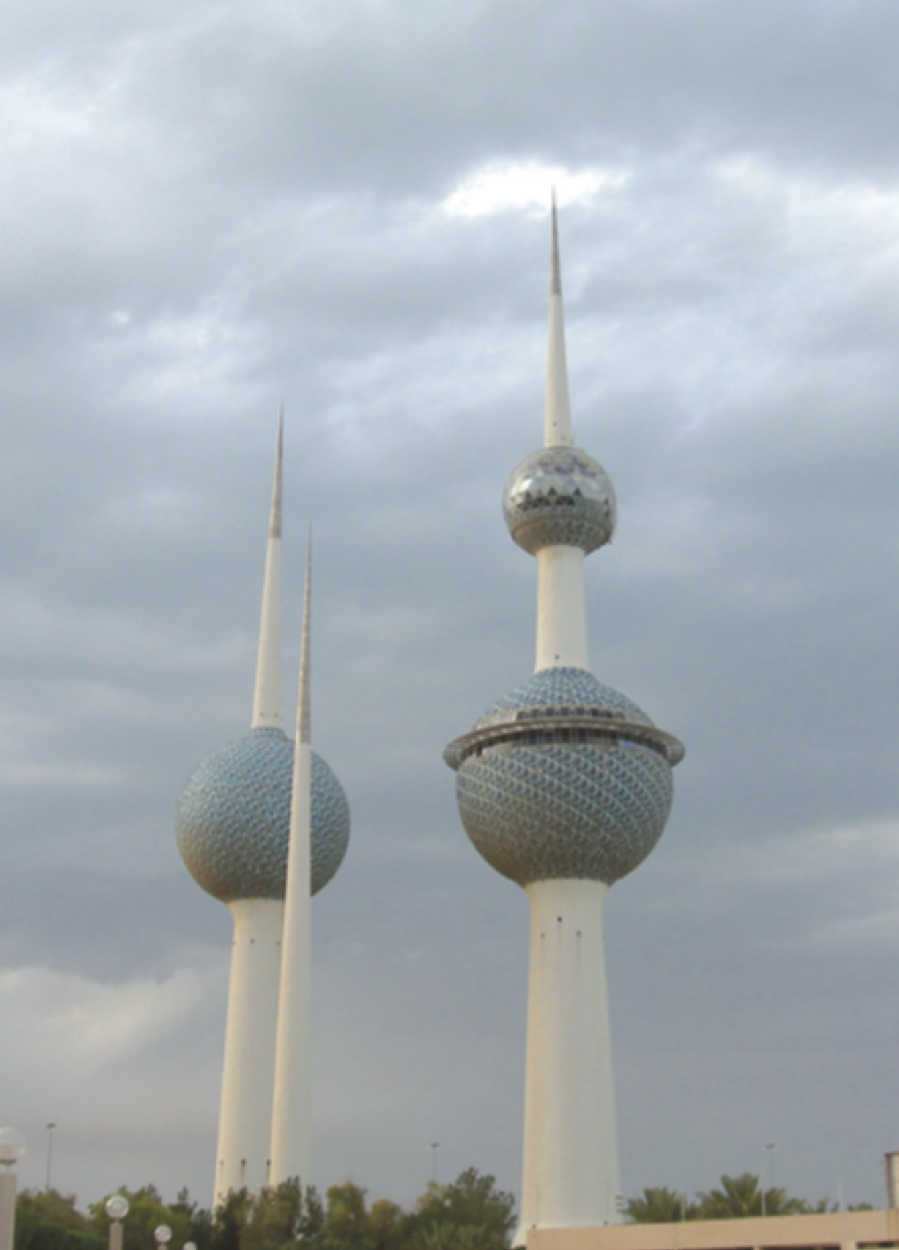
One factor that impedes democracy in the Middle East and North Africa, especially in oil-producing countries, is the lack of government dependence on citizen support, the state instead relying on oil revenues, of which there are plenty. However, Kuwait’s example over the last few years shows that this relationship of no-taxation/no-representation may not be immutable. Politics and the public space in Kuwait are becoming broader. The potential for a democratizing Kuwait is greater now that the price of oil has gone up, contrary to the theory’s prediction. Rentierism may thus not be the enemy of democracy.

Democracy in Kuwait is still a long way from what prevails in Western Europe or North America, but the emirate is far from being just a petro-state with nothing happening except oil gushing out of the ground and money being pumped into state and private coffers. The country is undergoing open debate about state institutions. Parliament requests ministerial testimony about possible corruption, prompting government interference in the legislature. Islamists have influence, and promise laws against the secular character of the state.

What is happening in Kuwait is partly a direct result of the modernization of politics that could become a formula for a limited form of rentier state democracy. While Kuwait is a typical rentier state where petroleum accounts for over 90% of exports and government income, its politics differ from those of typical rentier states, and parliamentary elections produce a collection of disparate political actors with different interests increasingly independent of the ruling family. In turn, the emir prefers to interfere more as a caretaker than a tyrant, and to allow for a modicum of open democratic politics according to constitutional rules.

Although these Kuwaiti experiences of representation leave much to be desired, despite all these limitations democratic development may be possible in the rentier state because of competing economic and social elites who benefit from the state’s drives for modernization. Future pressure may gradually produce better representation and participation.

As the price of oil soared from under $30 a barrel in most of 2003 to well over $100 during the last few months, the past half-decade has proven to be very good for oil-exporting states. With world demand for energy strong and its price rising, government coffers in the Arab Gulf countries have during that time benefited in a spectacular way. Kuwait is a case in point, as official revenues during the past fiscal year almost trebled from their 2003/4 level, mostly thanks to oil.

The bad news is that these numbers viewed in isolation suggest that Kuwait remains a classic rentier state, unwilling or unable to democratize or otherwise change for the better. If anything, the emirate should be wallowing deeper in rentierism as state dependence on oil rises. Yet the politics of the country may belie this. 

The idea of rentierism is clearly valuable, and it is also being applied to non-energy economies and sectors. For example, talking about Jordan as a quasi-rentier state, or analyzing the case of tourism in Egypt in terms of rentierism, as various writers have done recently, is instructive. However, as the last five years have shown, as far as the GCC states are concerned, the old equation of oil wealth with anti-democratic rentierism may need to be refined.

Riad al Khouri, co-founder and principal of KryosAdvisors, is Senior Fellow of the William Davidson Institute at the University of Michigan, Ann Arbor

September 13, 2008 0 comments
0 FacebookTwitterPinterestEmail
Banking & Finance

BLOMINVEST‘s review of Lebanese banks

by Stephane Abichaker, Nicole-Clémence Khoury & Nicolas Photiades September 4, 2008
written by Stephane Abichaker, Nicole-Clémence Khoury & Nicolas Photiades

In June 2008 BLOMINVEST published a review of Lebanese banks as part of its Global Equity Research Report series. The following is a summary of that report.

The Lebanese banking sector has always been at the core of the domestic economy with Lebanese banks playing a major role in the financial recovery of the country and carrying almost all of the latter’s financial intermediation activity.

• Lebanon enjoys high banking penetration rates with a deposits/GDP ratio standing at 2.82x in 2007e compared to 1.15x for the emerging markets. This is mainly due to the continuous inflow of funds from Lebanese expatriates which is driven by two important factors: the support of the international community as proven by the latest Paris III conference, and the strong track record of no default.
• The degree of fragmentation of the banking sector has been decreasing along with a fall in the number of active banks. Currently, 66 banking licenses are active out of which two thirds are Lebanese and 77% are commercial.
• This landscape results from foreign divestments, liquidity surpluses in the GCC countries, local diversification of business lines with an increasing focus on private, investment, and Islamic banking activities, and finally the BDL policy of supporting M&A activity between banks to avoid liquidation costs and to improve the efficiency of the sector as a whole. For instance, since 1997 around 30 banks were acquired or merged with the acquisition of BLC by Fransabank, with July 2007 being the most recent consolidation transaction.
• The 11 largest banks account for nearly 80% of the total sector’s deposits with BLOM and AUDI, the two largest banks, showing clear signs of pulling off the rest of the group due to higher assets, profits and greater geographical diversification.
• Despite immature local capital markets, the Lebanese banks were amongst the first banks in the Arab world to access the international capital markets by issuing GDRs, preferred shares and Eurobonds, reflecting comfortable financing flexibility.
• The major Lebanese banks have been seeking not only local but also international expansion in order to enhance their profitability, diversify their earnings’ sources and assets, increase their product range, and in time of crisis allow the channeling of funds to safer zones. Geographical expansion is also seen as essential for risk diversification.
• Traditionally, Lebanese banks have been mainly family-owned but the need in the last 15 years to raise capital via both the local and the international capital markets has diluted families’ stakes, albeit without affecting significantly their managerial control.
• The main driver of the Lebanese banks’ profits is interest income that arises mainly from inter- bank deposits, allocation of funds into mainly Lebanese sovereign bonds and treasury bills, and customers’ loans. Profitability indicators have been improving in the last few years, although the still limited diversification of income is causing return on assets and return on equity ratios to still lag regional peers. However, regional expansion is expected to promote earnings’ diversification by increasing non-interest income, and reducing the reliance on domestic income in the near future.
• Despite the cost burden that arises from the banks’ expansion strategy, Lebanese banks have managed to control their operating expenses, with BLOM leading in terms of operating and management efficiency.
• Amid the political and economic turmoil following the assassination of PM Rafic Hariri and the July 2006 War, customer deposits, the main source of Lebanese banks’ funding, grew significantly — over the past six years reaching $72 billion as at year-end 2007.
• Lebanese banks remain exposed to the Lebanese sovereign risk as around 25% of the banks’ balance sheet is accounted for by lowly rated government bonds and treasury bills denominated in both USD and LBP (Lebanon is rated B3 by Moody’s and B-1 by S&P). The high risk weighting on these government securities (as a consequence of Basel II regulations) is somehow mitigated by the high yields carried by these government securities and by the strong track record of the government in repaying principal and servicing debt. Moreover, the Central Bank has continuously enjoyed implicit support from GCC governments in maintaining high foreign currency reserve levels, and hence keeping the local currency stable.
• Loans account for a relatively low percentage (22% at end 2007) of the banks’ consolidated balance sheet. This is due to the lack of quality borrowers and to the limited ability of corporates to adequately service debt. However, NPL coverage by loan loss reserves is improving across the sector, with the smaller banks appearing to be in greater difficulty on that front than their larger peers.
• Capital adequacy of banks has improved significantly over the years with consolidated equity for the sector accounting for 7.6% of total assets as at year- end 2007. The larger banks in particular have a solid track record in capital raising within the international capital markets and have had a strong organic capital growth over the last decade due to solid profitability.

Stéphane Abichaker, Nicole-Clémence Khoury, Nicolas Photiades work at the equity & fixed income research unit of BLOMINVEST Bank.

September 4, 2008 0 comments
0 FacebookTwitterPinterestEmail
Banking & Finance

Aviation – LCB wind for MEA’s wings

by Executive Staff September 3, 2008
written by Executive Staff

As most airlines across the globe are responding to high oil prices by making personnel cutbacks, being especially selective with their routes and even grounding planes, there is no sign of crisis at Middle East Airlines (MEA), where the plans for continued expansion are still materializing.

As part of its continued efforts to encourage and support various sectors of Lebanon’s economy, in early August Lebanese Canadian Bank (LCB) signed a cooperation and finance agreement with MEA. LCB was the sole benefactor of the $65 million dollar deal, which is aimed to help the Lebanese national carrier increase and update its fleet with a new Airbus 330-200 aircraft.
The agreement, a clear indicator of the confidence that regional corporations have in their national carriers, was signed by both chairmen-general managers, George Zard Abou Jaoude of LCB, and Mohamad El Hout, of MEA.
“Middle East Airlines has proved that it is a very good company,” explained Elie Azar, LCB’s marketing manager. “They’ve made a lot of reorganization efforts, they’re re-engineering their administrative ways and they are doing excellent. Results are good, and we are expecting them to double this year, depending on the political and security issues in Lebanon.”
Aside from Lebanon’s infamously turbulent political atmosphere, LCB has minimal concerns about contributing such a sizeable 10-year loan, as MEA has offered not only its moral assurance, but also a significant collateral. “In this operation, the plane acts as collateral. It’s insured in London with Lloyd’s, plus it’s a mobile entity, so MEA can rent the plane to other companies if there are any big problems,” Azar outlined.
According to the International Air Transport Association, the airline sector in the Middle East expects to be bolstered by about $54 billion over the next decade, as the region plans to pour its resources into airport expansion. In addition to MEA’s most recent acquisition, over the last three years airlines across the region have ordered 700 new planes to the tune of $140 billion.
MEA appears to be on its own very impressive course of expansion, pursuing the growth of company capacity, productivity and supplies. Choosing LCB’s offer over those of other regional banks such as Bank Audi and BLOM Bank, MEA is following the path of greatest returns. “Middle East Airlines was very interested in our terms because we were able to offer the best loan at a very low interest rate,” Azar explained.
“This deal is very good for the Lebanese banking sector because it shows that Lebanese local banks now have the capacity to lend or to give such big amounts. Finally,” he concluded, “the deal is very good for Lebanese Canadian Bank; it’s one of our biggest operations yet, and we hope it’s only the beginning.”

September 3, 2008 0 comments
0 FacebookTwitterPinterestEmail
Banking & Finance

Banking – Fertility loans

by Executive Staff September 3, 2008
written by Executive Staff

In a notoriously image-conscious society, the launch of First National Bank’s (FNB) plastic surgery loan last year in Lebanon made sense. Though some social controversy initially surrounded the idea of a bank facilitating cosmetic enhancement procedures, Lebanese consumers were quickly won over as their inner vanity saw new opportunities.

FNB’s corporate strategy is to offer customized products for the Lebanese market, keeping in mind the consumer as well as the behaviors and needs of Lebanese society. Perhaps FNB was en pointe with the world’s first plastic surgery loan — hailing it as a way to “have the life you’ve always wanted,” however, may have been a bit of an exaggeration.
Despite the sensationalism of that tag line, FNB has made its point: it is in the business of offering the Lebanese life-changing opportunities. Most recently, FNB introduced another new product to Lebanese consumers. Though it is not “the first of its kind,” as the website claims, FNB’s fertility loan will facilitate individuals and families to have the life they’ve always wanted.
FNB’s fertility loan stands to accommodate those who would otherwise be unable to finance fertility therapy. The loan covers costs related to fertility operations, stem cell collection and preservation, delivery, and even baby accessories. Loan seekers maintain the freedom to choose their own doctor, and can borrow up to $7,000 for three years.
Worldwide it is estimated that one in seven couples have problems conceiving. Medical treatment of infertility generally involves medication, surgery, or both. The high cost of treatment means that for many, fertility therapy remains out of reach. Or, at least, it used to. FNB’s fertility loan offers a real chance for those who have difficulty conceiving.

September 3, 2008 0 comments
0 FacebookTwitterPinterestEmail
Banking & Finance

Real estate – Loan for a home

by Executive Staff September 3, 2008
written by Executive Staff

With property prices around the country appreciating significantly, more and more Lebanese are trying to beat the inflationary trend by buying a home. And the country’s banks are offering a plethora of home and housing loans.

The rise of real estate prices and stagnation of consumers’ purchasing buying power in regards to acquiring property, especially homes, has compromised individuals’ ability to purchase a home in Lebanon, according to Société Générale de Banque au Liban (SGBL). “The weakness of the local rental offer in regards to meeting consumers’ growing needs and high demand, in addition to the over- cautiousness of these local lenders, has magnified the severity of this situation,” said Michel Fiani, strategy and marketing manager at SGBL.
Banks have identified this need and targeted a population of prospective homeowners with housing loans that may vary from one banking institution to another, whether in their features or their potential market.
The Intercontinental Bank of Lebanon (IBL) home loan is dedicated to a large client base whether employees, member of syndicates or entrepreneurs, Lebanese residents or nonresidents, whose age may vary from 21 to 64 (at loan maturity). Borrowers are expected to earn a minimum wage of $600 while salary domiciliation is required for employees who also ought to have a minimum two years experience in their respective field. The minimum amount for the IBL loan varies between $5,000 and $500,000 (special cases for more than $500,000 are also treated on exceptional basis), while the total amount of the loan will not cover more than 90% of the property price. Interest is digressive and based on the US-$ LIBOR.
Last June, SGBL introduced a new version of its SOGEHOME loan. The program has carefully adapted and responded to the current needs of the market and most individuals’ financial profiles and capabilities. The SOGEHOME loan from SGBL is characterized by a longer amortization period that may stretch over 25 years, a diminution of the personal down-payment requirement (starting from 14%), as well as, for a limited period of time, a 0% interest rate granted on home loans acquired before the end of 2008.
The home loan offered by Credit Libanais is also destined to finance the purchase of a residence or land as well as the renovation or the enlargement of a property. While repayments are usually done in equal monthly installments with each equal to or less than one third of the borrower’s salary, no ceiling is actually imposed on the amount lent. In addition, loan applicants benefit from a grace period of up to six months and the bank is ready to cover as much as 80% of the property value. Credit Libanais offers a special interest rate of 4.5% for the first year, and afterwards the interest rate is revised annually depending on market rates (LIBOR + 4.5% with a minimum of 7.75 %). “To succeed in our corporate mission, we at Credit Libanais have developed a new approach to serve retail customers and marketing our countless products. We have turned each branch into a one- stop-shop that offers clients a wide variety of products and services to meet specific needs,” said Alain Hakim, assistant general manager at Credit Libanais Group.

Range of loan options
The Lebanon Home Loan offered by HSCB, “allows customers in Lebanon and throughout the region to arrange all financial transactions regardless if they’re in the country or in, say, Dubai, since HSBC has such a wide regional footprint,” said Tony Graham, senior manager at HSBC Lebanon. And because HSBC Lebanon is a branch of HSBC Middle East Ltd. it profits from Moody’s AA2 rating, and can offer the lowest international rates at LIBOR plus 2.75%.
Byblos Bank offers a loan dubbed “the doctors and dentists housing loan,” which caters to this particular segment of professionals. Single applicants are expected to boast a minimum monthly income of 900,000LL ($600), and 1,200,000LL ($800) if married. Like for other loans, candidates are required to have been employed over two years in the same company, or the same sector if they are self-employed. The loan amount covers 80% of the price of property in the case of a finished apartments, 60% of the rent amount for rented apartments, 50% in the case of a house construction project, and 100% in case of renovation of house as long as the investment does not exceed 50% of the house value. The bank does not place a limitation on the loan amount and the interest is calculated on the base of LIBOR to which 3.5% are added. Repayment period is usually between seven and 30 years.
At BBAC, home loans usually cover an amount of up to $500,000 or its Euro equivalent, on which is applied an interest rate of LIBOR plus 4% when the loan is dollar denominated, or Eurobor plus 4% when denominated in Euros. A grace period of up to 18 months is granted, while first year interest is an average of 5%.
Muhiedine Fathallah, head of consumer credit product at Bank Med, where home loans also know no ceiling or limit whether on the salary amount or property value, underlined that most home loan products are all linked to the LIBOR, varying from 7% to 10% on average. “In the last year, we have noticed an impressive growth in the home loan market. More and more people are buying property in order to either try beating the towering real estate market prices or for investment purposes. This has prompted the Lebanese Central Bank to issue a circular preventing banks from lending an amount covering more than 60% of a specific property value to borrowers who already have one apartment,” he added.
The manager expects the interest on home loans to remain low for the next two years, a factor which should further encourage clients to seek home loans. “Loans provided by the Housing Bank (Iskan Bank), which is an institution jointly owned by most large Lebanese banks offering special loans up to a certain value [$250,000] and excluding registration fees [on average amounting to 6%] have nearly doubled this year alone,” Fathallah said.
In addition to the loan offered by the housing bank, most Lebanese banks also offer the Iskan or PCH loan in coordination with the Public Corporation for Housing (PCH). “This product is relatively the same from one bank to another, the only differences residing in the down- payment on the property and insurance fees” said Charles Mansour, head of loans at IBL.
At Bank Audi the PCH loan amount range is between 20,000,000LL ($13,300) and 180,000,000LL ($120,000). This particular type of loan provides financing for 80% of the property value with an interest rate based on the price of two-year treasury bills (40% of two-year T-Bills to which 3.5% is added).
The repayment period is scheduled over a maximum of 30 years split evenly between the bank and the PHC, and when a loan is destined to renovation works, the amount will cover up to 50% of the apartment value. The loan is free of any registration, mortgage or stamp fees. Eligible candidates’ income may vary between 1,000,000LL ($666) and 3,000,000LL ($2,000) if they are employed in the private sector and between 800,000LL ($533) and 3,000,000LL ($2,000) if in the public sector. Borrowers will have to opt for the domiciliation of their salary at the bank and provide a proof of registration in the National Social Security Fund (NSSF).
Like in all housing bank loans, monthly installments should not exceed one third of the borrower’s revenue and one quarter of his income if he is self- employed or belonging to a liberal profession. For the latter two categories, candidates are expected to submit proof of income: a balance sheet covering the last three years of operation, a statement of account and legal documents when borrowers are also shareholders of a company. File fees are applicable to the loan, which amount to 1% of the total loan along with life insurance premiums, calculated on the base of the applicant’s age and tenure.

Loans in phases
In addition to these loans, in August Bank of Beirut (BoB) unveiled its new housing loan. Roger Dagher, head of the finance department at Bank of Beirut underlined that the PCH Plus loan offered by his bank, although similar to regular PCH loan, carries additional interesting features. Like the regular PCH loan, PCH Plus is granted over a maximum of thirty years, depending on the borrower’s age at loan inception. Eligible candidates are required to earn a monthly maximum of as much as ten times the minimum official salary (equivalent to $2,000). Like in regular loans, the maximum monthly payment should not exceed one third of the average monthly income of the borrower. The PCH Plus time period is divided into two equal phases like the regular PCH loan, where the borrower pays back to the bank the principal of the loan during the first phase and the accumulated interest to PCH during the second phase.
The loan interest is set by the PCH protocol and reviewed every two years, being tied to the two-year T- Bills coupon rate. The borrower is required to deposit 10% of the loan amount in the bank at inception, which will be discounted from accumulated interest during the first phase. In addition to a first degree mortgage, a mandatory insurance including life and fire coverage for the whole loan period is settled during Phase One.
The main difference between PCH Plus and the regular PCH loan, Dagher explained, “resides in one variation that allows the borrower to pay back only the principal of the loan during Phase One without paying back the accumulated interest to the PCH during the second phase, which is why we call this particular product the ‘zero interest loan’.”
In order to benefit from this cost saving, the borrower is required to make a deposit representing up to 11% of the chosen loan amount. This deposit earns interest at the regular loan interest rate and can be returned to the borrower at his request, if he chooses to end the relationship prior to loan maturity, which is subject to full settlement of the loan. With the PCH Plus program, BoB finances up to 100% of the loan, contrary to other housing loans. The customer may pay to BoB, as the required deposit, the down-payment he would pay to the owner of the apartment.
Dagher believes that the PCH Plus loan is more borrower friendly as the bank settles accumulated interest on behalf of the customer. In addition, the property will also be free of any lien at the end of Phase One, which provides the borrower with a greater margin of freedom.
“The PCH Plus loan provides young Lebanese the possibility to finance property at low interest rates. This particular loan emphasizes the social role Bank of Beirut is currently playing,” Dagher added. On the other hand, the manager estimates that this particular type of loan offers the bank greater exposure and reinforces its leading position in the marketplace.
“We believe this product will definitely be successful because it provides borrowers with flexible and advantageous conditions. In my opinion, the product has massive potential: it is possible for Bank of Beirut in one year to grant clients more than 1,000 loans”, Dagher said.
Around, the city, large billboards touting the merits of various home loans seem to be mushrooming. And the campaigns certainly generated popular interest. As Fathallah concluded, “Not only is it attracting attention on the banks commissioning the campaign, but it is also encouraging clients of the different institutions to seek home loans from their own bank as they become aware that buying a house on credit is a relatively easy and affordable process.”

September 3, 2008 0 comments
0 FacebookTwitterPinterestEmail
Banking & Finance

IPO Watch – A Saudi summer

by Executive Staff September 3, 2008
written by Executive Staff

The leader in Middle Eastern primary market action in August came — as has been the case for several other months of this year — from Saudi Arabia. The initial public offering of Methanol Chemicals Co (Chemanol) was worth $193 million and accounted for 79% of the aggregate amount of $245 million available last month in IPOs around the region. Different to numerous other recent IPOs which were green-field ventures, the Chemanol flotation originated from a company that has a substantial history of manufacturing activity — it was established in 1989 — which sought a flotation to obtain new capital for corporate expansion.

Its area of activity may be less splendorous than Islamic banking, but Chemanol allocated 70% of the offering to retail buyers, demonstrating confidence that it would be able to get retail investors interested in its offering at a price of SAR 12 ($3.2) per share, which included an offering premium of SAR 2 ($0.53). First results of the IPO showed that demand indeed reached high, with subscriptions totaling $1.1 billion.
Last month saw four other smaller IPOs seeking to raise between $7.8 million and $16.3 million in capital, all in Jordan. Two firms in the real estate sector each offered slightly less than half of their equity to investors; the other two offerings came from a credit card and an investment company.
A total of five companies started trading around the region in an environment of traditionally low August volumes, with international markets additionally subdued by worries over volatile energy markets, unending financial crises and recession talk. The five firms are Sohar Power in Oman, Tunisian conglomerate Poulina Group, Astra Industrial Group on the Saudi Stock Exchange, Jordanian real estate firm Amwaj Properties and the UAE’s Dar al Takaful insurance company.
Even as the last month was tough on MENA bourses, all five debutants had a decent or good start, achieving first-day gains of 12% to 437% — the latter feat was accomplished by Islamic insurer Dar al Takaful on the Dubai Financial Market and it underscores the current comparative edge of Arab bourses in the emerging markets theater. The BRIC (Brazil, Russia, India, China) markets’ top summer IPO of China South Locomotive, which raised $1.49 billion in August on the Shanghai and Hong Kong stock markets, managed a 58% gain on its first trading day in Shanghai, but disappointed in Hong Kong with a measly 1% burp. India’s Reliance Power, which has been battered on the bourse since its Jan 2008 IPO, in August scrapped the IPO of a telecoms equipment subsidiary, Reliance Infratel.

Heavyweight Arab IPOs
Although Middle Eastern investors were expected to have their minds a little less on sprinting after shares and a little more on summer diversions, two well-known Arab companies chose August to start large rights issues that will extend into September. Big money was sought by regional telecommunications operator Zain Group through its $4.5 billion rights issue for a 75% capital increase on the Kuwait Stock Exchange, which opened on August 17 and will run until September 18. A second notable rights issue was that of Egypt’s Al Ezz Steel. The company, one of the country’s leading manufacturers and an important player on the regional materials scene, announced on August 7 that it would seek to triple its share capital by offering almost 365 million new shares between August 26 and September 25 in a rights issue worth $341 million.
Also a September timeframe was selected for the $98 million telecommunications industry IPO of Kuwait’s third mobile operator. Kuwait Telecommunications Co, which was formally established in July as a company with 26% stake holding by state entities and 24% ownership by Saudi communications group STC, is offering 250 million shares, representing 50% of its capital, for subscription at a share price of $0.39.
Much more is expected for September and for the fourth quarter of 2008, with travel and tourism related IPOs something to watch for. The National Air Services offering on the Saudi Stock Exchange has been announced with a size of $600 million for 30% in the company, although the subscription period has yet to be set. In October, the Al Tayyar Travel Group will look to raise $320 million, also on the SSE, while Dubai-based retail and real estate group Aswaaq is said to plan offering 55% of its equity for participation in the same month.
Media reports from Kuwait said that the Kuwait Stock Exchange’s technical committee approved listing of four new companies, including Wataniya Airlines (or Kuwait National Airlines Co), which had sold 350 million shares, for $123.5 million, through an IPO in early 2006 and intends to start operating as a luxury carrier in 2009.

September 3, 2008 0 comments
0 FacebookTwitterPinterestEmail
Banking & Finance

Construction – Cement syndicate

by Executive Staff September 3, 2008
written by Executive Staff

What could prompt the cooperative efforts of a Lebanese bank to engage a French building materials company and 15 additional regional and international financial institutions from all over the globe and seal a $380 million deal? Apparently, cement is the glue behind one of largest private financing syndicates for industrial projects in the Levant.

“The current construction boom in the Middle East which has increased the consumption of cement, combined with an acute shortage in the region, has driven cement prices to unprecedented levels. Our region, and Syria in particular, has a shortage of about 4 million tons per year,” explained Ramzi Saliba, General Manager of Bank Audi’s corporate banking division. The Syrian cement deficit comes alongside an ongoing housing crisis and lack of raw materials, a result of decades of nationalization and the centralized economic policies under the ruling Baath Party.
For decades cement production remained a state monopoly in Syria. However, recent circumstances have prompted the Syrian government to open the sector to private investors, and to compensate by introducing a limited liberalized economy. “Contrary to common belief, Syria has modernized and liberalized its laws considerably in the last few years,” Saliba confirmed. “That, coupled with the explosion in construction has made cement a very attractive sector for Bank Audi, now and for years to come.”
Bank Audi, coordinator and leader of the syndication, is among the first banks to set up in Syria after the government allowed private banks five years ago. “Private banking in Syria is still in its infancy stages, and it is a natural place for Lebanese banks to take hold of opportunities, more so than any other country. We know the market well, we know the people well, many large Syrian names and corporations have been the clients of Lebanese banks for 40 years, so we know the business very well,” Saliba said.
As far as Bank Audi’s interest in putting together a bridge loan in Syria, Saliba outlined that, “This deal was in line with the regional expansion strategy of Bank Audi, helped by several factors. The main reason was the shying away of larger international financial institutions on large deal because of the economic crunch that’s taking place in the US and Europe. That gave us a really great chance.”
Capitalizing on the window of opportunity, Bank Audi pursued Egypt’s Orascom Construction Industries. Saliba detailed the progress of the operation: “We had started discussions with Orascom Construction, OCI, and in the interim, Lafarge bought OCI’s cement business. We asked them to carry on with the discussions, and they saw how far into the deal we’d gotten, so they continued working with us; it worked out.”
Global leaders in building materials, French cement maker Lafarge boosted its market position to No. 1 in the region after acquiring the cement business of Egypt’s Orascom Construction Industries at the close of 2007. Having secured the deal with Bank Audi for its subsidiary, Syrian Cement Company, Lafarge Group will now continue its expansion in the Middle East with the setup of a greenfield cement plant near Aleppo.
The new plant is scheduled to begin production in 2010, and will have the capacity to generate 2.9 million tons per annum. This should help put Syria on its way to meeting its cement demands, which are expected to grow drastically from 7 million tons per year today to around 18 million tons in the next three years due to the surge in real estate, construction, and tourism development.
The considerable size of the bridge loan, which stands be replaced after 18 months by a longer-term loan, and more importantly the union of so many diverse investors serve as clear indication of Bank Audi’s notable regional role. “It’s the first such transaction done by a Lebanese bank, in terms of region or even international financing opportunities,” Saliba said. “It’s the first, and certainly not the last for Audi, and I hope for other Lebanese banks who may be contemplating an effective regional role.”

September 3, 2008 0 comments
0 FacebookTwitterPinterestEmail
Banking & Finance

Private equity – An absence of exits

by Executive Staff September 3, 2008
written by Executive Staff

On any given day, a scour of Middle East business news reveals that private equity in the region is ‘hot’, owing to favorable conditions at the macroeconomic level or data on fundraising and investment, which seem to be getting bigger. Watchers of the asset class meticulously track which funds are looking for which companies and which opportunities and sectors are attracting the most private equity. The asset class’ behemoths and large-sized deals in infrastructure and other industries dominate headlines. On the surface, the coverage of the asset class looks healthy.

However, the component of private equity which is less covered than capital raised and investments is the arm of the asset class which offers the best indicator of performance, the exit. Without appropriate exit data, it has been difficult to see what trend is following the explosive growth in the other sub-data available on private equity, beckoning the question: whither to the exits in Middle Eastern private equity?
A dearth of evidence continues to pervade estimates, but some figures have indicated that only 5-10% of private equity deals in the Middle East and North Africa (MENA) region have been exited. With private equity comprising 45% of aggregate investment in the United Arab Emirates (UAE) and 35% in Saudi Arabia, the relation between money invested and return on investment can indicate several things that a purely deal-side analysis cannot, including the asset class’ performance, potential pitfalls, and lagged performance to see if larger funds are or are not commensurate with larger internal rates of return (IRRs), the derivate used in calculating the success of funds, with ranges at 15-20% on the lower end and up to 100% in more lucrative examples. Because of some poor performance in regional bourses, private equity houses seem to be holding investments for a bit longer, waiting for appropriate exit options. With funds raised, investments complete and deals outstanding, limited partners (LPs) are going to starting demanding a return on their investment within the appropriate bounds of the fund timelines.

M&A doesn’t count
Distinct merger and acquisition (M&A) activity lies on a separate sheet from pure private equity. In M&A, a buyer bids and acquires firms to enlarge businesses both horizontal and vertically. In the case of horizontal M&A, a firm might be a competitor, but vertically, the acquired firm is a complementary entity. In the instance of a horizontal M&A transaction, a hotel chain might acquire a competitor to enlarge business or grow operations in new markets, be they different countries or a higher or lower-end of the business. In a vertical M&A transaction, the hotel chain might purchase a food services group to bring more of the hotel’s daily operations in-house. The M&A as a distinct transaction differs from the bread and butter type of private equity transaction where firms are first acquired and later exited rather than incorporated as part of a firm’s main business lines.
What then do the longer partnerships between private equity players and firms indicate? There are several speculative guesses, including the disparity in vision which could entangle maneuvering by management, making a firm reluctant to realize an exit. Another possibility is the poor exit environment, while still another is the possibility that private equity funds backed by institutional investors such as sovereign wealth funds (SWFs) are bound to the wishes of these LPs and blurring the pure business thought of profit and yielding to the ‘what’s best’ scenario for firms under management.

Trade sales
Some private equity exits have come in the form of the trade sale. This type of exit is viable for the region’s numerous family-owned firms, who would like to retain control after beefing-up the best practices instilled by a private equity firm. In June, 2008 the Foursan Group exited the Abdali District in Jordan to new investors via a trade sale, while Abraaj Capital exited both EFG-Hermes and the Maktoob Group via this route in 2007. Additionally, Injazat Capital exited its stake in Atos Origin Middle East, through a trade sale exit for the GCC-based technology firm.

Secondaries
The secondary market has given a new dimension to the private equity business. It is heralded as a way to unload a firm to another private equity player and will doubtlessly be used while more traditional exits like the initial public offering (IPO) route remain weak. The largest secondary transaction was Citadel Capital’s exit of Egyptian Fertilizers Company in June 2007 and while others have not been reported as secondary sales, the private equity to private equity nature of an investment is one way of gauging the exit type.

Strategic sales
The strategic sale of a firm to a related firm covering the same or similar industries is another possibility for MENA firms and might be the destination of most unreported or disguised exits. In June, the Foursan Group exited Arab Orient Insurance Co., a Jordanian insurance provider, to Fairfax Holdings, an insurance group looking to beef up the scope of its services.
Fairfax Holdings is a Western firm that acquired Arab Orient Insurance Co. for one possible reason: to expand Fairfax Holdings reach into a new market in the MENA region. With an ever growing population consuming ever more goods, firms servicing large markets with great potential will attract the likes of more Western firms looking to establish an arm in the region.

IPOs
The most traditional of exit options for private equity firms — the IPO — has not be used by firms reticent to face the valuation of a firm in the open market. According to Private Equity International’s survey, 33% believe that valuation and control are the greatest threats to the growth and development of the private equity industry in the Middle East while 25% believe it is non-initial public offering exits. In 2007, securities markets in the MENA region mimicked the situation globally and reported fewer groups in 2007 than year to 2006, when the turmoil on capital markets began. Although Q1 2008 performance remained poor, the situation as a whole for 2008 remains positive. For instance, the Saudi Arabian stock exchange has grown from a low in July 2007 to remain up over 25%. Regional bourses have followed similar trends.
However, a less sanguine conclusion is drawn vis- à-vis regional inflation rates, which can deteriorate investments and the value of companies choosing to list restructured operations now. In an approximated situation where capital market indices are achieving 20% annual growth in capitalization figures, double digit inflation can prick the balloon of optimism.

Large time horizons
With private equity firms tabling the immediate or traditional exit, the business is taking on longer time horizons for investments. The asset class’ main driver in the MENA region is currently infrastructure, which, by the nature of the industry, involves longer holding periods between investment and exit.
Initially evoked to describe pipes, roads, and ports, the term ‘infrastructure’ has come to include a myriad of sub-industries, including downstream industries and suppliers as well as networks involved in social infrastructure, namely the hospitals and schools being built to care for the populations of new cities and the growth dynamics associated with large Arab families.
Tertiary educational institutions, from new universities to research centers, are additionally accommodating the jobs to be demanded when the under-18-year-olds turn of age. For 51% of those surveyed by Private Equity International, infrastructure will attract the most investment interest in the next twelve months, followed by energy in a distant second at 20%. The two industries involve longer time horizons owing to the scale of deals as well as the timeline to realize results.
Private equity fits into the equation by its ability to recapitalize the infrastructure industry. Statistics have accounted for infrastructure projects comprising over 60% of new funds raised by regional private equity firms. New funds are sprouting up to bolster the demand. Al Khayyat, Rasmala, and RHT recently acquired a 13% stake of Taaleem, an educational specialist, which increased Al Khayyat’s stake in the firm to 25%. Taaleem is not the only education firm seeking or gaining capital to finance growth plans. Online educational resources, private educational institutions, books, and universities have all benefited from seeking out private equity growth capital, especially as many are battling for regional supremacy, moving beyond conquering just Riyadh and Jeddah to include operations in Abu Dhabi, Kuwait City, and Manama.
With longer holding periods and new industries in which private equity players are investing, the asset class has taken on a flavor distinct to the region. Two reasons come in play to understand this dynamic. The first includes the aforementioned style of partnership in the region, with LPs consisting of SWFs in addition to individual fund backers. Sovereign wealth does not expect the same returns on investment and deals can be political to an extent in that GCC SWFs partner with MENA-centric private equity houses to strengthen the business climate in the region. An additional factor less thought of is the need for strong financial services houses. Because private equity is the quintessentially efficient type of investment, the savoir faire of industry experts is useful in structuring the longer-term outlook of firms involved in infrastructure or energy.

September 3, 2008 0 comments
0 FacebookTwitterPinterestEmail
Comment

Network cooperation between telecom competitors

by Bahjat el-Darwiche & Louay Abou Chanab September 3, 2008
written by Bahjat el-Darwiche & Louay Abou Chanab

Most recently, two fierce Italian telecom competitors with pending legal and regulatory claims resolved their differences and decided to share infrastructure. They are now jointly planning the rollout of their Next Generation Networks and they adopted a cooperation model open to all interested operators. This shift is a direct result of the need to focus on commercial offering and the drive to commoditize telecom networks.

This trend is growing in both developed and developing markets. In the Middle East and North Africa (MENA) region today, telecom networks are almost in every corner around us, yet the number of telecom operators is set to grow further. Policy makers and regulators understand the positive impact a balanced number of operators can have on competition and consequently on the economy as a whole. This raises a number of questions to answer: are investors still interested to fund more networks? Will those networks be profitable? And are there still enough available locations to deploy those networks without congestion risks?
Developed markets and recently developing markets have reached the conclusion that sharing telecom infrastructure can yield positive outcomes if managed properly. It mainly helps achieve the following:

1. Rationalized investments
It is not a hidden secret that building telecom networks is a costly activity. “Investment studies conducted during the early 3G hype in Europe put the average investment per 3G subscriber at around $500,” noted Bahjat El-Darwiche, a principal in the communication and technology practice with Booz & Company. “Sharing the cost to the 3G infrastructure buildup can generate savings of up to 40%,” he added. Sharing infrastructure can save critical investments thus significantly improving the profitability of the concerned operators

2. Develop new revenues
For incumbent operators in markets under liberalization, offering network components to competitors can generate new sources of revenues that would offset any potential losses from retail competition. “Sharing infrastructure can exceed 15% of an incumbent operator’s total revenues,” said Louay Abou Chanab, a senior associate in the communication and technology practice with Booz & Company.

3. Release capital
Competing operators, incumbents or new entrants are looking to diversify their revenue base and hence invest in different ventures locally or abroad. Sharing infrastructure allows all market players to release badly needed capital to invest in strategic ventures. In the case of India, $4 billion can be saved by 2010 if at least two operators share the needed 240,000 towers to improve coverage. The Indian government is even subsidizing towers should three or more operators decide to share it.

4. Improve competition
Infrastructure sharing has a dual impact on competition. On the one side it decreases entry barriers for new operators. Interested players will find it more appealing to enter that specific market given the ease with which they can start offering commercial services. From another perspective, operators now have less pressure to deploy networks and hence can shift their focus to innovation and better customer service. Both factors positively impact competition to the benefit of end-users.

5. Optimize use of scarce resources
Policy makers and regulators struggle with allocating frequencies to new entrants; municipalities also struggle with rights of way to allow the deployment of fixed networks. “Infrastructure sharing can alleviate some of the pressure we now have on allocating scarce resources to multiple operators,” said El-Darwiche. This optimization also serves to reduce the negative impact telecom networks may have on the environment.
A wide variety of infrastructure sharing forms can be leveraged by operators, policy makers and regulators. Sharing can focus on passive or active components of the network. For clarity, passive components are those that do not carry any electronic signals and can include mobile towers, ducts and even electric supply; active components on the other hand carry electronic signals and can include leased lines, switches and antennas.
In recent times, many innovative network sharing solutions have been implemented on both fixed and mobile sides. Stokab for instance, owned by the city of Stockholm, is building and operating a fiber-optic network in the city of Stockholm that is open to all service providers on equal terms. Stokab started in 1994 and now has coverage in over 27 municipalities in Sweden and is selling access to over 60 operators including the incumbent.
On the mobile side, a good example is one where Orange and Vodafone both agreed to share their respective networks in the UK and Spain. While each operator will still manage his own traffic independently, the UK sharing agreement will reduce capital and operating costs by up to 30% and in Spain it will reduce number of sites by around 40%.
Yet, the success of infrastructure sharing highly depends on key success factors. At a minimum, regulators should consider publishing certain safeguards as is the case in Jordan and Nigeria. Both countries have detailed certain behavior on the use of capacity, namely that it should be used on a first come first served basis and that any unused capacity should be returned.
Regulators should also consider pricing regulations for certain forms of infrastructure sharing like unbundling or site sharing; ideally, prices should be cost-based. What regulators should also aim to achieve is proper enforcement of the policy. It is foreseen that disputes will arise when sharing infrastructure. Regulators need to be ready to introduce regulatory compliance measures or intervene to resolve disputes.
In summary, it is important to seize the opportunity presenting itself today in the MENA region. While we have some successful examples, like in the case of Morocco where unbundling grew the broadband market by over 19% within six months, we need to maintain the momentum going forward. An incentive-based regulatory regime might significantly contribute to developing regional telecom markets and, in turn, the overall economy while rationalizing investments.

Bahjat El-Darwiche is a principal and LOUAY ABOU CHANAB is a senior associate in the communication and technology practice at Booz & Company


September 3, 2008 0 comments
0 FacebookTwitterPinterestEmail
Banking & Finance

The fallacy of projections

by Imad Ghandour September 3, 2008
written by Imad Ghandour

In September 2006, the IMF in its Global Economic Output report projected that the US will be “the engine of global economic growth despite some uncertainty in the housing sector.” In its July 2008 report, less than two years later, the IMF revised downward (again) its projections for US economic growth to 1.3% (from 3.2% and 2.2% in the previous two semi-annual reports). The world’s most sophisticated economic forecaster failed to project the size and impact of one of the most serious financial crises in our modern history on the most monitored economy, although that event was on the radar screen for two years.

Recently I spent a few hours with a colleague of mine trying to “fit” the actual financial results of a company we had invested in into the model we had built for that company prior to that investment. The bottom-line projections were close to the actual results, yet we couldn’t put the right parameters in the model that will get us even close to reality.
It was an intellectual exercise, but at the end I had to pause and think: if a model cannot predict the past, how on earth were we confident that it could predict the future?
Make no mistake, this is a universal problem and is not a result of any individual incompetency.
Thousands of financial analysts pour their energy into predicting the “fair” value of stocks and other financial assets. They calculate with pinpoint accuracy the price of the stock after going through the mundane task of calculating things like future revenues, overheads, profits, discount rates, betas, comps, etc. Yet, with all the sophisticated modeling, I have rarely seen a numerical analysis explaining or predicting the “actual” market price of a stock. Furthermore, research has shown that actual prices do not necessarily gravitate towards “fair” prices, as the theory behind all this analysis suggests. In other words, the thousands of “fair” value models published by investment banks invariably fail to predict the present (or the past) and are unlikely to predict the future.
Yet we rely on projections to give us confidence in our decision. No investment is done in the modern financial world without a model. No model is without future projections. We project profits in 2015 to be $56,405,383.34, yet the only fact we can be sure of is that they will not be this number. We base our decisions on such numbers, and we focus our attention on things like the IRR as the analytical summary of thousands of assumptions and projections. We may reject an investment because the model calculated an IRR of 29%, while we all know that the same model with a little bit of subjective tweaking and twisting may give a magical boost to the IRR to, say, 39%.
Prior to inventing Lotus 123 and its successor MS Excel (and before I was born), investors relied on qualitative assessment and simple calculation to make their investment decisions. Did they take wrong decisions? Does a 1000 line model give an edge over such “unsophisticated” investors?
In his inspiring bestseller The Black Swan, Naseem Taleb skillfully argues that we simply cannot predict the future because “significant yet improbable events” (he called them “black swan events”) are the ones that will shape the future of individuals, countries, companies, and economies. We simply cannot predict or time or imagine such events, and we definitely cannot project their impact (hence the IMF miscalculation).
Projections are useful to the extent they are used as an analytical tool for possible future options. They may bring illusionary confidence, but reality will surely be different, especially in private equity investments that span several years. Embracing this fact as we price, negotiate, structure, and manage any investment is the key to sustained successful investment.

Imad Ghandour is the chairman of Information & Statistics Committee—Gulf Venture Capital Association

September 3, 2008 0 comments
0 FacebookTwitterPinterestEmail
  • 1
  • …
  • 512
  • 513
  • 514
  • 515
  • 516
  • …
  • 686

Latest Cover

About us

Since its first edition emerged on the newsstands in 1999, Executive Magazine has been dedicated to providing its readers with the most up-to-date local and regional business news. Executive is a monthly business magazine that offers readers in-depth analyses on the Lebanese world of commerce, covering all the major sectors – from banking, finance, and insurance to technology, tourism, hospitality, media, and retail.

  • Donate
  • Our Purpose
  • Contact Us

Sign up for our newsletter

[contact-form-7 id=”27812″ title=”FooterSubscription”]

  • Facebook
  • Twitter
  • Instagram
  • Linkedin
  • Youtube
Executive Magazine
  • ISSUES
    • Current Issue
    • Past issues
  • BUSINESS
  • ECONOMICS & POLICY
  • OPINION
  • SPECIAL REPORTS
  • EXECUTIVE TALKS
  • MOVEMENTS
    • Change the image
    • Cannes lions
    • Transparency & accountability
    • ECONOMIC ROADMAP
    • Say No to Corruption
    • The Lebanon media development initiative
    • LPSN Policy Asks
    • Advocating the preservation of deposits
  • JOIN US
    • Join our movement
    • Attend our events
    • Receive updates
    • Connect with us
  • DONATE