• Donate
  • Our Purpose
  • Contact Us
Executive Magazine
  • ISSUES
    • Current Issue
    • Past issues
  • BUSINESS
  • ECONOMICS & POLICY
  • OPINION
  • SPECIAL REPORTS
  • EXECUTIVE TALKS
  • MOVEMENTS
    • Change the image
    • Cannes lions
    • Transparency & accountability
    • ECONOMIC ROADMAP
    • Say No to Corruption
    • The Lebanon media development initiative
    • LPSN Policy Asks
    • Advocating the preservation of deposits
  • JOIN US
    • Join our movement
    • Attend our events
    • Receive updates
    • Connect with us
  • DONATE
Comment

What’s education without sex?

by Norbert Schiller July 7, 2007
written by Norbert Schiller

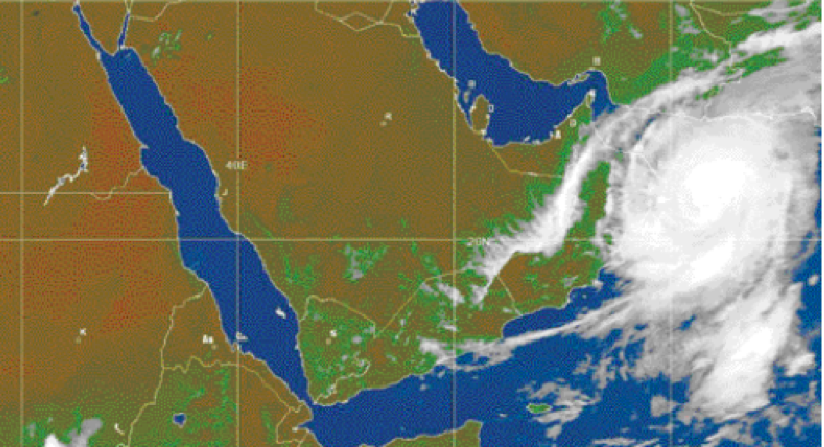
When cyclone Gonu hit Oman and parts of the Emirates, it only reconfirmed many scientists’ views that such a ferocious storm so close to the Arabian Peninsula was yet another tidbit of evidence that the earth’s surface is getting warmer due to high carbon emissions. But in many parts of the Arab world — as in Middle America for that matter — such phenomena are often explained away as merely another example of God’s wrath on mankind. Gonu “landed” as many students in the UAE were in the middle of their final exams, but Gonu as an act of God rather than the result of petrol guzzling and an over-reliance on CFCs is probably a theory Emirati students are used to.

For there are three main taboos in local education: religion, sex, and alcohol. What religious symbols students are exposed to in their textbooks are rigorously controlled and the mere mention of Darwin’s theory of evolution is forbidden in schools because it refutes Islamic — and Christian — beliefs on the origins of man. To say that man and apes are from the same gene pool is to cross a very thick red line.

The debate surrounding sex education has made inroads in recent years, “helped” by the unavoidable topic of the dangers of unprotected sex. An awareness campaigns directed at sexually transmitted diseases, most notably AIDS, has torn down old barriers, as has the anxiety surrounding the influx of foreigners — who have to submit to an AIDS test before getting a residence permit — and the fear that Western liberal values will corrupt this still very conservative society.

Where would Western literature be without alcohol — and sex for that matter? But as much as the schools in the UAE like to teach students the Western classics, they face a constant dilemma over content. How you read Shakespeare, Twain and Steinbeck, to name a few literary giants, without mentioning booze and sex? Meanwhile, history books with illustrations of naked indigenous people such as Native Americans or South Pacific, Islanders are still blacked out by a man at the ministry with a thick marker pen before being allowed into the classrooms, while documentaries previously aired on bastions of wise broadcasting such as the National Geographic Channel, Discovery, and the BBC, all are scrutinized for religious and sexual content before deemed fit for student viewing.

One taboo which has thrown off its shackles in recent years is the notion of Israel. Twenty years ago, the mere mention of the Jewish state in the newspapers, let alone a classroom, was strictly forbidden. Israel was always referred to as “Occupied Palestine.” Today, Israel is officially on the map.

But we know all this. It has been going on for decades. What am I getting at? Well, I suppose that all this censorship doesn’t jibe with the fact that the UAE has devoted a lot of energy to importing foreign (particularly Western) culture and educational resources into its society. Recently, the Louvre decided to lend — $1.3 billion can buy most names — its name to an impressive cultural and tourist development in Abu Dhabi. It is scheduled to open in 2012 and it remains to be seen what restrictions will be imposed on an institution that has always prided itself in freedom of expression. Will the Abu Dhabi Louvre be able to show nudity, and will religious art other than Islamic art be allowed in? Many in France feel that the Louvre sold out to the Arabs.

You see, the UAE suffers from a unique phenomenon. Instead of taking two steps forward and one backward, like most countries in the developing world, the Emirates manages to take two steps forward and then jump an additional three steps ahead, sometimes so quickly that they trip over themselves. Education is the perfect example. They have set up an impressive learning environment, with the best schools, universities and the most talented professors money can buy. They have even dedicated an entire mini-city — Knowledge Village — to learning and yet what will be the net result if the hidebound taboos are still in place?

To really educate the population it is important to allow more than one train of thought to be taught and discussed. From the outside, the UAE is a model in architectural achievements, investment opportunities and free trade but when it comes to education the sad fact is that it still has work to do. Maybe the UAE should slow down a little, take a step back and look beyond their impressive skyline to what is just as important.

July 7, 2007 0 comments
0 FacebookTwitterPinterestEmail
Banking & Finance

Finance – Solidere goes global

by Executive Staff July 1, 2007
written by Executive Staff

The secrecy in which Solidere has enshrouded its second lifeis lifting and the facts are beyond what the company had leton since last November when it first acquired shareholderapproval to venture outside of the confines of the BeirutCentral District.

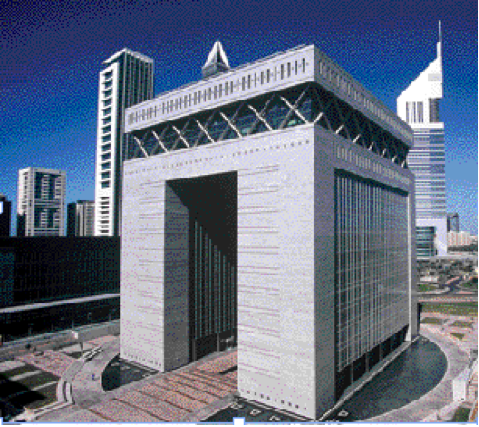
It has been known since last year that Solidere waspreparing its “coming out.” Solidere International (SI) willbe registered at the Dubai International Financial Centerwith capital of just over $700 million (representing a sharevaluation of $770 million). Solidere will have a 37.2% stakewith management control and the ability to consolidate SIresults into its books.

Everyone wants a piece of SI

These were the highlights of the ultimate investment planwhich Solidere chairman and CEO Nasser Chammaa put in frontof shareholders last month, asking for and getting,authorization to pour $216 million of company cash into theSI capital through a private placement in order to gain thecontrolling stake that the Lebanese company sought.

Besides the cash contribution, Solidere also has equity inSI as its sole founding shareholder with 1 million shares.Documents show that this stake was boosted from $50,000, or5 cents per share, to $70 million, or $70 per share, invaluation since Solidere assigned to SI its portfolio ofinternational projects (both signed and under negotiations)along with 25-year rights to using the Solidere brand nameoutside of Lebanon. This added contribution settles thetotal valuation of Solidere’s interest in SI at $286.4million.

The over $485 million in remaining SI capital has beensourced from investors who signed for shares in the privateplacement, which was lead-managed by Egypt’s investmentbank, EFG Hermes. During the one-month final promotion andsubscription period for the private placement from May 18,demand was high, exceeding the capital sought. “Demand was alittle over $950 million for the $700 million,” said KarimAwad, executive director at EFG Hermes Investment Bank, toldExecutive.

Awad said the majority of appetite for the placement camefrom regional investors and funds from western countries.Besides citing unspecified “significant demand from westerninstitutions,” he named Lebanon, Saudi Arabia, Kuwait, andQatar as originating countries for subscriptions in theprivate placement.

While Awad would not divulge names or contribution sizesof SI investors, Qatar’s Salam International Group has madeno secret of its ambition for a piece of the pie. The group,which among other things has activities in real estate andconstruction, authorized an SI investment at $6 million.Presumable the biggest single shareholder apart fromSolidere is a major Saudi investor, who early on pitched in$180 million, Chammaa revealed at the shareholder assembly.

According to the information Executive could acquire aheadof the company’s big announcement of establishing SI —scheduled for June 30, after this issue went to print — thenew company is seeking to engage in three areas of activity:urban planning; development of land and real estate; andhospitality projects and hotel management.

Many specifics on the three intended fields of business orcorporate departments of SI are still confidential butSolidere already has projects in each of the three areas inits pipeline, giving a hint of its regional andinternational possibilities. What can be deduced fromofficial Solidere papers obtained for Executive is that theprojects are diverse, complex structures in operational andfinancial engineering.

The three known projects which Solidere already discussedearlier in 2007 are the Al-Zorah project in the smallest UAEemirate, Ajman, and the agreement with Egyptian firm Sodicfor two urban centers in the Greater Cairo region: Katameyaand Sheikh Zayed. When the Ajman project was first announcedin January, ambiguous information provision led to reportsof a $6.8 billion investment participation by Solidere inequal partnership with the local government.

Information currently being presented by the designatedCEO of SI, Mounib Hammoud, showed that the Al-Zorah projectis in fact an equal partnership between the emirate and theprivate sector with a 50% stake holding by SI andco-investors, of which SI’s share will be 25%. The companydeveloping Al-Zorah as Ajman’s a new seaside urban core,will be capitalized at $1.1 billion (AED 4 billion), ofwhich 53% will be an in-kind contribution of some 12 millionsquare meters of land by the government.

SI will be handed a 3% stake directly from the emirate asfree equity stake and will solicit 25% of the total capitalfrom co-investors at a premium to par, in lieu ofarrangement fees. SI’s direct capital contribution to theAjman project company will thus require supplying a 22%stake from cash, for which the company will use proceedsfrom its private placement ($212 million according to thecorporate document,) and fee revenues collected fromco-investors. Expected SI revenues from Al-Zorah will include 4% of annual profits, property managementfee income, and proceeds from sales or leases of land andreal estate — with a total internal rate of returnprojection for SI equity at 32%.

In the Egyptian partnership, Solidere has entered intoagreements with real estate developer Sodic to masterplan,develop and property manage the two Cairo projects. Sodic – 6th of October Development & Investment to give it its fullname, is a company with partial government ownership andambitious projects. As remuneration for its troubles indeveloping two of these projects for Sodic and adding theSolidere brand name to the marketing mix, SI will beeligible to claim fees of between 7% and 10% on thevalue-added in land and real estate sales and leases andhave options to acquire one plot in each project at a preset(lower) benchmark price. All in all, the package represents$64 million in projected revenues for SI.

Partnerships make up bulk of in-kindcontribution

As the Ajman and Sodic partnership agreements werenegotiated and signed by Solidere, they constitute the bulkof the company’s in-kind contribution to the capital of SI,assessed by Solidere as a $70 million value. Soliderereasoned this as an 85% discount on the valuation for therights on the two signed projects, with the company’s brandname and expertise thrown in moreover as freebies for anirresistible package.

But marketers of irresistible offers always add even more— much more, all for the same excellent value. In the SIproposition, this includes memoranda of understanding, ashort-listed project bid, and a pipeline of potentialprojects. Of the MoUs, the most important one is forconstruction of a resort in the Turkish vacation region ofBodrum, foreseeing an SI equity stake of 50% in a jointventure to own over 250,000 square meters of land anddevelop residential units and hotels, for which SI plannersearmarked an investment of $45 million from the privateplacement proceeds.

A second MoU is in the hospitality business, where SIplans are to create a unit called Solidere InternationalHotels and Resorts (SIHAR). This subsidiary would becapitalized with $25 million and it has preliminaryunderstanding with international partners for developing andmanaging hotels and resorts under the name Nikki Beach, aFlorida-born brand with a flavor of Miami Vice and a claimto jet-set luxury. One partner in this venture, aiming torun five to ten hotels in the Mediterranean and Gulfcountries, reportedly would be Jihad El Khoury,Marbella-based entrepreneur.

Then there is a bidding partnership between Solidere andFrench group Vinci Construction in a tender for landreclamation and development project in Monaco with expectedcost of around 2 billion euros. If this consortium wins theproject against four other pre-qualified bidders, it would give SI its first attention-commanding project in a European real estate hotspot, evenif the SI stake — so far undisclosed by Solidere — in theproject company would be less than 50%. To round it all off,Solidere said it has projects in Saudi Arabia in itspipeline and has been exploring opportunities in Oman,Algeria, Morocco, and Croatia.

There can be little doubt that after — and perhaps evenbefore — Solidere’s management team received shareholderapproval to amend the corporate bylaws, the company hasrapidly made overtures to high-octane partners in the urban development business and becometouchy-feely with a broad circle of important public sectorleaders, well-placed construction companies, resortdevelopers and hospitality entrepreneurs.

Take Vinci for example: the French partner in the Monacolandfilling and real estate consortium, has carried outthree significant projects in Monaco in the past and hasextensive experiences in the Middle East and theMediterranean with completed projects on the Arab peninsula,although many date back to the third quarter of the 20thcentury. Vinci’s most recent big contract in the region isparticipation in a consortium for the third line of Cairo’ssubway, signed this year.

In Awad’s view, the Solidere name has greatly helped thegenesis of these relationships. Sodic, for example, broughtSolidere into its project specifically because of itsbranding power, he said, adding that the creation of theinternational unit in Dubai also emphasized the company’scapabilities while at the same time did not scare offinvestors wary of the risks associated with the parentcompany’s home base in Lebanon. “The new company willcapitalize on the good points, the capabilities and brandname, without the political risk,” Awad cheered.

Even without the hardships of the past 12 months that havebeset Lebanon and left their mark on the Beirut CentralDistrict (BCD), Solidere’s most famous urban project todate, the company’s desire for a new life in the largerworld is a highly rational move, given that its originalmandate for reconstruction of the BCD limited its geographicreach and necessitated a shrinking scope of activities asthe area’s land bank was finite.

Although private equity investors should be able to reapthe potential rewards of SI’s growth and exposure outsideLebanon, local shareholders, many of whom have sufferedhighs and lows since the Solidere shares were issued in1996, question how much and when they will be able tobenefit financially from the creation of SI. Chammaasweetened his request that shareholders should authorizecommitting $216.4 million of capital to the creation of SI,with a dividend announcement of $1 per share for the parentcompany — an amount exceeding the $0.84 earnings per sharefrom net profits stated in the 2006 annual report. Thedividend for the very successful 2006 is the largest sincethe company’s listing on the Beirut Stock Exchange and morethan 50% higher than last year’s payout; some shareholdersstill called it a bitter pill that management had pushed thepayout date to September and did not elaborate on therewards small share owners can expect from their investment.

Furthermore, the 2006 annual report — which provides ampleurban design details, architects commissioned for individualprojects and revised downtown zoning — was less expansive onthe benefits Solidere shareholders could expect for from SI,mentioning the plan only in one paragraph of theintroduction and in the concluding words of the chairman’sletter to shareholders as promise that external projectswill offer new sources of revenue “while avoiding to investany of your cash abroad.”

SI has a great opportunity to develop business but it willhave to prove itself in a region where other companies arealso seeking to exploit their planning expertise andincrease project experience. Solidere may have demonstratedits abilities and resilience but for years has also had theluxury of being pampered as the only fish in the sea.

Transparency remains an issue

While it has earned high grades for financial engineeringin the past three years, Solidere also has chronictransparency problems both with the public and stakeholders.“The company makes all kinds of land deals withoutdisclosing them and does not at all meet our expectations ontransparency,” said a Beirut-based financial analyst.Solidere has also gained a reputation for firing blanks whendealing with the public and its media spokespersons rarelybestow reporters with answers to their relevant questions.

The new venture will encounter more stringent publicscrutiny when it expands into highly visible projects inEurope. Well-capitalized real estate companies and hotelmanagement firms in the Middle East are on the rise and thisshould give SI great performance incentives throughcompetition. But the company may also find good partners andbusiness companions in firms with similar perspectives, forexample Jordan’s public sector-held Mawared corporation which is a joint owner (with theSaudi Oger group) in Amman’s Abdali urban regenerationproject and which plans urban planning and consultingactivities similar to those of SI through a new entitycalled Mawared International.

Whatever course SI charts in its first years on theinternational stage, Awad is sure that the new company has“a great upside potential.” Investors in the SI privateplacement can also be clear about their exit options with atime horizon of two to three years for a likely initialpublic offering (unless they decide to sell on the secondarymarket) .

Awad explained the timeline of the IPO and the fact thatSI, while not entirely a startup company because of itssigned contracts, will need to mature before going public.The DIFX, the bourse associated with the DIFC where SI isincorporated, will be the “logical choice” to list “butnothing would prevent us from listing elsewhere,” he said,adding considerations are still far from a point ofdecision.

July 1, 2007 0 comments
0 FacebookTwitterPinterestEmail
Banking & Finance

Insurance Lebanese Inertia

by Executive Staff July 1, 2007
written by Executive Staff

Lebanese insurance companies these days marvel that theyhave fared better than feared in the past 18 months, butknow that nearly a year of economic paralysis has not passedthem by. The woes range from corporate clients that reduceor renegotiate their policies to individuals who stop payingtheir premiums because they are leaving the country. Thisbrain drain of the best talent is also affecting insurancecompanies directly, putting strain on their human resources.

Sector results for 2006 were respectable because the firsthalf of last year was a bumper period and the optimistictime immediately after Israel’s summer war against Lebanonalso brought good business for insurers. With the recentseries of bomb attacks against commercial areas aroundBeirut, demand for war and terrorism covers has kept thephones ringing — although many companies looking for theprotection quickly drop their inquiries as soon as the firstshock from a bomb wears off and, more importantly, when thehigh costs for those special covers sink in.

Downsizing insurance covers

Jamil Harb, secretary general of the Lebanese insuranceassociation ACAL told Executive the insurance industry issuffering the same stagnation in the economy in general hasseen since the 34 days of war between Israel and Hezbollahthat began last July 12.

“In figures, there’s been zero growth for the sectorstarting in the middle or end of 2006 until now,” Harb said.“Growth is zero as it is for the whole economy. The wholesituation is blocking the economy. You have no newbusiness.”

The downsizing of insurance covers affects retail andsmall business policies such as clients switching to alesser care class in their hospitalization plan or trying tocut costs on motor insurance by going with third-partyliability insurance instead of all-risk, said FatehBekdache, general manager of Arope Insurance.

“The problem is the lack of confidence. People don’t see theend of the tunnel and have put everything on hold until theend of the summer,” he told Executive.

According to Bekdache all major trade and industrialcompanies have been shopping for terrorism and war coversbut the rates, which are dictated to at least 90% byreinsurance companies abroad, are so steep that only a verylimited number of companies sign up for policies, oftencoming with restrictions that need careful examination ontop of requirements to pay upfront for a substantial period,such as a full year.

Insurance experts said they had not heard of any majorclaims related to damages from the bomb blasts in May andJune. Five of the six blasts that have rocked Beirut and thenearby towns of Aley and Zouk Mosbeh since May 20 mainlydamaged businesses. If the cost of rebuilding after a blastis too high for already cash-strapped shop owners,businesses might be forced to close and cancel theirpolicies, said Ibrahim Muhanna, managing director ofinsurance consulting and ratings firm or Muhanna & Co.

Despite the admitted setbacks the industry will face inlight of the economic stagnation, Bekdache called it tooearly to forecast results for 2007. Much will depend on thesecond half of the year, he said, pointing to the trackrecord of insurance companies who have kept working throughthe thick and thin of last year’s war. Other insurancemanagers agreed, telling Executive that sector companieswill remain profitable and stressing the readiness of theLebanese to return to an optimistic mood on short notice.

The Lebanese insurance sector is something of an anomalyin the Arab world. The small Mediterranean nation is home to55 insurance companies, or nearly 14 for every one millionpeople. That is 10 more per million than in Jordan.

The industry in Lebanon is rife with minimally capitalizedsmall companies controlling slivers of the market, Muhannaexplained. “You have almost 30 companies (out of 55) thathave less than 10 percent of the premiums in the market,” hesaid.

According to data researched by his firm, the insurers inLebanon’s fragmented market are spending more onadministrative costs and client acquisition than otherinsurance companies in the Arab world. The expense topremium ratio for Lebanese insurance companies was 48% in2004 and 47% in 2005, compared to the 32 and 31% Arab marketaverages for the two years. Lebanese insurance companiesalso pay much higher commissions, 19% of premiums in 2004and 21% in 2005. The Arab market average was 6% in 2004 and8% in 2005.

The sector is also the least transparent in the Arabworld, Muhanna argued, pointing to insufficient disclosurerequirements. A very large share of local companies whichthe ratings firm approached with information requests overseveral years did not provide data that met the firm’srequirements for a rating, resulting in the fact that only18% of the 55 companies are rated, compared with 90% in bothJordan and the United Arab Emirates.

ACAL — which has long made it its target to improve theinsurance awareness of Lebanese consumers and lift thesector’s image to new heights — is alert to enter 2007 withnew determination to make the sector more transparent andenhance corporate governance.

In a practical measure of promoting corporate governance,ACAL in May organized a workshop where representatives ofthe Lebanese Transparency Association and the InternationalFinance Corporation discussed the Lebanese Code of CorporateGovernance and the benefits of more transparent businessleadership.

The workshop’s presentations showed that best practices arelinked to structural issues such as proper registration ofshares, board composition, and auditing practices which allcan have positive implications for sourcing funds andfinding investors. The legally driven arguments forcorporate governance were backed by practical examples. “Anycompany is lucky if it goes through the corporate governanceexercise before it is obliged to do so by the authorities,”the general manager of a regional insurance company toldindustry colleagues, adding that improvements in corporategovernance enabled the head office to expose a case ofinternal fraud at a branch office with at least $5 millionin damage to the company.

ACAL takes action

Lebanon’s insurance association has ambitious plans inmore than one direction, which it hopes will strengthen thesector and improve its internal communication andinteraction with the country’s public. Steps in the newdirection were agreed upon last year and included a revisionof ACAL bylaws to establish the position of secretarygeneral, enhance the work of technical committees, andstreamline election procedures.

To ease the collaboration of insurance stakeholders, theassociation is working on projects for arbitrationprocedures and on hammering out a voluntary code of conduct,in addition to seeking an increasingly proactive role inrepresenting insurance interests to ministries and theInsurance Control Commission. For a beefier interaction withthe public, ACAL this summer revamped its website andstarted publishing regular annual reports, flanked by anewsletter.

Although insurance performance in Lebanon made decentprogress in the past decade, aided by a gradual overhaul andrenewal of the relevant legislation, greater progress wasblocked by fragmented interests and extraneous factors.Insurance industry leaders say they don’t want to blamecircumstances and are aware that more can be done.

“We have a clear view on what our sector should provide toLebanon,” ACAL president Elie Nasnas told Executive. Thesector, which has pioneered so many insurance products andservices in the Middle East, wants to initiate solutions athome and, in a spirit of realistic targets, re-establishitself as insurance hub if not for the whole region then atleast for the Levant.

July 1, 2007 0 comments
0 FacebookTwitterPinterestEmail
Lebanon

Retail Sales and bombs don’t mix

by Executive Staff July 1, 2007
written by Executive Staff

Since last year’s deadly July War, followed in December bythe opposition’s permanent protest movement, the recentsechaurity problems and the fighting in Nahr al-Bared,Lebanon has been the victim of a “series of unfortunateevents.” One of the many sectors to suffer from the burdenof insecurity is the Lebanese retail market, seemingly adinfinitum condemned to face challenge after challenge. Theposh Beirut Central District (BCD) and the notorious Beirutnightlife have taken a rd blow, as tenants, exclusiveinternational brands and hip eateries alike slowly witheraway, with most balance sheets and performance figures inthe red. Executive looks at the annus horribilis 2006/07from a retailer’s perspective.

By mid-July of last year the exceptional 2006 forecast of1.6 million tourists had slowly melted down as “precisionbombs” targeted Beirut’s suburbs and Lebanon’s southernregions. According to Marwan Mikhael, advisor to theminister of economy, the 6% growth figure predicted insteadmorphed into a gloomy -1% mark by the end of 2006. The levelof exports — up by 50% before the war — averaged 20% by theend of that year. Dovetailing the morose situation, yearlytourism figures fell by 6.8% in 2006, and even 17% comparedto 2004. “Imports, which are good indicators for sluggishdemand, only increased by 0.6%,” says Mikhael. Anotherlinchpin of retail economy, the CPI (consumer price index)increased by 7%.

Beirut Central District’s woes

The Beirut Central District, a Lebanese economic landmark,came timidly to life after the end of the war. Yet scores ofstores remained empty, with shoppers choosing to stick tosurroundings closer to home. “I believe however, that theBCD troubles have their roots in Solidere’s approach of along time ago. Since its inception, the BCD always had anextremely high turnover rate, with an average 70 businessesclosing down against 80 setting up shop in the area,” saysRaja Makarem of Ramco Real Estate Consultants. After thewar, the lethargic state of downtown affairs could also beattributed to its clientele demographic, as it is composedmainly of Arab tourists, who literally vanished while localsmigrated to areas such as Gemayzeh.

On the retail level, Nadim Matraji, owner of Gant stores,agrees that the situation resulting from the war is dour,confirming a 70% drop in activity, with the number of clientvisits falling to 50%. “Nonetheless, we were able to keepour loyal customers,” he adds. As for the Italian franchiseBenetton, its launch in Lebanon coincided exactly with thebeginning of the conflict. “The war and the blockade forcedus to close our stores for a month. As a result, themerchandise came in too late and the Back-to-School seasonwas simply cancelled, as the store’s middle and upper classclientele were fleeing the country,” says Walid Matta, thecompany’s GM. Dora Jurdy (Georgio Armani) relays a similaraccount: “During the course of the conflict, our stores wereclosed for a month, leading to a 70% fall in turnover, sincewe rely heavily on the Arab tourists.” At Paul & Shark salesplummeted by 70% with clients too scared to visit theoutlets, according to the company’s Grace Assaf. JamilDargham at Omega, estimates that his turnover decreased by50% after the war, the luxury brand’s Gulf clientele havingbecome an oddity. At Eden Park, owner Mazen Mussalimexplains that he was able to recover some of the 90% drop ofthe July and August sales figures, thanks to a client basemostly made up of Lebanese.

As if the July War had not been enough to curb dwindlingprofit margins, a few months later it was followed bymassive protests held in the BCD area. Paul Ariss, presidentof the Restaurants Syndicate, paints a gloomy picture ofthis period. “Up to 30 downtown eateries had closed downpermanently, 40 were waiting for better times to come, 15were opened only for lunch and another 15 for lunch anddinner.” According to Ariss, Solidere acknowledged the trendand lowered costs by 10-20%, while private real estate owners negotiated new paymentterms with tenants. As a result of downtown’s lockdown,expansion was noticeable in some areas such as Gemayzeh,Hamra, Verdun and Kaslik. “At the time, activity in Verdunprobably increased by 30 to 40% with Gemayzeh and the ABCMall in Ashrafieh having a greater share of the cake,” hesays.

The reshuffling of the business and shopping scene alsotranslated into the real estate sector with demand forretail space in downtown Beirut near its nadir. However, theoffice rental segment escaped the misfortunes befalling therest of downtown. “There is a shortage in office spaceavailable for rent, which makes meeting the demand ofinternational companies, mostly American and European aswell as NGOs, very difficult,” underlines Raja Makarem. Withsales prices remaining at $4,000 per square meter, he pointstoward the migration taking place in Beirut. Businesses moveaway from the BCD into other areas, namely Kaslik, Verdunand Hamra. “Many businesses, which had opted for await-and-see approach during the demonstrations, have nowdecided to permanently close their businesses even if thismeans loosing on investments they’d made. I guess that’s thegeneral feeling now,” says Makarem. The realtor alsobelieves that rental estimates are currently very difficultto assess in the BCD area, as demand is simply non-existent.

On the other hand, in other areas the demand for rentalspace remains surprisingly healthy. Ramco confirms at leastone weekly request for the Hamra area, mainly asked for byfranchises. “One has to keep in mind that, whatever thecountry’s general situation, Hamra remains a major businessdistrict, holding within its grounds four universities, morethan 200 businesses and many hospitals with thousands ofpeople flocking in every day,” says Ramco’s GuillaumeBoudisseau. Restaurants such as Tabkha, Noodles, and BuffaloSteak House have also decided to open soon in the area whererental prices reach as much as $650 per square meter.According to the real estate company, Verdun is also quitein demand, a trend slowed down, however, by the limitedsupply for prime outlets. “Franchises usually require groundlevel outlets, which explains why so many underground orfirst floors stores remain empty,” underlines Baudisseau.The real estate sector’s progress comes as a surprise giventhe current political and security problems. The Lebanesenewspaper L’Orient Le Jour even reported a 30% spike inproperty prices. “The trend can be attributed to the obvioustrust the Lebanese hold in their economy,” says Makarem.

Some retailers better off than others

Still, retailers’ accounts sway between desperation, hopeand fatigue. For Virgin’s marketing manager Joanne Karkour,2006 was the year of great hopes as 1.6 million touristswere expected to visit the land of the cedars. Whendemonstrators congregated in the heart of Beirut, theneighboring Opera store — the company’s flagship outletlocated in the BCD — had to close down for over two weeks.The fall in sales at that store was at least twice higherthan in other points-of-sale. “Compared to 2004, last year’ssales figures at Opera store plummeted by nearly 50%, whilein 2007 sales fell by an average of 55% compared to 2006,”says the executive. Another significant indicator, footfallfigures at the Opera store — which represent under normalcircumstances twice the ABC overall store’s — reached a mere30% in 2006. This indicator can be put in perspective whencompared to the size of the Opera store, which covers asurface of 3,500 square meters and, at normal times, has atotal sales share that is twice that of the ABC and CityMalls cumulated. “Thus, it is difficult for ABC and CityMall to cover the sale loss of the Opera store althoughtheir turnover was quite satisfactory last December,”Karkour explains.

For Matraji the recent events have translated into salestaking a 50% nose dive, as people avoid wandering away fromtheir places of residence. “The security-related events have put a hold on any future plans. We hadto postpone one big project as well as the introduction oftwo new brands,” complains the manager. According to Matta,Benetton’s Saida and Tripoli outlets have taken the hardestblow, principally in the southern city where the store islocated close to the Taamir area, which had seen unrest inrecent months. The GM acknowledges that although 50% ofcompany’s targets have not been met, two new stores arestill underway.

At Georgio Armani, the season that had started on thebright side was brutally brought to an end with the Nahral-Bared fighting and the bombs — the Emporio Armani storeis located on the street where the Verdun bombing occurred—, leading to a 90% loss in activity. “We had to reducemerchandising by half to adjust to the situation, as well asabandon the marketing campaign we had scheduled,” saysJurdy. Assaf indicates that Paul & Shark sales have beenplummeting by 60%. At Omega the recent events have inducedan 80% decrease in sales. Robert Sayegh, owner of the ABCMall’s Mont Blanc store, reckons a 50% decline in sales,accelerated by the recent bomb targeting a parking lotadjoining the mall.

Grace Sehnaoui, owner of international brand franchisesTod’s, Vilbrequin and Hogan, estimates turnover to havecollapsed to 25%. “People are afraid to visit the BCD whereour stores are located, although the area remains much saferthan any other thanks to heightened security measures,” shestates. The Nahr al-Bared battle and the bombings, inaddition to the effects of the war, have forced her torenegotiate quantities, a situation that might hinder thefranchise agreement on the long run.

Sehnaoui is a typical example of Lebanese resilience. “Asthe stores closed down for a month during the war, we movedour merchandise out to the storage house, and then literallyfollowed our clientele from one safe area to the other suchas Broummana, Faraya and Jounieh. That was a huge headachein terms of coordination! However, we had to mark down ourmerchandise to be able to sell it, which somewhat affectedsomewhat our image.”

On the other side of town, Eden Park sales shrank to 20%during the month of May and 50% in June. “This drop mightalso be attributed to the proximity of our store to the ABCAshrafieh Mall next to which a bomb went off,” saysMussalem. At ABC Mall, apparent target of the recent bombingspree going around Lebanon, damages were repaired rapidly,with stores going back to normal the next day. “We’ve notwitnessed any tenant migration. Quite the contrary — newstores such as Lee Wrangler, Style Express, and Starbucksare still scheduled to open,” says Tania Ezzedine. TheLebanese company, which is also expanding in Amman, iscurrently renovating its Dbayeh flagship store. “We’re notpostponing any local investment and did not loose hope inour homeland,” she concludes.

The Demonstration effect

Like in any other crisis, one man’s misery can makeanother’s fortune: during the demonstrations, shopping areasaround the country benefited from the deadlock, luring informer downtown clients who shunned away from the cloggedcity district. “Ashrafieh was the most popular destinationamong malls while the Hamra area also improved much,” saysRamco’s Raja Makarem. Real estate agent Raymond Barakatcorroborated this assessment. According to him, in Kaslikdemand for rental space picked up by 40 to 50% during thedemonstrations, as Kisrwan and Metn rode the wave with a 20%increase. Unfazed, Makarem pointed out, however, that demandin Kaslik predated the demonstrations, and was actuallybolstered by the regional presence of the Azadea Dahergroup.

In Verdun, Mazen Kharazallah, manager of 730 and 732shopping malls with over 100 stores, estimated the spike incirculation to have reached 90%, with peak activityoccurring mainly on the weekends. “At least two people wereinquiring about vacancies. As for tenants, their activityhad improved by as much as 65%.” As one might expect, agrowing demand combined with limited supply usually drivesprices up. According to Barakat, this was best illustratedin Kaslik where prices increased by 25%, as well as the Metnregion where the snowball effect reached 20%. In Beirut,Hamra also recorded rents moving up by 20%. “Prices inVerdun, already quite high, did not really increase asdemand was satisfied by empty outlets available for rent,”says Makarem.

Although shop owners seemed to be fleeing the BCD enmasse, the migration was not permanent. Makarem believesthat the trend can be reversed: many businesses formerlylocated in the BCD have spent an average $1000/square meteron renovation costs and were not really prepared to forgotheir leases. “However, since the Nahr al-Bared events, most of them are not willing to wait anylonger.”

On the larger retail and service industry scale,consequences of the downtown lockdown were experienceddifferently. The big winners were undoubtedly restaurantsand cafe chains, which could swiftly adapt to the migratingtrend. Whether in Verdun or at the ABC Mall, eateries werebustling with activity. Georges Helou, manager at Casper andGambini’s, confirmed rumors of the chain’s BCD venue closingdown, and in May announced the opening of a branch inVerdun. “We still enjoyed similar levels of visits for moststores. The City Mall venue and the whole mall sector onaverage were doing much better with turnover boosted by 25%since the last demonstrations, but I would not go as far asimplying a definite relation between the two events,”explains Helou.

Alain Maroun, manager at Pain Quotidien, witnessed asimilar growth in sales as new faces flocked to the smallVerdun café. “With a 70-80% spike in activity, we didextremely well during the week,” he says.

Lina’s, another chain famous for its ‘sandwicherie’culture, modified its strategy, following clients where theycould be found. According to Sami Hochar, Lina’s GM, salesat the BCD venue fell by 75% when demonstrations started,stabilizing later at a mere 45%. On the other hand, itsAshrafieh café boasted a 50% increase in sales, the one inHamra 28%, and the Dbayeh branch 7%. The newly-opened Verdunand Kaslik venues were also performing extremely well.“However, customer purchase behavior has been affected bythe prevailing situation with ticket prices per personloosing up to10% of their initial value,” indicates Hochar.

On the retail side, chain owners adopted a more negativestance as the sector showed contradictory results from onemarket segment and region to the other. Dany Hani, managerand owner of Maria Pino, underscored the negative impact ofwar and demonstrations causing activity to abate by anaverage of 50%. “Gulf tourists, who constitute 30 to 40% ofour client base, have avoided shopping in Lebanon. Toreverse the local trend, we have expanded of late in variousmarkets such as Riyadh, Kuwait, Jordan, Dubai, and the USA.”

Karim Saadeh, operation manager at Mario Bruni, said thatsales at its BCD outlet have dropped by 75% during thedemonstrations, while Kaslik witnessed an increase of 21%,and the Verdun store even reached 45%. In addition, thecompany beefed up its presence abroad, with stores incountries such as Jordan, KSA, Egypt, Syria, and Romania.

On the clothing retail level, the Azadea group, withinternational brands such as ZARA, Bershka, Pull & Bear,Oysho, Massimo Dutti, Mango, Promod, Pimkie, Extyn, MaxMara, Marella, Pennyblack and Columbus Café, admitted thatturnover had been affected by the permanent protests andblockade, its sales figures improving conversely in certainareas such as Verdun and Kaslik. “The number of foreignershas decreased tremendously but no major change has beenobserved in the purchase behavior of the local customers atthe time,” agreed Said Daher, the company’s general manager.

On the regional level however, the prevailing situationvaried significantly. In Kaslik, businesses seemed tooperate on the brighter side of life, as Bedik Sarsonian ofZinnia could attest to a 10% improvement in turnover. “Wehad our clientele in Verdun and the unstable situation hadnot really affected their purchase behavior, but we had topostpone opening our BCD store,” he says. CK Jeans storemanager Marwan Salameh pointed out that business improved byup 20% with customers increasingly avoiding Beirut. DarineMoradian of Legend announced a 10% raise in sales, a figuremirrored by Lina Chidiac for Virile.

At the ABC Mall in Ashrafieh, Jean Mansour of Houdoumexplained the 50% drop in sales. “Although the overall mallactivity improved significantly at the time, this did notmean that people were buying,” he said with a derisivesmile. Liberto store manager Evy Bassim agreed, estimating adecrease in turnover of 30%.

The situation in Hamra seemed even bleaker, although thebusy streets were jammed with cars until late hours. GhassanHabayla, the store manager at Saint Michel, estimated hisdecrease in sales to have reached 60%. Hussam Dana, ElDorado’s store manager, explained that he had to rescheduleopening hours and close at 9:30 p.m. instead of midnight.

In Verdun, testimonials conflicted as some stores sawtheir turnover follow a rising trend while others complainedof deteriorating profit margins. Youssef Kaaki, manager atJack & Jones, estimated increase in sales to 30%. Luxurygoods, however, seemed to take the hardest hit. Samer Rifai,manager at Amore, had to face activity dropping by up to100%. Lina Kabbara of Oilily, a children luxury brand,shares his grievances, which emphasize the harsh realitiesof a negative business environment resulting from thepolitical upheavals.

July 1, 2007 0 comments
0 FacebookTwitterPinterestEmail
Comment

No outcry, just a whimper

by Gareth Smith July 1, 2007
written by Gareth Smith

Protests in the Islamic world were hardly a surprise whenthe Queen of England, Elizabeth II, last month awarded aknighthood to the controversial author Salman Rushdie. BothSunni Pakistan and Shia Iran summoned the British ambassadorfor a diplomatic dressing down.

In Tehran, Fars News Agency reproduced the religiousruling of February 14, 1989, from the late Imam RuhollahKhomeini authorizing the killing of the novelist as anapostate. But the overall reaction in Iran was surprisinglymild, with nothing of the popular outcry seen in Pakistanand no repeat of the embassy attacks last year after theDanish cartoons of the prophet Muhammad.

Times have changed since 1989, when Iran was at theforefront of radical Islam just ten years after the 1979Revolution brought down the Shah, regarded by Washington asimpregnable until toppled by a mass movement headed byAyatollah Khomeini.

The big difference is the rise of Wahhabi Sunni Islam inthe 1990s, including the emergence of al-Qaeda. This has notonly driven a deep wedge between Sunnism and Shiism buttaken the edge of Shia militancy.

Iranian president Mahmoud Ahmadinejad has tried his bestsince his 2005 election victory to return to the radicalismof the Iranian Revolution’s early years. But he isstruggling to undo all the compromises, at home and abroad,made in the 1990s under presidents Akbar Hashemi Rafsanjaniand Mohammad Khatami. Iran will assert its “rights,”especially on the nuclear program, and defend its friends,including Hizbollah, but fewer and fewer Iranian politicianssee themselves as in a war of existence with the West.

Hence, despite Ahmadinejad’s call for the Zionist state ofIsrael to be removed “from the page of history” (a quotationfrom Imam Khomeini) and his vilification by the US andIsraeli PR machines, he has achieved little other thanimprove his popularity rating across the Islamic world.

Just six months after Ahmadinejad was elected president,his reformist predecessor Khatami put his finger on theproblem in an interview with IRNA news agency where hewarned of “deviating and inflexible currents” in Islam.

Khatami did not name names, but few doubted he wascriticizing his successor. The nub of his argument was thefollowing: “I advise the radicals who are upset [Osama] binLaden is so well known in the world that no matter what youdo and how radical you become, you will be at the end of thequeue that bin Laden heads.”

Iraq has brought all this home. While some in the USadministration have been spinning the media that Iran issending arms westward, the reality is that the bulk of armsflow has been the other way round since US forces failed tosecure the Iraqi army’s weapons in the 2003 invasion.

The vast expansion of al-Qaeda’s violence in Iraq since2003 has alarmed Iran as a state based on Shia Islam withmainly Sunni countries to its west and east. As Ali Allawiargues in his recent book, “The Occupation of Iraq,” thepolitical situation in Iraq has driven a sizeable proportionand perhaps a majority of Sunni Arabs towards some kind ofpolitical Wahhabism.

Wahhabis have long attacked, as a violation of monotheism,the Shias’ veneration of long-dead Imams — those the Shiabelieve to have been the legitimate successors to theProphet Muhammad. And last month’s destruction of theminarets of the al-Askari shrine in Samarra, just the latestattack on Shia holy places in Iraq, showed the visceralhatred felt by Sunni extremists for Shia religiouspractices.

Iran itself has been largely spared the atrocities carriedout by al-Qaeda groups in Iraq, but long ago 1994 a militantSunni group based in Pakistan and possibly linked toal-Qaeda was suspected of the bombing of the shrine of theseventh Shia Imam, Reza, in Mashhad, killing 26 people.

In April, Iran was alarmed by an interview on the US-government’s Voice of America with Abdul-Malek Rigi, leaderof Jundullah, a militant group based in Iran’s Baluchistanprovince that ABC News reported was being secretlyencouraged by American in its bloody attacks on Iranianofficials and civilians.

All this leaves Iran ever more wary of Sunni radicalismand hesitant about putting itself at the head of any pan-Islamic militancy through issues like the Rushdie affair.

A former Iranian official once told me Tehran’s fear ofal-Qaeda meant it had no desire to distract its attention.“Al-Qaeda is like a dangerous snake,” he said. “If you seeit attacking someone who says he is your enemy, you will notattract the snake’s attention so it attacks you. With thissnake, there are no effective half measures. Either you killit or leave it free, as wounding it will make it angry andmore dangerous.”

Gareth Smyth is the Iran correspondent for the Financial Times


July 1, 2007 0 comments
0 FacebookTwitterPinterestEmail
Consumer Society

UAE – Multimedia boating

by Executive Staff July 1, 2007
written by Executive Staff

Dubai’s history has long been associated with the sea. Todaymore than ever, the city rekindles with its marine past.Driven by sustained regional economic growth and oilabundance, prestigious waterside developments such as thethree Palm developments, the World project, the Dubai Marinacomplex to name only a few, sprout from the desert sands.One company has taken close notice to the trend: the KnotikaMarine Mall (KMM) is a new concept in the marine industryoffering a wide range of products and services.

The mall is headquarters to more than 30 companies with acumulated 70% regional market share. “The Knotika Holdingcompany aims at filling the gap between suppliers andpotential buyers by providing products and services as wellas complementary activities such as learning centers as wellas media and events organization arms, all in relation withthe sea” says Wael Joujou, the company’s CEO.

The activities include a publishing house, a TV station, asea school, a marine store as well as the Knotika ExpressServices. The latter activity offers simple solutions forboat aficionados by combining financial services, insurance,transport and registration in one single package. “Thismakes the purchase process a much easier and enjoyableexperience,” Joujou points out. KMM showcases a wideselection of boats and manufacturers from all fivecontinents, promoting an efficient buying process from theneed identification to the last minute detail.

The young GM explains how boat owners have to undergo anumber of unavoidable steps, all requiring complementaryservices that are rarely provided by one single seller.Knotika intervenes at the beginning of the process byoffering first a wide selection of vessels, then helpingidentify customer needs, providing financial and insuranceservices as well as securing transportation or import forthe boat when needed. The company lends potential customersits technical expertise in screening and hiring crews,locating berths, ship maintenance and charter. “We aim tomake all those services come in one place at a guaranteedcompetitive rate. We also give customers insight into a hugeindustry and support their buying process, acquiring theirtrust by pointing them in the right direction,” underlinesJoujou.

Waterfront property developments boost boatsales

With the recent boom in waterfront property constructionin Dubai and a growing network of marinas expanding acrossthe Gulf area, the marine industry is receiving a tremendousboost, on which Knotika is capitalizing. “The UAE is still apremature market with tremendous potential, where theyachting industry takes at the moment the shape of a hockeystick curve,” says the company executive. He explains thatfor the time being supply remains higher than demand, themajor industry hurdle residing in the limited availabilityof marinas and berth. “The trend is supposed to reverse froma two to a ten year period with suppliers witnessing agrowth of 20 times their present turnover,” he adds.

“Although sales have progressed, the sector is stillunderdeveloped and clients have not been able yet to keep upwith supply,” says Joujou. On the other hand suppliers areincreasingly offering improved products and greaterselections as well as trying to educate buyers. New localentities are joining the industry race with internationalcompanies planning local production bases in the UAE wherelabor costs, land availability, low customs andtransportation fares can make prices more competitive by a20 to 40 % margin.

As for the products in demand in the UAE market, fishingboats are a big hit. “There is a potential market for sailboats … which combine a sport activity with yachting. In thecoming decade, we expect sail boats market share to increaseup to 50% while the remaining market is dominated bymotorboats. For now I would say actual sail boat marketshare is 5%,” Joujou reckons. In the CEO’s viewpoint,smaller boats can act as catalysts, appealing to the “newrich” executives with no real boating experience. Ideally,this activity will be practiced in the new WaterfrontProjects marinas and sheltered bays under development.

As the KMM pilot project proves to be a success, thecompany is expanding in the next few years, reaching the farshores of Jeddah, Qatar, Bahrain, Abu Dhabi, Kuwait andOman. A franchising option is also currently underway, withtwo contracts expected to be signed at the end of 2007.

July 1, 2007 0 comments
0 FacebookTwitterPinterestEmail
Editorial

The New Middle East

by Yasser Akkaoui July 1, 2007
written by Yasser Akkaoui

With the announcement of the creation of SolidereInternational, Lebanese entrepreneurship can once again holdits head high. Again, it has proved its credentials anddemonstrated that it can grow well beyond its borders evenwhen it is burdened by internal crises and politicalinstability. For international investors know that Lebanesebusiness acumen is resilient and operates outside mainstreamMiddle East rhythms and their commitment to investment inLebanese ventures has remained undimmed.

Solidere International is part of a more vibrant, robust andforward looking Middle East, a Middle East fuelled not byconflict and hate, but by a dynamic corporate vision and thehunger to compete at the highest level, to create newcorporate entities and deliver wealth, prestige, innovationand prosperity. Nowhere has this new spirit been moreevident, nowhere has demonstrated more the maturity and thediversity of the region or highlighted its remarkablecorporate development better than the Dubai InternationalFinance Center (DIFC), the Qatar Financial Center and thesoon-to-be built King Abdullah Financial District.

All are responding to a new wave of private equityinvestors, who are forging ahead in a regional bid todiversify what was a vulnerable, one sided, oil-basedregional economy. These hubs are responding to a newappetite. With wise public sector support and clearlydemarcated policy, they can complement one another and evenoffer opportunities for other similar hubs to spring upacross the GCC and across the Middle East.

And finally, into this new zeitgeist comes a new andexciting player, the Arab woman executive. More and more, weencounter senior team members and team leaders, not tomention CEOs, CTOs and CFOs, who are Arab women and who areexcelling in their position. And let’s not forget those Arabwomen who have made it as entrepreneurs, who have shed theapron for the two-piece and are taking their companies tothe forefront of regional and even global business.

They have all cut their teeth in a male-dominated world, inthis most male-dominated culture. They have shown thehighest level of professionalism, impressive business savvyand the desire to succeed in an environment in which toooften the male ego has been the driving force. They havecome in and shown us that a level head, an efficientattitude, determination and an analytical mind are more thana match for the often testosterone-fuelled bluster of theirmale colleagues.

Not only do we accept them, respect them and learn fromthem, they also make us rich!

July 1, 2007 0 comments
0 FacebookTwitterPinterestEmail
Comment

Return to Gaza

by Ben Wedeman July 1, 2007
written by Ben Wedeman

I hadn’t been to Gaza since January. The kidnapping of theBBC’s Gaza correspondent Alan Johnston on March 12 had madethe strip a no-go zone, and during the vicious rounds offactional fighting between Hamas and Fatah it was virtuallyimpossible to report from Gaza in a meaningful way.

But Hamas’ stunning victory in the final round of fightingon June 15, had changed everything. Fatah had been roundlydefeated, and my sources in Gaza told me we could return.

At the border, the scene, once we passed through the finalgate remotely controlled by Israeli border security, wassurreal. Around a hundred people — mostly young men with asmattering of women and children — were huddled by the sidesof the concrete corridor. There was a strong stench ofsweat, urine, human excrement and rotting garbage. Thepeople were mostly members of the defeated Fatah securityservices and their families, desperate to get out of Gaza. Afew spoke to us, and let us film them, and told us Hamas wasrounding up Fatah members and executing them.

Eventually, we passed through the first checkpoint manned byHamas gunmen, and the atmosphere changed. There was order.And the deeper we went into Gaza City, I was struck by howcalm the place was. There weren’t as many cars and peopleabout as usual, but I could hear no gunfire, and some storeswere open.

We drove by the villa of Muhammad Dahlan, once Fatah’s Gazastrongman, now residing in Ramallah on the West Bank. Dahlanwas Hamas’ arch-enemy, a man who, when he headed PalestinianPreventative Security, had mercilessly cracked down on Hamasduring the 1990s, and was believed to be the point man inFatah’s attempt to scuttle the Hamas-led Palestiniangovernment.

The villa was a shambles. Doors and windows had beenstripped, wiring yanked out from the walls. Everything thatcould be carried away was long gone. Three teenage boys werebusy loading up a donkey cart with the marble flooring.Nothing better symbolized the utter humiliation of the menwho were once the ruthless masters of Gaza.

What happened here is a revolution. For the first time in modern Arab history, a militant, revolutionary, Islamic movement has successfully and decisively overthrown the established Arab order. It was made possible by a variety of factors, including direct and indirect assistance from Syria and Iran, and by a single-minded determination to crush Fatah.

But the victory wouldn’t have been possible if Fatah hadn’tdone such a miserable job of managing the affairs of Gaza inparticular, and the Palestinians in general, over the years.When the leadership of Fatah returned to Gaza and the WestBank after decades in exile following the Oslo Accords in1993, they seemed more determined to profit from the new erathan create a viable Palestinian entity.

Their rule was characterized by blatant corruption,mismanagement, heavy-handed oppression and nepotism — allthe ills that have plagued the modern Arab world. They’rethe same ills which the Islamic movement — whether it be theMuslim Brotherhood in Egypt, the Islamic Action Front inJordan or Hezbollah in Lebanon — has been able to capitalizeon. Hamas proved its political power and popularity when ittrounced Fatah in Palestinian parliamentary elections inJanuary 2006. And it has matched its political prowess withmilitary might by crushing Fatah last month, even thoughthey were outmanned and outgunned.

Most of Fatah’s leadership in Gaza had long ago fled to therelative safety of the West Bank. Not surprisingly, almostevery regime in the Arab world is terrified by what happenedin Gaza, and is scrambling to do whatever they can to shoreup the bruised and battered leadership of Mahmoud Abbas inthe West Bank. They see themselves in Mahmud Abbas, and knowthat the forces that bolster them could, if faced by adetermined, focused, well-organized, and well-armed Islamicopposition, crumble just as easily.

That’s the big picture. For many Gazans, the return of orderis a positive change, or at least a relief after more than ayear of sporadic and intensifying factional fighting.

“It’s better now,” Ahmed, an old friend, told me. “Thefighting has stopped. We feel much safer. The problem is noone knows what will happen next. We don’t know if Israelwill allow food in. We don’t know if Israel will continue toprovide petrol or electricity. Today things are fine. Buttomorrow? We just don’t know.”

And that seems to be the worry of most people in Gaza. Thefuture only gets foggier. It’s a tiny, overcrowded patch ofland that always seems to be going somewhere, but neverarriving. One period of uncertainty is followed by another,and another and another.

Ben Wedeman is CNN’s Jerusalem Correspondent

July 1, 2007 0 comments
0 FacebookTwitterPinterestEmail
Comment

The media really are American

by Fadi Chahine July 1, 2007
written by Fadi Chahine

Jeremy Tunstall hit the mark when he called his book,“The Media Are American.” Two of America’s oldest mediaoperators — the News Service and Hollywood — possess a remarkable strength on the world media scene. For decadesthe news-service wires have been and still are dominated by theAmericans and partly shared with Europe.

Although the American slice of the world media pie iswaning due to the growth of the Internet, nevertheless, massmedia is still in the realm of players in the United Statesand Europe. Even today with the internet and the World WideWeb, news content and information is produced anddisseminated by the mainstream Western media outlets, likeReuters, AFP, AP, BBC, CNN and Dow Jones.

Even countries with a longstanding abhorrence for the Westare clients of the Western media. If one is to visit anynews service on a web portal from the Middle East and NorthAfrica (MENA) region, one will find that more than 75% ofnews content on those sites is a product of the dominatingWestern media.

Even smaller and more local print publications the regionuse and rely for their sources of news and information onthese media houses, both in English and Arabic. Majorpublications, like Al-Khaleej, Gulf News, Jordan Times,Tehran Times and others, carry lead stories on their frontpages that are produced by the Western and European press.Even the Arabic press is not immune. Reuters and AFP storiesconstitute at least 50% of news content inside the pages ofBeirut’s dailies Al-Nahar and Al-Safir and the London-based Al-Hayat or theSaudi-owned Al-Sharq al-Awsat.

Although Western news agencies do provide real-time newsfrom the MENA region, their coverage tends to be limited inscope, focusing on conflict, natural disasters and majorevents like the peace process and presidential visits.Insightful and local reporting about the major issuesaffecting regional countries, their economies and businessprospects, is scarce. Analytical and contextual reporting israrer still.

What’s more disturbing is that the American mediastructure, while it sustains a wide array of expressions,has become more concentrated in its control by a very selectfew of large corporations and a certain ethnic make-up. It is inevitable that these corporations/ethnic groupswill have their own agenda to influence the reader, as isthe case in the United States and some European countries.

The point worth emphasizing here is the fact the flow ofinformation for the MENA region is overwhelmingly flowingfrom the West to the East. As such, it is essential forthose of us in the media business to reverse this processand give the opportunity to the people of the Middle East tovoice their opinions, report their news and write theiranalyses for consumption in the Western world in particularand globally in general.

It is sad to see the Middle East with all its riches,culture, talents, creativity, liquidity and intellect,relying on what is mostly American news, discussing anddebating issues that will effect and shape everything aboutthe region. And what’s even worse is the fact that thepeople of the region, whether knowingly or unknowingly, area very active participant in this unfortunate event.

Today, news coverage has to be looked at from a globalperspective but reaching to the local level. However, sincea distinct characteristic of American journalism isisolation it leads a Western journalist to determine goodguys and bad guys in the Middle East based on preconceivedideas and prejudices, or simply straight-out bias in orderto follow a preset agenda.

Most people learn about national and international eventsfrom the mass media — newspapers, radio, and especially,television. Therefore, the media can contribute to conflictescalation, either directly or indirectly. Media coverage ofthe conflict played a key role in turning US public opinionagainst the Arabs, Palestinians and Muslims and in shapingthe current American foreign policies.

The media can also contribute to conflict de-escalation.As such, media houses in the Middle East, publishers,editors and reporters have the duty and the responsibilityto do all they can to reverse the flow of information andmake it stream from the East to the West. We must provide anaccurate view of the conflict through both words andpictures, and we should serve as an example for honest andunbiased reporting by providing both sides of the story evenif it points out some of our own shortcomings.

What the Middle East, Arabs and Muslims need today is anhonest, clear and transparent effort to create additionalspace in the Western media for their perspectives and fornews coverage produced by professional journalists who livein the region and who have the proper background andexperience to provide contextual, honest and fair reportingfor consumption in the Western world. The Jews at-large havedone the same successfully. What’s stopping the Arabs fromaccomplishing this very important goal? We either have thewill and courage or we don’t. There cannot be a grey line inthis struggle. Half-hearted attempts are not enough and willnot work. Clear and credible conviction is required andthose who have this conviction have the responsibility toact and to act now!

Fadi Chahine, is the Managing Editor of Zawya Dow Jones Newswires in Beirut


July 1, 2007 0 comments
0 FacebookTwitterPinterestEmail
Comment

Dreaming in St. Michaels

by Nicholas Blanford July 1, 2007
written by Nicholas Blanford

ST MICHAELS, Maryland, USA: Lebanon’s woes over the past twoyears have been keeping the Washington-based think-tankindustry busy as the country finds itself in the unenviableposition of being a point of convergence for most of thepressing quandaries besetting the Middle East — theArab-Israeli conflict, Iraq, Iran, terrorism, al-Qaeda andfundamentally the axis of resistance versus Pax Americana.Being a locus of multiple crises is bad for Lebanon butoffers plenty of food for thought for the many think tanksthat cram K, L, and M streets in the US capital.

Earlier in June, I was invited by a leading think tank toparticipate in a round table forum in which some 15 expertswere asked to brainstorm an ideal vision of Lebanon 10 yearsdown the road, identify the obstacles preventing that visionfrom being realized and offering suggestions to overcomethem.

The future aspiration for Lebanon derived by theparticipants was of a stable, prosperous, liberal democracywith a freewheeling economy and social welfare safety net.Whether all Lebanese would aspire to such a future forLebanon is questionable, but it certainly suited thecomposition of the group sitting around the table, mainlyWesterners including three Westernized Lebanese.

Still, the participants were in agreement that such autopian vision for Lebanon was most unlikely given thechallenges facing Lebanon both on both the short-term andlong-term.

Perhaps the chief obstacle raised by the roundtable was howto invigorate a sense of nationhood where Lebaneseprioritize loyalty to the state over loyalty to the sect orzaim. There is a will among some Lebanese, mainly theeducated young, to crack the stranglehold on Lebanesepolitics maintained by the neo-feudalistic zuama, be theytraditional landlords like the Jumblatt and Gemayel familiesor the post-civil war generation such as Nabih Berri and theHariris.

The independence uprising in spring 2005 generated for afleeting moment a hope among young street activists thatSyria’s disengagement from Lebanon would catalyze a generalreformation of the political system, giving rise to a newgeneration of politicians beholden to the state rather thanlocal sectarian interests. Of course, those dreams weredashed the moment the last Syrian soldier departed Lebanonthrough the Masnaa crossing and the leaders of the rivalMarch 14 and March 8 factions began cutting deals with eachother to ensure the re-election of themselves and theirlists in the parliamentary polls of May and June 2005.

Then there were the issues of Hizbullah and how to persuadethe Shiite resistance movement to relinquish its arms andserve first and foremost Lebanese interests rather thanfollowing a regional agenda. How to tackle and eliminatecorruption, Lebanon’s relations with the Arab world, Syriain particular, electoral and constitutional reform — allthese were discussed and debated.

For those of us who traveled from Beirut to attend themeeting, the tensions in Lebanon came with us. On touchingdown at Dulles airport in Washington, we learned of WalidEido’s assassination. We were on our way back home when newscame through that rockets had been fired from south Lebanoninto Israel, the first such incident since the end of lastsummer’s war between Hizbullah and Israel.

Yet the conference on the violence wracking Lebanon was heldSt Michaels, a resort for the east coast elite, besideChesapeake Bay, a two hour drive from Washington.

Lebanon felt a long way away when walking down the highstreet of St Michaels. The stars and stripes flags flutteredproudly from the front yards of simple houses of whiteclapboard and shingled roofs. Elderly married coupleswearing baseball caps, baggy shorts and polo shirts wandereddown the street, slurping on ice creams while gazing throughthe windows of a seeming endless array of shops with tweedynames such as Holly’s Haven and Three Crazy Ladies that soldpricey knick knacks. Huge SUVs that would humble the mostegotistical of Lebanese Hummer drivers ambled along thepristine asphalt roads at painfully slow — but legal —speeds.

Barely a car crawled through St Michaels without a yellowribbon motif stuck to the trunk carrying the demand “Supportour Troops.” Every now and then, a sign along the highwayrecorded that the next stretch was dedicated to the memoryof individual soldiers who had died in Iraq or Afghanistan.In one shop, a middle-aged man with steel-gray 1970s haircutand bizarre orange mirrored sunglasses extolled the virtuesof a new kind of body armor called Dragon Skin, apparentlypopular with troops serving in Iraq. “If I was deploying inBayroot, I’d accept no substitute,” he drawled.

After the sterility of St Michaels, it was somehowrefreshing to return to Beirut. As for the think tanksession’s future dream for Lebanon, don’t hold your breath.


Nicholas Blanford is a Beirut-based journalist and author of“Killing Mr Lebanon: The Assassination of Rafik Hariri and its Impact on the Middle East”

July 1, 2007 0 comments
0 FacebookTwitterPinterestEmail
  • 1
  • …
  • 572
  • 573
  • 574
  • 575
  • 576
  • …
  • 686

Latest Cover

About us

Since its first edition emerged on the newsstands in 1999, Executive Magazine has been dedicated to providing its readers with the most up-to-date local and regional business news. Executive is a monthly business magazine that offers readers in-depth analyses on the Lebanese world of commerce, covering all the major sectors – from banking, finance, and insurance to technology, tourism, hospitality, media, and retail.

  • Donate
  • Our Purpose
  • Contact Us

Sign up for our newsletter

    • Facebook
    • Twitter
    • Instagram
    • Linkedin
    • Youtube
    Executive Magazine
    • ISSUES
      • Current Issue
      • Past issues
    • BUSINESS
    • ECONOMICS & POLICY
    • OPINION
    • SPECIAL REPORTS
    • EXECUTIVE TALKS
    • MOVEMENTS
      • Change the image
      • Cannes lions
      • Transparency & accountability
      • ECONOMIC ROADMAP
      • Say No to Corruption
      • The Lebanon media development initiative
      • LPSN Policy Asks
      • Advocating the preservation of deposits
    • JOIN US
      • Join our movement
      • Attend our events
      • Receive updates
      • Connect with us
    • DONATE