
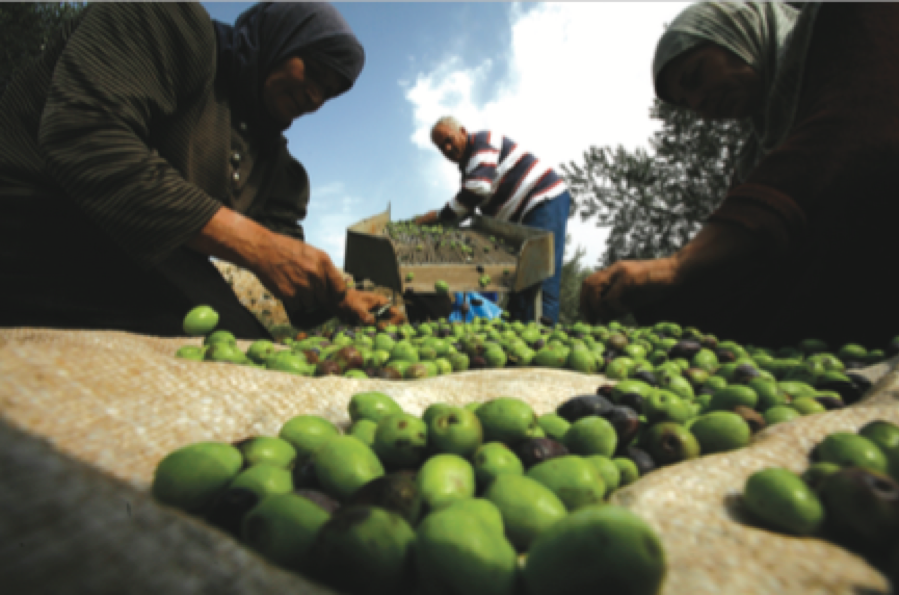
If Lebanon used its natural resources to its advantage, oil could be one of its main crude exports — olive oil, that is.
With the ideal climate for olive growing and a large expatriate community that prefers bottles of oil from home, Lebanon has the potential to stake a claim alongside gourmet olive producing countries such as France, Greece and Italy.
“There have been many attempts at export but it is fair to say that for the most part, Lebanese olive oil is underappreciated abroad and has yet to attract global consumers,” says Sabina Mahfoud, author of “Green Gold — The Story of Lebanese Olive Oil.”
“If it’s well packed, pressed and bottled, Lebanese olive oil is some of the best in the world,” insists Tony Maroun, general manager of Atyab (parent company to Boulos, Al-Baraka, Family and Virgo olive oils), which has half of the market share of branded olive oil in Lebanon. Even with his company’s success, Maroun still thinks the entire industry could do better. He suggests, “Lebanon should have a national campaign. The government should have advertisements [and] international exhibitions for Lebanese olive oil.”
Poor practice, poor production
Until now, the country’s olive oil industry, estimated at $72 million per year, has been characterized by inconsistent harvest seasons, outdated technology and production methods, poor marketing and a lack of standard quality control. In addition, rural migration to Beirut has left countless olive groves abandoned.
Lebanon produces between 5,000 and 15,000 tons of olive oil annually, with last year’s harvest, running from October to November, being at the smaller end of this spectrum. The large discrepancy year-to-year is due to a belief long-held by many farmers that olive trees don’t need to be pruned, irrigated or fertilized. They are traditionally considered naturally sustaining trees that need no care. Currently, more than 90 percent of olive groves in Lebanon are rain-fed. However, many experts contend that the best way to ensure consistent crops, and therefore reliable exports, is regular irrigation and pruning.
“The more you take care of the olive tree, the more it will take care of you,” says olive producer Youssef Fares, a fifth-generation olive grower from Koura, Lebanon’s top olive-producing area.
When the harvest is low, it is not uncommon for Lebanese producers to import oil from neighboring countries and label the bottle as “Lebanese” when selling it to foreign markets. Although the practice is relatively common, some producers worry this could affect the reputation of Lebanese olive oil.
“If it’s not a good season, Lebanese producers buy from Syria and Spain. That’s business,” says Bshara Shaker, an olive oil producer in the town of Aqtanit in the Bekaa Valley.
Shaker blames Lebanese olive farmers for the country’s inconsistent olive oil seasons, and thus the reliance on foreign olive oil. “Some farmers don’t work the right way to make their olive season big,” Shaker says. “If you go to Spain, Syria or Greece, you see the difference. You need to start at the grove, and prune and irrigate.”
All producers interviewed for this article denied using foreign olive oil.
Regardless of all the challenges the industry faces, Lebanese producers and consumers both consistently claim that Lebanon has the best quality olives in the world. In a country where foreign products are generally preferred over domestic ones, olive oil is the exception. Many people claim that olive oil from their village is the best and shun buying commercial brands from supermarkets.
There are approximately 100,000 olive farmers in Lebanon; a large proportion produces olive oil only for domestic (and often just family) consumption. Lebanese can form strong attachments to their native oil; most of the customers of Lebanese olive oil abroad are from the diaspora.
Olive producer Hussein Hoteit from Nabatieyeh says olive oil from South Lebanon is some 20 percent more expensive than from other parts of the country because the area’s large community abroad creates a higher demand for oil native to the South. But even Hoteit, a longtime producer from the South, doesn’t believe there is a difference between olive oil from different parts of Lebanon.
He says it’s the method of production that determines the quality. At the olive oil mills in the Nabatieyeh area, he points out what the producers are doing correctly and incorrectly: olives should be picked from the tree, not the ground; be delivered in boxes, not bags; be processed within 24 hours of arriving at the plant and stored in stainless steel and kept cool.
Hoteit says as much as Lebanese take pride in their olive oil, there remains a “lack of olive oil culture in Lebanon.” That is to say, many Lebanese may actually prefer lower-quality oil because they are used to the mild taste, as opposed to the strong, peppery extra virgin flavor. With this in mind, Hoteit is educating Lebanese about the difference between high and low-quality olive oil, — starting with restaurants.
“If we can convince restaurants to use the best quality olive oil, then tourists from the Gulf will notice, and they’ll buy Lebanese oil,” he says.
Currently, Gulf tourists account for the vast majority of visitors to Lebanon, but the region imports just a small amount of olive oil, most of which comes from Spain and Italy.
“The donor countries don’t help. They let Israel bomb us, and then give us free olive presses”
Unhelpful aid
Over the past several years, aid groups have worked closely with olive farmers and producers in Lebanon’s rural areas. The René Moawad Foundation, a local charity, has been supporting Lebanese olive farmers by providing up-to-date training and equipment. The foundation has promoted Lebanese olive oil at food fairs abroad, helping give the product some long-sought international recognition.
The project started in 2003, with funding from the United States Agency for International Development (USAID) and the Spanish government, which donated $2.5 million and $860 thousand, respectively.
But not everyone appreciates the effort. Randa Aractingi, who grows her olives in Hasbaya, near the United Nations’ Blue Line, says that supplying free equipment to olive oil producers creates unfair competition for entrepreneurs like her.
“Everyone around me has olive presses from USAID,” she says. “This equipment is going to people who haven’t invested time and money. It’s hard for me to compete when my neighbors are receiving this equipment for free.”
“The donor countries don’t help,” she adds. “They let Israel bomb us, and then give us free olive presses.”
Fuad Hashwa, dean of the School of Arts and Sciences at the Lebanese American University in Byblos, who has been working to manage olive oil waste water, agrees that aid projects for rural development are often counterproductive.
“They fail to sustain themselves, and then we’re back to square one,” he says. Instead, he suggests that creating community cooperatives would help sustain the local environment as well as the economy.
Cleaning the toxic olive waste water would allow farmers to have more fertile soil to grow more trees, and some of the treated waste could be sold for animal feed. Italy holds the international standard to which all olive producing countries aspire; this is where most of Lebanon’s top producers studied their trade and bought their equipment.
Although a small country such as Lebanon is unlikely to ever match the production scale of countries such as Italy, many producers see the potential in achieving a similar reputation for high quality olive oil. Aractingi adds jokingly that she sees a day when sophisticated people will say, “If you want to make tabouleh, use Hasbaya olive oil; for fatoush, use oil from Koura.”
