
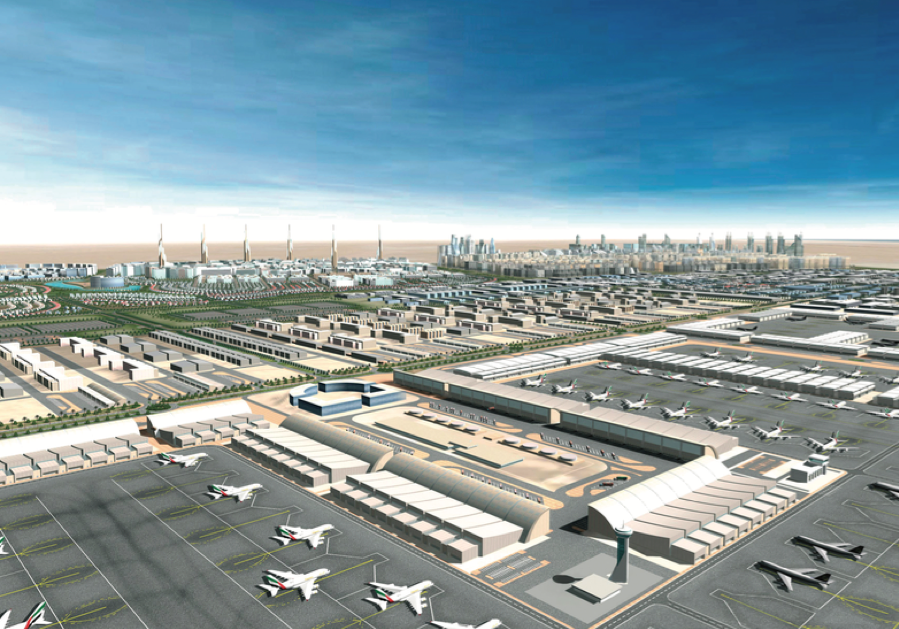
In a bid to become the aviation capital of the world, Dubai is investing more than $13 billion in civil aviation and aerospace industry projects as part of a master plan that extends to 2050. Neighboring emirate Abu Dhabi is also moving to get in on the booming aviation sector, with plans to spend up to $50 billion, but with such lofty ambitions there are always additional problems, such as a serious shortage of pilots.
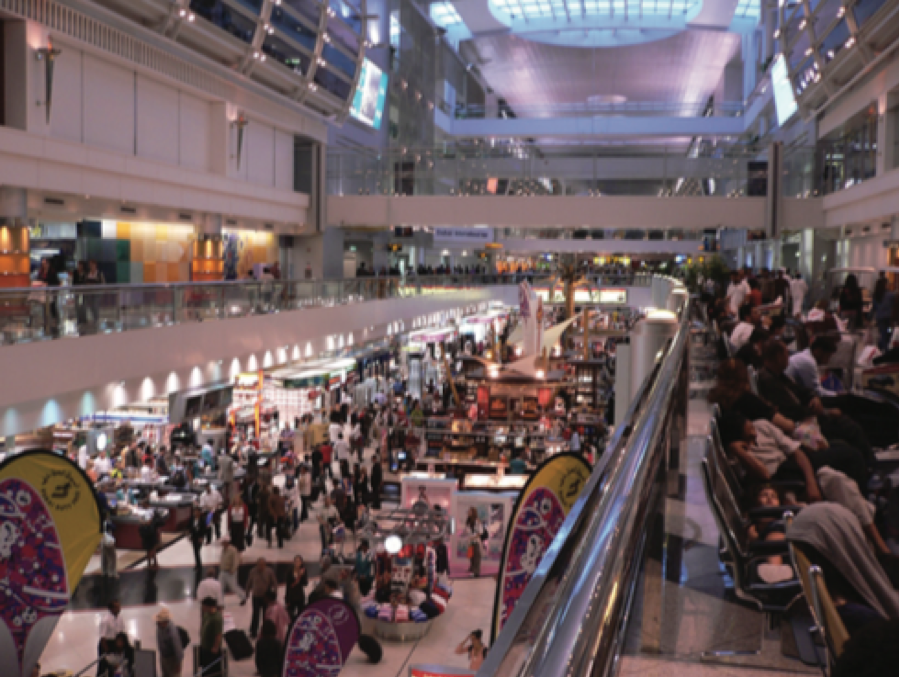
Dubai International Airport (DXB), the tenth busiest in the world in 2006 according to Airports Council International, is spending $4.5 billion on terminals and other facilities that will triple capacity by 2009 to 75 million, while the $33 billion Dubai World Central (DWC) will be centered around the world’s largest airport and cargo hub.
This heavy investment comes as the MENA region is set for the largest aviation growth globally between 2008-11, almost 40% higher than the world average, according to the International Air Transport Association (IATA). The region’s sector was also the fastest-growing in the world in terms of passenger movement in 2007, with a 18.6% growth rate, compared to 5% in Europe’s and the US’ 3% according to the Abu Dhabi Airport Company.
Spurring on Dubai’s decision two years ago to build the DWC, are rising passenger numbers, with 34.3 million at the DXB in 2007, up 19.3% on 2006 and the sixth consecutive year of growth above 15%.
Cargo has likewise spiked at Dubai Cargo Village, the freight facility for the DXB, handling 1.66 million tons in 2007, up 10.96% on 2006. Growth is attributed to the United Arab Emirate’s surging population, up 75% in a decade to 5.6 million, the 6.45 million tourists that visited Dubai last year — according to the Dubai Department of Civil Aviation — as well as the emirate’s growing position as a transport hub for the Gulf.
The DXB is extending Terminal 2 by 37,000 square feet to allow the terminal to handle 700 flights per week, of which 320 will be cargo. Terminal 3 is also under construction — several months behind schedule due to a shortage of raw materials — and is being laid out underground, some 20 meters below the apron and taxiways. Exclusively for Emirates Airlines, Terminal 3 will significantly ease congestion, with the DXB handling nearly a third more than its original capacity of 22 million passengers.
Fields upon fields of development
An estimated $33 billion is earmarked for infrastructure costs alone on the 140 square-kilometer DWC, a multi-phase development financed by the Dubai government, which incorporates the Al Maktoum International Airport (MIA), Dubai Logistics City, DWC Residential City, DWC Commercial City, DWC Aviation City and the DWC Golf City.
“It is geography that makes this vision possible with huge land availability in a prime location,” said Sheikh Ahmed Bin Saeed Al Maktoum, Chairman of Dubai City of Aviation Corporation-DWC. “The long-term benefits of DWC to the UAE, GCC countries and the wider region are phenomenal and will place this emirate firmly in ‘pole position’ for regional logistics, tourism and commerce.”
Neighboring Abu Dhabi, however, intends to spend $40-$50 billion for the building of new airports, according to the Centre for Asia Pacific Aviation, and turn Abu Dhabi’s second international airport, Al Ain, into a hub for aviation and cargo. The plan will also slot into Abu Dhabi’s recent announcement to build a new Capital District to consolidate the emirate’s position as the administrative capital of the UAE.
As in the case with Dubai, the decision to invest so heavily in aviation is being motivated by strong growth, with Abu Dhabi’s Etihad Airways posting a 40% increase in passengers during the first quarter this year, from 1 million to 1.4 million compared to first quarter last year, while cargo traffic was also up by 20%. The Abu Dhabi International Airport (ADIA) saw a spike in passengers as well, up 33% this year over last, with aircraft activity rising 16.9% over the same period.
To cater to rising demand, the ADIA has embarked on a $6.8 billion expansion plan. The airport is currently investing $272 million to add five million more passengers to the terminal’s capacity, bringing total capacity to 12 million, and increasing cargo capacity to 500,000 tons by the end of 2008.
Building the worlds biggest airport
At Dubai World Central, some 15,000 workers toil away in the heat of the desert sun on 18 construction projects, a number set to increase over the next three years as some 40 tenders are awarded.
“Of the 30 tenders already awarded, 20 have been specifically for the airport’s infrastructure and the rest spread over DWC’s real estate and logistics components,” explained Abdulla Al Falasi, DWC’s Marketing and Corporate Communications Director.
Some $8.1 billion is to be spent on the MIA in Jebel Ali to become the world’s largest international airport with a designed capacity for 120 to 150 million passengers per year and able to handle over 12 million tons of cargo annually.
The airport is to cover 68 square-kilometers with six parallel runways and as many concourses. Work is already completed on the first CAT-III runway, which will be able to handle the new jumbo Airbus A380.
The MIA will have two mega-terminals, the first for airlines within the Emirates Group, the second for regional and international carriers, while a third terminal is earmarked for low-cost charter airlines. The third passenger terminal building, a 75,000 square meter single level terminal, is designed to cater to seven million passengers per year, and is being built through a joint venture between the UAE’s Arabtec and Germany’s Max Bogl. The final design of the mega-terminals is to be announced at the end of 2008, said Khalifa Al Zaffin, DWC’s Executive Chairman. An Executive Jet Centre will also be built.
The MIA is to be linked to the DXB by an express rail system, and eventually linked to the Dubai Metro when it is completed. Not satisfied with having, likely, the region’s biggest car park, with some 100,000 spaces, the MIA’s $39 million air traffic control tower will be the region’s tallest freestanding control tower at 92 meters.
Aviation all in one place
A central feature of the DWC will be the $1.36 billion Aviation City — covering 6.7 square kilometers — the aim of which, said Al Zaffin, is to merge all the various aviation related business within one centralized location. Individual developers will also be allowed to develop their own hangers and facilities within a free zone on a long-term leasing basis, with air and land access to the MIA.
Al Zaffin said that the facility would host all aviation manufacturing, maintenance, repair and overhaul (MRO) services, aviation support services, design and consultancy, research and development, product and parts, light manufacturing units and high-technology industries. The MRO, said Al Zaffin, will be able to service up to 100 aircraft, a figure set to rise as the multi-phase development expands through to 2050.
On-demand flight support company Palm Aviation has plans in the works to build the project’s first fixed-base operation (FBO) ground handling facility, which is to cover 80,000 square feet and is estimated to come in at a cost of $10.8 million.
To meet the Gulf’s surging imports, worth an estimated $320 billion in 2007 according to the Dubai Logistics City (DLC), the DWC will be able to handle up to 12 million tons of cargo a year.
The 21.5 square-kilometer DLC is being developed as an integrated multi-modal logistics platform with all transportation modes, logistics and value-added services, such as product manufacturing and assembly in a single-bonded free zone environment made up of the DLC, DWC-MIA and the Jebel Ali port. Sea-to-air times for transport of goods at the DWC are expected to be three to four hours as opposed to the current one to three days.
The Aviation City will also feature a heliport zone with 17 helipads in addition to fuel, lighting and hangar facilities. An academic zone will host several aviation colleges and training centers for aerospace and academic studies.
The need for such institutions has become particularly pressing following a recent report by global management consultancy A.T. Kearney which said the GCC faced a ‘serious shortage’ of pilots to cater to surging demand, with passenger traffic up 18.1% last year. The report said that with GCC passenger traffic expected to grow 8% between 2007 and 2015 — higher than the global average of 5% — the number of pilots required by the UAE’s five airlines alone would spike by 75% by 2020.
Build it and they may come, but an adequate number of pilots will be integral to getting them all there and helping to realize the success of the Gulf’s futuristic aviation metropolises, though the tens of thousands of people already involved in turning these lofty ambitions into reality.
