
Despite the release of third-quarter corporate earnings last month, the markets remained fixated on macroeconomic news coming out of Europe. With the European sovereign debt crisis still unresolved, the markets remained jittery with investors sitting on the sidelines. For recommendations on where to invest in such volatile markets,
Executive spoke to Georges Abboud, head of private banking at BLOM Bank, Nadim Kabbara, head of research at FFA Private Bank and Haitham Arabi, chief executive of Gulfmena Investments.
Georges Abboud
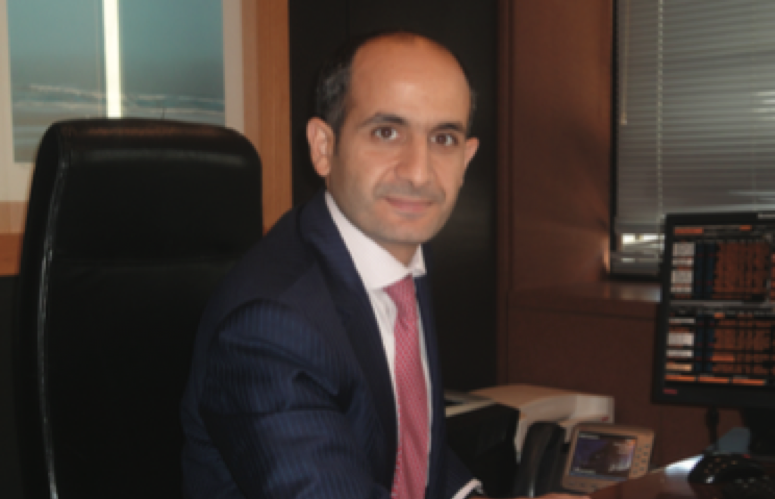
Bullish or bearish?
According to Abboud, most fund managers are sitting on a lot of cash at the moment as, at least in Europe and the United States, markets seem to be heading back into recession. “You can start building some positions now but you need to be careful,” says Abboud. He recommends investing in companies with solid cash flows, as Warren Buffett did when his investment vehicle, Berkshire Hathaway, acquired Burlington Northern Santa Fe in November 2009. “Buffett is intelligent, he saw what was coming, so he bought a company with secure cash flows for the long term.”
Favorite asset classes?
“Now is not the easiest time to ask me where to put my money,” admits Abboud, though he still recommends investing in companies with high dividend yields, low price-to-earnings (P/E) ratios and a vision for growth for the next five years. He believes that the high rates on deposits in Lebanon allow him to buy time and identify stocks to invest in. He would not invest in gold as it has “no transparency, we don’t know what we are buying, we don’t know who the market players are, we don’t know what the leverage is and the speculators are everywhere.”
Thoughts on the Middle East and North Africa, Lebanon and top picks?
Abboud would invest in the MENA region as well as the Lebanese market. His two favorite countries are Saudi Arabia, which has deep pockets and is diversifying away from oil through large infrastructure projects, and Qatar, which has strong development prospects, abundant gas and solid dividend yields. His top pick in the MENA region is Orascom Telecom, but he warns that it is a risky trade. Being a telecommunications company, it is defensive but it carries political risk. As for Lebanon, he does not believe Solidere is expensive but as there is no visibility within the current environment he prefers the local banks, which are cheap, diversified in terms of activities and offer solid dividend yields.
Other interesting ideas outside the MENA region?
1) Indian government bonds —current yield is around 8 to 9 percent with potential currency appreciation, as he expects India to continue enjoying solid gross domestic product growth. 2) General Motors — recently unseated Toyota as the world’s number one automaker, maybe the most compelling turnaround story in this sector. 3) Eurotunnel Group — operator of the Channel Tunnel between Britain and France. It is now profitable (started paying dividends two years ago) and should benefit from a significant cash flow boost through 2014.
Nadim Kabbara
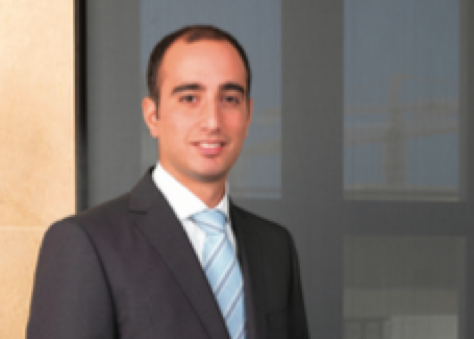
Bullish or bearish?
Kabbara is cautious but optimistic. He is concerned by the recent reports coming out of the US, Europe and Asia which show that the global economy is slowing. He is also concerned that we have not yet seen companies materially increase their revenues.
Favorite asset classes?
Kabbara highlights the disconnect between dividend yields on equities and coupons on 10-year treasuries. He believes that “Once we move out of this fear situation, there will be a return to fundamentals,” and investors will start buying equities again. He recommends owning stocks in defensive sectors — such as telecommunication, utilities and staples — but says “If you think we are going to go back into recession, then invest in fixed income and hold cash instead.”
Thoughts on the MENA, Lebanon and top picks?
According to Kabbara, MENA markets are moving in the right direction but one must be careful when looking at individual names, “as there remains a lack of corporate governance, transparency and regulatory apparatus.” He likes Saudi Arabia, Qatar and the United Arab Emirates. For Saudi Arabia, it is because of increasing investment in the social framework of the country. As for Qatar and the UAE, they are sheltered from the regional turmoil, are increasing infrastructure spending and might be upgraded to MSCI emerging market status from their current frontier-market ranking. Mobily, telecom operator in Saudi Arabia, and Industries Qatar, producer of petrochemicals, steel and fertilizers, are Kabbara’s top picks in the MENA. BLOM Bank is his top pick in Lebanon due to what he calls their risk averse culture, solid operating metrics and capacity for growth. He would remain cautious this year as local banks have, prudently so, put growth projects on hold due to the turmoil in some parts of the MENA.
Top pick globally?
Barrick Gold, the world’s largest gold producer, as Kabbara believes investors have not paid enough attention to gold miners as compared to the physical (gold).
Haitham Arabi
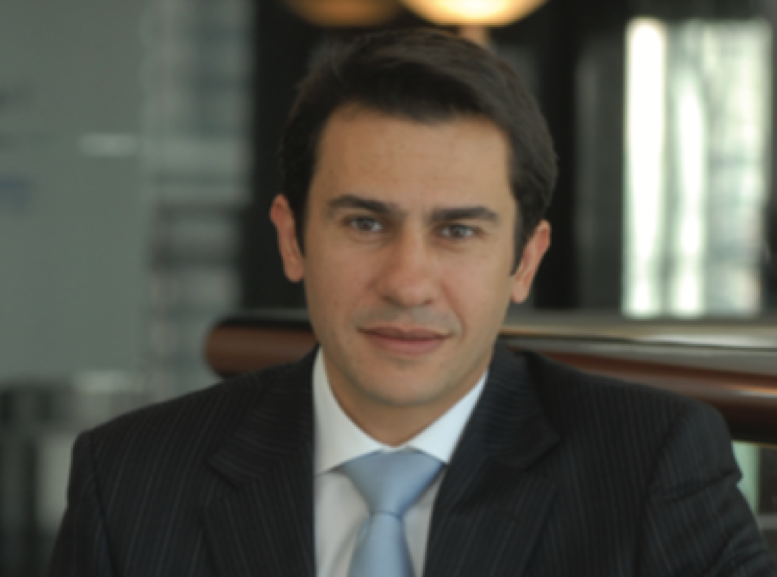
Bullish or bearish?
Arabi is slightly bearish in the short term as “the European crisis is not entirely over and the Eurozone’s GDP is around 27 percent of the world economy, the numbers in the US are looking anaemic and we keep hearing that China’s figures are exaggerated, and that we might see a hard landing. All of which clearly indicate a slowing global economy.” Arabi, however, recommends being selective and gradually building positions on valuation grounds.
Thoughts on the MENA and top picks?
Arabi is cautiously optimistic about the region as, “from a markets perspective, Middle Eastern equity markets have stronger embedded fundamentals.” However, he is concerned that the global macro-environment will impact investor sentiment in the MENA markets. He believes that “in general, it’s time for stock picking, with a 6 to 12-month horizon before markets start to perform again.” Arabi likes Saudi Arabia and Qatar, which are in an expansionary fiscal policy mode. On Saudi Arabia, he adds, “it has around $21 trillion of oil reserves and its total debt to GDP ratio is only about 10 percent while some countries now have debt to GDP ratios in the region of 160 percent to 170 percent, so if anything Saudi is a great hedge for investors if they can read its fundamentals.” As for stock picks, Arabi likes Saudi Basic Industries Corporation as he believes “it is way undervalued”, trading at a P/E ratio of 8.5 times earnings for the first time in several years compared to a usual ratio of 18. It is one of his largest holdings. He also recommends the banking sector in Saudi Arabia and Qatar. In Saudi Arabia, he recommends Rajhi Bank, Riyadh Bank and Saudi British Bank. In Qatar, he likes Qatar National Bank, Commercial Bank of Qatar and Doha Bank.
