
Beirut SE
Current year high: 886.37 Current year low: 882.02
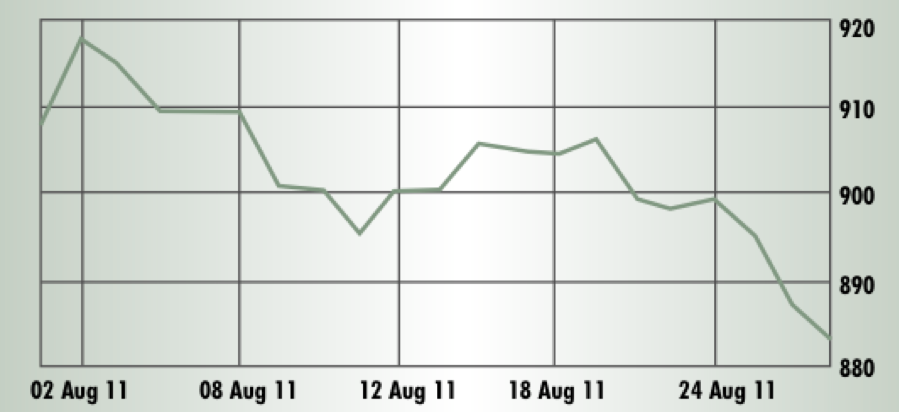
> Review period: Closed August 26 at 886.37 points Period Change: -3%
Investors found little time for Beirut stocks in a tumultuous month for international equity markets and amid escalating events in Syria. Trade volumes were unusually low even by Ramadan standards and proved as uninspiring as this summer’s tourist numbers. The affirmation of Lebanon’s credit rating by Moody’s with a stable outlook meant little to Solidere investors who were bitten by a 19 percent decline in property sales in the first half of 2011. Shares of the real estate developer plummeted 6.8 percent to a 2-year low of $15.85, while banks came in slightly ahead of the market.
Amman SE
Current year high: 2,477.99 Current year low: 2,03.71
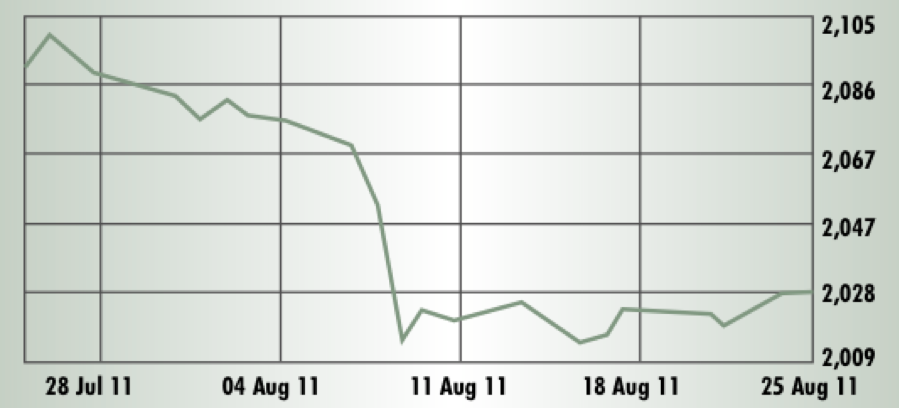
> Review period: Closed August 25 at 2,028.1 points Period Change: -2.6%
Amman stocks watched from the sidelines as neighboring equity markets spiraled downwards in August. Although the index retreated during the first week, it has since been on strong footing, backed by renewed political stability as the government pushes forward its promised reforms. A troubling increase in the budget deficit during the first six months was partly mitigated by a new agreement with Iraq to increase oil imports. Meanwhile, Royal Jordanian reported heavy losses in the first half due to regional turmoil, sending the stock down 19.5 percent through August 25.
Abu Dhabi Exchange
Current year high: 2,833.09 Current year low: 2,491.65
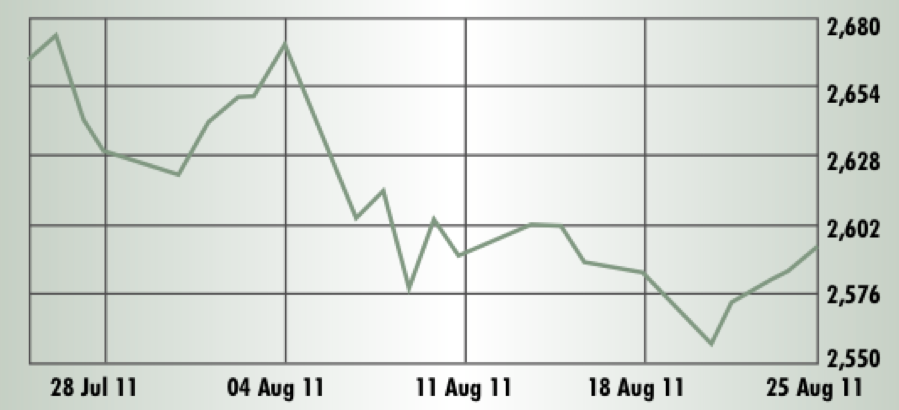
> Review period: Closed August 25 at 2,590.49 points Period Change: -1.1%
The rebound of ADX stocks stumbled on the downgrade by S&P of the US credit rating in early August. The emirate’s banks had reported strong second-quarter earnings when energy and real estate stocks were struck by rising fears of a new global recession. Dana Gas and Aldar fell 11.3 percent and 4.8 percent, respectively, during our review period while National Bank of Abu Dhabi was slightly better off at -0.5 percent. Abu Dhabi plans to face fresh global economic uncertainty with new blood after a shake-up of leading company managers, including at Aldar.
Dubai FM
Current year high: 1,781.92 Current year low: 1,352.24
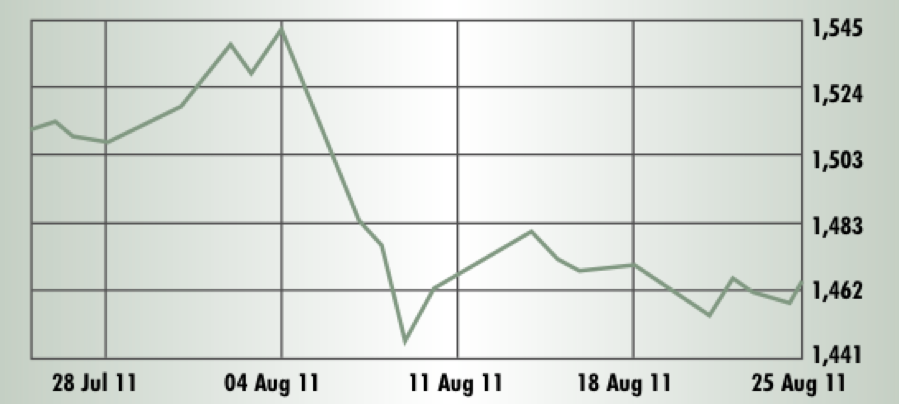
> Review period: Closed August 25 at 1,465.01 points Period Change: -3.5%
The region’s international hub was synching more with global equity malaise than listening to positive domestic indicators. Skepticism spread to major stocks, dragging Emaar Properties down 3.5 percent despite the group reporting a 20% increase in hospitality revenues in the second quarter. Similarly, Emirates NBD slipped 7 percent during our review period, although Fitch removed the ratings of the bank from negative watch, citing Dubai government support. Thin trading also showed how equities took second stage to gold trading, in addition to the typical Ramadan calm.
Kuwait SE
Current year high: 7,129.30 Current year low: 5,764.30
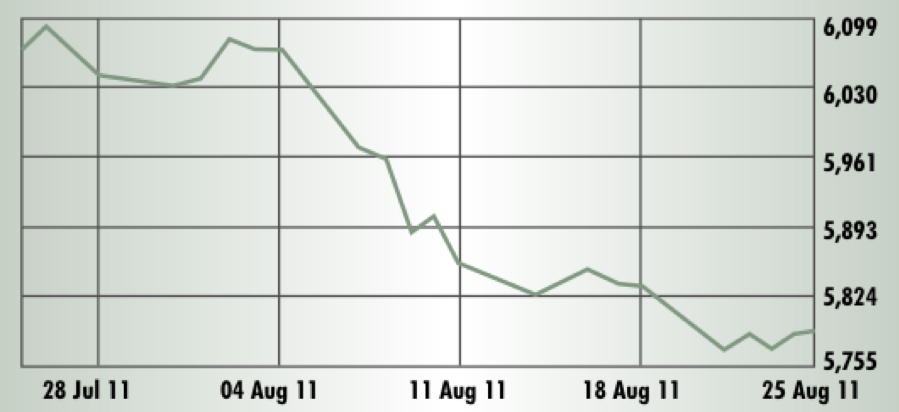
> Review period: Closed August 25 at 5,785.6 points Period Change: -4.1%
Kuwait’s exchange continued to nose dive in August, hitting a dangerous seven-year low in the benchmark index. Kuwait closed August trading almost 63 percent below the KSE’s June 2008 historic high tide mark. Latest corporate results were just as discouraging, with Agility reporting a 57 percent decline in net income in the second quarter with less government business, sending the stock down 10.2 percent during our review period.
Saudi Arabia SE
Current year high: 6,788.42 Current year low: 5,323.27
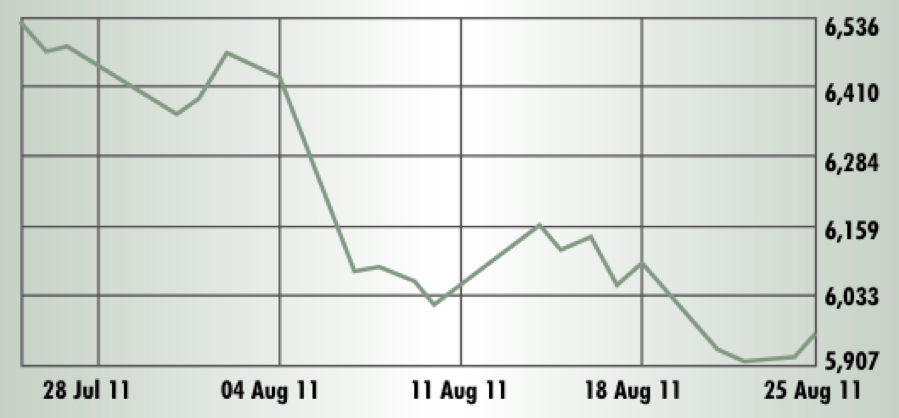
> Review period: Closed August 24 at 5,979.3 points Period Change: -6.5%
Domestic market sentiment took a direct hit from rising fears of a global recession. Stocks tumbled following the downgrade of US debt, which represents a major chunk of the kingdom’s portfolio. Petrochemical stocks slid 11% during the month as the Tadawul’s powerful stock SABIC dropped 10.5% among Ramadan trading volumes. A recent report by Global Finance Magazine said that Saudi Arabia hosts five of the 10 safest banks in the Middle East.
Muscat SM
Current year high: 7,027.32 Current year low: 5,426.56
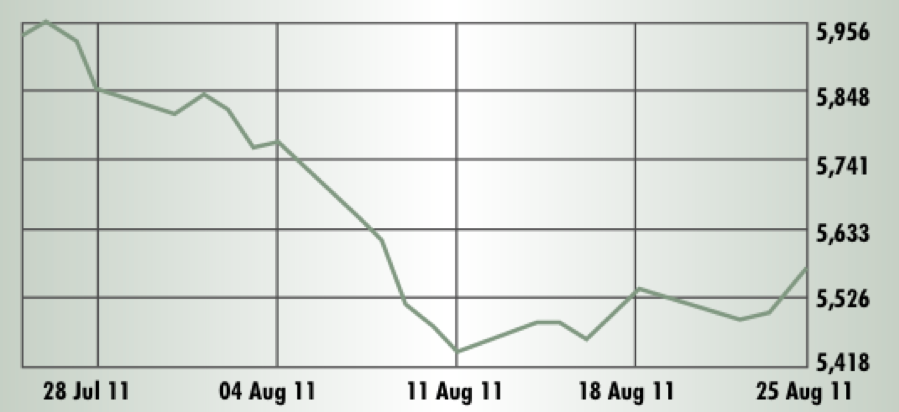
> Review period: Closed August 25 at 5,584.67 points Period Change: -3.8%
Muscat securities investors were flooded by a flurry of corporate and regulatory announcements during a supposedly quiet month, with the Capital Market Authority introducing margin trading to boost the exchange’s activity. But the Renaissance Services conglomerate announced a disappointing 71 percent drop in first-half profits and revealed fraudulent activities at its Topaz unit, pushing the stock into a 24.3 percent fall during our review period. Other investors struck gold in Omantel’s 7.1 percent gain following the announcement of strong revenues in the second quarter.
Bahrain Bourse
Current year high: 1,475.10 Current year low: 1,259.80
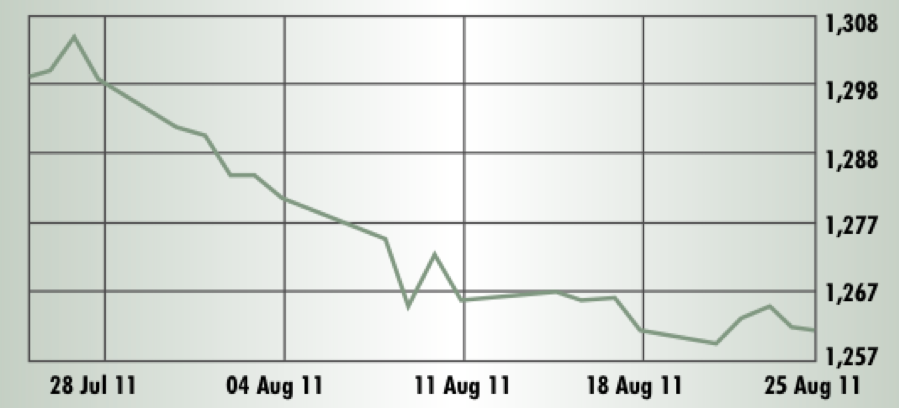
> Review period: Closed August 25 at 1,260.95 points Period Change: -2.4%
Ever declining Bahraini stocks were dominated by negative sentiment echoing Europe and the US. A steady market decline since late February’s civil unrest has cost stocks nearly 12 percent so far in 2011 and the trend appears unwavering. The country heads for elections in September to replace resigned opposition politicians, adding another layer of uncertainty to already murky global and domestic waters. Banking stocks faced rising investor uncertainty, falling 3.15 percent during the month through August 25, with Ahli United Bank leading the decline by 4.2 percent.
Qatar SE
Current year high: 9,242.63 Current year low: 7,195.88
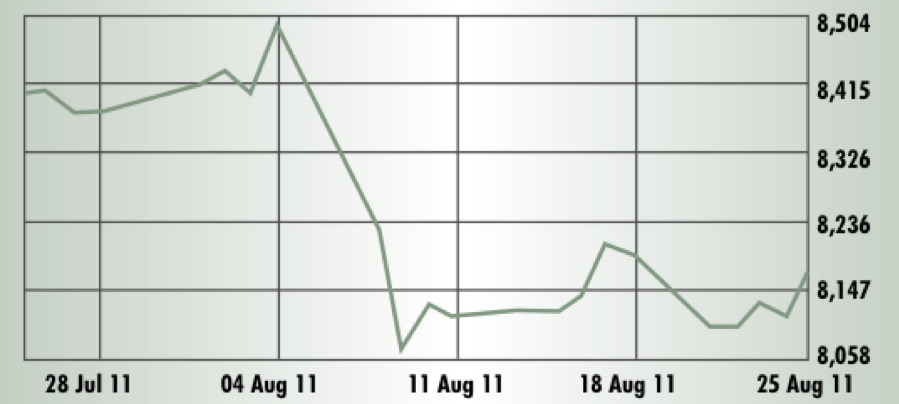
> Review period: Closed August 25 at 8,171.48 points Period Change: -2.8%
Industries Qatar, the country’s second largest stock, called back investors from their Ramadan escape, after adjusting its profit goals upwards for 2011 and putting on hold a steel expansion project. Traders rushed to book their profits, especially amid mounting global economic concerns, driving the stock down 12.2 percent through August 25. Outside the petrochemicals arena, sectors continued to show some strength, with banks adding 0.5% during the period, led by Qatar Islamic Bank, which rose 1.5% after its credit rating was affirmed by Fitch.
Tunis SE
Current year high: 5,681.39 Current year low: 4,058.53
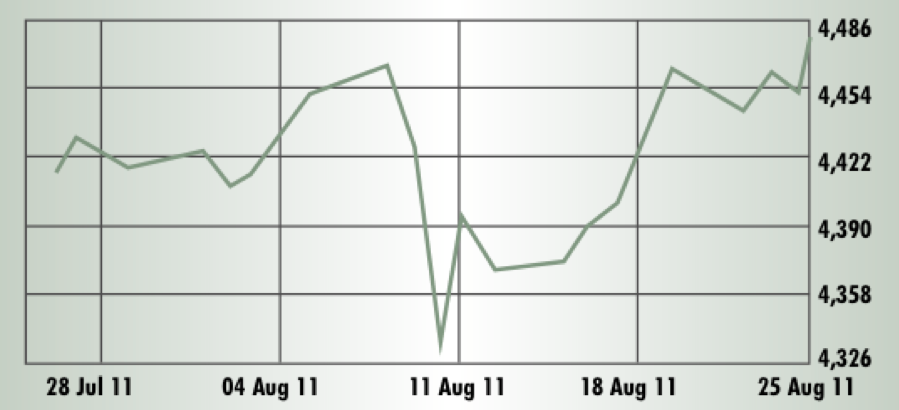
> Review period: Closed August 25 at 4,476.94 points Period Change: +1.3%
While global investors were getting burnt in international equity markets, Tunisian investors have put on a nice summer tan. The Tunindex led Middle East exchanges under coverage for the third consecutive month, signaling a steady return of domestic and foreign investors to a reinvigorated market. The country introduced a new press code and launched a successful electoral role registration process, sending positive shockwaves to the country’s tourism industry. Several stocks registered strong gains, including market heavyweight, Poulina Group, which rose 4.7 percent through August 25.
Casablanca SE
Current year high: 13,397.47 Current year low: 10,784.67
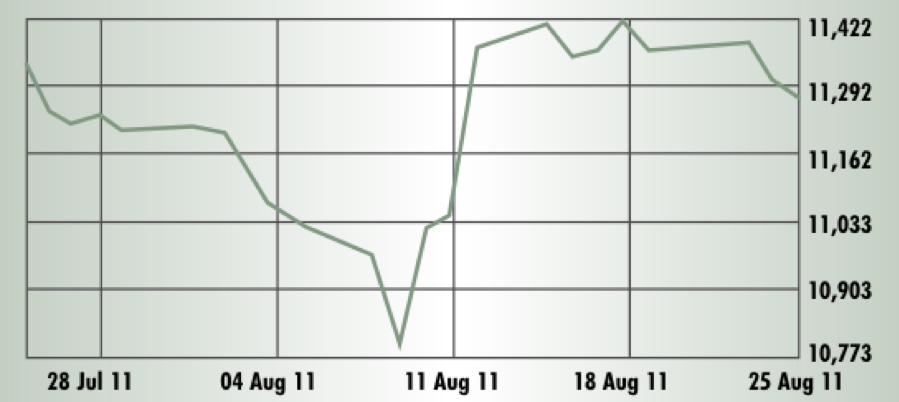
> Review period: Closed August 25 at 11,277.3 points Period Change: +0.7%
Casablanca stocks were on the offensive in August as the country took delivery of the first batch of F-16 jets from the US. The market index performed near the top of MENA exchanges, buoyed by banking stocks which rose 1.6 percent during our review period. Despite minor dismay over several electoral law items, the announcement of parliamentary elections in November rejuvenated investor sentiment. Positive news
also included tourist numbers, rising 6 percent during the first half of the year.
Egypt SE
Current year high: 7,210.00 Current year low: 4,478.00
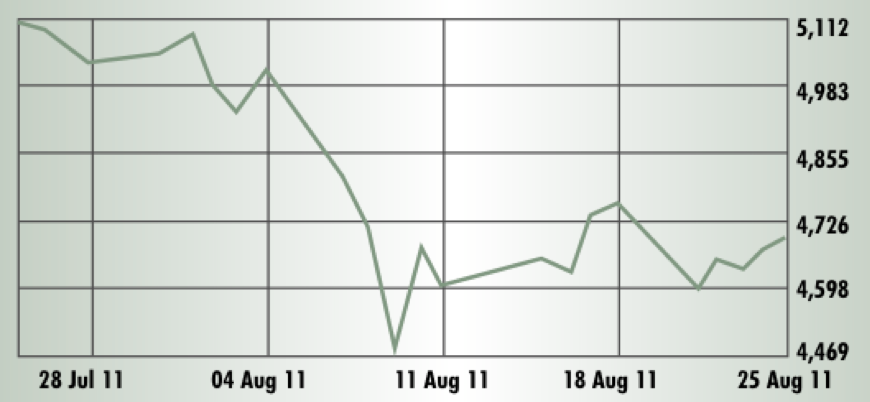
> Review period: Closed August 25 at 4,676.05 points Period Change: -7.1%
Fresh financial support from Saudi Arabia and the World Bank to post-Mubarak Egypt took the backseat to rising tensions between the country and Israel following a military incident in the Sinai desert. Stocks had originally tumbled along with global equities, but the rebound in the second half of the month was limited by fears of escalation on the northeastern border. Losses at market heavyweight Telecom Egypt were limited to 3.9 percent despite reporting an 11 percent drop in net profits in the second quarter.
