
European elections and Facebook’s IPO rattled the markets last month leaving investors skeptical and perturbed. Continuing with our initiative to seek investment advice from financial experts, Executive sat with Joe Nader, head of private banking at Byblos Bank and Hatem Rafii, head of asset management at Royal Forex Trading (RFXT).
Joe Nader
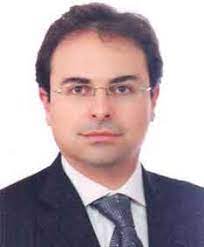
Thoughts on the global markets?
Nader takes a conservative stance, as he does not see an improvement from a macroeconomic perspective. Even though the markets have corrected, he believes this is due to an “absence of bad news and optimism over a third round of quantitative easing [introduction of new money by the US Federal Reserve Bank] which has not occurred”. He does not believe that markets will go up in the immediate future.
Main concerns?
Worried about Greece and Spain, Nader believes that we have not yet seen the worst of the crisis engulfing Europe. “I am wondering why the euro is at these levels, it has to go down further”, he says.
Markets to invest in?
His preferred market to invest in is the United States and he would go for defensive sectors such as consumer goods, utilities and healthcare. Europe would be his second choice. He does not see potential in the Middle East and North Africa except for Saudi Arabia, where he favors the banking sector.
How about Lebanese securities?
Nader recommends buying stocks at the Beirut Stock Exchange at these levels but warns that the lack of liquidity and paltry diversification of stocks is an issue in the Lebanese market. “When you invest in equities your main objective is capital gain but in Lebanon, your objective is the dividend yield because investors look at equities as a fixed income instrument.”
How about Lebanese government bonds?
Nader believes they are overvalued mainly because Lebanese individuals and banks are investing in the government bonds and “we are seeing some interest from international institutions”. He would avoid investing in them.
Your top investment recommendations?
Cash and short-term corporate bonds in the US market.
Would you invest in Facebook?
“For a small amount why not,” he says, while highlighting that the IPO was managed badly as Morgan Stanley, the underwriter, and Facebook executives decided to boost the offering size by 25 percent and push up the price to the higher end of the range.
Hatem Rafii
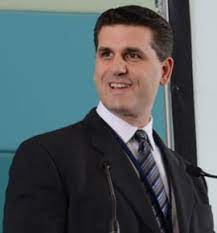
Thoughts on the global markets?
Rafii is bearish on commodity markets but very bullish on equity markets as he believes the recent accommodative actions by central banks worldwide should spur economic activity in next two to five years, leading to an appreciation of equity prices. He does not expect a repeat of the 2008 financial crisis in the near future, as the major banks in the US and in Europe are more stable and holding lots of cash.
Favorite markets?
Japan is one of his favorite markets as it is cheap and one of the top economies. “Today the top four economies are the US, Japan, China and Europe. If any of these top four markets gets cheap, at some point money will move around,” says Rafii. He expects these markets to start rallying first, followed by emerging markets. “If you have confidence, you will go to the top tier first.”
Would you buy Facebook?
“Never” he says, as it is “hard to price, it has no history and it is based on projection and hope for the future.” Rafii believes the future of the stock and of the company is uncertain. He would rather wait for a year or two before looking at the stock.
Thoughts on MENA markets?
Rafii would only invest in these markets once the top economies have gained momentum. He recommends accumulating on weakness for investors with patience and a long-term horizon.
Best ideas in the MENA markets?
Rafii would invest in the Dubai Financial Market stock as it is a “great stock to accumulate once volumes come back to the exchange.” He also likes the banking sector in Saudi Arabia.
Top investment ideas?
He would buy two indices: Japan’s Nikkei 225 and the S&P 500.
