
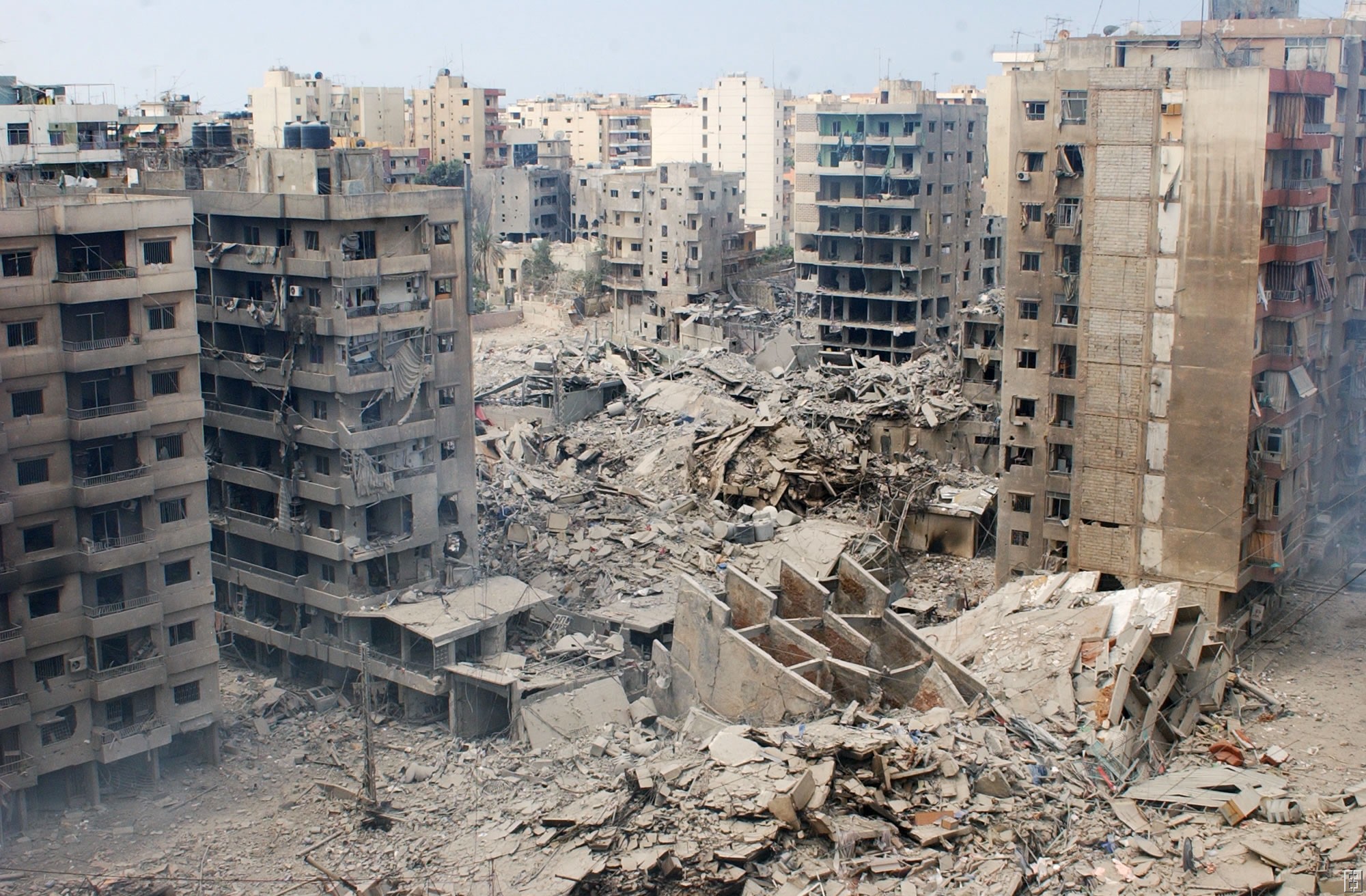
For as long as insurance has existed, companies, states and individuals have purchased policies to protect against war. Britain and France have long provided war insurance to companies, and America passed the War Risk Insurance Act in 1914 to provide marine insurance during World War I.
Unfortunately, war risk has not disappeared and new types of man-made risk have yielded the development of related insurance products, such as terrorism insurance.
The Middle East has long been prone to war and terrorism risk. As a consequence, the Arab War Risks Insurance Syndicate (AWRIS) was created in 1980 by a group of Middle Eastern insurance and reinsurance companies. The syndicate boasts a broad membership of 170 companies from 19 Arab countries; 21 board members hail from Lebanon alone. AWRIS collected a net premium of $21.7 million in 2008 and held $41.2 million in reserves in 2008. Total assets under management are approximately $1.22 billion. Providing war and terrorism risk coverage is difficult as the occurrence probabilities are difficult to predict, while the associated liabilities are generally enormous, which is why a syndicate or government-backed agency is usually required.
For each state “Q” of the Al-Qaeda terrorist network, there is a “Markov Feedback Policy“ involving “C,”a series of counter-terrorism actions. In a democracy with checks and balances on police and security services, these actions must be commensurate with the threat, i.e. dependent on Q, so C = C[Q].
Defining Qk to be the state at time k: the controlled Markov Chain model is
defined by the transition probability matrix T[i,j]: P {Qk+1 = i | Qk=j; C[Qk]}.
There are two primary types of insurance: property insurance and life insurance. At present, there is insurance available to protect both property and lives in the event of war or terrorism. In the Middle East, the AWRIS provides specialized war policies covering marine and aviation operations and property, sabotage and terrorism, personal accident (war-related), political risks and special risks.
Weighing up the risk
Property war insurance is primarily purchased by shipping companies and airlines. One type of insurance available is war liability, which covers people and goods in the craft. Another predominant type is hull insurance, which provides compensation for the craft based on its appraised value. Life war insurance is provided on an individual basis by a number of life insurance companies around the globe. The risk contracts can vary anywhere from one day to years depending on the period of an individual’s engagement in a war or terrorism prone area.
Pricing war risk insurance and reinsurance is dependent upon the ability of the insurer or reinsurer to accurately gauge the probability of an event. Historical experience can help insurance and reinsurance companies build realistic financial models for these risks. In the case of AWRIS, member companies cede risks and premiums to the syndicate whose rates are determined by a governing technical committee.
Importantly, the syndicate includes a provision for individual governments to subsidize the cost of coverage by paying a portion of insurance company premiums to the syndicate. The goal would be to reduce the cost of war risk and terrorism risk insurance to the end consumer.
Human conflict and conflict-generated losses are a fact of life. Because of the unpredictable nature of conflict, whether it be war or terrorism, this type of insurance will always be difficult to price. Furthermore, because of the high liability associated, many successful war and terrorism risk insurance and reinsurance schemes require government backing. It appears that the private market is still working to provide a solution independently of the public sector.
