Lebanon entered 2026 facing a familiar fiscal challenge: how to increase government revenue while meeting growing public spending needs. With pressure to finance public-sector compensation, maintain government operations and address long-standing gaps in public services, authorities introduced a series of tax and fee adjustments through the annual budget and separate government decisions. These measures affect everything from gasoline and imported goods to residence permits, business operations and property-related procedures.
Some directly increase household expenses, while others raise costs for businesses that may eventually be passed on to consumers. Yet the burden is not evenly distributed, and not every increase has the same effect on prices.
As Lebanon continues to rely on taxes and fees to generate revenue, the broader question is whether these measures form part of a predictable and effective fiscal policy, or whether they primarily respond to immediate financing needs.
Fuel taxation: A change in a critical time
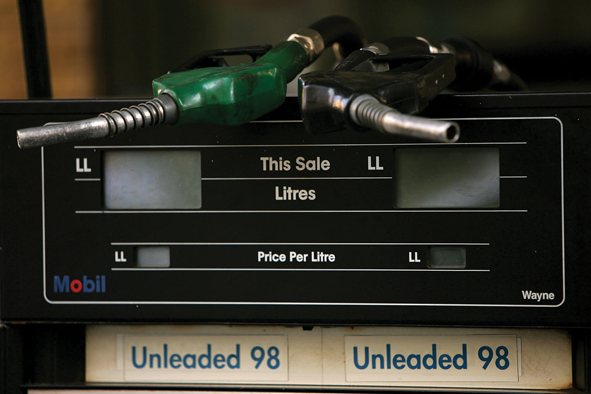
Among the measures introduced in 2026, gasoline taxation has one of the clearest links to household and business spending. Fuel is purchased directly by motorists and used in commercial transport, deliveries and other services. In February, the government approved an increase in gasoline taxation as part of a broader fiscal package linked to additional compensation for public-sector employees and military retirees. The increase amounted to approximately LBP 300,000 per 20-liter gasoline container and was formalized through Higher Customs Council Decision No. 13/2026, which amended the domestic excise duty on gasoline.
At the time, the increase reportedly raised the price of a 20-liter container by approximately 25 percent. Its timing was particularly significant. Shortly afterward, the US-Israel war on Iran war placed further pressure on international oil prices. By the end of April, gasoline prices had reportedly risen by more than 75 percent compared with the beginning of the year, and by October they had approximately doubled. While the tax increase contributed to higher fuel costs, the subsequent rise also reflected developments in international oil markets.
The consequences extend beyond the cost of filling a vehicle. For households, higher gasoline taxes increase transportation expenses and reduce the income available for other needs while simultaneously increasing the costs of basic needs, particularly given the limited public transportation options in Lebanon. For businesses, especially those highly involved in transport, deliveries and distribution, higher fuel costs can reduce profit margins or lead to higher service charges. These additional costs may reflect in consumer prices, adding to inflationary pressures, although the extent depends on how much businesses absorb.
The gasoline tax applies at the same rate per litre regardless of income, meaning that lower-income households bear a greater burden relative to their income, even if higher-income households consume more fuel. While the tax provides additional revenue for the government, it places the same charge on every litre of gasoline, regardless of the consumer’s ability to pay. For lower-income households, particularly those with few alternatives to private transportation, this can mean sacrificing a larger share of their budget to meet an essential daily expense.
Waste-management financing through import charges
A second major development concerns environmental charges on imported products. These measures have a potentially broad reach because Lebanon relies heavily on imports for consumer goods, industrial inputs and raw materials.
The charges aim to provide sustainable financing for waste management based on the polluter-pays principle. The sector has long faced funding shortages and accumulated financial obligations, making reliable financing an important objective. Decree No. 3214 of June 15 increased environmental charges on 98 categories of imported products, with rates ranging from 1 to 3 percent. The additional revenue was intended to support waste collection, treatment and infrastructure. However, concerns about higher prices prompted opposition from businesses, labor representatives and other stakeholders. The government suspended the decree on June 29 and revised the affected product list.
In late August, Decree No. 3754/2026 and Higher Customs Council Decision No. 94/2026 introduced a revised framework, limiting the higher charges to selected imported products. Other products remained subject to lower environmental charges or were excluded from the increases. The revised framework retained higher charges on the specified imported products listed below.
| Customs chapter | Product category | Environmental tax (% of product value) |
| 22 | Beverages, alcoholic drinks and vinegar | 3% |
| 23 | Food-industry residues and waste | 3% |
| 24 | Tobacco and manufactured tobacco substitutes | 3% |
| 25 | Salt and cement | 2% |
| 28 | Inorganic chemicals | 2% |
| 29 | Organic chemicals | 2% |
| 32 | Tanning or dyeing extracts; paints and related products | 3% |
| 33 | Essential oils, perfumes and cosmetics | 3% |
| 36 | Explosives and pyrotechnic products | 3% |
| 38 | Miscellaneous chemical products | 2% |
| 39 | Plastics and articles thereof | 2% |
| 40 | Rubber and articles thereof | 3% |
| 41 | Raw hides, skins and leather | 3% |
| 42 | Leather articles, handbags and travel goods | 3% |
| 43 | Furskins, artificial fur and related articles | 3% |
| 44 | Wood, wood products and charcoal | 1.5% |
| 45 | Cork and cork products | 1.5% |
| 47 | Wood pulp and recovered paper | 1.5% |
| 48 | Paper, cardboard and articles thereof | 1.5% |
| 61 | Knitted or crocheted clothing | 3% |
| 62 | Non-knitted clothing | 3% |
| 64 | Footwear and related parts | 3% |
| 65 | Headgear and related parts | 3% |
| 67 | Prepared feathers and artificial flowers | 3% |
| 68 | Articles of stone, plaster and cement | 2.5% |
| 69 | Ceramic products | 2.5% |
| 70 | Glass and glassware | 2% |
| 84 | Machinery and mechanical appliances | 1% |
| 85 | Electrical machinery and equipment | 3% |
| 87 | Motor vehicles and other land transport equipment | 3% |
| 88 | Aircraft and spacecraft | 3% |
| 89 | Ships, boats and floating structures | 3% |
| 90 | Optical, photographic and precision instruments | 3% |
| 91 | Clocks and watches | 3% |
| 93 | Arms and ammunition | 3% |
| 95 | Toys, games and sports equipment | 3% |
| 97 | Works of art, collectors’ pieces and antiques | 3% |
The impact on consumer prices may not be immediate. The charges apply to specified imported goods, not automatically to every product within a broad customs category. Retailers may still be selling older inventory, while businesses may absorb some costs or adjust their profit margins. According to the Central Administration of Statistics (CAS), clothing and footwear prices increased by 2.28 percent in September 2026 compared with August, while alcoholic beverages and tobacco rose by 0.26 percent. Although these categories include products affected by environmental charges, the figures do not establish that the charges caused the increases. Their effects may emerge gradually as newly imported goods reach the market, alongside other factors influencing prices.
The implications extend beyond household purchases. Charges on construction materials, plastics, machinery and electrical equipment can also raise business costs. Whether these reach consumers depend on the importance of the affected inputs, their share of total costs and market conditions.
The environmental charges are intended to help finance waste collection, treatment and infrastructure in Lebanon. However, the amount charged depends on the value of the imported product, not on how much waste it produces. For example, a more expensive product may face a higher charge even if it generates less waste than a cheaper one. In other words, the charges are mainly a way to raise money for waste management, rather than encourage people and businesses to produce less waste. Their contribution to improving the sector will depend on how much revenue is collected and how the government spends it.
Government services: Higher fees for specific transactions
The 2026 budget also increased fees for several administrative services, including residence permits and entry visas issued by General Security. Article 36 of Law No. 40/2026 raised fees for foreign nationals applying for or renewing certain residence permits. The increases depend on the applicant’s work-permit category, residence status and purpose of stay. Lebanon classifies foreign workers into four categories based on their employment, with Category IV covering domestic workers. Annual residence fees for Categories I, II and III increased by approximately 32 percent on average. Category I rose from LBP 82 million to LBP 108 million, Category II from LBP 55 million to LBP 72 million, and Category III from LBP 18 million to LBP 24 million. Category IV increased from LBP 13 million to LBP 18 million, or approximately 38.5 percent.
Other residence categories were also affected. Student residence fees increased by 50 percent, from LBP 10 million to LBP 15 million. Annual temporary residence fees for Syrian nationals rose from LBP 13 million to LBP 18 million, while certain other categories saw smaller increases. Fees for several transit, short-stay and tourist or visit visas rose from LBP 500,000 to LBP 2 million, quadrupling the previous amount. Applicable fees and exemptions vary by nationality and visa type.
The increases follow a roughly 98 percent decline in the value of the Lebanese pound, which reduced the dollar value of fees charged in local currency to a fraction of their pre-crisis levels. Fees had remained unchanged in Lebanese pounds despite the currency’s depreciation. The new rates bring their dollar value closer to pre-crisis levels. While the increases appear substantial in Lebanese pounds, the difference is smaller when measured in US dollars.
For foreign workers, students and employers who cover residence-related expenses, these changes mean higher administrative costs. However, the increase varies by category and do not apply uniformly to all foreign residents.
Other sector-specific fees: Transport, maritime activities and property
The 2026 Budget Law also revised fees affecting cross-border transport, maritime activities, quarrying and land surveying. Unlike taxes on gasoline or imported goods, these fees apply to specific activities or administrative procedures. While they mainly affect businesses and property owners, some may indirectly influence the cost of goods and construction.
Cross-border transport is covered by Article 23, which sets a USD 50 fee for certain operations involving foreign trucks entering Lebanon, including transit and goods transport. Trucks from countries offering equivalent exemptions to Lebanese trucks are exempt. The fee may increase freight costs for importers and exporters, particularly for smaller shipments where a fixed charge represents a larger share of expenses. Any impact on consumer prices depends on how those costs are distributed.
Maritime activities are addressed under Article 39, which revises several port and navigation fees, including annual charges for motor-powered recreational yachts ranging from LBP 2.5 million to LBP 22 million, depending on engine power. These yacht fees primarily affect owners rather than households generally.
Quarrying and construction are covered by Article 44, which specifies a quarry operating licence fee of LBP 2.3 billion, plus LBP 75,000 per cubic metre of extractable material. It also sets a fee of LBP 34.5 million for certain small operations that crush and recycle stone and rock waste. These fees add to the cost of extracting stone, gravel and other materials used in construction. Quarry operators may absorb the additional costs or pass them on to contractors, who may in turn reflect them in construction prices. The impact depends on the scale of operations, competition and market conditions.
Property surveying and land demarcation are addressed under Article 49. Fees for officially measuring land and establishing property boundaries range from LBP 9 million for plots of up to 3,000 square metres to LBP 60 million for plots exceeding 100,000 square metres, with intermediate fees of LBP 18 million and LBP 36 million. These are not annual property taxes or general registration fees. They apply to properties undergoing the relevant official procedures and can represent a significant expense for affected landowners. These are not annual property taxes or general registration fees. They apply to properties undergoing the relevant official procedures and can represent a significant expense for affected landowners.
Looking ahead: More tax and fee increases in 2027?
The proposed 2027 Budget Law suggests that the adjustments introduced in 2026 may be followed by further increases, including in sectors whose fees were recently revised.
Article 21 proposes quadrupling the annual tax on holding companies from LBP 50 million to LBP 200 million, while Article 95 would double the stamp fee benefiting the Mukhtars’ Cooperative Fund from LBP 50,000 to LBP 100,000. These measures affect different groups: the first targets holding companies, while the second would directly increase the cost of administrative transactions requiring the stamp.
The sharpest proposed increases are in maritime activities. Under Article 64, fees for motorized fishing boats up to 15 metres would rise tenfold, while registration and annual fees for several maritime service providers would increase fivefold. Charges for coastal sand and gravel extraction would also rise, alongside substantially higher penalties for maritime violations and pollution. For fishermen and maritime businesses, the proposed increases are especially notable because the government already revised maritime fees in the 2026 budget.
Yet the annual budget provides only part of the picture. During 2026, the government introduced and revised charges through decisions and decrees outside the annual budget, including the gasoline tax increase and environmental charges on imported goods. Some measures introduced during the year were also revised shortly afterward. For example, in August 2026, the government included solar panels among the imported products subject to higher environmental charges. However, about a month later, the government cancelled the increase on solar panels through Decree No. 3957 of September 24, 2026.
Taken together, the changes introduced in 2026 and those proposed for 2027 show how Lebanon is adjusting taxes and fees across different parts of the economy. Some directly increase costs for households, while others mainly affect businesses, property owners or specific activities. Their wider economic impact will depend on how much of these costs is passed on to consumers, how much revenue the government collects and how that revenue is spent. For 2027, the proposed increases remain subject to approval and may change before becoming law.