
Algeria’s accession to the world economy is moving forward with a surprising amount of support from the North African country’s Arab and European neighbors. In the past decade, the country integrated slower than its neighbors and was surpassed by both Morocco and Tunisia, who acceded to several trade agreements with the European Union (EU) and multilateral trade accords with Arab neighbors.
Despite a long history of being stalled under the country’s socialist-oriented economic policies, Algeria’s economy finally began to show promise when it began talks to join the World Trade Organization (WTO) in 1998. Ten years later, Algeria is still not a member, while Morocco and Tunisia have benefited since their accessions in 1995 by using the organization as a platform and mechanism for their continued liberalization and privatization plans.
Governments and businesses with connections to Algeria are poised on the sidelines as the country is set to finally join the plethora of other members during the second half of 2008.
A successful accession to the WTO is not by any means the final step on the path to liberalization, but it certainly is indicative of prior progress and future cooperation of the government with others in the global trading order. However, not all news of Algeria’s accession is positive and the country is attracting criticism from officials for not moving fast enough in key industries such as energy and services, where government reform plans are not satisfying the appetite of the world’s economies.
Regional connections
Like the many developing countries before it, Algeria’s progression towards the WTO began through a series of moves aimed at integrating the country’s economy with regional groups through regulatory and trade policies. Most WTO-aspirants follow the formula of increasing bilateral and multilateral trade with proven partners. Doing this helps the state create trade norms and learn to deal with more competitive markets. Understanding these norms and establishing trade policies on a small level helps the country manage tariffs and other protectionist measures to maintain a solid pace to improve and develop.
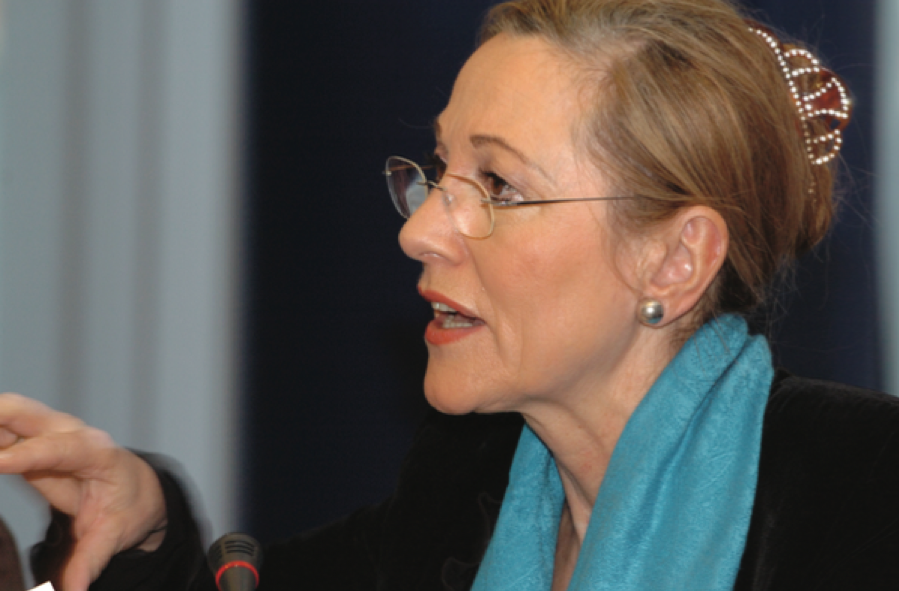
In the past decade, Algeria established connections with its Arab and European neighbors. For Algeria-EU relations, the success was attributed to the idea “that trade and economic integration helps to strengthen competitiveness and better face the remaining competition from other economies,” according to the European Commissioner for External Relations, Benita Ferrero-Waldner.
Neighbors in the Maghreb
For Algeria, proof of the country’s growth in regional trade is found in its burgeoning trade relationship with Morocco, its immediate neighbor to the west, but one with which it still shares tense relations regarding territorial disputes. The rise of Algeria-Morocco trade includes a year-on-year growth of 13.5% for Moroccan exports to Algeria, but more impressive is the astounding growth of Algerian exports to Morocco: 26.9% in 2006. The growth is attributed mostly to price increases in Algerian natural resource commodities, including the export of natural gas.
In the future, Algeria will need to depend on fellow members of the Arab Maghreb Union (AMU), especially Morocco and Tunisia, to service and govern parts of the two natural gas pipelines that connect Algeria’s main exports of natural gas, amounting to 98% of total exports, to its European markets. Tunisia will continue to oversee the Trans-Mediterranean (Transmed) pipeline from Algeria to Sicily, while Morocco remains part of the consortium controlling the Maghreb-Europe Gas (MEP) pipeline.
Liberalization via the WTO route is likely to foster better economic diversification, shying away from the natural gas industry as a main export driver, to include operations in services, research, and manufacturing, all of which are likely to be determined through relationships formed by Algeria under the WTO umbrella.
Many pundits consider the AMU defunct, which is why any analysis of the institution is given in small doses, since it seeks to formalize and bond a North Africa that to a large extent remains disconnected.
Going forward, the country’s WTO membership will most likely promote adhesion between AMU members and can serve as an impetus for more formalized applications of the idea behind the AMU. This model would be unique in that countries first regionalize and then globalize, but in Algeria’s experience, integrating with the WTO will bring it more formal results than its ties to the AMU.
In fact, Morocco voiced its support in January. Although the country remains a regional rival of Algeria and the land border between the two has been closed since 1994, Morocco expressed its support for Algeria’s accession plans. The ongoing dispute between the two countries — regarding the territory of the Western Sahara and the secessionist Polisario Front — has not has not interfered significantly with their mutual desire to integrate their economies and those of the all the AMU states.
According to Mohammed Loulichki, Morocco’s Ambassador to the United Nations in Geneva, “The adhesion of Algeria to the World Trade Organization will reinforce the presence of the countries of the Arab Maghreb Union at the heart of the WTO, will ameliorate the economic and commercial interaction between its members and will permit them to contribute more to the rapid development of world trade.”
Arab investment in Algeria
However, in addition to increased trade movements to immediate Maghreb neighbors, Algeria’s connections with other Arab countries are likely to be cemented by the country’s WTO-accession plans. Algeria has been attracting a lot of business and investment from many Arab countries. Between 2001 and 2007, foreign direct investment (FDI) from Arab countries to Algeria jumped by $7 billion.
Looking forward to the next two years, Arab-Algeria investment flows will hit $19 billion, of which “90% was already approved by the government,” according to Djamel Zeriguine, Algeria’s Division Chief of the Promotion of Foreign Direct Investment. These $19 billion are destined to finance projects in downstream industries dependent on natural resources, including aluminum, cement, and other construction materials, but the money will also develop social infrastructure in health care as well as the tourism and hotel industries.
Such flows are likely to spillover into nascent industries such as research and development, as well as manufacturing, as the government moves forward with increasing private enterprises, encouraged by fellow WTO members during Algeria’s accession talks.
Selling Algeria’s geo-economic benefits
Europe is equally as encouraging of Algeria’s WTO accession plans as the country’s other Arab counterparts. For Europe, Algeria offers a host of potential for import diversification and strategic partnership. Although manufacturing and research sectors are piquing the interest of European firms, Algeria is likely to primarily remain a hedge in the short term against disruptions to Europe’s energy supplies. For Algeria, connecting with the EU offers it a chance to continue to privatize, liberalize, and economize.
The partnership is a matter of EU geo-economic security and a hedge against disruption of the continent’s energy supplies. Undoubtedly, Europe is looking to source petroleum supplies from several different entities since Russia first pulled the plug on its feed in 2005, demanding higher prices without a moment’s warning.
Further integration to the WTO trading order will help strengthen the relationship and interdependence of the two economies: for Europe, a liberalized Algeria will offer the hedge they are seeking while Algeria will benefit in the long run from increased competition and the most-favored-nation (MFN) status it will enjoy as a co-WTO member. Ferrero-Waldner believes that Algeria “is already an important energy partner for the EU,” citing the country’s status as third largest energy supplier to the Union.
She further indicated that “several gas transportation projects are already underway that will in the close future significantly increase Algerian supplies to the EU.” Other plans, such as a strategic energy partnership between the EU and Algeria that will enhance the EU-Algeria energy relationship are also in the planning stage.
Whether or not the EU’s courting of its gas-rich southern neighbor as a hedge against Russia’s geo-political maneuvering — through tampering with the EU’s gas supplies — will result in the establishment of a wider array of relations with Algeria, what is clear is that Europe is one of Algeria’s most fervent supporters for WTO accession.
The three year relationship Algeria has had with the EU is mainly attributed to the 2005 Association Agreement, through which Ferrero-Waldner believes “good progress has been reached so far, namely through the implementation of the tariff dismantling according to the planned schedule.” She holds that the Association Agreement in general is a “bonus for the domestic economy by generating new trade opportunities and increasing foreign direct investment.”
Philippe de Fontaine Vive Curtaz, Vice-President of the European Investment Bank (EIB), concurs with this positive picture and added that Algeria’s reforms have “improved the investment climate” of the country. Algeria’s reforms — which place the highest priority on privatization of public entities and restructuring certain infrastructure sectors like telecommunications and energy — are likely to be fostered with WTO membership.
Curtaz indicated that in February 2008 Algeria and the EIB signed partnership agreements aimed at the development of two reformed sectors, the private sector and the financial sector. To this end, the EIB, which manages the Euro-Mediterranean Investment and Partnership Facility (EMIPF), in 2007 gave nine southern Mediterranean countries $2.16 billion, of which 68% is for its private sector. Since the first aid package in 1980, the EIB has given a total of $3.4 billion to Algeria for the development of its private sector.
Deeper and faster reforms
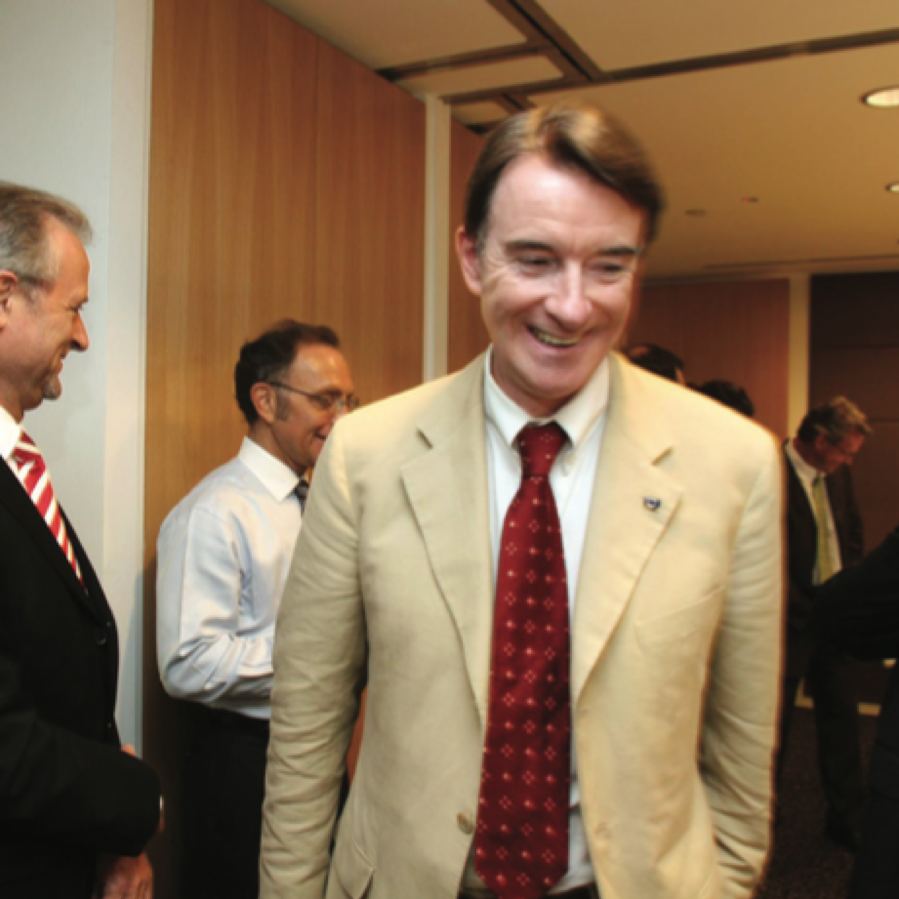
However, not all news from Europe has been rosy. In fact, during a February 2008 visit to Algeria, European Trade Commissioner Peter Mandelson said that Algeria was “too late to allow a timid attitude” towards advancing commercial reforms. He expressed his dissatisfaction as to the current application of the Association Agreement, which outlines the reforms Algeria must take to integrate its economy with those of EU member states. To this end Mandelson said that “it will be necessary to look for a new partnership agreement before 2010 to improve commercial conditions.”
Touching upon the EU’s bilateral market access negotiations, which constitute part of Algeria’s WTO accession plan as members can negotiation regulations bilaterally, the EU trade official believed further improvements had to be made in trading energy and services, which remains a tough international issue as Algeria’s energy price is more expensive on international markets. However, Mandelson thought progress had been made on energy pricing and the two bodies are now in “the phase of final clarifications,” although the issue of liberalizing services remained untouched. The commissioner refuted suggestions that the EU was contributing to the postponements in Algeria’s WTO accession talks, indicating that other WTO members also had concerns.
The meaning of a WTO Algeria
Beyond being a mere indicator of economic liberalization, the WTO label carriers with it several ties which will bind Algeria to the global trading order. The most important of the WTO standards is the group’s most-favored-nation (MFN) status, which applies to all WTO members by guaranteeing them the most advantageous terms of trade with any other WTO members.
For Algeria, the MFN status would mean increasingly favorable treatment of exports to its main trading partners, like the EU, and in particular the country’s top six bilateral trading partners — the United States, Italy, Spain, France, Canada, and Belgium — all of which are WTO members.
On the import side, Algeria need not worry as the country is enjoying a positive trade balance of $37.22 billion in 2007, largely attributed to the country’s extensive reliance on its hydrocarbons sector, which dominates 98% of exports and whose price rises in oil and gas is the reason for the country exporting twice as much in dollar value as it imports.
However, foreign investors will take note of the MFN application to their exports to Algeria as a market in which the country can spend its foreign exchange earnings. Algeria’s other industrialists are likely to move on the WTO green light as the county explores economic liberalization and diversification from its reliance on natural resources.
The country will also benefit from the WTO’s technical assistance for developing countries. According to the organization, the benchmarks set for less-developed economies are usually met with success through the group’s technical assistance and cooperation as markets move from command-based to market-based. The WTO experiences of its neighbors Morocco and Tunisia seem to show a marked amount of success, although significant challenges remain in both economies.
Indirectly, Algeria’s WTO accession is likely to help the country’s trade relationship with the further integration of the AMU, in addition to the country’s trade relationship with the EU. According to Ferrero-Waldner, the EU is trying to help Algeria “embark on negotiations on services, on trade in processed agricultural and fisheries products and on industrial standards and conformity assessment.”
She believes that together “these new negotiations could be effective drivers for speeding up internal market reforms, enhancing the diversification of Algeria’s exports and deepening bilateral trade cooperation.”
Next stop, the World
According to El Hachemi Djaaboub, Algeria’s Minister of Commerce, 31 of 35 countries involved in Algeria’s accession talks with the WTO “officially” expressed their wish for Algeria’s rapid accession. He continued “The option to adhere is irreversible … the laws of the republic conform to international expectations; there is no discrimination between nationals and foreigners, nor oral rules nor recourse to tariff barriers in which the consolidation came back to 2000.”
Further integration into the WTO order is unlikely to damage other international relationships, as other countries’ experiences have shown. According to Ferrero-Waldner, “the EU has constantly expressed its support to Algeria’s integration in the multilateral trading system and the world economy as a necessary condition for its further development. WTO accession remains the top priority for Algeria. The EU welcomed recent progress and improvements on main key trade priorities in discussions in WTO both on bilateral and multilateral levels.”
