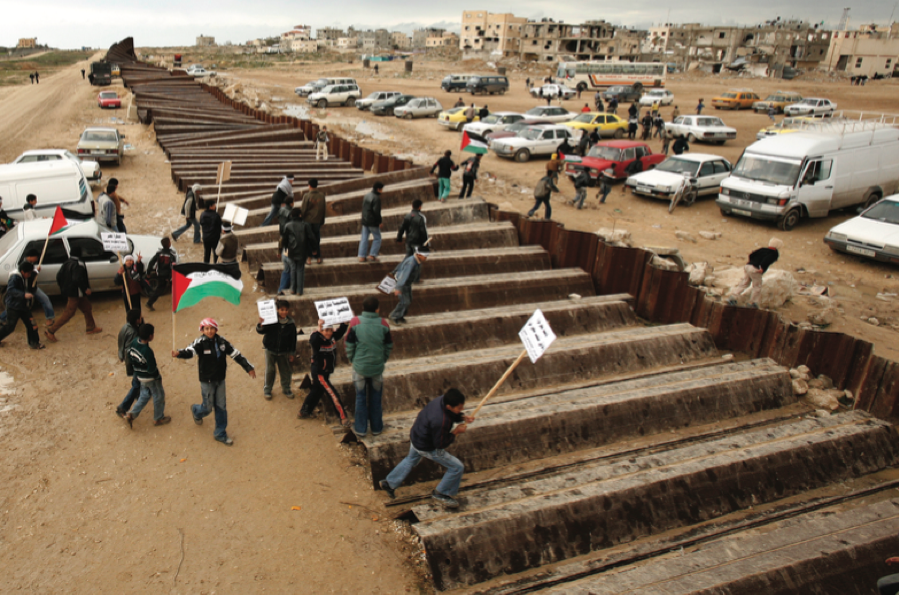
When Palestinians breached the border wall separating Gaza from Egyptian Sinai, one of the unintended outcomes was a testimony to the capitalist laws of supply and demand, and, even more unintended, to the fact that in times of economic crisis there develops a conflict between the innate desire of merchants to make the highest-possible profit with a popular expectation of the state to maintain a “moral economy”.
Or, to put it in other words, the shops and markets of the North Sinai governorate, far removed from the main population centers on the Nile and counting only a little over 300,000 inhabitants, were not prepared for a sudden influx of tens (if not hundreds) of thousands of Gazans trying to buy as much as possible before the border would be closed again, and thus prices skyrocketed.
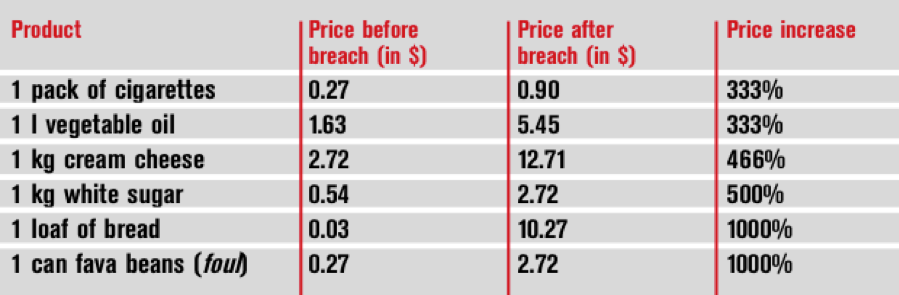
As residents and reporters on the ground observed, prices for basic commodities on average increased three-to-fivefold, and in some cases to over 10 times of what they had cost just the day before the border breach.
Overall, during the two weeks of the border breach, Gazans spent $480 million in Egypt, buying everything from foodstuffs and construction material to motorcycles and satellite dishes. Soon, rumors started to spread that the inflation, and accompanying shortage of goods, had reached the Suez Canal governorates. This and the angry reaction of local Egyptians, many of whom saw their average monthly income of EGP300 being eaten away by this sharp price hike, was one of the reasons for the Egyptian government to close the breach as quickly as possible and force all Palestinians back to Gaza. However, the concomitant policy of not letting any supply trucks east of the Suez Canal until the border was resealed — the idea behind this decision that, once the stores in the Sinai are empty, the Palestinians would voluntarily return to Gaza — also meant that the Sinai residents had to wait with their purchases of everyday goods. How the Egyptian government wants to get out of this “damned if you do, damned if you don’t” situation, should another border breach occur, is anyone’s guess.