• Donate
  • Our Purpose
  • Contact Us
Executive Magazine
  • ISSUES
    • Current Issue
    • Past issues
  • BUSINESS
  • ECONOMICS & POLICY
  • OPINION
  • SPECIAL REPORTS
  • EXECUTIVE TALKS
  • MOVEMENTS
    • Change the image
    • Cannes lions
    • Transparency & accountability
    • ECONOMIC ROADMAP
    • Say No to Corruption
    • The Lebanon media development initiative
    • LPSN Policy Asks
    • Advocating the preservation of deposits
  • JOIN US
    • Join our movement
    • Attend our events
    • Receive updates
    • Connect with us
  • DONATE
Economics & Policy

Tunisia: Moderating Islam and government

by Daniel Harris May 3, 2012
written by Daniel Harris

On a brisk spring day last month in the Tunis, one could have been forgiven for thinking the revolution was still in full swing. Stepping out of a hotel onto Habib Bourguiba Avenue — normally a bustling artery through the Tunisian capital lined with cafes and restaurants — Executive was enveloped in teargas and forced to flee down side streets with other bewildered bystanders, lest be trampled by the waves of whistle-blowing, baton-waving police in riot gear.

There was a sense of déjà vu to witnessing interior ministry forces in full pursuit of perhaps the very same shabaab (or ‘youth’) whose sustained protests helped oust former President Zine el-Abidine Ben Ali from power in January 2011. Now, however, instead chanting against dictatorship, they were denouncing the party that had won the plurality of seats in the first post-Ben Ali elections last fall, Ennahdha — or in English, the “Renaissance” Party.

Several days later at this once-banned Islamic movement’s headquarters — an apartment building draped with blue banners in the Montplaisir neighborhood of Tunis — phones rang incessantly and were answered by a young, multi-lingual staff, who hurried between offices clutching folders and papers. Men wore business suits, minus the tie, with clean-shaven faces or closely cropped beards; women mostly, though not uniformly, wore a hijab to compliment their western fashion sensibilities. The atmosphere was all at once casual, stressed and excited. There was energy in the air.

As it turned out, the casual factor was purposeful and came straight from the top. The movement’s septuagenarian founder, Rachid al-Ghannouchi, is “easy-going” and not the stuffy kind of Islamic theologian one might expect, according to an elderly man named Ahmad who sat in the waiting room. He would know — the two men shared persecution for their activist pursuits under the Habib Bourguiba regime that preceded Ben Ali, spent some two decades in exile together in London and returned to Tunisia only after revolution.   

Born in 1941, Ghannouchi, who studied philosophy in Damascus and at the Sorbonne in Paris, came back to Tunisia and joined the Quranic Preservation Society in 1970, helping to organize the Islamic Tendency Movement, Ennahdha’s predecessor, in 1981. As a political activist and Islamic philosopher, from early on his energies and publications had focused on real-life issues facing Tunisians — such as the economy, political reform and human rights — rather than doctrinal Islamic matters. 

“What concerns the young people of today?” Ghannouchi was quoted as saying in the early 1970s. “The position of the Mu’tazilites on the attributes of God?… Whether the Quran is pre-existent or created? Was Islam revealed for this kind of useless, sterile argument? I wonder how our students feel studying ‘Islamic philosophy’ when it offers them only a bunch of dead issues having nothing to do with the problems today.” For an Islamic leader in the Middle East, such opinions are decidedly liberal.

To protect and clarify

Back in the waiting room, after a seemingly endless stream of well-wishers, friends, advisers, petitioners and politicians and had passed through, Ghannouchi’s secretary — a pleasant young woman with a degree in English literature — ushered Executive into a large conference room.

In attire, Ghannouchi was an older version of his staff — dressed in a gray suit, blue shirt with an open collar and close-cropped beard — but he seemed worn for this late afternoon interview. There was a definite, if subdued, gravitas around the man who had been imprisoned, tortured, and exiled from his home, and now led the political party with the most power and influence in Tunisia at this crux in history.

After handshakes, the interview moved to a corner crook of black couches. Throughout the conversation Ghannouchi’s right eyebrow was cocked upward and he spoke slowly and purposefully in a soft, brittle English that stressed the burden his words carried. Ahmad, who sat close to his side, leaned in and as the interview went on his eyes took on a concerned look. Ahmad’s affection for the older man was obvious, and he interjected on occasion when Ghannouchi’s statement tripped on broken English. There was a sense that Ahmad was present both to clarify for, and protect, Ghannouchi.

Perhaps there was good reason to feel defensive. Since Ennahdha electoral victory and subsequent formation of a governing coalition to write a constitution, intermittent strikes and protests have gripped the country. The party has come under significant criticism of late, mostly from the Tunisian left. Secular organizations, trade unions and young activists who took part in the revolution claim that Ennahdha is stealing the revolution away from those who carried it out in order to Islamize the country.

“They fear sharia [Islamic law] because they don’t know the sense of sharia,” said Ghannouchi, adding that this fear is isolated to the Tunisian elites. After a teargas bath courtesy of Tunisian police, Executive questioned whether the situation was so easily explained.

“It is normal for the Ministry of the Interior to forbid demonstrations in some streets, in some places in the capital,” said Ghannouchi. He explained that there had been a temporary ban enacted on Habib Bourguiba Avenue at the request of businesses on the street. Previous demonstrations had disrupted the flow of foot traffic, driving away customers and tourists from the cafes and the Old City at a time when the economy is already suffering. He pointed out that protests on major thoroughfares in European capitals were also not allowed. While critics had compared Ennahdha’s use of police suppression to that of former President Ben Ali’s, Ghannouchi dismissed this as exaggeration and propaganda designed to damage Ennahdha’s reputation.

At a press conference following the protests, Ghannouchi had appealed to Tunisians to be patient. But how patient are Tunisians at this point? Are they not fed up with waiting for positive change?

“People now are fed up with demonstrations, with [streets being cut off], and strikes,” said Ghannouchi. “People would like to work. They are fed up with the freezing of the economy.”

The demonstrators, claimed Ghannouchi, want to stop Tunisia’s economic progress — they want Tunisia to fail because that would mean Ennahdha would fail too. It was those elites, not the main body of the Tunisian people, who were afraid, and were acting in this way.

“We respect this fear,” he said. “And we would like to build our constitution on common ground… Fifty-one percent is not enough to build a constitution.”

To its credit, Ennahdha has gone allayed many secular fears. Its officials have stated that it will not try to ban alcohol or force the hijab on women, and Ghannouchi recently announced that it will not include sharia law in the constitution. And yet the fear persists, amongst both Tunisians and outside observers, that Ennahdha will eventually go too far.

Ennahda’s fellow Islamists, the Salafists, compound that fear among the more secular segments of Tunisian society. When a Salafist Skeikh called for Jews to be murdered, there was a popular outrage in Tunis and Ennahda was critizied for not condemning the statement quick enough. “We oppose what some Salafists have done,” Ghannouchi countered when asked about this an other incidents such as attacks on media by Salafists. “When they made some slogans against the [Jewish minority] in the country, I phoned the Chief Rabbi and I [expressed my support]. The Chief Rabbi, after we won the elections, he visited me to congratulate our movement and explained that he had no fear from Ennahdha, that it was moderate, but he said he feared the Salafists..”And while he may not approve of media outlets publishing caricatures of God or the Prophet Muhammad, Ghannouchi said that he disavows the use of any violence to oppose it.

Same but different?

For many Tunisians, the ills of Ben Ali’s rule have not faded, not least the economic ones like the 18 percent offical unemployment rate. Ennahdha’s platform would initially seem to differ little from that of former President Ben Ali, in its support of free market mechanisms and privatization buffered by a social welfare net, and its emphasis on tourism. Acknowledging this, Ghannouchi underlined two main differences: “Ben Ali [was] corrupt,” he said plainly, eliciting frank nods and laughter from others in the room. “We want to have a sacred war against corruption.” Secondly, Ghannouchi stressed that the focus of public spending would switch from the more developed coastal regions to developing the neglected interior. The government is planning to pour public resources and infrastructure programs in cities such as Kasserine, Gafsa, and Sidi Bouzid — hometown of Mohammad Bouazizi, whose self-immolation sparked the Tunisian revolution, and indeed the entire so called Arab Spring.

Ghannouchi admitted this increase in public spending would strain government coffers, but said it was necessary in the short-term to spur the private sector recovery, growth and employment in the long term, while also creating an environment attractive to foreign investment. “The real enemy of Tunisia now is unemployment,” he noted. Pointing to the positives, Ghannouchi said the investment, tourism and exports had all seen recent increases.

A ‘rational’ West

When it came to foreign relations, one could imagine an American official at State Department listening in to Ghannouchi while going down a checklist of things that they want to hear an Islamist leader in the Middle East say. While the United States supported the previous regimes in Tunisia, Egypt and Yemen, Ghannouchi pointed out that the US did not intervene to try to save them when the revolutions erupted.

“The US behaved, vis-à-vis the ‘Arab Spring’, rationally, supporting democratic change, supporting its development,” said Ghannouchi. “What we want is for the US to not give any priority to any side because of ideology, to treat all parties the same, equally, regardless of religious background.”

There will be changes in foreign policy, however: “Ben Ali and Bourguiba opened only one door. This door is towards Europe and the West. We will preserve this door, and we will widen this door,” he said, “but we will open other doors, to the [Arab Maghreb], the Middle East, the [Persian] Gulf, Africa, Asia, [Latin America]… We keep this door to the west open, but we will open other doors.”

Throughout the interview it was clear that Ghannouchi wanted to impress upon people that Ennahdha was different — different than Ben Ali and different than other Islamist movements. And yet the paranoia persists that Ennahdha has a secret agenda to impose strict Islamic adherence upon the country.

One must concede that in such an environment it is entirely possible that Ennahdha’s opponents are demonizing it in order to weaken it, that Ghannouchi may have a case in claiming that the demonstrators would rather see Ennahdha fail then see Tunisia succeed. However, the youth on the streets of Tunis today would surely beg to differ.

“Freedom and justice is the main sense of Islam,” he said at one point in the discussion. If it really is just about freedom and justice, than it remains to be seen what makes Ennahdha different from secular Tunisian political parties that emphasize the same things. And perhaps it may be Rachid Ghannouchi himself, with his story of struggle, persecution and return from exile to a homeland that becomes Tunisia’s Nelson Mandela, or just another Islamist.      

May 3, 2012 0 comments
0 FacebookTwitterPinterestEmail
Business

The shifting wings of Abu Dhabi

by Thomas Schellen May 3, 2012
written by Thomas Schellen

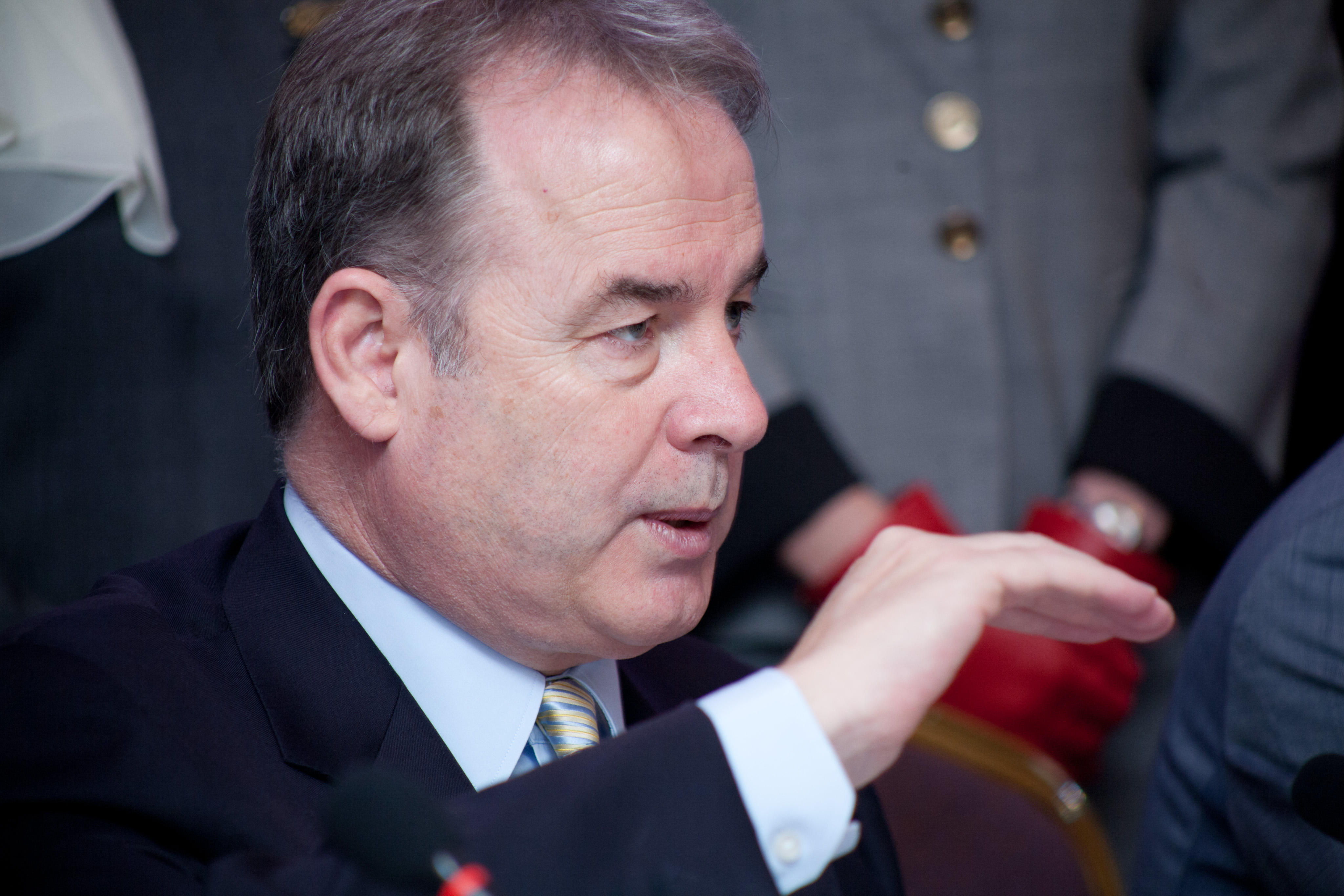
Eithad Airways, the Abu Dhabi-based carrier that recently canceled an order of seven Airbus A350 passenger jets, will reduce its original order with the plane-maker and substitute canceled planes to meet expansion targets, Etihad Chief Executive James Hogan told journalists in Beirut.“We are still committed to 10 options and 15 purchase rights. At the right time, we will take those aircraft,” Hogan said. Options and purchase rights are commitments that airplane manufacturers and their customers commonly enter into when agreeing on firm orders. Options and purchase rights can give jet buyers access to production slots and prices based on the agreements they negotiate with manufacturers. Hogan did not comment on the 12 remaining firm orders for A350 jets.

“I substituted to meet the growth strategy,” Hogan said, explaining that the carrier had ordered the 25 A350s plus placed additional 25 options and purchase rights back in 2008 “to meet our network expansion and expected them to come at a certain time.” 

As the schedule for delivery of the A350s started sliding and the manufacturer was still working on the specifications of the A350-1000, “we took a view to reduce the firm commitments to 12 and canceled six in 2011 and seven in 2012. We still believe in the aircraft but we have bridged that with [Boeing] 787 [version]9 where we increased our order to 41. That’s business,” he said.

Etihad’s initial order for B787s, signed at the 2008 Farnborough International Airshow, was for 35 planes. The company said at the time that the total value of its order with Boeing, which also included 10 B777-300 planes, was more than $9 billion.   

The original Etihad order for the 25 A350s, also signed at Farnborough in 2008, was part of a deal for 55 jets also including 10 A380s and 20 A320s with a value of approximately $12 billion, according to Etihad. Media reports put the value of the recently canceled seven A350s at $2.2 billion. 

The cancellation of seven A350s was first reported earlier this month by Reuters, based on data from Airbus. Media in the United Arab Emirates this week quoted analyst speculations that Etihad would fully step away from the wide-bodied Airbus in favor of the competing 787 but Hogan said this is incorrect.

Airbus and Boeing have been intensely competing with their long-range, wide-bodied A350 and 787 model lines, both designed to become workhorses in the next generation of fuel efficient passenger aircraft. Each highly-touted model, however, also had shares of technical challenges to contend with.

Fleet purchases by Etihad in the carrier’s first years of operation have favoredAirbus jets . When asked if the shift to 787s signified an end of his love affair with Airbus, Hogan said, “I love both Boeing and Airbus, equally. In this business, you have to work with Boeing and Airbus.”  He emphasized that Etihad has a considerable fleet of Airbus planes and in addition to the A350s, more A321s and 10 A380s will be added to its fleet in the next few years.

According to Hogan, Etihad will report a financial revenue performance of $5 billion, implying growth above 22 percent when compared with 2011 results of $4.1 billion. Last year was the first time the airline reported a profit as its revenue improved 36 percent on 2010.  

On the sidelines of the press conference Hogan told Executive that Etihad will achieve the targeted ten-million passenger mark this year. In 2011, the airline reported passenger growth figures of 17 percentwhile registering a first quarter year-on-year increase in passengers by 27.4 percent to 2.36 million from 1.85 million, according to an April 4 announcement. 

The Lebanese connection

Hogan came to Beirut to celebrate the success of Etihad’s eight-year service to the Lebanese capital, which commenced in November 2003. Beirut was Etihad’s first commercial destination.

According to Hogan the carrier’s strongest demand from Beirut-originating travelers  is for flights to Sydney, followed by Abu Dhabi. In 2012, Etihad’s Beirut office has a revenue projection of $31 million, he added. 

Joseph Chamoun, Etihad’s country manager for Lebanon, also told Executive that the operation is the airline’s top performing market in the Levant and Africa. In important long-haul services from Beirut to Australia and some Southeast Asian destinations Etihad’s share of the outbound Lebanese travel is above 40 percent, he claimed. 

During the first quarter of this year Beirut airport saw 204,670 outbound passengers, according to Lebanon’s Civil Aviation Authority At the time of posting, statistics on the number of travelers to Oceania within that total were not available. 

Etihad also anticipates that its network’s expansion intoLagos, Nigeria this summer and next year’s expansion to Brazil as the first Latin-American destination will be drawing in many travelers from the large expatriate Lebanese communities in those two nations, Hogan said. In previous press statements, Etihad had announced the start of its service to Latin America for 2013 but did not specifically say that it would serve Brazil as its first destination in the continent. 

May 3, 2012 0 comments
0 FacebookTwitterPinterestEmail
Society

A brand by any other name

by Zeina George May 3, 2012
written by Zeina George

The recent news of Kraft naming its global foods company “Mondel?z International” has sparked controversy in the business world, with Forbes describing the move as one that raises a “huge red flag”. 

The new name, meant to call to mind the image of a “delicious world”, is actually supposed to be pronounced “Mohn-dah-LEEZ”, hence the accent on the second ‘e’. This has incited mockery in the media, with CNN jokingly titling its article on the news of Kraft’s recent decision “Monde-what?”.

On top of it being difficult to pronounce, Mondel?z sounds very similar to what was described as a “very dirty” word in Russian slang. As a result of all this, many have called for yet another rebrand, emphasizing the detrimental impact that the wrong name can have on brand equity and positioning. 

What we find particularly perplexing about the decision to opt for the name Mondel?z, though, is the fact that Kraft, a corporation based in the United States, had the option of choosing a name from the English language, universally spoken in today’s globalized business world. Yet it chose a name inspired by the Romance languages and complicated matters even further with the addition of an accent that many do not recognize.  This naturally brings to mind the very different reality faced by many Arab companies, whose names often contain letters that do not exist in other languages (and could not be pronounced by non-Arabs if they tried). These companies go to great lengths to make their names easily pronounceable to a Western audience, as has been the case with Almarai, Saudi Arabia’s leading food producer, and Emaar, the Dubai-based property developer.

This is not the first instance of a less than ideal brand name. There are many such examples that mark the annals of branding history. One instance was the embarrassment Mitsubishi caused itself in Spain when it named one of its new models “Pajero”, a local slang term that is, to put it mildly, sexually explicit (a quick Google search will suffice to reveal the meaning of the word to more curious readers).  Another equally comical yet serious misnomer that caused an entire advertising campaign to fail in Italy occurred when Schweppes Tonic Water translated its name as “Schweppes Toilet Water”.  These examples are extreme cases featuring linguistic missteps, when in reality brand naming mistakes can occur for reasons much less blatantly obvious. The point, however, is this: brand naming is not a matter to be taken lightly.  Brand names are the first step in establishing a successful business and creating a story around your brand. A strong name can set the brand apart in an overly saturated market, communicate a company’s culture, describe what it does in a word or two, or even automatically bring to mind desired associations. 

Conversely, the wrong brand name can limit opportunities for expansion and diversification or take away from the equity created by a company’s actual work. In light of all this, if brand names are not carefully selected, businesses run the risk of being “branded” by the marketplace, forfeiting the right they have to shaping how the public perceives them.

A key regional concern

The issue of brand naming is of key relevance to the Middle East. Historically, many major Arab companies have not had to struggle with the issue as they were government-owned utility corporations (e.g. Saudi Telecom, The Emirates Telecommunication Corporation) or family businesses (e.g. Majid Al Futtaim Holding, Al Khorafi Group). Nowadays, the brand naming process is less straightforward, with most businesses operating in a highly competitive globalized economy. Add to this the fact that it is estimated that the youth bubble in the Middle East will require 8 million jobs to be created every year until 2020. 

Private and public sector actors alike realize that sufficient job opportunities do not currently exist in the region; they will have to be created. Practically speaking, this means that entrepreneurial youth will be establishing startups that will naturally need to be named. Brand naming thus becomes highly relevant, and getting it right can seriously increase an up-and-coming business’s chances of gaining visibility and establishing desired strategic positioning.

The right way to name a brand

The brand naming process can follow several routes, some of which are self-explanatory and include Latin and Greek-inspired names, initials and family names. Other less self-evident routes include:

Onomatopoeic and Invented: Onomatopoeic names use a word that sounds like the entity or idea it signifies. It creates names that are both catchy and musical. Examples include Zippo and Bing. Invented names are either based on an already existing word to create a new sound or a completely unheard of name that is phonetically appealing. Such brand names are memorable and distinctive due to their uniqueness. Examples include Oreo, Kleenex, and Du. Both invented and onomatopoeic names have become increasingly popular recently, as they allow for the creation of fresh, new names that simultaneously avert the problem of the widespread trade marking of most existing words.

Cultural and Linguistic: This involves using a term or phrase specific to the particular culture or dialect of the target market, appealing directly to local consumers. One such example would be Zaatar W Zeit. 

Functional: Such names depict the company’s line of business. This approach holds the possibility of creating strong brand equity for the company or product, centered on the name. Examples include Ford Motor Company and Saudi Telecom.

Lifestyle: This approach evokes a particular lifestyle and calls on consumers to partake in the experience of the brand. Examples include Free People and Marlboro.

Each of these proposed routes offers a brand name something unique. Once companies have decided what route they would like to follow, basing their choice on the nature, positioning, and market of their brand, they must also ensure that final selection abides by certain important criteria.

The name must be in line with the brand promise and positioning and should serve to bolster brand strategy and equity. For instance, Abbott Laboratories recently decided to brand its pharmaceutical spinoff as Abbvie, a name derived from that of its parent company combined with the Latin word for “life”. Upon closer examination, it becomes apparent that the name is contradictory with the desired positioning for the brand, as the pharmaceutical company was seeking to position itself as being cutting edge, yet selected a name whose Latin root evokes the antiquated past.

A brand name needs to constitute a good cultural and linguistic fit. In the Middle East, this means taking into account the different realities defining the market, from the youth majority demanding “edgier” communication to the nonetheless prevailing culture of traditionalism. 

A brand name ought to have cultural relevance yet remain capable of transcending cultural boundaries. Though this may seem like an impossibly tricky feat, it has been achieved with such brands as “Zain” and “Yamli” – Arabic names possessing universal appeal thanks to ease of pronunciation and the fact that they simply “roll off the tongue”. 

The nature of today’s globalized economy dictates that a name also be in line with worldwide consumer trends. A look at today’s international trends reveals a certain move away from what many perceive as “stuffy” Latin and Greek-inspired names, accompanied by increasing demand for distinctive brand names that are functional and relatable. One example is JCrew’s “Madewell” women’s clothing line. 

The final and essential point is a simple one: due diligence. Once a company has decided upon a given brand name, it can never be too sure of its effectiveness or marketability. The brand name ought thus to be validated with several different stakeholders and experts before it is officially rolled out. 

Though it may pain some to learn this, readers should be cautioned that the real work starts after a brand name has been selected. 

Building the verbal identity of a brand permeates every activity carried out by a business and ought to manifest itself in the construction of overall brand personality and identity. Indeed, a name is the first chapter in the telling of a compelling brand story that captivates the public through the strategic use of communication — but those are matters for another article.


May 3, 2012 0 comments
0 FacebookTwitterPinterestEmail
Comment

Devastated by laissez-faire

by Peter Speetjens May 3, 2012
written by Peter Speetjens

If Michel Ecochard were alive today to see his beloved Beirut, he would arguably want to drop dead on the spot. Beginning in the 1930s, the French architect and urban planner worked for some 30 years in Lebanon and the region. He had especially high hopes for Beirut, as it was blessed with what he called, “One of the most beautiful sites in the world.”

In 1943, he was asked to produce an urban blueprint that could accommodate Beirut’s future growth. Taking into account the city’s existing character and natural setting, he proposed strict zoning, a modern infrastructure to cope with the growing popularity of the car, and a string of gardens and parks as the city’s green lungs. 

Today, the AUB campus and Sanayeh Garden offer a rare glimpse of what Beirut could have been, while the city’s ever increasing traffic jams echo the fact that Ecochard’s plan was never approved in Parliament. Not surprisingly, the most vocal opposition stemmed from Beirut’s property owners and landed elite.

The situation did not improve following World War II. The newly independent “merchant republic” under the presidencies of Camille Chamoun and Bechara Khoury were neoliberal avant la lettre, in the sense that the state was to stay out of social and economic affairs in order not to hamper the private sector’s potential to generate profit. Urban planning was among the least of its concerns.

Having worked in such cities as Casablanca, Damascus and Aleppo, Ecochard returned in 1961 when President Fouad Chehab asked him to again produce a master plan for Greater Beirut. Despite his earlier disappointment, Ecochard accepted. “Beirut can still be saved, but action must be taken immediately,” he said.

Again, Ecochard called for zoning, the creation and protection of green spaces and an improved infrastructure. He also proposed building government cities to decongest the capital, and social housing schemes for east and south Beirut to raise the living standards among the many new arrivals in search of a better future. Finally, he advocated strict building regulations to discourage speculation. Again, his plan came to nothing. Parliament, in 1964, adopted a watered down version of his proposal, in which some industrial zoning remained and construction along beaches was (temporarily) frozen. 

Ecochard disassociated himself from the plan and soon after left the country. Contrary to what many Lebanese think, the urban chaos that characterizes Beirut today has not been the result of 15 years of Civil War. Ecochard was hardly the only planner that tried to tame Beirut. Before him, there was 1930s French urbanist Rene Danger. After him there were Greek, Swiss and homegrown plans. The problem was that, time and time again, plans were compromised or shelved entirely. In other words, the lack of urban planning dates straight back to Lebanon’s independence in 1948, and is directly linked with the impotence of the Lebanese state. “[Ultimately,] Beirut’s urban landscape symbolizes the difficulty of the state to affirm its authority,” concludes modern urban historian Eric Verdeill in his book ‘Beyrouth et Ses Urbanistes’. 

The consequences of this inability are plenty. The lack of proper public transport and the ever increasing fleet of wheels, for example, is strangling the city. There are hardly any parks and there is little or no sense of social, aesthetic or historic value, as everything is measured by the mighty $-sign. As a result, Beirut’s cultural heritage is rapidly making way for ever higher high-rise that makes you wonder: what ever happened to the art of architecture? 

A recent low point on a long list of urban disasters was the adoption of the 2004 building law. While in the 1960s a building was allowed to be only as high as 1.5 times the width of a street it faced, since 2004 it can be 2.5 times the street’s width. This change prompted a forest of towers to be erected everywhere, even along the Corniche. While most are a slap in the face of beauty, they also have disastrous consequences for the city’s air and traffic circulation. 

“It was the private domain… that invaded the public domain and hacked away at its flailing carcass,” wrote the late Samir Kassir in summing up the sad history of urban planning in his book ‘Beirut’. “The metropolitan area was little more than a mass of infringements and trespasses against the ability to breathe that is no less essential to a city than a person.” 

Sweet dreams, Monsieur Ecochard.

May 3, 2012 0 comments
0 FacebookTwitterPinterestEmail
Society

A watch for life

by Michael Karam May 3, 2012
written by Michael Karam

A watch has become a necessity but not necessarily for telling the time,” explains Mhir Atamian, whose family business is one of Lebanon’s leading watch importers. “For men, it is one of the few pieces that they can wear, but for both male and female consumers, it has become as important as what clothes they wear or the car they drive. Among their peers, it is important to be seen to have the ‘right’ watch.”

So which is the right watch? It’s not just a case of what you like in terms of design or functionality or price; what Atamian might have been alluding to was that, in modern Lebanon, or anywhere else for that matter, is that you may often be judged — in terms of status, taste and even credibility — by the watch on your wrist.

To many people, a watch is a watch. It tells the time. You could be wearing a $250,000 Patek Phillipe chronograph and many people would not be the wiser; but to the trained eye your watch can say a lot about you. Are you an arch-vulgarian, an aficionado, or simply someone who wants to wear a decent piece of engineering success on the wrist?

It is fun to match watches to certain jobs. The photographer, designer or creative director might demand a watch that is both functional and a design classic. He or she will want us to know that form is appreciated just as well as function. Where others see cliché, they see an icon.

So what are we talking about? Omega’s Speedmaster Professional that was designed for astronauts, together with Breitling’s Navitimer, a pilot’s watch, and the Rolex Explorer (the white face “polar” edition in particular) all fit the bill. They are proven designs that have hardly changed over the years. While fads come and go, the classics still remain.

But remember, while these watches are not cheap — the Speedmaster is the most affordable at around $3,000 — they do not belong to the true elite of the watch world. This brings us to the banker or the businessman: which is the right watch for the man or woman who lives in life’s first class lounge? For the person who takes life at a calculated, more measured pace and who, whenever they shoot a cuff, want the world to see understated elegance? 

For those who have plowed their professional furrow and are looking to reap a rich harvest, there are four of five watch houses from which to draw horological inspiration. Patek Philippe – naturally – A. Lange Sohne, Vacheron Constantin, Girard Perregaux and perhaps a Jaeger LeCoultre constitute   grown-up watches and, in many cases, potential family heirlooms. 

Which leaves us with the man who simply wants to reward himself and send a signal to the world that he has ditched that Swatch; a man that has between $5,000 and $10,000 to blow on a watch that will be a friend for life but which won’t let him down at the beach, the club or the boardroom. IWC, Jaeger LeCoultre, Omega and of course Rolex are my top picks. Women can have all these too and they can mine Cartier’s rich deposits of classic designs.

In fact, women consumers can often have more fun. With the fad for oversized watches, they can really make a statement. Cartier’s oversized Ballon Bleu in particular is a current favorite as is the 42mm IWC Portuguese, steel on a black strap.

You will have noticed some brands (perhaps unfairly) have not made the cut. Tag Heuer, Longines and Baume and Mercier are all fantastic watches and, in the case of Longines and Tag in particular, have an enviable heritage, but, and this is just my opinion, they just fall outside the “watch for life” segment. They are perfect “step-up” or “second” watches.

Also absent are Panerai — too big and brash (even if many of us secretly want one) — and Tudor, which needs more time to win over a new generation of fans, although the new Black Bay Diver and the Chrono Heritage are both destined for cult status.

Finally, if you are reading this and are thinking that this is all a load of elitist tosh and you are very happy with your trusty Seiko, take comfort from knowing you wear one of the best made and most reliable watches on the planet. Fact.

May 3, 2012 0 comments
0 FacebookTwitterPinterestEmail
AdvertisingSpecial Report

Ad-vice from the top

by Executive Editors April 14, 2012
written by Executive Editors

“The problem is this [‘Arab Spring’] came in the wake of the remnants of financial struggle. The environment is not conducive to a high level of investments. Clients are maintaining their strategies rather than implementing aggressive ones.”

Roy Haddad, chairman of JWT MENA

“At times like the ones we are in today, tactical or immediate-result advertising becomes the main requirement. The pressure is definitely on creatives today to deliver immediate or short-term results. I can see that 2012 will be similar to 2011 and 2013 will also be similar in the way that everybody is looking for immediate results. The big ideas and big deliveries will not disappear but they will be less and less.”

Joseph Ghossoub, chairman and chief executive officer, Menacom Group

“We have come a long way in developing planning and doing campaigns that no longer address a single media but are integrated. Our creative people are now thinking in a broad spectrum way of thinking, rather than in the silos of the media disciplines.”

Ramzi Raad, group chairman and chief executive officer, TBWA Raad

“The agencies are being put under pressure and our margins are suffering because of the pressure, but at the end of the day you have to stand for something and if you stand for quality and a certain standard, you have to find a way or quit this business.”

Raja Trad, chief executive officer, Leo Burnett Group MENA

“Mobile, specifically in our markets, will take up more and more share of the digital spending. The opportunity to connect with people on a 24/7 platform will generate exponential growth, especially [since] we’re starting from such a low base.”

Tarek Miknas, chief executive officer, Promoseven Group

“With the apps model we finally have a way where people can pay one dollar for something. With a paid website you obviously want people to pay but more importantly you want some people to think it is so valuable that they are willing to pay for it.”

Jimmy Wales, Internet entrepreneur, founder, Wikipedia

“I would say 2011 was the year when companies significantly improved their online investments. Better infrastructure means more users in the GCC. North Africa and the Levant also show significant improvements in [online] usage, so ads [will] follow.” 

Ari Kesisoglu, Google regional director for MENA

Hussein Friejeh, commercial director, Yahoo Middle East:“The industry is dominated by 30 clients. Out of those 30, you have 10 who spend up to 10 percent of their ad budgets online. Once other clients get onboard, market will jump.”

Ajay Shrikhande, chief executive officer, DDB Gulf:“Perhaps one can compare the advertising industry awards with the air cargo industry awards, and how is the public excited with the air cargo industry awards?”

“We still have high hopes for Syria. It is a big market, a manufacturing market, and we believe that a lot of Syrian manufacturers and services providers will eventually grow into the region, including Iraq and Lebanon.”

Mark Daou, chief operating officer overseas, Rizkgroup Communications
April 14, 2012 0 comments
0 FacebookTwitterPinterestEmail
Feature

Syria rendez-vous with the rebellion

by Executive Editors April 14, 2012
written by Executive Editors

The deep, single boom announces a symphony of staccato gunfire, and the calm spring morning in Syria’s eastern mountains descends into chaos.

Two rag-tag groups of Syrian Army defectors, part of a loose umbrella group commonly known as the Free Syrian Army (FSA) have just detonated a gas canister full of explosives beneath a Syrian army tank which was patrolling outside their village. Having left their hilltop hideouts late the night before, the 11 rebel soldiers are now executing their hastily planned attack. Their payload delivered, the rebels fight their way home beneath airburst anti-personnel artillery and withering fire from the Syrian Army; of the three wounded that day one would later die.

Holed up in a small farm building on a cliff-top near the village of Janoudiyeh, this small group of defectors operating autonomously but in loose collaboration with similar groups in the area, is one of many such units striving to write the next page in the Syrian uprising. Saying they have learned from the mistakes of Homs, where the FSA was forced to make a “tactical withdrawal” after a month-long artillery bombardment, these fighters have taken to the hills, preferring quick surprise attacks over a protracted urban struggle.

But while they may maintain the element of surprise, supplies are scarce. This group relies on FSA comrades in a nearby village to keep them stocked up with food, but on a bad day lunch is foraged from the ground outside: cabbages, greens and spring onions.

A string of government assaults have recently driven the FSA from many of its strongholds, but the group’s fortunes may be on the rise. On Saturday, March 24, FSA chief Colonel Riad al-Asaad joined forces with a unit led by the most senior army deserter, General Mustafa al-Sheikh, to form a united military council.

The FSA needs to move beyond its fractious nature if it is to prove a substantive oppositional force. Foreign states with an interest in seeing the FSA succeed would then find it far easier to supply the weapons and support it with what it desperately needs.

“Given the weapons we have and what they have, we can’t do anything. Of course we don’t want outside interference but if things keep going the way they are then of course I hope that NATO would interfere,” said Lieutenant Mohammed el-Hajj. “Any kind of alliance…let Israel come into the country and it would be better than Bashar al-Assad… At least if they are bombing our children we would know it is not our brothers, cousins, our [own] army bombing us.”

April 14, 2012 0 comments
0 FacebookTwitterPinterestEmail
Consumer Society

For your information

by Executive Editors April 6, 2012
written by Executive Editors

Hello again, Mr. Moto

After 2011’s less robust showing in terms of new car sales — a major economic indicator of consumer confidence — automobiles are again flying off the lots. According to figures from the Association of Automobile Importers in Lebanon, which are compiled from car registration statistics, the sector has seen a 17.7 percent rise in the first two months of 2012, with 3,796 cars sold in the first two months of 2011 and 4,469 new passenger cars sold in the first two months of 2012. Again, Korean brand Kia was the big winner in these new statistics, selling 1,252 new cars,  against 938 in the same period last year. Korean models also took second place, with Hyundai selling 702 cars versus 538 in 2011. Third, fourth and fifth in the rankings were Japan’s Nissan, Japan’s Toyota, and rounding out the pack was the US brand Chevrolet.

The power of women

Of the CEO Middle East’s 2012 list of the 100 most powerful Arab women, 12 were Lebanese. The majority of Lebanese entries came from the entertainment sector, with Fairuz, Elissa, Nancy Ajram and Haifa Wehbe all making an appearance, at rankings 13, 41, 65 and 69 respectively. This trend to celebrate women’s roles in the ‘culture and society’ category was apparent across the list, with 43 out of the 100 overall listed being from this background. Other notable Lebanese entries include filmmaker and face of Johnnie Walker’s ‘Keep On Walking’ campaign in Lebanon 2012, Nadine Labaki (14), CEO of Treats Holding (Dunkin Donuts, Semsom) Christine Sfeir (15), and journalist and political analyst Maria Maalouf. The most powerful Arab woman was listed as the United Arab Emirates’ Minister of Foreign Trade, Sheikha Lubna al-Qasimi, for the second year in a row, ahead of Yemeni Nobel peace prize winner Tawakkul Karman in second place.

Organic food takes off

The well-established global trend toward organic foods will soon be reaching new heights, as Abu Dhabi-based carrier Etihad airways announces the introduction of organic produce to its in-flight menu, in exclusive partnership with Abu Dhabi Organics Farms. First class diners will find fresh organic food products on their plates, from eggs to vegetables to honey. Organic products are produced by sustainable farming practices and internationally certified, making them popular with discerning eaters. Etihad has plans to extend the provision of organic ingredients across all cabin classes in the future. The initiative comes after Etihad launched an on-board five-star restaurant service for First class last October, recruiting international chefs.

Superhero Con

The Middle East region’s first consumer convention devoted exclusively to pop culture, comic books and cult entertainment is being held this month, from April 20 to 21 in Dubai. Tickets for the Middle East Film and Comic Con (MEFCC) range from AED 55 ($14) for a day pass to AED 500 ($136) for a VIP festival pass.  The festival will feature blockbuster movie previews, gaming and competitions, workshops, panels and Q&As. To promote local talent, artists from all over the region are invited to set up stalls in ‘Artist Alley’ to promote or sell their collections. Areas covered by the MEFCC include science fiction, fantasy, manga, anime, animation, illustration and collectables.

The call of the camel

Demand is growing worldwide for camel milk products, according to Emirati chocolatiers Al Nassma. They launched their camel milk chocolate in August 2011, and it has just been announced that Al Ain Dairy, one of the biggest producers of dairy products in the UAE, will shortly be introducing camel milk ice cream flavored with dates, caramel, saffron and chocolate. The company plans to renovate its facilities at a cost of AED 10 million (nearly $2.7 million) in order to produce the range commercially, according to CEO Abdullah Saif al-Darmaki in UAE daily Gulf News. Camel milk is an essential part of the traditional Arab diet.  Research has shown  that the milk offers plenty of health benefits as well.Al Nasmaa chocolatiers — which also sells drinks like Camelcinos and Camelattes at its coffee shop in Mall of Emirates — is available in 60 outlets in Switzerland, as well as in Japan, Europe and the Gulf, where the product has proved extremely successful. Global expansion, however, is currently stalled by the EU, which is unlikely to give permission for the export of fresh camel milk until 2013. 

April 6, 2012 0 comments
0 FacebookTwitterPinterestEmail
Real estate

For your information

by Executive Editors April 6, 2012
written by Executive Editors

Hyperactivity around the Hippodrome

Solidere, the largest real estate developer in the country, and Minister of Culture Gaby Layoun are getting an earful of objection regarding a decision to dismantle ancient ruins once part of the Roman Hippodrome — to build a luxury residential development on a construction site in downtown Beirut. Layoun dismissed the decisions of three of his predecessors when he gave permission on March 15 for the destruction of the ancient ruins on the site to make way for development. For his part, he said the process would be respectful to archeological interests since it would involve dismantling and then recombining certain walls of the hippodrome to integrate them into the new structure. In response, the Association for the Protection of Lebanese Heritage called for a rally on March 24 near the site to voice their opposition to the destruction of the ancient ruins. The group’s Facebook page says the protest is “to protect the Phoenician port of Beirut, on plot 1398… and work for the reversal of the Ministry of Culture’s decision to allow the ‘integration’ of the Beirut Roman Hippodrome in Wadi Abou Jmil, into a development project, especially because the Hippodrome is on the list of culturally relevant monuments in Beirut.” Other politicians are taking a stance as well. A March 20 statement from the media office of Progressive Socialist Party leader Walid Joumblatt clarified his earlier published statements about the ordeal in Al Anbaa newspaper, placing full blame on Solidere rather than the Beirut Municipality, which is tasked with preserving archeological sites in collaboration with the General Directorate of Antiquities.  Former Culture Minister Tammam Salam urged Parliament on March 15 to reject the decision, calling it an “unacceptable crime” against the Lebanese, according to The Daily Star.

Fashionable arrival

While there are currently two “So by Sofitel” boutique hotels globally, the French hotel group, Sofitel, plans to expand that brand to 18 properties worldwide in the next five years, Sofitel CEO Robert Gaymer-Jones told Hotelier Middle East in a March 14 article. “Eventually we’ll have somewhere between 15 and 18 Sos operating around the world in the next five to seven years,” he said. “I’d love to bring it to Dubai, Cairo and other parts of the Middle East. We’re looking at an opportunity in Beirut.” The two existing properties are the original in Mauritius and a property in Bangkok, which featured the design collaboration of Kenzo Takada and Christian Lacroix, respectively. The Lifestyle-hotels heavily depend on a fashion-centered brand identity, where employee uniforms, bath robes and even toiletries like soap are designer products. Sofitel opened 9 more hotels in 2011 and its Bahrain property, Sofitel Bahrain Zallaq Thalassa Sea & Spa, contains the first thalassotherapy (therapy that uses seawater) in the Middle East. After three years of construction work, the company’s Egyptian property, the Sofitel Legend Old Cataract Aswan, reopened its doors in 2011.

Luxury incentives

Adding to the bevy of luxury hotels in downtown Beirut, a new five star hotel has been announced by the Investment Development Authority of Lebanon (IDAL), which gave the project owner, Sabah Barakat, a handy incentive package on March 16, according to Byblos Bank. Barakat, the general manager of Al Bashoura Company, will build a hotel that will hold 153 rooms, 62 suites and 35 apartments, costing $208 million to include retail area, a pool, and a conference room. Since the project will reportedly create 250 jobs and contribute to tourism, the 10-year incentive package will allow the owners to skip paying income tax for a decade while reducing construction fees by half. IDAL expects that close to $1 billion worth of projects will receive similar incentives in 2012.

Shop ‘til you drop

While the external work is already complete on what will be Lebanon’s largest shopping mall, Beirut City Center in Hazmieh, its Dubai-based developer, Majid Al Futtaim, announced that the $300 million development would be complete by early 2013. Originally, the mall, which will contain 200 stores within 60,000 square meters of retail space, was to be completed by this summer. MAF has developed 10 malls in the Arab region, including the United Arab Emirates, Egypt, Oman and Bahrain, and has two more under development in Fujairah, UAE and Cairo, in addition to its first mall development in Lebanon. In the fourth quarter 2011 report by Ramco Real Estate Advisors on the Lebanese real estate sector, it noted that Lebanon has a total of 240,000 square meters of gross leasable area (GLA) within six existing shopping malls and five shopping galleries, but that there is need for more malls outside the capital. There are four malls under construction, which will add another 130,000 square meters of GLA. These are Le Mall Dbayeh, the Landmark in downtown, Beirut City Center and the expansion of Beirut Souks on the North Side.

Investor–friendly rooms

While Saudi Arabia’s Mecca and Medina came in first and second place in a poll of hospitality performance among Arab cities, Beirut came in 16th place. A February 29 report in Arabian Business, based on data from Ernst & Young, showcased the best Arab cities for hotel investment, ranking them by hospitality performance based on occupancy and room rates from the year 2011. Beirut had an average hotel occupancy rate of 57 percent and an average room rate of $220, while the average room yield (the average revenue per room per night) was $126. The report indicated that less Arab visitors came to Lebanon because of political upheavals in the surrounding area. Mecca had an average occupancy rate of 73 percent in 2011, partly due to an increase in religious tourism.

Dubai, which saw an increase in tourists (and 78 percent occupancy rate) in 2011, came in 3rd, while Abu Dhabi ranked 9th place. By  January, however, Lebanon’s local hospitality industry had picked up. Hotel occupancy rose by 16 percent compared to January 2011, reaching 60 percent, and the average room rate increased 4 percent to $229 by the first month of this year, compared to January 2011, according to Ernst & Young. The room yield, which shot up 40.4 percent in comparison to January 2011, was the second highest rise in the region after Medina, where it was 114 percent.

Sales slow but values rise

According to figures from the General Directorate of Real Estate and Cadaster, the number of property transactions fell 1.2 percent in January compared to January last year, hitting 5,387 total transactions. It is important to note that this represents a fall of 44.9 percent compared to December 2011 figures. Ninety-seven  of the sales in January 2012 were to foreigners, showing a 12.8 percent rise in sales to foreigners compared to January 2011. The value of property sales, however, was up 17.4 percent in January 2012 compared to January 2011, reaching $562.1 million. Newly issued construction permits covered an area of 793,988 square meters in January 2012, up 5.81 percent compared to January 2011, while 61.63 percent of the area which received a construction permit is in Mount Lebanon, according to the Order of Engineers.

April 6, 2012 0 comments
0 FacebookTwitterPinterestEmail
Banking & Finance

Financial quotes of the month

by Executive Editors April 6, 2012
written by Executive Editors

“The idea that ‘drill, baby, drill’ can cure our jobs deficit is basically a joke.”

Paul Krugman, American economist, regarding former US vice presidential candidate Sarah Palin’s statement

“We call on banks to continue stimulating growth in their deposits, even at the expense of slowing growth in profits.”

Riad Salameh, Governor, Banque du Liban

“The Turkish lira now has a symbol, just like the US dollar, the euro and the yen.”

Recep Tayyip Erdogan, Turkish Prime Minister

“They [the Bahrainis] will pay if there is no race. The money is in the bank already. So we’re not going because we’re going to get paid. That has nothing to do with it.”

Bernie Ecclestone, the Formula One tycoon, defending his decision to go ahead with the Grand Prix in Bahrain in April

“We used to be the people of the Book. Now we became the people of the Facebook. Much better.”

Shimon Peres, Israeli President who recently opened a Facebook page

“The risks of turning away from Greece now are incalculable. No one can assess what consequences would arise for the German economy, on Italy, Spain, the Eurozone as a whole and finally for the whole world.”

Angela Merkel, German Chancellor

“I hope US companies would come. Even the US oil companies haven’t started coming back.”

Abdurrahim al-Keib, Libyan Prime Minister

“Britain seeks to protect Lebanon’s lucrative banking sector from sanctions against Syria, and we will do our utmost to safeguard its credibility.”

Tom Fletcher, British ambassador to Lebanon

“Over the last 12 months I have seen five different managing directors refer to their own clients as ‘muppets’.”

Greg Smith, ex-Goldman Sachs banker, in his resignation letter published in The New York Times

“We do realize that a 25 percent increase on the third salary bracket would not be realistic, but this is our legal right.”

Assad Khoury, head of Lebanon’s Association of Bank Employees

“We received a letter from Exxon on March 5 saying they are freezing the contract with the Kurds.”

Abdul Kareem Luaibi, Iraq’s oil minister after US oil company Exxon infuriated Baghdad by signing a contract with Kurdistan
April 6, 2012 0 comments
0 FacebookTwitterPinterestEmail
  • 1
  • …
  • 333
  • 334
  • 335
  • 336
  • 337
  • …
  • 686

Latest Cover

About us

Since its first edition emerged on the newsstands in 1999, Executive Magazine has been dedicated to providing its readers with the most up-to-date local and regional business news. Executive is a monthly business magazine that offers readers in-depth analyses on the Lebanese world of commerce, covering all the major sectors – from banking, finance, and insurance to technology, tourism, hospitality, media, and retail.

  • Donate
  • Our Purpose
  • Contact Us

Sign up for our newsletter

    • Facebook
    • Twitter
    • Instagram
    • Linkedin
    • Youtube
    Executive Magazine
    • ISSUES
      • Current Issue
      • Past issues
    • BUSINESS
    • ECONOMICS & POLICY
    • OPINION
    • SPECIAL REPORTS
    • EXECUTIVE TALKS
    • MOVEMENTS
      • Change the image
      • Cannes lions
      • Transparency & accountability
      • ECONOMIC ROADMAP
      • Say No to Corruption
      • The Lebanon media development initiative
      • LPSN Policy Asks
      • Advocating the preservation of deposits
    • JOIN US
      • Join our movement
      • Attend our events
      • Receive updates
      • Connect with us
    • DONATE