• Donate
  • Our Purpose
  • Contact Us
Executive Magazine
  • ISSUES
    • Current Issue
    • Past issues
  • BUSINESS
  • ECONOMICS & POLICY
  • OPINION
  • SPECIAL REPORTS
  • EXECUTIVE TALKS
  • MOVEMENTS
    • Change the image
    • Cannes lions
    • Transparency & accountability
    • ECONOMIC ROADMAP
    • Say No to Corruption
    • The Lebanon media development initiative
    • LPSN Policy Asks
    • Advocating the preservation of deposits
  • JOIN US
    • Join our movement
    • Attend our events
    • Receive updates
    • Connect with us
  • DONATE
Comment

The tipping point

by Jihad Yazigi February 3, 2012
written by Jihad Yazigi

After months resisting the pressure, the Syrian pound dived in January against the United States dollar and other international currencies, forcing the central bank to announce that it would begin a managed float of its currency in a dramatic departure from a five-decade-old policy of strictly regulating foreign exchange transactions. 

While the American dollar traded at around 60 pounds in black market dealings at the end of December, it quickly rose to 63 pounds in the first days of the year before crossing the 70 pound mark by mid-January. Since the beginning of the popular uprising in March 2011, Syrian analysts have been predicting the collapse of the national currency. However, contrary to the most pessimistic projections, the pound managed to stand its ground for months, falling to only 51 pounds per dollar in August, five months after the beginning of the protests — a decline of roughly 8 percent relative to its pre-crisis level of 47 pounds.

The relative strength of the currency for this extended period of time was a consequence of a number of factors including an aggressive strategy by the central bank, which by August had reportedly spent some $2 billion, or 10 percent of its foreign reserves, to defend its currency. Other factors were sensible policy choices by the bank, including a rise in interest rates and restrictions on the sale of foreign exchange by money traders, as well as a decline in imports resulting from a strong contraction in investment and spending, which partly helped offset the decline in export earnings. Still, the last weeks of 2011 saw a rapid increase in the rate of decline. The combined impact of the general downturn in business, poor economic policy and international sanctions had taken its toll on the currency. Another key factor was likely the beginning of the application of the European Union embargo on oil exports in November. Indeed, oil revenues made up in 2010 some 20 percent of Syria’s total foreign currency earnings and a much larger share of the government’s export revenues. 

One other factor, however, also explains the rapid deterioration witnessed at the beginning of this year. In an interview on Syrian TV early January, Minister of Economy Nidal al-Shaar said that the government’s priority was to “preserve the country’s foreign reserves and not to defend the currency.” These few words alone may have triggered the rush to the greenback.

By declining to go too far in the defense of the currency, Shaar was echoing the advice of many economic analysts: if the international value of the pound must be defended, it must not be done at any cost — i.e. at the expense of the foreign currency assets.

Indeed, Syria’s foreign reserves, painfully accumulated during the country’s short oil boom of the 1990s, will be almost impossible to recover once they are spent, given that Syrian oil fields have been largely depleted, while by selling its foreign assets now the government would be mortgaging the country’s future.

Also, in spite of the serious consequences it will have on the purchasing power of the population, already largely dented by decades of poor growth, the devaluation of the pound can provide new opportunities for Syrian exporters and make local manufacturers better able to compete with imports. Finally, the fall in the value of the currency is a natural consequence of the political stalemate and of the economic crisis faced by the country, and in a certain sense more accurately reflects the real status of the economy.

By deciding to partially float the currency, the central bank may ease the supply of foreign currencies in the market and help reduce pressure on the pound. However, there is little doubt the fall in the value of their currency will have a serious psychological impact on Syrians. Indeed, the majority of them still remember the dark days of the 1980s when a serious economic and foreign currency crisis led, in less than two years, to a precipitous decline in the value of the pound from 3 pounds to 50 pounds per dollar.

The period marked the beginning of the end for Syria’s middle class. Twenty-five years later, the Syrian population is helplessly taking a second hit and wondering how difficult the years ahead will be.
February 3, 2012 0 comments
0 FacebookTwitterPinterestEmail
Society

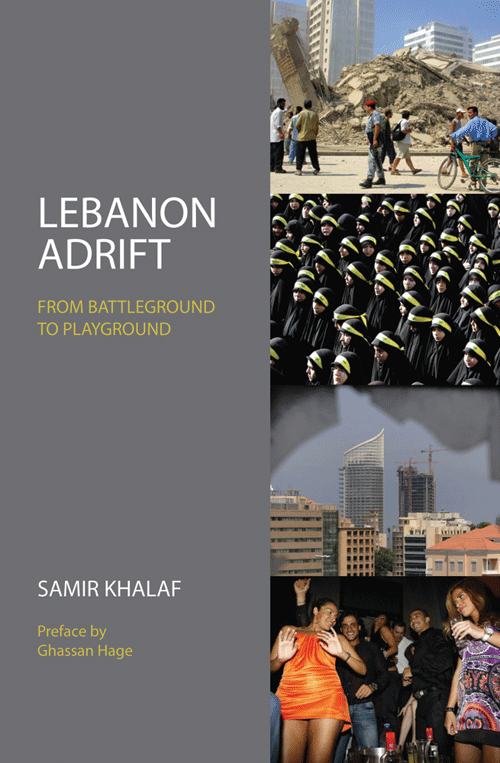
Lebanon Adrift – A book by Samir Khalaf

by Ellen Hardy February 3, 2012
written by Ellen Hardy

Something strange often happens to first year medical students, confronted by textbooks listing reams of sinister symptoms: they all come down with galloping hypochondria, seeing brain tumors in every headache and consumption in every cough. Something similar might happen to a Beiruti reading “Lebanon Adrift” — though instead of physical ailments, readers will look up from the pages and see, in every poster, traffic jam or flutter of false eyelashes, a society in torment. “Lebanon Adrift” is a wide-ranging diagnosis of Lebanon’s contemporary pathology as a culture of unrestrained excess, narcissism and escapism, indicative of political, moral and social alienation.

Author Samir Khalaf is a distinguished sociologist and professor at the American University of Beirut. “Lebanon Adrift” is a book full of “personal indignation and outrage” — the sum of a lifetime of observation of a land he loves, in which he attempts to theorize those grating features of Lebanon’s social landscape that will be familiar to anyone with more than a passing acquaintance with the country, from pervasive littering and smoking to the gaudy wedding season with its antisocial firework displays. Via a whistle-stop tour of Lebanese history and politics, peppered with social thought from the Frankfurt School to Zygmunt Bauman, Khalaf explores theories of modern consumerism turned to mindless commodification of kitsch and prestige items in the pursuit of social status.

Lebanon’s post-war society, Khalaf suggests, rejects the usual trappings of restraint and sobriety typical for countries recovering from long periods of civil conflict. Rather, the Lebanese, with their history of mercantilism and aptitude for playfulness, have responded to political inaction, social and geographical stratification, unresolved tensions and an uncertain future by unreservedly embracing the numbing attractions of conspicuous consumption. With everything from ‘super nightclubs’ to the latest Porsches, they are replacing creative industry and functional social cohesion with a Durkheimian “social state in which society’s norms can no longer impose effective control over people’s impulses,” resulting in a damaged landscape of environmental degradation, corruption and incivility.

By designating a range of social features as part of Lebanon’s movement from a battleground to a “playground”, where the dark sides of the nation’s Janus-faced liberty, playfulness, enterprise and conviviality are taking over, Khalaf is offering a constructive way of thinking about social malaise. Through consumption, he suggests man gained freedom, “but not the positive sense [of] freedom to mobilize this liberation in creative and purposive forms of participation in the public sphere.”

But like those medical students, the temptation to see everything around one as the manifestation of an illness can obscure other realities. Khalaf proposes the use of “ideal types” to pin down “essential elements” of a social reality as a constructive “tool for analysis”. Yet in his scattergun and often rambling tour of the tribulations of contemporary Lebanon, his “average Lebanese” is invariably hugely wealthy, indolent, monstrously superficial and male. That such people exist is indisputable, but to give them the status of standard-bearer for the modern Lebanese identity is dangerous. There is little attempt to differentiate his central analysis by class, age, gender, religion or geography, and at times his personal outrage reaches the point of parody, decrying Lebanon’s “houses of ill-repute, casinos, gambling parlors, nightclubs, discos, bars, escort bureaus and other abodes of wickedness… Such aberrant features blemish the country’s national character.” Further, by identifying a general and unattractive tendency of the Lebanese for excessiveness and locating so many evils within it, Khalaf neglects a rigorous taking to task of the politicians and lawmakers who are allowing so many damaging transgressions free rein. 

There is much to admire in “Lebanon Adrift”, which also sees possibilities for redemption, making an assessment of non-governmental organizations, architects and political movements that give hope for an active and engaged civil society. Khalaf sees within consumerism possibilities of creativity and resistance. With luck, the debate over Lebanon as a “playground” will act as a spur to action and an encouragement to the “avant-garde and counter-culture” who are sidelined by Khalaf’s “average Lebanese”.

February 3, 2012 0 comments
0 FacebookTwitterPinterestEmail
Comment

The ugly side of man

by Sami Halabi February 3, 2012
written by Sami Halabi

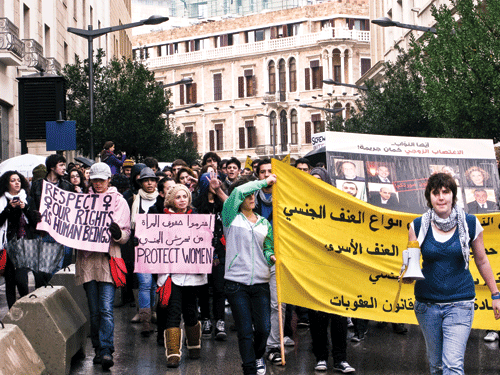
Misogyny is the vulgar indulgence of ignorant men, and it is a shame upon this nation that the men who head our government so openly display this flaccid form of intellect. They began to give it expression early in their term, by forming a cabinet devoid of women, and continued through their denial of nationality rights to the children of Lebanese women and their spouses, then ignored a parliamentary initiative to enact laws targeting men who beat their wives and, more recently, a refusal to criminalize marital rape — these are just some of the more obvious affronts. 

With such exemplary leaders, it is no wonder why the slighting of women is so pervasive in our society, reaching even inside their bodies to reproductive choices. 

Even though abortion is widely available in Lebanon, it remains technically illegal and therefore unregulated and often unsafe. While forms of emergency contraception, in particular what is commonly known as the ‘morning after pill’, are not officially barred, pharmacies across the country were not stocking it on their shelves through December and January.  

Emergency contraception in the form of a pill does not induce an abortion; it is a preventative measure that releases hormones to prevent fertilization during the time it takes sperm to reach the egg, usually between 24 and 72 hours after intercourse. Only one brand of emergency contraception, called Norlevo, has legal access to the Lebanese market, but for reasons unbeknownst supplies of the drug were “cut off” according to the more than 20 pharmacies that were contacted last month. 

Calls to the local distributor, Union Pharmaceutique d’Orient, enquiring as to why, were met with denials that there was even a shortage and officials for the company refused to comment further. The manufacturer in France, HRA Pharma, also declined to comment. The head of the Syndicate of Pharmacists in Lebanon said he was unaware of the issue when asked, but promised to follow up on the matter — all further calls to his phone were left unreturned.

The underlying issue here is that there are no consequences for private companies who take away a woman’s right to choose and even put their lives at risk. The worst thing that usually happens with the morning after pill is a horrible mood swing, but little or no pain. But the alternative to proper emergency contraception for, say a 16-year-old girl who has been raped, is resorting to drugs such as Misoprostol, intended for use in the prevention of ulcers, but also having the ‘side effect’ of technically inducing miscarriage.

So instead of a relatively painless hormonal procedure to prevent pregnancy, women are forced to endure an excruciating process whereby eggs are expelled after contractions in a pool of blood and then, “you just pray,” according to one pharmacist, that fertilization has not taken place. There is no guarantee with Misoprostol that an embryo is expelled, as it is possible that a life threatening ectopic pregnancy might occur, where the embryo implants outside the uterus. Other complications of Misoprostol can include potentially fatal toxic shock syndrome. 

This shortage of Norlevo on the market is directly related to Lebanon’s economic aberration of exclusive agents, which disallows any other company from importing the same brand of medicine. So, in the interests of companies’ product monopolies that keep retail prices high, and the structure of our economy dependent on a few rich and powerful men, women are suffering.

Reproductive rights, and the recognition that women are entitled to the same opportunities and protections as men in a society, are not trivial policy matters — they are issues of human rights that leaders with any claim to morality need to address. 

Misogyny in Lebanon is as societal as it is systemic, rooted in a lack of education with regards to the issues and perpetuated by regressive laws and lawmakers. For the sake of treating half the population — including our sisters, wives, mothers and daughters — with a minimum of respect, we cannot allow our leaders to sit so comfortably with their inhumanity.

February 3, 2012 0 comments
0 FacebookTwitterPinterestEmail
Finance

MENA stock tips

by Maya Sioufi February 3, 2012
written by Maya Sioufi

Envisioning the start of 2012, investors across the Middle East probably could not have conceived of a more nightmarish scenario if they tried. The European debt crisis, Arab revolutions and election year posturing in the United States are just some of the many monsters ready to jump from the closet and under the bed as they lay awake at night. For advice on how to keep your cash safe from these creatures of havoc, Executive spoke with Tareck Farah, chief executive of MENA Invest, and Amin el-Kholy, head of asset management at Arqaam Capital.

 
Tareck Farah 
 
Bullish or bearish? “Cash is king,” says Farah as he explains his bearish stance towards the financial markets. He prefers to hold cash, especially in the first six months of 2012. Within developed markets, he prefers to be exposed to the United States where there is at least some confirmation of growth relative to Europe, which faces a “deleveraging process that might take longer than we imagine.” He believes that investor confidence could still go lower as the European crisis deepens. In emerging markets, Farah believes there will be a squeeze in liquidity in the first half of the year but expects this to ease towards the end of the second quarter, and would start picking stocks in these markets then.
 
Favorite asset classes? While Farah stresses that he would keep a high level of cash in these uncertain times, he likes the corporate credit of solid US and European companies and would stay away from sovereigns and financials. On the equity side, he recommends the US healthcare sector for its defensiveness and likes Medtronic, United Health Corporation, Johnson & Johnson, Élan Corporation and Boeing in the heavy industry sector. He also recommends the US telecommunications sector on the back of the social network boom this year, with major initial public offerings expected, such as the much-hyped Facebook offering. In this space, he highlights Constant Contact, a provider of social media tools.
 
Thoughts on the MENA region? Farah is not particularly hot on any MENA market, with the only one he would consider investing in – if it falls to lower levels – being Saudi Arabia for its solid growth potential, high global oil prices, significant government spending in 2012 and population growth. His favorite sectors are cement and petrochemical.
 
Thoughts on Lebanon? Farah would not invest in Lebanon’s financial markets. He is concerned about the exposure of the Lebanese banking sector to Arab countries facing turmoil. On Solidere, he believes it is not expensive at $14 and if it falls further, it becomes a no brainer. As for Lebanon’s debt, he finds it expensive relative to global market conditions and it does not reflect the Lebanese reality. Farah believes rates should be higher given that Lebanon is “not a producing country, has a single B credit rating and 100 percent of its [territorial] frontiers have issues.”
 
Top pick globally? He stresses on cash as he says, “The intelligent investor would be the one who can better manage his cash.” 
 
 
Amin el-Kholy
 
Bullish or bearish? Kholy is neither overly bullish nor bearish. He is selective in these uncertain markets, as he believes that we are now facing a binary scenario. He stresses that in these markets it is essential to be selective and able to react quickly as we get more clarity on the possible scenarios. Kholy is not too concerned about the Arab political situation as “the risk is already out there.” He is more worried about what the new normal will look like once the European debt crisis and the global uncertainties are resolved, and how it will impact the commodity space, emerging markets and the MENA region. He also highlights the geopolitical risk in Iran as a key issue to be resolved before he can be more bullish on the MENA markets. 
 
Favorite asset class? Kholy believes that both fixed income and equities present attractive opportunities. He is particularly interested in solid names in the MENA region, which offer high dividend yields. He likes the Gulf Cooperation Council region, as it enjoys a favorable economic environment.
 
Thoughts on MENA markets? Kholy would be bullish but selective in trying to find interesting opportunities. The only factor that could impact his stance in the region is geopolitical risk stemming from the Iranian situation. His favorite countries to invest in would be Saudi Arabia and for a slightly contrarian pick, he would recommend the United Arab Emirates. In Saudi Arabia, he would invest in the retail and banking sectors. In the UAE, he would also look into investing in the banking sector.
 
Top global picks? Kholy likes gold or US dollars, but which depends on the scenario that pans out over the course of the year. In a more favorable scenario in which inflation picks up, he expects gold to be popular again. In a less favorable scenario, he would invest in the US dollar, especially via high-yielding GCC fixed income.
February 3, 2012 0 comments
0 FacebookTwitterPinterestEmail
Economics & Policy

A rush to power

by Joe Dyke February 3, 2012
written by Joe Dyke

If the many announcements coming out of the energy ministry last month translate into reality then the country’s electricity sector is on the verge of major change. In a few short days the government announced the start date for the increasing of the country’s energy capacity, the winners of a number of crucial contracts and even plans to control the price of illegal generators.

But if anybody has learned to be wary of the difference between presentations and performance it is the Lebanese. There are significant obstacles in the path of Energy Minister Gebran Bassil, among them political infighting, lawsuits and even allegations of corruption looming over the ministry’s head. 

At present, Lebanon’s consumption of power far outstrips supply. Including generation and imports the country has around 1,500 megawatts (MW) of electricity available, but demand reaches as high as 2,500 MW at peak times, leading to blackouts of over 6 hours a day in some parts of the country.  Late last year the government came close to collapse over the $1.2 billion electricity plan, which aims to add 700MW to the country’s grid, with Free Patriotic Movement (FPM) leader Michel Aoun threatening to pull his ministers from the cabinet if Bassil’s plan was not accepted. 

This cabinet collapse was averted and in January a government circular announced that the projects — including the redevelopment of Jiyye and Zouk power plants, a new gas pipeline and floating electricity-producing barges — are due to begin in March. Yet the infighting continues, with allegations that the finance ministry is preventing the transfer of the $1.2 billion. Cesar Abu Khalil, advisor to the Minister of Energy and Water, admitted that there have been “unnecessary” delays and confirmed that they are still waiting for the funding to be released.

“Technically no, I cannot confirm they [the funds] have been transferred but they have been allowed for by a law. It can be delayed but it cannot be stopped,” he said. “Sometimes it gets delayed in some administration but inevitably we will get our $1.2 billion.”

Unperturbed, the ministry plans to begin the tenders on the 700MW project in March and has begun announcing the winners of other contracts. One project that has been given the go-ahead despite a cacophony of criticism is the distribution service providers (DSPs). Under the scheme Lebanon is to be divided up into three sections, with one private consortium in each area allocated electricity distribution, maintenance and collection operations for a four-year period, with each contract worth more than $100 million. Last month the contracts were awarded, with Butec due to administer the north, Arabian Construction Company (ACC) dealing with Beirut and Debbas in the south.

Potential conflicts of interest are, however, apparent. Butec’s founder and majority stakeholder, Nizar Younes, ran for the Aoun/Franjieh alliance in the 2005 election in Batroun, alongside the energy minister. Meanwhile the ACC is run by the Qatari Prime Minister Hamad bin Jassim bin Mohammed al-Thani, whose country is known to have close relations with the FPM. Furthermore, while all of the companies are well respected, none have experience as energy distribution units in Lebanon.

One of the losing bidders in the north was E-Aley, a company that has been distributing energy in the country for more than 80 years. Following the decision to overlook them in favor of Butec, deputy general manager Albert Khoury confirmed that they have begun legal proceedings against the ruling. Khoury did not wish to discuss the bidding process for fear of jeopardizing the legal proceedings, but said: “electricity is more about politics in this country than about kilowatts and hertz; this is my conviction and this is how it is being played today.”

Mohammed Qabbani, head of parliament’s Public Works, Transport, Energy and Water Committee, says he believes the project is not permitted by Lebanese law, which grants powers exclusively to Électricité du Liban (EDL). “It is a completely illegal project. I will be asking the President of the Republic and the Prime Minister to stop [the minister] from continuing his illegal preparations for these service providers,” he said.

However Khalil denies all accusations of wrongdoing or political favoritism, welcoming legal challenges from those who believe there have been nefarious dealings. “There have been many allegations in the media and we don’t respond to these allegations. We waited for justice to issue its verdict and the verdict of justice is our response to all these allegations,” he said. Given the backlog of cases in Lebanon’s courts, justice may be a long time coming. 

Punishing success?

E-Aley is not the first company to take the government to court over their plans. Last month the ministry won a case brought by Électricité de Zahle (EDZ) over plans to reduce concessions for independent providers of electricity. 

Under the current scheme EDZ, and other firms that have exclusive concession agreements, receives electricity cheaper than cost price. The ministry claims Zahle is provided electricity at LL50 per kilowatt (KW), with others mostly around LL75, while average prices are around LL127. A ruling from the council of ministers in January upheld the decision that the cheapest price going forward will be LL95 per KW, a price Zahle owner Assaad Nakad claims will squeeze him out of business.

“It will be impossible for us to continue our services, and this will lead to the total liquidation of EDZ,” he said. He added that EDZ had been providing a similar service to the distribution service providers for decades. “I really do not understand why they want to destroy such a successful example while they do not know yet the outcome of the DSP project.”

But Khalil points out that these concessions add to the deficit of EDL, which ranges anywhere from $1.2 billion to $2 billion a year depending on oil prices, and are therefore paid for by the Lebanese people. “These concessions are some kind of feudalism, out of the Middle Ages. They try to portray themselves as a success story for Zahle and others,” he said. “If you got a kindergarten kid and put him in these conditions — where he has a fixed cost and a fixed selling price and exclusivity on people with 150 percent in profit — he will be a success story.”

Generating a regulator or regulating generators?

While announcing sweeping changes in almost every part of the industry, the government has remained tight-lipped about one issue; the creation of an independent regulator. Lebanon has been due a financially and politically independent body to organize and control the development of the sector since it was promised as part of Law 462 in 2002. 

Roudi Baroudi, Lebanon secretary at the World Energy Council, believes a regulator is the most important step toward increasing confidence in the energy sector. “The regulatory authority would make the market very transparent and honest; it would create competitiveness and a modern platform for private investors to have more of a stake in the industry,” he said. “And finally somebody would be liable for failures; the consumer will be able to pursue companies for mistakes.”

Yet successive energy ministers have proved unwilling to relinquish absolute power in their fiefdoms and the current one appears little different. Khalil claims the minister is open to the idea of a regulator but is waiting on the outcome of an amendment to Law 462, something a cabinet committee formed during the electricity crisis last September promised to create within three months — yet it has still not come to fruition.

“Whenever there will be a need for this body we will work on creating it,” said Khalil, though many in the private sector would claim the need has been clear for more than a decade. 

Perhaps the most bizarre of the ministry’s many announcements in January was the ‘directive’ on the price of private generators. Under Lebanese law only EDL is allowed to distribute electricity, but the power cuts that plague the country have led many to rely on illegal private companies, or ‘neighbourhood generators’ as they are more commonly known, to provide them with energy when the lights go out. 

The government has long turned a blind eye to such practices but has become concerned by the growth in companies exploiting their monopolies and overcharging customers. So a recent circular announced that the minister was introducing a ‘maximum price’ that generators are allowed to charge at LL400 ($0.26) per hour per five amperes, seemingly ignoring the fact that the industry is outside the law.

Khalil explains that whilst the whole issue is outside the rule of the law they do have tools at their disposal to make the generator owners comply. “Last week two generator companies were shut down by the municipalities; for those who will not abide by this tariff the municipalities, along with EDL, can ask them to remove their cables from EDL installations.” 

What Khalil is admitting, in effect, is that the government has begun to regulate an illegal industry. Whilst it may be commendable to face up to the elephant in the room there are serious concerns that without a regulator to ensure best practices, this process is open to abuse. The relationships shared between local officials have the potential to become more important than the service they provide.

“He [Bassil] is indirectly legalizing generators in the villages and streets. Why do it this way?” asked Qabbani. “Create a regulatory body and this body would have the right to give licenses for the production and generation of electricity. What can you deduce when somebody wants to monopolize illegal authority? What could it mean except corruption?”

The bottom line

When all this squabbling is over and done with, the average Lebanese customer cares about two things: whether they have electricity and how much it costs. The minister’s plan of 2010 aims to “gradually increase the (EDL) tariff” as the additional 700MW is introduced onto the grid over the coming years, thus reducing consumers’ reliance on expensive illegal generators. Yet the government has admitted that demand continues to grow by between 100 to 200 MW year-on-year. Therefore the 700MW, spread over three or four years, could only match the increase in consumption, meaning any increase in price will burden the Lebanese consumer without offering a tangible return.

Qabbani questions whether the plans will be able to counteract the growing gap between supply and demand. “They might be able to stabilize the inclination downward but I don’t think they can have any appreciable increase.”

The flurry of announcements suggests that at least something is happening. After years of deadlock, with electricity reform constantly overlooked, any news may be good news. Yet Riad Chedid, professor of electrical engineering at the American University of Beirut, believes for all its announcements the government is facing an uphill battle. “One should not underestimate the difficulties of trying to fix the electricity sector. It is multi-character: technical, political, human resources, financial. This is what the ministry has been doing so far, but you are dealing with 40 or 50 years of neglect.”

February 3, 2012 0 comments
0 FacebookTwitterPinterestEmail
Society

Discovering Armenia’s palate

by Executive Editors January 28, 2012
written by Executive Editors

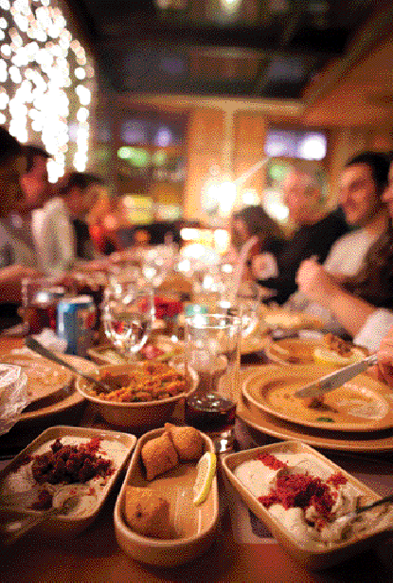
For some it is the smoky strips of blood-red basterma hanging in glass windows in Bourj Hammoud and filling the air with leathery, spicy scents, while others have a weakness for muhammara, rich with walnuts and pepper paste. More still grow misty-eyed at the thought of kafta, drenched in wild cherry sauce and strewn with cashew nuts and fried bread.

Most Beirutis with more than a passing interest in what goes on their plate will be able to name a favorite Armenian dish. But although people of Armenian origin have been in Lebanon for centuries, it’s only in the last few years that they have been drawing attention to themselves as restaurateurs.

The bulk of the Armenian diaspora in Lebanon are descendants of families from Cilicia, a region south of the Anatolian plateau, today in eastern Turkey and northern Syria. During the First World War, the Ottoman Turks pursued a campaign of ethnic cleansing that left some 1.5 million Armenians dead and drove tens of thousands into exile in the Levant; the survivors today in Lebanon are a 150,000-strong community known as much for their commercial industry as for their traumatic history. But if there is one way to pique interest in a people, it’s through food.

Aline Kamakian — co-author of the recent cookbook “Armenian Cuisine” and member of the family behind Mayrig restaurant — says that in her youth, going out to eat Armenian dishes would not have occurred to her. “It was everyday food. Traditionally, it’s always been Armenian mothers who cook.” But as second-generation families loosen up and intermarry, women have more time and independence.

Restaurants with an Armenian twist are therefore thriving on the skills of mothers who have time to spare — the kitchens at Mayrig and Seza are staffed by local women, not chefs — and who fill a need for labor-intensive traditional dishes. Madame Seza, who opened her restaurant a year ago, still idolizes the cuisine of her mother, who “did everything at home, and so well, to perfection.” Now, it is her children who have been re-enthused about the cooking of their forebears through the restaurant. “Before they asked for burgers, now they ask for manteh,” she says.

This flourishing of the cuisine in the public domain is also helping connect Armenians with their homeland and educate outsiders about Armenians and their history. As “Armenian Cuisine” demonstrates, with the recipes come memories, and many dishes — hummus with basterma here, pastries from Latakia there — are expressions of long geographical dislocation.

Rich variety and demand support flourishing restaurants across Beirut. There’s a familial welcome and bistro atmosphere at Onno in Bourj Hammoud, boutique design and ladies in lace headscarves at Seza in Mar Mikhael and seu beureg with a side of jazz at Razz’zz in Hamra. Now two of the more long-standing (and pricey) outfits — Mayrig and Al Mayass — are expanding, taking Cilicia’s heritage global. Kamakian is plotting a central kitchen in Europe that will be able to supply branches in Paris and beyond with food as skillfully produced as it is at Mayrig in Beirut, where “everything is handmade, mum’s doing it.” Al Mayass has had a branch in Kuwait since 2008, and is introducing four more outlets in the UAE and New York next year.

And so the cuisine of Cilicia, which tells the story of a country lost and countries gained through smoky meats and spices, is taking on new commercial and cultural significance. “When you’re eating the food and someone is telling you this is Armenian but the name is in Turkish,” says Kamakian, “the first question is, ‘Why? What happened?’ You’re opening a door for a million people to smell, taste, listen to what is Armenia. You’re moving all the senses through a simple dish.”

January 28, 2012 0 comments
0 FacebookTwitterPinterestEmail
Economics & Policy

For your information

by Executive Editors January 28, 2012
written by Executive Editors

Paying the bill

Lebanon’s banks made an uncharacteristically political move last month when they decided to fund Lebanon’s contribution to the controversial Special Tribunal for Lebanon. The move follows a decision by Prime Minister Najib Mikati to fund the tribunal in late November through the Higher Relief Council. The decision to pay Lebanon’s share of approximately $32 million was announced by the Association of Banks in Lebanon (ABL) and will see the country’s top 12 banks, which sit on its board, put up the money. Each bank will pay a share proportionate to their assets, according to the ABL. The ABL justified the move by saying that it would protect depositors’ funds, maintain political stability and help the investment climate in the country. The banks on the ABL’s board are Byblos Bank, BLOM Bank, Bank Audi, BankMed, Fransabank, Banque Libano-Française, Crédit Libanais, Bank of Beirut, SGBL, BBAC, the Lebanese Swiss Bank and Fenicia Bank. Hezbollah criticized the move to fund Lebanon’s portion of the tribunal but said it will not create a political issue out of it. 

Digging deeper deficits

Lebanon’s trade balance (exports minus imports) and balance of payments (or BOP, the measure of money coming in and out of the economy) have hit their greatest deficit levels to date, according to the latest data released by customs and the Banque du Liban (BDL), Lebanon’s central bank. By the end of October the trade deficit had widened to $13.35 billion, up 18.4 percent year-on-year, even while exports increased by 3.3 percent to $3.6 billion during the period. In October alone, the trade deficit was $2.2 billion, 107 percent higher than the same month in 2010. The BOP deficit increased accordingly to $2.13 billion in October, compared to a surplus of $2.8 billion in 2010. October’s BOP deficit, $589.8 million, was up from September’s $301.7 million figure. The two largest factors weighing into the BOP were the BDL’s net foreign asset surplus of $1.8 billion, and the $3.9 billion deficit in the payments of commercial banks and financial institutions.

Minimum wage, maximum anger

Much to the ire of trade unions, Labor Minister Charbel Nahas and his Free Patriotic Movement party, the cabinet voted last month to amend the minimum wage decree that was previously rejected by the Shura Council, Lebanon’s highest court. After a debate that has lasted months, the cabinet decided to increase the minimum wage from LL 500,000 ($331.67) to LL 600,000 ($398.00) and institute various other raises on other brackets. Teachers then held a strike shortly after the decision, which they called “humiliating”. The General Labor Confederation (GLC), the country’s largest labor union, also called for a nation-wide strike on December 27. When the measure came to a vote in cabinet, some of the labor minister’s recommendations were incorporated and the minium wage was raised to LL868,000 ($575.78), which includes LL 236,000 in transportation allowances added to the basic salary. Salaries between LL 1.5 million ($995) and LL 2.5 million ($1,658) will get a further 10 percent raise (above the intial 18 percent) while with anything above LL 2.5 million rises by LL 370,000 ($245). The raise is retroactive on a monthly basis as of December 1, 2011. Prime Minister Najib Mikati stated that the raise may hurt the economy and the GLC was considering calling off the strike as Executive went to print.

Dropping less calls

The typical Lebanese annoyance of having your phone conversation cut short because of the country’s infamously low quality cellular phone services is set to change in the next eight months, according to the telecommunications ministry. Last month the ministry unveiled a plan to invest some $110 million in a project to upgrade and modernize the country’s two cellular networks. The National Quality of Services plan will be implemented by the two privately owned operators Alfa and MTC, and could start showing results in as little as two to three months, according to the ministry. The first phase of the plan was to determine the geographic and technical weakness of the networks and as such the ministry has committed to purchasing 400 new antennas to support areas where reception is weak or non-existent. A further 20 mobile stations will provide backup support in densely populated areas. The ministry will also buy around 120 repeaters to install in areas where people have installed their own equipment to enhance signal strength.

Eating out

Known for their ability to throw a party and have a good time, the Lebanese spend around one-seventh of their income on eating out, according to a new study. A survey released last month compiled by the global credit card company MasterCard showed that the Lebanese spend an average of $105 per month on dining out and that 20 percent of consumers spend between $101 and $200 every month on restaurants. The highest spenders by age bracket were seen to be seniors over 55, while consumers with an annual household income over $30,000 spent around $169 every month eating out. The survey said that more than half of respondents eat out on average five times a month at mid-range family restaurants or cafes and six times per month at fast food restaurants; 32 percent went to food courts while 16 percent went to fine dining establishments in both hotels and standalone restaurants.

Labor makeup

New figures released by Lebanon’s official statistics agency have shed light on the makeup of employment across the nation. According to the Central Administration for Statistics, which used the International Labor Organization’s standards to measure the job market, Lebanon’s employment rate stood at 44.6 percent in 2009, the latest year studied by the agency. Of the total, 77 percent of the labor force is male and 23 percent is female. Around a quarter of workers were shown to hold university degrees, while another quarter had completed intermediate-level education, with 4.2 percent of workers deemed to be illiterate. The survey showed that 36.9 percent of workers are employed in the services sector, 27 percent in trade, 12.1 percent in industry, 8.9 percent in construction, 6.3 percent in agriculture and just 2 percent in financial intermediation and insurance.

Tentative growth prospects

Barclays Capital has forecast Lebanon’s gross domestic product growth at 3.6 percent this year after an estimated 1.8 percent growth in 2011. The firm said that an escalation of sanctions against Syria would pose downside risks for any economic growth and hurt the economy due to close economic ties between the neighboring countries. It also cautioned that the capital inflows enjoyed previously could be a thing of the past if the situation in Syria continues to worsen. The firm added that if the budget is passed as is presented by the finance ministry it would reverse previous fiscal gains due to higher and haphazard spending. It indicated that this increase in spending might not be absorbed by the ministries, which would entail a waste of public funds and inefficient spending. Barclays also cautioned that if the economic situation continues to deteriorate, this year could see political risk spill over onto banks’ balance sheets. It urged the government to support an orderly budgetary process, something that has not occurred since the last budget was passed by parliament six years ago. The government has until the end of this month to pass a yearly budget under the constitution. As Executive went to print the cabinet had yet to pass its version of the budget onto the parliament for debate and ratification.

January 28, 2012 0 comments
0 FacebookTwitterPinterestEmail
Real estate

For your information

by Executive Editors January 28, 2012
written by Executive Editors

Changing hands in Cannes

Eight months after Lebanese investor Toufic Aboukhater bought a string of seven InterContinental Hotels in Europe from Morgan Stanley Real Estate Fund, including the Carlton Hotel in Cannes, the same hotel has been sold to Qatari national Ghanim bin Saad al-Saad for $586 million, according to AFP. Starting in August 2012, the hotel will undergo previously planned renovations for a period of 10 months, its first major renovation since being established in 1911. In 2006, Morgan Stanley paid $826 million for the same portfolio. The December AFP report said the Qatari investor was also interested in other hotels belonging to the InterContinental chain, including those in Vienna, Rome and Madrid. In similar news, Saudi Arabian businessman Sheikh Mohamed bin Issa al-Jaber concluded a “100 percent equity” deal on December 14 to buy back the Scotsman Hotel Group, after it fell into the hands of creditors during a lengthy legal showdown with Standard Bank Group. The group accused him of reneging on $150 million worth of loans due but later settled out of court, in a deal that indirectly cost him a total of $1.55 billion, according to Jaber and reported by Arabian Business. Though the deal signed by Jaber’s hospitality firm, JJW Group, to buy the hotel properties out of administration was left undisclosed, Jaber’s December 15 statement said the hospitality firm would see an investment close to $100 million in 2012. The portfolio includes luxury hotels in Leeds, Edinburgh and Paris. Jaber’s MBI group originally bought the Scotsman Hotel Group, the hotel operator, for $98 million in 2006.

Red-hot healthcare

A partnership between Beirut’s Red House Group, a real estate investor, and Rizk Healthcare, has created the newly formed Rizk Red House Healthcare (RRHH) to deliver 10 hospitals in Saudi Arabia, a deal worth $1.35 billion. RRHH will work in partnership with the Saudi Arabian investment firm, Ebram, to complete the projects, which will see nearly 3,000 hospital beds added to the kingdom’s healthcare industry. “Today’s announcement of our partnership with Red House is a great example of how we continue to invest in the healthcare industry and of our commitment to provide healthcare services not only in Lebanon but also on the regional platform,” added Sami Rizk, chief executive officer of RRHH, which will be headquartered in Beirut with an office in Riyadh.

Lights on in Ajman

Originally announced in 2007, Al Zorah Development Company has re-launched its mixed-use tourism development, covering 5.4 million square meters in the northern emirate of Ajman in the United Arab Emirates. Solidere International, registered at the Dubai International Financial Centre, and the government of Ajman are behind the joint venture, with Sheikh Rashid bin Humeid al-Nuaimi as chairman of Al Zorah.  The project’s strategy has been restructured so that 70 percent of the land area will have resorts or tourism-related entities on it, 14 percent will be for residences or mixed-use plots, while offices and retail will take up 7 and 6 percent of land area respectively. The project leaders said the first phase will see delivery of a five-star resort, as well as a luxury hotel, with 160 rooms and 300 rooms, respectively. A luxury golf course and a community of villas and townhouses will round out the first phase, which should be complete by 2014. Speaking at the launch, Al Zorah’s Chief Executive Officer Imad Dana said 1.2 billion dirham ($140 million) worth of contracts have already been issued, but confirmed that management is still deciding on international hotel operators. Infrastructure work has started and completion of the roads and the four marinas is due by 2012. The total project comprises five developments, with nearly 5,000 hotel rooms in total. Regarding financing, Solidere Chairman Nasser Chamaa said the project had enough cash to fund its first phase without resorting to bank finance, but admitted that paid-up capital for the venture had halved to $234 million.

Lebanese buy into London

Ireland’s National Asset Management Agency has reportedly sold a property in London to an unnamed Lebanese developer for a hefty sum. Regarding the plot on the Isle of Dogs, where a 62-storey apartment block was to be built, the Irish Independent newspaper said in a November 30 article that: “It has been bought by a Lebanese developer for around £50 million [$78 million],” without naming the developer. The agreement is part of four deals concerning London properties, which will generate some $117 million for the group. In related news, M1 group, a private investment firm based in Beirut, has made headlines in recent years for some of the largest property deals in the British capital. The group’s real estate arm, based in Monaco, bought Victoria House in Bloomsbury in 2010 for $295 million and Credit Suisse’s headquarters in Canary Wharf in 2009 for $242 million. A December 7 BBC article quoted M1’s Executive Director of Real Estate, Mustapha el-Solh, as saying: “The system in London is very investor-friendly with transparent legal structures… and it has fiscal benefits in terms of tax and capital gains which give it a certain advantage.”

Luxury still sells

Despite the political instability in the region in 2011, Dubai-based developer Damac said a third of its luxury apartments in its Beirut high-rise have sold. “In Lebanon, we mobilized the site in 2010, we launched in June 2010, and so far, although being a very premium project in an area which is still under a lot of political turmoil, our sales are very good,” said General Manager Ziad el-Chaar in a December 5 statement reported by Arabian Business. The 28-story Damac Tower, situated near the Phoenicia Hotel and featuring interior design by Italian fashion house Versace Interiors, is the first residential project in Lebanon for Dubai’s largest luxury homes builder. In Dubai, a number of Damac’s projects have stalled, though the firm has delivered 21 buildings in total. Speaking of those investors who bought off-plan in the Palm Springs residential project on the now-stalled offshore island, Chaar said: “We have offered them a full refund in staged payments [or] a lump sum [70 percent] immediate payment, which is unprecedented in the market.” He added that there are no plans to launch future projects in Dubai in the foreseeable future.

Kuwait teams up with REAL

In a December 11 workshop titled “Mechanism of Real Estate Investments in Lebanon,” Chairman of the Kuwait Real Estate Association Tawfiq al-Jarrah said Kuwaiti investments in the Lebanese real estate sector were growing steadily. The workshop was the first formal cooperation with the Real Estate Association of Lebanon (REAL), headed by Chairman Massaad Fares, since the Kuwaiti team signed a ‘cooperation protocol’ with the former in November to help “remove hurdles facing Kuwaiti businesses” in Lebanon, according to the Kuwait News Agency.  REAL’s agreement means it will help register land plots bought by Kuwaiti businesses with the relevant Lebanese departments. In addition to legal and administrative council, the group will provide names of accredited companies, dealers, engineers, brokers and lawyers in Lebanon. In previous statements to Executive, Fares said the organization aims to promote reputable companies and eliminate or reduce the expanded number of non-professionals who enter the industry.

January 28, 2012 0 comments
0 FacebookTwitterPinterestEmail
Banking & Finance

Lebanese capital markets

by Executive Editors January 28, 2012
written by Executive Editors

Equity update

 16/12/201118/11/2011  % change
BLOM Stock Index1,189.411,174.81     1.24
Daily Average Traded Volume 513,17369,186      641
Daily Average Traded Value$1,945,930$766,177      154

The payment of Lebanon’s $32.6 million share of the annual funding for the Special Tribunal for Lebanon boosted activity on the Beirut Stock Exchange (BSE) in the latter part of November. The BLOM Stock Index (BSI) climbed by more than 4% during the period to 1,224 points, before retreating to 1,189 points by the end of the fourth week (December 12-16). Hence, the BSI advanced 1.2% from its previous close on November 18, with total losses in 2011 at 19.39%. The daily average volume per month rose more than seven-fold to 513,173 shares, up from 69,186 shares in the preceding four-week period, due largely to 6.8 million shares in Byblos’s common stock being traded on 16  December.

On the regional front, the BSI managed to outperform both the MSCI Emerging Market Index and the S&P Pan Arab Composite LargeMid Cap index. The former fell between November 18 and December 16 by 6.5% to 897 points, reflecting fears over the European debt crisis and signs of economic slowdown in China and South Korea. The S&P index followed suit, retreating 1% to 106 points.

Most banking stocks ended the four week-period in the red, affected by Moody’s Investors Service Outlook‘s downgrade for local banks to ‘negative’ from ‘stable.’ In fact, BLOM’s global depositary receipts lost 2.5% and BEMO common stock retreated by 4.9% to $7.70 and $2.35 respectively. Bank of Beirut stocks followed suit as its common stock declined by 1.3% to $19.20, while its preferred Class D lost 0.4% to $26. Bank Audi stocks also drew back, with its GDR losing 2.3% to $6.29. Its listed stock fell 2.2% to $5.85 and its preferred Class D decreased by 0.5% to $10.30. Byblos common stock was the sole gainer among banking stocks, rising 3% to settle at $1.65.

Solidere stocks A and B, which accounted for around 42% of total value traded, rallied during the first three weeks to hit $16, their highest level since mid-August 2011, before closing at $14.5 each on December 16 with a monthly increase of 6% and 7.5%, respectively.

Within the manufacturing sector, Holcim stock grew 1.5% to $16.15, whereas Ciment Blancs Nominal Class witnessed a single trade of 2,496 shares, lifting its price by 40% to $2.41, its highest level since inception.

Eurobond bulletin

 16/12/201118/11/2011Change
BLOM Bond Index (BBI)110.70111.09 -0.35%
Weighted Yield4.88%4.69%  19bps
Weighted Spread413400  13bps

The Lebanese Eurobonds market remained subdued over the past four weeks, sending the BLOM Bond Index (BBI) down 0.35% to settle at 110.7 points. Thus, the portfolio-weighted effective yield advanced 19 basis points (bps) to 4.88% and the spread against the United States benchmark yield widened 13bps to 413bps. Lebanon’s credit default swap (CDS) for five years — a proxy for a country’s default risk — reached 440-466bps, compared to 402-432bps on November 18. Comparatively, in regional markets, Dubai and Saudi Arabia CDSs were quoted at 449-465bps and 123-130bps, respectively.

January 28, 2012 0 comments
0 FacebookTwitterPinterestEmail
Banking & Finance

Financial quotes of the month

by Executive Editors January 28, 2012
written by Executive Editors

“Let us not hide it, Europe may be swept away by the crisis if it doesn’t get a grip, if it doesn’t change. We don’t have the right to let such a disaster happen.”

Nicolas Sarkozy, French president

“The economic situation is worse than anyone imagines.”

Kamal al-Ganzouri, Egyptian prime minister

“Acting like everyone who’s been successful is bad and that everyone who is rich is bad — I just don’t get it.”

Jamie Dimon, chief executive officer of JP Morgan

“Iran is a major oil producer and any sanctions on our oil export will definitely harm the global market.”

Rostam Qasemi, Iranian oil minister

“Rick, I’ll tell you what: $10,000 bucks? Ten thousand bet?” 

Mitt Romney, Republican presidential candidate, to rival Rick Perry while arguing over whether Romney had once supported nationalized healthcare

“There is no truth to what has been said of an intention to restructure part of debts that are due on [Dubai government-related] companies in 2012.”

Sheik Ahmed bin Saeed al-Maktoum, chairman of Dubai’s Supreme Fiscal Committee

“I simply do not know where the money is.”

Jon Corzine, former chief executive officer of MF Global, in his testimony to Congress regarding $1.2 billion in missing customer funds

“Between 2010 and 2011, lending to the private sector surpassed investments in treasury bills.”

Riad Salameh, Lebanon’s central bank governor, on commercial bank lending

“We think this will encourage the establishment of more new companies in Dubai because it makes the regulations and business environment more attractive for foreign investors.”

Hamad M Buamim, director general of the Dubai Chamber of Commerce and Industry, on the new UAE company law

“It means that Libya’s government will now have full access to the significant funds needed to help rebuild the country.”

William Hague, Britain’s foreign secretary, on the UN Security Council’s unfreezing of Libyan central bank assets

January 28, 2012 0 comments
0 FacebookTwitterPinterestEmail
  • 1
  • …
  • 348
  • 349
  • 350
  • 351
  • 352
  • …
  • 695

Latest Cover

About us

Since its first edition emerged on the newsstands in 1999, Executive Magazine has been dedicated to providing its readers with the most up-to-date local and regional business news. Executive is a monthly business magazine that offers readers in-depth analyses on the Lebanese world of commerce, covering all the major sectors – from banking, finance, and insurance to technology, tourism, hospitality, media, and retail.

  • Donate
  • Our Purpose
  • Contact Us

Sign up for our newsletter

    • Facebook
    • Twitter
    • Instagram
    • Linkedin
    • Youtube
    Executive Magazine
    • ISSUES
      • Current Issue
      • Past issues
    • BUSINESS
    • ECONOMICS & POLICY
    • OPINION
    • SPECIAL REPORTS
    • EXECUTIVE TALKS
    • MOVEMENTS
      • Change the image
      • Cannes lions
      • Transparency & accountability
      • ECONOMIC ROADMAP
      • Say No to Corruption
      • The Lebanon media development initiative
      • LPSN Policy Asks
      • Advocating the preservation of deposits
    • JOIN US
      • Join our movement
      • Attend our events
      • Receive updates
      • Connect with us
    • DONATE