• Donate
  • Our Purpose
  • Contact Us
Executive Magazine
  • ISSUES
    • Current Issue
    • Past issues
  • BUSINESS
  • ECONOMICS & POLICY
  • OPINION
  • SPECIAL REPORTS
  • EXECUTIVE TALKS
  • MOVEMENTS
    • Change the image
    • Cannes lions
    • Transparency & accountability
    • ECONOMIC ROADMAP
    • Say No to Corruption
    • The Lebanon media development initiative
    • LPSN Policy Asks
    • Advocating the preservation of deposits
  • JOIN US
    • Join our movement
    • Attend our events
    • Receive updates
    • Connect with us
  • DONATE
Capitalist Culture

Weaning off oil

by Michael Young November 3, 2009
written by Michael Young

When it comes to major political and economic policies in the Middle East, is the United States about to break a six decade-long habit?

That the question can be asked without provoking derision suggests that something is indeed changing in Washington and in the region. After World War II, a cornerstone of American policy in the Arab world was the protection of oil supplies. A quid pro quo was reached with Saudi Arabia: the US would militarily protect the kingdom and the Gulf in general, in exchange for which the Saudis would uphold stability in the oil markets, maintaining relatively cheap oil prices by using the kingdom’s enormous surplus capacity to regulate price and demand.

In recent years, however, particularly after the 9/11 attacks, Saudi Arabia’s image in the US has taken a dive. In the public eye, the kingdom was transformed from a long-term ally into a fount of Islamist fanaticism. This perception segued into a broader sense that the profits the Saudis reaped not only funded America’s enemies, but also confirmed how vulnerable the US was to fluctuations of an oil market in which Riyadh was a major player. This provoked American demands for “energy independence.”

Writing recently in Foreign Policy magazine, Saudi Prince Turki al-Faysal took issue with this mood. He described the “energy independence” slogan as “political posturing at its worst — a concept that is unrealistic, misguided, and ultimately harmful to energy-producing and consuming countries alike.” It was also shorthand “for arguing that the US has a dangerous reliance on… Saudi Arabia, which gets blamed for everything from global terrorism to high gasoline prices.”

Turki reminded his readers that Saudi Arabia holds about 25 percent of the world’s oil reserves and has the largest spare capacity globally, while no alternative energy source is available to run America’s economy. This situation only highlights the fact that “efforts spent proselytizing about energy independence should instead focus on acknowledging energy interdependence. Like it or not, the fates of the US and Saudi Arabia are connected and will remain so for decades to come.”

The prince was doubtless correct, but his protests only underlined how different the Saudi-American relationship is today, with politics as much a problem as economics. The Obama administration is preoccupied with disengagement from Iraq. This was Barack Obama’s priority as candidate, and little has changed since he took office. For the Saudis, whose priority is to contain a resurgent Iran, this American drawdown is worrisome.

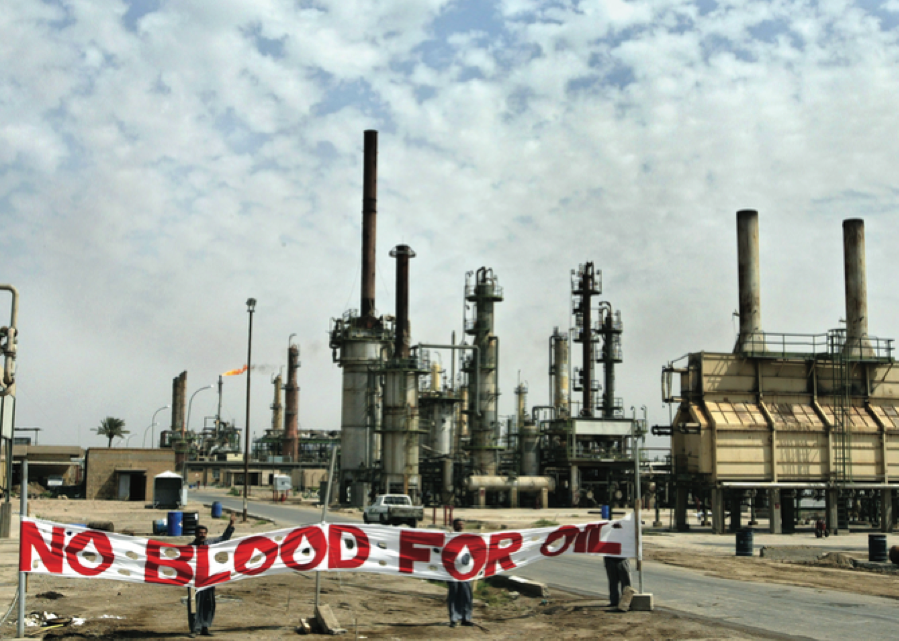
The Saudi regime remembers that in 1990 and 1991, the US deployed hundreds of thousands of soldiers to the kingdom to push the Iraqis out of occupied Kuwait. At the time, George H. W. Bush’s administration briefly linked this to protecting oil supplies, before anti-war protesters replied that they refused to trade “blood for oil.” But Washington’s clumsiness concealed a legitimate aim: preventing Iraq from imposing its hegemony on the Gulf. Today, as the Saudis watch the US eager to pull out from Iraq, they wonder who will prevent Iran from succeeding where Saddam failed.

The Obama administration has failed to answer that question. But on the specific issue of oil, some have tried to downplay Saudi importance by suggesting that oil should be treated as a neutral commodity — divorced from political commitments as the US secures alternative sources. Oil producers need to sell their oil, after all, and America is the largest consumer. Arrangements can be made.

Turki, however, sees oil as a political as much as an economic good, given how essential cheap oil is to the wellbeing of Western governments. We are heading toward a serious disconnect between Saudi and American perceptions if the Obama administration’s departure from Iraq plays out in Iran’s favor. In that case, Saudi Arabia’s autonomy on oil policy may gradually be called into question, while its rising sense of insecurity and other worries, such as the future of the regime, might push it to take steps that will have a profound impact on regional politics.

Hence, the notion of “de-politicizing” oil seems illusory, as would an American assumption that breaking away from Saudi Arabia could be effected with minimal negative consequences.

The answer to this conundrum is not obvious. The American strategy in the Middle East today, which involves greater political involvement complemented by a physical reduction in its forces, displeases the Saudis because they are not sure what US intentions are with respect to Iran. That means the Obama administration must articulate an unambiguous strategy, one either restating or convincingly replacing the postwar US-Saudi understanding. But the last word may be Turki’s: the US and Saudi Arabia are likely to remain connected for decades to come.

Michael Young

November 3, 2009 0 comments
0 FacebookTwitterPinterestEmail
Special SectionYoung Arab Leaders

Louis Hakim (Q&A)

by Executive Staff November 3, 2009
written by Executive Staff

Louis Hakim is the Chief Executive Officer of Philips Middle East. Since joining Philips Electronics Middle East & Africa in 1998, Louis has held a number of management, marketing and communications positions. In February 2005, he became CEO of Philips Middle East, and in October 2007 he was appointed Vice President of Royal Philips Electronics. Hakim is also a board member of Young Arab Leaders (YAL).

E What originally brought you to YAL and what do you feel are the important needs of youth in the Arab world?

The mission of YAL — to promote leadership and entrepreneurship across the Arab world — was and still is very appealing to me. I believed, then and now, that there is tremendous untapped potential within the region, and I was interested in finding ways to unleash this potential and to personally give back to the community. This is something that is important for everybody to do, especially those of us in key positions.

E What are the issues confronting Arab youth in the world today?

The new generation in the Middle East is no different from young people in other parts of the world. Internet penetration rates in the Arab world are highest among people aged between 15 and 30 years old. Our youth are technology savvy, are up-to -date on the latest trends and interact with their peers around the world on a daily basis, often in real time.

But unlike in other parts of the world, the young population in the Arab world is growing, and growing fast. More than half of the Arab population is under 24 years of age. And, according to the World Bank, it is estimated that between 55 and 70 million jobs need to be created in the coming decade to absorb the influx of people into the workforce.

This is both a challenge and an opportunity; on the one hand, we have the fastest growing workforce of any region in the world, which can be a tremendous asset and catalyst for growth. However, the same youth, if not educated well and if not provided with the right opportunities for employment and growth, can become the biggest challenge.

Enabling these youth, with the right skills for the labor market, to sustain themselves is the most critical issue facing our youth and facing us. We, as YAL, are working together to channel the potential of our youth to create a better future for our region and the world at large.

E How have you been working to help YAL have the biggest impact on the region?

In February of this year, in partnership with the Mohamed bin Rashid Foundation, we launched the ‘Philips Innovation Program.’

The objective of this program is to promote the development of broader and deeper innovation capabilities throughout the Arab region, which would contribute to future sustainable economic growth and the creation of new employment opportunities. The program is a competition whereby entrepreneurs across the Arab world submit their business concepts to a panel of industry experts. The selected innovators will spend up to six months, all expenses paid, in one of the Philips hi-tech campuses in Europe to develop their concepts into a formal business plan. They will then have the opportunity to go back to their home country and present their business plan to venture capitalists with a view to transforming their idea into a real business, which must be located in the Arab world.

E How do you see YAL’s role in the future? What would you like to see the organization undertake in terms of programs or activities?

As an organization, YAL has the ability to be a tremendous catalyst for entrepreneurship and a center for education of our youth. By undertaking or sponsoring more of these types of programs, the member companies will become increasingly exposed to the potential of the next generation in the Arab world. And for our youth, these programs will accelerate their understanding of what the business world is really like and help them move beyond theoretical learning to practical experience. 

November 3, 2009 0 comments
0 FacebookTwitterPinterestEmail
Companies & Strategies

Balancing act

by Executive Staff November 3, 2009
written by Executive Staff

Soraya Narfeldt is the top executive and founder of the logistics firm RA International. When her business cards came back from the printer with the title “Chairman” instead of “Chairwoman,” she asked herself, “Why do I have to make such a fuss [for you] to know I am a woman?”

These and many other questions arose on October 15 when Narfeldt visited Beirut, where she was born, to speak at the third annual New Arab Woman Forum at the Phoenicia Intercontinental Hotel.

The forum featured panels packed with female entrepreneurs, media figures, writers and community leaders. The only consensus reached among the speakers and the vocal attendees in the audience was that there would be no consensus.

Narfeldt and fellow speaker Amal Daraghmeh Masri, a Palestinian entrepreneur, have both learned that the best way to succeed as an Arab businesswoman is to make your own rules because every situation is different, as the heated conference discussions proved.

The right man for the job is a woman

For Narfeldt, that means getting the right “man” for the job no matter what tradition demands. When she needed to train a fleet of cleaners for a project in Chad, she thought of the dynamics of her own home.

“We were just about to start waste management and pest control for the United Nations and I said, ‘You need to go train some girls because they’re going to do it a hell of a lot better than the boys’,” she says. “They’re not going to cut corners, because I don’t cut corners when I clean. But, I know my husband does.”

After the training and the conclusion of her UN contract, the 30 women that Narfeldt’s company trained will have certificates validating their professional training.

Though her company is based in Dubai, Narfeldt’s true workplace is in post-conflict zones, whether it be Chad, Afghanistan, Sudan or Somalia. But she says that the real challenges of being a businesswoman comes up when her work takes her to London, New York or Washington DC.

Battling stereotypes

“Most men in the industry, especially in our industry, think that it’s going to be too hard for [women] to see the sad side of life or its harshness,” says Narfeldt. “In my industry it’s very tough sometimes, but most of the time I ensure that I earn that respect. Most men expect you to be fluffy and warm and cuddly. Well, no. We’re doing business.”

But while Narfeldt is often forced into the center of an old boys club, Masri is still looking for ways to break in.

“Men go to the gym or go drink something together and I’m at home cooking for my children. So, this is another barrier,” says Masri, general manager of Ougarit Advertising and chairwoman of the Business Women Forum in Ramallah, Palestine.

After teaching university and holding several marketing jobs, Masri decided that self-employment was the best way to become a successful businesswoman. She began her advertising business in 1999 and eventually expanded into media buying, print and production as well as real state.

Going it alone

“Having a household to take care of and having children at the same time is a real challenge,” she says. “That’s why I encourage women to have their own businesses. It gives them flexibility with their families.”

Masri insists that being a woman has never garnered a negative reaction from clients, but she does think that government support is needed to help women start businesses.

“Women in general do not own things. They don’t own land or apartments, so they can’t use them as collateral to get loans,” says Masri. “Let’s give some tax exemptions to women who open businesses for the first five years.”

November 3, 2009 0 comments
0 FacebookTwitterPinterestEmail
Companies & Strategies

Playing to the middle

by Executive Staff November 3, 2009
written by Executive Staff

Good news for middle income house seekers searching for affordable apartments: Sayfco Holding, the Lebanon-based high-end real estate developer is going back to its roots, said Chahe Yerevanian, Sayfco’s chairman. After having abandoned the middle income market for many years, the company is planning to launch  a new housing project in Jdeideh (Metn) this month for mid-range budgets.

‘Abraj Jdeideh’ will feature five 15-storey towers and will include apartments ranging from 122 square meters, which will be priced at $140,000, to 166 square meters — priced at $180,000. Sayfco is not planning to stop developing luxurious housing projects, but is now entering a new market, which is projected to be healthier in the forthcoming years.

“Luxury [demand] will stop for a while because of the economic crisis. The prices [of high-end apartments] will never go down, but I think luxury will stop having a quick turnover,” said Yerevanian. Sayfco has finalized the plans and is waiting for the permits to come through in order to launch the project. Construction will start by the end of this year or beginning 2010 and will take around two years.

From politics to real estate

Even though Sayfco has not been involved in middle-income housing for some years now, this segment was the sole target of the company when it was first created. Ara Yerevanian, Chahe’s father, took the challenge upon himself, when he was elected a member of the Lebanese parliament in the 1950s, to provide housing for the middle income market, something which the government failed to do. He established ‘Ara Yerevanian Establishment’ and began building 200 to 300-unit residential developments,  priced at around $30,000 per unit. When the Lebanese Civil War began, the family immigrated to Canada and started conducting its business there until they returned in 1995. The company was then renamed Ara Yerevanian & Sons. In 2000, Chahe took over the leadership of the company and started targeting Gulf Cooperation Council  (GCC) clients, while also entering higher market segments.

“I foresaw that the luxury market is going to have a boom, so instead of building apartments for $100,000 to $150,000, we went up to half a million and from there we went to Clouds [Faqra Club]— 11 villas for $5 million each,” said Yerevanian.

In 2004, Ara Yerevanian & Sons was substituted with Sayfco Holding and all its subsidiaries were created: Sayfco Development, Sayfco Brokerage, Sayfco Financing, Marina Hills, Villa des Roches and Ahlam Lands. This move was the first step to restructuring Sayfco and turning it into a corporate entity, rather than a family business.

“I believe family businesses do not last more than two generations… once the kids and the cousins meet, and the wives come in, the company is gone,” said Yerevanian. Therefore, potentially, the management of Sayfco will be separated from its ownership and when Yerevanian retires, a non-family member may take his place. “This is how I see the future of Sayfco,” said Yerevanian.

Expansion on the way

Sayfco develops projects only in Lebanon, but targets both Lebanese and regional customers. For that reason, the brokerage arm of the company was set to open in different GCC countries, in addition to its Bahrain branch which opened in 2005. The plan stalled when the financial crisis hit the property market in the region. With 500 GCC clients, Yerevanian said that it was necessary for them to open regional sales and marketing offices.

Next summer, depending on the market, new branches will start opening six months apart in Qatar, Saudi Arabia, Oman, Dubai and Abu Dhabi, with further expansions possible in Jordan, Egypt and other regional countries.

As for future projects, Sayfco is planning to resume work on the $1.2 billion Beirut Gate after the project was frozen due to difficulties faced by the Abu Dhabi Investment House — Sayfco’s strategic partner on this project. The company is also planning to start work on the Ahlam Mountain resort in Kfardebian in the near future.

November 3, 2009 0 comments
0 FacebookTwitterPinterestEmail
Finance

Regional equity markets

by Executive Staff November 3, 2009
written by Executive Staff

Beirut SE  (one month)

Current Year High: 1,158.30  Current Year Low: 705.56

The Beirut Stock Exchange (BSE) closed the Oct. 23 session at 1,572.28 points, as measured by BLOM Bank’s Blom Stock Index. Shares on the BSE had a positive trajectory in October, despite some frightful interludes, when political worries were heightened by the political class’s unbelievable wrangling over ministerial positions and cabinet powers. Notable risers on the BSE were real estate firm Solidere, recording a gain of more than $1 to $26.28 on Oct. 23, just a bit below the stock’s 12-month high. Bank Audi stock appreciated even more and closed at $75.40 on Oct. 23, representing a 22% gain since Oct 1. Overall, the Lebanese share indices have risen to levels that analysts had estimated, after the national elections in June 2009, to be reachable on basis of a successful cabinet formation — but a sharp one-day drop on Oct. 22 due to disappointing political news served as reminder that markets must rely in precarious dependency on improving government stability.

Amman SE  (one month)

Current Year High: 3,406.80  Current Year Low: 2,454.48

The track sheet for stocks on the Amman Stock Exchange (ASE) showed a lot of red in October, more than the ASE index drop of 2.37% to an Oct. 22 close at 2,624.40 points would let on. Curiously, all four sub-indices — for services, industry, banking, and insurance — underperformed the general index, by between 0.7 and 3.7 percentage points. Of the four leading companies by market cap, only The Housing Bank for Trade and Finance recorded a small gain in its share price, up 0.56% in the review period. Jordan Phosphate Mines Co. dropped 0.51%. The largest company on the ASE, however, Arab Bank, gave up 6.14% in valuation and number two player, Arab Potash Co, lost 5.06%. With third-quarter result announcements slow in rolling in, trading volumes on the ASE remained subdued into the third week of October while investors waited for information. 

Abu Dhabi SM  (one month)

Current Year High: 3,435.61  Current Year Low: 2,136.64

On the back of three months of fairly steady gains, the Abu Dhabi Exchange weakened in the sessions after Oct. 15 and ended the review period at 3,119.56 points, a tenth of one percent down from the beginning of the month. Construction, energy and real estate were the sectors that had driven index gains intra-month, whereas industry, consumer goods, and insurance underperformed in October. In the end, construction was the best performer, closing the Oct. 22 session 3.95% up on the month. Telecommunications operator Etisalat was a star of the earnings season, posting a 5% gain to $613.7 million for Q3 2009. As leading banks were also projected to bring decent results to the table, the contrast in expectations for the real estate majors, Aldar and Sorouh, became neuralgic points. Analysts anticipated year-on-year profit contractions of 65% or more for the two companies and shares of both moved lower after Oct. 15, an upwards revised target price for Aldar and the impending inaugural Formula 1 race on Yas Island not withstanding.

Dubai FM  (one month)

Current Year High: 2,955.11  Current Year Low: 1,433.1

Where Abu Dhabi goes, Dubai follows suit. Like the Abu Dhabi Securities Exchange (ADX) and Doha Securities Market (DSM), the Dubai Financial Market (DFM) index pattern sloped downward in the latter part of October. However, the DFM closed at 2,244.03 points on Oct. 22 with enough oomph for a 2.4% gain on the month, runner-up in the GCC after the Saudi market. Telco Du, expecting to double profits, gained 16.98% in its share price during the review period; the telecoms index on the DFM advanced 16.98%, making it the period’s best performing sector. Emaar Properties was not the strongest gainer on the DFM — that was Haji travel specialist Firdous Holding with a 90.7% gain — but clearly the most important one. Posting a third-quarter net profit of $178.3 million, Emaar made a different impression from its losses in the second quarter of 2009, beating analyst estimates by a mile. Emaar’s share closed the Oct. 22 session up 13.8% on the month — interestingly, the stock’s price climbed most vigorously up until about a week before the company announced its good earnings.

Kuwait SE  (one month)

Current Year High: 9,867.57  Current Year Low: 6,391.50

Losers outnumbered gainers in a sober October trading period that saw the Kuwait Stock Exchange (KSE) general index close at 7,607.90 points on Oct 22, down 2.7% from the start of the month. The quarterly earnings season did not spur obvious buying interest in any field, as all major sector indices moved lower. Insurance, which had seen above average downward pressure in 2009 until September, moved up 1.3%, making it the month’s best performing sector index on the KSE. The country’s strongest bank, National Bank of Kuwait, beat expectations with third-quarter result of $263 million, 10% higher than in the same quarter a year ago. Zain, the telecommunications group that is the market cap leader on the KSE, was making further news as negotiations moved forward over a sale of a 46% stake to a consortium of Malaysian and Indian investors.

Saudi Arabia SE  (one month)

Current Year High: 6,568.47  Current Year Low: 4,130.01

Oil is up 15% in the first 20 days of October and 99% since the start of 2009, with the Saudi stock market dutifully shifted into gaining mode — but ever so mildly. In the review period from Oct. 1 to 22, the Tadawul All-Share Index (TASI) added 3.1% to close at 6,515.81 points. Owing to this gain, which was the strongest for any GCC bourse in the review period, the TASI is up 35.7% since Jan. 1 and the Saudi Stock Exchange is almost on par with the Dubai Financial Market in terms of year-to-date performance. Insurance showed the strongest price movements, accounting for three of the four top gainers and for the biggest loser. Also notable were petrochemicals firms, among gainers, and manufacturers Saudi Cable and Arabian Pipes, on the downside, as was agro-industry company Anaam, whose share has appreciated 73% to Oct. 22 from the start of September.

Muscat SM  (one month)

Current Year High: 6,989.75  Current Year Low: 4,223.63

The general index for the Muscat Securities Market (MSM) fared only marginally better than its peer in Bahrain, as the MSM closed the Oct. 22 session at 6,609.45 points, or 0.6% up when compared with the last close in September. However, the MSM has an overall growth cushion for 2009 of 21.5% at this time, rather comfortable and better than the GCC average. The banking sector, closing the period 1.8% higher, performed slightly better than the general index, whereas the industrial index shed 2.3%. Among the market’s larger companies, Galfar Engineering showed a notable performance with a 9.4% gain during the review period. Smaller companies — Gulf Mushrooms Co. and The National Detergent Co. at the top and the Oman Chemicals Co. at the bottom — provided the market’s largest share price gains and losses, respectively. Bank Muscat, the country’s top bank by market cap, posted lower profits for both the third quarter and the first nine months of 2009 when compared with the same periods in 2008.

Bahrain SE  (one month)

Current Year High: 2,230.96  Current Year Low: 1,481.06

Bahraini stocks continued to be under-appreciated in October as the Bahrain Stock Exchange (BSE) index closed the Oct. 22 session at 1,558.21 points, only 0.2% up from the end of September and still in the doldrums in relation to the start of 2009, compared to which the market was down 13.6% at the end of the review period. While the index for the services industry made gains of almost 6%, the investment sector index pulled in the opposite direction with a drop of 5.7% in its sector index. National Bank of Bahrain, which announced a 19.6% year-on-year improved net profit of $30.2 million for Q3 2009, and Bahraini Saudi Bank, were the best gainers in October to date, each moving about 14% higher in their share prices. Kuwait’s BSE cross-listed Global Investment House saw its share price tank 32.4%, followed by Al Baraka Bank with a drop of 17.6%.

Doha SM  (one month)

Current Year High: 7,624.45 Current Year Low: 4,230.19

The Doha Securities Market (DSM) closed at 7,285.14 points on Oct. 22 with a 1.7% drop versus the last close in September, as buying sentiment dropped in the course of October after having pushed the DSM index more than 700 points higher between Aug. 20 and the end of September. On Oct. 6, reaching 7,624 points, the index had been at its highest since Oct. 22 of last year. All sectors saw volatility in October trading but in the end a sudden push upward let the insurance index come out on top with a gain of 5.9% for the review period, followed by industry with a 0.5% rise. Banking and services ended 2.4% and 1.8% lower, respectively. Two heavyweights, Industries Qatar and Qatar National Bank, posted drops in their Q3 profits of 54% and 7.5%, respectively, but saw price gains in the review period. By contrast, it was the bourse’s third-largest player, Ezdan Real Estate, whose shares nosedived with a 14.7% fall. The real estate company, whose stock had rallied in two wild dashes in August and September, posted a 40% drop in net profit.

Tunis SE  (one month)

Current Year High: 4,194.27  Current Year Low: 2,836.64

The Tunindex for the Tunisian Exchange closed the Oct. 23 session at 4,082.08 points, recording a 110-point drop from a new year high over two trading sessions. The index had rallied for much of the first 10 months in 2009, its year-to-date gain of 41.25% making it the MENA region’s number two performer, bested only by the gains seen on the Egyptian bourse. Tunisair increased 22.1% in the review period as the market’s top gainer. Market cap leader Poulina Group Holding dropped 3.3%. A new market entrant, cement maker Les Ciments de Bizerte, started trading on Oct. 21 and reinsurance company Tunis Re let it be known that it plans for an initial public offering before the end of 2009.

Casablanca SE  (one month)

Current Year High: 12,224.21            Current Year Low: 9,405.86

The Casablanca Stock Exchange was a case of trading sideways in October, closing 0.6% higher at 10,830.43 points when compared with the start of the month. Its performance for the year to date has been similarly mellow, with a drop of 0.84% since the start of 2009. All regional bourses in MENA are participating in the global financial markets game, but not all are equally affected by the questions that generally stir the minds of global investors these days. Are banking stocks gaining too much too fast? Is the real economy’s recovery substantial enough to warrant growth of financial markets? These are burning questions elsewhere. In Morocco, main issues of concern relate to increasing the Casablanca exchange’s efficiency and give investors improved transparency. To this end, market authorities announced that a new index of selected liquid securities will be introduced next January. 

Egypt CASE (one month)

Current Year High: 7,224.55  Current Year Low: 3,389.31

The Egyptian Exchange (EGX) 30 Index closed up 5.03% at 7,101.70 points on Oct. 22 when compared with the end of September. As the market had not seen these levels since share prices had crashed through the entire 7,000-point range in September of 2008, pundits immediately started theorizing of “psychologically important” index lines. The index reading for the Oct. 22 close has the aura of a pretty number, regardless, and what made it ever more impressive was the exchange’s year-to-date climb of 54.5%. Orascom Construction, the market cap leader, gained 15.4% in the review period, putting it in a club of 20 stocks that appreciated by more than 10% in this short time. Notably, well-known names representing a wide spectrum of sectors dominated in this stratum of sought-after shares, including EFG-Hermes, Orascom Telecom, Talaat Moustafa, Abu Qir and SODIC.  

November 3, 2009 0 comments
0 FacebookTwitterPinterestEmail
Finance

Spring to life

by Executive Staff November 3, 2009
written by Executive Staff

A drizzle of three initial public offerings on the Saudi Stock Exchange in October added some $52 million — small change in the world of IPOs — to this year’s regional primary markets. Slow but measurable progress in the region’s IPO market has pushed the total new equity raised in the region’s capital markets in the first nine months of 2009 to nearly $2.5 billion, according to the Regional Press Network, representing an 83 percent drop from the same period in 2008.

This quarter’s activity is a far cry from the heated IPO activity of a few years ago but a notable improvement from record lows in the first quarter of 2009. According to PricewaterhouseCoopers, the Gulf Cooperation Council witnessed two IPOs in the third quarter, raising $728 million, compared to six new listings in the three months to June 2009, which raised $1.12 billion. However, investors and analysts expect a return to much higher IPO activity in 2010, encouraged by new life in global markets that points to respectable performances of recently floated companies in the region.

Reversing course

Six of the region’s eight newly listed stocks that started trading in the second half of 2009 have achieved share price gains substantially above the gains of their respective benchmark indices in the same period. Vodafone Qatar has traded below issue price since August, unsurprising given the size and circumstance of its offering.

Companies with IPO plans can also take encouragement from subscription ratios in the Middle East North Africa region, which have been better than expected in the past few months. Three Saudi stocks — insurers mandated under their license terms to offer shares to the public — closed their subscription periods on October 9, and reported oversubscription demand ranging from 7.5 to 11.6 times the available capital.  

Observers say that the same “perfect storm” of dynamics that brought the IPO market to a halt in 2008 seems to have started to reverse course, and may now be helping to slowly rebuild IPO market fundamentals. According to Bloomberg research analyst Samer Shaheen. “The IPO market is expected to pick up some steam in the fourth quarter of 2009 and investors’ appetite for risk seems to be full speed ahead, as the IPO market has turned out some real dogs with fleas in the fourth quarter,” he said.

According to the latest figures, at least 85 IPOs have been announced for 2010, of which 34 will be in Saudi Arabia. However, the IPO market is expected to spring back to life during the last quarter of 2009 with more than seven new IPOs announced so far.

Saudi Arabian Airlines said it will offer a 30 percent stake of its catering unit in an IPO in 2010. Although the company did not specify the amount it wants to raise, it appointed Calyon Bank Saudi Arabia as the IPO advisor. The company’s goal is to “do a private sale, get some expertise, improve the efficiency, and move forward to an IPO market at a stage where there is still growth in the company,” said director general, Khalid al-Molhem.

Dubai not so lucky

The region’s most battered economy, the United Arab Emirates, failed to register any IPO announcements in 2009. A faint promise of an IPO came from Abu Dhabi’s Invest AD, which plans to float 25 to 33 percent of its shares through an IPO in the next three to five years. The company, which recently changed its name from Abu Dhabi Investment Co., did not disclose the amount it would like to raise, but chief executive Nazem Fawwaz al-Kudsi said it is “not in the business of doing a quick deal and flipping things over.”

In Qatar, the region’s hottest up and coming economy, the newly established Damman Islamic Insurance Co. or Bima, said it plans to launch an IPO two years after it begins operations in January 2010, as required by market regulations. The company, which was set up by Qatar Islamic Bank, Qatar Insurance Co., Al Rayan Bank, Barwa Real Estate Co. and QInvest, did not provide additional details.

In Egypt plans are underway to privatize four new river ports and offer them to the public in early 2010. The government expects the country’s transportation sector to grow by at least 8 percent in 2010. Container trading capacity is slated to increase by 260 percent, to reach 8 million containers by 2010. 

Tunisia’s Société Tunisienne de Réassurance (Tunis Re), said its plans to launch an IPO in the last quarter of 2009. It did not say how much it seeks to raise, but has appointed BNA Capitaux and Maxula Bourse as lead managers.

The Beirut Stock Exchange, the Levant’s least active stock market after Syria, may see the listing of Naas Bikfaya Mineral Water Co., a company that had been dormant but was recently acquired (86 percent stake) by Beirut-based FFA Private Bank and associates. FFA said it plans to re-launch Naas and offer a substantial portion as an IPO sometime in 2010.

Analysts say the seven announced IPOs show that liquidity has improved, along with better pricing and credit spreads. Rising valuations and regained investor confidence will continue to contribute to a more positive environment.

“No one is predicting a return to the boom era days when more than 200 companies went public a year, but some financiers and bankers say the market could soon recover to the level of 100 or so IPOs a year,” Shaheen added.

Regional Press Network

November 3, 2009 0 comments
0 FacebookTwitterPinterestEmail
Finance

Rogue to riches

by Executive Staff November 3, 2009
written by Executive Staff

The early release of convicted Lockerbie bomber Abdelbaset Ali Mohamed al-Megrahi from a Scottish prison this summer sparked new scrutiny of Libya’s global economic clout. Megrahi was the only man convicted of the bombing of PanAm flight 103 in 1988 that killed some 270 people, mostly Americans. After it was discovered that Megrahi, who has always maintained his innocence, was terminally ill with prostate cancer earlier this year, the Scottish Justice Ministry officially released the prisoner on grounds of “conscience,” sparking international furor, as well as British and American calls for an inquiry into how the decision was reached.

While the British government called Megrahi’s release an “independent step,” British Foreign Secretary David Miliband seemed to contradict this claim in a Commons statement, where he highlighted Megrahi’s relevance to British-Libyan relations: “Although the decision [to release Megrahi early] was not one for the United Kingdom government, British interests — including those of UK nationals, British business and possibly security cooperation — would be damaged… if Megrahi were to die in a Scottish prison.”

Whether or not Britain pawned Megrahi off in a backdoor business deal, his early release and hero’s welcome in Tripoli were something of a diplomatic coup for Libya, a country considered a rogue, terrorist state by Western powers up until the current decade. Since the lifting of UN sanctions in 2003 and its removal from the US state sponsors of terrorism list in 2006, Libya has rapidly remade itself from being the West’s antagonist to its unbowed trading partner.

Now poised to deepen its economic ties through strategic foreign investments, Libya’s sovereign wealth fund (SWF), the Libyan Investment Authority (LIA), is channeling the country’s oil-fed surpluses into a portfolio that includes energy sector assets, real estate and foreign exchange. Launched in 2006 by a merger of six investment entities belonging to the Libyan government, the LIA is finding international trading partners open for business for the first time, especially as the financial crisis fuels a search for new sources of liquidity.

“If you wanted to invest in the past, no one would take your calls,” Libyan Investment Authority (LIA) Executive Director Mohamed Layas said at the fund’s launch. “Now bankers fly on their private jets to see us.”

Transparent figures are hard to come by, but the LIA is thought to manage some $65 billion worth of assets, earmarked to diversify the country’s economy and lessen its dependence on oil exports. LIA executives have stated that Libya’s intentions are purely commercial. Analysts say, however, that while recent trends in LIA foreign investment reveal a cautious, long-term approach to investing, new energy deals and foreign alliances are telling of Libya’s willingness to mix political maneuvering with business interests

The revival of resource nationalism

On September 18, Verenex Energy Inc. gave in. The small Canadian oil exploration company with stakes in Libya was forced to agree to a buyout by the LIA for about $293.7 million, after the Libyan National Oil Corporation (NOC) vetoed a $482 million bid for the Calgary-based firm by China National Petroleum Corporation (CNPC). Libya’s state-run NOC used its right of first refusal to block the bid by CNPC; when Verenex protested the veto, the NOC threatened to investigate “improper bidding” in Verenex’s acquisition of Libya’s Area 47. Faced with the risk of losing a region with roughly 2.15 billion barrels in crude oil reserves, the Canadian company resigned itself to its fate and recommended the deal to shareholders.

Although the LIA had agreed in March to match the CNPC’s bid of $9.35 per share, it later announced it was helping itself to a 30 percent discount, paying $6.63 per share.

Senior analyst at global research firm Roubini Global Economics, Rachel Ziemba, said that in addition to laying bare the close ties between the Libyan government and the LIA, the deal could signal “a revival of resource nationalism in Libya, with a reluctance for some foreign investment.”

Foreign investors are liable to find themselves on shaky ground in Libya. “They’ve made it easy to get in, but it seems to be difficult to exit, at least in our case, under normal business terms,” Verenex CEO James McFarland said last month. The US Embassy in Tripoli warns potential investors about the “great deal of confusion, particularly among foreign investors” created by the reform process, “as shifting regulations and a weak regulatory environment have not inspired confidence in the market.”

“The decision not to sell to the Chinese was a political one,” said John Hamilton, contributing editor at African Energy, adding that, generally, the LIA avoids serving a political agenda. “Libya has a handful of other funds, some of which are nominally associated or subsidiary to the LIA, but which are autonomously run, [such as the] Libyan African Investment Portfolio (LAIP). These funds are more political. In the LAIP’s case, it supports Colonel Muammar al Qaddafi’s political ambitions for the United States of Africa,” he said.

London panders while Rome bows

Now that Europe is “biting for the chance to invest in Libya, particularly its oil and gas sector,” according to Ziemba, the LIA is sending a scratch-my-back message: companies receiving Libyan foreign investments are to be granted access to coveted Libyan markets. The LIA’s Layas said as much in a 2007 interview with the Financial Times: “If we buy shares in a construction company abroad, the other benefit is that we will generate business for them in Libya, where we have a huge development plan,” he said.

Critics of the Megrahi affair recalled this summer that British companies had recently signed a number of significant contracts with Libya, including BP’s $900 million oil exploration and production contract in the Ghadames basin, hailed by BP group executive Tony Hayward as “a welcome return to the country for BP after more than 30 years…It is BP’s single biggest exploration commitment.”

At least 150 British companies now operate in Libya, including BP, HSBC, Marks & Spencer and Rentokil.

The LIA is also making acquisitions in top-shelf London real estate. Last December, the fund acquired a prestigious office building opposite the Bank of England for $200 million. In July, it bought a sleek commercial property on Oxford Street, called Portman House, for $258 million. London representatives of the LIA say they are looking for more acquisitions and plan to open the LIA’s first field branch in London.

Italy, on the other hand, ushered in a new era of bilateral economic relations with a historic reparations treaty that commits Rome to paying an astonishing $5 billion over the next 20 years to its former North African colony for key infrastructure projects. Berlusconi humbled himself at the signing ceremony in a Libyan tent last year.

“It is my duty to express to you, in the name of the Italian people, our regret and apologies for the deep wounds that we have caused you,” said the Italian premier.

Libya had sought for more than 30 years to expose and shame Italy’s tragic colonial blunders on its soil, but analysts say it was the heavy pressure the Italian business and political establishment brought to bear on Italy’s government that produced an agreement with such highly desirable business provisions for Italian companies. In addition to infrastructure development, the treaty envisages bilateral cooperation in the energy sector and intensifying efforts to combat illegal immigration and terrorism. In a less humble moment of candor with an Italian journalist, Berlusconi described his understanding of the treaty’s objectives: “less illegal immigrants and more oil.”

Italian aerospace and defense group Finmeccanica said in July it had signed a memorandum of understanding for strategic cooperation in the Middle East and Africa with the LIA, which now also holds minor shares in Italy’s Fiat, Eni, Banca di Roma and football team Juventus. Two months before the signing of the reparations treaty, Libya’s NOC and Eni renewed their oil and gas contracts for 25 years, setting new expiration dates of 2042 for oil and 2047 for gas. The six exploration and production sharing (EPSA IV) contracts “ensure greater energy security for Italy,” according to a statement by Eni, and they contain technology transfer provisions that favor the Libyan side.

Western politicians and executives seem to be cozying up to Qaddafi with firm offers for long-term partnerships — a sure sign that Libyan shrewdness in playing its post-rogue status has clearly paid off. With key domestic infrastructure investments assured and foreign investment deepening its economic and political influence in recession-hit Europe, horizons look bright for North Africa’s largest oil producer.

November 3, 2009 0 comments
0 FacebookTwitterPinterestEmail
Finance

Managing a cash crunch

by Ahmed Youssef November 3, 2009
written by Ahmed Youssef

The global recession has recently shone a spotlight on the way many companies in the Gulf Cooperation Council region manage their business. Before the economic downturn, there was a collective belief that growth would continue unabated and liquidity would be endlessly available. As a result, companies chased the top line while ignoring critical aspects of their cash flow and balance sheet, making sales under terms favorable to their customers but that undermined their own profitability. They took on debt from multiple sources to build factories, took stakes in other companies, covered finance charges and cut dividend checks to shareholders.

This approach to growth is akin to living on borrowed time. Liquidity issues bubbled beneath the surface while the economy was booming, but rose to the top when the global recession hit. Now, many GCC companies are in a full-fledged cash crunch. In Saudi Arabia, for instance, our analysis of 75 listed companies shows that more than 20 percent have a cash ratio of less than 0.1 as of the end of fiscal year 2008, putting those companies in a highly vulnerable position. In the United Arab Emirates, our analysis of 50 listed companies shows that more than 60 percent had a negative free cash flow in 2008, amounting to a cumulative shortfall of $11.1 billion. 

As executives now prepare for an eventual economic recovery, they should get their house in order and free up cash by improving the management of their working capital, calibrating their asset base and rightsizing their capital structure. Beyond those quick tactical fixes, executives should use this period to adopt a change in philosophy in their approach to managing their business. They should synchronize the execution of all elements of their business strategy: adopting the appropriate financing approach, anticipating a buildup of operational capabilities and strengthening relationships with key stakeholders and suppliers. Companies that address these challenges now will be able to improve their cash position and move aggressively to seize the next wave of growth and strategic opportunities that present themselves.

Immediate action required

Managing the top line in isolation from cash flow and balance sheet considerations is clearly unsustainable. Companies don’t necessarily have to stop investing, but they do need to get their house in order in the short term by addressing three challenges through a series of quick tactical measures to free up and hoard cash.

• Improve management of working capital. GCC companies should take a more rigorous approach to accounts receivables, ensuring that every stage in the receivables process happens promptly, as well as offering discounts for early payment. They can overhaul their inventory management, eliminating redundant and obsolete inventory, even at a book loss, to save the cost of its handling, storage, and insurance. Finally, they can increase management accountability for cash flow, tying incentives to measures such as working capital over sales and interest coverage ratio.

• Improve asset utilization. Companies should consider deferring large capital investments and maintenance capital, or else introducing them in phases instead of all at once. They should also look into selling idle or under-utilized noncore investments to generate cash to reinvest in value-adding operations. Top companies go even further by continuously evaluating their portfolios in search of opportunities to create value with businesses that are worth more to a different owner or in a different form of ownership.

• Improve capital utilization. Companies should suspend or reduce dividend payments in the short term to save cash and help restore their balance sheets’  health. There will be no better time to find understanding investors and to convince them of the importance of keeping cash in the company. They should also work closely with their lenders to solve the short-term crunch, adjusting the terms of their loans and extending their maturities. They could also explore hybrid capital instruments to address short-term needs.

The long-term perspective

After executives explore these near-term fixes and take action to weather the immediate cash crunch, it is imperative that they begin to lay the groundwork for a more strategic approach to managing their companies’ financials. The day-to-day operations of many GCC businesses are governed by a patchwork of independent individuals, departments and business units. Strategy, operations and finance are often not coordinated, operating in silos, which is a recipe for unstable growth rather than sustainable market leadership. Tearing down those silos and fostering an environment of cooperation requires a fresh look at the way information is shared and decisions are made within the company. Ensuring that strategy decisions are subjected to rigorous due diligence and risk assessments will, in most cases, help companies steer clear of major financial harm.

Finance’s role in this reorganization is to design a clear financial strategy that takes into account the company’s operational capabilities and overall growth strategy, and aligns its capital structure, cash management and shareholder distributions. In this, finance becomes a business partner to the CEO and the board of directors, rather than a scorekeeper focused solely on accounting and financial reporting. As a business partner, the finance executive would revamp the relationship with investors. Strategically reviewing banking relationships can yield opportunities to foster closer ties by consolidating activities under a select few. On the equity side, finance executives could help reset shareholders’ expectations by communicating goals for total shareholder returns over a five to 10-year period.

Finally, GCC companies should focus on improving productivity across all areas of the business and instituting the right management incentives to maintain a high level of productivity. Most important, companies should not be shy when making significant changes to their operating mode — for example, introducing centralized purchasing or consolidating supply chain activities — to ensure a radical, competitive and sustainable change in cost position. Successful GCC companies will emerge from the downturn with a more competitive and sustainable cost structure than their competitors.

Ahmed Youssef is a principal at Booz & Company

November 3, 2009 0 comments
0 FacebookTwitterPinterestEmail
Finance

For your information

by Executive Staff November 3, 2009
written by Executive Staff

Lebanon’s finances struggle to keep afloat

Lebanon will issue $500 million dollars in Eurobonds in the coming weeks in order to service its existing debt, according to Finance Minister Mohammad Chatah. In regards to public debt, the minster also stated that, “If we are at 150 to 152 percent by the end of the year, we should aim at a continued drop in that ratio… it should be possible to aim at yet another significant drop.”

According to figures from the Ministry of Finance, the country’s public debt in June stood at 153 percent of GDP, representing a monetary value of $47.3 billion. This, however, stands in contrast to a European Union Commission report — issued as part of the EU’s “Neighborhood Policy” — which stated that mismanagement of government spending has caused Lebanon’s debt to climb to 160 percent of GDP, with interest on that debt amounting to two thirds of government spending in the last 17 years. While acknowledging that the Lebanese government has made some progress in consolidating its debts, the EU also stated that the country’s current fiscal situation is “unsustainable,” and that without reform, the high debt-to-GDP ration could cause Lebanon’s economy to “stop.” 

In the year to September Lebanon’s budget deficit reached 24.47 percent, according to figures released last month by the finance ministry. The deficit amounted to $1.84 billion, up from $1.70 billion over the same period last year — the increase is mostly due to the allocation to Électricité du Liban, which rose some $176 million.  The silver lining is that when the cost of debt servicing is subtracted, a surplus of 59.8 percent of total spending, or $650 million dollars, was recorded, an increase of around $85 million. Other positive signs are that revenues have climbed by $1.3 billion (26.47 percent) to reach $5.7 billion, and Lebanon registered its highest balance of payments surplus ever at $4.8 billion in the first nine months of 2009.

Power supply to receive extra charge

Caretaker minister of Energy and Water Alain Tabournian has stated that he has received an initial approval from caretaker Prime Minister Fouad Siniora to initiative the purchase of power generators to produce 300 megawatts of electricity to help alleviate improve power rationing in Lebanon. The move comes after months of opposition between the two ministers who disagreed over the manner in which to reform the electricity sector. The new generators are slated to become operational next summer and cost between $250 and $350 million. The electricity sector alone is expected to cost the government $1.4 billion next year, according to statements made by the finance ministry.

Dubai fund “insufficient”

The support fund created by Dubai to help pay off its public debt is “insufficient,” according to an analyst at the credit ratings firm Standard and Poor’s (S&P). Speaking to the Associated Press, Farouk Soussa, S&P’s head of Middle East government ratings, said some $50 billion in debt would have to be covered over the next three years.

Bank of America Merrill Lynch has estimated the United Arab Emirate’s total debt at some $142 billion — $80 billion of which is foreign owned — while also estimating that $24 billion of the total debt is due by the end of 2009.

A large part of the debt is held by government-owned companies, such as Nakheel, which paid off a $1.2 billion securitized bond one month in advance, according to the London based Middle East Economic Digest.

Dubai will need to restructure at least $4.5 billion in the next two months, including a $1 billion Islamic bond from Dubai’s civil aviation department and Nakheel’s total issue of $3.5 billion.

According to S&P, no more than $4 billion is currently present in the Dubai support fund. “The notion that the government will be able and/or willing to stand 100 percent behind all that debt on an equal basis is wrong,” said Soussa.

Damas CEO resigns

Damas, the regional family-controlled jewelry giant, said that it would resume trading its stock after its chief executive, Tawhid Mohammed Taher Abdulla, stepped down. Abdulla’s resignation came subsequent to “what is understood to be unauthorized transactions conducted by him,” said the company in a statement.

The statement also noted that the full extent of these transactions were not yet clear as of October 11, but are believed to amount to some $165 million. The company’s share price dipped to $0.37 per share at the time of the announcement, compared to the $1 per share Damas enjoyed when it was listed last year.  Damas appointed Hisham Ashour as its new chief executive and said it will appoint an “independent global accountancy firm to conduct an independent review and an international law firm to assist in analysis of the transactions,” conducted by the previous CEO. Since then, the global auditing firm PricewaterhouseCoopers has been commissioned to look into the allegedly dubious transactions.

GCC SWFs in the black

The Gulf’s Sovereign Wealth Funds (SWFs) are expected to bring in a total of nearly $134 billion this year after suffering losses of some $90 billion in 2008, according to the International Institute of Finance (IIF). The institute also estimated that the Abu Dhabi Investment Authority (ADIA), the Kuwait Investment Authority (KIA), the Qatar Investment Authority (QIA) and the Oman Reserve Fund will collectively constitute $768 billion in wealth.  ADIA is expected to gain the most with a total growth of almost $81 billion. The IIF identified the improvement in oil prices as the main element of the turnaround.  

The 10 largest SWFs in the world hold $2.2 trillion in assets and invest around half that figure in international equity markets, according to an Investor Responsibility Research Center Institute (IRRCI) and RiskMetrics Group (RMG) survey published last month. The study estimated that ADIA, considered the world’s largest SWF with assets of $500 billion to $700 billion, invests 60 percent of these in global stock markets.  The joint RMG/IRRCI survey also revealed that the QIA is the least compliant with the Santiago principles, a global set of principles aimed at increasing the transparency of SWFs, with a “no compliance” rate of 58 percent, followed by the ADIA’s 52.6 percent.

Moreover, The KIA has also said that it is open to selling off its share of the regional telecom company Zain where it holds 24.6 percent. KIA chairman Badr al-Saad made the statement during an interview where he said the current valuation of the company’s stock ($6.98 at the time) was attractive to the fund.

Qatar sells off Barclays stock

On October 20 Qatar Holdings, the investment arm of Qatar’s sovereign wealth fund, sold more than 379 million of its shares in Barclays at $5.91 per share, according to Credit Suisse. Qatar Holdings exercised warrants to buy the shares at $3.23 per share, trimming its stake in the British bank from 7.40 percent to 7.13 percent.  The move garnered around $1 billion in profit and caused Barclays stock to drop five percent to $5.96. The bank had seen substantial rises in its share price in recent months resulting from a restructuring plan and capital investments from Abu Dhabi and Qatar. Qatar Holdings still maintains some 379 million additional warrants in Barclay’s stock while Abu Dhabi also owns $1.5 billion of warrants, all exercisable at $3.23 apiece.

November 3, 2009 0 comments
0 FacebookTwitterPinterestEmail
Consumer Society

Heeling the call

by Executive Staff November 3, 2009
written by Executive Staff

French luxury shoe brand Berluti opened the doors to its first store in Lebanon last month. Olga Berluti, creative director and lead designer for Berluti, said Lebanese clients shopping in Paris, whom she described as “always cheerful and courteous,” persuaded her to open a store in downtown Beirut.

Pierre Bouissou, general director of Berluti, told Executive that he too had his eye on Beirut since he joined the company in 2008. “For me it was strategy to develop in Beirut,” he said at the store’s opening on October 8. “In Paris, we have a lot of Arab clients, and Arab clients love watches and shoes.”

The Berluti’s Beirut establishment is the company’s second in the region, after Dubai, which opened in 2006. Berluti currently has 36 stores worldwide and according to Bouissou, will be concentrating on developing in the Middle East and China in the coming year. 

“For us it’s really important to be here because in Beirut we have local clientele and we need to have a relationship with the client,” said Bouissou. “In Dubai you have a lot of tourists. For us, it is more important to be in a city where we have local clientele because we need to have a relationship with the client to understand what he needs.”

Berluti’s top two markets continue to be France and the United Kingdom, with the third slot belonging to Japan, where Berluti already has 10 stores.

Bouissou said that although each store and each client base is different, the process of opening a new location stays the same.

“We need to understand the market before we open a store because Berluti is not a product, it is a philosophy and we need to help the client,” he explained. “We want to develop a Beirut market and we would want to maybe open stores in Kuwait and Qatar.”

Despite the high price tag, which ranges from $500 to $2,500 for a pair of shoes, Bouissou insisted that Berluti has not felt the effects of the economic slowdown.

“The crisis has not impacted [us] because when you buy the Berluti product it is not for one year, it is for your whole life,” he continued. “During a crisis, people want a quality product. With Berluti, they find that product.”

The numbers confirm the success of this philosophy according to the records of Berluti’s mothership, luxury brand giant Louis Vuitton Moet Hennessy (LVMH), which bought the bottier in 1993. LVMH posted $25.67 billion in revenue for 2008, which constitutes 7 percent organic growth compared to the previous year. The global conglomerate also reported a 7 percent loss of organic growth for the first half of 2009, but a 0.2 percent bump in revenue based on the same period last year, totaling $11.64 billion in revenue.

The fashion and leather goods sector of the group, which includes Berluti as well as Louis Vuitton, Marc Jacobs and Fendi, saw 10 percent organic revenue growth in 2008. That number dropped to 1 percent in the first half of 2009, with $4.46 million in revenue, making fashion and leather goods LVMH’s only sector showing growth in 2009.

Many luxury analysts credit this sector, and the Louis Vuitton brand specifically, for LVMH’s relatively smooth ride through the global economic downturn. 

Since Berluti shoes are not available anywhere other than Berluti stores, the brand did not feel the overall slowdown in department store sales. In fact, Bouissou claims that Berluti avoids the traditional behavior of what he calls “fashion brands.”

“We want to protect the philosophy of the brand, not create a fashion image,” Bouissou said.

November 3, 2009 0 comments
0 FacebookTwitterPinterestEmail
  • 1
  • …
  • 443
  • 444
  • 445
  • 446
  • 447
  • …
  • 685

Latest Cover

About us

Since its first edition emerged on the newsstands in 1999, Executive Magazine has been dedicated to providing its readers with the most up-to-date local and regional business news. Executive is a monthly business magazine that offers readers in-depth analyses on the Lebanese world of commerce, covering all the major sectors – from banking, finance, and insurance to technology, tourism, hospitality, media, and retail.

  • Donate
  • Our Purpose
  • Contact Us

Sign up for our newsletter

[contact-form-7 id=”27812″ title=”FooterSubscription”]

  • Facebook
  • Twitter
  • Instagram
  • Linkedin
  • Youtube
Executive Magazine
  • ISSUES
    • Current Issue
    • Past issues
  • BUSINESS
  • ECONOMICS & POLICY
  • OPINION
  • SPECIAL REPORTS
  • EXECUTIVE TALKS
  • MOVEMENTS
    • Change the image
    • Cannes lions
    • Transparency & accountability
    • ECONOMIC ROADMAP
    • Say No to Corruption
    • The Lebanon media development initiative
    • LPSN Policy Asks
    • Advocating the preservation of deposits
  • JOIN US
    • Join our movement
    • Attend our events
    • Receive updates
    • Connect with us
  • DONATE