• Donate
  • Our Purpose
  • Contact Us
Executive Magazine
  • ISSUES
    • Current Issue
    • Past issues
  • BUSINESS
  • ECONOMICS & POLICY
  • OPINION
  • SPECIAL REPORTS
  • EXECUTIVE TALKS
  • MOVEMENTS
    • Change the image
    • Cannes lions
    • Transparency & accountability
    • ECONOMIC ROADMAP
    • Say No to Corruption
    • The Lebanon media development initiative
    • LPSN Policy Asks
    • Advocating the preservation of deposits
  • JOIN US
    • Join our movement
    • Attend our events
    • Receive updates
    • Connect with us
  • DONATE
Real estate

Ghassan Youssef (Q&A)

by Executive Staff October 23, 2009
written by Executive Staff

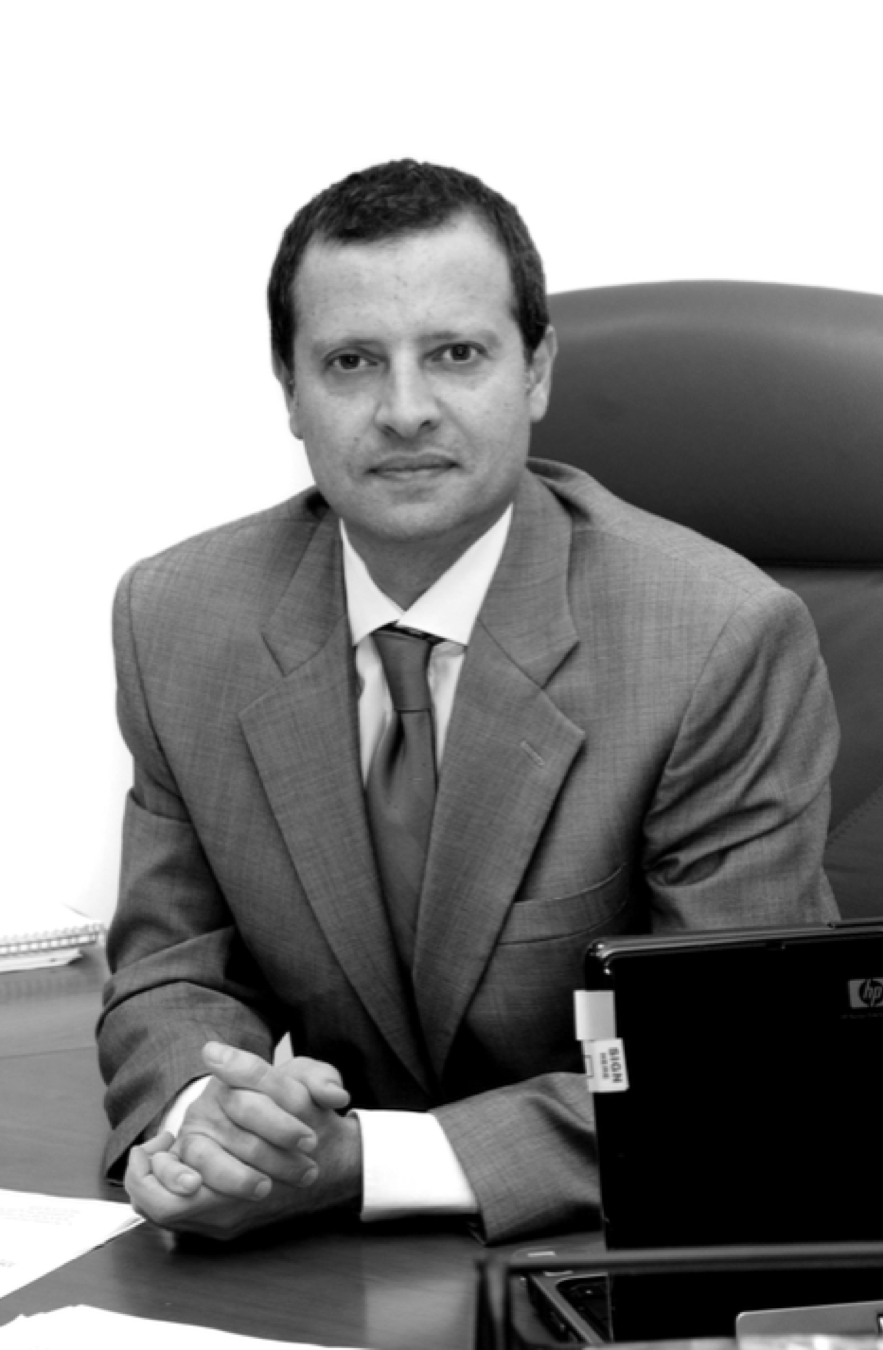
Ghassan Youssef is the managing director of Rakeen, the real estate arm of RAKIA (Ras Al Khaimah Investment Authority) in the United Arab Emirates. Rakeen recently launched its new ultra high-end project in Beit Meri, Lebanon. ‘Beit Meri Sunset’ is comprised of 10 residential villas and nine apartments. Executive sat down with Youssef to discuss issues related to the project and the company’s investment plans in Lebanon.

E I know you started the sales of your project in Beit Meri in September. How much have you sold so far? And to whom?

We secured 20 percent already in the first two weeks. People interested are half locals, half [other] Arabs. But the target [segment] in Lebanon is always the locals and Lebanese expatriates. Then it is our cousins, the Arabs who love Lebanon and want to have a stake in the country. So they target Lebanon, whether for business or residential [purposes], to have a place to stay when they go to Lebanon because they love to go to Lebanon.

E Do you think that the fact that the government formation was delayed will affect interest in your project?

This is an important question. The answer would be no, because people are used now to the unstable country which is Lebanon. People are used to the political storms, so if Lebanon is not like this, then something is wrong, and maybe then I would worry about it. But now everybody knows that if there is a cabinet or not, Lebanon is there to stay and to prosper and people are investing and the real estate market is jumping from one month to another in positive numbers.

E So you think that even if a cabinet was formed, this wouldn’t result in you having more sales?

It doesn’t affect us. If they stay like this for a year or there is cabinet in the next two weeks, it doesn’t affect me. Now, obviously, if the cabinet is up and running in the coming few days you will have the stock market up and running. You will have a momentum created in the country. Then ok, the positiveness is there and we have a cabinet. The bottom line is that the outcome of the cabinet is not the cabinet itself. In Lebanon the private sector runs the country and not the public sector. In that perspective, the outcome of having a cabinet would only be that there is a positive atmosphere that all parties in Lebanon are fine together.

If it was 10 years go, I would tell you you’re right. But now everyone knows. During the July 2006 war, Lebanon suffered for a month, and then next month, everything was up and running. Now people who don’t know it will fear it. But your target segment is the people who know Lebanon. The Arabs know Lebanon more than the Lebanese know their own culture and they love it the way it is.

E Did you start construction? And how long will it take to complete?

We took the license and we started now on the project. It is our first project in Lebanon, but not the last. It is the first project and it is a very small project. When we say 10 villas it might be big but if you compare it to our projects worldwide, it is a tiny project — it is around 10 percent of our projects overseas. Regardless of sales, we have a target of one and a half years to finish. So in two years, you as a client will be living in that house.

E So construction is independent of the sales?

True. If I sell, it would be better. If I don’t sell now, I will increase my prices later and keep on construction.

E What is the value of the project and how is it financed?

I don’t know if I can tell you the whole value of the project. But you can assume we are talking about $2 to $3 million for a villa, and we are talking about 10 villas. But I cannot give you the numbers to tell you this is how much it is going to cost me and that’s how much it is going to sell. It is financed by us, pure equity. We did not take any loans for it.

E I know that you have a diversification strategy since you have projects in so many other countries. Can you tell us about it?

Our chairman has a very strong appetite for emerging markets, and this is where we are. We are present in the emerging markets. Our strategy is not like other real estate companies who go into building luxury resorts. We are into mixed use outlets. We have a mall, an office tower, a residential tower, a hotel etc., that is our segment. That is how we build our projects. We have a beautiful project in Tbilisi, Georgia. It is an amazing market. We are building the biggest shopping center in Georgia — 70,000 square meters. We have the World Bank as partners with us through the International Finance Corporation in that project because they love it. With this shopping center comes an office tower and a residential tower. So that is the kind of scale of our projects.

E What about the financial crisis? Has it pushed you to diversify more or is it a setback?

We did not stop the projects, and we did not adopt a speedier construction model. We are still in business as usual. The only thing I would say about this crisis that affected us is that we are not starting new projects. We used to start three to four projects per year, now we will say it is one project per year or none. And it will be the strategy for the coming three years, to honor our commitments to the market. And that is what counts, our reputation.

E So can we say that when you have future plans in Lebanon, they will be in the next three years?

We are planning to expand in Lebanon, and that is the one project that I talked about. It is in Lebanon. I want to expand in Lebanon because it is a beautiful market. Not because I am Lebanese, not because I only believe in Lebanon; I truly believe in Lebanon and I know that Lebanon is there to stay. It is like Dubai. Now everyone talks about Dubai and the crisis and now bad it hit Dubai. But Dubai is there to stay and prosper again and again. And I give you my word on that.

I have a land bank in Lebanon. I started this project, but I have other lands in other areas. There is no specific time for this, but there are plans. And we are also in a position to acquire new land in Lebanon. We are only doing this in Lebanon, not in other countries. We believe that Lebanon and Syria are going to expand and prosper. There is a big need. Syria is underdeveloped. Lebanon is super developed, but yet if you take all the available land now, the plots available to construct in Lebanon are very rare.

You have four million Lebanese in Lebanon, and you have 16 million or even more Lebanese abroad. Let’s say you have 20 percent of these aboard who want to come back one day with their kids as well, plus the growth that you have within the Lebanese in Lebanon, plus the interest of the Arabs all over. The attraction of Lebanon is the hospitality of the Lebanese and the way they deal with people, how they welcome them, how they love life and know how to live it.

October 23, 2009 0 comments
0 FacebookTwitterPinterestEmail
Real estate

Small and quaint demand

by Executive Staff October 23, 2009
written by Executive Staff

Lebanon’s real estate market, especially its high-end segment, has been directly impacted by internal and external constraints. Both the financial crisis and the delayed formation of a new government have buyers thinking carefully about their next investments. Still, considering current circumstances, the market performed fairly well this season and developers are more or less content with the overall outcome.

Sales numbers have not drastically dropped, and prices did not decrease further than the 10 to 15 percent recorded in the first six months of the year. But experts agree that units priced at above $1 million are hard to sell, and demand is concentrated on the lower market segment — mostly ranging between $300,000 and $700,000.

Moreover, even though Gulf investors don’t represent a big chunk of the demand, they were particularly absent this summer.

“[The high demand] has materialized to a large degree for the Lebanese, but less for the Gulf people who have been waiting for the government to be elected or to be formed,” said Nabil Sawabini, chairman and CEO of Mena Capital. “So its late formation has delayed some of the potential sales that we were expecting.”

Hani Haddad, managing director at A&H Construction and Development, agreed with Sawabini.

“Gulf investors have been asking a lot but not buying a lot. After the elections they started buying but not as much as they used to before. They are still very hesitant compared to normal,” he said.

With Gulf investors adopting a wait-and-see approach, the demand is mostly Lebanese, either locals or expatriates. However, with budgets cut due to financial difficulties, there is a new trend sweeping the market. While maintaining luxurious standards, Lebanese buyers are currently looking for smaller apartments with smaller budgets, which are now hard to find.

‘Smaller’ is the trend

“We want them (developers) to decrease the size for the budget to decrease,” said Christian Baz, general manager of Baz Real Estate. Baz gave examples of some of his customers wanting small but luxurious apartments for around $400,000 in decent areas.

“There is no supply to meet the demand; those who were demanding apartments for more than $1 million have disappeared,” said Baz.

High-end developers concur with Baz, admitting that smaller apartments are what buyers are looking for at the moment.

Karim Bassil, chairman of Byblos Real Estate Investment (BREI), said he is struggling to sell larger apartments.

“Some people that are used to living in 400 square meter apartments are looking for 200 square meters. And some that are used to Beirut are willing to go outside the capital; there is no easy cash like there was before,” said Bassil.

Consequently, developers are aiming to target a lower market segment through their future projects, thus satisfying the true demand in the market.

“There are definitely many who are looking for different types of properties, which we don’t have today, but we will hopefully have in the future,” said Sawabini. “In terms of size, it doesn’t have to be very high-end as most of our projects are. But high-end, good quality, decent location and smaller sized apartments are definitely the demand and we will be satisfying it.”

Summer property indicators

Construction permits (in square meters)

Source: Order of Engineers and Executive Magazine

What numbers say

In the first six months of 2009, real estate sales transactions dropped 3.3 percent year-on-year, according the Bank Audi second quarter real estate report. The report added that in the same period, sales transactions to foreigners dropped to 9.6 percent, compared to 18.5 percent in the first half of 2008.

This summer, adding June and July together, foreign sales increased 8 percent year-on-year. According to Sawabini, the increase is not an indicator of the activity during the two months. A big part of sales could have been agreed upon in April or May, while contracts were left to be signed in June or July. So July numbers could be an accumulation of the former three months because many people don’t come to Lebanon until the beginning of the summer.

As for the total number of sales transactions, it registered a decrease of 7 percent over the same period. This number also is not very indicative, experts say, because even though it gives an overall assessment of the sales activity, it does not show what the demand is truly for. Baz explained that numbers don’t show if the apartments sold were small or big, thus not giving a true indicator of the market demand.

“There is also an old apartment that was sold for $800,000 and registered at $400,000,” he said, adding also that it is possible for a sale to be registered in the name of a Lebanese company owned by a foreigner.

“There are no regulations. We know [more] because we are the ones who are selling.”

Government or no government

Many factors play a role in determining the future expectations of the Lebanese real estate market. Although it has always been considered a safe haven for real estate investments, some say that the delay in forming a government, rather than the financial crisis, is the main reason for the slowdown in demand. Sawabini from Mena Capital said that without a government being formed, sales could be cut in half.

“They are investing millions of dollars — they want to have more insurance,” he said.

Haddad from A&H agrees, saying that he sold a lot more last summer, and when the government forms sales will surely pick up again.

Other market players disagree, arguing that the internal factors have become a usual trend and buyers are interested regardless.

“Some say that [the slowdown in demand] is due to the situation in Lebanon, but I don’t believe it that much; we had worse times,” said BREI’s Bassil.

Whether the government is formed or not, or if the financial crisis eases or not, developers have a job to do in order to satisfy current market needs and meet demand.

“It is very important going forward that whatever we develop we don’t develop haphazardly, that we begin to be more conscious and differentiate our projects in a matter that would make them more attractive,” said Sawabini.

“Those who were demanding apartments for more than $1 million have disappeared”

October 23, 2009 0 comments
0 FacebookTwitterPinterestEmail
Real estate

Dubai’s slide slows

by Executive Staff October 23, 2009
written by Executive Staff

One year has passed since Dubai’s real estate sector started its downhill slide. Since then, investors have fled the market, prices and rents have dropped, property disputes have risen and many projects have been canceled or put on hold. Needless to say, it’s been a bumpy ride.

But since the second quarter of this year, things have begun to stabilize. Prices and rents are more or less steady in many areas and developers have been consolidating in a bid to try to strengthen their financial positions. These are signs that confidence in the market is starting to come back. And while the worst may seemingly be over, the emirate is still expected to witness a tough year in 2010 as more units come online in a market where demand remains fairly weak.

Slowly but surely

Buyers are now “cautiously optimistic,” said Linda Mahoney, CEO of Better Homes. “We are seeing some confidence coming back, but it is going to take more than nine to 10 months” for confidence to be strong again. Current demand, although low compared to 18 months ago, is mostly coming from end-buyers — people who actually want to live in the units — or long-term investors who find current valuations attractive.

Charles Neil, CEO of Landmark Advisory, an arm of Landmark Properties, said that from April to July the company has seen an “increase in activity” in leasing and overall sales because “people took advantage of falling rents.” He added that demand for off-plan properties is still non-existent due to the unavailability of mortgage financing for such developments and buyers having doubts over whether they will ever be completed.

In terms of properties that are finished or close to completion, it seems that mortgage financing is slowly reentering the market, even though this time around banks are being very careful with how much they lend and to whom. As such, experts are predicting that the lending situation will gradually improve.

“We are anticipating that a number of banks are looking to re-enter the mortgage market towards the end of the year or early next year,” said Ian Albert, regional director of Colliers International.

Coupled with the mild improvements of Western stock markets in recent months, experts say Dubai’s real estate sector is expected to stabilize in 2010, and perhaps even start to recover by 2011.

Residential market stabilizing

According to most experts, residential property prices have fallen some 50 percent since the beginning of the crisis. In the second quarter of this year alone, housing prices in Dubai fell around 25 percent,  according to the global real estate services firm Jones Lang LaSalle.

Out of 32 countries examined by the United Kingdom-based Knight Frank real estate agents, Dubai recorded the largest year-on-year drop in housing prices (at 47 percent) for the period up to July. The company also added that prices now are falling at a slower rate.

Real estate experts have also stated that the decrease in prices is mostly contingent on the attractiveness of the area. As such, buyers are currently searching for communities that already include infrastructure, restaurants, schools and leisure facilities. Some of these developments have even witnessed some appreciation in the last few months.

Residential supply and demand

“In Dubai Marina, there are shops, office space, hotels, restaurants… there is a community where people can live and work,” said Elaine Jones, CEO of Asteco Property Management. Jones also explained that sometimes prices in the same development might differ, depending on the quality and the facilities. “And now you have the metro for example,” she added, which would make the surrounding areas more attractive.

After the hefty decrease in prices, players are also waiting for the market to hit bottom. Even though prices have begun to stabilize, most experts agree that they will drop further as new supply comes online.

For example, Saud Masud, a Dubai based analyst from UBS, the global financial services firm, told Bloomberg that housing prices in Dubai will drop about 33 percent to reach $1,754 per square meter, and the market will only bottom out in the next 12 to 18 months. According to UBS, 30,000 new homes will be completed by 2011, but it also stated in June that the new supply coupled with the decrease in population will leave one in three homes vacant by 2010.

While that may be the case, when it comes to predicting the actual oversupply amount on the market for year’s end 2009, there seems to be little consensus. Jones Lang LaSalle is expecting 22,400 new units while JP Morgan expects 30,600 new units, adding that this will lead to an oversupply of some 28,500 units. 

“With the new supply coming on between now and the end of the year, given the population growth has slowed, if not contracted, it will take some time for the market to absorb the new product coming on stream. It could take up to 12 to 18 months,” said Sana Kapadia, vice president of equity research at EFG-Hermes.

Ziad Chaar, general manager of Damac Properties, adds that although prices have stabilized in some areas, the reason why they are still decreasing is because of the sale of distressed properties below the market value pushing prices down. He explains that many investors who have commitments in the emirates and abroad are still willing to sell at low valuations.

As new supply comes to its handover stage, rents are expected to drop further

Rents

Rents, like prices, are also expected to decline due to the oversupply in the market. However, the degree to which rents have decreased since the beginning of the crisis varies depending on who you ask. Chaar said they have dropped 35 percent, while Mahoney from Better Homes said the figure was as much as 50 percent and Colliers’s Albert puts the figure at 18 to 40 percent, depending on the area. Albert explained that it takes longer to deflate rental prices, mainly because people are engaged in one or two-year contracts while property prices can change every day.

Landmark’s Neil, however, said there is an “artificial shortage,” whereby landlords prefer to wait until rents go up again. “Towards the end of the year, more units will come to the market for rent and prices will come down further.”

Although rent prices have dropped, the leasing market witnessed a good amount of activity this summer. With the sales market more or less on hold, people who used to buy property now choose to rent. Moreover, those who need to renew their contracts are looking for cheaper or larger apartments, as are those living in neighboring emirates who are looking to capitalize on the current valuations.

Asteco’s Jones said her company is experiencing record numbers in term of leases and is content to go back to the “fair market prices” of late 2006. As new supply comes to its handover stage, rents are expected to experience more downward pressure depending on the attractiveness of the area and the quality of the development.

“Rents have stabilized, but there is a lot of supply coming on,” said Albert. “I think it will soften again towards the end of the year.”

Office market 

Sale prices from 2008 peak to Q2 2009

Rental prices from 2008 peak to Q2 2009

Source: Investment Boutique

Of all the real estate sectors in Dubai it seems the commercial market has been hit the hardest. This comes as little surprise since the flow of new businesses into Dubai has decreased and existing businesses are either closing down or moving to smaller office spaces due to the effects of the global downturn.

“Commercial rents could certainly have dropped 50, if not 60 percent, depending on the location,” said Better Home’s Mahoney, adding that this even applies to offices on Sheikh Zayed Road — otherwise know as the E11 highway, the main traffic artery running through most of the UAE, along which most of its skyscrapers are located. According to Jones Lang LaSalle, office rents have declined at around 45 and 25 percent in the first and second quarters of this year, respectively.

Jones Lang LaSalle’s second quarter report also said that by the end of 2011, 2.3 million square meters of additional office space will enter the market, placing even more pressure on rental prices. Moreover, investors who used to buy office space and then lease it to companies have all but disappeared from the market, which has also increased office supply.

“There is a huge supply in office space. Between 2008 and 2011, office supply would have doubled,” said Neil. He added that office rents have decreased about 50 percent and maybe 30 to 40 percent on Sheikh Zayed Road.

Most experts predict that the office market has not hit bottom yet and will continue to drop next year as new units become available and remain vacant due to a lack of interest from companies.

A year of stabilization

Most informed sources agree that 2010 will be a year of consolidation and stabilization while 2011 will see the beginnings of a recovery. That said, what is keeping analysts anxious is doubts over population sustainability coupled with the new supply that may further increase the surplus of units on the market.

Even considering the difficult times predicted for next year, if a general economic recovery does occur, Dubai’s real estate market is poised to recover quickly, due to its relatively advanced infrastructure and its attractiveness to new business ventures in the region.

“I don’t think the new supply is going to take more than one year to be absorbed. But the advantage will be that the entry cost for residential or office space will still be significantly low,” said Jones Lang LaSalle’s Regional Director Fadi Moussalli. “Dubai will still have the underlying macroeconomic benefits.”

If a general economic recovery occurs, Dubai’s real estate market is poised to recover quickly

October 23, 2009 0 comments
0 FacebookTwitterPinterestEmail
Real estate

Cityscape Dubai 2009

by Executive Staff October 20, 2009
written by Executive Staff

At Cityscape Dubai last year, Gulf real estate firms launched some $100 billion worth of new projects on the show’s first day. But expectations for this year are markedly different. Considering the struggle that the regional real estate market has been going through since September 2008, few or no projects are expected to be launched and the number of exhibitors and visitors will likely be a fraction of last year’s.

Rohan Marwaha, the managing director of Cityscape, told CEO Middle East magazine that the exhibition is expected to be 25 to 30 percent smaller than last year, though official figures indicate the number of exhibitors will be markedly less.

“Considering the global economic turmoil, it would be unrealistic for anybody to assume that the event will be as big or attract as many visitors as last year,” Marwaha said.

At Dubai’s Novotel Trade Center, where rooms are usually booked for developers in order to close their real estate deals, seven out of the eight rooms were still free in mid-August. Novotel Staff told Arabian Business that by this time in 2008, all the rooms were booked, in addition to the aerobics room.

Linda Mahoney, CEO of Better Homes LLC, agreed with Marwaha, and gave the example of MIPIM, the property show in Cannes, France, which is considered the world’s biggest property exhibition. She said that the number of exhibitors was not very impressive.

“Many exhibitors from around the world were not there, and most of the exhibitors from the Gulf region were not there either,” said Mahoney.

Back to basics

Real estate experts think that Cityscape this year will play its primary role of bringing contractors, developers, architects and market players together, rather than being solely a retail show. Therefore it will go back to being a business-to-business (B2B) venue rather than a business to consumer (B2C) one. Ian Albert, regional director of Colliers International, said that this year’s Cityscape cannot be compared to the 2008 event, but is more comparable to Cityscape Jeddah this year, where few transactions took place.

“It is going to be a B2B show and not the retail event that it has been for the previous four years, so you can’t compare it,” said Albert.

Increasing rates

Surprisingly, the cost of exhibiting at Cityscape has increased 15 percent, according to the event’s organizers IRR Middle East. They did not comment on the issue further, but according to Arabian Business, the increase could be split into two years if the company is planning to also participate in Cityscape 2010, a 7.5 percent increase in 2009 and 7.5 percent in 2010. The magazine also said that sponsorship costs for exhibitors was cut by 25 percent and that this year’s event will feature several “not-for-profit” events such as seminars, round tables, and a CEO networking luncheon.

“Of course it bothered us — we did not like it, but we wanted to be in,” said Ziad Chaar, general manager of Damac. “We tried to negotiate, but it was not feasible.”

Most market experts seemed to agree with Chaar that raising Cityscape’s fees was a bad idea.

“I think they have made a big mistake in raising the rates; they should be reducing them. It is the last thing you do in a downturn,” said Charles Neil, CEO of Landmark Advisory, part of Landmark Properties Dubai. He added that this will result in a much smaller Cityscape then would already be the case. 

Cityscape 2008 figures

Source: IRR Middle East

Who’s participating?

Compared to 954 exhibitors in 2008, this year’s four-day Cityscape will only host 175, according to the list provided by IRR Middle East in mid-September. The sizable decrease in numbers was more or less expected, either because developers had nothing to launch, or they were cutting back on expenditure.

For example, Albert explained that Colliers International is not going to take part in Cityscape due to “budget cuts.” Property development companies Limitless and the Abu Dhabi-based Sorouh Real Estate, are also not participating.

The same was initially thought of real estate giants Emaar and Nakheel when they announced they wouldn’t participate in Cityscape.

Maktoob Business initially reported that Nakheel was not participating because it wanted to focus on the completion and handover of existing projects.

But in an apparent about-face just days after their official announcement, Emaar and Nakheel came out to say they would participate.

“The decision follows discussions with the various agencies involved in organizing the event,” Emaar said in a statement.

There has been speculation that the absence of the two government backed companies would reflect badly on the emirate’s real estate sector, particularly given the prominence Nakheel played at last year’s event when it announced the $38 billion, one kilometer-high Nakheel Harbor and Tower project. The mega-project has since been put on hold.

“If I see that Emaar and Nakheel are not there, it doesn’t show confidence in the market,” said Mahoney before the companies revised their decision. 

Limitless said their decision not to attend, “is part of our overall response to the global economic situation.” 

Fadi Moussalli, the Dubai-based regional director of the global real estate services firm Jones Lang LaSalle, said being on the list of non-participants is indicative of having nothing new to launch.

“Obviously the rational is: do you have anything to sell? If you do, you have to be at Cityscape. If not, why incur the expenses?”

Still, it is not expected that developers — even the ones who will participate — will be launching new projects this year. As most have been doing since the beginning of the 2009, developers will concentrate on finishing their existing projects and showing the market that project development is still underway.

“Our focus this year is the right focus, which is construction and delivery, and not developing more projects,” said Chaar from Damac.

“If someone wants to launch a project at this time, they will probably get a great deal of media coverage. It would be extremely courageous to launch anything this year,” said Elaine Jones, CEO of Asteco Property Management. Asteco will not exhibit at Cityscape this year, primarily because their clients have nothing to launch.

What to expect

Cityscape 2009 will be interesting this year. Though expectations are low in terms of the crowds and new launches, the show may offer  parameters for measuring confidence in the market.

“I would be curious to see what is there, who is there, who comes… are there going to be more overseas people? Are we going to see more foreign as opposed to local developers?” said Mahoney.

October 20, 2009 0 comments
0 FacebookTwitterPinterestEmail
Real estate

Arab SWFs slow to return to overseas real estate

by Fadi Moussaffi October 16, 2009
written by Fadi Moussaffi

After a period of sustained activity characterized by high-profile investments and significant appetite for trophy assets, sovereign wealth funds (SWF) in the Arab world felt the repercussions of the global financial crisis, and significantly reduced their real estate investment activity. The drop in oil prices in the second half of 2008 led Arab governments to tighten petrodollar cash allocations to SWFs, as reduced fiscal surpluses had to be used in priority to complete infrastructure spending and salvage domestic economies. With almost no exceptions, SWFs from the Gulf refrained from investing in overseas real estate markets for the past 12 months.

This situation prevailed up until June 2009, when two SWFs executed two high profile transactions in their preferred destination, the London real estate market. The Oman Investment Fund acquired 75 percent of a major City of London development in a joint venture with Hammerson in a staggering $733 million transaction. Furthermore, the Libyan Arab Foreign Investment Company (LAFICO) acquired a 100 percent interest in Portman House, a high profile mixed use building on Oxford Street from Land Securities for $255 million. In addition, we have strong evidence that other Arab SWFs are reviewing investment opportunities not only in London but in other major European hubs as well.

Are Arab SWFs returning to the real estate scene?

To get a clearer understanding of the situation we need to dig a little deeper into the details. While it is true to say that the London real estate market offers an extremely compelling story, as prime yields are in excess of the 25 year high, and the recent depreciation of the British pound improves purchasing power of US dollar pegged currencies, it is worthwhile noting the Oman Investment Fund transaction was achieved through a relatively modest injection of equity and taking advantage of the existing imbedded debt structure. OIF now owns 75 percent of the joint venture of one of London’s best pieces of real estate and enjoys a minimum of 18 years secured income stream to Allen & Overy as the major tenant who occupies the majority of this asset.

London’s long-term prime yields

Source: Jones Lang LaSalle

On the other hand, after a long period of frozen overseas investment activity due to the international sanctions imposed on Libya, LAFICO has marked its return on the international real estate investment scene, completing two deals in London in the past six months. LAFICO is undergoing a profile exercise to rehabilitate its image in the international investment community, and spending a small part of its long accumulated fiscal surpluses at a time when global real estate markets have significantly re-priced.

With the exception of the LAFICO, our assessment is that Arab SWFs, in general, are still some distance away from reinstating their traditional overseas real estate investment activity. A somewhat cautious view was still prevailing up until the beginning of the summer amongst this investor group, and whilst some of those sovereign vehicles could have a vulture-like behavior and act in the most opportunistic way, we believe the general trend for the coming 12 months will be to direct cash surpluses towards domestic priorities and honoring of past financial commitments.

The realization and accuracy of our forecast depends on several factors including the oil price level that will play a vital role in terms of determining the volume of Middle Eastern capital to be invested in overseas real estate markets, and the reversal of the wait-and-see stance, which will obviously be linked to the speed and magnitude of the recovery in Western economies.

Fadi Moussaffi is regional director at Jones Lang LaSalle

October 16, 2009 0 comments
0 FacebookTwitterPinterestEmail
Real estate

For your information

by Executive Staff October 16, 2009
written by Executive Staff

Damac CEO resigns

Peter Riddoch, the CEO of Damac Properties, is resigning from his position in October. No replacement for Riddoch has been appointed, nor did he name the reason for his resignation. In his last statement, Riddoch only said: “I know that the time is right to make some changes, focus a bit more on my personal interests and family, and possibly even take on  new challenges.” Riddoch began has career at Damac in 2003. According to Arabian Business, Hussain Sajwani, chairman of Damac Properties, said he accepted Riddoch’s resignation unwillingly but wishes him success in his future.

Arabtec in St. Petersburg

Arabtec Construction LLC, a leading UAE-based construction company, was awarded the contract to build Europe’s tallest building in the Russian city of St. Petersburg. The project, known as Okhta Center, is owned by Gazprom Neft, a subsidiary of the state-owned natural gas giant Gazprom, and will be used as the company’s headquarters. The tower is presenting a threat to the historical image of the city, since the United Nations Educational, Scientific, and Cultural Organization (UNESCO) warned that the city’s center could be removed from the World Heritage list if the tower is built, according to the UAE daily newspaper The National. On September 2, a public hearing took place in the city where residents protested, claiming that it was wrong to change St. Petersburg’s zoning laws in order to build the project. During the meeting, six people were thrown out after disputes with security guards and the police, according to the newspaper. The contract was awarded in March last year, but faced delays due to design changes aiming to reduce costs. The original contract, valued at $2.72 billion, was cut to $817 million. Ziad Makhzoumi, the chief financial officer at Arabtec told The National that if the approval is given, work should start by the end of March 2010.

EEC teams with Binladen Group

The Saudi-based Emaar Economic City (EEC) announced September 6 that it has agreed to form a joint venture with Saudi Binladen Group (SBG) to finance, develop, and operate the port at King Abdullah’s Economic City on the Red Sea Coast. The EEC board had approved a preliminary agreement with SBG over the joint venture the day before, according to the company. Work on the first phase of the port was expected to begin as of the end of last month, and it is slated to be operational by 2012. The cost of the first phase is estimated at $1.07 billion. At the same time, according to the Saudi Stock Exchange Tadawul, the EEC canceled the $373 million contract with SBG awarded in April 2008 to build 16 residential towers. The cancelation was due to the decrease in building material costs and reconsideration of the development. The $31 million EEC already paid for the project will be retained by the contractor for works already executed on the development. 

Real estate optimism at Saudi Build 2009

The Saudi Arabian real estate sector is projected to grow by 5 to 7 percent each year until 2012, and contribute 7.2 percent of gross domestic product in 2009, according to a recent study by the Kuwaiti investment company Global Investment House. The report also said Saudi real estate investments will reach $300 billion in 2009 and $400 billion by 2010. As the real estate and construction sectors continue to grow, it is expected that Saudi Build 2009, the annual construction trade exhibition, will also witness success with more than 650 regional and international companies already signed up, according to Riyadh Exhibition Company, the event’s organizers. More than 38 countries from Europe, Africa, the Middle East and Asia are already represented in the exhibition, and the number is expected to grow.

Alumco Qatar inks Doha deal

Alumco Qatar, part of the Lebanese Alumco Group, won a contract for the installation of 31,000 square meters of aluminum cladding and 48,000 square meters of stick system curtain walls, windows and doors in the Barwa Commercial Avenue mega project in Doha. About 250 people are expected to be employed due to the announced contract. Moreover, it was announced in Aswaq Aliraq in early September that the Thi-Qar Investment Commission approved the engineering design submitted by a Lebanese company for the construction of a residential compound in Nasseriya city, Iraq, which will be comprised of 1,800 buildings with eight floors each. The name of the company was undisclosed.

Dubai contracts Arabian Construction

The Lebanese construction firm Arabian Construction Company (ACC) won the contract to build a $397.5 million, 124 story skyscraper in Dubai. ACC will be building the “Pentominium” tower in Dubai Marina, which will be the tallest residential tower in the world, and Dubai’s second tallest building after Burj Dubai. The contract was awarded to ACC by the Dubai-based Trident International Holding, and the project is slated to be finished within two years. The tower will include a sky lounge, business center, sky pool and an observation deck of above 400 meters. The Pentominium tower is not the first to be built by ACC, which has 12 offices throughout the Middle East and operates in seven countries. ACC’s other projects include the 30-story Silver Tower, Sorouh’s Sky and Sun towers, all located in the UAE capital Abu Dhabi.

Property driving Lebanon’s economy

The real estate market is Lebanon’s main economic driver, accounting for 45 percent of total investment, according to a report published by American real estate brokerage firm Coldwell Banker. The report projected the size of the sector will reach $6 billion by 2010. Real estate activity soared in the months following the June parliamentary elections after a period of relatively slow growth. While Lebanon has been indirectly affected by the global financial crisis, the fact that some 90 percent of property buyers are end-users has taken the edge off speculation that has afflicted the Gulf countries. Moreover, regulations issued by the central bank have sheltered the sector from risky lending. The loan-to-value ratio allowed does not surpass 70 to 80 percent, and falls back to 50 percent if the individual wants to purchase a second apartment. The report also added that foreign investment accounts for 10 percent of the total real estate investment, and it is expected to increase to about 20 percent in the near future.

Tourist village slated for Petra

Construction of a $50 million tourist village near the ancient city of Petra in Jordan is expected to start by year’s end, according to The Jordan Times. Financed by Saudi-based Pharaon Commercial Investment Group (PCIG), the project is slated for completion in 30 months, and will be comprised of a 100-bed, five star hotel, a shopping center, a multipurpose conference hall, restaurants, a spa and a swimming pool.  According to reports, the government has received guarantees on the preservation of the globally renowned archaeological site of Petra and the surrounding environment. The village is expected to create jobs for locals, while 15 percent of the project’s revenues are earmarked for community development. The head of PCIG, Sheikh Pharaon, said in a press conference that specialized companies are working on the project design, and are submitting blueprints to the concerned authorities.

Deyaar’s low-cost Beirut housing

The Dubai-based Deyaar Development company is planning to start its second project in Lebanon after launching the $100 million Saifi Village II development in June. The company is to build low-cost housing in the Beirut area in cooperation with Solidere. “Beirut is tremendously expensive,” Markus Giebel, CEO of Deeyar, told Maktoob Business. “If you build low-cost housing that’s close to the city, you could end up with solid returns over the long term and a new development model.”

If Solidere backs the project, the two developers will negotiate with the government to allocate the land and for banks to provide mortgage financing for buyers. Back in June, Giebel told Executive that Deeyar has a total of $200 million invested in various projects in Lebanon. Saifi Village II, the first development by Deyaar in the country, is part of the Beirut City Center master development.

Israel authorizes settlement expansion in occupied Palestine

Despite continuing pressure exerted on Israel to stop the construction of new settlements, the Israeli government has given the go-ahead to expand settlement construction in the occupied West Bank. Last month the Israeli Defense Minister Ehud Barak authorized the construction of 455 new residential units in the occupied Palestinian territories. A few days after the decision was taken, Israel reopened the tendering process for 486 new homes in another settlement in annexed Arab East Jerusalem, according to AFP. The Israeli government has said that “it would approve a burst in construction before considering a United States demand to halt settlement activity.” The unilateral decision has been opposed by the governments of the United States, Europe and Egypt.

Israeli settlers have also said they will resist any partial freeze on the construction of new settlements. According to the Yesha Council, the main settlers’ lobby in Israel, 2,000 young Israeli couples will require new homes to be built every year as the current and projected supply is not sufficient to meet demand.

“We have more demand than offers… the threat of a freeze would be a disaster for the development of our village,” said Tamar Castelnuovo, a real estate agent in the Tekoa settlement in Nokdim, south of Bethlehem. However, community leaders in the settlements still seem unimpressed with the number of building licenses granted to the settlers. Commenting on the first decision, Pinchas Wallerstein, the director general of the Yesha Council, said, “It is an insult to our intelligence; we are very disappointed by this announcement.”

Chief Palestinian negotiator Saeb Erakat said the move “undermines faith in the peace process, and the belief that Israel is a credible partner for peace,” according to AFP. Palestinian president Mahmoud Abbas said the plan was “unacceptable” according to the news agency.

October 16, 2009 0 comments
0 FacebookTwitterPinterestEmail
Feature

Playing on a shoe string

by Executive Staff October 16, 2009
written by Executive Staff

With football and basketball events followed religiously by millions of fans around the globe, modern ball games have become lucrative money making machines. In Lebanon, however, sectarian violence and political instability has kept the public away from stadiums and worsened an ongoing financial crisis faced by local sports leagues.

“The rise in political tensions in 2001, further exacerbated by the assassination of prime minister Rafiq Hariri in 2005, have significantly affected the Lebanese football scene,” says Rahif Alameh, head of the Lebanese Football Association (LFA). The LFA seems to reflect the ongoing Lebanese political struggle, with main community leaders intervening in the appointment of members.

“Sectarianism also plagues Lebanese basketball, with teams associated with the various religious communities, but we have managed to keep it out of the federation, our members being elected and not appointed, as is the case in other federations,” says Pierre Kakhia, head of the Lebanese Basketball Association (LBA) and president of the World Sports Group.

As an example, the basketball team Hekmeh is usually associated with the Christian community, the Antranik team with Armenian Lebanese and Riyadhi with Sunnis. In football, Homenetmen (an acronym for Armenian General Athletic Union) as well as Homenmen (Armenian Athletic Association) are both identified as Christian Armenian teams, while Al Ansar is perceived as a Sunni team and the Safa football club as a Druze club. Al-Ahad and Al Mabarra have mainly Shiite players and supporters.

Until 2006 and the subsequent ban on spectators, clashes erupted regularly between supporters of rivaling March 8 and March 14 political factions, who chanted respectively ”God, Nasrallah and the Dahieh,” while others shouted at the top of their lungs “God, Hariri, and Tarik Jdeideh.”

Killing the game

“The spiraling violence and the ban on the public have exerted significant pressure on Lebanese clubs, already facing financial difficulties,” Kakhia says. “This has trickled down to the management of clubs and resulted in the loss of their financial stability. As an example, big clubs such as Sagesse and Kahraba are still actively looking for a benefactor.”

Clubs’ worsening financial woes are not much of a secret in the world of sports as players’ salaries spiral out of control.

“Wages are increasing all over the region. Foreign players who used to be paid on average about $35,000 are requesting today double if not triple the amount,” says Karim Diab, president of the al-Ansar club. Alameh concurs, saying that about 65 percent of football club budgets are usually dedicated to players, coaching salaries and expenses.

Diab says maintenance, medical costs and equipment account for about 30 percent of the rest of the budget. In basketball, the breakdown seems somewhat similar as Kakhia says that while player and coaching wages together account for 80 percent of clubs budgets, the remaining 20 percent is generally spent on stadium rental. The head of the LBA emphasizes that while Lebanon spent $1.2 million on its national basketball team over the past three years, Jordan spent $7 million over the same period and Iran spends $30 million annually. According to Diab, the budget of Al Ansar — considered one of the richest clubs in Lebanon — amounts to about $1.2 million.

One reason behind the pauperization of Lebanese sports leagues is that most clubs have failed to tap into the lucrative, sports-associated  businesses.

TV rights paid to the Asian Football Federation have doubled every four years, from some $20 million between the years 1996 and 2000, to around $40 million between 2000 and 2004, to $80 million between 2004 and 2008. It is estimated that Asian football TV rights will almost double again between 2008 and 2012, to $140 million. In Lebanon, however, TV revenues for football teams have been “shrinking steadily,” complains Kakhia.

Comparison of contracts awarded to TV broadcasters

Source: TV Sports Markets 

Empty seats and pockets

Most clubs thus find themselves in dire straits with the collapse of hefty broadcasting contracts and matches unattended.

“Broadcasting being the main money-spinner for clubs, the public needs to be allowed again into stadiums,” says Alameh. He also explains that the LFA’s $800,000 contract with the Al Jazeera sports channel, will not be renewed this year, leaving the federation with a $150,000 contract with Future TV, one that will be increased to $200,000 by next year. This amount will be divided among the various Lebanese clubs depending on their ranking.

Football and basketball clubs have not been able to rely on steady sources of revenue usually brought in by merchandising and ticket sales, as well as sponsorships, which should ideally account for up to 30 percent of a club’s income, according to Diab. Tickets to basketball games are usually distributed free of charge to club supporters. In football the situation is different.

“We used to generate $60,000 in ticket sales every year, this has definitely changed since the ban on the public,” says Diab. “In Egypt, sponsorship and TV rights fully cover the $35 million budget of the national Al Ahli club.”

Diab says TV rights for Al Ansar account for 1 percent of the team’s budget. He says sponsorships have become difficult to secure, adding that a few years ago the Coca Cola company had to sponsor three football teams representing the Sunnite, Shiite and Christian communities to avoid being perceived as taking sides in the sectarian struggle.

“To be financially successful, clubs ought to be branded and managed like real commercial companies, unfortunately this is not the case in Lebanon,” concludes Kakhia.

October 16, 2009 0 comments
0 FacebookTwitterPinterestEmail
Feature

A brutal call

by Executive Staff October 16, 2009
written by Executive Staff

Last summer, demonstrators in Tehran’s central square shouted anti-Nokia slogans following news reports that the Finnish mobile giant had sold technology to the Iranian government allowing the government to monitor its citizens through Iran’s communications networks. This has since sparked a storm of protest actions against Nokia Siemens Networks (NSN) — the joint venture between Nokia and the German conglomerate Siemens — including the splashing of green paint (associated with pro-reformist presidential candidate Mir Hossein Moussavi) over Nokia billboards in Iran and calls for a boycott of NSN on social media outlets like Facebook and Twitter.

In Tehran, wholesale vendors told The Guardian newspaper that the demand for Nokia gadgets had fallen by nearly half following the news reports. Millions of Iranians currently use Nokia mobile phones.

Iran is known to be an avid practitioner of Internet filtering, but during the post-elections fall out, many suspected that the Iranian authorities were also implementing similar monitoring systems on mobile phones.

No dial tone for protest

A large portion of Iran’s network traffic is controlled by the telecommunications operator Iran Telecom. One day after the contested presidential election, on June 13, traffic on communications networks came to a near standstill according to an investigation by network security firm Arbor Networks.

When the election unrest began and communications traffic gradually increased, analysts suggested that the halt and subsequent re-start was a result of the Iranian authorities installing filtering and monitoring mechanisms.

The truth of the matter is that NSN did sell a so-called “monitoring center” to Iran Telecom through its Intelligent Solutions division. The product allows the authorities to monitor any network communications, including voice calls, short message service (SMS) traffic, instant messaging and Internet use.

Throughout the turmoil that erupted in Iran following June’s disputed presidential election, media reports suggested the Iranian authorities were practicing a so-called “deep packet inspection.” Through this, the authorities not only block communications but also monitor what kind of data is being passed back and forth between individuals using the country’s networks. Some reports have indicated that the data can also be altered and used for disinformation purposes.

The media flurry over Nokia Siemens’ Iran venture was then followed by further speculation that the company was supplying the Iranian regime with spyware, software installed on devices that collects information about users without their knowledge.

Nokia Siemens has denied the spyware allegations and stated it had supplied Iran only with “lawful intercept” capability in order to monitor local phone calls. The companies had not, they said, provided the Iranian authorities with either deep packet inspection or Internet filtering tools.

Nokian ethics

Ben Roome, head of media relations at Nokia Siemens, told Executive in a telephone interview that the wire tapping function, known as lawful interception, is a standard feature of modern telecommunications networks which was implemented under pressure from the European Union and the United States to “roll out those new networks.”

When asked about the interception capabilities provided by the server package sold to Iran by Nokia Siemens, Roome explained that law enforcement cannot scan broad and random swaths of any communications network.

“You need to know the telephone number you want to wiretap. You can’t, for example, scan a network for keywords. The request has to be made by law enforcement agencies to track the number,” he said.

Roome estimates that there are more than 55 million mobile lines in Iran. In no way does he believe it would be plausible for the Iranian authorities to tap millions of phone lines with the gear provided by the NSN monitoring center. After all, said Roome, the package sold to Iran was made up of traditional mobile phone technology due to limits imposed by trade regulations.

But members of Iran’s political opposition, along with rights activists, remain suspicious of the extent of the monitoring capabilities provided by the NSN product.

Issa Saharkhiz, a 56-year old Iranian journalist and former official at Iran’s Culture Ministry, implicated Nokia in his arrest in July by Iranian police. Saharkhiz told his family from an Iranian jail that his Nokia mobile phone helped the authorities to trace him, according to a report by Radio Free Europe. Saharkhiz had been campaigning for the reformist candidate Mehdi Karrubi and was an outspoken critic of Iran’s supreme leader Ayatollah Ali Khamenei and President Mahmoud Ahmadinejad.

NSN’s venture in Iran has also triggered some groups to undertake campaigns against the company. The American Islamic Congress (AIC) recently launched a letter-writing campaign against Nokia and has called for a boycott of the company’s products. So far, the AIC’s letter to Nokia Siemens officials has been signed by more than 10,000 people.

Nokia, said the AIC, has the “responsibility” to make sure its technology is used in an ethical manner.

“There are always business deals. The Nazis had lots of deals with big businesses. The point here is that Nokia’s technology is specifically enabling the Iranian regime to monitor and crack down on peaceful protesters,” said AIC North Africa director Dalia Ziada.

AIC has helped organize several public rallies against Nokia in US cities such as New York and Chicago. While Nokia has not responded to the AIC’s campaign efforts, Ziada said she is convinced that the image of the mobile phone conglomerate has been tarnished by its dealings with the Iranian regime. She believes thousands are currently boycotting Nokia products.

“Their strategy appears to be to try to ignore the campaign and make it go away. But people keep sending letters and the Nokia brand is definitely tainted,” said Ziada. “We have a simple request: don’t do business with the Iranian regime and disable the advanced technology. Until Nokia does that, thousands of people will be boycotting their products.”

Pass the hot potato

NSN no longer offers the monitoring service to its clients. The firm sold its Intelligent Solutions business to the German investment firm Perusa Partners Fund 1 LP in March. The product was marketed to around 150 countries while it was still under the control of NSN. However, the company maintains that it did not sell the system to China or Burma, whose governments have a reputation for keeping a close eye on citizens through various monitoring practices.

When asked why NSN decided to sell the Intelligent Solutions business, Roome responded that it simply did not fit with the firm’s “core.”

“We looked at assets and business we wanted to focus on, which is providing telecommunications networks to telecom operators. That business didn’t fit with the core we wanted in the organization,” he said.

NSN is not the first Western technology company that has been accused of aiding governments with poor human rights records through their technology.

In 2005, Yahoo came under fire after rights groups accused the company’s Hong Kong arm of providing information to the Chinese authorities that led to the arrest of a reporter for “divulging state secrets.”

Press freedom watchdog Reporters Without Borders (RSF) said Yahoo’s Hong Kong branch helped China trace reporter Shi Tao’s e-mail account and computer to a message containing an internal communiqué from the communist party.

RSF accused Yahoo of playing the role of a “police informant” in an aim to boost its business ambitions in China. Yahoo responded by saying it had to operate within the realm of each country’s laws.

Tao worked for the Contemporary Business News newspaper in Hunan province before he was arrested and sentenced in April 2005 to 10 years in prison. According to RSF, he was convicted of sending foreign-based websites the internal communist party’s message.

In 2006, the mobile phone provider Azercell in Azerbaijan provided prosecutors with information on political opposition activists who had raised concerns over the alleged rigging of the country’s presidential elections, including recordings of mobile phone conversations.

One of the largest owners of Azercell is the Swedish-Finnish telecommunications firm TeliaSonera which, through its Turkish subsidiary, Turkcell, has a majority share in Azercell.

When confronted about Azercell providing information to the intelligence services, TeliaSonera responded in a similar way to Yahoo in 2005, saying it also had to comply with Azerbaijanian regulations.

It remains to be seen whether high-tech companies will come under further pressure from ethics-conscious consumers. But if the case of NSN in Iran is anything to go by, telecom companies may have to balance their commercial interests with the realities of global human rights issues for some time to come.

October 16, 2009 0 comments
0 FacebookTwitterPinterestEmail
Feature

The Mediterranean Madoff

by Executive Staff October 2, 2009
written by Executive Staff

The quiet Southern Lebanese village of Maaroub has recently found itself at the center of attention following the recent arrest and indictment of its deputy-mayor and a prominent businessman hailing from the Shiite town.

Forty-nine-year-old business-mogul Salah Ezzedine, known by many for his piety and closeness to Hezbollah, is bankrupt and stands accused along with his alleged partner, Maaroub Deputy-Mayor Youssef Faour, of running a giant Ponzi scheme similar to that of American financier Bernard Madoff, who earlier this year was sentenced to 150 years in jail. As a result, the Lebanese press has dubbed Ezzedine “Lebanon’s Madoff.”

A Ponzi scheme is a fraudulent investment operation that promises investors high rates of return over a short period of time. The investments are then used to pay the return instead of actually being invested.

Exactly how much money invested with Ezzedine has gone missing remains a mystery. Some media reports estimate that he allegedly squandered more than $1 billion of investor money. According to sources close to the case,  the total amount invested with Ezzedine was at at least $500 million.

On September 12, the Lebanese financial prosecutor’s office charged Ezzedine and Faour with embezzlement, loan-sharking, distributing bad checks and breaching financial laws. They are currently in jail awaiting trial.

A wolf in sheep’s clothing

Ezzedine’s indictment has shocked residents of Maaroub. Many of them remember him as a kind and generous man who always stood up for the poor. He was considered a religious man who apparently gained fame among the Shiite community in the 1990s for organizing pilgrimages to Mecca. Indeed, one of Ezzedine’s businesses is his travel agency Bab el-Salam, which specializes in religious pilgrimages.

“He helped everyone, the poor, the sick, and people wanting to put their children in school that couldn’t afford it. Whatever the request was, he was there to help out. He was there to help immediately,” said Hussein Ezzedine, an employee at the town hall in Maaroub and distant relative of the business-mogul.

With the money he made, Ezzedine built new mosques in the town and made financial contributions to building the town hall.

A few years ago, Ezzedine funded a brand new soccer field for the village. Looking out from a tower above the field offers a view of the town, as well as Ezzedine’s luxurious villa estate that now stands empty. Locals point to two large and still unfinished houses next to Ezzedine’s mansion and said they belong to his partner, Faour.

Ezzedine was also known for his close ties to Hezbollah, which apparently earned him credibility among his investors, the majority of them being from the Shiite communities in Beirut and the South Lebanon. It is also believed that several Hezbollah officials lost money with Ezzedine. One of them is Hezbollah MP Hussein Haj Hassan, who filed a complaint against Ezzedine when his check from Ezzedine bounced. Although Hezbollah has clearly distanced itself from the alleged crooked moneyman, with Hezbollah leader Hassan Nasrallah denying the party had any official links to Ezzedine in a televised address, the story is still a major embarrassment to the organization. Nasrallah has acknowledged that some members of his party invested with Ezzedine, but that the total sum did not exceed $4 million.

Ezzedine was known for his close ties to Hezbollah, which earned him credibility among his investors

The smell of something fishy

Ezzedine’s business scheme, which incorporated tens of thousands of investors, offered quick returns of 40 to 50 percent from a range of apparently bogus investment projects such as petrol, African oil and titanium. Some of his investors even say they were offered annual returns of 60 to 80 percent.

Nassib Ghobril, head of economic research at Byblos Bank, says that while there have been several similar schemes in Lebanon over the past years, there have been none “on this scale.”

Commenting on the high returns promised by Ezzedine, Ghobril says this should have raised doubts in the minds of investors. Indeed, returns of up to 80 percent should have had alarm bells ringing in the heads of Ezzedine’s investors. That, however, did not happen.

“Anyone should be suspicious about these kinds of high returns,” says Ghobril. “But people still tend to believe these things. People don’t learn, not in Lebanon and not elsewhere in the world. The victims have a hard time believing it. They learned the hard way this time.”

Ezzedine headed a number of businesses, including the publishing house Dar Al Hadi, which specializes in children’s books, and a children’s TV station carrying the same name. Following Ezzedine’s arrest, the authorities seized the Dar Al Hadi offices, sealing the company’s glass doors with red tape.

Another one of Ezzedine’s company’s is a Beirut-based financial institution established in 2007 called Al Mustahmir, which specializes in money management.

Another business that has been linked to Ezzedine is the mysterious East Line Company. The Financial Times and Abu Dhabi’s The National reports say this might be one of the investment vehicles that Ezzedine used for his business operations. Last year, in June 2008, Gambian President Yahya Jammeh issued a statement saying that he had received a $4 million check for “royalties paid to the Gambian government by Salah Ezzedine of East Line Company for 10,000 tons of sand minerals exported from the Gambia.”

Unwary victims

With expected returns of 40 percent, a sizable portion of Maaroub’s 5,500 residents decided to try their luck with Ezzedine.

Hussein Ezzedine estimates that around 15 percent of the villagers invested money with the businessman at some level.

He mentions one man who started investing with Ezzedine back in 2000 and lost $1.4 million, while others invested between $100,000 and $250,000. Some of the lower-income investors lost $10,000.

Another investor, 29-year old car importer Ali Fneish, invested $120,000 with Ezzedine half a year ago. That money is now all gone.

A man in the nearby village of Toura identifying himself as N. Chour says he invested “more than $100,000” with Ezzedine earlier this year. He says he lost all the money he earned working in Africa for 15 years.

Chour says 60 percent of Toura residents invested money with Ezzedine. To collect investment capital, lower-income investors in some cases mortgaged their houses and sold off land.

Mohammed al-Duheini, mayor of Toura, told Agence France Presse that some 250 residents from his town invested money with Ezzedine.

“He managed to win the trust of the Shiites of South Lebanon and handled a lot of their money,” he told AFP. Chour speaks of how one person in the village was appointed to collect the money from investors and hand over the investments to Ezzedine and his associates as lump sums.  According to several Ezzedine investors, Faour allegedly had an office in Tyre and served as a point man for investors in the south. Ezzedine, meanwhile, is said to have had an office in Beirut’s southern suburbs.

Paperwork, including official receipts, appears to have been scarce with Ezzedine. In place of receipts, investors were given checks for the principle amount they had invested.

The great conspiracy theorists

In a peculiar twist, several of Ezzedine’s investors still defend him despite the fact that their money went up in smoke.

In Maaroub, investors and residents whom Executive talked to spoke of Israeli and American conspiracies as the cause of Ezzedine’s bankruptcy. Others believed the business mogul had taken a hard hit from the global financial crisis. They deny that Ezzedine, the “respected man” they entrusted their savings to, is a swindler.

But Chour says he has “doubts” about Ezzedine, especially following his and Faour’s recent indictment. So do other villagers, he says.

“Of course I have doubts. We don’t know what happened to him or where the money went. We have been asking this question and no one is giving us an answer — not the Lebanese state, nor any other person.”

Many investors still holding on to their checks from Ezzedine now await the outcome of the investigation for a solution. Reports have surfaced about investors in the Gulf losing large sums to Ezzedine. Yet, it is still widely believed that the majority of the victims of the alleged scam are Lebanese investors, many of whom have earned their money abroad and then returned home.

Amid growing fears in Lebanese financial circles, Central Bank Governor Riad Salameh told Bloomberg in September that Lebanon’s banks were not involved with Ezzedine.

“There is no exposure by the banks to it,” he said. “The investigation is ongoing. It has nothing to do with the finance or banking industry. He had his own investors, and it’s a private matter that’s outside of the banking industry.”

October 2, 2009 0 comments
0 FacebookTwitterPinterestEmail
Feature

Captain Hook incorporated

by Executive Staff October 2, 2009
written by Executive Staff

The financial cost of piracy off the Horn of Africa has surged over the past year as pirates have become increasingly audacious, better funded and equipped, and able to extend their reach in the high seas. A few years ago vessels were warned to keep 50 nautical miles off the Somali coast; now, pirates are boarding ships as far away as the Seychelles, some 1,500 kilometers off the coast of Africa. The area the European Union Naval Force (EUNAVFOR) patrols is some 9 million square kilometers, almost the territorial size of the United States of America.

Just as the range of pirate operations has increased, so has the ransoms being paid out, rising from $250,000 to an average of $1.25 million in 2008. The London-based International Maritime Bureau recorded 111 pirate attacks off the Horn of Africa last year, of which 42 were successful hijackings. In the first half of 2009 there have been 130 incidents.

The situation turned into what was internationally deemed a “crisis” last year, prompting the European Union to establish its first naval security mission consisting of 12 ships, while Russia, the US, China and India also sent warships to the Western Indian Ocean to protect their maritime vessels. In a rare show of international solidarity, the armada patrolling the Gulf of Aden is coordinating to curb the scourge of piracy.

But covering the cost of bases in Djibouti, Kenya, Bahrain (the US naval base), Dubai and elsewhere runs in the tens of millions. The operating cost of EUNAVFOR alone is $12 million a year, excluding the cost of naval vessels, aircraft and military personnel.

The cost to the shipping and insurance industries, however, is far higher. Last year, pirates collected around $30 million in ransoms. Cyrus Mody, manager of the International Maritime Bureau, said that figure doubles when the legal fees, negotiators, delivery of ransoms and associated costs were added. “The amount paid out is pretty much equal to what the ransom is,” he said.

The cost to insure ships transiting the Gulf of Aden is estimated at $20,000 per ship per voyage, excluding injury, liability, and ransom coverage. A year ago, the cost of the additional insurance premium was only $500, according to maritime newspaper Lloyd’s List. It is estimated that the increased cost of “war risk insurance premiums” for the 25,000 ships that ply these waters, which includes an estimated 11 percent of the world’s petroleum, could reach as much as $400 million.

Keeping to the designated shipping lanes in what EUNAVFOR calls “group transit” of several ships, and paying up if captured, would seem to be the only options for the world’s shippers. The alternative of avoiding the Gulf of Aden and the Suez Canal is simply too expensive and time consuming.

According to the US Department of Transportation, to re-route a tanker from Saudi Arabia to the USA via the Cape of Good Hope adds approximately 2,700 miles to the voyage and some $3.5 million annually. A routing from Europe to the Far East via the Cape, rather than through the Suez Canal, would incur an estimated additional $89 million annually, which includes $74.4 million in fuel and $14.6 million in charter expenses. In addition, the rerouting would increase transit times by about 5.7 days per ship.

Pirate dens

The heightened international naval presence off the Horn of Africa has had a direct impact on curbing piracy. “The number of attacks has not decreased but the number of successful attacks has gone down, primarily because of the naval presence,” said Mody.

EUNAVFOR’s specific mandate protects ships of the World Food Progamme. Commander John Harbour of the British Royal Navy and chief media spokesman for the European task force, said the rate of success was one ship hijacked for every three attempts, whereas a year later it is one in nine successful pirate attacks. “Every single day there is an attempt and every day we thwart that attempt. And even when there is not a direct attack, we see many skiffs with armed men,” said Harbour.

A knock-on effect, however, of the naval presence has been the ramping up of the ransoms demanded by the pirates and heightened investment in faster speed boats, mother ships to refuel and launch skiffs on the high seas, and better weaponry.

“When the navies united under an Aden task force, the pirates needed to be more audacious,” and demand higher ransoms, said Simon Davies, a former detective and special investigator with Britain’s Scotland Yard and a consultant on financial crime and piracy in East Africa. “That [ransom] pie graph is getting more and more cuts in it as the money is shared around. There is money for bigger engines and dhows to ply the sea carrying extra oil,” he added.

The pirates run what Mody called an “extremely business orientated” operation, similar to many organized crime syndicates around the world. Up to five major pirate groups operate from bases on the Somali coastline and are either self-funded or financed by external investors.

Employing watchers in commercial hubs like Dubai, the pirates are informed of when a ship leaves port and what cargo it is carrying, or information is easily garnered from reading the shipping news published in local newspapers. A crew of armed men on speed boats or on a mother ship then head out on the high seas to track down potential targets. If successful, the pirates capture a vessel and sail it to Somalia. There, said Davies, the pirate crew is replaced with another crew for negotiations to take place. The onus is then on the owner of the ship and insurance companies to cough up the ransom.

Due to the frequency of attacks, ship owners have set up insurance cartels, with many owners paying into a pool that will then pay out in the case of a hijacking. Then the separate insurers of a ship’s cargo, hull, and other forms of insurance get involved.

“If say a cargo of sugar costs $50,000, the insurer pays 10 percent of the ransom, the owner 15 percent, hull insurer 15 percent. If [they are] maybe $150,000 short, the cartel of ships pays up,” said Davies.

Then the drop off — usually in small denominations of US dollar bills — takes place. Back in 2005, Mody said money exchanged hands in either airport lounges or hotels in Dubai.

“A phone call was made and the vessel released. In 2008, the money was taken by security companies by boat to the captured vessel,” he said. “This has been taken a step further. To make it safer for delivery, the money is now being air dropped on the vessel or nearby. This is how the delivery has progressed, as, if you have a security person on-board, he will automatically become a threat to the pirates. And sailing in with the money from, say, Djibouti or Kenya, you need to hire a crew, and the crew knows there is $1 million on-board… The air drop has made it cheaper and safer.”

Getting rid of the loot

One spin-off from the piracy business has been a boom for sectors catering to the pirates, from arms dealers to boat outfitters, car dealers, and other enterprises. Businesses have also emerged that cater to the unwilling European visitors to Somalia.

“With Europeans captured, there is a burgeoning restaurant business [in Somalia] to cater to Western palates,” said Davies.

Mody said that living standards are going up due to “lavish spending by pirates, which is encouraging local industry to build up, and flashy new cars to be driven around because of the new money.”

While part of the loot is divvied out among the pirates, some is earmarked for investment in the next venture. But if the ransom money doesn’t stay in Somalia, where does it go? There have been claims that the money is laundered in Dubai — a claim the Emirate has vigorously denied — and via Beirut. Mody said much of the money gets siphoned into Kenyan real estate, where there has been a marked increase in Somalis buying properties in Nairobi. Davies said money may also be laundered or invested in Iran, Yemen and the UAE.

Indicative of the pirates’ business savvy, there has been minimal violence toward captured crew members.

“It is a business for them and any violence towards the crew will affect this business model,” said Mody. “If violence increased, this would change the dynamic, and that could be a turning point in how nations look at piracy. Keeping that in mind, having a link to terrorism is also not in the best of their interests. If a link is established, there would be a very serious clamp down by certain external interests.”

October 2, 2009 0 comments
0 FacebookTwitterPinterestEmail
  • 1
  • …
  • 447
  • 448
  • 449
  • 450
  • 451
  • …
  • 696

Latest Cover

About us

Since its first edition emerged on the newsstands in 1999, Executive Magazine has been dedicated to providing its readers with the most up-to-date local and regional business news. Executive is a monthly business magazine that offers readers in-depth analyses on the Lebanese world of commerce, covering all the major sectors – from banking, finance, and insurance to technology, tourism, hospitality, media, and retail.

  • Donate
  • Our Purpose
  • Contact Us

Sign up for our newsletter

    • Facebook
    • Twitter
    • Instagram
    • Linkedin
    • Youtube
    Executive Magazine
    • ISSUES
      • Current Issue
      • Past issues
    • BUSINESS
    • ECONOMICS & POLICY
    • OPINION
    • SPECIAL REPORTS
    • EXECUTIVE TALKS
    • MOVEMENTS
      • Change the image
      • Cannes lions
      • Transparency & accountability
      • ECONOMIC ROADMAP
      • Say No to Corruption
      • The Lebanon media development initiative
      • LPSN Policy Asks
      • Advocating the preservation of deposits
    • JOIN US
      • Join our movement
      • Attend our events
      • Receive updates
      • Connect with us
    • DONATE