• Donate
  • Our Purpose
  • Contact Us
Executive Magazine
  • ISSUES
    • Current Issue
    • Past issues
  • BUSINESS
  • ECONOMICS & POLICY
  • OPINION
  • SPECIAL REPORTS
  • EXECUTIVE TALKS
  • MOVEMENTS
    • Change the image
    • Cannes lions
    • Transparency & accountability
    • ECONOMIC ROADMAP
    • Say No to Corruption
    • The Lebanon media development initiative
    • LPSN Policy Asks
    • Advocating the preservation of deposits
  • JOIN US
    • Join our movement
    • Attend our events
    • Receive updates
    • Connect with us
  • DONATE
Capitalist Culture

Lebanon – A state of patronage

by Michael Young August 3, 2009
written by Michael Young

In the first weeks of trying to form a government, the prime minister-designate, Saad Hariri, reportedly held meetings to see how he and his ministers might affect economic reform. It was a brave step, one that was much-needed. However, the complexity of Lebanese patronage networks makes serious reform efforts almost impossible to implement.

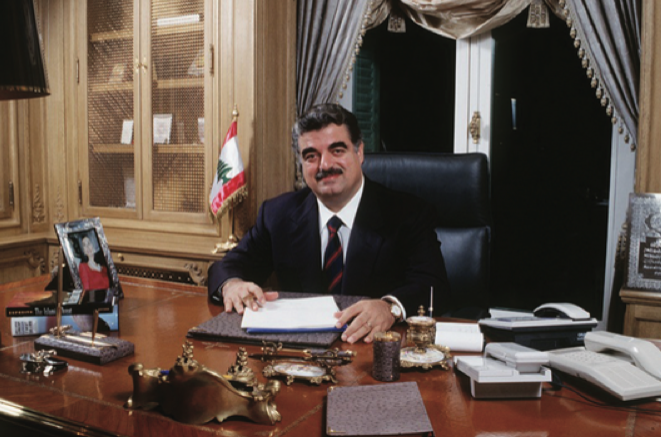
When Rafiq Hariri took office in 1992, his method of dealing with patronage was to establish government bodies that he attached to the prime minister’s office, in order to circumvent ministries controlled by his political adversaries. In this way he hoped to fast-track decision making by avoiding the laborious process of negotiating every step with his rivals. He also centralized all reconstruction policy in his own hands. This had two contrary consequences: It doubtless accelerated decisions, which is why Hariri was able to rebuild so much so quickly. Yet by avoiding deep reform of the public bureaucracy, his method only weakened the state further, exacerbating the dysfunctional nature of the ministries and hardening their roles as founts of partisan patronage. 

Patronage is more than just doing favors for one’s political or social clients. It represents a vast array of services and favors that vary depending on who is providing them, where they are provided and for whom. Patronage has created a vicious circle: since the state is unable to provide many services the Lebanese demand, the population becomes reliant on services provided by politicians or political parties, delegitimizing the state for citizens, who then bestow that legitimacy on political representatives. 

The bulk of patronage in Lebanon involves politicians acting as a link between the state and citizens. Political heavyweights usually supplement this with private patronage, affirming how little they differentiate between public and private matters. For some groups, let’s say Hezbollah and to a lesser extent the Hariri family, there is an additional dimension few can match: the direct distribution of foreign funding to meet local needs. Throughout the 1990s, Rafiq Hariri was a conduit for Saudi aid to his electorate, while Hezbollah helps its supporters from what is widely believed to be Iranian money, or money from supporters abroad.   

The obstacle to economic and financial reform is that the state has become an instrument to advance personal political agendas. This is demonstrated at several levels. Employment is one of the simplest forms of patronage — the placement of political clients in the public bureaucracy, to serve the politicians or parties who placed them there, in exchange for enjoying the advantages of a regular salary and job security. This is the principal reason why Lebanon has never been able to bring about bureaucratic reform, and why the state has had to bear the increasingly onerous burden of a bloated, inefficient bureaucracy.

Virtually all political forces in Lebanon are guilty of placing their people in the administration, even if they differ over how it is done. Some will insist that their clients sit for entry examinations; others are less discerning; in the absence of administrative reform, everyone has an interest in taking maximal advantage of the state. 

Another form of patronage is for politicians to mediate on behalf of clients in their administrative and legal dealings with the state. What makes this type of patronage interesting is that it is less “feudal” in nature; it satisfies specific needs, often the needs of businesses or enterprises, so that the measure of the patron is effectiveness, not belonging to an established family.

A third form of patronage is to intervene on behalf of one’s clients to facilitate their access to state services. Many are the health ministers who have treated their region for free on the ministry’s payroll. The same thing can be said of the social affairs, agriculture, public works, and other “service” ministries, which, depending on which government is in place, will favor specific groups, often to shape future electoral outcomes.

The list can go on, and the reality is that with patronage so intimately tied to one’s political power and survival, it is all but impossible to advance a project to substantially reduce it. For example, when Walid Jumblatt declared that he opposed privatization in the new government, he was doing more than stating a position of principle; he was claiming his share of the patronage pie, one he feared might be reduced given that his present parliamentary bloc is smaller than it was in the previous government.

Circumventing bureaucracy, as Rafiq Hariri did, can work. But it is expensive, unsustainable and is one reason among others why Lebanon’s public debt grew so quickly in the 1990s. Economic reform is a nice idea, but it is best applied in the margins where it is more easily achievable. We would be naïve to assume the economic system can be overhauled when politics are played as they are.    

Michael Young  

August 3, 2009 0 comments
0 FacebookTwitterPinterestEmail
Lebanon

Art – Creativity’s capital

by Executive Staff August 3, 2009
written by Executive Staff

Beirut explodes every now and then, often with tragic consequences. This past year, though, Lebanon witnessed a different and welcome kind of explosion: that of its contemporary arts scene. The opening of the Beirut Art Center, along with several smaller galleries such as The Running Horse – Contemporary Art Space and the Maqam Art Gallery, signals the development of Lebanon’s historically vibrant art market into a regional cultural center different from, but no less important than, the commerce-heavy hub of the United Arab Emirates.

“It’s a completely different new market here,” said Joy Mardini, the manager at Naila Kunigk’s Espace Kettaneh Kunigk, the Beirut sister gallery of Munich’s Galerie Tanit. “It’s booming, in parallel with Dubai, Abu Dhabi, and Qatar,” Mardini said, referencing the major arts institutions and fairs that have opened, or are planning to open, in the Gulf.

The international auction house Christie’s opened a salesroom in Dubai in 2006, kicking off with an inaugural sale in May of that year. The opening was significant because it was the first auction in the Middle East of international and contemporary art in Christie’s history, and the first time the auction house featured a modern and contemporary Arab and Iranian art section. The auction pulled in over $2.2 million, and subsequent auctions set records for artists including the Lebanese painter Paul Guiragossian, whose “Le Grand Marché” sold for $230,500 in October 2008, a world auction record for him. In March of this year, rival auction house Sotheby’s held its first Middle East auction at its new Doha office.

Art Dubai, a fair that now features 70 galleries, more than a quarter of which are based in the Middle East, launched in March 2006. The Sharjah Biennial also held its ninth edition in March, and several museums including a Louvre and a Guggenheim are scheduled to open in the region within the next decade.

Although the recently constructed infrastructure in the Gulf has had ripple effects in Lebanon, local Lebanese art brokers distinguish between the bubble that, by most accounts, has burst in the Gulf, and Lebanon’s steadily evolving art market.

Creativity’s costs
Natalie Khoury, director of the Beirut branch of Hamburg’s Galerie Sfeir-Semler for the past four years, said this is reflected in retail prices, which have grown at an even pace, in contrast to some of the record-setting prices achieved at recent auctions in the Gulf.

“[Now]they’re almost the same, and have been growing with the reputation of the artists,” she said in reference to Beirut’s prices vis-à-vis the Gulf. “We never had speculation like with the Iranians. The Lebanese artists established their careers very slowly and in a very balanced way.”

“Prices have increased, but not drastically. The prices have evolved with the careers of the artists,” she said.

Fadi Mogabgab, of the Fadi Mogabgab Gallery in Gemmayze, has been selling art in Lebanon for over 15 years, first alongside his sister Alice Mogabgab’s namesake gallery, and later on his own. He attributes the relative stability of the market to the distinct nature of his mostly local clientele.

“Because here in Lebanon we have culture and taste, people are very demanding,” he explained. “They are not necessarily following the trends of the big auction houses.”

Lebanese artist and collector Elias Maamari agrees.

“Today anyone with two pennies to rub together is buying and calling themselves an art collector. As soon as you have more paintings than walls, you’re a collector,” he noted.

Maamari, who trained as an architect, has also entered the art market through the other side of the looking glass, as an artist. His first publicly displayed piece, a cold cathode and rusting steel sculpture called “You are here for now,” was shown at the Scope Art Fair during Art Basel this year in Switzerland. It was priced at $78,290, but price, he said, can and should be irrelevant.

“You can buy art for $5,” said Maamari. “And sometimes that’s the most interesting stuff.”
More interesting to note, he said, is the relationship between the financial industry and the art market.

“They’re in bed together. They have to be. Look at the people collecting art today. The big collectors in Turkey, Russia — they’re a very small minority of individuals, and they’re the wealthy captains of industry, as they were historically,” Maamari said, citing the Frick Collection, which is housed in a museum in New York.

In Lebanon, though, there is an emerging group of young collectors, who, along with major Western arts institutions, are prying the market wide open.

Khoury of Sfeir-Semler gallery sells pieces to museums such as the Museum of Modern Art in New York, and the Hamburger Bahnhof in Berlin. As far as private collectors are concerned, she said most of them live outside Lebanon, but are Lebanese. While corporate collections are still not a major factor in their business, they are reaching new regional buyers through fairs like Art Dubai.

The art appeal
A 29-year-old New York-based Palestinian-American collector who often purchases art from Sfeir-Semler gallery on her trips to Lebanon told Executive that despite the frenzy in the Gulf, she has observed the prices of her favorite Lebanese artists, such as Walid Raad, remaining fairly reasonable.

“You’ve seen maybe a 20 percent increase in value over the past few years,” she said. “It’s not like it’s doubled in value. There have been fluctuations in Dubai, excitement and hope, but none of those galleries represent the famous Lebanese artists.”

Saleh Barakat, who says his Agial Gallery in Hamra was the first to open in Beirut after the civil war, remembers that when he started, “Only old rich people and relatively established collectors came to this gallery.”

“Now it’s much younger people [who are buying],” he said. “I think it has to do with the evolution of the economy; with the e-economy, and telecoms, these industries make young people richer.”

“The market evolves, collectors evolve, and I am evolving,” he continued. In addition to promoting young, emerging artists at Agial, his newest project, Maqam Art Gallery, is exclusively focused on Lebanese modern art. It opened in early 2009 with a show of Lebanese landscape paintings.

“The international light is only on contemporary art” from the region, said Barakat. “They are completely neglecting Lebanese modern art.”
Jim Quilty, a journalist for The Daily Star who has covered the regional art scene for the last decade, says the art market is a “fickle thing.”

“It’s about trends, what’s new, what’s sexy,” he said. “People become aware of an artist or two artists that hail from a certain region, and PR takes over, and it becomes ‘a thing.’ Artists can be working unrecognized for years and years, and then the PR people take over and decide that something exists.”

Local flourish
Although it may be a passing fad, the international appetite for Middle Eastern art, as manifested by shows like the Saatchi Gallery’s “Unveiled” in London, is nonetheless encouraging local arts initiatives to flourish.

Sandra Dagher, a co-founder along with artist Lamia Joreige of the Beirut Art Center, a non-profit gallery that opened this year in the city’s Karantina district, acknowledges the link between her institution and the commercial galleries that operate nearby.

“Even though the space is totally non-commercial, it’s an advantage for artists to make exhibitions in a center like this, and could raise their prices,” Dagher said. Dagher, who ran the avant-garde gallery Espace SD from 2000 until 2007, found the non-profit model more workable for her vision of promoting contemporary art.

“I realized that to be able to help with production of less commercial art, I didn’t want to depend on commercial issues,” she said. “When you want to be sustainable and dependable, you shouldn’t be a private company.”

The center is funded by private individual donations, a few corporate sponsors, and organizations like the Prince Claus Fund of the Netherlands. A bookshop and café produce additional revenue, and as Dagher said, the massive, airy space is also available to rent for events.

Her disappointment with the commercialism of the Lebanese art market was echoed by some gallerists, who complain that it is often difficult to sell some of the newer media, such as installations and video, in the local market.

Twenty-three-year-old Lea Sednaoui, who opened the Running Horse gallery in Karantina, said that often buyers are reluctant to spend big on an unknown name.

“They need to know what they’re buying,” she said. Nonetheless, she has had relative success with her two first shows, one of the Swedish painter Sigrid Glöerselt, and another of Lebanese photographer Karim Joreige. Joreige’s show was already more than halfway sold out as Executive went to print.

Sfeir-Semler’s Khoury agreed that pedigree plays a role, citing one popular conceptual artist whose work is part of major museum collections.
“A lot of people are asking about established Lebanese artists, i.e. Walid Raad. We sell a lot of Walid Raad. When people want to buy contemporary art from Middle East, he’s one of the artists they want to buy.”

She also cited medium as a factor, which in an era of large-scale installation and video work, may be problematic.

“Generally, videos are really hard to sell,” Khoury said. “It’s much easier to sell photography and painting.”

Barakat agrees that the big names are the easiest to sell, but this phenomenon is normal.
“Of course in every part of the world you have super stars and less established artists. Here it’s [conceptual artist] Walid Raad, [painter] Nabil Nahas, [painter] Ayman Baalbecki,” he says. The works of the latter two are both available through his galleries.

Fadi Mogabgab, though, insists that Lebanese have an open mind when it comes to art.
“I have sold things here I couldn’t sell to the French public,” he said. “Here they are more curious. They want something artistic, not just to match the carpets.”

As Elias Maamari points out, art has “a lot to do with money and very little to do with good taste… Money is the universal currency and good taste is very subjective.”

August 3, 2009 0 comments
0 FacebookTwitterPinterestEmail
Lebanon

Rest & recreation – The beach life

by Executive Staff August 3, 2009
written by Executive Staff

It’s an obvious business proposition: buy beach front property, wait for the sun to come out, and charge $20 a day for entry. And from mid-July through September, as long as there is heat to beat, Lebanon’s beach clubs are packed with tanned, oily bodies frying themselves to golden perfection.

As competition for customers intensifies, beach club owners are offering new, innovative incentives and programs to lure clients to their particular strip of sand. Furthermore, some are adding facilities to make their clubs year-round destinations, maximizing profit on some of Lebanon’s most expensive beach front property.

Club Senses in Kaslik sits near the coastal highway, 20 minutes from Beirut, drawing customers from the capital and nearby towns who want a quick escape from the urban heat. It’s a massive black building, with several floors of gym equipment, 40 exercise classes per week, an indoor pool with panoramic view and a large spa. While there is no beach access, it has two swimming pools, one of them for children. Last year, the pools were only for members of the gym, who pay a monthly ($165), quarterly ($462), half-yearly ($890) or yearly ($1,788) membership fee to use the equipment and take classes.

This year, the club’s management opened up the pool area for non-members. Although open for only a year, according to Shyrine Yaghi, Communication Manager at Club Senses, the laid-back, somewhat New Age feel proved extremely popular, especially with local Lebanese.

“Tourists are more likely to go to touristic cities,” she said. “But at Club Senses, it’s more like a resort. We’re not promoting it as the city of Kaslik. Last year we had a good experience with the beach club, so this year we’ve developed more space and a certain strategy to contain the 600 to 700 people who come on the weekends.”

In Byblos, Eddé Sands, one of Lebanon’s favorite beach resorts, is upping the ante, faced with increasing competition from places like Club Senses. In addition to their tropical outdoor spa, Eddé Sands opened an Ayurvedic spa this past year, the first of its kind in the country. Two Indian doctors trained in Ayurveda, an Indian science of healing, offer treatments, massages and consultations for specific ailments.

Eddé Sands is also looking to capitalize on the exclusivity angle, offering for the first time a silver “Presidential” tier membership, which for $1,430 comes with a host of benefits, such as free massages, free meals for two at all of the resort’s dining outlets, and a 15 percent discount at the spas. The regular purple ($411) and gold ($847) memberships are also now offered for families, rather than just individuals. And instead of one entrance for everyone, Eddé Sands also split the experience in two, with a VIP entrance that goes directly to the cabanas, bungalows and circular VIP pool, and a separate entrance for families and day-pass beach goers.

Like Club Senses, Eddé Sands is looking to make the resort a year-round destination. The memberships, which used to be valid until the end of September, are now valid through the end of the year. A massive new ballroom, over 700 square meters and seating up to 640 people, will host weddings and parties all year long. The resort’s traditional Lebanese restaurant, Layal al-Zaman, was the scene of New Year’s and Valentine’s Day parties last year, and can be kept open for winter dining.

Then there’s the beach club that’s opening this winter. Hotel Byblos-sur-Mer, owned by Alexy Karim, is set to re-open around Christmas this year, so he can catch some holiday tourists or Lebanese on a trip back home who are looking to spend a few days by the sea and explore Byblos’ old town. Located at the edge of the port and built in 1964, it ironically had its heyday during the civil war years, when many Beirut residents left for the relative peace of Byblos. But then the capital came back to life, with its new downtown and fancy hotels, and Byblos was, as Karim puts it, “forgotten.” He is looking to bring the hotel back to its former glory minus, of course, the circumstances that made it so popular.

Karim is also the owner of Dar l’Azrak, a seafood restaurant perched on a cliff in the town of Amchit, south of Batroun. With seven years in the seasonal food and beverage industry, he is keen to move onto a project with a slightly longer window of opportunity.

“We work all year just to make these three months,” he says, referring to the high summer season. Karim shudders to think of the summer of 2006, and calls 2008, when Lebanon’s government was pieced together just a month before the season began, “sort of a miracle.”

The four-story hotel will have 22 suites, eight rooms and a massive rooftop presidential suite with a 400 square meter terrace. Room rates will begin at around $200 for a 30 square meter deluxe room, and will climb into the thousands for the 160 square meter presidential suite. With high-speed Internet and two conference rooms, as well as a small spa on the third floor, Karim hopes to make it a corporate destination during the low season.

“There are two hard months, February and March. We have a low season like everyone else, when we will focus on corporate things, seminars,” he says. “But after February and March, you have Easter, and then springtime comes,” at which point he expects business to take off.

For summer 2010, he’s planning a beach club and pool just across the road from the hotel. Comprising 2,000 square meters, the U-shaped outdoor area sits just adjacent to the port. A finger of land that juts into the Mediterranean will house a seafood restaurant, also called Dar l’Azrak, and the rest of the little strip of coast will have a lounge pool, deck and snack bar.

“I’d rather give my guests nice clean water to swim in the sea than focus on a big pool,” says Karim, referring to a plan to pipe the hotel’s wastewater back into the municipal system for treatment, rather than letting it run into the sea. At the other side of the U is a raised wooden deck; this area will turn into a bar and lounge once the sun sets.

“It’s not wild like Eddé Sands, more of a chill out place, with jazz, blues, Cuban music. You can moor your boat and come spend the day, and then continue your evening after dinner at the lounge,” he explained. Guests will also be able to catch music from the Byblos Festival, whose stage is on the other side of the port.

“We’re targeting not teenagers but executives. Young executives,” said Karim, who is in his late 40s, “like me.”

The phased opening will help him iron out any kinks in what is his largest project to date, while not missing any of the seasons.

“I could have opened the beach this year,” he said, “but the hotel would not be done. I like to fix one thing at a time.”

“When you open it, that’s the hardest thing,” Karim continued. “It takes you two or three years to adapt, upgrading everything yourself. This way, we can fix any problems during the low season stages.”

August 3, 2009 0 comments
0 FacebookTwitterPinterestEmail
Lebanon

Telecom – Dialed with good intentions

by Executive Staff August 3, 2009
written by Executive Staff

Lebanon’s telecommunications industry has seen some progress in the last year, mainly due to efforts aimed at reforming the sector. One of the most positive developments is that Law 431 has actually begun to be applied. The law, in theory, lays out a roadmap for how the telecommunications sector should be reformed by giving it a corporate style structure, the goal of which is to prepare the sector for possible privatization.

Law 431 also created an entity responsible for carrying out and overseeing the reforms, called the Telecom Regulatory Authority (TRA). Recently the TRA’s mandate has put it in conflict with the Ministry of Telecommunications, with both sides struggling to assert their authority over the regulation of the telecom industry. It doesn’t help that the ministry and the authority appear to be backed by parties from opposing sides of the country’s political divide.

The conflict came to a head earlier this year when the TRA made two decisions that the ministry perceived as overstepping its mandate.

Simply called “Decision Number 1,” the TRA ordered that all mobile numbers for MTC start with the prefix “71” and all numbers for Alfa would start with “72.” The point of the decision was to shed light on the actual cost of calls between networks, since it’s more expensive to call an Alfa number from an MTC Touch phone, or vice versa, than to call a number on the same network.

“Decision Number 1 gives transparency to the end-users and makes it easier to know whether they are calling a subscriber who is on the same network or on a different network, because there is a difference in terms of tariffs,” said Kamal Shehadi, chairman of the TRA.

Also included in “Decision Number 1” was a TRA order to issue one million mobile numbers to each of the two mobile network operators. The decision went directly against the ministry’s policy of approving and handing out numbers for MTC and Alfa in batches of 100,000, thus giving the ministry control over the amount of mobile numbers in the market and keeping the operators on a tight leash. The Ministry of Telecommunications contested both parts of “Decision Number 1” on grounds that the TRA was overstepping its authority, and Alfa went ahead and started issuing 71 numbers. The Ministry of Telecommunication and Alfa declined to comment for this article.

The dispute was brought before Lebanon’s highest court, the Shura council, and in mid-July the court issued a ruling backing the TRA decision. The court said that under Law 431 the TRA was within its legal mandate to issue “Decision Number 1.”

The allocation of the numbers is part of the implementation of a “National Numbering Plan (NNP).” The numbering plan would, in theory, allow for better management of the mobile networks, and is part of the planned reforms of the sector. But the numbering plan’s budget comes from government coffers, and is called the “numbering fee.”

The second decision made by the Shura council was to suspend the implementation of the numbering fee that would be paid to the TRA to implement the national numbering plan. In May, the current care-taker Telecommunications Minister Gebran Bassil issued a policy paper for the plan, where he envisioned the TRA to be “guided to work on an NNP,” thus outlining his support for the plan but not allocating the task to the TRA.

If Bassil’s policy paper is anything to go by it seems that these decisions won’t be the last points of contention between the minister  and the TRA. The section of the paper that deals with the TRA uses language that asserts the ministry’s authority over the TRA. The paper then states that the “TRA is bound to fulfill all its duties and responsibilities under the minister’s supervision, following all ‘general rules for the Regulation of Telecommunications Services in Lebanon’ set out by the minister.”

While all this may seem like the TRA and the ministry are in a state of perpetual tug-of-war, Shehadi insists that this is not the case.

“This is not a turf war,” he said. “The TRA’s position is based on its desire to have a full partnership between the TRA and the Ministry of Telecommunications… based on the law and the respect of the TRA’s independence.”

Liban Telecom
Liban Telecom is intended to be a government-owned body with a corporate framework that eventually replaces the telecommunications ministry. According to Bassil’s policy paper, when launched, 40 percent of Liban Telecom shares will be offered to the Lebanese public (33 percent minimum) through an initial public offering in the Beirut Stock Exchange.

“The delay in establishing Liban Telecom is creating a delay for the overall package of reforms that is called for in law 431,” Shehadi said.

For this to happen, however, a new cabinet will first have to ratify the decision — and this cabinet has yet to be formed.

August 3, 2009 0 comments
0 FacebookTwitterPinterestEmail
Comment

Kurds and the oil curse

by Ranj Alaaldin August 1, 2009
written by Ranj Alaaldin

Sitting on one of the world’s biggest reserves of oil, Iraq continues to be presented with a still difficult-to-answer question — are its vast hydrocarbon reserves an asset or a curse? The country has the third largest proven oil reserves in the world, with an estimated 112 billion barrels. But while Iraq’s oil is relatively easy and cheap to extract, tapping into these reserves is being impeded by political, technological and financial constraints.

In June, eight oil fields were made available in a televised auction, the first major tender since the 2003 US-led invasion. This, however, proved to be a rather embarrassing event as some 41 oil companies that had been invited to bid backed out, including ExxonMobil and other major players. Just one contract was allocated, a 20-year contract to BP and China’s National Petroleum Corporation to develop the 17 billion barrel Rumaila field.
The principal reason for this disappointing result could be put down to the current climate of uncertainty in Iraq amid security and political problems. But in reality, international oil companies were unwilling to bid due to the terms Baghdad offered and the lack of regulatory clarity.

The federal government in Baghdad and the Kurdistan Regional Government (KRG) are still, for example, yet to pass an oil law that provides for revenue sharing, production and exploration of Iraq’s oil. The stalled law is being opposed by the KRG because it gives too much control to Baghdad, contrary to the intentions of the Iraqi constitution. Concerns stem from more than 70 years of financial dependence on Baghdad, tainted by deprivation of both people and land in the Kurdish areas.

The KRG, during the two-year impasse over the proposed law, has enacted its own oil law, developed Kurdistan’s resources (Kurdistan holds an estimated 45 billion barrels of oil reserves), and independently signed more than 20 exploration and development deals. The federal government deems these illegal and void since, it argues, all contracts must be submitted to Baghdad. But the failure to pass the hydrocarbons law has hindered foreign participation in the energy sector and therefore development of Iraq’s dilapidated oil infrastructure.

There is also a level of intricacy surrounding it all. The oil ministry offers international investors a service contract whereby companies receive a fee for the oil that is produced as opposed to a share of the oil itself. In contrast to the terms offered in other parts of the region, oil companies that invest in Iraq will have to be content with a lack of ownership over the oil they produce and an inability to benefit from fluctuations in oil prices.
Then there is uncertainty over the regulatory environment, given the lack of transparency as to whether any deals will be ratified and implemented.

The KRG, however, does provide ownership over physical barrels of oil. Baghdad rejects this model, rendering illegal any contracts concluded pursuant to this format, and blacklists any companies that do so. The tussle is also a legal and constitutional one. Looking at the constitution, Article 111 states that “oil and gas are owned by all the people of Iraq in all the regions and provinces.” Oil and gas ownership, however, is not within the exclusive powers of Baghdad. Articles 115 and 121(2) give regions like Kurdistan legal supremacy on matters outside the exclusive powers of Baghdad. In the absence of any provision explicitly suggesting otherwise, Article 111, or federal government control over oil, is therefore subject to the laws of the Kurdistan region.

In any case, economic realities may force Baghdad’s hand. For example, in May the federal government allowed the export of oil extracted from the Tawke and TaqTaq oil fields, despite oil being extracted from those fields by the KRG in accordance with the production-sharing contracts it prefers. A production of 40,000 barrels per day (bpd) from Tawke and 40,000 bpd from TaqTaq promises to provide a potential $5 million per day (at $50 per barrel).

More than 90 percent of Iraq’s development is dependent on oil revenues. Iraqi Oil Minister Hussain al-Shahristani has been lambasted by the parliament for his ministry’s failings and languishing production, currently 2.4 million bpd and lower than pre-war levels. The country has a dilapidated oil infrastructure in desperate need of rapid reconstruction; its state-owned oil companies are also in need of increased investment and trained staff. Some experts have suggested that more than $40 billion is needed to put oil infrastructure back on track. Pragmatism should therefore pave the way for increased investment.

Strategic nous dictates that international investors make it to Iraq before others, so all eyes will be on the next tender when more than 13 yet-to-invest companies will be invited to re-submit bids for the seven remaining contracts. Investors will also be closely watching the ongoing wrestling match between the KRG and Baghdad.

Ranj Alaaldin is a Ph.D. candidate at the London School of Economics focusing on post-invasion Iraq

August 1, 2009 0 comments
0 FacebookTwitterPinterestEmail
Lebanon

Real Estate – Demolishing heritage

by Executive Staff August 1, 2009
written by Executive Staff

During Lebanon’s civil war, bombs and rockets wiped out a substantial portion of the country’s architectural heritage. The war ended and the shooting has stopped, but the destruction of historic buildings has not. Every day, demolition teams tear down old houses and bulldoze hundred-year-old gardens. Tall concrete towers replace the houses, overshadowing the few historical neighborhoods Beirut has left.

Heritage activists are trying their best to preserve the few old ‘Lebanese houses’ still standing in Beirut. But their efforts are largely in vain, as there is no law to protect old homes and preservation is low on the list of priorities for the country’s politicians.

“We have failed,” says Fadlallah Dagher, an architect and a member of the Association for Protecting Natural Sites and Old Buildings in Lebanon (APSAD).
 
Too few on the list
Activists have lobbied the government to enact a heritage law, but so far they have not succeeded. The only law issued dates back to 1933, when Lebanon was under the French Mandate, and protects buildings constructed before 1700. Activists say this law is better than nothing, but does not protect the majority of Beirut’s old buildings.

“This law is very old and outdated, buildings [built before 1700] are very few,” Dagher says. “We do not have any legal support, the only thing we have is the famous list of buildings that should not be demolished.”

In 1999, the government issued a directive listing 220 historic buildings protected from demolition — unless the minister of culture says otherwise. Kahtib & Alami, an architectural and engineering consulting company, created the list, which groups historical building into five categories: A,B,C, D and E. “A” refers to buildings in very good condition, and “E” is the classification for those buildings needing significant work. Buildings classified as A, B or C are protected, while D and E can be torn down freely.

In 2007, parliamentarians drafted a law to reinforce the 1999 directive. It passed through the council of ministers and then disappeared, and is now assumed to be gathering dust on parliamentary shelves.

Mona Hallak, an architect and a member of APSAD, says the 1999 listing is the “worst thing that ever happened” to protecting old buildings, because the study classifies many buildings as D and E, although they are still in good condition. She also says the study concentrates on individual buildings, rather than whole clusters and neighborhoods, which are more important to preserve.

Demolishing an A, B or C building requires the approval of the minister of culture, and it would appear some ministers have been happy to grant permission. Hallak says that when Mohammed Youssef Baydoun was the minister, developers tore down around 22 of the B and C buildings. Since then, Hallak says no one has removed any buildings from the list. The Directorate General of Antiquities (DGA), a division of the ministry of culture, holds the protected buildings list. The DGA declined to comment for this story, saying the issue is “hard and complicated for us.”

Political pressure plays a major role in determining whether a developer can demolish a heritage building. Whenever a historical site is torn down, whether it is on the list or not, activists begin to send letters to different government officials at the Beirut municipality and the prime minister’s office, in order for the work to stop. But they seldom reply, and the demolition normally continues regardless.

 “Without the law, it is just a bit of pressure here and there,” says Hallak.
While A, B and C buildings are somehow protected, heritage activists are trying to fight for the remaining — those listed as D and E and those which are not listed at all. Activists are also trying to safeguard the historical image of some neighborhoods like Gemmayze, which is slowly being torn down, and soon will only host contemporary towers and buildings.

“In 50 years there will be nothing but tall buildings,” says Hallak.

Gemmayze losing identity
The Gemmayze area is one of the few neighborhoods in Beirut where the architectural history of the city is still preserved en masse, and its residents, with the help of some architects, are trying to keep it that way. However, the neighborhood faces a dilemma found in much of Beirut: developers tear down heritage buildings only to replace them with high-rise towers, which activists say destroys the area’s historical image.

Among the most recently demolished historical structures is the Medawar Khan, an Ottoman era roadside inn built from stone blocks and snuggled into the hillside at the bottom of Gemmayze near Beirut’s port. The khan, the last one in Lebanon, at one time hosted merchants and traders after long days of traveling to Beirut. In July, the DGA found out about the destruction of the khan. It sent two formal requests to the Beirut municipality and to the administrative governor of Beirut — one on July 2 and the other on July 7 — asking for the demolition to be stopped immediately.

But it was too late. The structure was not on the government’s list, the DGA could not act by itself since it does not have its own heritage police staff, and the municipality did not reply in time. By mid-July the khan was gone. Lot 146 (where the khan was) is owned by a Lebanese company called Consilium for Investment and Real Estate Development, which is foreign-owned.

Other historical buildings are also being torn down. For example, Makram Zeeny, president of the Gemmayze Development Committee, says the building were he lives on Nahr Ibrahim street in Gemmayze is being evacuated. The developer who bought it will tear it down. Zeeny says the building was constructed in 1927 and might be listed as a D-building so that it can be demolished later, even if it is still in good condition. Two other buildings on the small Gemmayze street are already empty and will also be torn down. A local said that the works started on July 21.

Since these buildings are not listed, or listed as D and E, there is nothing activists can do in order to stop their demolition. Even the DGA has no power to stop their destruction. Thus with no law, heritage activists can only sit and watch large parts of Beirut’s history being turned into dust.

“There are so many beautiful D and E buildings that are being torn down,” says Hallak.
“Slowly, we are losing everything we have.”

Neighborhood growing tall
Architects say it is more important to preserve a cluster than it is to safeguard one building.

“Tearing down a building is terrible… but what is worse is what is going to be built instead of it or beside it,” says Hallak.

For that reason, the APSAD is lobbying for a law that sets construction standards for historical neighborhoods.

“We were demanding a new construction law… but no one wants to review it because it is hard and complicated, especially in Beirut,” says Dagher from APSAD.

In 2006, the Director General of Urbanization (DGU) — the government body in the Ministry of Public Works and Transportation responsible for urban planning — issued a directive to set the construction standards for Gemmayze, so new construction would blend with the neighborhood’s traditional image. To the surprise of all the activists and Gemmayze’s residents, tower permits given before the directive was issued were exempted — although that was the reason why the area was put under study in the first place. Residents submitted a petition to outgoing Prime Minister Fouad Saniora and the former Minister of Public Works and Transportation, Mohammed Safadi, requesting a reversal of the decision. But construction permits were given, and the towers were built.

In a 2006 statement, Joseph Raidy, the president of the Gemmayze Development Association (ADG) said that issuing a directive that applies only to certain segments while exempting the others only happens in a “Banana Republic.”

The government also commissioned a study of the St. Nicolas Stairs in Gemmayze in 2001. But according to Georges Abi Khalil, head of management and coordination at the ADG, no one is abiding by the directive. Many developers are building more stories than is allowed, then going to the municipality to compensate for the ‘mistake’ by paying money.
“The building beside us [on the St Nicolas Stairs] is listed, but they built two more floors, which is illegal,” he says.

Khalil also says archeological remains were found below a new building that hosts a restaurant on the stairs, but the developer ignored them.

“We filed many lawsuits… we stopped their work for six months… but nothing happened,” he says. “There was also a small road between the two buildings, which was there for 70 years, and they closed it.”
 
Paving over history
Back in the 1960s and 1970s, the Lebanese authorities planned two new roads in Ashrafiyeh; one in the Sodeco area, and the other in the Hekmeh area — both areas rich with historical buildings and beautiful gardens. The decree for the road in Hekmeh was signed again in 2008 by the caretaker Minister of Interior Ziad Baroud, outgoing Prime Minister Fouad Saniora, Lebanese President Michel Sleiman and other concerned parties.

However, according to Shafik Milan, the head of the general planning committee at the Beirut municipality, there is nothing new happening with this project. He thinks that it is very hard for this road to be built because of its very high cost, and the many buildings and gardens that would need to be destroyed.

“The road should be done before buildings come up, and not after,” he says. That is good news to the APSAD, who launched a campaign on March 20 against the road in the Sodeco area, which passes through Tabet street and would demolish seven heritage buildings.

Jack Tabet, the owner of the Tabet Palace, says unfortunately there is nothing he can do if the government decides to build the road. A third of his garden would be destroyed, and the foundation of his 13th century property will be damaged.

APSAD is trying to propose an alternative to this plan by shifting the road so that it includes the large parking area on the other side of the street, thus sparing historical buildings.

Dagher says that since the buildings included in this plan were frozen because the Lebanese government acquired them, Lebanese citizens should take the opportunity to safeguard the cluster and replace the road plan with an alternative. It is yet to be known whether the plans will go through.

Economic repercussions
Historic buildings not only hold sentimental value, they are also economically viable. Nada Sardouk, director general of the ministry of tourism, says the loss of Beirut’s history is having a negative effect on tourism. She also says that whole clusters should be preserved, and not only individual buildings.

“If I was the head of the Beirut municipality, I would have asked the government, the municipality and the ministry of finance to give municipalities incentives and say: ‘go ahead and buy these houses or go and be sponsored by a bank.’”

As a next step for heritage activists, they say they will wait for the new cabinet to be assigned, and will then push the parliament to pass the law to protect buildings of historic value. Even though the law took 10 years to be drafted, hopefully it will not take as long to be approved.

“If they will approve it, it will be great,” Hallak says. “If not, we will keep up the pressure.”

August 1, 2009 0 comments
0 FacebookTwitterPinterestEmail
Comment

Iran rifts in a dangerous time

by Gareth Smith August 1, 2009
written by Gareth Smith

Ironically, Iran’s reformists have long feared a scenario in which a conservative government would first crush them and then reach an agreement with the United States and reap the domestic political benefits.

Could an agreement with the US, defusing tension over Tehran’s nuclear program, result from June’s presidential election awarded to Mahmoud Ahmadinejad with 63 percent of the vote? Could a deal be delivered by a single-minded, unified right wing in control of Iran’s organs of state?

In theory, yes. In practice, it is hard to see Iranian politics being so malleable, even if Ayatollah Ali Khamenei, the supreme leader, has emerged from the post-election protests still in charge.
While much of the American media has detected a military coup in the election and its aftermath, the claim is unsubstantiated. Even if Iran’s Revolutionary Guards Corps has increased its influence in recent years, overall control of the state lies with a group of clerics and non-clerics, civilian and military, who are subject to factional pressures and various vested interests. Iran is not North Korea.

But it is equally hard to believe the push and pull of factions will ease the chances for engagement with the US, even as the threat of an Israeli military attack increases.
On July 17, Ali Akbar Rafsanjani, veteran of the 1979 revolution, gave a sermon at Friday prayers in Tehran calling for unity, the release of detainees and the easing of restrictions recently imposed on the media. He echoed the argument from reformists and senior ayatollahs that complaints about the election should be addressed more thoroughly than the perfunctory official enquiry.

Rafsanjani is no liberal. Rather he has long been concerned by the international challenges facing Iran, and now believes its ability to resist them is weakened by internal strife.
Many others within the elite are just as restive. Ali Larijani, parliamentary speaker, was one of the first conservatives to question the conduct of the election. The conservative-controlled parliament can be expected to resist at least some of Ahmadinejad’s nominations for ministers after his inauguration this month for a second term.

None of this offers a propitious backdrop for talks with Washington. The shift to the right has over several years increased the influence of those most skeptical of engagement and removed those best placed to conduct it.
Many of Iran’s best diplomats — whether professionals or those more or less allied to Rafsanjani — were removed by Ahmadinejad in his first term. The team that conducted the 2003 to 2005 talks with the European Union, during which Iran suspended uranium enrichment as a “goodwill gesture,” has long been out of favor with those who are now in power.

During the presidential campaign, Ahmadinejad attacked those talks, even though they were endorsed by Ayatollah Khamenei. Conservative newspapers, including the state-owned Kayhan, have long argued against negotiations with the US, even though Ayatollah Khamenei in March accepted the possibility if Washington should “change its behavior.”
In seeking an interlocutor in Tehran, the US has long known it must talk to Ayatollah Khamenei, but President Barack Obama can hardly relish dealing with an Iranian leader facing an internal power struggle.

At the same time, the US president faces an American right and Israeli lobby energized by the well-publicized crackdown in Iran, which they say proves the Iranian regime is dangerous. Twitter-armed liberals and feminists in the Democratic party are just as outraged.
American law-makers are discussing an autumn deadline for tougher sanctions if Iran does not agree to talks, and public opinion is far more likely now to accept Israeli strikes.

None of this means successful engagement is impossible. Both Obama and Secretary of State Hillary Clinton have calmly insisted that nuclear talks between the leading UN powers and Iran should continue.
In a rare positive sign, the new head of Iran’s Atomic Energy Organization (AEO), appointed in mid-July, is Ali Akbar Salehi, an American-educated nuclear physicist. The vacancy arose after the resignation of Gholamreza Aghazadeh, reportedly disgruntled with the election.

Salehi, who holds a doctorate from the Massachusetts Institute of Technology, was the Iranian representative to the International Atomic Energy Agency (IAEA) between 1999 and 2004, including the period of the talks with Europe decried by Ahmadinejad. In 2003 Salehi signed, on Iran’s behalf, the additional protocol allowing snap IAEA inspections. His appointment to head the AEO will have been approved by Ayatollah Khamenei and seems unlikely to have been the president’s initiative.

But since Salehi left the IAEA five years ago, Iran has installed in its Natanz plant around 7,000 centrifuges, the devices used for enriching uranium, while the UN Security Council has passed four resolutions demanding Tehran halt enrichment.

The planned expansion of the program will widen the gap between Iran and the US. And the further each must go to compromise, the harder it will be to manage the process domestically. With recent events, Ayatollah Khamenei leans more than ever on those who believe Iran can and should confront the ‘Great Satan’ in Washington.

Gareth Smyth is the former Financial Times correspondent in Tehran

August 1, 2009 0 comments
0 FacebookTwitterPinterestEmail
Money Matters

IPO Watch – Still out to lunch

by Executive Staff August 1, 2009
written by Executive Staff

One can hardly describe the recent pick up in initial public offerings in the Middle East and North Africa region as a recovery. As of July 22, the number of IPOs in 2009 stood at 11, down 75 percent year-on-year, while the total value of offerings fell to $1.9 billion, a fraction of the $12.5 billion raised over the same period in 2008.

Indeed, the MENA IPO market has become more talk and less do, pending clearer signs of a banking and real estate sector recovery, in addition to a turnaround in general economic activity, expected to take hold in early 2010. 

The average size of offerings has also dropped by 39 percent to $172 million, reflecting the cautiousness of companies in their efforts to raise capital. Even average oversubscription multiples have fallen off a cliff from 17.17 times in 2008 through July 22, to only 3.61 times over the same period in 2009.

Nevertheless, some signs of a recovery have emerged on the back of the three month global equity rally that started in March. Second quarter IPO activity accelerated to reach seven IPOs that raised $1.13 billion compared to just two IPOs raising $84 million in the first quarter of the year.

Following the weak upward trend, July saw the opening of two IPOs worth $676 million, up from only one worth $106.81 million in June. National Petrochemical Company’s $639.95 million share offering as well as Qatar National Bank – Syria’s $34 million IPO were the talk of the month as Saudi Arabia and Syria have recently become the bearers of the last IPO flames in the MENA region.

Both IPOs have attracted strong demand from investors, as Saudi Petrochem’s IPO was 52 percent covered on July 18, the first day it opened, while QNB – Syria’s IPO is reportedly seeing “surprisingly strong interest” in its first few days of a month-long offering. 

Saudi Steel Pipe Company’s IPO, which closed on July 3, was oversubscribed by 344 percent. The company offered 31.4 percent of its shares to the public, raising $106.81 million in just one week.

The lagging number of public offerings and the retreating equity markets have not limited some companies from planning future IPOs. Dubai-based and government-owned Aswaaq plans to offer 55 percent of its shares to the public during the first quarter of 2010. “We believe the economy will start rebounding in the fourth quarter of the year. When it does, we expect it to be at a slower pace and that is OK,” said CEO, Abdul Baset Al Janahi.

The Saudi government also said it may sell part of the $13.4 million shares of Tabadul, the Saudi state-run information exchange company, in an IPO in the future. Also in Saudi Arabia, the Shura Council recommended the sale of Saudi Arabian Airlines in an IPO instead of privatizing the company. Later reports citing Abdullah al-Ajhar, assistant general manager for public relations, said only part of the shares will be sold through an IPO.

To list is good
Listing has been a good move for investors and companies in July. Vodafone Qatar and Al Rajhi Company for Cooperative Insurance were the only two companies to list their shares on an exchange in July, and both rose 14 percent and 670 percent, respectively, on their first trading day, reflecting the positive sentiment surrounding new IPOs and listings in the region.

The Vodafone IPO in April in fact contributed to tripling the number of share issuances to three in the telecom sector, making it the only sector to experience a year-on-year increase in IPO activity. Issuances in the financial services, real estate and construction sectors in 2009 through July 22 stood at only six, down from 24 in 2008.

On a national basis, the number of MENA stock exchanges to have a share issuance has dropped from 11 to only the Saudi Stock Exchange (7), Damascus Stock Exchange (2), Qatar SE (1), and Tunis Stock Exchange (1) in 2009, through July 22. Amman Stock Exchange is the most notable absentee from the IPO market, after seeing the issuance of shares for 11 different companies during the review period. Amman’s missing IPOs appear to be for good reason: in early July, Al Tajamouat for Tourism Projects, an affiliate of Bahrain’s Unicorn Investment Bank, said its rights offering, which closed on June 21, was only 76 percent covered, raising only $21.4 million instead of the targeted $28.1 million.

The IPO market in the MENA region was hardly alone in its downturn, but is slowly losing out to foreign markets. Unlike the MENA region, global IPO activity appears to be returning with vigor following the announcement on July 22 that China State Construction Engineering Corporation received approval to raise over $7 billion in capital.

In June, China officially removed a ban enacted in September 2008 on new offerings, paving the road for massive IPOs on the Shanghai Stock Exchange. The State Construction IPO will be the world’s biggest since Visa’s $19.7 billion IPO in March 2008 and the country’s largest since PetroChina in October 2007. 

US investment firms, including Apollo and Alliance Bernstein, have recently created Real Estate Investment Trusts (REITs) that would raise almost $4 billion in capital through IPOs to invest in commercial real estate.

Going forward, despite the full-pipeline that is driving a medium-term positive outlook, IPO activity may slow further as market participants, especially in the Gulf, leave for vacation during the hot summer season and Ramadan.

Regional Press Network

August 1, 2009 0 comments
0 FacebookTwitterPinterestEmail
Comment

A divided Cyprus remembers

by Claude Salhani August 1, 2009
written by Claude Salhani

Cyprus is part of the European Union but its problems are very much tied to the Middle East. July 20 marked 35 years since the Turkish invasion, the result of which was the division of Cyprus between the Greek Christian south and the Turkish controlled, and largely Muslim, north. Cyprus remains the only country in the EU to be divided and occupied by foreign forces.

The Turks call it an “intervention.” The government of then Prime Minister Bulent Ecevit felt the Turkish population of the island was threatened by a coup mounted a few days earlier by a group of Greek Cypriots favoring “Enosis,” or uniting the island with Greece.
The war that followed tore the island apart and produced staggering results.

Nearly 5,000 people were killed from a population of some 775,000. Almost 200,000 were displaced and 37 percent of the country was occupied by the Turks. If the numbers of internal refugees seems dwarfed when compared to other refugee crises, in relative terms, that would be the equivalent of 100 million Americans becoming refugees.

The conflict traces its roots to the back pages of history books. But let’s start just a few days before the war began, when the coup led by Nicos Sampson overthrew the Cypriot president, Archbishop Makarios. Sampson was a member of EOKA, the National Organization for the Cyprus Struggle, a far-right group founded in the early 1950s with the aim of uniting the island with Greece.

Sampson had been urged on by the junta of Greek colonels ruling Athens at the time to depose Makarios, thereby opening the way to Enosis, much to the concern of the island’s Turkish community. When Makarios escaped to one of the island’s British military bases, and from there to Britain, Sampson declared himself president.

Ecevit ordered the Turkish army to invade when Ankara’s demands that Sampson be dismissed fell on deaf ears. The invasion began at dawn on July 20, 1974 with a simultaneous assault by about 1,000 paratroopers on the capital Nicosia and an amphibious landing further north in Kyrenia.

I had arrived in Nicosia two days earlier to cover the coup and from my hotel room I had a front-line view of the war, literally. Pulling back the drapes in the early hours of July 20, I saw the sky filled with Turkish paratroopers. With that came the sound of gunfire as Greek Cypriot forces began fighting back. The Greek Cypriots were no match for the better trained and armed mainland Turks. The Greek Cypriots were inadequately armed and suffered from poor leadership. One thing they did have was courage and persistence.

From my perch in the Ledra Palace, a four-star hotel situated smack on the Green Line separating Greek from Turkish Nicosia, I saw Greek Cypriot soldiers, equipped with what appeared to be World War II vintage rifles, seeking shelter behind amplifiers and drums abandoned by the hotel’s band to exchange fire with the Turks around the clock.

Tales of atrocities going back more than a century, combined with those of the more recent 1963 civil war suddenly resurfaced, reviving hatred and fears that never really dissipated.
When revolts erupted all over the Greek-speaking provinces of the Ottoman Empire in 1821, the Turkish governor of Cyprus received permission to crack down on the rebels. The Greek archbishop and other prominent Greek leaders were arrested and hanged. The suppression of the revolt dissipated the Greek Cypriot’s hopes of joining the wider Greek rebellion. But it had a more nefarious, long-lasting effect; that of instilling a deep-rooted loathing of the Ottomans in the Greek Cypriot community. This is where the desire for Enosis was first born.

Britain took control of Cyprus in 1878 (with permission from the Ottomans), but with the outbreak of World War I, Britain annexed the island, turning it into a British Crown colony in 1925. Meanwhile the Turkish and Greek communities never learned to trust one another, and civil strife erupted in 1963, pitting the two communities against each other. The 1963 clashes brought United Nations troops to separate the two sides. UN troops were still deployed when Turkey invaded in 1974, and they remain there to this day.

Now, 35 years later, tourists have been flocking back to the island where Greek mythology says Aphrodite waded ashore. But if the goddess of love were to return, she would find some 43,000 Turkish troops still “intervening” on the island.

Andreas Kakuris, the Cypriot ambassador, pointed out to this reporter that if the United States had 120,000 troops in Iraq at the height of the fighting, why does Turkey need 43,000 when Cyprus does not represent a threat and there has not been a shot fired in 35 years? A good question.

Where does this leave Cyprus today? Talks between the two communities continue. The Republic of Cyprus holds a major trump card given that it is a member of the EU, and as such, has the power to veto Turkey’s accession into the EU — assuming that Turkey would eventually be allowed in.

Claude Salhani is editor of the Middle East Times and was in Cyprus when the Turkish Army invaded.

August 1, 2009 0 comments
0 FacebookTwitterPinterestEmail
Comment

Lebanon‘s political hypochondria

by Peter Speetjens August 1, 2009
written by Peter Speetjens

One good thing about living in Lebanon is that it is hardly ever boring. Even if the country is not plagued by war, internal strife or election fever, the Lebanese have no difficulty in finding an issue to disagree about and, thanks to a natural-born love for high drama, happily blow it out of proportion. Indeed, living in Lebanon often resembles the very best and worst of a Mexican soap opera series.

The most recent such affair featured French comedian Gad Elmaleh. Known as France’s funniest man, this comedian of Jewish-Moroccan descent had agreed to perform his hit one-man show “Papa Est en Haut” on three consecutive nights at the Beiteddine Festival. Tickets sold fast and all seemed set for a night of French fun in the Chouf, were it not for Al Manar.

On June 25, the media outlet affiliated with Hezbollah published a photo allegedly showing Elmaleh wearing an Israeli helmet and military outfit. The accompanying text, written by a Hussein Assi, claimed Elmaleh in the 1990s had served four years in the Israeli army fighting in Gaza and Lebanon.
Assi wrote that Elmaleh was a fervent Zionist, as “he had spoken favorably about the Jewish state on several occasions.”

“He will arrive to Lebanon on July 12, on the third anniversary [of] the Israeli war against the country,” Assi wrote. He wondered how such a man could be billed at the Beiteddine Festival.

Now, if the above were true, this would be a legitimate question.But the accusations were immediately denied by Elmaleh’s manager and the festival organizers who claimed the photo had been “doctored.” Assi admitted in his text that he had simply done a Google search on Elmaleh’s name. The photo stems from an open-source website in France, and thus could have been posted and manipulated by anyone. Still, the photo and article caused such a stir that Elmaleh cancelled the sold-out shows, citing concern for his personal safety.

Contrary to what Assi claims, Elmaleh has Moroccan, French and Canadian passports, yet not an Israeli one. In any case, if one looks at Elmaleh’s biography, one wonders how he could have fought in the Middle East in the 1990s, as he was performing in a series of French plays and films. Fighting in the Gaza back streets during the week, hitting the Paris limelight over the weekend?

To illustrate Elmaleh’s alleged Zionist outlook on life, most people, including Assi, refer to a French interview Elmaleh gave following several shows in Jerusalem some two years ago. Asked what he thought of Israel, he replied that life there was about more than the images one sees on TV, and he had advised several friends to go and visit.

He said he especially liked Israel’s most secular city, Tel Aviv, where he has many friends, mainly fellow actors and comedians. He went on to praise the Israeli sense of humor which, according to him, goes 10 times further than what is regarded as acceptable in politically correct Europe.

“Israeli society, if only through the creatively acerbic outlook of its performers, is very healthy, balanced and lively,” Almaleh said in an interview with the French-Israeli magazine guide SVP-Israël. He also told his interviewer he was attached to his roots in Morocco, just as he was to Israel.

Taking into account that an A-list artist like Elmaleh has to walk a tight rope not to politically upset part of his audience, this is hardly the Zionist pep talk Assi accused him off. Now, in most countries, the people concerned would simply point out the appalling level of journalism and demand a rectification. Not so in Lebanon.

Here, 350 lousy words and a dodgy photo produce a national debate on the verge of hysteria, in which even ministers feel obliged to participate. Al Manar stood accused not of bad journalism, or even slander, but of nothing less than “intellectual terrorism.”
Antoine Courban, reportedly a journalist and professor of medicine and philosophy, circulated a petition on Facebook in support of “cultural diversity and freedom of expression.” According to the up-in-arms Courban, the case against Elmaleh violated Lebanon’s cultural and individual liberties, which constitute “a red line we will always defend,” he wrote on the website.

“We have to be courageous and prepare ourselves psychologically for a long and tiring struggle,” Courban wrote. “If we surrender on issues concerning those fundamental rights, we will end up in a state of barbarism, where cultural production has nothing to do with freedom.”

Personally, I find Courban’s overwhelming use of military metaphors frightening. Secondly, he makes little sense. What are a country’s “cultural liberties?” If he speaks about such a fundamental right as freedom of speech, does that include allowing Assi to write as he pleases? And is poor Lebanon really so fragile that the non-arrival of a French funny man can plunge it into the Dark Ages?

To me the case is really quite simple. In their urge to land a scoop, Assi and Al Manar simply forgot that a Google search is not the equivalent of investigative journalism. They should have checked their sources. It is bad journalism which, thanks to pseudo-intellectuals and sensationalist media in search of a story, has been turned into a TV soap opera à la Libanaise.

Peter Speetjens is a Beirut-based journalist

August 1, 2009 0 comments
0 FacebookTwitterPinterestEmail
  • 1
  • …
  • 457
  • 458
  • 459
  • 460
  • 461
  • …
  • 708

Latest Cover

About us

Since its first edition emerged on the newsstands in 1999, Executive Magazine has been dedicated to providing its readers with the most up-to-date local and regional business news. Executive is a monthly business magazine that offers readers in-depth analyses on the Lebanese world of commerce, covering all the major sectors – from banking, finance, and insurance to technology, tourism, hospitality, media, and retail.

  • Donate
  • Our Purpose
  • Contact Us

Sign up for our newsletter

    • Facebook
    • Twitter
    • Instagram
    • Linkedin
    • Youtube
    Executive Magazine
    • ISSUES
      • Current Issue
      • Past issues
    • BUSINESS
    • ECONOMICS & POLICY
    • OPINION
    • SPECIAL REPORTS
    • EXECUTIVE TALKS
    • MOVEMENTS
      • Change the image
      • Cannes lions
      • Transparency & accountability
      • ECONOMIC ROADMAP
      • Say No to Corruption
      • The Lebanon media development initiative
      • LPSN Policy Asks
      • Advocating the preservation of deposits
    • JOIN US
      • Join our movement
      • Attend our events
      • Receive updates
      • Connect with us
    • DONATE