• Donate
  • Our Purpose
  • Contact Us
Executive Magazine
  • ISSUES
    • Current Issue
    • Past issues
  • BUSINESS
  • ECONOMICS & POLICY
  • OPINION
  • SPECIAL REPORTS
  • EXECUTIVE TALKS
  • MOVEMENTS
    • Change the image
    • Cannes lions
    • Transparency & accountability
    • ECONOMIC ROADMAP
    • Say No to Corruption
    • The Lebanon media development initiative
    • LPSN Policy Asks
    • Advocating the preservation of deposits
  • JOIN US
    • Join our movement
    • Attend our events
    • Receive updates
    • Connect with us
  • DONATE
Levant

Tenderly international

by Peter Grimsditch May 10, 2009
written by Peter Grimsditch

It has to happen sooner or later. One of the financial world’s longest-running unrequited courtships appears to be heading for consummation this month. Turkey and the International Monetary Fund (IMF) have been through a series of flirtations and lovers’ tiffs since the dying months of 2008, when it became clear the Ankara economy was being dealt a pummeling as the financial system of the West fell apart.

Already saddled with an uncomfortably large budget deficit, Turkey’s problems began to accelerate as its exports slumped, especially exports of motor cars and consumer durables like fridges and washing machines. The numbers for the last quarter of 2008 and the first few months of this year make for grim reading. The overall economy shrank 6.2 percent between October and December as unemployment headed in the opposite direction, hitting just over 15 percent by the end of February. Concerns about refinancing foreign currency denominated loans were about the only other growth industry in 2009. 

…and then the politics

Meanwhile the government of the ruling Justice and Development Party (AKP) was also worried about other numbers. It was elected in 2007 with a popular vote of nearly 47 percent and wanted to consolidate its grip on power in the municipal elections at the end of March this year. An agreement with the IMF on renewing, or even increasing, the $10 billion facility that expired last May was contingent on cutting public spending and increasing tax revenues. That was the last thing the ruling party had on its mind as it tried to replicate its national election results in the local government vote. It was also, arguably, the biggest single reason why the on-off love affair with the IMF has been more off than on lately.

The local elections saw the AKP come out as a clear winner, with less than its previous national support, but still an overall 40 percent of the vote. However, it lost control of one municipality and failed to make inroads into opposition-held territory, despite some tough campaigning and distribution of voter incentives such as food and household appliances.

Now comes the day of reckoning: the only thing virtually certain about the new deal with the IMF is that it will take place. A three-year agreement is more likely than the previous 12-month arrangement, and the amount involved could range anywhere from twice the previous $10 billion to as much as $45 billion.

It seems probable that tax cuts earlier this year designed to stimulate the economy — not to mention increase the pre-election feel-good factor — will be reversed. The absence of a new IMF deal had also seen the Turkish lira slide in value to around TL1.80 to the US dollar, especially in light of recurrent cuts in the prime lending rate by the central bank. With the elections over and the prospects of an IMF facility on the horizon, the lira has recovered to around 1.60 at the time Executive went to press.

For all the criticism levelled at the AKP for delaying a decision to bite the economic bullet, probably the only ill effect has been a period of uncertainty for the past few months, in the markets, with the currency and also in the manufacturing sector.

Most of the factors buffeting the Turkish economy are externally driven. Exports are down because the European Union markets for Turkish-produced goods have collapsed. Refinancing debts is problematic because of the global liquidity squeeze. And certainly none of the other political parties have a growth track record that can match the AKP’s since it first came to power in 2002.

Perhaps the biggest lesson being learned is that the “moderate Islamism” attributed to the AKP has less to do with its popularity than widely thought, and is also less “dangerous” than claimed by those who equally say it is not all that moderate. Once the numbers started going against the AKP — rising unemployment and slumping production — so did some of its support. But then gratitude has never been a strong factor in the voter’s choice.

Peter Grimsditch is Executive’s Turkey correspondent

May 10, 2009 0 comments
0 FacebookTwitterPinterestEmail
Levant

Billions in bonds rolled

by Executive Staff May 10, 2009
written by Executive Staff

The biggest voluntary debt exchange outside the US was successfully completed by the Lebanese government in March when it “rolled over” $2.3 billion worth of foreign currency bonds. The government exchanged four dollar-denominated bonds maturing in 2009 for new dollar bonds maturing in March 2012 and March 2017.

The minimum yield guidance was set at 7.5 percent for the new March 2012 bond, and 9 percent for the new March 2017 bond.

The government also offered holders of its 2009 euro-denominated floating-rate notes an exchange for a tap of the existing 5.875 percent euro-denominated bonds due in April 2012, with the minimum yield set at 7.75 percent. The government selected three banks — Byblos Bank, Credit Libanais and Credit Suisse — to act as deal managers for the exchange offer.

The Ministry of Finance said the purpose of the debt exchange was “to proactively conduct liability management, increase the republic’s financial flexibility and extend its debt maturity profile.”

The international financial sector reacted positively to this voluntary exchange, as it is expected to improve the government’s ability to deal with the large public debt and reduce roll-over risk in the near term.

Moody’s Investor Service upgraded Lebanon’s local and foreign currency bond ratings to B2 from B3, respectively. Moody’s said the reason for this upgrade was the substantial improvement in external liquidity, the proven resistance of the public finances to shocks, and the willingness and ability of Lebanon’s resilient banking system to finance fiscal deficits.

“This exchange improves the structure of the government’s very large debt stock by extending its average maturity and reducing roll-over risk in the near term,” Tristan Cooper, a vice president-senior analyst in Moody’s Sovereign Risk Group, told the Middle East and North Africa Business Report.

Concurrently, Moody’s upgraded Lebanon’s country ceiling for foreign currency bank deposits to B2 from B3, while its country ceiling for foreign currency bonds has been raised to B1 from B2. Standard and Poor’s also raised the country’s credit rating from CCC+ to B-.

Although the voluntary debt exchange was seen positively by credit ratings agencies, the amount transferred is trivial in comparison with Lebanon’s $47 billion public debt. Lebanon’s credit rating is still six levels below investment grade.

Eurobond deal

Source: Central Bank.

Average participation rate

Source: Central Bank.

May 10, 2009 0 comments
0 FacebookTwitterPinterestEmail
Levant

A dawning market

by Executive Staff May 10, 2009
written by Executive Staff

The Damascus Securities Exchange (DSE) launched in March had been a long time coming, like a financial version of the play “Waiting for Godot.” Year after year, articles would emerge in the press — this magazine included — that the DSE was slated for launch by year’s end.

Back in June 2007, Executive paid a visit to the future site of the bourse in Birzeh in northeastern Damascus, then housing the Syrian Commission on Financial Markets and Securities. The Commission’s plain gray concrete building looked like any other non-descript government structure in a Damascene suburb: the ubiquitous Syrian flag draped over the main doorway, security guards milling around, and badly lit interiors.

The room on the ground floor that was to become the trading floor resembled a small theater or cinema, with 50 odd, dusty, red felt seats facing a curtained stage. Such a gloomy interior did not look like the ideal location for the country’s first bourse since the 1960s. But the temporary home of the bourse has had a makeover.

The exterior has been stone clad to resemble the checkered shirts favored by many bankers; an electronic ticker shows trades over the main entrance, and up-market cars are parked along the surrounding streets. But it is the interior that is starkly different from two years ago.

Greeted upon arrival by a be-suited young Syrian lady, she was ready to give a tour and explain what the bourse was all about. But she didn’t need to go into the details as twice a week, on the two days the DSE is open, the public is treated to a lecture on the workings of the stock market — how to trade, what buys and sells are, bidding prices, percentage change and so on.

Some 60 people were sat on one side of the viewing area of the bourse, a mixture of both genders from their mid-twenties upwards, while a dozen sat in more plush chairs nestled amid flat screen computer monitors on the other side — the VIP section.

As the spokesman gave his presentation, he repeatedly turned to point at the digital trading board that dominates the back wall. To the immediate right of it, there is the only indication — other than the title of the DSE — that one is in Syria: the national flag attached to the wall and a small camera next to it. Curiously, the portrait of President Bashar al-Assad had been removed since the official launch on March 10.

Where the dirty work is done

The actual trading section consists of 18 cubicles set on a raised platform separated from the ‘audience’ by a waist-high glass wall. Five traders were at work, tapping into their computers, and by mid-morning a mere three trades had been made.

But that didn’t deter the apparent interest by the public, listening attentively to the presentation and asking questions.

Such interest reflects not only how the bourse has been received locally and internationally — notable as the first stock exchange to open since the global financial crisis — but also the long route the DSE has taken to open.

Syria has played it slow and cool in introducing such an economic platform to a population that is generally poorly informed about free market capitalism. After all, millions were stung in Saudi Arabia when the kingdom’s fledgling bourse dropped in value a few years ago. It caused a great deal of consternation among a public that had ill-conceived notions about what a stock market truly entailed: they realized too late that stocks don’t always go up, and that an emerging bourse is not always the best place for one’s life savings.

Listed companies and companies that have acquired initial approval for listing in the market

Source: DSE

Companies that are expected to be listed in 2009

Source: DSE

Indeed, the DSE is only in phase two of its development — the launch and building up of interest and trading levels. Phase three will be a more mature stage, as more companies list and the bourse moves to a purpose built location at Emaar’s $500 million Eighth Gate real estate development on the edge of the Syrian capital, slated for completion in mid-2010.

There are currently eight companies listed on the DSE (five of which are banks), three have initial approval for listing, and a further nine are slated to list this year, mainly banks, insurance and telecom companies.

“We could reach double the number of companies by the year end. If we get 14 companies listed, it will be quite good,” said Bassel Hamwi, general manager of Bank Audi Syria and deputy chairman of the DSE.

“The DSE has risen fairly well, but we won’t reach a point where it mirrors the economy itself — that is some way off. Total capitalization is less than one percent of Syria’s [gross domestic product],” he said.

Trading levels are also low as the DSE has set a daily cap of 2 percent for shares to rise or fall, while they cannot be bought or re-sold on the same trading day.

“I think the cap should be temporarily raised to 5-10 percent to have some activity,” said Jihad Yazigi, editor of financial publication The Syria Report. “The number of shareholders is also very limited, not tens of thousands but only in the thousands.”

The DSE clearly has potential, with pent up demand by companies to access capital, family owned companies to list, and privatization being mulled by the government. A clear indicator of such potential was evidenced over the past month by brokerage firms scrambling for licenses as the government had set a limit of 19. Currently only five are active.

“There are 19 brokerage firms, which is more than the number of firms listed on the DSE,” said Yazigi. “But the DSE is very low, so it can only go up. It is very symbolic of the efforts to liberalize the economy over the years.”

May 10, 2009 0 comments
0 FacebookTwitterPinterestEmail
Levant

Built by foreign hands

by Executive Staff May 10, 2009
written by Executive Staff

Everyone has heard about the Lebanese expatriates who send money back home — a foundation of the country’s economy. But there is also a significant foreign workforce in Lebanon. Domestic workers from South Asia and laborers from Syria constitute at least 20 percent of Lebanon’s workforce. They fill gaps in Lebanon’s employment and (as a group) remit a significant amount of money to their home countries.

“Foreigners here work at jobs that Lebanese won’t do,” says Abdallah Rouzzouk, spokesman for Lebanon’s labor ministry. “It’s the nature of this country.”

According to figures from the Ministry of Labor, there are currently 93,000 registered foreign workers living in Lebanon. Of those, five percent are considered “highly skilled.” The ministry estimates there to be 300,000 foreign workers living in Lebanon.

But most estimates put the total number of foreign workers in Lebanon much higher — at 500,000 to a million. Most are Syrians, who need only their identity cards to enter Lebanon, and are engaged in temporary or seasonal work.

The next largest groups are Sri Lankans, Bangladeshis, Nepalese, Ethiopians and Sudanese. They account for approximately 20 percent of Lebanon’s workforce. But their incomes are far less than that of their Lebanese counterparts. Average per capita annual income for Lebanon in 2008 was estimated at just more than $11,000, meaning that the $300 per month normally earned by foreign workers is a fraction of what Lebanese nationals earn.

Most foreign workers’ income earned in Lebanon goes toward basic living expenses; they make very few purchases in Lebanon, and about a third of their money goes in remittances sent to their home countries.

According to a Western Union office in Beirut’s Hamra district, foreign workers regularly come to their establishment to transfer money to their home countries. Most of their customers are South Asians, as the Syrians tend to carry the cash they earn back to their country on weekends and holidays. The typical money transfer for foreign workers is $100 per month.

Paying dues

Dipendra Uprety, a Nepalese who works as a chef in Beirut, has lived in Lebanon for 11 years. Like his compatriots, he sends money back home on a regular basis.

“I’m a professional chef, and I’m happy with my salary,” says Uprety, who also volunteers as a social worker at the Nepalese consulate. He’s decided to stay in Lebanon to help other migrant workers. “I’m fine, but there are others who aren’t.”

The majority of foreign workers in Lebanon are unskilled, performing strenuous, labor-intensive and often dangerous jobs. For Syrian men, this usually means working on construction projects. For South Asian women, this commonly entails employment as a domestic worker, often with no vacations or private accommodations. Depending on the situation in their home countries, Lebanon is often the best option, even if it is not always a good one.

“What’s pushing them here is poverty in their countries,” says Semil Esim, senior regional specialist with the International Labor Organization in Beirut.

Once the workers arrive in Lebanon, they usually find themselves in a situation where competition is impossible and loose labor regulations provide few protections to these vulnerable residents.

“Poor governance has created severe distortions in the labor market, such that migrant labor is not usually in the realm of competition with Lebanese labor. The latter has higher educational levels than foreign labor,” says Jad Chaaban, a professor of economics at the American University of Beirut. “More importantly, and in light of the current living conditions in Lebanon, the Lebanese labor force cannot accept the wage levels on offer to the foreign workers.”

Chaaban says most Lebanese wouldn’t work for the $330 per month minimum wage that foreign laborers often settle for. Even if the jobs paid more, Chaaban says there are social stigmas to consider.

“Lebanon has some of the best construction in the world. who does it? The Syrian worker”

Wouldn’t be caught dead…

“The culture of shame surrounding the cleaning, construction and agricultural occupations would tend to cause Lebanese job seekers to avoid these occupations, preferring to emigrate or otherwise remain unemployed.”

There have been few laws to regulate foreign work in Lebanon. In 1964, Lebanon passed the Foreign Labor Organization Law number 17561, requiring foreign workers to register with the government.

In 1993, Syria and Lebanon signed the Agreement for Economic and Social Cooperation and Coordination. The agreement outlines the gradual economic integration between Lebanon and Syria. Six clauses outline free movement of persons, labor, services, goods, capital and transport.

“Syrian workers are really good for Lebanon,” says Rene Matta, general manager of the Beirut-based Matta contracting company, where the workforce is 70 percent Syrian, almost all working low-skilled jobs.

As the system now works, Syrian laborers in Lebanon typically work on a freelance basis, meaning they are often hired on the spot, paid in cash, and their work can be terminated at any time. This non-committal understanding from both sides has served both parties relatively well for the past two decades, as Syrian workers have helped rebuild war-torn Lebanon and unemployed Syrians have earned a living in Lebanon’s construction boom.

“There should be more organization of Syrian workers,” believes Matta. But he acknowledges, “Working the way it is now, it’s hard for there to be regulations because of the high number of Syrians. But I don’t see it happening for another five to 10 years. If regulation started today, it would start a black market of Syrian workers.”

Nadim Houry, a Beirut-based researcher for Human Rights Watch, says Lebanon’s labor unions have lost their effectiveness.

“They no longer have effective gatherings,” he said. “They should be interested in low-skilled jobs. But it’s hard to talk about a labor policy in Lebanon when there isn’t one.”

The contributions of foreign laborers in Lebanon have not gone unnoticed. As Matta puts it, “Lebanon has some of the best construction in the world. Who does it? The Syrian worker.”

May 10, 2009 0 comments
0 FacebookTwitterPinterestEmail
Levant

Return of the tourist

by Executive Staff May 10, 2009
written by Executive Staff

Blonde girls in hiking boots and backpacks sightsee downtown. Men in clean white dishdashas walk on the corniche at sunset. Lost Americans haggle unsuccessfully with taxi drivers in Hamra. All signal that the tourists are back.

For the first time in four years, Lebanon has experienced an increase in winter tourism. The Ministry of Tourism says the first few months of the year saw a 20 percent rise in tourism from last year.

Political and security stability have been major factors, but credit can also go to local tour companies who have aggressively marketed their country. A string of favorable articles in Western publications promoting Lebanon as a good travel destination have helped. Lebanese ex-pats and tourists themselves can be credited with spreading the word about the country.

“My favorite thing I did in Lebanon was skiing in Faraya on a clear, sunny day,” says Hakon Fossmark, a 27-year-old student from Norway.

Fossmark has been using Beirut as a base to travel throughout the rest of the Middle East. He brushes off the travel warnings the US and European countries have issued about Lebanon.

“Certainly things can happen here, but it seems safer to walk around here than in Oslo,” Fossmark says.

Calm and sensible wins the day

It is this sense of stability that Lebanon’s tourism sector is counting on to make this summer a successful year for foreign arrivals. Lebanon’s Ministry of Tourism predicts 2 million tourists will come to Lebanon this summer.

“In 2005, tourism was dropping because of the assassinations and Lebanon’s security situation,” says Nada Sardouk Ghandour, general director of Lebanon’s Ministry of Tourism. “Tourism then increased after the election of the president. This past February, we had 98,000 tourists. We haven’t seen that in 20 years.”

Officials from the ministry have attended travel fairs and hosted conferences throughout Europe and the Middle East, including Iraq, to encourage tourists to visit Lebanon. Travel agencies are giddy.

“We’re getting more requests every month,” says Marwa Rizk Jaber, CEO of Beirut-based travel agency U Travel Middle East. “We had a lot of bookings for the ski season this year and most of the hotels in the ski resorts were fully booked during the months of January and February.”

This high demand has led to 90 percent occupancy rates at Lebanon’s 5-star hotels since the beginning of the year as well as an expansion of Middle East Airlines’ routes.

The Beirut-based travel agency Wild Discovery says inquiries about tourism in Lebanon are up 40 percent from last year. The agency is also sees the increased tourism levels in Syria as a complement to that in Lebanon.

“Lebanon is an excellent door to neighboring countries Syria and Jordan,” says Karim Saade of the Saade Group, which runs Wild Discovery. “Foreigners will come for several weeks and visit all three countries.”

Lebanon’s rural south and Bekaa have also seen an increase in visitor numbers. Carlos Khachan, founder of Club Grappe, says this is the first year he will take groups to South Lebanon to see wine-making monasteries and visit the Karam winery in Jezzine. His group has offered tours of the Bekaa’s vineyards and wineries in the Bekaa Valley since 2002.

“All of the diaspora are coming back for the elections, and they’re staying for the summer,” Khachan says. “If we work with them, it will be a good opportunity to promote Lebanon. Tourism is increasing because the political situation is getting better.”

“We are one of the pioneers of Arab alternative music. This atmosphere is very different from other places in the Middle East”

The Arab alternative

This improvement has brought what nightclub owners and others say is an influx of cultural tourists, who come to experience Beirut’s alternative music scene.

“We [are]one of the pioneers of Arab alternative music,” says Jad Soueid, a Beirut-based DJ. “This atmosphere is very different from other places in the Middle East, where there are restrictions on opening hours and alcohol. If they [the Israelis] leave us alone, we’ll have a good year.”

But Saade of Wild Discovery says it’s not just the threat of war with Israel and political instability that keeps the tourism sector in Lebanon from seeing its full potential.

“We can do better,” he says, suggesting that the Lebanese government do more to promote the country abroad, and reopen the National Council of Tourism, which has been closed for many years. He also thinks Lebanon should have more three-star hotels.

“Most of the new hotels here are five-star,” Saade says. “Because of this, Europeans find it too expensive, and that’s why they’re going to Syria more. We have an excellent brand as a country. We need to do more to promote it.”

May 10, 2009 0 comments
0 FacebookTwitterPinterestEmail
Levant

Routed back to the roost

by Executive Staff May 10, 2009
written by Executive Staff

Rony H. moved to Dubai in 2003 in the midst of the city’s building boom, and eventually got a job in the red-hot property market. By 2007 he worked as real estate broker, banking $10,000 a month selling condos and apartments.

“It was easy money,” Rony said.

But a year later, the bottom fell out of the real estate market as the global financial crisis hit the Gulf. Rony lost his job when the real estate company he worked for folded. The company’s owner fled.

“He has millions with him, and he’s in Germany in jail now,” Rony said, adding that he thinks his boss was laundering money. 

Rony wasn’t caught up in the scam, and he’s now returned to Lebanon after spending the last six months unemployed in Dubai. He’s one of perhaps thousands of Lebanese who have returned jobless and near penniless from the Gulf, a phenomenon that could drastically reduce the remittances that fuel a quarter of the country’s economy.

Last year, remittances from millions of Lebanese expatriates working and living everywhere from Kuwait to Australia totaled more than $6 billion. Thirty percent of Lebanon’s labor force resides in the Arab Gulf states like Dubai, according to Standard Chartered bank.

Overall, one in every three expatriate workers in the Middle East may be poised to return home or move jobs, according to a poll conducted by Bayt.com, which surveyed 22,000 people this spring.

Lebanon’s Central Bank has planned for a worst-case scenario of remittances dropping 30 percent, says Central Bank Governor Riad Salameh, although he says it’s still too early to gauge how severe the impact will be.

“Up till now, we haven’t seen really a negative affect or big change in remittances, and maybe it’s too soon for we are at the beginning of 2009,” Salameh said. “They are a pillar of stability and source of funding of the private and public sector, that’s why we give them importance.”

A river to a trickle

A decline of “between five percent and 10 percent in remittance inflows to Lebanon in 2009 would result in a current account deficit of 10 percent of gross domestic product (GDP) for the year,” wrote Byblos Bank in an article in ‘Lebanon this Week’, citing a prediction by Standard and Poor’s.

And any drop in remittances will mean Lebanese families have less to spend. Rony used to send $500 to $1,000 home every month to help his parents pay the bills. Now thousands like him, and their families, will be forced to survive on much lower salaries than were once available in Dubai.

“I need to find a job ASAP,” Rony says, indicating he’d readily accept a far lower salary than the one he had in the UAE. He says he’d accept “at least one thousand dollars per month, as a start.”

Others have, luckily, landed a job as soon as they returned to Lebanon.

Charbel Karam, 26, lost his job in January as a graphic designer at one of Dubai’s top advertising firms. With his top-notch experience, Karam quickly found a new job in Lebanon that gave him more responsibility, as an art director. He’s making about a third of what he made in Dubai, but he doesn’t mind.

“The cost of living is high in Dubai. It costs $25 for lunch,” Karam said. “I was making money but I wasn’t enjoying it.”

Both Karam and Rony had to leave cars they bought in Dubai behind. Karam says he’ll probably have to sell his late-model Chevrolet Lumina for less than he owes on it — which is about $25,000. Rony’s Nissan Murano has been left with a friend, who Rony says is taking over the loan.

Rony has other loans to worry about as well. His high-rolling, nightclub-loving lifestyle (“every night was a weekend,” he says) saddled him with $27,000 in credit card debt and personal loans.

“I spent all my money. I’m going to start from zero,” he said. Rony asked that his full name not be used in this article to protect him from creditors in Dubai.

The Lebanese Central Bank has tried to cushion and capitalize on the return of so many young expatriates by organizing new start-up loans to entrepreneurs and small businessmen, many of whom may be returning unemployed after losing jobs abroad.

The central bank has tried to capitalize on returning expatriates by organizing new business loans

Minds on the move

And the crisis may help reverse what many Lebanese lamented as “brain drain,” when fresh university graduates would flock to the Gulf for better salaries and benefits.

“[Companies from the Gulf] used to come and recruit at universities. It was so bad that we were finding it difficult to recruit people here,” said Nassib Ghobril, head of economic research & analysis at Lebanon’s Byblos Bank.

He points out that many of those graduates will now be competing with Lebanese returning from overseas for the same positions, which may glut the market with overqualified candidates.

But some returning Lebanese aren’t finding the financial adjustment so hard. It’s returning home to live with the family that is presenting more of a challenge.

“For six years I wasn’t living with my parents, and so it’s so weird. I’m a big guy now,” Rony said. “I’m not comfortable. If I have a lady come to my house, it’s bad. So once I get a new job and good salary, I will move.”

But adjusting to a new lifestyle is something the vast majority of Lebanese in the diaspora will probably not experience. The Standard and Poor’s analysis indicates Lebanon’s expatriate workers are “older, better established and, on average, more wealthy than the diaspora of other MENA countries,” according to Byblos Bank.

Younger Lebanese employees who lose their jobs, like Charbel Karam, may face the most problems in the coming year. Karam is thankful he lost his job early, so he could find a job in Lebanon before an onslaught of expats start returning home.

“Everybody is moving back, so whatever [employment positions] are available now are going to get filled up pretty soon, if they’re not filled up already,” he says.

May 10, 2009 0 comments
0 FacebookTwitterPinterestEmail
Levant

Telecom’s tortuous tangle

by Executive Staff May 10, 2009
written by Executive Staff

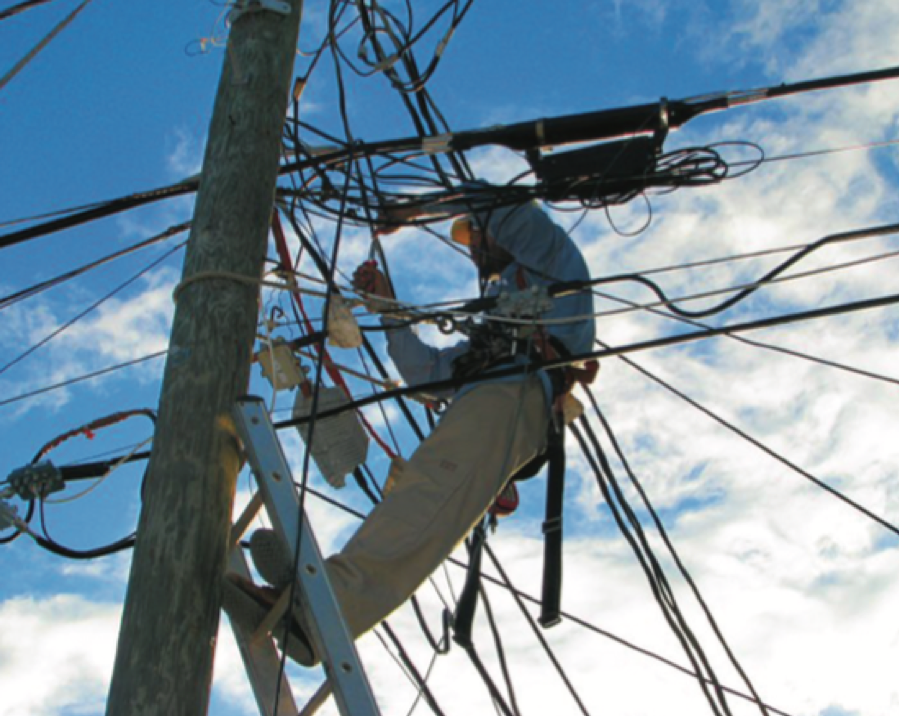
In a country where people seem to do more fighting than talking, the need for an efficient telecommunications sector could hardly be more essential. But like many things in Lebanon, the possibilities are often overridden by reality.

“The [telecommunications] situation in Lebanon in many respects, if not all respects, resembles a disaster zone,” says Riad Bahsoun, telecom expert at the International Telecommunications Union (ITU).

The country’s government-run telecommunications sector lags far behind the rest of the region, with customers suffering exorbitant fees, bad service, poor governance and policies based more on political considerations than economic impetus.

In Jordan for example, the purchase price of a postpaid mobile line (around $12) is about one-fourth the cost of its $50 Lebanese counterpart. Lebanon’s mobile rates per minute are three to four times higher than the world average. The mobile market penetration rate stands at around 32 percent in a region where the penetration rates of some countries are over 100 percent. Lebanon still does not have access to broadband Internet.

The problems started in 1994 when the Lebanese government began rebuilding the telecommunications infrastructure destroyed during the civil war. That is when the government issued four decrees that dictated the manner and direction the telecommunications sector would take.

Calling in the dark

“The government arbitrarily decided to separate the telecom industry, without any knowledge, into fixed services, mobile services or data and internet services,” explains Bahsoun, who is also vice-chairman of the South-Asia Middle East & North-Africa Telecommunications Council.

The resulting governance structure is what Lebanese see today when they look at the tangled web of telecommunications institutions, agencies, regulators and companies.

The decrees resulted in the creation of two general directorates within the Ministry of Telecommunications (MoT). It also created OGERO, the government-owned company that, confusingly, contracts with the government to provide fixed line and internet services. It also created the Global System for Mobile (GSM) office to operate the mobile market.

Bahsoun says the government’s creation of the telecom sector left much to be desired.

“In each segment [the government] started to interfere — govern wrongly with wrong political decisions — in operational decisions,” he says. “Enormous amounts of money and chances were lost.”

In terms of potential however, Lebanon is a telecommunications pot of gold. Its strategic location, educated population and low penetration rates make it a prime candidate for a thriving telecom sector. But it has not come to pass.

“There is a direct correlation between government ownership… and inefficiency,” says Ghassan Hasbani, vice president and partner at the consultanting firm Booz & Company.

Nearly all telecommunication revenues go directly to the government. The only exceptions are providers of end-user Internet and data service such as Inconet Data Management (IDM), Cyberia and others. But even these providers are dependent on the government- owned infrastructure and are subject to revenue sharing agreements with the government. That said, no one seems to know how much money the providers and data operators are making, and how much they are paying to the MoT.

“The Ministry of Telecommunications has something like a dozen revenue sharing agreements with data operators where by the government receives 20 percent. They have never been audited,” says the ITU’s Bahsoun. “Those who may decide to audit are those who receive the money.”

Originally forecasted Lebanese telecommunications reform schedule

Source: TRA
* The privatization of the mobile sector will depend on the regional and international financial market conditions
** Two mobile operators and Liban Telecom
*** Two mobile operators and Liban Telecom
**** Two national broadband licenses, subject to CoM’s decision

Market indicators

Source: TRA
(*) Per household
Note: Mobile and ADSL figures are as of Q2 2008; Fixed and Internet figures are for 2007.

Privatization

Many industry experts say privatization is the key to improving Lebanon’s telecommunication sector. But efforts to free telecoms from government control have proved futile despite attempts to corporatize and privatize the sector.

In July of 2002, the Lebanese government passed Law 431/2002, called the Telecommunications Act, which established the legal framework for the creation of a joint stock company named Liban Telecom.

“I took part in about 35 committee meetings to pass the telecommunications law and we had a dream that it would be implemented immediately,” says Yassine Jaber, current member of the Lebanese Parliament and former Minister of Economics and Trade.

Liban Telecom is intended to be a government-owned body with a corporate framework that eventually replaces the MoT. It is mandated to encourage development, approve licenses, participate in privatization and encourage transparency. But it doesn’t exist yet.

What does exist is the Telecom Regulatory Authority (TRA). The TRA was also created by Law 431 to regulate Liban Telecom’s operations and to encourage competition and investment in the Lebanese telecommunications market.

Although Liban Telecom is nonexistent, the TRA was established in April 2007 “in a sort of cloud,” says one telecom executive. Its first five-member board meeting was held almost five years after Law 431 was enacted.

Kamal Shehadi, chairman and CEO of the TRA, says Lebanon’s politicians lack the will to implement the reforms stipulated in Law 431. He points out that putting the law into action would “cut the umbilical cord between politics and telecommunications.”

The TRA to date has no legal mandate over the MoT or any of its organs, which include both mobile, fixed line telephony as well as Internet access.

“We regulate the market. We don’t regulate the internal governance of a company,” Shehadi says. “We do not get involved in the internal governance of the ministry; that is not our business.”

MP Jaber explains, however, that according to the law, the TRA should be the only entity that manages the sector. “Unfortunately, because of politics [the MoT] has sidestepped the TRA.”

As Lebanon’s telecommunication drama has dragged on, the allure of maintaining government ownership has outweighed the benefits of privatizing the sector.

In January, Telecommunications Minister Jibran Bassil said the Lebanese treasury earned more than $1 billion from the mobile market in 2008, and banked over $300 million from the operations of OGERO. The government’s control over the telecommunications sector is often justified as necessary to ensure a constant revenue flow into the government’s coffers and to pay its debt. But that argument has become less justifiable as the rest of the region leapfrogs the Lebanese telecom industry.

“Government ownership in mobile [telecommunications] is generally not conducive to productivity,” says Booz & Company’s Hasbani.

The idea to privatize the networks inched closer to realization in November 2007, when Lebanon was slated to auction its mobile networks. The decision was reversed only a few months later due to Lebanon’s political stalemate. After the Doha accords, privatization was again put on the table. Then the financial crisis hit, and the proposal was put on the shelf. Again.

In February, the mobile management contracts of Lebanon’s two mobile networks were renewed under a new agreement between the government and Lebanon’s two mobile operators: MTC, part of the Zain group, and Alfa, now managed by Orascom.

“The contracts have to be renewed because there was simply no way for the council of ministers and the TRA to proceed,” Shehadi says.

Previously, MTC and Alfa were paid a flat fee of around $5 million a month to manage the networks. In the past, both operators paid all the operating costs associated with running the networks. This arrangement was, by nature, antithetical to encouraging growth in the sector, because any increased expansion of the networks would increase operating costs, thus reducing the bottom line of the operators.

But Claude Bassil, general manager of MTC in Lebanon, says that under the new management contracts, “the objectives of both the Ministry of Telecommunications and our own are aligned.”

MTC currently receives $6.66 per active subscriber and Alfa receives $6.75 per active subscriber, drastically changing the revenue model, and giving the operators incentive to expand.

Probably the most important element of the new arrangement that will impact the growth of the mobile market is the new pricing structure put in place by the government at the beginning of April.

The plan lowers prices for prepaid monthly subscriptions ($45 to $25), prepaid minute rates ($0.50 to $0.36), monthly subscription fees ($25 to $15) and postpaid minute rates ($0.13 to $0.11) in a move that has been eulogized by many as the sector’s first shift toward a viable pricing structure. The new contracts can be renewed for a period of one year, or revoked if privatization of the mobile networks ever becomes a reality.

With a subscription-based revenue model, the interests of the mobile operators now focus on expanding Lebanon’s overburdened and aging mobile network infrastructure, part of which fizzled out in late March during the prime-time hours.

Samer Salameh, chairman and CEO of Alfa, says the problem was caused by a software bug in a faulty switch that was provided by Nokia Siemens Networks. The switch has been replaced by the company.

“The network… is around 14 years old,” Salemeh says. “Imagine a car that is 14 years old and how it will run today if you don’t change the oil. This is what we have.”

As Executive went to print, both mobile operators were aiming to expand their respective networks by 400,000 subscribers each by May, to reach a nationwide total of 2.4 million subscribers.

The expansion is made possible by an agreement between the operators and the government. The government has agreed to take on the costs associated with any kind of capital expenditure, purchasing everything from towers to switches to buildings. The operating costs are being incurred by the mobile operators. Such an arrangement has made their bottom line look rather dim.

“We would be lucky if we actually make any money this year,” says Salameh. “We are actually forecast to lose some money.”

So why are the mobile operators willing to accept a loss-making agreement? The answer, it would seem, is that they want to get their foot in the door if the government ever decides to sell a chunk of the mobile network.

“We are not interested in [just] managing the network,” says Claude Bassil of MTC’s unique contract in Lebanon. His company usually owns and manages all aspects of the telecommunications network it operates.

At this point the government’s privatization yo-yo has become commonly accepted practice. And further conditions are now being applied to the sale of the networks. The government changed its sales pitch in February after signing the management agreements, saying that it will only offer a minority share for sale to a strategic partner, because the “majority should be reserved for the Lebanese as investors, as individuals or as funds,” says Minister Bassil.

The idea of a minority share has been met with staunch opposition from industry experts who fear that such an initiative would be contrary to the promise of privatization. Hasbani says the move could also reduce the perceived value of the networks, and scare off potential investors. TRA’s Shehadi says the plan is ludicrous.

“These are proposals that have no basis whatsoever in the reality of the telecommunications market,” he says. “They are unprofessional proposals made by people who have never transacted in the telecom market and have never worked on a licensing effort or privatization.”

Proponents of selling a minority stake say such an arrangement is in the interest of Lebanon’s citizens.

Hizbullah — allies of Minister Bassil’s Free Patriotic Movement — has come out in favor of the minority share plan. In the party’s political platform it stresses “the preservation of this national wealth through the sector development and improving its services.”

Ought to audit

Aside from the problems with operations and debates surrounding privatization, irregularities abound in the telecom sector, especially in the auditing process, ITU’s Bahsoun says.

“For 14 years the fixed services network has never been physically audited,” he says. “The operations of OGERO have never been financially audited. And the two mobile networks that have existed in Lebanon since 1995 have never been physically or financially audited.”

The decision to physically assess and audit the networks rests with the Lebanese government, through the MoT, and there is a disagreement as to whether a full technical assessment of the mobile networks has been completed. Shehadi says that OGERO to date does not have an updated fixed asset registry, making it impossible to perform a financial or technical audit.

“There is no such thing as an audit for OGERO,” says Shehadi. OGERO did not respond to requests for comment on this allegation.

On the mobile side of things, the government has appointed PricewaterhouseCoopers (PWC) to produce an audited financial statement in order to gauge the financial position of Lebanon’s mobile telecommunications. Gilbert Najjar, head of the Owner Supervisory Board, the government entity that oversees the GSM office at the MoT, explains that according to International Financial Reporting Standards (IFRS), PWC has fulfilled its obligations and both mobile operators have provided their financials. That said, his office requires a full audit of all the major accounts of the two operators, instead of just the sampling procedures carried out under the IFRS.

“I told the auditors that I will not approve accounts on this basis because I am dealing with the accounting of government money and I need to have a proper check of all documentation,” says Najjar. “I need the major accounts checked and audited on a proper basis, I cannot do it on a sampling basis.”

The issue has been pending since the mobile operator’s contracts were signed in 2004. Only when all parties involved sign off on a final audit will the case of the mobile operators’ financial standing finally be closed.

“At the end of the day you need the government of Lebanon, the operator, and the auditor to come together and this has not happened,” says Claude Bassil of MTC.

This creates a problem for the TRA, because as Shehadi says, his agency is tasked with providing potential investors with the information they need to invest in the mobile networks.

When asked about why these requests have fallen on dead ears, Minister Bassil says, “[The TRA] has nothing to do with privatization; it is something that the minister decides and a policy that has to be adopted by the council of ministers and by our parliament.”

The Owner Supervisory Board is currently in the process of an internal audit of its major accounts.

“These are unprofessional proposals made by people who have never transacted in the telecom market”

Goop in place of governance

In 2005, then Telecommunications Minister Marwan Hamade appointed then general director of operations and maintenance at the MoT, Abdulmenem Youssef, to be chairman and general manager of OGERO. OGERO is contracted to, and paid by, the Office of Operations and Maintenance at the MoT. Bahsoun says this arrangement presents a clear conflict of interest where “the right hand plays the left hand.”

Executive attempted to contact Youssef several times, but he did not respond to requests to address Bahsoun’s allegations.

The Capital Expenditure Committee, called CAPEX, of the Owner Supervisory Board is the government entity that monitors the mobile network operator’s capital expenses. The CAPEX Committee also contains members of OGERO’s board.

“All the CAPEX Committee members either work for OGERO or the MoT and that has been the case for the past few years so there is nothing new,” says MTC’s Claude Bassil.

But Gilbert Najjar says only one board member of OGERO, Alain Bassil, also currently sits on the CAPEX committee.

“It was a decision taken by [former] Minister Hamade and by the general directors of telecommunications who at the time had the powers of the TRA,” Najjar says.

Lebanon currently buys its bandwidth from the cypriot telecom authority, effectively making it a bandwidth colony

Internet at a snail’s pace

The cost of the telecom sector’s spider web of authority is apparent in the archaic speed of Lebanon’s Internet connections. The minister himself seems to have little hope in curing the situation.

“I am sorry to say that as the telecommunications minister, I tried to make some headway with respect to [improving Internet access and services,] but was incapable of doing so,” he said in a speech at the Arab Telecom and Internet Forum last month.

Lebanon currently buys its bandwidth from the Cypriot Telecom Authority (CYTA), effectively making it a bandwidth colony. Plans are in motion to increase Internet speeds. In June, a government project will lay 4,700 kilometers of fiber optic cables in the form of an outer ring and an inner ring to encircle the country. The project is set to be completed by 2011 and cost the government $64 million.

Shehadi says the TRA has also initiated a plan to allow private license in the broadband arena. There is also a plan to connect Lebanon to the International Middle East Western Europe 3 (IMEWE3) network, which could add more bandwidth to the country’s decrepit Internet infrastructure. But Riad Bahsoun of the ITU says the plan would require someone to cut through what may be considerable bureaucratic red tape.

“IMEWE3 is a good decision, but it has to go through Alexandria, and the internal security services in Egypt are not happy because they probably haven’t gotten their share of the corruption,” says ITU’s Bahsoun.

There is little hope that the ills of Lebanon’s telecom sector will be remedied until the results of the June parliamentary elections are in and a new government has been formed. When asked whether any headway can be made with regards to privatization or reform during the current government’s term, Minister Bassil laughed and said, “Definitely not. We can wait.”

May 10, 2009 0 comments
0 FacebookTwitterPinterestEmail
Editorial

Let talent roam free

by Yasser Akkaoui May 10, 2009
written by Yasser Akkaoui

In spite of everything, the Arab world is adapting to the current crisis. There is developing, out of the gloom, a positive attitude. There have been no more dramatic crashes and we are factoring this reality into our ‘books.’ In short we are less traumatized. It is as the French say, la vie c’est l’habitude. Still, looking at the numbers, the crisis is very much a reality and will not be going away any time soon. So despite this new-found stoicism, measures to spur growth are still needed.

This is where the UAE’s policy of insisting that foreign talent leave the country within one month of leaving a job — enforced or voluntary — is, at least in the current zeitgeist, somewhat short-sighted. A nation in the grip of an economic crisis needs consumers. This is real economics and a scheme should be developed whereby these people — many of them Lebanese, it must be said — be allowed to stay and, more crucially, to spend their money (not, mind you, money that has come from welfare, but for example money from unemployment insurance policies that the unemployed themselves have paid for). Let them stay and spend on their cars and spend on their apartments as they forage for new work.  Then, there would be no urban myths of sand-swept airport parking lots filled with abandoned cars with credit cards tossed casually onto the passenger seat.

Without these people, there will not be ‘real’ economic activity. And the policy of ejection will have an even greater impact on those economies that have already been buffeted by what are arguably the worst economic winds in 60 years. We must be thankful that Dubai’s neighboring emirates — especially Abu Dhabi — have not been hit as hard and have, by maintaining a degree of price relativity, not seen prices, real estate in particular, plummet.

Keeping these valuable human assets on the ground will bring out the best in their entrepreneurial survival instincts. They will regroup; they will network; they will seek out new opportunities and all the while they will be spending and this can only lead to eventual growth. It has happened in Lebanon since the 1970s, when civil war forced the Lebanese to be at their most creative, and it is still going on — despite the best efforts of our politicians to squash any economic dynamism — as many struggle to recalibrate their business lives to the new reality.

Let human talent roam free and it will thrive.

May 10, 2009 0 comments
0 FacebookTwitterPinterestEmail
Comment

Ahoy ye high seas hypocrisy!

by Paul Cochrane May 3, 2009
written by Paul Cochrane

Piracy off the coast of Somalia has become another ‘global crisis’. It took the hijacking of a US ship last month and the media hyped antics of the US Navy in ‘neutralizing’ the rogue elements — three shots, three dead pirates — to make it onto the crisis list.
Yet piracy has been a problem off Somalia for as long as this East African country has been in a state of crisis, since 1991. And it is not a clear-cut case of the good guys — merchant seamen — versus the baddies — Somali pirates.
The dire situation in Somalia is what triggered a surge in piracy that has, like the conflict itself, many regional and international players involved. As an essentially failed state, there are no means for patrolling Somalia’s coastline. This has been a scourge for the Somalis as well as the 33,000 ships a year that sail either side of the Horn of Africa. With no regulation, the seas were a free-for-all and the area became a rich source for unscrupulous seafarers.
In the year subsequent to the overthrow of the Union of Islamic Courts by US-backed Ethiopian troops in December 2006, there were 31 attacks on ships. As the conflict in Somalia heated up in 2008, the number of attacks spiked to 122, while in the four months of this year there have been 79 attacks. [As Executive went to print, pirates were holding 280 crewmen on 14 ships for ransom.]
But while pirates demand millions of dollars to release hijacked ships, Somalis and the UN have claimed that foreign ships, primarily European, have been dumping toxic and nuclear waste off the coast to avoid high waste disposal costs elsewhere. When some of this toxic waste washed ashore, more than 300 people died from radiation sickness, according to news reports.
Illegal fishing has also taken its toll, with an estimated $300 million worth of fish trawled every year. Stocks are running so low that coastal Somalis are struggling to survive. Vigilante justice ensued when local fishermen took to the seas to levy ‘taxes’ and seize ships suspected of dumping and illegal fishing, calling themselves the Volunteer Coastguard of Somalia.
It was a measure that has popular backing in Somalia, as has actual piracy. According to an editorial on Somali news site WardheerNews, 70 percent of those polled “strongly viewed the piracy as a form of crude, primitive, if you will, national defense of the country’s territorial waters.”
It is a bit of a stretch however to say a ship hijacked up to 900 nautical miles off the coast is national defense, particularly with the ransoms paid out funding militias in Somalia. But such piracy could be viewed like the folkloric hero Robin Hood, robbing the rich to feed (and arm) the poor. After all, whether someone is referred to as a pirate depends on how they are regarded, similar to the way ‘one man’s terrorist is another man’s freedom fighter’.
Take Captain Morgan of Jamaican rum fame, who was a privateer in the service of the British navy in the Caribbean in the late 1600s, attacking Spanish flotillas laden with booty. Morgan and his ilk — what we might now refer to as maritime mercenaries — served a foreign policy objective by pillaging from the Spanish, but crucially set the course for Britain to become an empire through its domination of the seas. Piracy had its uses, and for his efforts Morgan was made the Lieutenant Governor of Jamaica. The founder of New Orleans was also a pirate and during the American Revolution, George Washington— lacking a navy— paid pirates to patrol the coast.
Piracy could also be considered a policy common to the financial world, whether it’s offshore banking havens that launder dirty money or of the more cutthroat capitalist variety. There was even a recent posting on the Wall Street Journal’s blog on “Piracy vs. Private Equity: A Comparison.” Similarities were the seizing of assets and adopting a “all for one, one for all” partnership model. But where piracy demands a ransom to divide among the pirates, PE has a dividend recap, then sale or initial public offering.
And just as tighter regulations of the free market are being sought, amid the global financial crisis, NATO is debating whether to provide armed convoys for ships plying Somalia’s waters. But despite the 15 to 20 warships under UN auspices currently off the coast, Somalis claim navy vessels are protecting illegal trawlers that were initially scared off by its volunteer coastguard.
While some temporary measures are needed to protect shipping routes, the real solution to the crisis lies on land. With stability, Somalia would have less need to resort to piracy — defensive or offensive — and its natural resources could be better protected. If one good thing can be said of the ‘piracy crisis’, it is bringing attention to the ramifications of a failed state.

PAUL COCHRANE is a Beirut-based journalist  

May 3, 2009 0 comments
0 FacebookTwitterPinterestEmail
Levant

Kataeb – March 14 Coalition

by Executive Staff May 3, 2009
written by Executive Staff

Samy Gemayel, 29, is currently the General Coordinator of the Central Committee of the Kataeb (Phalanges) Party. He is also the son of former Lebanese President and current Kataeb Party leader Amine Gemayel. Samy Gemayel is running for the Maronite seat in the Metn electoral district.

E The United Nations estimates that 28.5 percent of Lebanon’s population lives below the poverty line and 300,000 people live in extreme poverty. What will you do to elevate the poverty situation?
The whole economy should be more organized. You have to make structural changes.
First of all we think that the lack of stability is the main cause of economic problems in Lebanon. A good economy needs investment and investment need stability… Investments will create jobs. Jobs will create income and that income will help consumers to be more active. It’s the whole process of the economy that starts with investment… If you don’t have investment you don’t have any economy.
With regards to poverty, first we have to create jobs. In order to create jobs, we need an institution that helps people create jobs. That’s why we have a project to create something like NPE [“Nouvelles Politiques de L’emploie – New Politics of Employment”], like in France. It’s a public institution that consolidates all the offers and the demands on jobs in order to link people. We need to create this institution and it’s not present. If people work they will have an income and the poverty problem will be solved.
Also, the personal income tax should be progressive. This is a very important point because you cannot use the same taxes on all people. Actually, you have today taxation on luxury products; we put taxes on them but this is not sufficient. Maybe we can make more money with the cigarettes. The cost of cigarettes in Lebanon is too low. By increasing the cost of a pack of cigarettes, you can use the money to invest in medical research, hospitals and medical care and help the poverty situation.

E EDL has been a drain on the budget for over a decade. What will you do to decrease expenditure, improve efficiency and take the industry forward?
We think that some sides of EDL should be subject to privatization. The distribution should be privatized and the collection of bills should also be privatized. The problem of EDL is that today only 60 percent of the production of EDL is being billed. We don’t know where 40 percent of the production is going.
First, you have to bring someone from the outside to put their hands on EDL because corruption is the main problem. The second problem is that the 60 percent that is billed, only 60 percent of that [initial] 60 percent is being paid for. That’s why we have a problem with EDL and it is the main cause of the debt.
In order to stop that we have to understand that this is the main cause of the economic problem and we have to bring consultants and find a way to stop this wastefulness. The way to stop that is to privatize some of the sections of EDL, not all. Just the collection, distribution and the billing processes.

E In order to service Lebanon’s mountain of debt, policy has always been enacted to tax the private sector. Will this continue under your party and what will you do to spur on private sector growth?
Firstly, there are public institutions that should be privatized. Then, you need to have laws organizing the relations between the public and the private sector. Public private partnership is a very important point for us, in terms of economics, in order to make the private sector more efficient and more attractive. We think the service sector should not be the main focus of the economy because it is too influenced by the stability of the country. Agriculture and industry are less affected by economic problems related to stability and they create jobs, more jobs than the service sector. We think, especially for young people, that there should be no tax on initiatives taken by young people who create companies, new industries or inventions in order to encourage the new generation to invest in Lebanon and to encourage creativity for everyone.

E The debt servicing is also weighing heavily on Lebanon. How will you reallocate inflows and payments to service this debt while still maintaining public services and decrease the budget deficit?
The first thing is to stop corruption because if the money you inject into the Lebanese economy goes into corruption, there is no way that this economy will stand up even if you do Paris I, Paris II and Paris III. If this money is not well invested or reserved; there is no chance that this economy will stand up anyway. We don’t think that adding more and more debt on Lebanon will help in any way. I think that the first thing to do is to stop corruption before bringing more money in, because otherwise it’s like a pocket with a hole in it.

E What mechanism would you propose to deal with the issue of corruption?
I think that first we should privatize. The best way to stop corruption is to privatize, to organize and to create a central agency to fight corruption.

E What initiatives will you take to decrease Lebanon’s risk factor with respect to investment, encouraging competition and diffuse political elements that increase the risk factor?
You need a strong state and no weapons outside of Lebanese jurisdiction.

E Do you mean weapons entering the country?
Not only the weapons entering the country. We have to get rid of the weapons that are inside the country today, with the Palestinians and with Hizbullah. Once we have a state acting with full sovereignty in all of its territories, then it will be easier for us to impose stability and to impose a viable state that will, for sure, bring a lot of investments to Lebanon.

E Will you be talking with the Palestinians and Hizbullah about the best way to move forward?
We are talking about the Lebanese government, which will have this role or principle as a main target, to impose the sovereignty or order of the law on all the Lebanese territories in order to have stability.

E Recently the ILO reported that 22,000 students dropped out of schools in Lebanon. What will you do to keep children in school?
In all civilized and modern countries every person under 18 years old should be in school. It’s not a right; it’s an obligation. We will promote free and obligatory schooling for all people under 18. When I lived in France, I was once arrested in the street at 9 a.m. because I didn’t go to school in the morning. If you want any development you need all the people to be educated, to be in school and have a minimum [level of] education.

E The balance of payments remains in the black but is dragged down by the balance of trade. What will you do to increase trade efficiency and volume and maintain a positive balance of payments?
The balance of trade is related to the situation of the economy in general. If the economy stands up and that state makes a good plan to reactivate all the sectors of the economy, as we planned before, then I think the whole balance will be up again [sic].

E Privatization of the telecom industry has been stifled by politics and market conditions. How will you encourage competition and root out bad governance in the sector?
In all the countries in the world when they have a big problem like that, they bring in consultants. I don’t know why Lebanon doesn’t believe in consultants even if it is the most efficient way to improve [the situation]. It is not normal, in Lebanon, to have only two companies having a duopoly on the mobile telecom industry. There should be many more companies competing between each other in the interest of the people. When you compete prices go down so for sure you have to privatize [the industry].

May 3, 2009 0 comments
0 FacebookTwitterPinterestEmail
  • 1
  • …
  • 469
  • 470
  • 471
  • 472
  • 473
  • …
  • 686

Latest Cover

About us

Since its first edition emerged on the newsstands in 1999, Executive Magazine has been dedicated to providing its readers with the most up-to-date local and regional business news. Executive is a monthly business magazine that offers readers in-depth analyses on the Lebanese world of commerce, covering all the major sectors – from banking, finance, and insurance to technology, tourism, hospitality, media, and retail.

  • Donate
  • Our Purpose
  • Contact Us

Sign up for our newsletter

    • Facebook
    • Twitter
    • Instagram
    • Linkedin
    • Youtube
    Executive Magazine
    • ISSUES
      • Current Issue
      • Past issues
    • BUSINESS
    • ECONOMICS & POLICY
    • OPINION
    • SPECIAL REPORTS
    • EXECUTIVE TALKS
    • MOVEMENTS
      • Change the image
      • Cannes lions
      • Transparency & accountability
      • ECONOMIC ROADMAP
      • Say No to Corruption
      • The Lebanon media development initiative
      • LPSN Policy Asks
      • Advocating the preservation of deposits
    • JOIN US
      • Join our movement
      • Attend our events
      • Receive updates
      • Connect with us
    • DONATE