• Donate
  • Our Purpose
  • Contact Us
Executive Magazine
  • ISSUES
    • Current Issue
    • Past issues
  • BUSINESS
  • ECONOMICS & POLICY
  • OPINION
  • SPECIAL REPORTS
  • EXECUTIVE TALKS
  • MOVEMENTS
    • Change the image
    • Cannes lions
    • Transparency & accountability
    • ECONOMIC ROADMAP
    • Say No to Corruption
    • The Lebanon media development initiative
    • LPSN Policy Asks
    • Advocating the preservation of deposits
  • JOIN US
    • Join our movement
    • Attend our events
    • Receive updates
    • Connect with us
  • DONATE
Levant

Kataeb – March 14 Coalition

by Executive Staff May 3, 2009
written by Executive Staff

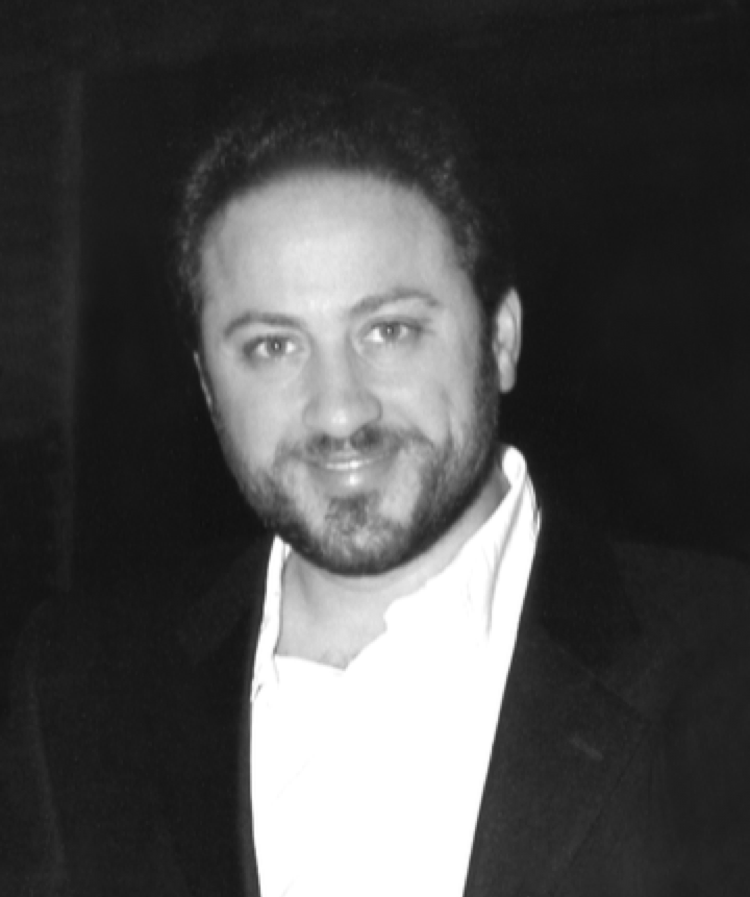
Samy Gemayel, 29, is currently the General Coordinator of the Central Committee of the Kataeb (Phalanges) Party. He is also the son of former Lebanese President and current Kataeb Party leader Amine Gemayel. Samy Gemayel is running for the Maronite seat in the Metn electoral district.

E The United Nations estimates that 28.5 percent of Lebanon’s population lives below the poverty line and 300,000 people live in extreme poverty. What will you do to elevate the poverty situation?
The whole economy should be more organized. You have to make structural changes.
First of all we think that the lack of stability is the main cause of economic problems in Lebanon. A good economy needs investment and investment need stability… Investments will create jobs. Jobs will create income and that income will help consumers to be more active. It’s the whole process of the economy that starts with investment… If you don’t have investment you don’t have any economy.
With regards to poverty, first we have to create jobs. In order to create jobs, we need an institution that helps people create jobs. That’s why we have a project to create something like NPE [“Nouvelles Politiques de L’emploie – New Politics of Employment”], like in France. It’s a public institution that consolidates all the offers and the demands on jobs in order to link people. We need to create this institution and it’s not present. If people work they will have an income and the poverty problem will be solved.
Also, the personal income tax should be progressive. This is a very important point because you cannot use the same taxes on all people. Actually, you have today taxation on luxury products; we put taxes on them but this is not sufficient. Maybe we can make more money with the cigarettes. The cost of cigarettes in Lebanon is too low. By increasing the cost of a pack of cigarettes, you can use the money to invest in medical research, hospitals and medical care and help the poverty situation.

E EDL has been a drain on the budget for over a decade. What will you do to decrease expenditure, improve efficiency and take the industry forward?
We think that some sides of EDL should be subject to privatization. The distribution should be privatized and the collection of bills should also be privatized. The problem of EDL is that today only 60 percent of the production of EDL is being billed. We don’t know where 40 percent of the production is going.
First, you have to bring someone from the outside to put their hands on EDL because corruption is the main problem. The second problem is that the 60 percent that is billed, only 60 percent of that [initial] 60 percent is being paid for. That’s why we have a problem with EDL and it is the main cause of the debt.
In order to stop that we have to understand that this is the main cause of the economic problem and we have to bring consultants and find a way to stop this wastefulness. The way to stop that is to privatize some of the sections of EDL, not all. Just the collection, distribution and the billing processes.

E In order to service Lebanon’s mountain of debt, policy has always been enacted to tax the private sector. Will this continue under your party and what will you do to spur on private sector growth?
Firstly, there are public institutions that should be privatized. Then, you need to have laws organizing the relations between the public and the private sector. Public private partnership is a very important point for us, in terms of economics, in order to make the private sector more efficient and more attractive. We think the service sector should not be the main focus of the economy because it is too influenced by the stability of the country. Agriculture and industry are less affected by economic problems related to stability and they create jobs, more jobs than the service sector. We think, especially for young people, that there should be no tax on initiatives taken by young people who create companies, new industries or inventions in order to encourage the new generation to invest in Lebanon and to encourage creativity for everyone.

E The debt servicing is also weighing heavily on Lebanon. How will you reallocate inflows and payments to service this debt while still maintaining public services and decrease the budget deficit?
The first thing is to stop corruption because if the money you inject into the Lebanese economy goes into corruption, there is no way that this economy will stand up even if you do Paris I, Paris II and Paris III. If this money is not well invested or reserved; there is no chance that this economy will stand up anyway. We don’t think that adding more and more debt on Lebanon will help in any way. I think that the first thing to do is to stop corruption before bringing more money in, because otherwise it’s like a pocket with a hole in it.

E What mechanism would you propose to deal with the issue of corruption?
I think that first we should privatize. The best way to stop corruption is to privatize, to organize and to create a central agency to fight corruption.

E What initiatives will you take to decrease Lebanon’s risk factor with respect to investment, encouraging competition and diffuse political elements that increase the risk factor?
You need a strong state and no weapons outside of Lebanese jurisdiction.

E Do you mean weapons entering the country?
Not only the weapons entering the country. We have to get rid of the weapons that are inside the country today, with the Palestinians and with Hizbullah. Once we have a state acting with full sovereignty in all of its territories, then it will be easier for us to impose stability and to impose a viable state that will, for sure, bring a lot of investments to Lebanon.

E Will you be talking with the Palestinians and Hizbullah about the best way to move forward?
We are talking about the Lebanese government, which will have this role or principle as a main target, to impose the sovereignty or order of the law on all the Lebanese territories in order to have stability.

E Recently the ILO reported that 22,000 students dropped out of schools in Lebanon. What will you do to keep children in school?
In all civilized and modern countries every person under 18 years old should be in school. It’s not a right; it’s an obligation. We will promote free and obligatory schooling for all people under 18. When I lived in France, I was once arrested in the street at 9 a.m. because I didn’t go to school in the morning. If you want any development you need all the people to be educated, to be in school and have a minimum [level of] education.

E The balance of payments remains in the black but is dragged down by the balance of trade. What will you do to increase trade efficiency and volume and maintain a positive balance of payments?
The balance of trade is related to the situation of the economy in general. If the economy stands up and that state makes a good plan to reactivate all the sectors of the economy, as we planned before, then I think the whole balance will be up again [sic].

E Privatization of the telecom industry has been stifled by politics and market conditions. How will you encourage competition and root out bad governance in the sector?
In all the countries in the world when they have a big problem like that, they bring in consultants. I don’t know why Lebanon doesn’t believe in consultants even if it is the most efficient way to improve [the situation]. It is not normal, in Lebanon, to have only two companies having a duopoly on the mobile telecom industry. There should be many more companies competing between each other in the interest of the people. When you compete prices go down so for sure you have to privatize [the industry].

May 3, 2009 0 comments
0 FacebookTwitterPinterestEmail
Comment

Jordan’s barter

by Riad Al-Khouri May 3, 2009
written by Riad Al-Khouri

The setting up of the World Trade Organization (WTO) in the mid-1990s was supposed to have put the world economy on the path to multilateral trade liberalization. Yet, bilateral and regional free trade agreements (FTAs) have proliferated over the last decade or so.
In the 1990s, the European Union (EU) was a main proponent of bilateral accords. With the start of the Doha Round in 2001, however, the Europeans focused on the multilateral level, whereas the United States embarked on a major drive for regional and bilateral FTAs. Yet in 2006, with the Doha talks stalling, the EU developed a new strategy emphasizing bilateral free trade accords. While the EU and the US are among the more active players in this process of making trade agreements, others are similarly engaged.
Jordan provides the leading example of bilateral and regional trade liberalization since the late 1990s. Regarding trade agreements with the West, Jordan is the most heavily involved country in the Arab region. The US-Jordan FTA entered into force in December 2001. Previously, the two parties had also signed a Qualifying Industrial Zones (QIZ) trade agreement.
Relations between the EU and Jordan are governed by an Association Agreement signed in 1997 and implemented in 2002; and Jordan is a member of the ancillary Agadir Agreement with Egypt, Morocco and Tunisia. The kingdom is also part of the Arab Free Trade Area.
Bilateral FTAs with other countries have also been concluded or are being negotiated, notably with Canada, Israel and Singapore. Jordan’s trade liberalization has contributed to growing exports, including QIZ clothing sold to the US.
Jordan today is a highly open economy with diversified trade. The kingdom has undergone major economic reforms since the early 1990s, including rationalization of its fiscal policy, liberalizing trade, privatizing most state-owned enterprises and reforming customs, as well as other parts of the state administration.
Exports as well as imports have risen much faster than gross domestic product (GDP): the merchandise trade to GDP ratio reached 120 percent in 2008 (up from 82 percent in 1997) amounting to a staggering $9.1 billion.
Jordan’s National Agenda for 2006 to 2015 spelled out ambitious goals, including a cut in the net trade imbalance to $1.7 billion by 2012, and $900 million by 2017. This shortfall is financed by remittances, inflows of private capital, aid and some services income, such as that from tourism, which earned Jordan $2 billion last year. So the current external balance is not precarious: on the positive side, hard currency reserves in early 2009 stood at $8.3 billion, while foreign debt shrank. Expatriate remittances are estimated at $2.4 billion for 2008.
But the trend for the past few years has been for imports to rise faster than exports. The export to GDP ratio increased from 25 percent in 1997 to 35 percent today, while the comparable import ratio rose from 57 percent to 85 percent over the same period.
The structural characteristics of Jordan’s exports thus warrant attention. In 1997-2008, the kingdom’s total exports grew more than threefold, faster than global trade. Much of this growth is accounted for by exports to the US. The share of total Jordanian exports destined for the US increased from less than one percent in 1997 to more than 25 percent in 2008.
But the kingdom’s sales to America, heavily dominated by apparel, may decrease as Jordanian preferences in terms of US market access gradually erode. Jordan will thus need to diversify its exports to the US in order to compensate for flat or falling apparel figures.
Following a major liberalization effort in the context of its accession to the WTO in 2000, Jordan now has relatively low tariffs. Although the kingdom accepted and implemented the multilateral principles of the WTO, Jordan continues to support its external policies with a complex tissue of bilateral trade agreements.
Trade reforms have been implemented gradually since 1996 as governmental efforts addressed unilateral trade-related legislative adjustments in customs and taxes, as well as patent, copyright and trademark protection. Once full membership in the WTO was successfully reached in April 2000, Jordan agreed to assume all its market access commitments on goods. As for services, Jordan committed to removing 139 measures excluding market access, and 79 measures granting national treatment. The majority of commitments regard business services, transport, financial services and tourism, which are strategic to supporting the diversification of the kingdom’s economic structure.
Bilateral accords have also been important for Jordan in recent years. Since 1995, Jordan signed over two dozen bilateral agreements.
In conclusion, Jordan has moved over the past decade from being a closed economy to one that is very much in tune with the realities of globalized international trade. Yet, the results of this process have not always been positive, and the country still has some way to go in its quest to become a serious exporter.

Riad al Khouri is a Senior Associate Consultant, William Davidson Institute University of Michigan, Ann Arbor

May 3, 2009 0 comments
0 FacebookTwitterPinterestEmail
Levant

Change and Reform bloc – Opposition

by Executive Staff May 3, 2009
written by Executive Staff

Farid el-Khazen, 49, has been a Member of Parliament since 2005 and is the author of The Breakdown of the State in Lebanon. He is also a professor of political science and former chairperson of the department of political studies and public administration at the American University of Beirut. Mr. Khazen is running with the Change and Reform bloc for the Maronite seat in the Kesrouan electoral district. 

E The United Nations estimates that 28.5 percent of Lebanon’s population lives below the poverty line and 300,000 people live in extreme poverty. What will you do to elevate the poverty situation?
Poverty in Lebanon is the result of a lack of policies to deal with this problem, and as you know the priorities of the government have been elsewhere since the end of the war in 1990. This is not an issue that was given sufficient attention. There has been attention or concern or interest by international organizations that dealt with this issue in Lebanon, but not much has been done when it comes to government and I think this has to go by sectors.
For instance, on the issue of hunger and households — I am not an expert on this issue but I assume that it has to go by age group, by gender and by region. The policy of simply giving aid, which is the classical approach, may be needed for the very poor, but beyond that I think that one should create security and jobs and provide an opportunity for these people to work. This is one effective way to elevate poverty.
Some regions are definitely poorer than others but there are also needy sectors or sectors that need development all over Lebanon, not only one region or another. This does not apply only to poverty; it applies to other areas.
In the region that I represent, Kesrouan, public schools are in very bad shape, while in other regions public schools are much better. I would not [just] go by region, I would go by where there is poverty and where there is need for infrastructure and the need for human development. Definitely there are more poor people in some regions than in others.

E EDL has been a drain on the budget for more than a decade now; what would you do to decrease expenditure and improve efficiency?
The debt that Lebanon has is partly due to this problem, the funding of EDL. This is a monumental factor; it is the worst and the most costly problem in the country and it’s been going on since the end of the war — almost 20 years now and nothing has been done.
This is not a problem that surfaced last year or a few months ago. This is due to mismanagement, corruption and a variety of factors that all converge on one thing, the policy of the so called muhasasa [a situation by which parts of a whole are split up amongst stakeholders].
Over the years, the money that has been spent to subsidize the EDL could have been used in a different way and then used to build new plants. So what is the best approach today? We are still waiting to produce electricity by gas that we don’t have and we don’t have the proper infrastructure for it. It’s a vicious circle and in my view that should be given top priority. First we need to deal with the immediate problem and find ways to produce electricity at a lower price and again I am not an expert. I am not familiar with the proposals to comment whether it is a proposal by Mr.A or Mr.B.

E In order to service Lebanon’s mountain of debt, policy has always been enacted to tax the private sector. Will this continue to be the basis of the government under your party and what will you do to spur on private sector growth?
The private sector at some point in the ‘90s had been given incentives, but with the overall policy, the political process was not at all favorable for the public sector to flourish.
You say you lower taxes or eliminate taxation or whatever, but it is still uneven and there is no long term vision. You may support the private sector through certain policies, but there is an overall political situation that is really counter to that support, and there is also this problem of corruption which does not at all go well with the private sector and how it should operate.
The private sector — especially when you are dealing with exports — it’s not simply the issue of taxation. I don’t know what the tax rate is here in comparison with other neighboring countries, say Jordan or the Gulf, but definitely it’s a package of taxes and proper administrative procedures and the overall political situation. The package in Lebanon is not competitive. You have to make it competitive so that Lebanon can really become, once again, the business center of the region that it was before the war.

E Recently the ILO reported that 22,000 students dropped out of schools in Lebanon. What will you do to curb this phenomena and to facilitate human development in Lebanon?
We have other problems in the region, mainly infrastructure and the absence of any sewage system, water pollution and waste water treatment plants. This is a major problem in the region.
When it comes to schools, I mean public schools. Public schools cost [money]. The average student in a public school would cost more than in a private school and therefore there is a huge problem; it should cost less. Plus the level of education is not as good or comparable to that of private schools. Had it been better, more parents would have been likely to send their kids to public schools.
It’s not simply schools, it’s also universities and in recent years. In the last 10 years or so, the government or the Ministry of Education have given licenses to several institutions which are not qualified to become universities and today are called universities. Students will graduate from a so-called university; they have a diploma and they think they can work with this diploma when in fact they cannot. They cannot compete with the students graduating from the established universities in the country. We have so many engineering schools, so many businesses [schools], so many medical [schools] — its total chaos.
We are a small country and already we have more than 40 so- called universities and more to come. They keep on presenting proposals for licenses and there is no policy on this. There is a lack of enforcement and this started in the ‘90s and then became chaotic, and you have political interest at stake sometimes, sometimes clientelism, sometimes nepotism, all the ills of society are there so this is an issue that needs to be addressed first.

E Telecommunications privatization has been stifled by politics and market conditions. How will you encourage competition and root out bad governance in the sector?
There is bad governance in all sectors, in all of the above. The current minister has done something that is a great achievement by lowering prices. This is a major achievement and I don’t know why this was not done before Minister Bassil came to office. The minute this service started in the mid-90s, corruption started there.
When it comes to privatization, in this sector or in any other sector, it cannot be simply privatization by the norms that apply in a number of developing countries where privatization meant private property not [real] privatization. We have seen this in a number of countries in the Middle East and elsewhere. If it is privatization by the norms that apply in Europe or developed markets where there is transparency, then yes [we agree]. Otherwise privatization becomes synonymous with private business. Under the label of privatization we can get into a very bad situation in all sectors. So we are for privatization and we support privatization, but again it should not be politicized; it should be totally transparent and it should go by the rules and the norms that are in application in other countries. We opt for privatization when we know that we can assure that we can abide by these laws. Otherwise it’s not simply the rush for privatization. Privatization, if not applied properly, is not a recipe for reform. It becomes a recipe for corruption. [I support] no politicization, transparency and the norms that are in application — the best practices.

May 3, 2009 0 comments
0 FacebookTwitterPinterestEmail
Comment

The capitalist mea culpa

by Peter Speetjens May 3, 2009
written by Peter Speetjens

If the G-20 April meeting in London could be summarized in two words, they are regulation and internationalization.
“Major failures in financial regulation and supervision were fundamental causes of the crisis,” stated the G-20’s final communiqué, which promised to build “a stronger, more globally consistent, supervisory and regulatory framework.”
A key element of that framework will be the establishment of a new global watchdog, the Financial Stability Board, which is to closely cooperate with the International Monetary Fund (IMF). The latter, in turn, has been bolstered by a major cash injection. While the G-20 summit was arguably not the “new Bretton Woods,” as some politicians euphorically claimed, it did change its tune.
“We are for open economies and open markets, but open economies and open markets have to respect some rules,” said European Commission President Jose Manuel Baroso. According to French President Nicolas Sarkozy, the world had turned the page on the Anglo-Saxon model of free markets.
Significantly, it has not just been politicians who signaled a paradigm shift. “This is a reversal of the ideology of the 1990s, and at a very official level, a rejection of the ideas pushed by the US and others,” said Joseph Stiglitz, the World Bank’s former chief economist. “It’s a historic moment when the world came together and said we were wrong to push deregulation.”
In addition to the call for regulation, the summit agreed to increase the IMF’s cash reserves from $250 billion to $750 billion and issue $250 billion in Special Drawing Rights, the fund’s artificial currency that, based on a basket of currencies, is used to settle accounts among IMF member states.
“The IMF is back,” said the fund’s managing director, Dominique Strauss-Kahn, in reaction to the G-20’s decision. It should be noted however, that only half of the $500 billion increase is immediately available in the form of bilateral agreements with Japan, the EU, China and the US, while it is not clear yet where the other half will come from. Nevertheless, no one can deny that the London summit has been a real boost for the IMF.
Having witnessed the recent wave of multi-billion dollar bail-outs for banks, insurance companies and car manufacturers in response to the global financial meltdown, the G-20’s call for a stronger role of the IMF must have left a bit of a sour taste in the mouths of the inhabitants of countries like Argentina, Ecuador and Tanzania.
After all, when they went through a financial crisis in the 1980s, the IMF offered them a loan on the absolute condition that they did the exact opposite of what the world’s leading economies are doing today. They were told to liberalize, privatize, cut government spending and deregulate (financial) markets.
The IMF’s so called Structural Adjustment Programs prompted Stiglitz in 2000 to resign from the World Bank. A year onward he was awarded the Nobel Memorial Prize in Economic Sciences, while in 2002 he published his bestselling book Globalization and its Discontents, which severely criticized IMF and World Bank policies.
In response to Stiglitz and other critics, IMF managing director Strauss-Kahn announced in late March an “overhaul” of the IMF’s lending practices. Firstly, conditions associated with future IMF lending will be better tailored to each country’s specific circumstances. The new Flexible Credit Line makes high-volume financing available without conditions attached. But to qualify, countries must have relatively sound economies.
Most observers believe the option has mainly been created to serve the needs of countries such as Iceland, Hungary and other East European economies. For the countries that do not qualify, conditionality will be focused on core areas, while “structural conditions will be judged in a less formalistic manner.”
Also, for countries that do not meet the Flexible Credit Line standards, the IMF’s “Stand-By Arrangement” will be made more flexible to allow for higher financial access even before a crisis materializes. As well, the amount of lending available from the IMF is being raised substantially.
In a kind of soft-toned mea culpa, Strauss-Kahn wrote: “These steps address the core problems — the stigma associated in the past with IMF conditionality, the availability of early pre-crisis financing and the overall size of rescue packages — that have sometimes diminished the effectiveness of the Fund’s role as a crisis lender.”
Now, it remains to be seen to what extent the G-20’s call for regulation and a greater, if modified role for international institutions, will be put into practice. Still, the current debate must come as a cold shower for the followers of such free market prophets as Francis Fukuyama and Thomas Friedman.
Two decades after the victory of capitalism over communism, history has not ended, as Fukuyama once claimed, but just made a gigantic U-turn. Suddenly, the neo-cons’ ultra-liberal agenda seems a thing from the past, while John Maynard Keynes is firmly back from the dead. 

Peter Speetjens is a Beirut-based journalist

May 3, 2009 0 comments
0 FacebookTwitterPinterestEmail
Levant

Independent

by Executive Staff May 3, 2009
written by Executive Staff

Nayla Tueni, 26, is currently the deputy general manager and member of the board at An-Nahar newspaper. She is also the daughter of former An-Nahar managing editor Gebran Tueni, who was assassinated in a car bombing in 2005. Ms. Tueni is an independent and running for the Greek Orthodox seat in the Beirut 1 electoral district.Note: Ms. Tueni preferred to reply to our questions by email and not to sit for a one-on-one interview with Executive.

E The United Nations estimates that 28.5 percent of Lebanon’s population lives below the poverty line and 300,000 people live in extreme poverty. What will you do to alleviate the poverty situation?
To alleviate poverty, you want to give the poor the tools to help themselves. It is not by throwing money at the problem that it will eventually go away. By raising awareness on the importance of education and how it is a weapon against poverty and facilitating access to it, we would be taking our first steps towards winning the war against poverty. Creating more job opportunities will be a step towards alleviating poverty. There should also be a fair distribution for development programs across the capital.
As a parliament representative of Ashrafieh, Saifi and Rmeil, I will focus my efforts on developing these regions.

E Lebanon’s electricity sector has been a drain on the budget for more than a decade. What will you do to decrease expenditure and improve efficiency? We know that among the possible options is privatization, but this has been stifled by politics and market conditions. How will you encourage competition and root out bad governance in the sector?
When talking about Électricité du Liban and the telecom industries, one word comes to mind: privatization. It is only by privatizing these two industries that we — as government, citizens and service providers — will be able to reap the benefits. These three players, by working together to institutionalize effective regulatory frameworks and practices — which will help increase investment and innovation — will lead to a higher contribution from the two sectors to the country’s overall economic and social development. Ultimately it is the end user who will benefit from the privatization of the telecom sector, since there will be an increased choice of service providers and services. This induces competition between operators, resulting in lower prices for the consumers, more advanced technologies and greater service variety.

E What initiatives will you take to decrease Lebanon’s risk factor with respect to investment and encourage Foreign Direct Investment?
The only way to address the risk factor issue is to have the parliament play its role in setting regulatory laws governing the investment climate. Moreover, committees need to follow up on the implementation of these laws in order to encourage Foreign Direct Investment and inspire faith in our economic system. As we know, lately there have been several proposed laws by the government that are aimed at stabilizing the investment climate; however, they are still pending in the parliament. The parliament should be encouraging the passing of these bills in order to attract foreign investments. By doing so, we will be promoting stability, and reinforcing investor’s confidence and trust.

E Recently the ILO reported that 22,000 students dropped out of schools in Lebanon which is indicative of a wider problem with regards to human development in Lebanon. What will you do to encourage human development in both the public and private sectors?
First off, there should be an investigation as to why 22,000 students dropped out of schools; we can not go about making assumptions on how to fix it if we don’t know the root of the problem. For example, if the majority is dropping out for financial reasons, then the problem should be addressed by encouraging scholarship programs and facilitating credit payments for the parents.
However, if the reason behind this rate is that the majority of students are dropping out because they are finding it more appealing to kick off their careers instead of pursuing their studies, then raising awareness on the importance and the benefits of education would be our main concern. After all we should be focusing on empowering the youth, and by educating them we will be giving them the most important tool they will need to build their futures.

E In an interview with NOW Lebanon you stated your opposition to a quota for women in the Lebanese Parliament because it “could be limiting.” Do you still stand by this statement?
I strongly stand by my position on [a] women’s quota in the parliament. The quota is limiting to women’s potential influence in the parliament. Women are the backbone of our society; they are equal to men and should be treated as such. They should be able to participate in shaping the society they live in through the parliament and they should be able to have their mark on the political scene. By imposing a quota for women in the parliament, first off there would be a discrimination against them on the basis of sexes. Moreover, there will not be as much diversification of opinions as there would be.
I am a firm believer in the free market economic system. As members of parliament, it is our duty to set regulations favorable to this system, which help maintain it a well-oiled machine. Moreover, the private sector should be encouraged and nurtured since it is a vital player in the economic sector.

May 3, 2009 0 comments
0 FacebookTwitterPinterestEmail
Comment

Vietnam then, Afghanistan now

by Claude Salhani May 3, 2009
written by Claude Salhani

In late March President Barack Obama unveiled his new policy for dealing with the war in Afghanistan, a conflict that is escalating and drawing the United States into deeper involvement in Central Asia.  There was something of an eerie déjà vu to the president’s new policy. It was reminiscent of a previous policy put forward by a former US president in another conflict: President Lyndon B. Johnson’s 1965 decision to dispatch thousands of additional combat troops and civilian advisers to Vietnam — a major step in the escalation of the war.

In his speech to the nation, President Obama said that sending civilian advisers to Afghanistan was paramount to winning the war. In 1964, the US had 23,300 civilian advisers in Southeast Asia, and we know the outcome of that war. US policymakers in the mid-1960s feared that if Vietnam fell to the communists, it would only be a matter of time before the region would be engulfed by the Reds. This was called the “domino” theory.

More than 40 years later the threat of communism is no longer a reality, having all but disappeared from the geopolitical map of the world — Cuba and North Korea being the exception. Today the enemy has changed; communism was replaced by a more potent enemy given that philosophy has been replaced by theology. Bringing God into the picture has always been a powerful ingredient to raise the level of violence and hate.

This new threat is often referred to in the West as Islamist; a more politically correct term would be Salafist or Takfiri. Regardless of what you call them, the fear of the domino effect persists.

History has shown the war in Vietnam could not be won by sending more civilian advisers or combat troops.  The same applies in Afghanistan. In recent history the British tried, as did the Soviets. Both failed.

While one may draw many similarities between the wars in Vietnam and Afghanistan, there are important differences to bear in mind when considering why Western involvement in Afghanistan is important.

The Vietnamese fought to liberate their land. They had no intention of supporting or exporting terrorism.  They did not attack targets in the United States, Europe or in the Arab and Islamic world. Al Qaeda and other Takfiri groups on the other hand have proven otherwise.

Obama’s new policy may not be the most brilliant, and may draw the US into an open-ended conflict, but the administration has little choice. The situation in Afghanistan represents a real danger to the security of Western nations. Much time was wasted by an unnecessary war in Iraq.

An important distinction from the previous administration’s Afghan policy is the inclusion of Pakistan as part of the problem, and therefore part of the solution. Pakistan is to the war in Afghanistan what Cambodia was to Vietnam.

Successful engagement in Vietnam, it was believed, necessitated expanding the conflict into Cambodia, and today, similarly, the success of the Afghan campaign requires extending military operations into Pakistan.

Pakistan and Afghanistan are intricately connected. Neither country’s problems can be solved so long as the Taliban enjoy rear bases in the Pakistani border areas. And as long as Afghanistan remains unstable and insecure, it accentuates the risk of the conflict expanding and engulfing other countries in the region.

While Obama’s new policy was welcomed in both Pakistan and Afghanistan, some Afghan diplomats remain skeptical, as elements in the Pakistani leadership, especially in the military, continue to profit from what one diplomat termed “the AAA of Pakistan.” The diplomat explained: “Allah, army and America.”

For some members of Pakistan’s military intelligence branch, the ISI, the AAA has turned into a lucrative business. While the problem of the jihadist Taliban and al-Qaeda (fighters in the name of Allah) continues, America — the first ‘A’ — will continue to send funding to Pakistan and to support the country’s military with weapons and money, thus keeping the army — the second ‘A’ — in business. There is however a new twist in this tale. While America’s European allies may be reluctant to contribute more troops to the Afghan war effort, help may come from an unexpected source: Russia.

The Russians know only too well the problem in Afghanistan, and Moscow has indicated its willingness to help out. Despite recent tensions between the Russians and the West over the war in Georgia and the U.S. plan to position an anti-missile defense system in Eastern Europe, Moscow is aware that a Taliban-ruled Afghanistan would threaten its national security.

Speaking to the BBC, Russian President Dmitri Medvedev said Moscow “was ready to participate in the efforts directed at putting things in order” in Afghanistan. This is an offer Washington cannot and should not refuse.

Despite the analogies made to Vietnam and Cambodia, the final chapters of US involvement in Afghanistan and Pakistan do not have to match those of Southeast Asia. Having Russia as an ally in this war can make all the difference and set the tone for a positive epilogue.

As mentioned earlier, this war will not be won through military force alone. Winning the war in Afghanistan will necessitate covert operations. Successful covert operations sometimes require the use of unorthodox methods, which is a domain where the Russians may prove very helpful.

Claude Salhani is editor of the Middle East Times and a political editor in Washington, DC

May 3, 2009 0 comments
0 FacebookTwitterPinterestEmail
Levant

Economics – After the vote

by Executive Staff May 3, 2009
written by Executive Staff

Lebanon has often been used as a battleground for various regional and global disputes. Sometimes those battles are conducted with weapons. Over the last three years, the battle has involved aid money.
Lebanon has received billions in financial, military and development aid from around the world. Paris III saw dozens of nations pledge more than $7 billion to Lebanon. The country’s debt has been restructured with help from the European Union (EU) and international financial institutions. Saudi Arabia pumped cash into Lebanon during the 2006 war and funds development projects. Iran has built roads and reconstructed parts of South Lebanon and the Bekaa Valley. Qatar rebuilt Bint Jbeil and other villages devastated in 2006. And the United States (US) has provided military hardware and development aid to Lebanon.
With both coalitions in Lebanon’s parliamentary contest enjoying strong support from foreign government, could the outcome of the elections affect aid to Lebanon? And would economic support from countries backing the governing March 14 coalition — such as the US and Saudi Arabia — dry up if the March 8 coalition wins? Statements from Washington seem to indicate this is a possibility.
In March, senior US State Department official Jeffrey Feltman indicated the amount of US aid to Lebanon could depend on the results of the country’s parliamentary elections in June.
“We anticipate that the shape of the US assistance programs in Lebanon will be evaluated in the context of Lebanon’s parliamentary election results and the policies formed by the new Cabinet,” the former US Ambassador to Lebanon told a US Congressional committee.
A spokesperson for the US Embassy in Beirut confirms the State Department’s non-committal position, saying that US aid to Lebanon would be assessed in light of the forthcoming election results. “We don’t have a crystal ball,” says spokesperson Cherie Lenzen.
US aid to Lebanon has been America’s way of trying to compete with Hizbullah, which the US considers a terrorist organization, and to promote the pro-Western March 14.
“Many US policy makers fear that without significant outside support, the March 14 movement will not be able to

    Lebanon’s patrons

    Following the July 2006 war, some of Lebanon’s biggest financial supporters met to pledge loans and grant money to help rebuild the country, improve infrastructure and implement reforms. The most significant of these meetings was the Paris III conference in January 2007.
    Top pledges form the Paris III conference include:

  • The European Investment Bank: $1.25 billion
  • Saudi Arabia: $1.1 billion
  • The World Bank: $975 million
  • The United States: $890 million
  • The Arab Fund for Economic and Social Development: $750 million
  • The European Commission: $680 million
  • France: $650 million
  • The United Arab Emirates: $300 million
  • Other significant contributions include:
    SAUDI ARABIA: Pledged a total of $1.59 billion to Lebanon in assistance and deposits to the Central Bank of Lebanon in 2006.
    UNITED STATES: Pledged $140 million after 2006 war to rebuild the Mdeirej bridge, oil clean-up and to fund development projects.
    EUROPEAN UNION: Pledged $111 million for reconstruction of infrastructure, support of reforms, and humanitarian relief in 2006.

withstand Syrian and Iranian meddling through their Shiite proxies, Hizbullah,” says a 2007 Congressional Research Report on US aid to Lebanon.
US fears of March 8’s ascendancy caused American aid to skyrocket. Since the 2006 war, the US has sent $1.3 billion in assistance to Lebanon, according to the embassy. Before 2006, US aid totaled around $40 million annually. And for the first time in more than 20 years, a significant portion of the aid money (40 percent) is military aid. Still, this pales in comparison to the aid the US sends Israel.

Money for guns
The US has already provided $90.7 million to the Lebanese Armed Forced (LAF) in 2009. President Barack Obama’s administration has requested Congress approve additional assistance in the amount of $98.4 million. That would make the total amount of assistance for the LAF in 2009 $189.1 million.
But are Lebanese worried about losing American and other nations’ financial support and aid if March 8 wins? If some countries withdrew aid, would it have a significant impact on Lebanon’s economy?
“I think that this would be disastrous for the economy because the opposition believes in the ‘resistance society’ or the resistance Lebanon,” says March 14 parliamentary candidate Samy Gemayel regarding a possible March 8 win. “This means more and more wars and more and more instability and you know what […] effect a lack of stability has on the economy.”
Hanin Ghaddar, managing editor of NOW Lebanon, a pro-March 14 website, also worries about what a March 8 win could mean.
“All kinds of aid is coming from the West. That will probably stop if March 8 wins,” she remarks.
Ghaddar says the Future Movement is the only party with an economic plan. As for Hizbullah, “all they care about is having an independent army. They don’t care about the rest of the country. I’m sure Iran won’t be able to send us bags of money like they did before.”
But would the US really stop sending aid if March 8 wins?
Abdo Saad, director of the Beirut Center for Research and Information, doesn’t seem to think so. He believes it is in America’s interest to continue providing aid to Lebanon, no matter who wins the upcoming elections.
“US aid is insignificant in Lebanon,” says Saad, and even if March 8 does win, he predicted the aid “wouldn’t stop.”
Saad explained that it is unlikely other major donors — such as Saudi Arabia or the EU — would withdraw their assistance to Lebanon based on the outcome of the elections. Following the 2006 war, the EU pledged $111 million in aid, the US $140 million and Saudi Arabia $500 million, plus another $1 billion to Lebanon’s central bank, making Saudi Arabia one of Lebanon’s biggest financial supporters.
But with Syria taking steps to heal its rifts with Saudi Arabia and the US, competing aid to Lebanon might become less relevant. If the US and Iran make a diplomatic breakthrough, the political symbolism of the aid from either country would be much less significant than in years past.
Ali Hamdan, senior adviser to Parliament Speaker Nabih Berry — a leading March 8 figure — sounds an optimistic note about these recent rapprochements, especially in the context of the upcoming elections in Lebanon.
“We’re seeing with the new [US] administration serious reconsideration of all policies in the region,” he says. “I believe dialogue is leading that policy, and this is helpful for Lebanon.”
Hamdan dismissed Feltman’s statement as unhelpful, and said the US is “trying to influence the elections, and this will open the door to other camps” to do the same.
Hamdan says the US government should not contradict itself, as US officials have repeatedly stated that there should not be foreign interference in Lebanon’s elections. He expects the US to respect the outcome of the elections.
But Lebanon is not the Palestinian territories, where the US notoriously supported an election and then condemned the result. More specifically, it’s not Gaza, where the US and EU have imposed sanctions on the territory, controlled by Hamas which, like Hizbullah, is classified by the US as a terrorist organization. In Lebanon, it would be virtually impossible to isolate and sanction Hizbullah and its allies without also harming those parties America supports.

Clinton’s cards
Late last month, US Secretary of State Hillary Clinton said she was concerned about an opposition victory. But she indicated that punishing the Lebanese for a March 8 win would be difficult, since US aid already flows to a government that includes Hizbullah.
“We are currently supporting the Lebanese government, which has Hizbullah in it and we are doing that because on balance it is in the interest of the US,” Clinton said in a testimony before a US Congressional subcommittee on April 23. Clinton visited Lebanon a few days later to meet with President Michel Suleiman. She also visited the tomb of former Prime Minister Rafiq Hariri.
Clinton’s statement in some ways echoed an argument March 8 has used since 2006. Yassine Jaber, an Amal parliament member from Nabatieh running for re-election, says no matter who wins, the Lebanese government by nature must be a coalition including all of Lebanon’s political parties and factions.
“If we get a majority, we want to insist that whoever is in the minority take part in any government,” he says. “All major speakers amongst the 8th of March have been saying once and again that we want a full partnership.”
Mohamad Abou Hamia is bitter about US assistance to Lebanon. The professor of economics at the Lebanese American University said the country wouldn’t need that much international aid if the US and other donors had pushed for a quicker end to the 2006 war.
“If the US really would like to help Lebanon, they could have done it four years ago [by] stopping the destructions of its villages, towns and infrastructure,” he says. “US aid has never been that important to many Lebanese.”
“Why wait for the election outcome?” Hamia asks. “I don’t believe many Lebanese are counting on US aid to solve their economic problems, and I don’t think Lebanon is [so] vital to US interests that the US government will rush to help its economy fundamentally after the coming election.”
Abdo Saad of the Beirut Center for Research has an alternative strategy if US money dries up.
“We could get aid from somewhere else, like Iran,” he says. “Iran has already paid $1 billion in reconstruction aid to Hizbullah.”
But for some Lebanese, talk of Iranian aid and the politics of resistance associated with the March 8 coalition haven’t served Lebanon’s economy well, or even done enough to help its own supporters.
“March 8 represents a country I don’t want to be in,” says Eli Khoury, CEO of Saatchi and Saatchi Levant and a self-described cedar revolutionary. “They represent Iran, or Syria at best. I don’t see a Syria and an Iran that people aspire to.”
Khoury remarks that Lebanon’s political parties’ economic platforms are directly linked to their stances on other political questions.
“An economy can only prosper if there’s freedom of speech. They [Hizbullah] don’t allow it now. Imagine if they were in power,” he says.
MP Jaber dismisses these statements by March 14 supporters as scare tactics.
“I think that someone is trying to scare the Lebanese voters to take decisions so they elect under fear,” he says. “The 8th of March bloc does not propose to run the country. We believe very much in a democracy built on consensus.”
Consensual rule and power sharing are cornerstones of the Lebanese governing system. But election analysts say the coalition that wins the 2009 election is likely to do so by only a slim majority.
“Nobody will get an absolute majority in parliament,” says Jad Chaaban, an economics professor at the American University of Beirut. Chaaban believes that whatever the election outcome, “it won’t affect Lebanon’s relationship with the West.”

May 3, 2009 0 comments
0 FacebookTwitterPinterestEmail
Comment

The third way in Iran

by Gareth Smith May 3, 2009
written by Gareth Smith

The ‘third way’ is associated with both Tony Blair and Bill Clinton, but pitching for the middle ground is one of the oldest and most effective electoral strategies. Mir-Hossein Musavi, 67, is currently putting forward his own ‘third way’ to try and win Iran’s presidential election in June.

For both the British Labour Party and the US Democrats, the third way was a response to defeat. Likewise, Musavi has recognized the need for Iran’s reformists to adjust to a series of lost elections, including the 2005 presidential poll that brought hardliner Mahmoud Ahmadinejad to office.
Musavi is stressing the importance of both “principles” — the buzzword of the “principlists” or fundamentalists — and “reforms,” the buzzword of the reformists. And Musavi, although largely out of the public eye since being prime minister in the 1980s, has already disappointed those who relished the presidential election as a Manichean struggle between left and right.
These included both the radicals — at home and abroad — who wanted former reformist president Mohammed Khatami to stand again and the supporters of president Ahmadinejad.
Before Khatami pulled out in March, the Ahmadinejad camp was aiming to rally principlists by attacking the former president as a Trojan horse who would willingly or unwillingly undermine the Islamic Republic through a renewal of the student unrest that characterized his presidency of 1997-2005.
The prospect of such confrontation must have alarmed Ayatollah Ali Khamenei, the supreme leader, for whom elections should strengthen Iran rather than exacerbate internal differences. In a major speech in March, Ayatollah Khamenei explicitly rejected backing any particular presidential candidate, presumably to counter the notion he favors Ahmadinejad.
Compared to Khatami, Musavi is an almost reassuring candidate for regime loyalists. Known to older Iranians from his period as prime minister — a post that no longer exists — during the 1980-88 war with Iraq, he evokes a time of sacrifice and egalitarianism now remembered by some as a golden age.
Khatami’s candidacy would have been far more divisive. As Mohammad Atrianfar, former editor of the reformist Shargh newspaper put it, Khatami faced two options. He could either run for the presidency and face “heavy political attacks without achieving real changes,” or he could back Musavi, “who might implement fewer reforms but has more chance of being elected.”
While Musavi, like Khatami, wants social and political reforms, he is also concentrating on the day-to-day economic issues so often neglected by the reformists. Iran faces a fiscal crisis brought on by falling oil revenue, and dealing with it will require some tough decisions. Long overdue changes, especially the phasing out of universal subsidies of staple goods like bread, will require public understanding and acceptance.
While Ahmadinejad remains in poll position as an incumbent and a proven communicator with the mass electorate, he could be vulnerable to Musavi even on his chosen ground of “social justice.” But even with Khatami out of the race, Musavi will not carry the reformist banner alone. At 71, Mehdi Karrubi, the former parliamentary speaker, is unlikely to easily give up what will presumably be his last crack at the presidency.
At the end of the spectrum, the withdrawal of Khatami has made many conservatives more willing to speak out against Ahmadinejad, who has over his four years in office alienated many natural allies. The president has faced a bitter struggle in the conservative-controlled parliament, with his budget for the current year drastically amended.
Like Musavi, parliamentary deputies accuse Ahmadinejad of frittering away record oil revenue on ill-advised development projects around the country. Banks say the government policy of subsidizing loans has piled up record levels of bad debt and stoked inflation to its current level of 26 percent.
There has also been talk among conservatives about broadening the government after June’s election. The idea has been put forward by several heavyweights — including former President Akbar Hashemi Rafsanjani, Ali Akbar Nateq Nuri, an advisor to Ayatollah Ali Khamenei, and Mohsen Rezaie, the former commander of the Revolutionary Guards.
Many conservatives are not just concerned over Ahmadinejad’s domestic policies but are uneasy that his international radicalism — particularly in taunting the Israelis and in asserting Iran’s nuclear program — is not suited to delicate times.
Their calculation is that Ahmadinejad will likely continue as president after June, and they want him hemmed in. Hence, they would welcome a broader range of ministers in domestic portfolios. They would prefer that what they see as the president’s excitability does not complicate Iran’s diplomacy — even though Iran’s international approach will continue to be set by the leadership group, with Ayatollah Khamenei pre-eminent.
Hence an electoral challenge from another conservative — possibly Mohammed Bagher Ghalibaf, Tehran’s mayor — cannot be ruled out. But in any case, many conservatives would lose no sleep if Musavi polls well or even wins in June.

Gareth Smyth is the Financial Times Tehran correspondent

May 3, 2009 0 comments
0 FacebookTwitterPinterestEmail
Society

Watches – BaselWorld 2009

by Executive Staff May 3, 2009
written by Executive Staff

BaselWorld — the world’s most important watch and jewelry show — opened its doors again this year to exhibit the most luxurious and prestigious brands to the pleasure of watch and jewelry enthusiasts.

While 2008’s show broke all record figures with 106,000 visitors, the current financial crisis has decreased attendance numbers. This year’s show had “at least 20 to 30 percent less people,” says Barkev Atamian, business manager at Ets. Hagop Atamian, one of the leading watch distributors in Lebanon.

Fewer Visitors
Actually, only 12 percent less people visited this year’s BaselWorld. In precise numbers, there were 93,000 visitors and 1,952 exhibitors present. Exactly 2,973 accredited journalists were also present at the show to find out what the other 95,000 people were talking about, according to the Swiss Exhibitors Committee.
Certainly, exhibitors would have preferred to see the number of visitors exceed the 100,000 mark. But in current conditions, an even bigger drop was expected.
“I don’t know about other brands, but actually we had quite a big crowd everyday and sales were really very good,” says Eric Vergnes, Middles East’s general manager at TAG Heuer.
“Particularly for the market of the Middle East where we sold products a bit less compared to last year, but better than expected.”
The same statement came from many brand managers who expected much worse, and were pleasantly surprised. Georges Bechara, brand manager of Zenith in the MENA region says, “I am happy personally with the orders that we took in Basel despite the crisis.”
Bechara further explains that the mood in general was positive, and echoes Vergnes by adding that good orders came from the Middle East market, which is still better positioned compared to other regions.
But the effects of the economic downturn are still rippling across the Middle East, and it showed. Buyers and collectors have less money to buy, or to travel, or they are less keen on spending their money on ritzy accessories. Jean Tamer, president of Tamer Frères, the official distributor of many luxurious watch brands like Audemars Piguet and Breitling in Lebanon, attributes the decrease to the SIHH (Salon International de la Haute Horlogerie) which took place in January in Geneva.
“The SIHH used to be in Geneva a couple of days after Basel. This year SIHH [left] Basel, so many customers avoided two trips to Switzerland,” says Tamer.

Pre-Basel
Many watchmakers usually release pre-Basel teasers one or two months before BaselWorld to draw their big clients’ attention. As BaselWorld is for everyone, pre-Basel is private for the manufacturers themselves, which enables them to have the full attention of their invitees and pace the viewing of the merchandise. This year, Rolex, Zenith, Versace and other brands have canceled their traditional pre-Basel shows for different reasons.
“This time we didn’t [do a pre-Basel]. I think we made the right choice because we won’t have the return on investment that we want. So we prefer to concentrate on Basel,” says Bechara from Zenith. He further explains that last year’s pre-Basel in Dubai was the ‘dream pre-Basel’ which cannot be repeated this year in such an economic climate.
Versace has not entirely canceled pre-Basel, but as Paulo Marai, managing director of Versace Watches explains, “Normally we had these people fly from all over the world. Now we decided this year to hold the meetings within the regions.” In other words, Versace wants to decrease the money its clients and partners spend and go to them, while also personalizing its products to meet the needs of each region.
“We took advantage of the difficult moments to have a more tailor-made strategy,” Marai says.

BaselWorld 2010
As BaselWorld 2009 closed its doors, it won’t be long before watchmakers find themselves preparing for BaselWorld 2010, held from March 18 to 25 in Basel, Switzerland. Hopefully, better market conditions will allow manufacturers to present their novelties and not have to worry about fewer sales or visitors. As Swiss Watch Federation President Jean-Daniele Pasche wrote in the BaselWorld Daily News on March 30, “The Swiss watch industry remains confident in its ability to live through these turbulent times thanks to its great resources. Its ability to innovate in technology and styling, its training, brands and global presence.”

May 3, 2009 0 comments
0 FacebookTwitterPinterestEmail
Executive Insights

Crisis strategies for financial officers

by Hadi Raad May 3, 2009
written by Hadi Raad

The authors of Executive Insights have been invited by this magazine to offer their professional opinions and analysis to you, the reader. Executive magazine does not endorse the analysis of Insight authors, nor should the Insights be interpreted as reflecting the views or opinions of Executive or its editorial staff.

For the last seven years, successful chief financial officers (CFO) have positioned themselves at the forefront of corporate strategy, driving financial performance across all business entities. During this economic crisis the CFO must — now more than ever — be more than an accountant or a referee: he must actively manage the balance sheet and seek out opportunities to create value for the company.
In the Middle East and North Africa region, as elsewhere, the crisis is generating conditions that present unique challenges for the CFO. Lower business-to-business spending, and in some industries lower consumer spending, means declines in revenue. Restricted lending from banks results in potential cash-flow challenges. A drop in enterprises’ debt capacity leads to higher weighted average costs of capital. All of these factors drive lower capitalization multiples and lower terminal values, significantly reducing shareholder value.
During this turbulent time, cash is king and the CFO is the power behind the throne. The CFO’s challenges, however, will vary according to the financial strength of his company. In organizations with liquidity constraints, CFOs will have to cope with difficulties in raising capital: debt will become more costly, if it is available at all.
Floating more shares could prove ineffective in the current turmoil and would further send negative signals to stock markets. For companies that have more cash on the balance sheet, CFOs will still have to contend with threats to revenue. The crisis, however, is also likely to elevate cost consciousness and financial awareness among management. CFOs will need to leverage this exceptional trend in MENA management behavior to seek out opportunities to optimize costs, increase synergies across operations and rationalize capital expenditure spending.
Regardless of the organization’s financial status, almost every CFO has heard one or more of the following questions from the chief executive officer:

  • How will the current economic crisis impact our financials in local, regional and international operations?
  • How can we optimize our operations to create value despite the downturn?
  • What level of investment and spending is appropriate to maintain profitability and sustainable growth?
  • How can we ensure adequate cash to fund operations and growth aspirations, despite the credit crunch?
  • How can we protect our share price from both decline and volatility despite the stock markets’ turmoil?

Few of the CFOs in the MENA region who are struggling with this economic crisis have ever experienced anything like it. Not many of them were in their jobs during the collapse of the dotcom bubble at the start of this decade. Despite some similarities to the last economic downturn, this crisis is significantly different in terms of its global nature, scope and scale. More CFOs than CEOs were laid off during the 2001 recession, and CFOs are once again under the spotlight.

The way through the crisis
In order for CFOs to weather the economic crisis, leverage any potential opportunities for their companies, and solidify their own positions, they should structure their agendas according to four key pillars:

CFOs should swiftly assume a strategic role in their organizations if they haven’t done so already. They need to quickly build capabilities, free themselves from daily operational tasks, and focus their efforts on the strategic dimension of their agendas with an outward perspective on contemporary business issues.

  • Extract value from current operations — Look across the organization for ways to improve operational margins and generate cash flow. This may include optimizing operating expenditure, rationalizing capital expendiuture against value-based business cases, reevaluating fixed-asset utilization against opportunity cost to maximize return on investments (ROI), integrating or consolidating across global operations to capture synergies, and ensuring effective management of company resources to maximize value generation. In short, MENA CFOs should entrench a culture of value-based management across the organization. Companies should institute key performance indicators (KPIs) that measure economic profit rather than just revenue in order to align management behavior and actions with the creation of shareholder value.
  • Regularly assess and assure enterprise financial health — Conduct dynamic financial planning and risk management activities to detect finance time-bombs before they explode. Timely management reporting and scenario planning are essential in this regard. The CFO perspective should be based on awareness of the relationship between actions and the enterprise’s financial results. Moreover, MENA CFOs could consider hedging international investments across various financial risks, such as currency fluctuations. Finally, CFOs should revise dividend policy and capital structure as necessary to maintain debt-to-equity ratio at controllable levels. An early risks alarm on the enterprise’s financial health to the CEO and board of directors is essential.
  • Manage the corporate portfolio — Reassess the business’ portfolio, based on what assets create value and how they fit together strategically; consider selling assets with opportunity costs that are higher than the asset’s current market value. CFOs of financially strong corporations should continue to actively seek regional or international investments that are a good fit with the organization’s capabilities and strategies and that might currently be undervalued. The right moment to invest doesn’t depend on the market cycle, but rather on whether the investment will drive the operational strategy and whether there is access to necessary financing.
  • Secure funding sources — Manage liquidity and ensure optimal funding sources for CapEx and M&A activities. The region has previously witnessed significant M&A activity that has consumed excess cash resources; nevertheless, cash might still be on the balance sheet in the form of working capital. While some enterprises fund their operations with a negative working capital (e.g. Amazon.com), many MENA enterprises suffer a highly positive value. Smarter management of receivables, payables and inventory could release the cash needed to recover liquidity. This could involve revising customer credit and vendor financing policies. Furthermore, CFOs should leverage any potentially slower deal-making period to negotiate and secure financing alternatives and revise the pecking order. This will speed the company’s ability to act when a target emerges. Finally, CFOs should also manage investor relations in capital markets to enable equity funding, and contain the turmoil around share prices. In fact, CFOs are best positioned to rebuild confidence among the community of investors in the MENA region via proper communication of their enterprise growth story based on business fundamentals.

Hadi Raad is senior associate at Booz & Company

May 3, 2009 0 comments
0 FacebookTwitterPinterestEmail
  • 1
  • …
  • 470
  • 471
  • 472
  • 473
  • 474
  • …
  • 685

Latest Cover

About us

Since its first edition emerged on the newsstands in 1999, Executive Magazine has been dedicated to providing its readers with the most up-to-date local and regional business news. Executive is a monthly business magazine that offers readers in-depth analyses on the Lebanese world of commerce, covering all the major sectors – from banking, finance, and insurance to technology, tourism, hospitality, media, and retail.

  • Donate
  • Our Purpose
  • Contact Us

Sign up for our newsletter

[contact-form-7 id=”27812″ title=”FooterSubscription”]

  • Facebook
  • Twitter
  • Instagram
  • Linkedin
  • Youtube
Executive Magazine
  • ISSUES
    • Current Issue
    • Past issues
  • BUSINESS
  • ECONOMICS & POLICY
  • OPINION
  • SPECIAL REPORTS
  • EXECUTIVE TALKS
  • MOVEMENTS
    • Change the image
    • Cannes lions
    • Transparency & accountability
    • ECONOMIC ROADMAP
    • Say No to Corruption
    • The Lebanon media development initiative
    • LPSN Policy Asks
    • Advocating the preservation of deposits
  • JOIN US
    • Join our movement
    • Attend our events
    • Receive updates
    • Connect with us
  • DONATE