• Donate
  • Our Purpose
  • Contact Us
Executive Magazine
  • ISSUES
    • Current Issue
    • Past issues
  • BUSINESS
  • ECONOMICS & POLICY
  • OPINION
  • SPECIAL REPORTS
  • EXECUTIVE TALKS
  • MOVEMENTS
    • Change the image
    • Cannes lions
    • Transparency & accountability
    • ECONOMIC ROADMAP
    • Say No to Corruption
    • The Lebanon media development initiative
    • LPSN Policy Asks
    • Advocating the preservation of deposits
  • JOIN US
    • Join our movement
    • Attend our events
    • Receive updates
    • Connect with us
  • DONATE
Lebanon

Automotive – Wheels and deals

by Executive Staff August 1, 2007
written by Executive Staff

The Association of Car Importers in Lebanon (ACIL) has reported that total registered new cars are down by 20%, selling 7,909 cars in the first six months compared to the same period in 2006 whose sales reached 9,780. June’s drop alone was over 50% compared with June 2006, which has weighed down the average considerably. Mid-May through September is the car industry’s high season when dealers make nearly half of their yearly sales and, despite everything, July has shown promise of an upswing.

The car market is a traditionally important economic measure of consumer confidence. As the second largest investment for the average person, car sales can show how the economy is affecting individual lives. The industry has been hit by a number of factors — political uncertainty, a flaccid tourist season (the revenues from which would normally contribute 11% to Lebanon’s GDP) and a strengthening euro — all of which will contribute to what is expected to be a year of zero economic growth. The good news is that it’s a buyer’s market.

According to Farid Homsi, general manager of Impex Trading, the local agent of Chevrolet, Cadillac and Hummer, statistics show that over 70% of Lebanese buyers of new cars now choose from the $10,000 to $16,000 segment. He says that this change in consumer preferences is partly due to increasing petrol prices forcing most to search for more efficient and affordable cars. Not surprisingly, given the retail pinch, the mid-level luxury segment from $40,000-$50,000 has been most affected. The recession-proof luxury and SUV segment has remained unaffected by the dip.

Commericial sales are down

Another factor that has hit the car industry is the drop of commercial sales of cars for business fleets and car rental companies which account for 30 to 35% of overall sales. “We knew they were going to suffer,” said Abdo Sweidan, chief operating officer at Rasamny-Younis Motor Co. (Rymco), which represents Nissan. Most dealers expected corporate fleets would not be replaced this year and the same for car rental companies that would reuse the same cars. Despite this, year-to-date figures in June showed that 634 commercial cars — vans and the like — have been sold, compared to 726 for the same time last year.

“We are crisis managers more than marketing managers,” explains Bazerji. In his experience, “all cars which have a selling price of at least $35,000 are more heavily affected by the currency exchange.” Maserati has been negatively impacted by the rising euro forcing his company to improvise and find solutions.

For most dealerships of European cars — which make up nearly a third of the market — management have found ways to soften the blow of currency fluctuations relating to the euro. Christian Nehme, commercial manager at Kattaneh, representative for Audi and Volkswagen, said that his company has received its stock through their regional office in Dubai to hedge against the rising currency.

Luxury still sells

“High-end luxury buyers are unpredictable,” said Charles Tarazi, brand manager and partner at Porsche. While sales deliveries are down around 10% for Porsche, the ultra luxury segment priced around $190,000, such as GR3RS, the Cayenne Turbo SUV, and the 911 Turbo, are not only selling but even carrying with them a waiting list running until February 2008. What most impacted Porsche has been the used models which range in price between $30,000 to $80,000 and make up at least 40% of sales.

Other European brands have steadily lost ground from 47% of the market share three years ago to 29% today. Most brands are down for the first half-year compared with that of last year, except for Porsche — propped up by the best selling Cayenne — and the competitive Skoda both showing healthy sales. Peugeot remains the top selling European brand selling 607 units and making up 7% of the European market.

The combination of the trend toward compact and efficient cars in the last two years and the exchange rate for the yen has had a positive impact on Japanese models. This year, Japanese models captured almost 47% of the market share with Nissan and Toyota taking the lead. Nissan’s Tilda takes the lead as Rymco’s most popular model. Korean brands have also continued to increase their market share to just over 16%.

The impact of the weakening dollar has also helped to push American cars according to Homsi. American brands have a market share of 7%. Compact cars such as the Chevrolet Aveo have been his company’s most popular. Going up the scale, the Cadillac’s compact model BLS has been aimed at the younger clientele as well as Hummer’s H3 which is smaller and more compact, Homsi said. Known for their gas-guzzling engines and large bodies, American manufacturers have shifted to greater fuel efficiency and compact sizes.

Deals are to be had during these times as car dealers are forced to find creative ways to attract customers. “Buyers right now are very prudent, they want to wait and see,” said Nabil Bazerji, managing directory of GA Bazerji and Sons, representative for Maserati, Lancia and Suzuki. “We are advertising to motivate the market and improvising to reduce the price burden,” he continued. While many in the industry cite consumer tastes changing to affordability, Bazerji maintains that “Lebanese are still trendy, they focus on the brands and then look for affordable models of the brands they want.”

The car industry is capital intensive with high overhead. With import duties beginning at 20% for the first $13,000 of a car invoice and then 50% for the value over that, not to mention the 10% VAT, dealers must make a considerable investment to import their stock. The industry has lobbied for the duty to be replaced by a flat rate similar to those used in Europe and Dubai, according to Homsi, adding that sales would be higher if the duty was lifted. These fees are paid before the cars are sold on the market forcing dealers to recoup them in the sticker price and leaving little wiggle room for negotiations on prices. Taxes, registration and insurance tack on several thousand dollars to the price of a car.

Creative financing

Rymco came up with a campaign to remedy this whereby the sticker price was inclusive of all fees leaving off those last minute “surprises” like the 7% registration fee. Additionally, they provided a financial package with no down payment and free insurance for a year. “We had to think outside the box,” said Sweidan, adding that the campaign was so successful in the spring that their inventory vanished in less than a month. While most dealers are reporting decreasing sales, Rymco was able to report growth of 30% according to Sweidan. “The summer campaign has also been successful, I wish that I had ordered more cars,” he said. The success of their campaign is also due in part to their aggressive advertising campaign from newspaper advertisements to SMS messages, leaving only very few unaware of the offer.

Other dealers have followed suit by providing financing programs up to five years to lower the monthly payment as well as financing packages that include all fees and taxes to ease the financial burden as well as aftersales services, filling in the void between consumers’ wants and their financial means. Low interest rates have also helped to financing packages. Attractive leasing options are also gained much ground for consumers who are wary of long-term commitments.

Sweidan said the two most important lessons for Rymco in the last year after the Summer War and this year’s continued economic uncertainty has been that “there is never no market, there are always segments within the market that have growth potential. Once you have identified them, focus all of your resources on the target segment you want to attract and find a match between consumer wants and their means.”


August 1, 2007 0 comments
0 FacebookTwitterPinterestEmail
Finance

Qatar clamps down on runaway fees

by Executive Staff August 1, 2007
written by Executive Staff

Qatar central bank

As a foil to Dubai, where runaway fees and commissions are en vogue, Qatar’s central bank has begun efforts to cap bank commissions and fees, according to local newspaper Asharq’s February 22 report. The new rule will cover 30 different commissions deducted from personal accounts for banking services. The crackdown will also include the requirement of full disclosure of all fees and commissions both to the banks’ customers and the country’s central bank.

August 1, 2007 0 comments
0 FacebookTwitterPinterestEmail
Lebanon

Real Estate – Home sweet home

by Executive Staff August 1, 2007
written by Executive Staff

Slump? What slump? If you listen to some of the pundits, one would be forgiven for thinking that the Beirut real-estate sector had forgotten the country is on the edge of the abyss. High-end developers still claim they are achieving $2,000/m2, that’s $500,000 for a “modest” new 250m2 apartment, albeit in sought-after Ashrafieh.

But for the average Lebanese, housing has become unaffordable. In the last three years, property prices in Beirut rose by around 50%, according to some figures. Despite the current unstable political climate, prices are not decreasing. In fact they are set to increase even more due to the rising cost of building material such as steel and cement and the weakness of the dollar against other currencies. Any rise in VAT will also be reflected in the price and the steady emigration of foreign laborers has resulted in the increase of labor prices. Another factor is that those Lebanese who can afford to buy are, securing property before foreign buyers return and drive up prices further.

Prime locations in Ashrafieh have in fact reached an unprecedented $4,500-5,000 per square meter, according to Patrick Geammal, chairman and managing director of Ascot, a real estate brokerage firm. “We have never seen the kinds of prices we have been seeing in the last 30 days,” he explains, speaking in mid-July, a period which saw Lebanon gripped by political crisis, bombs, assassination and battle. Yet despite this, municipal Beirut is experiencing a property boom, with tell-tale holes in the ground springing up everywhere.

Ashrafieh has been helped by the evolution of the Beirut Central District. Geammal says that prices now radiate outward from the BCD and now encompass the genteel Christian quarter Ashrafieh. Ten years ago, when the BCD was one vast construction site, the most desirable areas were in West Beirut — Verdun, Ramlet al-Baida and Ras Beirut — where commercial potential drove residential demand.

Ashrafieh was almost Suburbia. “In this part of town, that was not the case,” remembers Geammal. “The only people investing there were Ashrafieh residents themselves.” Today, hotels, restaurants, boutiques and shopping malls have seen it well and truly become part of Beirut’s metropolitan heartbeat and prices have hit the stratosphere, rivaling Verdun and Ras Beirut.

However, even with this spike in prices, Geammal believes that some Lebanese still find Beirut something of a bargain compared to other capitals. “A million dollars for Lebanese working here is a lot when you consider the salaries but for those living abroad, a million dollars for a 500-square-meter apartment, especially in a prime location, is nothing. Lebanon is still relatively cheap compared to prices in London or Paris.”

Not all are bullish

Raja Makarem, managing partner of Ramco, real estate advisors, is not so bullish. He believes that something has had to give during Lebanon’s worst political crisis since the end of the civil war. He says that projects for apartments larger than 600m2 have been halted and very few apartments larger than 400m2 or more (the $1 million-plus category) are selling. “The Gulf customers have stopped coming and the Lebanese living abroad have stopped buying large apartments.”

Any movement in the market, says Makarem, is being financed by Lebanese working in the Gulf who maintain their families in Lebanon. Makarem believes that this bracket has given the impression that real estate is on the up and further states it is this perception that kept asking prices artificially high as property owners hold out the price they want and not what is determined by the market. To back up his theory he says that new smaller-size projects have begun to slow down in the past six to eight weeks and interest could wane further.

But how does all this affect ‘regular’ or first time home buyers? With most of the construction focus on the high-end of the spectrum aimed at foreign buyers with foreign salaries, affordable (for Lebanese) new apartments are scarce and much sought after, driving up prices by as much as 25%, putting the “low-end” market out of the reach of most Lebanese.

In this climate, buyers are gradually accepting that one does not need a home the size of a football stadium to live comfortably. Lebanese who have lived abroad and have been forced to live in small apartments in London or Paris have realized that they don’t need to have a huge apartment to live well.

Changing mindsets

“The mentality has changed in Lebanon that yes, I can live in a 100 square meter apartment,” said Geammal. You also have the Lebanese and Gulf Arabs that only spend their holidays here and are willing to live in smaller quarters. “Think about when you are on vacation and how you and your family were able to stay in a hotel room and were still happy — it’s the same mentality,” adds Geammal. “You have to understand that many of these smaller apartments are bought by the same type of people as the larger apartments but with different mentalities.”

However, in Geammal’s view, the current market is not as skewed as it appears. “Imagine that there is a launching of 1,000 flats,” he says. “I sincerely believe that between the 3 million Lebanese living here and the 10 million living abroad, a thousand of them are successful enough to put half-a-million or so aside to buy an apartment. This isn’t like Dubai where they throw 100,000 flats on the market to see how they sell. In Lebanon, if no one buys there is no problem because if they don’t sell today they will sell tomorrow. If you are the owner of a $1 million flat, you can take a loan for $100,000 and it will not change your life. You don’t need to sell your property to make do.”

Ultimately it’s all about the allure of property, particularly to those living in this part of the world. For most Lebanese investment is about owning things — things you can show and things that you can touch. Property represents a secure commodity in which to invest their savings, as opposed to currencies, which are subject to market fluctuations, as evidenced by the recent decline of the dollar. For Lebanese, it’s about having a piece of land and being able to pass it on to future generations. “Cash has no value for us; if I had $10 million in real estate, I would be richer than if I had $50 million in cash,” argues Geammal. “If you wanted to take a loan from the bank, they wouldn’t ask how much you are worth but the value of your properties.” The old adage, “money in the bank,” just doesn’t cut it around here, it seems.

August 1, 2007 0 comments
0 FacebookTwitterPinterestEmail
Feature

MENA: Tourism tracker

by Executive Staff July 31, 2007
written by Executive Staff

More Leisure! is the universal battle cry of the region’s governmental economic planners. Irrespective of presence or absence of oil revenues or the varying states of their knowledge economies, most countries in Asia Minor and North Africa have plans for making tourism produce more income and more jobs in the coming 10 to 15 years. The ambitions run so high that many countries want to increase the influx of foreign visitors two, four, or even six and tenfold by the century’s third decade.

Countries like Tunisia and Turkey have already succeeded in staking good claims as easy venues for quick-grill-in-the-sun (and a bit of culture garnish) visits by European herd travelers. Backed by ample supplies of shorelines, new and mostly self-contained resort projects, and natural hospitality of their people, at least half the region’s countries appear eager to “emulate” the sunshine tourism model or create niche tourism destinations.

As home of three major religions and numerous confessional subdivisions, the Middle East is also the global hub for religious tourism, not to forget its once again growing functionality as trade and meeting center for three continents and stopover location in long-haul trips. On the downside risks, tourism is fickle and nothing deters wanted peaceful visitors more (but sadly, seems to attract the other kind all the more) than if a country is enmeshed in senseless power struggles and danger of terror attacks. 

Last month, Executive devoted extensive coverage to Dubai, without doubt the region’s jewel in the crown. This month, we assess the rest from our pick of the hotspots and HOTSPOTS.

Egypt

With 9.1 million visitors in 2006 and more than a tenth of its workforce relying on tourism, Egypt was and is the top spot in Middle Eastern destinations. How can you beat pyramids for recognition value, the real thing that made even a Napoleon gasp? Tourism developments in Egypt remain vulnerable to terrorism, with murderous attacks in a Sinai resort town in April 2006 and the 2005 bombings in Sharm El Sheikh demonstrating the high level of recurring risk. Sunshine and safety thus have been picked as two themes for Egypt’s most recent tourism promotion campaign, which is a testimony to the fact that even a country with a complete line-up of archeological wonders, cruise-worthy river, dive-enticing coral reefs, picture book beaches, and plenty of resorts has to invest in its tourism marketing. Holidaymaking in Egypt is a growing potential for Arab visitors, partly because of expansive Gulf investments in tourism complexes and summer homes. Egyptian tourism promoters have also toured the Gulf recently. However, the country’s main target markets remain elsewhere and Egypt is the Middle East’s sole country which has an official tourism promotion website for industry members and media that operates in more than a dozen languages from Swedish and Russian to English and German – although not yet in Arabic.

Oman

Oman has treasures of nature supporting its aspiration to expand its tourism industry, which is said to have welcomed around 1.2 million visitors in 2006. Adventure tours and family packages are on the agenda of the sultanate which also counts the myth of Sinbad, model of the adventurous traveler, among its assets.

Flying to Oman with the national carrier means traveling in the shadow of an upsized symbolic dagger on the cabin wall but – given the airline’s chosen seat configuration on its 737s – that air trip to Muscat is actually more a menace for the long-legged than a challenge to the faint-hearted.

Tourism projects include The Wave, a 2.5 million square meter development near Muscat on the pristine shores of the sultanate. Construction at the site started last month. Once completed, the tourism paradise will be able to permanently house 4,000 of the world’s wealthy and harbor 300 of their yachts. Golf will be played on a course designed by Greg Norman and one of the four luxury hotels will be managed by Kempinski. A longer-term plan is to build Blue City, an urban and leisure dream, over the next two decades. Cost of the multi-hotel, multi-golf course entailing project is optimistically projected at $15 billion and the first $925 million note for its finance has been sold.

Iran

For a country whose intriguing historic appeal and marvels such as Isfahan, Shiraz, and Persepolis attracted 1.5 million visitors in 2005, Iran has been given a bleak tourism positioning by its current leadership whose motto appears to be ‘we don’t care who likes us’. Having a disputed civilian nuclear program may not be the worst of tourism PR disasters and denial of historic evils is not unique to Iranian ideologues, even though it did turn off well-heeled segments of US and European visitors who had taken a bit of a liking to Iran during the reign of reformist president Mohammed Khatemi. But forcing Ahmadinejadian hospitality on British sailors and sending off every single of the “guests” in attire fashioned to the taste of the current president has caused not only British interest to dwindle to a hefty nil when it comes to any form of Iran tourism. Topping the instructional news off are reports on the state’s latest fashion of coercing women to comply with restrictive interpretations of proper head scarves (show no hair!). With so much effort at state self-presentation, doubling tourist numbers by 2010 is unimaginable. The commercial tourism sector in Iran looks at years of minimal interest, save for those trip itinerary discussions for going to Tehran in some American uniformed and wannabe warrior circles that no-one can wish to see implemented. 

Kuwait

Kuwait’s tourism thrives on paper. The country has a 20-year master plan for tourism development, which was completed at end of 2005 with assistance from the UNDP and UNWTO and spans from vision to action plan. Kuwaiti tourism officials are professionally optimistic about growth of the industry, spurred on by factors such as having less salty beaches than in other locations on the Gulf coast. So far, however, most of Kuwait’s inbound tourism is business travel (estimated at 90%) and the country’s single iconic image is that of Kuwait City and its pointy towers.

During peak time Iraq occupation presence of US troops in the larger area, Kuwait was neighborhood R&R (rest and recuperation) stop for weary liberators but the numbers of American military tourists have gone down. On the other hand, Kuwaitis are world-class in traveling abroad. According to their own tally, 79% journey outside each year and spend upward of 3% of the national GDP on tourist pleasures. Guests from Kuwait spent 52,000 nights in Switzerland last year while it is not known how many Swiss revelers ventured to Kuwait’s emerging attraction, Failaka Island. Budget travelers and backpackers have not figured thus far in the country’s tourism profile but the establishment of low-cost airline Jazeera has helped making air travel to Kuwait more affordable.

Jordan

Claiming 6.5 million tourist arrivals in 2006, Jordan is one of the region’s more experienced countries in the international tourism scene. The country has diversified its visitor base and last year’s arrivals included almost two million Arab tourists. Jordan’s goal is to see 12 million tourists visit in 2010, presumably in an environment of peace and stability in Iraq and elsewhere in the Near East. Terror attacks have challenged the country but the bigger risks for Jordan are concentrated in the regional political situation, as proven in the recent past by tourism downturns in 2003 triggered through the Iraq war and last year through Israel’s summer war on Lebanon. The impact of the Lebanon conflict was a mixed bag for the Hashemite kingdom, which on one hand has seen Gulf tourists redirect their vacations to Jordan because of their fears of potential insecurity in Lebanon but on the other hand led last year to double-digit drops in European tourist visits to Petra and other sites favored by Western tourists. The Aqaba resort developments have recently been complemented by announcements of new projects on the Dead Sea and a project with environmental flavor in the north of the country. The country has made significant gains in attracting lucrative conference and events tourism and has become the Levant’s center for this corporate play on leisure travel. Currently, Jordan is concentrating new tourism promotion activities on Arab countries.

Iraq

Although some highly optimistic reporters recently meant to have detected “swanky hotels” under development in Kurdistan, Iraq remains no tourist’s land. Statements by the World Tourism Organization (UNWTO) in praise of the world’s tourism growth to 842 million arrivals in 2006 for obvious reasons do not even mention Iraq under the rubric of regretting unfulfilled expectations. Lebanon was mentioned in sparse, but sympathetic words. The disaster of the present not withstanding, long-term plans for placing Mesopotamia back on the tourism agenda would be well advised, in the spirit of those noble aims of fostering compassion among nations and support for economic development of a country that is suffering unbearably. For the moment, only the worst cynics will have the nerve to play on the kind of visitors who are drawn to Iraq from terrorist hide holes wherever hatred has become a profession. The one valid travel advisory in place is for international officials: drop in unannounced, speak, use photo-op, and withdraw at speed.

Qatar

Big on projects that seek to carve out a market for stop-over visitors whom Qatar wants to woo in ever-increasing numbers through its hard striving and marketing wise ubiquitous national carrier. Investments in hotels and tourism infrastructure are done according to the big-ticket principle. The country implemented a paradigm for its tourism ambitions in 2006 when it hosted the Asian Games as – by the host’s own reckoning – the best and biggest ever. In further self-promotion, Qatar has taken to the staging of conferences that discuss not only business but also matters that can perhaps not be solved on the conference table but are of definite global concern. Propaganda aside, 2006 was a massive and successful year in Qatar’s tourism strategy by drawing in almost double the number of visitors that had come in 2004. Challenges for the country include the high costs of living and the tight supply of hotel rooms, which currently cater mostly to visitors who come on short business trips.

By 2010, Qatar expects to add a big pearl to its crown of tourism attractions when the Lusail, or Pearl, Qatar mega-project will allow well-to-do residents and visitors to dwell on this artificial island and spend their days cruising in more than two million square feet of luxury retail and recreation space. The Lusail project is already dazzling as a stage of elite events, such as the region’s first masked ball in honor of innovators in responsible energy solutions, held fittingly in the Lusail project’s sales and marketing center, a place named The Oyster. Many more events are planned for the site.  

Saudi Arabia

The kingdom is the world’s leading destination for religious tourism, with over four million pilgrims coming each year and demand that far exceeds what currently can be accommodated in terms of both the usual tourist facilities and the rituals of faith that are the requirement of the Hajj.

Tourism development beyond the religious realm have for quite some time been discussed by Saudi officials who have in recent years come to appreciate the sector’s economic potential and its importance as source of potential employment for the growing Saudi population. UNWTO forecasts that were issued a few years ago put Saudi Arabia in the top spot of all Middle Eastern tourist arrivals by 2016, with an estimate of 22.5 million, ahead of Turkey and Egypt. Target figures cited in an April 30, 2007, study by UK consulting firm Global Futures and Foresight raise the expectations even further, to 45.3 million visitors by 2020.

The growth of pilgrim arrivals is a foregone conclusion and backed by infrastructure projects at the holy sites and in access improvements that range from airport development to an entire new pilgrimage port in the King Abdullah Economic City development. Other inbound tourism, especially from out-of-region, is a less certain proposition. A Saudi tourism commission, established in 2000 with a veritable prince in charge, has been making preparations for the sector’s growth through new seaside and mountain resorts.  

Lebanon

After a May of insurgents and bombs targeting exactly the country’s vacation areas most loved by Gulf tourists, Lebanon’s tourism outlook for 2007 is tending toward nil. Where jubilatory forecasts of 1.6 million visitors and fast growth appeared reasonable in 2006, the picture at the onset of the 2007 summer season is grim enough to keep industry members and government officials from daring a forecast. First-quarter arrivals were 25 to 30% lower than arrivals in the same period of 2006 and an expectation of even one million visitors – allowing for a positive balance in the summer months in reversal of the total tourism crash during the summer war – would be contingent on miraculous improvements in the security situation and the way in which the country appears in international perception.

But that is the problem. Where talkers and worriers focused heavily on their concerns of internal violence, the Lebanese reality was one of coping under avoidance of the – by observers overstated – worst-case scenario of civil war. This means that the risks remain substantial and one cannot assume or exclude anything – but most places in Lebanon are as pleasant to visit and at least as rewarding as they have been in the summers of 2003 and 2004. A fringe benefit for budget travelers: the Beirut downtown has its current shortfalls in atmosphere but there are readily available tent accommodations without any occupants – although the overnighter option is advisable only for people unfazed by olfactory impressions. 

Syria

The road to Damascus is slated for widening. Touting itself as every planetarian’s second homeland, Syria not only wants to more than double the number of inbound visitors from 3.5 million last year to 7.5 million by 2010 – the nation’s far-sighted authorities also are pushing a broad development agenda of new private sector investments in all segments of the hospitality industry and public-private partnerships for the fanciest resort projects.

There is a lot to do for developers, beginning with building hotels in Damascus and continuing with expanding tourism infrastructure into the provinces.

The vast need for shaping the industry is reflected in the number of projects offered in the country’s main tourism investment forum; it increased from 37 in 2005 and 40 in 2006 to 101 in 2007. Government officials said that approved investments in the tourism sector last year were in the $2 billion range, although it remained unclear how much of that was under actual implementation. For the coming years, the ministry of tourism put even larger projects on the table, focusing on the Mediterranean coast, the region around Damascus, and the archeological site of Palmyra. 

Syria’s rulers have staked a lot on tourism in seeking future revenues. The risks in tourism planning include the country’s lack of services infrastructure, the slow bureaucracy, and regional security issues. If Iraq stays down and if Lebanon becomes a target for more aggressions by hell-bent militants, Syria automatically loses a huge part of its attractiveness to foreign and regional tourists.

July 31, 2007 0 comments
0 FacebookTwitterPinterestEmail
North Africa

Tunisia Textile boom

by Executive Contributor July 27, 2007
written by Executive Contributor

Bringing in more than 40% of Tunisia’s export earnings and providing employment to well over 200,000 people, the textile and clothing sector in Tunisia is a key driving force of the country’s economy. The sector has also attracted a major part of the foreign direct investment (FDI) that has gravitated to Tunisia in the past decade, with leading international brand names such as Benetton, GAP, Levi Strauss and Playtex all establishing production facilities in the country.

Of the approximately 2,100 firms active in the clothing and textile industries, more than 75% produce exclusively for the export trade, with total overseas earnings of some $4 billion in 2006.

However, the sector is coming under some pressure despite Tunisia’s favorable trade agreements with the EU, by far its biggest market. China’s growing dominance in the international clothing trade since the lifting of quotas and barriers in 2005, especially those of the now defunct Multi-Fibre Agreement, has put the squeeze on traditional Mediterranean manufacturers such as Tunisia and Turkey. So too has the accession of a number of Eastern European countries to the EU, with FDI being drawn to them, attracted by low wages, existing plants and good transport links.

Textile industry focuses on Italy

While other export-oriented industries had a strong year in 2006, with Tunisia’s mechanical and electrical industries posting an increase of 25% in overseas sales, the textile and clothing sector flat-lined, failing to match the overall GDP growth of 5.4% last year.

Though there has been an early surge in exports in the first five months of 2007, with overseas sales up 19% over the same period last year, this has to be balanced by the 4.2% drop in exports recorded for the first half of 2006.

During the textiles and clothing industries showcase annual event, TEXMED, held this year in Tunis in June, sector leaders were told they should step up their efforts to penetrate the lucrative Italian and Spanish markets.

Jean-François Limantour, chairman of the European-Mediterranean textile-clothing managers’ guild, told a seminar on the sidelines of TEXMED that more needed to be done by Tunisian producers to raise their profile in the Italian market. “In particular, there should be greater contacts with organizers of Italian trade shows to increase Tunisia’s profile as a clothing and textiles source,” he said.

However, he offered some solace, saying that Romania’s clothing industry, Tunisia’s main rival in the Italian market, could suffer from an exodus of skilled workers following its accession to the EU at the beginning of 2007.

Limantour also warned that Turkey could pose a challenge to the Tunisian industry, given its potential for expansion.

According to Youssef Neji, chairman and managing director of Tunisia’s Export Promotion Centre (CEPEX), the textiles and apparel sector has to strengthen itself ahead of the end of the quota system for Chinese textile exports in 2008.

Under World Trade Organisation rules, the US and the EU can restrict Chinese exports under two separate types of safeguard mechanisms that can be used until 2008 and 2013 respectively.

“The sector has to meet the objectives of a strategy laid out three years ago to move from being a subcontractor to focusing on partnerships and finished products,” he said.

Finding a niche

Jorge Rodriguez Taboadela, Spanish market advisor for CEPEX, said a sales and promotion approach targeting individual markets was the best course for the Tunisian textiles and clothing sector to adopt.

“In particular, clothing exporters should look to develop specific collections for a target area or country, taking into account culture, tastes and current trends,” he said. “Competition in this market is played on the level of innovation and difference and not on the quality and price levels.” Current developments in the sector show that despite investments in textile and clothing sector have eased off in the past two years, there is still room for development. At the end of 2006, Benetton announced it was to develop a 14,000 square meter finishing facility in the Monastir region at a cost of $29 million, as part of the company’s projected $332 million investment plans. While this represents a vote of confidence in the future of Tunisia’s textile sector, vigilance will be needed to keep this significant employment provider

July 27, 2007 0 comments
0 FacebookTwitterPinterestEmail
North Africa

Morocco Need to build

by Executive Contributor July 27, 2007
written by Executive Contributor

Although the Gulf has seen the majority of construction activity in the MENA area of late, Morocco too is beginning to emerge as a favorite for a variety of European and Gulf investors.

The Investment Commission, chaired by Prime Minister Driss Jettou, announced on June 13 the setting-up of three major cement factories at a total cost of Dh8.9 billion ($1.1 billion). These significant investments in the cement industry are designed to meet the increasing demand in the construction and real estate sector.

Although the cement industry still is dominated by foreign capital, two out of the three factories will be Moroccan-owned. The first one is initiated by the Ynna group and will be built in the Settat region. The second one, to be established by the Addoha group, will have two units, one in the region of Beni Mellal and the other one also in Settat.

The Ynna group is investing Dh3.3 billion ($400 million), creating 500 jobs. The Addoha group’s factory, also know as Ciments de l’Atlas, will require an investment of Dh3.6 billion ($430 million), with the creation of 1,000 jobs in its two units.

Spanish firm Lubasa, over the past 50 years specializing in construction, real estate development and environmental management, will set up the third cement factory. To complete this project in the region of Sidi Kacem, Lubasa will invest Dh1.9 billion ($228 million) and create 170 direct jobs and 300 indirect jobs.

The investment commission has also studied many other projects. In total, some Dh25 billion ($3 billion) and the creation of 5500 jobs are at stake.

Most developments are high end

Among others, the commission will soon assess the Loukos construction project, a city planned by Emirati firm Al Qudra and Moroccan firm Addoha. The investment for this new city amounts to Dh1.2 billion ($144 million) and will create 2024 jobs. The investment program includes the construction of apartments, houses, public facilities and shopping malls.

According to a study conducted by the Centre Marocain de Conjuncture (CMC) published in March 2007, the construction and real estate sectors make up 7% of national production for an added value of 5% of GDP. The latest statistics on employment reveal that the construction and public works sector employs around 700,000 people directly, representing 6.7% of the working population. The real estate sector generated Dh2.9 billion in foreign direct investment (FDI) in up to the end of September 2006, which represents 15% of all FDI flow.

“The real estate market is booming, as illustrated by domestic sales of cement at the end of September, which rose by 10% compared to the same period in 2005. The construction and public works sector also created 61,000 jobs by the end of September and the number of mortgages contracted by banks by the end of November rose by more than 25%,” said Leila Haddaoui, project director at CDG Development, a development and construction firm for large-scale urban projects.

In that sense, FDI development prospects in the real estate sector look very promising as illustrated by the real estate boom in high-end products: luxurious condominiums, office headquarters, five-star hotels, tourist resorts and port facilities.

Although there are many who bemoan the lack of maturity in Morocco’s real estate sector, notably the lack of reference prices, the lack of insurance tools and the threat of a speculative bubble, the construction sector continues to thrive.

The housing shortage, combined with the development of tourism projects and the emergence of a new type of professional real estate service industry all point to a promising future for Morocco.

However, while the market is in danger of becoming oversupplied with property for upper and middle income groups, the country is still suffering from an acute shortage of low-cost housing. Morocco’s cities are growing, as increasing numbers of migrants move in from rural areas. In 2000, 53% of Morocco’s population lived in urban areas, a figure that is predicted to rise to 65% by 2012.

While demand for residential property in Morocco is high, the market faces three principal challenges: affordability, limited financing options, and unclear laws regarding landownership and titling issues.

As foreign interest in Morocco continues to grow, the government needs to be careful to ensure that the all-too-common problem of “make it all luxury” is not repeated in a country that needs to house a rapidly growing population. With a housing shortfall estimated at anywhere form 500,000 to 1.5 million, social housing could well be more of a priority.

July 27, 2007 0 comments
0 FacebookTwitterPinterestEmail
North Africa

Algeria Gold from Gas

by Executive Contributor July 27, 2007
written by Executive Contributor

Algeria’s natural gas industry is growing strongly, and is on target to meet ambitious plans. Part of this growth can be attributed to the cultivation of the energy-hungry US as a market — it will play an increasingly important role as a purchaser of Algeria’s resources.

In recent years, Algeria has been increasingly targeting the US as a major customer for natural gas, having exported more than 60 billion cubic meters last year. It has ambitious plans to become one of the US’s major suppliers in the coming years.

In May, Mohamed Meziane, the president and chief executive officer of Sonatrach, Algeria’s state owned oil and gas company, announced the company was looking to triple gas exports to the US from 4 billion to 12 billion cubic meters by 2010.

Meziane said he was confident that Algeria could carve out a larger slice of the expanding US market, despite competition from other suppliers, especially those in the Middle East. Currently, Algerian exports account for only around 5% of US gas imports, something Meziane said he believed would change.

“We managed to break into European markets, including the British, so why not other markets? Our interest is no longer directed solely towards European nations,” he said to local media.

The US is increasing its reliance on natural gas, with one-quarter of the country’s energy now coming from gas. However, as the demand for gas rises, with daily consumption standing at around 1.7 billion cubic meters, the US is also seeing the depletion of many of its domestic resources, with fields in the Gulf of Mexico nearing the end of their commercial lives and daily production falling by 1.2 million cubic meters since 2001.

This is an opportunity in the market that Algeria hopes to take advantage of. Algeria aims at lifting its annual exports from the 62 billion cubic meters registered in 2006 to 85 billion cubic meters by the end of the decade, with more than a third of this increase intended for the US market.

Diversifying its market

“Algeria will not miss the opportunity to take share from the US market and Algeria will contribute to fill the US gas shortage,” said Chakib Khelil, the minister of energy and mines. However, separately the minister confirmed the cancellation of a proposed gas-to-liquids (GTL) plant on the basis of spiralling costs. Proposed gas exports seem to have been little affected by the cancellation.

The emphasis on the US market is part of Algeria’s plan to capitalize on its gas resources and to diversify its markets. Sonatrach recently announced that, in the future, half of its exports would be carried by pipelines, mainly to Europe, which buys around 70% of its gas needs from Algeria, while the other 50% would be shipped by tanker to more far-flung destinations such as the US and Asia.

The US, too, would be happy to lock Algeria into some long-term agreements and to meet its asking price as a means to ease calls for a gas cartel similar to OPEC. Washington, along with Europe, was none too pleased with the suggestions from some of the world’s major gas producers, including Russia, Venezuela and Algeria’s President Bouteflika that an organization for gas producing nations be set up, fearing price rises and market control.

During his May visit to the US, Khelil sought to allay these fears. Algeria did not seek “control of the world oil and gas market or to fix the prices,” he told a press conference after meeting with Samuel Bodman, the US energy secretary of state in May.

Khelil also soothed ruffled US feathers over the close ties between Sonatrach and Russian gas giant Gazprom, saying the relationship was no different from that enjoyed by the Algerian firm and other international companies in America and Europe

In June, Khelil told the international press that Algeria would be holding bidding rounds for new hydrocarbon exploration blocks to bring new capital and technology into the energy sector.

Algeria’s LNG sector has been a key supplier to Europe for some time. With increased exports to the US, the country is developing a growing energy-hungry customer which will become an ever more important source of revenue.

July 27, 2007 0 comments
0 FacebookTwitterPinterestEmail
North Africa

Tunisia An old alliance

by Executive Contributor July 27, 2007
written by Executive Contributor

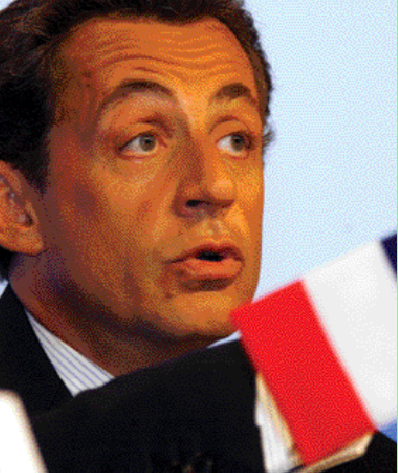
Nicolas Sarkozy’s coming to power in France initially raised worries that the country would weaken the strong relationship it had with countries in the MENA region under Jacques Chirac. However, this seems not to be the case, evidenced via the whirlwind tour of the region by the new foreign minister, Bernard Kouchner.

The new French president also found time to contact Tunisia’s president, Zine El Abidine Ben Ali, not once but twice while naming his new cabinet and taking over the reins of power.

There had been concerns in some Middle East countries that Sarkozy would prove less sympathetic to Arab nations than his predecessor. Much has been made of his Jewish ancestry — his maternal grandfather was Jewish — and his pro-US stance on a number of issues, which has earned him the nickname of American Sarko among some in the French political left.

However, Tunisia does not seem to share those concerns. Since it is not a frontline state close to Israel, it is able to distance itself somewhat from the day-to-day tensions of that part of the region, and has established sound ties with the United States.

Tunisia stands firm behind Sarkozy

While France ended its rule over Tunisia in 1956, the link between the two countries remains strong. France is Tunisia’s largest trading partner by far, the destination for more than 30% of its exports and the source of a quarter of its imports. Bilateral trade is worth some $6.5 billion annually and is growing. France also accounts for 38% of all foreign direct investment (FDI) in Tunisia.

During his election campaign, Sarkozy floated a proposal that would draw Tunisia, along with the other Mediterranean littoral states, into a loose knit union to boost economic development and security, as well as to restrict illegal immigration. In a speech given in early February, Sarkozy also called for the setting up of a Mediterranean Investment Bank, along the lines of the European Investment Bank, and floated the idea of the union having joint institutions with the EU some time down the track.

Though little comment was made at the time, Sarkozy again referred to the plan in his inauguration address, turning what had been a comment on the hustings into a slightly more solid commitment.

Unlike Turkey, which fears that Sarkozy’s plan for a Mediterranean union may prove another step in his overt opposition to Turkey’s accession to the EU, Tunisia is a strong advocate of the new French president’s proposal. Indeed, Tunisia, together with Libya, Algeria, Morocco and Mauritania, first floated such a concept in 2003, during a conference in Tunis attended by representatives of France, Italy, Spain, Portugal and Malta.

Though little came out of the so- called “5+5 plan,” it has been dusted off and expanded by Sarkozy, who is looking at Tunisia to help in providing a lead.

In a letter congratulating Sarkozy on his electoral victory, President Ben Ali commented on the particular importance the new French head of state gave to the Mediterranean.

“I would like to take this opportunity to reiterate my readiness to endeavor — with you — to make of it an area of peace, co-operation and co-development,” he said.

In response, Sarkozy reconfirmed his commitment to the Mediterranean scheme.

Partners to build Euro-Med union

“I express the wish that our co-operation might develop in all fields of mutual interest,” Sarkozy said. “In this regard, I would like, with the countries concerned, to build up a Mediterranean union, so as to take up together, and with success, the challenges facing us. In this ambitious and very necessary venture, I know that I can rely on your support and determination.”

The Mediterranean union and building on French-Tunisian ties were again highlighted when Sarkozy spoke on the phone with President Ben Ali in May.

According to the official Tunisian press agency, the two gave a commitment to establish a fruitful and effective partnership between both shores of the Mediterranean, so as to boost the Euro-Mediterranean partnership. Unlike some Arab states that are wary of being members of a union that could include Israel and Turkey, Tunisia feels positive towards a potential union and its relations with the EU. It stands firmly behind Sarkozy’s plans to strengthen ties between the states on the two shores of the Mediterranean. As to whether Sarkozy’s plan will gain any traction in Brussels, that is another question

July 27, 2007 0 comments
0 FacebookTwitterPinterestEmail
GCC

Oman Caught in a storm

by Executive Contributor July 27, 2007
written by Executive Contributor

Threatening its way towards Oman for nearly a week, tropical cyclone Gonu had luckily leveled to a category-1 storm when it finally hit the coast of Muscat on June 7. Gonu’s weakened state, however, was not enough to hold back the ravaged city’s inevitable economic costs of $3.9 billion, according to early government estimates.

Gonu, which means “bag made of palm leaves” in the Dhivehi language of the Maldives, shut Oman down for days after it battered the sultanate with torrential rains, wind gusts of 83 km/h (51 mph) and waves 10 to 12 meters high.

The Ministry of National Economy sent an army of surveyors to assess the resulting damage in the badly hit regions of Muscat and Sharqiyah. In addition to the 60 lives it claimed, Gonu caused the displacement of 20,000 people and the destruction of 70,000 homes.

The insurance industry will assume the massive rebuilding costs, as most insured Omani properties have storm and flood coverage, according to a June 13 report by BankMuscat on the cyclone’s economic impact. Large insurers will be exempt from making claim payments, as 90% of property risks are reinsured. This is expected to bring on more economic headaches as reinsurance rates rise and minor insurers are not “able to pass on the entire cost to the consumers, due to competition,” BankMuscat said.

The government will step in to control cement prices to facilitate reconstruction. Oman Cement, the sultanate’s largest provider, escaped damage to its facilities but lost gas supply, cutting output that will shave 2% off profits for 2007.

Not much damage, just costly

Oman’s infrastructure took several hits, including the demolished main water pipes in Muscat and 12 kilometers of the main Wadi Adai highway. The excessive flooding led the government to plan the construction of three dams and a large canal to contain future flood waters, at a cost of $62 million.

The Muscat Securities Market closed for three trading sessions, after technical problems closed the bourse the Sunday after the storm.

Fortunately for the heavily invested tourism sector, it escaped with minimal damage. The Grand Mosque was temporarily closed, along with certain shopping areas and some inaccessible beaches. Although flooding rendered many roads traveled by sightseers unusable, “post-cyclone tourism in Oman is healthy and going full-fledged,” Mohammed bin Hamdan al-Toobi, under-secretary of tourism, said at a June 18 press conference. “There wasn’t any major damage to hotels or resorts during the cyclone, except a few minor incidents that are being rectified and things are going back to normal in a quick pace.”

A report released in May by London-based think tank Global Futures and Foresights put Oman’s current investment in tourism at $464 million, an amount expected to rise to $904 million by 2017. The report said Oman’s goal is to raise tourism’s contribution to GDP from 0.3% in 2007 to 3% by 2020.

Seeb International Airport temporarily halted flights, but the main gateway has since bounced back, with most regional and international carriers resuming normal flight schedules.

But this fluke storm, as it is being widely referred to, begs the question, what’s in store for the Arab oil industry as global warming looms ever larger? Although there is no direct evidence linking Gonu to climate change, some wonder why such a storm made it to a region typically immune from climate fury; and what happens if this is just a sign of what’s ahead?

When Gonu hit, it caused the Sur liquid natural gas terminal southeast of Muscat and the Al-Fahl oil terminal to stop shipments for three days, costing $200 million in lost revenues, according to government estimates. If similar or more intense storms are to be expected in the area, offshore oil refineries could be irreparably damaged, oil exports would become intermittent and costly, not to mention the punitive damage of consuming nations responding to increasing price hikes. This might leave oil-producing nations to wonder whether it wouldn’t be wiser to throw their full support behind such measures as the Kyoto Protocol.

July 27, 2007 0 comments
0 FacebookTwitterPinterestEmail
GCC

GCC Sky segments

by Executive Contributor July 27, 2007
written by Executive Contributor

The Middle East and budget aviation were writ large last month when the world’s air industry met at the venerable Le Bourget airfield near Paris. The circle of Gulf-based full service carriers (FSCs) from Emirates and Qatar Airways to Etihad committed to important orders for new wide-bodied jets needed to carry out their various long-haul network expansions ­— and with their large-scale orders delivered equally important good news to brighten the mood among executives and employees of the large plane manufacturing duo, Boeing and Airbus.

Right next to the region’s big names and their prominent aspirations to rank higher among the world’s long-haul carriers, the Middle East’s emerging low-cost carriers (LCCs) added a splash to the aviation news circus with sizeable orders and buying plans in their market segment: single-aisle aircraft.

Jazeera Air, the new Kuwait-headquartered budget airline, on the first day of the Paris Air Show committed to buying 30 new A320 planes from Airbus, expanding its order volume to 40 aircraft. Sharjah-based Air Arabia, while not signing any contract in Le Bourget, said it wants to buy 34 new jets from Boeing or Airbus by the end of the third quarter of 2007, also in the single-aisle category.

Budget airlines poised for expansion

More than any marketing statement or regional aviation report from an investment bank, the new orders by the two operating Arab LCCs manifest how confident the discount carriers are in their rapid expansion. Estimates by aviation analysts put the (discounted) cost for 30 A320s at around $1.4 billion.

This means that Jazeera, which only in April could announce that its first full year of operations in 2006 resulted in black figures with a profit of $8.7 million, will spend in the range of $2 billion on its fleet purchases in the next few years. Air Arabia, which is slightly more seasoned with a three-year operational track record, also could spend more than $2 billion on new aircraft.

In unit numbers, the two carriers are looking to boost their fleets by multiples in the coming eight years, from Air Arabia’s current nine to 52 by 2015 and from Jazeera’s five to 45 planes that will serve the budget airline passenger demand within the Middle East and to neighboring regions, especially the Indian subcontinent.

The surge of Gulf-based LCCs marks a departure from a past in which the Middle East was a desert-like space for air travel. With poor options for intra-regional travel and fractious regional networks, it was ruled solely by opulently staffed flagship carriers whose service levels were usually directly inverse to their employee count.

The budget flight business model, while not at all new in the airline industry, has matured greatly in the past 15 years with the first success stories in the United States and Europe where LCCs could benefit from market segmentation and introduction of open-skies policies.

In the Middle East, the voracious growth of LCCs is linked to the boom economies in the Gulf region and the hunger for labor. As oil prices peak and GCC countries use this money to diversify their economies, more expatriate workers from Lebanon, Egypt, other regional countries, and Asia move to the Gulf for work. With the decent salaries expatriates make, they are able to return to their home countries, making this group a focal consumer base that FSCs and LCCs compete over.

“In the Middle East [LCCs] target workers in the GCC that want to go home,” Eric Chang, Senior Associate for The National Investor (TNI), a UAE investment company, told Executive in a phone interview.

The region’s discount flying market is still in its infancy. The LCCs’ share of the market is under-penetrated compared to Europe and America where 2006 market penetration was 23% and 27% respectively. In comparison, the Middle East’s LCC market share was 1.4% according to the Official Airline Guide (OAG).

By providing flights for half the cost due to their ‘no frills’ model, which cuts operational costs by 63%, LCCs are gaining ground. Unlike FSCs, in-flight meals are not offered, special VIP lounges are not available and all seats are economy class, providing more seats and thus tickets to be sold.

For travelers who last month could find a roundtrip flight this summer between Beirut and the UAE below $350, according to price quotations on Air Arabia’s web site, the concept would have been appealing.

Room for more

Passenger traffic for Jazeera in 2005 was 500,000 and increased by 20% to 600,000 in 2006. Air Arabia’s 2005 traffic reached 1,132,900 passengers, increasing to 1,600,000 in 2006 — a 41.2% surge.

Jazeera is building a second hub in Dubai to complement its existing Kuwaiti one, which will up the ante for Air Arabia as it is based in Sharjah.

Two new arrivals that latched onto the LCC market came out of Saudi Arabia this year, Nas Air and Sama Airlines. Both plan to focus on providing low-cost flights within Saudi Arabia and cautiously speak of building up their domestic aviation market before advancing into the market regionally.

As the Middle Eastern aviation industry will grow by 6.4% every year until 2015 according to the International Civil Aviation Organization (ICAO), there is room for more LCCs and FSCs to emerge. The OAG pegged the 2006 LCC market share at 0.8% — almost doubling this year to 1.4%.

The numbers will soon increase as Air Arabia and Jazeera expand their routes, while Nas Air and Sama Airlines are making their first steps in serving the Saudi domestic market since February and March of this year.

Rethinking the strategy

The strong LCC growth is making FSCs rethink their business strategies. “Conventional airlines feel the pressure from LCCs and are trying to narrow down their ticket costs,” said Kareem Murad, Senior Research Associate for Shuaa Capital, an UAE investment bank.

Emirates Airline is the first to show signs of trepidation over LCCs. Emirates’ vice chairman, Maurice Flanagan, in April hinted to the press that the airline may open an LCC unit in the coming years to complement their regular FSC service.

The scramble to grab a share in the Middle East’s LCC market marks a shift in the aviation industry’s consumer base. TNI, in a March report, largely attributes the industry’s growth to the swelling middle class fuelled by GCC petrodollars being invested to diversify the economy and create jobs.

Investors see potential in LCCs, too. In March, Air Arabia listed an IPO of 55% of its shares with equity of $713 million, which was quickly oversubscribed. Though less successful, Jazeera Airways launched its IPO in 2006, offering 70% of its shares with an equity offering of $24 million.

“The success of the IPO reflects the belief of the investors in LCCs and their business model,” said Murad.

Budget travel has an additional bonus in the fact that cost-consciousness is increasingly understood to be smart and vastly different from “cheap.” This has created a segmentation of air travel also in the business realm where LCC business-class-only carriers Silverjet (UK) and Maxjet Airways (US) have opened successful routes between Europe and the US East Coast. According to recent reports, both business-only LCCs are considering routes to Dubai. The companies will offer tickets for roughly half the cost of an FSC business class ticket and the same price as an FSC economy class ticket.

But the lack of Middle Eastern open-skies agreements hinders LCC growth, making inter-regional air travel more costly than in Europe and providing fewer flight choices. For LCCs to continue growing, they must pressure governments to liberalize their skies as FSC customers can swallow high prices, as opposed to LCC consumers.

In May 2006, 17 states from the Arab Civil Aviation Commission signed open-skies agreements, but “the full and proper implementation of liberalized policies has not yet been adopted by most countries,” says Murad. “However, several countries are holding the grants of permits for use of their skies and hubs until they begin restructuring their own national carriers.”

As the steep discounts for aircraft purchase orders at the Paris Air Show — estimates speak of 40% price reductions against list prices for large orders — demonstrate, LCCs encounter a supportive environment within the international aviation industry and the regional budget airlines appear to have chosen a good time to enter the market.

But they will have to succeed in the long term in a new phase of passenger air transportation that is leaving behind the old business paradigm of economizing by cramming as many human sardines as possible into a tube subdivided into 20 to 50 rows of pain and a few rows of pleasure.

Air carriers are looking at years of a tight cost environment of high oil prices to which most recently also ecological concerns over limitless travel growth have been added. In the end, customers will judge by comfort, price, and social — which is largely environmental — acceptability of the carrier when they get on a plane.

July 27, 2007 0 comments
0 FacebookTwitterPinterestEmail
  • 1
  • …
  • 570
  • 571
  • 572
  • 573
  • 574
  • …
  • 707

Latest Cover

About us

Since its first edition emerged on the newsstands in 1999, Executive Magazine has been dedicated to providing its readers with the most up-to-date local and regional business news. Executive is a monthly business magazine that offers readers in-depth analyses on the Lebanese world of commerce, covering all the major sectors – from banking, finance, and insurance to technology, tourism, hospitality, media, and retail.

  • Donate
  • Our Purpose
  • Contact Us

Sign up for our newsletter

    • Facebook
    • Twitter
    • Instagram
    • Linkedin
    • Youtube
    Executive Magazine
    • ISSUES
      • Current Issue
      • Past issues
    • BUSINESS
    • ECONOMICS & POLICY
    • OPINION
    • SPECIAL REPORTS
    • EXECUTIVE TALKS
    • MOVEMENTS
      • Change the image
      • Cannes lions
      • Transparency & accountability
      • ECONOMIC ROADMAP
      • Say No to Corruption
      • The Lebanon media development initiative
      • LPSN Policy Asks
      • Advocating the preservation of deposits
    • JOIN US
      • Join our movement
      • Attend our events
      • Receive updates
      • Connect with us
    • DONATE