• Donate
  • Our Purpose
  • Contact Us
Executive Magazine
  • ISSUES
    • Current Issue
    • Past issues
  • BUSINESS
  • ECONOMICS & POLICY
  • OPINION
  • SPECIAL REPORTS
  • EXECUTIVE TALKS
  • MOVEMENTS
    • Change the image
    • Cannes lions
    • Transparency & accountability
    • ECONOMIC ROADMAP
    • Say No to Corruption
    • The Lebanon media development initiative
    • LPSN Policy Asks
    • Advocating the preservation of deposits
  • JOIN US
    • Join our movement
    • Attend our events
    • Receive updates
    • Connect with us
  • DONATE
Special Report

Women in business: Breaking glass

by Executive Staff July 7, 2007
written by Executive Staff

Over the past decades, Arab women have seen immense progress in terms of education and participation in politics, and have made tremendous forays into the business world. The average literacy rate for women in the MENA region rose from 16.6% in 1970 to 52.5% in 2000. Since 1980, girls’ tertiary (university) education has doubled so that now 14% of young women go to university (compared to 20% of young men). On the other hand, female participation in the MENA labor force stands at a measly 32%, the lowest among all developed countries, on top of which the vast majority of women are working in the public sector.

The World Bank estimates that the MENA private sector is still significantly prejudiced against women, resulting in the bizarre situation that the best-educated women have the biggest problems getting hired. There is still a perception that women take away men’s jobs. Statistics, however, actually show a negative correlation between unemployment and women’s participation in labor. The World Bank calculated that had the MENA region used its female labor potential, the average per capita income could have risen by 2.6% during the 1990s, instead of the actual 1.9%.

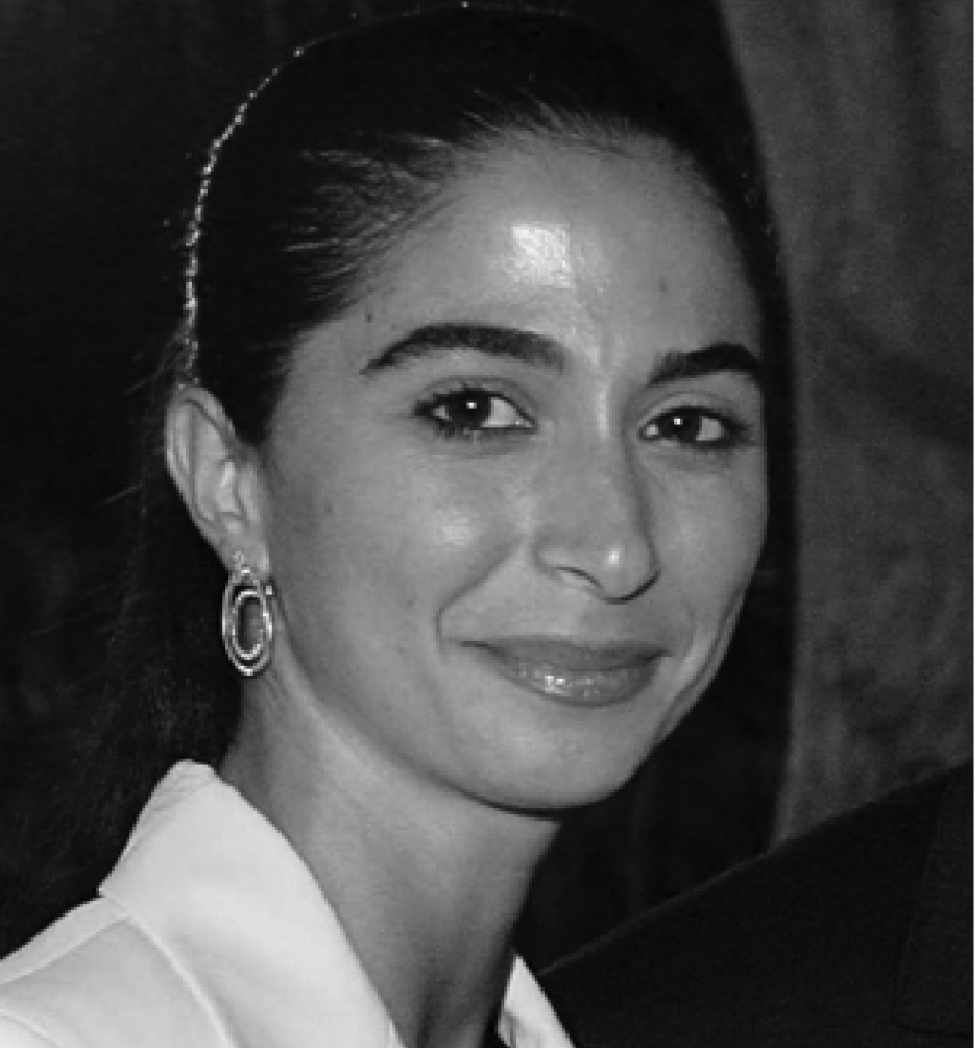
With this month seeing the publication of a World Bank report on women entrepreneurs in the MENA region, Executive interviewed six Arab women — all highly educated, ambitious, driven, and persistent and all successful in their careers, some having salaried jobs in companies and others entrepreneurs — on the issue of women in business.

When in summer 1997 Nada Safa, having just finished her college degree in Economics at the Université St. Joseph in Beirut, inquired about a job opportunity at a leading Lebanese finance house, she was told “This is a man’s world. You are young and you have no experience, so I don’t think there is a place for you here.”

Determined to realize her childhood dream, one month later Nada arranged a second interview with another manager. She outlined a simple financial deal: she would work for free for a while and then, if they wanted, they could decide to give her a contract. “I told him it was an investment because I would be working for free during the summer. No risk. Zero capital. They might have a return, or they might not, but they had nothing to lose. I worked for a month for free and then they told me ‘You’re in.’”

Today, at 31, Nada Safa is a regional manager at Banque Audi Saradar Private Bank, one of Lebanon’s two biggest banks. And while she stresses that her difficulties in being accepted among her peers have mainly to do with her age, she nevertheless agrees that her gender does play a role.

Regional Specificities

Sahar al-Sallab, Vice-Chair and Managing Director of the Commercial International Bank (CIB), Egypt’s third largest bank, says that when she entered the banking sector in the mid-1970s it was normal for Egyptian women to work, not just in banks but throughout the economy. Her employers — first Citi Bank and since 1982, Chase Manhattan Egypt (which later transformed into CIB) — gave her the professional opportunities to gain experience, prove herself, and rise in the ranks. CIB now has a female vice-chair, 70% of senior management positions are occupied by women, over 60% of the staff is female and a quarter of the current Board of Directors are women — more than double the S&P 500 average. As Al-Sallab puts it, “In Egypt, woman have been in banking, in law, in other areas for a long time and their participation is much higher than in other places in the region or even in Europe.”

Contrast that with the situation in Saudi Arabia and the Gulf. The tale of Nahed Taher’s groundbreaking career in the Saudi finance system is well-known: Coming from a family of bankers and oil managers, and having written her Ph.D. thesis in the UK on the deficiencies of the Saudi banking system, she first became a financial consultant and then the first female chief economist at the National Commercial (Al-Ahli) Bank, which at the time covered a quarter of the Saudi banking sector, before, at age 42, she founded her own business — Gulf One Investment Bank, with a capital base of $1 billion — in 2006.

This is certainly a very impressive career, but at each step she had to convince her peers that she could do it. Some of her fears proved to be entirely unfounded, as Al-Ahli’s general manager and chairman supported her, and the predicted interference from the government and religious establishment never materialized, yet it was never clear if and when a backlash could occur and Nahed Taher was always aware of the fact that she was breaking new ground. She attributes the support she received to both the fact that Al-Ahli is headquartered in Saudi Arabia’s more cosmopolitan Western Region and that today, Saudi government officials are well-educated. As she says, “I’ve never received any single comment. I was the first woman to enter the Central Bank and the Ministry of Finance — but nobody commented.”

For 30-year-old Dalal al-Dousari the choice of a career in the financial sector was easy — in Kuwait it was either that or going into the oil industry. Ultimately she chose finance because, “It is the decision-making field. You take everything from the other fields and then make the decisions. At the end of the day you’ll be able to be the decision-maker.”

According to her, some companies are open-minded and actively seek to employ women. One of her former bosses told her that he wanted women in his company because he believes that women are more precise and more faithful to their companies than men. And certainly, in Kuwait there have been female pioneers — just like Nahed Taher in neighboring Saudi Arabia — such as Maha al-Ghunaim of Global Investment House (“She sets the standard,” says Al-Dousari) and Sheikha Al-Bahar at the National Bank of Kuwait. But there is still much to be done and women do face discrimination at the workplace. According to Al-Dousari, “Decision-makers prefer men in certain positions to women. They say that men are more flexible, can travel on short notice, can do late meetings, that women will get married and then get pregnant and committed to their family, and then their children get sick … So they keep that in mind when they decide about whom to put into certain positions. Women have to work to prove that they are flexible, that they can do a good job. They have to put in an effort that is at least double that of their male peers.”

But even in everyday business they are faced with peculiar challenges resulting purely from the fact that they are women. At one point Dalal al-Dousari, now Vice-President for Investment at Amwal International Investment, was managing a multi-million dollar portfolio for an Islamic institution. She did all the work, devised the project, developed the strategy, and prepared the brief, only to learn that the client refused to let her do the presentation because she is a woman, although even after the presentation she would be managing the portfolio.

“So imagine, I had to give my brain to a man, who doesn’t know anything about the project, and to tell him what to say, how to present, what sort of questions to expect and how to answer them — and he went to give the presentation. My bosses apologized and explained that the client had made the demands but I think they should’ve insisted on sending me or not done the project. But the outcome will be that everyone will think that the presentation was my male colleague’s work, because nobody knows that it was my work.” Another time she had to hand

 Financing for Arab businesswomen in 5 countries (World Bank) a project to a male colleague because it involved traveling to Saudi Arabia, which meant that, again, she had lost a great professional opportunity. And, as she says, this will certainly influence the senior managers’ decisions when it comes to promotions.

For Lina Hundaileh, a Jordanian entrepreneur who founded and manages Philadelphia Chocolate Manufacturing Company, since she runs her own business the obstacles she faces because of her gender may be different from those encountered by the Kuwaiti banker, but they still exist. On the one hand, she says that there are instances where business meetings are held in exclusively male spheres — like the Qat-chewing majaalis in Yemen that are strictly off-limits to women — or done over after-hour drinks at the bar, where a woman might feel uncomfortable. On the other hand, despite speeches and grand announcements by the political leadership to empower women, she says they are often nothing but kalaam faadi (empty rhetoric) and when it comes to such issues like electing women to offices the traditions persevere. When she wanted to be elected to the Chamber of Industry, Lina Hundaileh stood a good chance of wining the election because by then she had established a good reputation and a wide network. But she had not counted on the resistance of her male peers.

“Businessmen came to my house and wanted to convince me to withdraw. And I accepted to withdraw because they did it in the Arab way — they didn’t drink the coffee of my father and brother-in-law until I withdrew. And now they are blaming themselves because I could’ve added value.” Thus, even a woman’s long-term success in business does not automatically translate into true acceptance. She adds, “It’s easier to implement decisions in my company since I am the boss, but when I go outside my environment, outside my comfort-zone, I will again face obstacles. Where people don’t know me, I again need to prove myself.”

The two Lebanese women interviewed show that there are extremes even within one country. Where Nada Safa had to work for free to prove that she was good (and determined) enough, and then worked her way up — back office, analyst, front office, trader — to arrive at a level where she is respected and could choose in which institution to continue her career, Rula Abu Daher had the luck to be hired by MTC Touch, one of Lebanon’s two GSM operators, whose CEO believes that women, when given a chance, can do as well as men. After her university degree in Engineering (a major chosen because she had heard that there were few women and sought the challenge) she joined MTC Touch and, after a year of training, was promoted to CTO, the only female chief technical officer in a GSM company within the region. As she put it, it was a meeting of similar characters. “I already had a sense of independence and I happened to join a company that does not do any gender discrimination. Half of the management are women. MTC is an exception.”

About that ‘glass ceiling’

Despite the regional variations, based on different historical experiences and developments, all interviewees agree that there is a glass ceiling when it comes to women’s careers. In a country with a long tradition of women in business, the ceiling is very high, as Sahar al-Sallab confirms, “In Egypt, I don’t think there is a glass ceiling on the medium-level management, but there is one on the senior, the chairman level.” In Jordan, according to Lina Hundaileh, “in the high-ranking businesses, you don’t see women.” Dalal al-Dousari, pointing at old-boys-networks in the region, even says that “It’s not a glass ceiling — it’s a concrete ceiling.” Some companies, like Rula Abu Daher’s MTC Touch, are notable exceptions, since there are led by visionary CEOs who’s maxim is “The sky is NOT the limit.”

Of course, one should not forget that a ‘glass ceiling’ for female employees is not a particularly region-specific issue. Nahed Taher points towards the relative situation of women in the Middle East compared to other regions when she says, “Definitely there is a ‘glass ceiling.’ But relative to the global banking industry it is everywhere. In the UK there is no female CEO banker. In the future, the support will be there. But women will need more experience. Right now they don’t have it yet.”

Must women work harder to succeed?

The often-cited argument that women have to work harder than their male peers in order to be recognized as competent professionals is not echoed by all. Nahed Taher thinks that “it might have existed when I was younger, but now they know me.” Nada Safa did have to prove herself more than others, but she puts it down to her young age, not her gender. However, both Lina Hundaileh and Dalal al-Dousari think that women have to work twice as hard to prove that they are as flexible, as good at their jobs as their male colleagues.

The main challenge is the widespread perception that women’s family responsibilities are preventing them from giving their jobs full attention. Indeed, in the framework of a World Bank report Women Entrepreneurs in the Middle East and North Africa: Characteristics, Contributions and Challenges, to be released this month, businesswomen from across the region identified the work/family balance as the most challenging issue they face.

Sahar al-Sallab, too, had to balance her family with her work when she was sent for training to Europe: “My company didn’t treat me as a woman — they treated me as a person. But that meant that they didn’t accommodate the fact that I had children, so I had to exert more effort, and also incurred more expenses, in order to take them with me.” The World Bank report notes that other challenges for women entrepreneurs are learning financial management skills, finding and keeping good employees, access to capital and the high cost of public services. However, throughout the region female and male entrepreneurs face difficulties to access capital, as banks in the MENA region are generally not geared towards financing small- and medium-size enterprises (SMEs). The report adds that, “the situation may be

Types of financing used by businesswomen in 5 countries during 2006 (World Bank) exacerbated for women-owned SMEs, due to lower availability of collaterable assets, gender bias among lending institutions, and a lower level of financial management education among women entrepreneurs.”

Character type ‘successful woman’

Within the particular environment of the MENA region, where women still need to struggle to establish themselves in the business world and to convince their peers as well as society that they are as good (or even better) than men, it seems to take a certain kind of woman to succeed: goal-oriented, driven to excel, impervious to obstacles and, yes, stubborn. Says Nada Safa, “I knew what I wanted to do since I was 13 years old, and I went for it. If I had doubted, I wouldn’t be here today. But even now, I always consider I haven’t achieved anything — I’m not satisfied.” Lina Hundaileh avers that, “There was nothing in my dictionary that would say that I could fail. I only saw success at the end of the road. Ambition and working hard helped me to convince my business partners. And even now I continuously learn to stay up-to-date.”

When Rula Abu Daher became CTO of MTC Touch, “many people thought that I would fail, would give up after a few months because I would not be able to deal with the responsibility and the non-acceptance. But I did not give up — I persisted. The fact that I wanted to prove myself as a female might’ve pushed me more than it would a male in my position. So there was this inner motive that pushed me to keep proving myself.” Of course, this mirrors the experience of women in the business world all over the globe, and is not restricted to or special to the MENA region.

Despite the individual strength necessary to succeed, family support remains crucial since, as Nahed Taher puts it, “if there had not been the strong support from my family, I may still have embarked upon my career but not reached the results.” Most of the other women also received support from their families and attribute their success to the fact that their parents encouraged them to follow their dreams, chose the college majors they wanted, and ultimately provided a comfort zone during their professional careers. But “going against all odds” can be a strong motivation, too. After Nada Safa’s father died when she was still a teenager, the family had to struggle and this instilled in her a strong motivation to “make it from zero all the way up. I had to prove yourself. I had to rely on myself. For me it was unacceptable to fail because I couldn’t afford to fail.”

Not surprisingly then, their recommendations to other young women who espouse careers in business and finance read like quotes from self-help books: “Nothing is impossible.” “Follow your dream.” “Believe in yourself.” “To really achieve anything you have to start by yourself.” But then, their male peers — in the region and anywhere else — give (and get) the same advice, with one exception. “You have to create a momentum at home whereby you get a career, whereby you gain financial independence,” is Sahar al-Sallab’s advice to Egyptian girls. Yet in that, too, there is no ‘cultural gap’ between East and West.

Becoming male?

One thing that all women interviewed resent is the idea that, in order to succeed in business, women have to give up their femininity. Rula Abu Daher insists that she is “keeping the feminine side in me – the way I dress, talk, do my hair. You want to do this proving you can do it by being a woman, not by becoming a man.” Nada Safa, like the others, insists that women are different from men and that there is no point trying to mask that. “I dress appropriately, but feminine.” Making male colleagues learn to understand that a successful woman doesn’t become a ‘buddy’ can even have implications outside the workspace, as Dalal al-Dousari observed. “One can be feminine and be professional at the same time. One still can be a lady while wearing a business suit. I still insist that my colleagues treat me as a woman and open the doors for me. I’ve trained my colleagues and it is getting better. And it even has an impact how they treat their wives at home!”

Foreign Perception

Often, Arab businesswomen not only have to deal with prejudices at home but also while traveling abroad. When Lina Hundaileh went to the United States, “they didn’t believe we have really successful businesswomen in the region. They looked at us as being Arab, Muslim … and I was frustrated.” Egyptian banker Sahar al-Sallab concurs, “In the West I always get perceived not just as a banker but also as an Arab, Muslim woman. They ask me how I got into this position, how my country let me go into this position.”

Apart from the cultural prejudices businesswomen also have to deal with global stereotypes towards women in general. Rula Abu Daher made the experience that, “Abroad, they don’t expect a woman to be a technical officer. 3% of world senior positions are occupied by females — so it’s a world-wide issue. Many times when I met people, they always thought I am in marketing or a sales-person, not a technical person.”

And then Arab businesswomen, especially those in high-ranking positions, are also treated as exotica to be showcased. When Dalal al-Dousari attended the May 2007 World Economic Forum in Jordan she received a slew of meeting requests, many more than her male, and senior, colleagues. TV stations asked to talk to her, CNBC even exclaiming “Finally we have a woman to interview!”

However, this situation quickly shifts, once business meetings start and it becomes clear that those ‘exotic women’ know what they are talking about. As Nahed Taher says, “At the beginning they treat me as a ‘Saudi woman’ … but when they see me and I discuss business then it changes. And Forbes ranked me based on my competence and not because I’m Arab.” Or as Nada Safa succinctly puts it: “In meetings, nobody looks at me as an Arab woman or a Muslim. When you start talking money, they forget the woman or the Arab in the business.”

Positive change over time

Over the past years there has been marked change, even if — according to the interviewed women — it is still too slow. “When a woman is well-placed and has her position in society and her career she can do very well — they are seen differently now than 10 years ago,” says Nada Safa. Nahed Taher agrees and points to a changing economic situation in KSA. “There are two major factors: Women are now more educated. There is an economic need. During the Oil Boom in the 1970s women didn’t feel the need, because they all had money. Now, as life becomes more expensive, women want to be part of supporting their family. The sector is definitely reacting to that. Now opportunities are better: they are looking for qualified people, regardless if they’re men or women. Women proved their professionalism, their productivity, their commitment — also in industrial sector, even into the managerial levels.”

Sahar al-Sallab says about Egypt that, “It needs an intelligent man, a confident man to make a woman rise up the scale and give her the chance even to be better than him on the scale. So if they’re intelligent enough, they will accept it. And they are now accepting it in Egypt. Most of the compliments I get are from men. They believe and want women to be leaders in their own domain.” When, a few months ago, Rula Abu Daher was named ICT Woman of the Year, she says it radiated outward and “made other companies also think about appointing women to manager positions. I hope my experience can serve for others to succeed.” And indeed, the businesswomen are keen on not remaining alone. Says Nahed Taher, “It is my goal to be a pathbreaker and have other women following. If it was only me, then I would not have achieved anything.”

Who drives change?

Asked about how the change should be effected, the interviewees say that women themselves are driving it. As Nada Safa put it, “women are no longer saying they should stay at home and have children, because they can do all those things and work and stay a woman. We can do many things at the same time, it’s natural — we were born like this.” Indeed, many interviewees argue that women are naturally predisposed to succeed in business. Thus, Nahed Taher argues that, “The majority of women have proven to be the best for entrepreneurship — worldwide. Two major factors are in the nature of woman: She is patient to raise a family, to wait for things to grow. Also, a woman by nature likes to educate. So they educate their colleagues. Men, by nature, don’t have this patience.” Sahar al-Sallab goes as far as to say that women have the natural skills to be better managers than men, since “Women are more stable, because they have more compassion and are more sensitive. They can manage better. They are less ego-centric. They are more accommodating, making their male colleagues and subordinates think that most ideas come from them, and not from the female colleague or boss. It is an advantage that women have, if they use it.”

Lina Hundaileh sees that professional organizations, like Jordan’s Young Entrepreneurs Organization that she heads, offer crucial help to women who want to set up their own businesses. “We mentor them, we incubate their businesses. This makes it easier for young businesswomen.” Nahed Taher notices that, now that she and other women have opened the doors, young women are more encouraged to follow in their wake. Sahar al-Sallab even thinks that precisely the lack of opportunities for women in the region, compared to those for women in the West, motivates Arab women not to be complacent and to fight harder for what they want.

However, it is by no means clear if the example of these women is followed on a large scale, or if role models like Nahed Taher and Sahar al-Sallab will not remain exceptions to the rule. In a talk given at an Oxford conference on “Women of the Arab World: Setting their Agenda” in February 2007, Sheikha Lubna al-Qasimi, UAE Minister of Economy, pointed out that, while in UAE women now hold 30% of management positions, 32% of employees in the finance and banking sector are women, and 15% of all professors are Emirati women, this empowerment did not occur because the women themselves had driven the change and claimed their rights. Instead, it had been the government that pushed the women. Lina Hundaileh also calls for the politicians to — finally — implement their lofty promises into realities on the ground, in order to change the awareness of society — both among men and women. Sahar al-Sallab, hinting at economic incentives as agents of change, points out that, “There is a new challenge in that there are now certifications for institutions based on their gender policy, which — if achieved — would upgrade the institution.” She is referring to the ISO 9000:2000 standard that, according to the official website (www.gendercertification.com) aims “to provide tools for creating an enterprise culture where Equality is considered a quality factor integrated in organizational management.”

There are already many executives who realize that women can work as well as men can, and the women interviewed all benefited from such superiors, and unprejudiced fathers and husbands. In the end, it will take a combination of visionary executives, pragmatic government policies and women’s self-motivation to effect significant, lasting change.

July 7, 2007 0 comments
0 FacebookTwitterPinterestEmail
Comment

What’s education without sex?

by Norbert Schiller July 7, 2007
written by Norbert Schiller

When cyclone Gonu hit Oman and parts of the Emirates, it only reconfirmed many scientists’ views that such a ferocious storm so close to the Arabian Peninsula was yet another tidbit of evidence that the earth’s surface is getting warmer due to high carbon emissions. But in many parts of the Arab world — as in Middle America for that matter — such phenomena are often explained away as merely another example of God’s wrath on mankind. Gonu “landed” as many students in the UAE were in the middle of their final exams, but Gonu as an act of God rather than the result of petrol guzzling and an over-reliance on CFCs is probably a theory Emirati students are used to.

For there are three main taboos in local education: religion, sex, and alcohol. What religious symbols students are exposed to in their textbooks are rigorously controlled and the mere mention of Darwin’s theory of evolution is forbidden in schools because it refutes Islamic — and Christian — beliefs on the origins of man. To say that man and apes are from the same gene pool is to cross a very thick red line.

The debate surrounding sex education has made inroads in recent years, “helped” by the unavoidable topic of the dangers of unprotected sex. An awareness campaigns directed at sexually transmitted diseases, most notably AIDS, has torn down old barriers, as has the anxiety surrounding the influx of foreigners — who have to submit to an AIDS test before getting a residence permit — and the fear that Western liberal values will corrupt this still very conservative society.

Where would Western literature be without alcohol — and sex for that matter? But as much as the schools in the UAE like to teach students the Western classics, they face a constant dilemma over content. How you read Shakespeare, Twain and Steinbeck, to name a few literary giants, without mentioning booze and sex? Meanwhile, history books with illustrations of naked indigenous people such as Native Americans or South Pacific, Islanders are still blacked out by a man at the ministry with a thick marker pen before being allowed into the classrooms, while documentaries previously aired on bastions of wise broadcasting such as the National Geographic Channel, Discovery, and the BBC, all are scrutinized for religious and sexual content before deemed fit for student viewing.

One taboo which has thrown off its shackles in recent years is the notion of Israel. Twenty years ago, the mere mention of the Jewish state in the newspapers, let alone a classroom, was strictly forbidden. Israel was always referred to as “Occupied Palestine.” Today, Israel is officially on the map.

But we know all this. It has been going on for decades. What am I getting at? Well, I suppose that all this censorship doesn’t jibe with the fact that the UAE has devoted a lot of energy to importing foreign (particularly Western) culture and educational resources into its society. Recently, the Louvre decided to lend — $1.3 billion can buy most names — its name to an impressive cultural and tourist development in Abu Dhabi. It is scheduled to open in 2012 and it remains to be seen what restrictions will be imposed on an institution that has always prided itself in freedom of expression. Will the Abu Dhabi Louvre be able to show nudity, and will religious art other than Islamic art be allowed in? Many in France feel that the Louvre sold out to the Arabs.

You see, the UAE suffers from a unique phenomenon. Instead of taking two steps forward and one backward, like most countries in the developing world, the Emirates manages to take two steps forward and then jump an additional three steps ahead, sometimes so quickly that they trip over themselves. Education is the perfect example. They have set up an impressive learning environment, with the best schools, universities and the most talented professors money can buy. They have even dedicated an entire mini-city — Knowledge Village — to learning and yet what will be the net result if the hidebound taboos are still in place?

To really educate the population it is important to allow more than one train of thought to be taught and discussed. From the outside, the UAE is a model in architectural achievements, investment opportunities and free trade but when it comes to education the sad fact is that it still has work to do. Maybe the UAE should slow down a little, take a step back and look beyond their impressive skyline to what is just as important.

July 7, 2007 0 comments
0 FacebookTwitterPinterestEmail
By Invitation

Tapping into the GCC Infrastructure Boom

by Imad Ghandour July 1, 2007
written by Imad Ghandour

Investing in a water desalination plant or a school was seenfor a long time to be a government’s job. Private companieswere usually interested to build such projects, but wererarely excited to own them. If seduced enough, a contractormight proceed to operate and finance them under a long-termcontract. But the general population of equity investors —not to mention the hyper private equiteers — were rarelyexcited about a business as stable as a toll road and neverhad the patience to wait 30 years to realize back theirinvestment.

But suddenly all that changed in 2006. Today infrastructurefunds are one of the hottest asset classes. Globalinvestment in infrastructure is rising exponentially, andglobal financial institutions like Macquarie Bank havediscovered how to convert infrastructure stability to a veryexciting investment. Private equiteers have hopped on thebandwagon, and creatively managed to make an asset classwith meager IRRs of 8-15% produce returns as high as 40%.Through creative financial engineering, private equiteershave pressed to put as little equity as possible and financemost of their investments through debt. Consequently,marginal improvements in asset value due to underestimatingdemand or improved margins significantly boosted the privateequity IRRs.

The developed world has build most of its infrastructureafter World War II, and such infrastructure is now comingtowards the end of its natural life. With most countries inthe developed world experiencing budget deficits, there isno appetite to fork out trillions of dollars over the nextdecade to replace the aging roads, ports, and bridges. TheUS, for example, needs between $2 and 3 trillion alone torehabilitate its road and transportation infrastructure.

On the other hand, the rising needs of the Chinese, theIndians, and other Asians for electricity, water, andtransportation, after decades of being satisfied withhumbler lifestyles, have put enormous stress on theinfrastructure of these countries. China is building in2006-7 more than 200,000 Megawatts of generation capacity —equivalent to the total generation capacity of the UK — ashundreds of millions of Chinese buy TVs, refrigerators, andwashing machines. In total, the World Bank estimates thataround $32 trillion is needed to be invested in the globalinfrastructure between 2005 and 2030.

In the GCC, the demand for capital to finance theinfrastructure needs has never been greater. By the end of2006, the GCC’s announced power, water, energy, real estate,and transportation projects financing requirements wereestimated to be around $723 billion according to MEEDProjects. Add to this amount a rough guesstimate for theunannounced infrastructure needs over the next decade, andit is easy to foresee the total crossing the trillion dollarmark. To put this in perspective, this amount is larger thanthe total GCC banking sector.

Despite the petrodollar windfall, GCC governments areasking the private sector to step in, and this is creatingsignificant opportunities for private equity players. Themost attractive opportunities will come from privatizinginefficient state companies, where private equity playerscan combine operational improvement to creative financialengineering to realize significant returns.

Private equity players will also tap into theinfrastructure boom through investing in the limitedinventory of private companies that design, build, operate,maintain, and finance infrastructure assets. These areprivate companies like Metito for building and runningdesalination plants, Madares for operating schools, and ACWAPower for building IWPPs. I will not be surprised to seestellar demand and exuberant valuation for such companiesfuelled by regional — and increasingly international —investors trying to tap into the upcoming GCC infrastructureboom.
 

Imad Ghandour is head of Strategy & Research — GulfCapital and Chairman of Information & Statistics Committee —Gulf Venture Capital Association

July 1, 2007 0 comments
0 FacebookTwitterPinterestEmail
By Invitation

Dancing around the International Monetary Fund

by Mounir Rached July 1, 2007
written by Mounir Rached

Last March, Lebanon requested to use $77 million (25% of itsquota) of IMF financing as Emergency Post-ConflictAssistance (EPCA) for the first time since it joined thisinternational financial institution on April 14, 1947. TheIMF’s principal function is to provide balance of paymentssupport, particularly when reserves fall to a critical levelthat could jeopardize financial stability, and to monitorreform commitment that supports use of its resources.

The IMF Board in May approved the government’s request whichcoincided with a level of reserves close to $12 billion,equivalent to 20% of deposits; certainly one of the highestin the world in relation to the size of the economy. Thisamount can hardly make a dent in the above quantity ofreserves.

Clearly, the incentive for the arrangement is two-fold: tohave a solid commitment from the government toward itsreform agenda and to provide assurance to donors thatmacro-economic adjustment are adhered to and monitored bythe fund. EPCA then constitutes a catalytic part of ParisIII financing and (if implemented successfully) paves theway for future IMF financing under the standard and morestringent Stand-By arrangement.

Measures require prudence and governance

The risk to the government is that a failure to fulfillits commitment would engender doubt in donors and jeopardizetheir willingness to continue providing financial support aspart of their Paris III pledges of $7.6 billion in thecoming years. These risks for the duration of the programthrough 2007 are revealed in the quantitative programtargets: preserve foreign reserves at $11.5 billion, limitthe primary deficit to LP1.3 trillion ($870 million), anddebt accumulation to LP 2 trillion ($1.3 billion). All thesethree targets are inferior to the outcome of 2006. A fourthquantitative target is to repay LP 2 trillion ($1.3 billion)to the Central Bank. The other hurdle in the program is aset of administrative measures — “Monitorable Actions” —covering fiscal measures, electricity reform, andprivatization. None of these measures requires belttightening, but rather prudence and governance, and a timelydisbursement by donors of pledged resources. This isnormally the case of IMF EPCA programs, setting the pace forthe challenges ahead. The demanding reform will ensue in2008 and beyond. The monetary program is limited tomaintaining a high level of liquid foreign assets combinedwith a an exchange rate peg without creating an imbalancebetween the central bank’s liquidity injections — emanatingfrom its balance sheet cash losses — and money demand.

In the words of the IMF, “the authorities program for 2007 …focuses on maintaining financial stability and containingthe primary deficit while accommodating reconstruction andrelief spending. Keeping the excise rates on gasolineproducts at the levels prevailing in March will be a keymeasure to achieve the deficit objective. EPCA will thusprovide a transition to 2008, when the demanding fiscaladjustment is envisaged to commence. Then, it is perceivedthat the government will be able to embark on acomprehensive economic program that could be supported byfurther IMF financing in the context of upper credit tranchearrangement (Stand-By) arrangements.”

Problems fulfilling promises

What are the inherent risks then? Certainly, the politicalrisk, very well recognized by the IMF, remains the primeimpediment to government capacity to fulfill its commitmentunder EPCA. First, almost one year after the devastating warlast summer the economy remains in a recession. A nominalgrowth rate of 4.5% in economic activity envisaged in theprogram for this year is already beyond reach. While thegovernment met all end-March targets under EPCA, except forthe ceiling on government borrowing from the central bank,the outlook for the rest of the year is bleaker. June andSeptember targets are more foreboding in the ongoingpolitical stalemate and recurrent outbreak of violence.Attaining the revenue target (a 16% rise by the secondquarter) is very unlikely. And the government is alreadyburdened by rising spending to improve security. Failure tocontain the primary deficit to the set target in the secondquarter (by end-June) will in turn necessitate preaching theceiling on government borrowing from the central bank for asecond time. Commercial banks were hesitant to roll overmaturities in the first quarter, and a change in the banks’outlook is unforeseen. The deadline for fulfilling most(four out of six) monitored actions was due by the end ofJune as well, and with parliament not convening, these(including the budget) are yet to be approved. The reform isstumbling at the beginning of the race; to regain momentumit will need exceptionally favorable circumstances, and anend to the political stalemate.
 

Dr. Mounir Rached is a senior IMF economist and afounding member of the Lebanese Economic Association. The views in this article are those of theauthor and do not represent those of the IMF.

July 1, 2007 0 comments
0 FacebookTwitterPinterestEmail
Capitalist Culture

Summers of our discontent

by Michael Young July 1, 2007
written by Michael Young

Many things can be said about the July-August 2006 war,whose first anniversary we will be commemorating later thismonth. However, for those who lived through it, a singleenduring image remains: that of sudden, irrevocable,traumatic collapse into chaos.

One minute the Lebanese were enjoying the start of whatlooked to be a prosperous summer, the country was awash withemigrants and visitors, and the football World Cup had hadcreated a sense of being hooked into the nodes of acelebrating world; the next minute, Lebanon was being bombedremorselessly, citizens had become refugees in their owncountry, tourists and visitors were taking to the sea, andthe link to the world had been brutally severed with thesudden closing of Beirut Rafik Hariri International Airport.

In what was an instant, Lebanon’s capitalist culture, aculture of openness, of the promotion of free minds and thefree pursuit of profit, had been overturned by one ofconflict and destruction. The country never recovered fromthat transformation, and to this day is paying the price forthe aftermath of that war, which profoundly divided Lebanesesociety.

The mythology of Lebanon’s summer tourism season has beenworn to the bone. The country can be heading to hell in ahand basket, but people will react most sensitively to thefact “summer” is threatened. Somehow, the symbolism of thatthree-month moment cannot be underestimated: it is themoment of Lebanon’s communion with the outside, when a yearof sluggish business can be righted, when politicians take abreak and when people can take a break from politics. Moreominously, it’s also the time when Lebanon has usually beenhit by disaster: the mass entry of Syrian troops in 1976;the 1978 Israeli invasion, followed by that of 1982; thebeginning of the killings after the Syrian withdrawal in2005; the summer war of 2006. The Lebanese psyche seemsforever buffeted by this struggle between profitablenormalcy and debilitating conflict; and most of the timethat psyche is bathed in the hues of a single season:summer.

Today we’re back to the same worries again. Things startedearly this year. In fact, the summer season was the firstcasualty of Lebanon’s proliferating crises and bomb attacks.The bombings in Ashrafieh, Verdun and Aley were all, to alarge extent, designed to suffocate the tourist season itits egg. While not devastating on a human level, at least inlight of what Lebanon endured in the past, the bombings havebeen devastating to the economy. Travel agencies now reportmass cancellations of reservations; restaurants areoperating at well below their capacity, particularly inBeirut; and by 9 p.m., most streets are empty.

Hanoi or Hong Kong?

Once again, the symbolism is stark. In denying Lebanonnormalization, those who planted the bombs went after itsAchilles heel: summer. The pendulum is again swingingbetween a culture of destruction and a culture of opennessand free-wheeling profit. This dividing line has been apersistent one in postwar Lebanon. It was the Druze leaderWalid Jumblatt who summarized it best when he distinguishedbetween “Hanoi and Hong Kong” in the early 1990s. What hemeant, or what he asked, was whether Lebanon would become anemblem of militancy and armed struggle, particularly againstIsrael, as best represented by Hezbollah? Or would thecountry opt for the path laid out by the late Rafik Hariri,who sought to transform Lebanon into a business nexus forthe region, a bastion of liberal capitalism and ecumenicalpermissiveness?

To this day, Lebanon hasn’t found an answer to thatquestion, hence its dilemma as two vastly different projectscontinue to drive apart its political class and its society.Some months ago, after the summer war, a publicity campaignplayed on this perceived difference. The “I Love Life”billboard campaign, which was directed against mainly whatwas seen as Hezbollah’s ideology of war, provoked animmediate reaction from the opposition. In response, it toobegan an “I Love Life” campaign, falling into the trap ofdeploying a discourse shaped by its adversaries. However,more significant was that the opposition was destabilized bythe accusation that it did not love life. Maybe there wassome hope there.

But hope or no hope, for the foreseeable future Lebanonseems destined to remain a front line in the clash between acapitalist culture and a culture that aims to underminethis; between Hong Kong and Hanoi; between a country thatawaits summer impatiently, but then all too often findsitself dealing with an early winter.

Michael Young

July 1, 2007 0 comments
0 FacebookTwitterPinterestEmail
Comment

Ties across the river

by Riad Al-Khouri July 1, 2007
written by Riad Al-Khouri

As reform bears fruit, Jordan’s economy may finally beready to take off into sustainable growth. Recentindications of this came at the Dead Sea World EconomicForum gathering in May, which witnessed the signature ofinvestment deals for Jordan totaling $2.5 billion. (Bycomparison, all of 2006’s direct foreign investment intoJordan totaled $3 billion) Given that and other strongeconomic signs, Jordanian GDP looks set to continueexpanding at 6% or more in 2007 and over the next few years;and with population growth decelerating, that means higherper capita incomes.

However, Jordan’s path towards sustainable prosperitywould undoubtedly be smoother without major problems inPalestine, given the symbiosis between the two sides of theJordan River. Most Jordanian citizens are originallyPalestinian; but beyond family ties, many East Bankindividuals and firms have business in or with Palestine.

The most notable example of investment by Jordan in theWest Bank or Gaza (where the Jordanian dinar is widely used)is in Jordanian banks, the branches of which do the lion’sshare of Palestine’s financial business. For example,Palestinian banks hold only 30% of Palestinians’ depositswhile the rest is in the eight Jordanian banks operating inPalestine (including Amman’s flagship Arab Bank).

On that score, things could also move in the oppositedirection, with Palestinian banks branching out into Jordan.As part of its trade liberalization, Jordan’s banking sectoris opening up to outsiders, and the Bank of Palestine isseeking to branch out east of the Jordan, pending a rise incapital and Jordanian central bank approval.

Merchandise trade however, is another matter: as thingsstand today, Jordan’s export of goods to the Palestinians ismeager (and vice versa), with Palestine not even figuringamong the top ten customers or markets of Jordan. On paper,the two sides are committed to expanding commerce, and thePalestine National Authority has an agreement with Jordan tobolster and liberalize trade. In 2003, Jordan exempted allPalestinian goods from duties and fees, in line with anearlier Arab Summit decision, and canceled quotas governingthe entry of Palestinian agricultural products into Jordan.However, four years later, even with the easing of tariffand non-tariff barriers, Palestinian–Jordanian merchandise trade isstill paltry, not having moved much beyond its pre-Oslo 1993level of $60 million annually.

The reasons for this lack of commerce between Palestine andJordan are various, some of them being purely economic. Forinstance, it is sometimes the case that adjacent developingeconomies do little business with each other because theirproducts are so similar. To take two examples, Jordanians donot export many tomatoes to the West Bank because the lattergrows so much of them; nor do Palestinians buy a lot ofbuilding stones from the East Bank, when the stuff isabundant at home anyway.

However, such factors only partially explain the weak tradeflows between the two countries, and this brings us back tothe overriding issue of peace. The lesson of the past decadeor so has been that token commercial deals may help to breakthe ice between protagonists and lead to a feelgoodatmosphere; but expecting a full-blown business relationshipto thrive among all sides on both banks of the Jordanwithout genuine peace is at best naïve.

Amman’s push for Palestinian-Israeli peace is thus a logicalmove to help expand business ties across the Jordan. Thelatest effort by Amman in that direction consists of sellingthe Beirut Arab Summit peace initiative to Israel. Jordanhas always supported the 2002 plan, but five years on, Ammanhas even more to gain from reaching a fair solution to thePalestine problem. For example, political disaffection onthe East Bank — more apparent under democratization — wouldease with a Palestinian-Israeli peace that gives all sidestheir own turf to play on. As things stand now, thePalestinian majority in Jordan can neither aspire to realauthority in a quasi-democracy east of the river, norcredibly hope to project power in the West Bank/Gazaquagmire. Thus, a just peace, whatever the formula, wouldhelp solve East Bank Palestinian problems and lead to a morerelaxed situation on both sides of the Jordan.

Economically, peace would also benefit Amman through a realopening up of Palestine to Jordanian exports and vice versa,unhindered by Israel. However, with the present USadministration playing tough, Israel stalls on peace, to thedetriment of all. That includes Jordanians who, for thefirst time can glimpse sustainable development, but notachieve it without a solution to the Palestinian issue thatmakes all on both sides of the Jordan feel part of abrighter future.

Riad El Khouri is Director, MEBA Amman and a Senior Associate, BNI Inc New York City


July 1, 2007 0 comments
0 FacebookTwitterPinterestEmail
Comment

‘Korea‘ solution means what?

by Claude Salhani July 1, 2007
written by Claude Salhani

Mark it down as yet another more miscalculation by President George W. Bush — one of a slew of political gaffes committed by his administration in conducting the war in Iraq. This time the error lies in miscalculating the length of time US soldiers and Marines would have to remain in Iraq.

The grim reality four years into the conflict — and with no end in sight — is that American troops fighting in Iraq are likely to stay there for many more years to come. In a recent speech US Secretary of Defense Robert M. Gates said that American troops would be staying in Iraq for at least another decade. Gates, in fact, foresees a “Korea” type solution for Iraq.

The American secretary of defense did not elaborate as to what he meant by a Korea-type solution, leaving reporters to speculate if he meant that Iraq would become divided into a north and south, with a heavily fortified demilitarized zone separating the two regions, while one side tries to acquire nuclear weapons. Or is the secretary of defense referring,instead, to an unfinished “police action” as the Korean War came to be known?

In either case, it does not look as though American forces are to be withdrawn from Iraq anytime in the near future, in any case not until the administration begins to make some sense of the mess they created there. In recent months the president has started losing support even among his traditional base, the military.

“Bush will go down as the worst president since Grant. His leadership has been solely based on business, not on what is right or wrong, and certainly with no concern for human life on either side,” wrote a former US Marine — we shall call him Bill — in an e-mail to me.

In fact, the president’s policy on Iraq is leaving a huge number of serving soldiers as well s veterans frustrated because people they know in the Army are now preparing for third tours of duty in Iraq. Many soldiers have tried to get out of the Army when their enlistments ended, but have been held in active duty by the “stop-loss” that has been in effect for the past three years. This is a law Bush passed to prevent soldiers from leaving the Army in time of war.

“Three combat tours is inhuman!” says Bill. “You have seen combat. You know the stress. We who have been there, know full well the toll it takes,” he told me.

“One tour is more than enough and leaves life-long scars that take years to heal. Two tours in an outrage, but three tours is beyond belief.”

This comes at a time when the Pentagon admitted that it is unable to handle the medical strain placed on its personnel by the wars in Iraq and Afghanistan.

The numbers of traumatic brain injuries and post-traumatic stress disorder issues alone are overwhelming the defense department’s medical staff’s capabilities to care for wounded veterans. Military doctors and psychiatrists are leaving the service for jobs in the private sector.

Some are starting to say that President Bush must reinstitute the draft in order to give relief to the overworked and overstretched military. But that is unlikely to pass muster with Congress. Bill, the former U.S. Marine officer, says the president must send closer to one million troops if the situation in Iraq is to be fully controlled.This is more in line with the numbers called for in pre-war estimates, but which were turned down by former Defense Secretary Donald Rumsfeld.

The alternative, according to Bill, “is to pull out of Iraq and let the Iranians and Syrians fight over what is left.”

Regardless of how one looks at it American forces are unlikely to be withdrawn from Iraq anytime soon. Even with a Democratic president in the White House.

The Democrats are making the Iraq war a major issue in the2008 presidential elections, but the reality is very different from campaign promises. National Public Radio’spolitical analyst Ted Koppel pointed out that, during a recent debate among democratic presidential candidates,Hillary Clinton was asked what she would do if the war was still on when she became president.

According to Koppel, Clinton said she would bring the troops home. She never said she would bring “all” the troops home.There is a subtle difference between bringing some troops home and bringing all the troops home.

Still, according to Koppel, Hillary Clinton is reported to have told a retiring Pentagon official that she would not be surprised if American forces were still in Iraq at the end of her second term in office, if she were re-elected. That means nine years from now. Nine long years during which time many more American servicemen and women will lose their lives as will many Iraqis.

As Bill laments, “Not one [of those running for President]from either party is capable of the kind of courage and leadership that will be required of the American president to bring this fiasco to a close with any degree of success.

Claude Salhani is international editor and a senior political analyst with United Press International in Washington, DC.

July 1, 2007 0 comments
0 FacebookTwitterPinterestEmail
Comment

Gaza’s not the only battlefield

by Lee Smith July 1, 2007
written by Lee Smith

In most of Washington, the Palestinian civil war in Gaza hasbeen understood as yet another setback for the Bush WhiteHouse and yet another sign of an ascendant Iran. As if Washington policymakers vying for a job in the nextadministration didn’t already know it, Gaza is a sharpreminder that the peace process is dead. At this stage at least, it is nothing more than a jobs program for deeplycynical American officials past and present who do not givea damn that Arab and Israeli lives are being thrown away, aswell as US money and prestige, all for the privilege of beating a dead horse.

But all is not what it seems in the Middle East, where chaos in Gaza is perhaps less dramatic than it appears and the Lebanese Army’s battle in Tripoli is an unheralded achievement for Washington and its regional allies.

The Americans are all but oblivious to the fact that whathappened in Gaza is the continuation of a Palestinian civilwar that began more than 70 years ago with Hajj Aminal-Husseini’s Arab Revolt. He assassinated rivals whileestablishing the basis of Palestinian political culture —extremism is rewarded and moderation is futile if notsuicidal.

Yasser Arafat is the father of Palestinian nationalismprecisely because he was able to quell the Palestinian civilwar. In doing so, he also rescued the Palestinian file fromregional players, namely Gamal Abd el-Nasser and Hafezal-Asad. Arafat established his own power and consolidatedwarring clans and rival centers of power into one entitythrough a simple tactic — waging war against Israel, acommon enemy that all Palestinians could safely agree to fight.

When the Palestinians elected Hamas in 2005, they voted against Fatah corruption, but they did not vote for good governance — or, in President Bush’s formula, “fixing streetlights.” A vote for Hamas was a vote for the politicalinstitution most likely to prosecute a successful waragainst Israel. Except for Islamist domestic policies, Hamaschampions exactly the same causes as Fatah, just moreintransigently.

The US is allied with Mahmoud Abbas but should be under noillusions as to his political orientation or, moreimportantly, his ability to win the Palestinian civil war.Abbas’ choice for new PA Prime Minister is telling. He choseSalam Fayyad, former PA finance minister. Obviously Abbas isnot interested in winning this fight; rather he isinterested in making sure the money keeps flowing to himselfand Fatah.

The major point that the Americans need to recognize is thatGaza is not the only Palestinian battlefield in the regionright now, and so we should put it in its regional contextand look elsewhere for clues to which way the region isheading. If the fighting is Gaza is about something old,developments in Lebanon are pointing to something very newindeed.

Perhaps we will never know who fired rockets from southernLebanon into Israel, but it is useful to remember ithappened just as the Lebanese Army seemed on the verge offinishing off Fatah al-Islam in the Nahr al-Bared refugeecamp.

Lebanese readers may be surprised to know that neither theAmerican press (like Seymour Hersh), nor the US intelligencecommunity (especially the CIA) are willing to admit thatFatah al-Islam is a function of the Syrian regime, one ledby a man described in the Arab press as a Syrianintelligence asset, Shaker al-Absi. With defeat on thehorizon, it seemed Damascus was looking to open up anotherfront to attack the Lebanese government. However, the keyfactor in the equation is the Palestinians.

In 1975, Lebanon’s Christian community wanted to put down the PLO and other Palestinian factions that sought to turn Lebanon into a garrison state. However, the Christians were blocked by the Sunnis, both within Lebanon and in the region. Today the situation is reversed. The Syrians have lined up with Iran to challenge Sunni primacy throughout the Middle East, and the Sunni response has been unequivocal. Fouad Siniora has the support of the Gulf States and other Sunni powers, like Egypt and Jordan, to take on an armed Palestinian group manipulated by the Alawi regime in Damascus.

And so with Arafat gone, foreign actors are once againtrying to use the Palestinian file to their own advantage — namely, Iran, through Hamas in Gaza, and Syria, throughFatah al-Islam and others in Lebanon. This Iranian-Syrian attack against the Sunni order is also a directchallenge to Washington, for whether the Americans, stillangry at Saudi and Egypt after 9/11, like it or not, theSunnis as it turns out are allies. The Shia emancipationprogram in Iraq did not turn out as the US had hoped, butthe Middle East will continue to shift under the White Houseeven as it is tottering astride it.

And some of that movement is to Washington’s advantage —Sunni support for putting down an armed Palestinianinsurgency in Lebanon represents a significant sea change inthe regional order. Moreover, the Lebanese Army’s fight is atentative sign that the government is able to assert itssovereignty, a fact that can only make Hezbollah uneasy,while the Islamic resistance’s Syrian sponsors have suffereda very palpable setback.

Lee Smith is a Hudson Institute visiting fellow and reporter on Middle East affairs.

July 1, 2007 0 comments
0 FacebookTwitterPinterestEmail
Banking & Finance

Finance – Solidere goes global

by Executive Staff July 1, 2007
written by Executive Staff

The secrecy in which Solidere has enshrouded its second lifeis lifting and the facts are beyond what the company had leton since last November when it first acquired shareholderapproval to venture outside of the confines of the BeirutCentral District.

It has been known since last year that Solidere waspreparing its “coming out.” Solidere International (SI) willbe registered at the Dubai International Financial Centerwith capital of just over $700 million (representing a sharevaluation of $770 million). Solidere will have a 37.2% stakewith management control and the ability to consolidate SIresults into its books.

Everyone wants a piece of SI

These were the highlights of the ultimate investment planwhich Solidere chairman and CEO Nasser Chammaa put in frontof shareholders last month, asking for and getting,authorization to pour $216 million of company cash into theSI capital through a private placement in order to gain thecontrolling stake that the Lebanese company sought.

Besides the cash contribution, Solidere also has equity inSI as its sole founding shareholder with 1 million shares.Documents show that this stake was boosted from $50,000, or5 cents per share, to $70 million, or $70 per share, invaluation since Solidere assigned to SI its portfolio ofinternational projects (both signed and under negotiations)along with 25-year rights to using the Solidere brand nameoutside of Lebanon. This added contribution settles thetotal valuation of Solidere’s interest in SI at $286.4million.

The over $485 million in remaining SI capital has beensourced from investors who signed for shares in the privateplacement, which was lead-managed by Egypt’s investmentbank, EFG Hermes. During the one-month final promotion andsubscription period for the private placement from May 18,demand was high, exceeding the capital sought. “Demand was alittle over $950 million for the $700 million,” said KarimAwad, executive director at EFG Hermes Investment Bank, toldExecutive.

Awad said the majority of appetite for the placement camefrom regional investors and funds from western countries.Besides citing unspecified “significant demand from westerninstitutions,” he named Lebanon, Saudi Arabia, Kuwait, andQatar as originating countries for subscriptions in theprivate placement.

While Awad would not divulge names or contribution sizesof SI investors, Qatar’s Salam International Group has madeno secret of its ambition for a piece of the pie. The group,which among other things has activities in real estate andconstruction, authorized an SI investment at $6 million.Presumable the biggest single shareholder apart fromSolidere is a major Saudi investor, who early on pitched in$180 million, Chammaa revealed at the shareholder assembly.

According to the information Executive could acquire aheadof the company’s big announcement of establishing SI —scheduled for June 30, after this issue went to print — thenew company is seeking to engage in three areas of activity:urban planning; development of land and real estate; andhospitality projects and hotel management.

Many specifics on the three intended fields of business orcorporate departments of SI are still confidential butSolidere already has projects in each of the three areas inits pipeline, giving a hint of its regional andinternational possibilities. What can be deduced fromofficial Solidere papers obtained for Executive is that theprojects are diverse, complex structures in operational andfinancial engineering.

The three known projects which Solidere already discussedearlier in 2007 are the Al-Zorah project in the smallest UAEemirate, Ajman, and the agreement with Egyptian firm Sodicfor two urban centers in the Greater Cairo region: Katameyaand Sheikh Zayed. When the Ajman project was first announcedin January, ambiguous information provision led to reportsof a $6.8 billion investment participation by Solidere inequal partnership with the local government.

Information currently being presented by the designatedCEO of SI, Mounib Hammoud, showed that the Al-Zorah projectis in fact an equal partnership between the emirate and theprivate sector with a 50% stake holding by SI andco-investors, of which SI’s share will be 25%. The companydeveloping Al-Zorah as Ajman’s a new seaside urban core,will be capitalized at $1.1 billion (AED 4 billion), ofwhich 53% will be an in-kind contribution of some 12 millionsquare meters of land by the government.

SI will be handed a 3% stake directly from the emirate asfree equity stake and will solicit 25% of the total capitalfrom co-investors at a premium to par, in lieu ofarrangement fees. SI’s direct capital contribution to theAjman project company will thus require supplying a 22%stake from cash, for which the company will use proceedsfrom its private placement ($212 million according to thecorporate document,) and fee revenues collected fromco-investors. Expected SI revenues from Al-Zorah will include 4% of annual profits, property managementfee income, and proceeds from sales or leases of land andreal estate — with a total internal rate of returnprojection for SI equity at 32%.

In the Egyptian partnership, Solidere has entered intoagreements with real estate developer Sodic to masterplan,develop and property manage the two Cairo projects. Sodic – 6th of October Development & Investment to give it its fullname, is a company with partial government ownership andambitious projects. As remuneration for its troubles indeveloping two of these projects for Sodic and adding theSolidere brand name to the marketing mix, SI will beeligible to claim fees of between 7% and 10% on thevalue-added in land and real estate sales and leases andhave options to acquire one plot in each project at a preset(lower) benchmark price. All in all, the package represents$64 million in projected revenues for SI.

Partnerships make up bulk of in-kindcontribution

As the Ajman and Sodic partnership agreements werenegotiated and signed by Solidere, they constitute the bulkof the company’s in-kind contribution to the capital of SI,assessed by Solidere as a $70 million value. Soliderereasoned this as an 85% discount on the valuation for therights on the two signed projects, with the company’s brandname and expertise thrown in moreover as freebies for anirresistible package.

But marketers of irresistible offers always add even more— much more, all for the same excellent value. In the SIproposition, this includes memoranda of understanding, ashort-listed project bid, and a pipeline of potentialprojects. Of the MoUs, the most important one is forconstruction of a resort in the Turkish vacation region ofBodrum, foreseeing an SI equity stake of 50% in a jointventure to own over 250,000 square meters of land anddevelop residential units and hotels, for which SI plannersearmarked an investment of $45 million from the privateplacement proceeds.

A second MoU is in the hospitality business, where SIplans are to create a unit called Solidere InternationalHotels and Resorts (SIHAR). This subsidiary would becapitalized with $25 million and it has preliminaryunderstanding with international partners for developing andmanaging hotels and resorts under the name Nikki Beach, aFlorida-born brand with a flavor of Miami Vice and a claimto jet-set luxury. One partner in this venture, aiming torun five to ten hotels in the Mediterranean and Gulfcountries, reportedly would be Jihad El Khoury,Marbella-based entrepreneur.

Then there is a bidding partnership between Solidere andFrench group Vinci Construction in a tender for landreclamation and development project in Monaco with expectedcost of around 2 billion euros. If this consortium wins theproject against four other pre-qualified bidders, it would give SI its first attention-commanding project in a European real estate hotspot, evenif the SI stake — so far undisclosed by Solidere — in theproject company would be less than 50%. To round it all off,Solidere said it has projects in Saudi Arabia in itspipeline and has been exploring opportunities in Oman,Algeria, Morocco, and Croatia.

There can be little doubt that after — and perhaps evenbefore — Solidere’s management team received shareholderapproval to amend the corporate bylaws, the company hasrapidly made overtures to high-octane partners in the urban development business and becometouchy-feely with a broad circle of important public sectorleaders, well-placed construction companies, resortdevelopers and hospitality entrepreneurs.

Take Vinci for example: the French partner in the Monacolandfilling and real estate consortium, has carried outthree significant projects in Monaco in the past and hasextensive experiences in the Middle East and theMediterranean with completed projects on the Arab peninsula,although many date back to the third quarter of the 20thcentury. Vinci’s most recent big contract in the region isparticipation in a consortium for the third line of Cairo’ssubway, signed this year.

In Awad’s view, the Solidere name has greatly helped thegenesis of these relationships. Sodic, for example, broughtSolidere into its project specifically because of itsbranding power, he said, adding that the creation of theinternational unit in Dubai also emphasized the company’scapabilities while at the same time did not scare offinvestors wary of the risks associated with the parentcompany’s home base in Lebanon. “The new company willcapitalize on the good points, the capabilities and brandname, without the political risk,” Awad cheered.

Even without the hardships of the past 12 months that havebeset Lebanon and left their mark on the Beirut CentralDistrict (BCD), Solidere’s most famous urban project todate, the company’s desire for a new life in the largerworld is a highly rational move, given that its originalmandate for reconstruction of the BCD limited its geographicreach and necessitated a shrinking scope of activities asthe area’s land bank was finite.

Although private equity investors should be able to reapthe potential rewards of SI’s growth and exposure outsideLebanon, local shareholders, many of whom have sufferedhighs and lows since the Solidere shares were issued in1996, question how much and when they will be able tobenefit financially from the creation of SI. Chammaasweetened his request that shareholders should authorizecommitting $216.4 million of capital to the creation of SI,with a dividend announcement of $1 per share for the parentcompany — an amount exceeding the $0.84 earnings per sharefrom net profits stated in the 2006 annual report. Thedividend for the very successful 2006 is the largest sincethe company’s listing on the Beirut Stock Exchange and morethan 50% higher than last year’s payout; some shareholdersstill called it a bitter pill that management had pushed thepayout date to September and did not elaborate on therewards small share owners can expect from their investment.

Furthermore, the 2006 annual report — which provides ampleurban design details, architects commissioned for individualprojects and revised downtown zoning — was less expansive onthe benefits Solidere shareholders could expect for from SI,mentioning the plan only in one paragraph of theintroduction and in the concluding words of the chairman’sletter to shareholders as promise that external projectswill offer new sources of revenue “while avoiding to investany of your cash abroad.”

SI has a great opportunity to develop business but it willhave to prove itself in a region where other companies arealso seeking to exploit their planning expertise andincrease project experience. Solidere may have demonstratedits abilities and resilience but for years has also had theluxury of being pampered as the only fish in the sea.

Transparency remains an issue

While it has earned high grades for financial engineeringin the past three years, Solidere also has chronictransparency problems both with the public and stakeholders.“The company makes all kinds of land deals withoutdisclosing them and does not at all meet our expectations ontransparency,” said a Beirut-based financial analyst.Solidere has also gained a reputation for firing blanks whendealing with the public and its media spokespersons rarelybestow reporters with answers to their relevant questions.

The new venture will encounter more stringent publicscrutiny when it expands into highly visible projects inEurope. Well-capitalized real estate companies and hotelmanagement firms in the Middle East are on the rise and thisshould give SI great performance incentives throughcompetition. But the company may also find good partners andbusiness companions in firms with similar perspectives, forexample Jordan’s public sector-held Mawared corporation which is a joint owner (with theSaudi Oger group) in Amman’s Abdali urban regenerationproject and which plans urban planning and consultingactivities similar to those of SI through a new entitycalled Mawared International.

Whatever course SI charts in its first years on theinternational stage, Awad is sure that the new company has“a great upside potential.” Investors in the SI privateplacement can also be clear about their exit options with atime horizon of two to three years for a likely initialpublic offering (unless they decide to sell on the secondarymarket) .

Awad explained the timeline of the IPO and the fact thatSI, while not entirely a startup company because of itssigned contracts, will need to mature before going public.The DIFX, the bourse associated with the DIFC where SI isincorporated, will be the “logical choice” to list “butnothing would prevent us from listing elsewhere,” he said,adding considerations are still far from a point ofdecision.

July 1, 2007 0 comments
0 FacebookTwitterPinterestEmail
Banking & Finance

Insurance Lebanese Inertia

by Executive Staff July 1, 2007
written by Executive Staff

Lebanese insurance companies these days marvel that theyhave fared better than feared in the past 18 months, butknow that nearly a year of economic paralysis has not passedthem by. The woes range from corporate clients that reduceor renegotiate their policies to individuals who stop payingtheir premiums because they are leaving the country. Thisbrain drain of the best talent is also affecting insurancecompanies directly, putting strain on their human resources.

Sector results for 2006 were respectable because the firsthalf of last year was a bumper period and the optimistictime immediately after Israel’s summer war against Lebanonalso brought good business for insurers. With the recentseries of bomb attacks against commercial areas aroundBeirut, demand for war and terrorism covers has kept thephones ringing — although many companies looking for theprotection quickly drop their inquiries as soon as the firstshock from a bomb wears off and, more importantly, when thehigh costs for those special covers sink in.

Downsizing insurance covers

Jamil Harb, secretary general of the Lebanese insuranceassociation ACAL told Executive the insurance industry issuffering the same stagnation in the economy in general hasseen since the 34 days of war between Israel and Hezbollahthat began last July 12.

“In figures, there’s been zero growth for the sectorstarting in the middle or end of 2006 until now,” Harb said.“Growth is zero as it is for the whole economy. The wholesituation is blocking the economy. You have no newbusiness.”

The downsizing of insurance covers affects retail andsmall business policies such as clients switching to alesser care class in their hospitalization plan or trying tocut costs on motor insurance by going with third-partyliability insurance instead of all-risk, said FatehBekdache, general manager of Arope Insurance.

“The problem is the lack of confidence. People don’t see theend of the tunnel and have put everything on hold until theend of the summer,” he told Executive.

According to Bekdache all major trade and industrialcompanies have been shopping for terrorism and war coversbut the rates, which are dictated to at least 90% byreinsurance companies abroad, are so steep that only a verylimited number of companies sign up for policies, oftencoming with restrictions that need careful examination ontop of requirements to pay upfront for a substantial period,such as a full year.

Insurance experts said they had not heard of any majorclaims related to damages from the bomb blasts in May andJune. Five of the six blasts that have rocked Beirut and thenearby towns of Aley and Zouk Mosbeh since May 20 mainlydamaged businesses. If the cost of rebuilding after a blastis too high for already cash-strapped shop owners,businesses might be forced to close and cancel theirpolicies, said Ibrahim Muhanna, managing director ofinsurance consulting and ratings firm or Muhanna & Co.

Despite the admitted setbacks the industry will face inlight of the economic stagnation, Bekdache called it tooearly to forecast results for 2007. Much will depend on thesecond half of the year, he said, pointing to the trackrecord of insurance companies who have kept working throughthe thick and thin of last year’s war. Other insurancemanagers agreed, telling Executive that sector companieswill remain profitable and stressing the readiness of theLebanese to return to an optimistic mood on short notice.

The Lebanese insurance sector is something of an anomalyin the Arab world. The small Mediterranean nation is home to55 insurance companies, or nearly 14 for every one millionpeople. That is 10 more per million than in Jordan.

The industry in Lebanon is rife with minimally capitalizedsmall companies controlling slivers of the market, Muhannaexplained. “You have almost 30 companies (out of 55) thathave less than 10 percent of the premiums in the market,” hesaid.

According to data researched by his firm, the insurers inLebanon’s fragmented market are spending more onadministrative costs and client acquisition than otherinsurance companies in the Arab world. The expense topremium ratio for Lebanese insurance companies was 48% in2004 and 47% in 2005, compared to the 32 and 31% Arab marketaverages for the two years. Lebanese insurance companiesalso pay much higher commissions, 19% of premiums in 2004and 21% in 2005. The Arab market average was 6% in 2004 and8% in 2005.

The sector is also the least transparent in the Arabworld, Muhanna argued, pointing to insufficient disclosurerequirements. A very large share of local companies whichthe ratings firm approached with information requests overseveral years did not provide data that met the firm’srequirements for a rating, resulting in the fact that only18% of the 55 companies are rated, compared with 90% in bothJordan and the United Arab Emirates.

ACAL — which has long made it its target to improve theinsurance awareness of Lebanese consumers and lift thesector’s image to new heights — is alert to enter 2007 withnew determination to make the sector more transparent andenhance corporate governance.

In a practical measure of promoting corporate governance,ACAL in May organized a workshop where representatives ofthe Lebanese Transparency Association and the InternationalFinance Corporation discussed the Lebanese Code of CorporateGovernance and the benefits of more transparent businessleadership.

The workshop’s presentations showed that best practices arelinked to structural issues such as proper registration ofshares, board composition, and auditing practices which allcan have positive implications for sourcing funds andfinding investors. The legally driven arguments forcorporate governance were backed by practical examples. “Anycompany is lucky if it goes through the corporate governanceexercise before it is obliged to do so by the authorities,”the general manager of a regional insurance company toldindustry colleagues, adding that improvements in corporategovernance enabled the head office to expose a case ofinternal fraud at a branch office with at least $5 millionin damage to the company.

ACAL takes action

Lebanon’s insurance association has ambitious plans inmore than one direction, which it hopes will strengthen thesector and improve its internal communication andinteraction with the country’s public. Steps in the newdirection were agreed upon last year and included a revisionof ACAL bylaws to establish the position of secretarygeneral, enhance the work of technical committees, andstreamline election procedures.

To ease the collaboration of insurance stakeholders, theassociation is working on projects for arbitrationprocedures and on hammering out a voluntary code of conduct,in addition to seeking an increasingly proactive role inrepresenting insurance interests to ministries and theInsurance Control Commission. For a beefier interaction withthe public, ACAL this summer revamped its website andstarted publishing regular annual reports, flanked by anewsletter.

Although insurance performance in Lebanon made decentprogress in the past decade, aided by a gradual overhaul andrenewal of the relevant legislation, greater progress wasblocked by fragmented interests and extraneous factors.Insurance industry leaders say they don’t want to blamecircumstances and are aware that more can be done.

“We have a clear view on what our sector should provide toLebanon,” ACAL president Elie Nasnas told Executive. Thesector, which has pioneered so many insurance products andservices in the Middle East, wants to initiate solutions athome and, in a spirit of realistic targets, re-establishitself as insurance hub if not for the whole region then atleast for the Levant.

July 1, 2007 0 comments
0 FacebookTwitterPinterestEmail
  • 1
  • …
  • 573
  • 574
  • 575
  • 576
  • 577
  • …
  • 707

Latest Cover

About us

Since its first edition emerged on the newsstands in 1999, Executive Magazine has been dedicated to providing its readers with the most up-to-date local and regional business news. Executive is a monthly business magazine that offers readers in-depth analyses on the Lebanese world of commerce, covering all the major sectors – from banking, finance, and insurance to technology, tourism, hospitality, media, and retail.

  • Donate
  • Our Purpose
  • Contact Us

Sign up for our newsletter

    • Facebook
    • Twitter
    • Instagram
    • Linkedin
    • Youtube
    Executive Magazine
    • ISSUES
      • Current Issue
      • Past issues
    • BUSINESS
    • ECONOMICS & POLICY
    • OPINION
    • SPECIAL REPORTS
    • EXECUTIVE TALKS
    • MOVEMENTS
      • Change the image
      • Cannes lions
      • Transparency & accountability
      • ECONOMIC ROADMAP
      • Say No to Corruption
      • The Lebanon media development initiative
      • LPSN Policy Asks
      • Advocating the preservation of deposits
    • JOIN US
      • Join our movement
      • Attend our events
      • Receive updates
      • Connect with us
    • DONATE