• Donate
  • Our Purpose
  • Contact Us
Executive Magazine
  • ISSUES
    • Current Issue
    • Past issues
  • BUSINESS
  • ECONOMICS & POLICY
  • OPINION
  • SPECIAL REPORTS
  • EXECUTIVE TALKS
  • MOVEMENTS
    • Change the image
    • Cannes lions
    • Transparency & accountability
    • ECONOMIC ROADMAP
    • Say No to Corruption
    • The Lebanon media development initiative
    • LPSN Policy Asks
    • Advocating the preservation of deposits
  • JOIN US
    • Join our movement
    • Attend our events
    • Receive updates
    • Connect with us
  • DONATE
GCC

UAE Tale of two banks

by Executive Contributor June 16, 2007
written by Executive Contributor

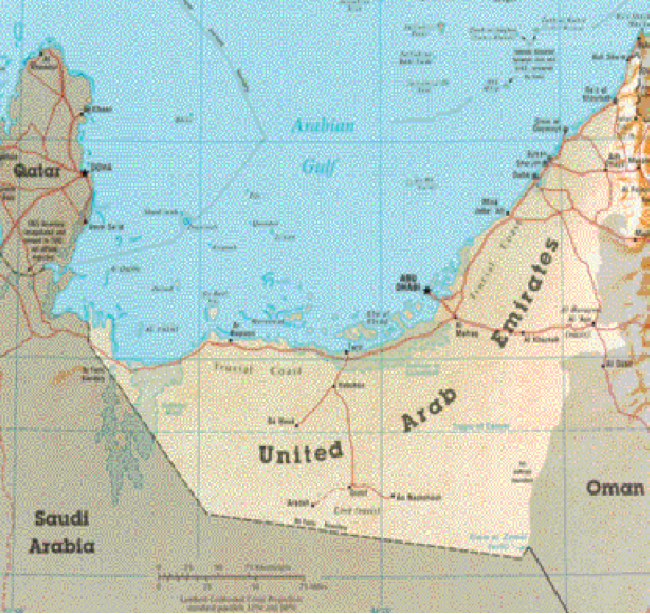
Over the past 20 years of banking growth, the UAE has become a biosphere of financial institutions – local, foreign, specialized, conventional, and sharia-compliant – to a total sector count of 46 banks and a low banking concentration by international standards.

Given that mergers and acquisitions are a staple of international banking progress in developed and developing markets, it is within the ruling global industry trend for economies of scales and ever-larger institutions that banking voices have been looking at the potential and role of mergers in the GCC financial industry. But when Dubai-based Emirates Bank International Group and National Bank of Dubai entered the merger process with a formal announcement this spring, the move provided observers with a few surprising aspects to consider.

In combining their assets, the two banks will become the largest sector force in the UAE and a major regional player, although not the largest GCC bank by market valuation. Emirates Bank International Group (EBI) and National Bank of Dubai (NBD) had a combined market cap of $11.4 billion at the end of 2006, but no obvious operational advantage that would jump out at first glance. EBI had revenues of $936 million with 5,000 employees in 2006 while NBD raked in $507 million with 1,400 staff.

Coming together

EBI Group institutions include Emirates Bank and Emirates Islamic Bank. As of March 31, total assets of EBI stood at $28.35 billion versus $20.05 billion at NBD. On the liabilities side, customer deposits were more evenly split with $14.9 billion at EBI and $13.3 billion at NBD. 

While full-year profits of EBI in 2006 were $514 million, up by 9% year-on-year, NBD’s net profits were flat at $301 million. By the end of the first quarter in 2007, however, the picture was reversed as EBI reported a 4.8% lower profit of $156.5 million to March 31 when compared with a year earlier, whereas NBD boasted of a 17.5% year-on-year improvement for the first quarter to $82.25 million.

By EBI’s claims, 17 new branches were opened in the last 15 months. The group’s retail network of now 57 outlets includes Emirates Bank’s 26 branches in Dubai, six in Abu Dhabi and four in other emirates.  NBD on its part also continues opening new branches and inaugurated its 40th outlet in May. Its geographic network structure entails 32 Dubai branches and eight in other emirates, similarly to the EBI network.

According to analysts, EBI staff costs jumped 45% in the first quarter of 2007 from a year earlier, due to retail network expansion and human resources investments across operations, plus an inflationary element.

The rapprochement of the two banks undoubtedly offers income opportunities to specialist firms. In one of the first international specialist reactions, a publication for UK law practitioners commented that the process created “plum mandates” for multinational law firms, Linklaters and Allen & Overy, who were commissioned by the two banks with advising on legal aspects of the merger.

But what will the cost benefits for the two entities be? EFG-Hermes estimated that the two banks would initially gain annual synergies in the range of $25 million. The potential to realize cost synergies would be limited because the two banks are likely to maintain their brands and consolidation of their branch networks will not be easy because of image concerns and guarantees to employees.

Under product and market focus angles, the two banks are compatible but their main advantages will be enhancement of their “strategic position and revenue opportunities,” EFG-Hermes said. This is also the rationale which the banks named in announcing the merger, saying that their new financial strength will allow the joint entity to compete more effectively for big deals and enhance its ability to stand up to increasing market presence from large international banks.

The sector composition of UAE banking already shows a large number of foreign banks, 25, in relation to the 21 domestic banks. However, the foreign banks until now operate under restrictions and mandates that disadvantage them in the retail market. With the implementation of international trade agreements – WTO membership as well as the free trade agreement with the US and, hopefully, the EU-GCC one – the UAE banking market will have to open up to more foreign competition.

Beginning of a new trend?

The larger question is if EBI and NBD are setting the beginning of a merger wave among UAE banks. Khaled Sifri, a well-known investment banker in the UAE and director of financial firm Rasmala Investments, doesn’t think so. All banks in the UAE make good money and currently have no compelling reasons to enter the complex processes required for a merger, Sifri told Executive.

The motive for the EBI-NBD merger is overlapping ownership, namely the stake holding and decision making authority of the Dubai government over both institutions. For EBI, the state’s stake is direct and absolute with 77% ownership. In the case of NBD, the government shareholding of 14% is augmented by stock holdings of members of the ruling family.

For both banks, the decision over a merger was not competitive in the sense that bank management on the search for a strong partner identified a merger/ takeover target from a more or less sizeable group of banks whose valuation and business structure would make them attractive. Rather, the consolidation is that of an ownership move under what Sifri described as a “legitimate political imperative. Even if two entities are privately owned, the owner can force a merger if he expects that the synergies will give greater results in future.”

Although the EBI-NBD joining caused market watchers to allege that the new size benchmark and the momentum of the step will create new support for consolidation in the UAE banking industry, analysts agreed that the move may not hasten a wave of mergers. According to Sifri, banks based in one emirate of the UAE can expand easily into any other emirate and have no strong economic imperative to favor a merger over other forms of domestic expansion. “All operate all around. If you look hard enough for potential synergies, you may find fits but this is not a standard situation and there is not a sufficient imperative in my view,” he said.

The track record of bank mergers in the global financial landscape shows that the cost of a merger is often larger than the benefits turn out to be in the end – and mergers have created some great hybrids and many unspectacular ones. The first merger in the UAE is neither humongous by size – when compared to the $80 billion ABN-Amro case – nor does it appear to be among the most complicated in a field that is admittedly hard to manage.

But, as a yardstick for a sector trend, the EBI-NBD deal is not a classic merger, and other banks planning similar nuptials will not find the union so seamless.

The mergers that would really befit GCC banks by allowing them to operate in multiple GCC countries would be cross-border mergers, Sifri said. “Those would be most justifiable because the real opportunities and value creation lies in cross-border mergers.”

June 16, 2007 0 comments
0 FacebookTwitterPinterestEmail
GCC

UAE  Bullish Outlook

by Executive Contributor June 16, 2007
written by Executive Contributor

UAE’s banking sector is the second largest in the GCC with asset growth outstripping GDP since 2000, according to latest official figures. Banks in the UAE were expected to face earnings pressure in 2006 following a record year in 2005, but many of the country’s 46 commercial banks continued to perform well, reporting good earnings despite a weaker stock market in 2006.

The UAE has 21 national banks with combined asset, loan and deposit market share of 77.4%, 80.0% and 75.4% respectively. And these banks continue to gain market share over their foreign-owned counterparts – 25 at the last count – due to better access to the UAE government’s hefty deposit pool. Among the national banks, five are Islamic while the rest are conventional; 19 of the national banks are listed on either the Dubai Financial Market (DFM) or the Abu Dhabi Securities Market (ADSM).

The UAE stands out as having higher commercial banking penetration rates than the rest of the GCC countries. The top domestic banks continue to dominate the local market, but foreign banks take the lead in retail and investment segment. Many of the banks enjoyed a nice stream of revenues from a short-lived Bull market that ended in the first quarter of 2006. According to a report by the UAE-based investment firm, Noor Capital, the sector saw year-on-year asset growth of 42% in 2006, while decelerating from 48% year-on-year in 2005, is still very impressive.” Although margins and non-interest income suffered in 2006 post-bubble asset quality remained robust, as stocks-related credit was confined to margin lending. Provisioning is also adequate.

Banking on religion

Another notable feature is the rapid stride that Islamic banking has made in the UAE. The growth in demand for Islamic compliant products and services has lead to a noticeable and rapid growth in the market share for Dubai Islamic Bank (DIB) and Abu Dhabi Islamic Bank (ADIB), Emirates Islamic Bank and Sharjah Islamic Bank. Figures show a rise in the number of banks that have established or are in the process of establishing Islamic finance subsidiaries. Earlier this year, Dubai Bank converted to an Islamic entity and other conventional banks have established separate Islamic banking operations. And in line with demand, another Islamic bank is expected to be launched in the second quarter of 2007.

Growth drivers

With an increasing number of mega-projects being announced and launched, lending activity is expected to remain robust while deposit growth is expected to reach new heights. Analysts forecast real economic growth in the UAE of 8% and 7% in 2007 and 2008, respectively. Global rating agencies also predict that banks in the UAE will maintain their healthy performance in 2007 although their asset quality may be challenged in the longer term by recent strong loan growth. “The banking sector’s profitability in 2007 is expected to be maintained broadly at levels seen in 2006 while asset quality and capitalization are likely to be sustained at their current levels,” said Yousef Khan, an analyst at Fitch.

According to a recent report by National Bank of Kuwait, the unprecedented access to liquidity generated from the high-oil-price environment has pushed UAE banks to seek acquisition of international financial assets. “The foreign assets of banks operating in the UAE grew 84% in a span of two years as those banks increasingly look abroad for investing and lending opportunities. At the same time, the foreign liabilities of those banks, especially the national ones, are rising rapidly, logging an 80% CAGR in the three years ending in 2006,” the report said.

Experts agree that the drivers of strong earnings, growth and under-penetration of key banking products will continue to push the profit margins of UAE banks upward. “Going forward, we believe that domestic banks will continue to benefit from strong (not astronomical) asset growth (+25%) and decent margins (+2%) with a shift in focus toward core service-driven banking fees,” a report by Noor Capital said.

Future growth

According to EFG-Hermes, the Cairo-based investment firm, there are some concerns that bankers must keep an eye on, including the weakening of the dollar and the rise in inflation rates, higher interest rates and falling bond prices. Noor Capital suggests that banks, must, “take a breather via inward examination of systems, portfolios, cost base and human resources. They also need to assess their short-term tactical standing and long-term positioning.”

The UAE is often regarded as over-banked, over-branched and ripe for a wave of consolidation that will strengthen the banking system. But analysts at EFG-Hermes believe otherwise. “There are a number of reasons why the pressure for change in this direction is likely to be significantly less than the headline numbers might suggest. The most compelling are that the incentives currently do not exist: in particular, pricing is wide and costs are low. While the gap between revenue and cost growth may narrow over the next few years, the sector is a long way from facing external pressure for consolidation,” its report said.

The region is developing and is expanding at a tremendous rate and there is room for financial institutions to provide services and facilitate investment both in size and the depth of the market. Analysts maintain that the future remains bright. “We expect that the growth of most exceptional and volatile income streams will slow to a stable level while the core banking business will grow strongly,” EFG-Hermes said. The UAE is the most competitive economy in the Arab world according to the Arab World Competitiveness Report 2007, but there is much to do.

The government must continue to take bold steps to remove impediments to economic growth and leverage the competitive advantages. It must continue to work hard to put in place systems and structures to ensure that the momentum gained in the last few years is maintained. Analysts said that innovation in the UAE in particular and the GCC in general, is fueling growth of trade and finance and further regional and global expansion might bring the banking sector to closer integration with the global economy.

UAE Leading Commercial Banks by Assets (Dec 31, 2006)

June 16, 2007 0 comments
0 FacebookTwitterPinterestEmail
Levant

Turkey Holding the course

by Executive Contributor June 16, 2007
written by Executive Contributor

Turkey’s Central Bank has pledged to maintain tight monetary policy to meet inflation targets, warning that, despite predicted continuation of recent disinflation, the risk of inflation is far more serious. Despite monetary control, the banking sector remains dynamic. External demand and the growth of housing and consumer spending loans have partly offset a cooling of domestic demand, and several banks have recently cut rates, giving incentive to borrow further. The implementation of a new mortgage law is expected further to boost demand for credit, albeit in the medium- to long-term.

At the end of May, the monetary policy committee of Turkey’s Central Bank announced that short-term interest rates would not be cut, despite the trend of disinflation. The committee said that high levels of consumer spending and investment, high oil prices, an uncertain political environment and service price inflation all combined to make a cut in rates unwise. The bank operates on a policy of inflation-targeting.

“The committee assessed that meeting the medium-term inflation targets requires the maintenance of the tight policy stance,” the committee reported. The report, issued on May 14, noted that sound fiscal policies and structural reform were important tools for restraining inflation, and that monetary policy alone was not enough to rein in prices.

“The recently elevated prices of crude oil and commodities add to the inflationary pressures via imported input costs and thus curb the disinflation process,” the report added.

Managing inflation

Consumer price inflation of 1.21% in April brought annual inflation down to 10.72%, within the annual uncertainty band set by TCMB. A rise in clothing prices offset some of the decrease in consumer durable and service inflation, local press reported. The first-quarter year-on-year inflation rate was 10.86%, partly attributable to an increase in food and tobacco prices.

The central bank stated that disinflation would be a continuing trend, but counselled caution, due to the existence of inflationary risk. “Against this background, disinflation is expected to become more significant in the upcoming period. However, there are some remaining risks to the inflation outlook,” the report said, announcing that the central bank was prepared to act swiftly should economic shocks change the economic outlook.

Despite inflationary pressures, both current and potential, year-end inflation will be likely to fall between 4.5 and 7.1%, with a midpoint of 5.8%, according to the central bank’s second 2007 inflation report. The outlook was for inflation to continue to fall to 1.3% to 5.0% in 2008, with a midpoint of 3.2%. Bank Governor Durmufl Yilmaz said that this was due to bank policy since June last year, following the market correction in May. Yilmaz announced that “the tight stance for monetary policy and the ongoing perceptions of uncertainty continue to restrain the demand for credit.” He noted that demand for durable goods and machinery had weakened. Yilmaz said that there would be little scope for monetary relaxation if the medium-term goal of 4% was to be met.

However, the impact of tight monetary policy on inflation has been smaller than predicted. While there has been a cooling in domestic demand recently, exports have flourished, boosting industrial production and offsetting the internal slowdown to an extent. Recent increases in public spending also look set to lessen the effectiveness of the interest rate freeze, hence perhaps the Central Bank’s warning that fiscal caution and economic reform were also needed to bring inflation down to target levels. However, in the midst of a tough election campaign, it is unlikely that the government will back off from spending until the third quarter.

Another issue has been inflation expectations, which have stalled over the past three months after dropping for some time, affecting price and wage setting behavior. Yilmaz said that he expected inflation expectations to start dropping again as headline inflation falls.

The central bank noted that the trend of late has been for banks to ease interest rates due to an increase in lira bond issues and the proceeds of privatization. In May, HSBC dropped its monthly TRY consumer loan and TRY consumer loan at interest. Home financing interest rates have gradually been fallen to 1.49% per month. Vehicle loans have backed down at 12 month terms to 1.67%, at 36 month terms from 1.69% to 1.65% and at 48 to 60 month terms from 1.69% to 1.59. Even though home financing loan has been set on interest rate of 1.67%, the rate has backed down by 0.89%.

Garanti Bank also moved to decrease its lending rates. The monthly mortgage rate which, was initially set up at 1.53% has now been cut to 1.44%. According to Garanti Bank General Manager, Ali Fuat Erbil, the bank is not expecting further decrease in interest rates, stating that any forecasts should be put aside until the end of the general elections.

While automobile loan growth has slowed, housing and consumer spending loan growth continues.

New mortgage law

One factor set to increase the rate of housing loans is the new mortgage law, which was implemented in February. For several decades, due to inflation, high interest rates, poor securitization and cultural traditions, Turkey has had a relatively small mortgage market. This was already beginning to change due to interest falling below the psychologically important benchmark of 20% in 2005. By mid-2006, interest on housing loans accounted for 10.7% of banking assets, up from 1.3%.

The new provisions create a secondary market in securitized mortgages, which should increase the number of mortgages with maturities of 10 years or more. It reinstates a 2% early payback or break charge and gives the green light to floating-rate mortgages, as well as cutting lender liability to one year for defaults and giving lenders more powers to repossess property, for example in the case of three consecutive non-payments.

The law also makes possible the formation of non-bank financing organizations working with floating mortgage-backed securities and, at implementation, converted all housing loans into mortgages unless specific requests are made by the debtor.

Deeper problems

However, despite widespread praise for the reforms, it may take some time for the new law to boost mortgage take-up significantly. One issue is that many banks do not have the administrative infrastructure for large-scale mortgage transactions. They will need property assessment divisions that can evaluate mortgage applications. Insurance companies will also have to be equipped to investigate the properties and provide guarantees for the lenders.

Perhaps a bigger problem is the fact that, at conservative estimate, half the housing in Turkey is illegal and therefore not eligible for mortgages. Earthquake standards will also eliminate many of the legal buildings.

While it will doubtless take time for the new systems to be fully operational, the emergence of the legal provision for a proper mortgage market is a positive step.

Overall, careful monetary policy seems set to support confidence in a maturing banking sector and the economy as a whole in a time of underlying inflation risk. It does not seem to have deterred banks from cutting lending rates further, and the reforms of the mortgage sector not offer a real prospect for loan growth in a relatively under-banked market. However, with the election coming up in July, the policy of the Central Bank may come under review depending on the victor.

June 16, 2007 0 comments
0 FacebookTwitterPinterestEmail
LevantUncategorized

Jordan Coming of age

by Executive Contributor June 16, 2007
written by Executive Contributor

As Jordan’s financial services industry comes of age, the banking sector has been shaping itself into one of the major contributors to the country’s increasing economic power. The sector may also be experiencing what is equal to its Sturm und Drang period, brimming with ambitions, growth instincts, and sometimes conflicting impulses.

In recent reports, analysts credited increased purchasing power of consumers along with liberal attitudes towards personal debt with driving Jordan’s explosive banking sector growth. Deeper rooted drivers of development included increased investment from the GCC, improved regulations, and focus on the development of retail business.

A variable helping the sector sustain its growth is trade and banking services activities originating from neighboring Iraq, which has provided significant fee income for local and foreign banks. Observers also say that the sector appears to have benefited from the ongoing political instability in Lebanon where certain capital inflows make it to Jordan in search of a safer environment for investment.

Banking sector deposits, which last year reached $20.6 billion and equaled 1.4 times Jordan’s nominal GDP, have grown at a slightly faster rate than GDP – supporting the notion that the country’s financial culture has left its underbanked past firmly behind and that banks are reaching the customers. However, in spite of the highly competitive environment, the market remains concentrated, with the top three banks dominating the market.

Good asset

Jordan sports 13 local commercial banks plus eight foreign owned, two Islamic banks and five investment banks for a population of 5.9 million. There is no state ownership in the sector. But one of the significant features of Jordan’s banking sector is its high concentration. The leading bank is the Arab Bank, which holds approximately 60% of overall banking assets. Observers agree that size matters when it comes to the performance of banks and Arab Bank demonstrates the accuracy of this theory.

Research shows the strength of Arab Bank is such that the bank’s 40% increase in profits in 2006 reflected very positively on total sector results, which rose for all banks to $773 million (JD547.35 million; JD1 buys $1.41) in 2006 from JD 500.77 million in 2005, representing a 9.3% increase. According to research firm Amwal Invest, only Arab Bank and four other banks experienced growth in their bottom line in 2006. 

In any case, the sector’s 2006 growth is paltry when compared to the 80% increase in 2005. But nevertheless, experts say the sector’s prospects for 2007 are promising, specially the sector’s performance on the Amman Stock Exchange.

In 2006, the sector’s consolidated assets grew by 14.9% to reach JD 24.24 billion. Figures from the Central Bank of Jordan (CBJ) showed that 25.6% of the total assets at the end of 2006 comprise foreign assets, with balances held at foreign banks making up the bulk. The remainder represents local assets, with the lion’s share claimed by facilities given to the private sector, constituting 39.31% of total assets. The largest increase in assets in absolute terms was for the Arab Bank, which grew by JD1.624 billion.

The International Monetary Fund said it expects Jordan’s economy to keep growing at around 6% in 2007 on the back of 6.5% real GDP growth in 2006. Expecting a bumper year in 2007, a number of the local and foreign bankers are willing to expand their business in the kingdom.

The IMF encouraged the increasing role of the banking sector, but issued a warning on credit growth. “Particular care is required with new forms of lending, which carry greater risks, such as margin and non-collateralized loans that have been growing rapidly,” the international watchdog admonished, arguing that the profitability of banks and, implicitly, the health of loan portfolios have yet to withstand tests of a slowing economy. 

The stats

Figures by Amwal Invest show 2006 saw the consolidated credit facilities offered to the private sector grow by 26.1% to reach JD9.7 billion. “Facilities extended to public entities increased by 18% to JD423.2 million, while those to financial institutions declined by 63.4% from JD20.5 million in 2005 to JD7.5 million.”

Amwal did note two distinct changes in the sector between 2005 and 2006. “In 2006, net interest income made a more significant contribution to total operating income at almost 70%, pursuant to a refocusing on core operations, while gains from investments played a much smaller role, making up only 3%.” When compared to 2005, interest income contributed 55% to total operating revenue, and gains from investments around 13%. “The average increase of net income for all the banks was 27%, the most significant being Jordan Commercial Bank, rising by 62.9% from JD 9.66 million to JD 15.74 million,” Amwal’s report said.

Property financing increased to meet the expansion in the real estate sector in Amman and other tourist areas. Similarly, other kinds of financing, such as personal loans, holiday loans, marriage loans, car loans, and business loans also thrived. These developments trickled down to fee-income and thus, the bottom line.

Both the Arab Bank and the Housing Bank for Trade and Finance (HBTF) posted profit increases of over 20% in the first quarter of 2007. Arab Bank announced first quarter profits of $187 million after taxes and provisions, which was a year-on-year increase of 24.6%. HBTF reported even a better increase of 36% with profits standing at $51.7 million for the first quarter of 2007.  These robust results to a certain extent were also achieved by other banks with Jordan Kuwait Bank reporting profits of $15.7 million in the first quarter of 2007 or a 5% increase when compared to the same period in 2006.

Despite rapid growth and high levels of profitability, the banking sector still requires further development, including long-term strategies to diversify sources of income, innovations in product and service delivery, greater choices for customers and investing more on staff training.

Charging ahead

Experts agree that the upcoming three years hold considerable challenges for the banking sector, as well as for policy makers who determine aspects of the environment in which the sector operates. Banks will be looking for sources of growth and to maintain the high profit rates that they become accustomed to, while competition intensifies, and technological changes impact on the way that banking operations are carried out.

Banks must also introduce new strategies aimed at the most efficient utilization of capital in line with capital adequacy requirements. Large banks must accelerate efforts to penetrate new markets regionally and internationally. The CBJ must also encourage a consolidation phase in the next two years as the market is saturated. Consolidation should first start in acquisitions between local banks, especially smaller ones. This move would encourage the introduction of new products and services and enhance the quality of those already existing, allowing effective competition on a regional and international level.

Another challenge local banks must face is the entry of foreign banks. Foreign banks have many advantages over their local counterparts and could eat away at their profits if additional reforms and development of the sector fails to materialize.

Although experts warn of the potential shortfalls in the sector, the report by Amwal Invest acknowledges that most “Jordanian banks enjoy a higher capital adequacy requirement ratio than the 12% set by the CBJ, which is also higher than the 8% ratio set by Basel II Committee.” After the CBJ raised the minimum paid-up capital for Jordanian banks last year, “most banks went about increasing their capital through the distribution of stock dividends or through private placements. The step helped banks secure sufficient funds to seize investment opportunities locally, regionally and globally.”

In non-fiscal aspects, Jordan’s financial services industry has a number of governance and cultural issues to master. The sector’s evolution recently showed some large-scale employee migrations and shifts in personnel that seemed indicative of challenges in the management of highly skilled human banking resources, which are somewhat scarce in the country. In one recent banking conference in Amman, a sector critic asked the president of a smaller bank outright why his institution was lambasted by so many people for “loan sharking”. In other instances, industry insiders still frequently clam up when asked about the dominance of Arab Bank and its impact on the entire sector, virtually forcing further questions on transparency and the authenticity of all facets in the country’s banking picture.

Although the economy and leading sectors are showing consistent growth, the government in Amman is tasked to have strong strategies to mitigate potentially even higher oil prices, address unemployment and control inflation in order to remedy the country’s trade and current account deficits. As more foreign investment is flowing in and alternative financing means gain in popularity in the broadening financial industry, supervision of the Jordanian banking sector through the CBJ will be existential for the further sound development, believes the IMF. But, the government must also assist in establishing a central credit bureau to help banks make better risk assessment. And implementation of the Basel II accords by the end of 2007 is a move that cannot be avoided. Market forces will drive mature banks to excel – with a little helping hand from the regulator. 

June 16, 2007 0 comments
0 FacebookTwitterPinterestEmail
Lebanon

Foreign Banks Staying put

by Executive Contributor June 16, 2007
written by Executive Contributor

Last spring Hani Houssami, General Manager of the Saudi National Commercial Bank (NCB) in Beirut, was gearing up for a busy summer season ahead. Tens of thousands of Saudis were expected to descend on Lebanon and some $4 billion was earmarked for investment.

“It was a dilemma for me to manage – a nightmare the number of people coming,” recalled Houssami.

The July war changed all those expectations, with Houssami left with a headache of a different kind – a glut in Saudis tourists and investors as Lebanon struggles to get back on its feet amid political instability and a sluggish economic environment.

But NCB, 79% owned by the Saudi government, has no plans to leave.

“We’ve been here 52 years so we’re not going to pack and go – it’s a country we believe will re-emerge,” said Houssami.

NCB’s decision to stay the course is not an exception to the other international banks and institutions operating in Lebanon. The majority have been in Lebanon for decades, weathering the country’s ups and downs, ever optimistic that the country will pick up and rise, as the cliché goes, like a phoenix from the flames once again.

Indicative of this belief is regional investment bank Shuaa Capital’s recent decision to open a branch in Beirut’s downtown in September, and rumors of BNPI’s talks with the Bank of Sharjah about a possible takeover.

Nonetheless, international banks are finding the political environment a constraint on their activities. “Every time we look to expand the number of branches, something happens,” said Charles Hall, Chief Executive Officer at HSBC.

“It is very difficult to plan meaningfully ahead. We tend to operate on a yearly plan in reference to our five year plan.”

HSBC, which has been in Lebanon since 1946, have nonetheless had a good year so far, registering 10% growth.  “There was a very conservative framework for this year, but ahead of internal forecasts and historical results, so unless [the situation] deteriorates further, we should make 20% to 30% compared to 2006,” said Hall.

Standard Chartered, which entered the market in 2000, also expects double digit growth this year, said Naji Mouaness, head of consumer banking. “Defaults have been normal, not abnormal, so this is a good sign,” he added.

NCB has also achieved growth, “but not hit the ground yet” and has no plans for new products. “We cannot anticipate the future. Some friends in other banks spent a fortune a few years ago on products they couldn’t use,” said Houssami.

The situation has not dampened Standard Chartered’s plans, diversifying into private banking for high net worth individuals. But instead of shelling out for new branches, the bank has introduced a payment mechanism through Liban Post, a 24-hour deposit service, and soon, internet banking services.

“The war  [last summer] didn’t affect our strategy for new products; we are going ahead with aggressive plans to grow our portfolio,” said Mouaness.

Driving growth for both HSBC and Standard Chartered are credit cards, with both banks in the top five in terms of issuance of plastic. HSBC has some 41,570 credit cards out of the 277,000 credit cards currently issued, according to a January statement by the Central Bank, while HSBC Visa cards account for 22,000 of the 97,000 visa cards nationwide.

HSBC are also looking to expand their presence when the time is ripe.

“We had one or two approaches for mergers, but the environment is not quite right,” said Hall.

Although Lebanon is well catered for in terms of banks, foreign and national, there is the possibility of more Arab banks entering the market.

“The big Saudi or Jordanian banks, the big three players, will establish a presence here. Bank Audi is present in their markets, so why not in ours?” said Tarek Khalife, Chairman-General Manager of CreditBank.

Expansion is not likely for NCB, however. “We are not investing in expansion, as we are not sure if tomorrow we can cross the street,” said Houssami. “One day we might move activities out of the country if the current situation continues.”

Hall also suggested that banks should exercise caution.

“International banks that want to enter should consider private and corporate banking, or takeover or acquisition. The cost of setting up in a heavily banked area is too expensive,” he said.

Equally, the country’s instability could also shy off potential investors that are not already committed. Remarking on the slated growth figures for this year, Hall added: “the major caveat is if the situation doesn’t deteriorate.” As NCB and other banks found out last year, projections for Lebanon can all too quickly go belly up.

June 16, 2007 0 comments
0 FacebookTwitterPinterestEmail
North Africa

Morocco: Need to build

by Executive Staff June 7, 2007
written by Executive Staff

Although the Gulf has seen the majority of construction activity in the MENA area of late, Morocco too is beginning to emerge as a favorite for a variety of European and Gulf investors.

The Investment Commission, chaired by Prime Minister Driss Jettou, announced on June 13 the setting-up of three major cement factories at a total cost of Dh8.9 billion ($1.1 billion). These significant investments in the cement industry are designed to meet the increasing demand in the construction and real estate sector.

Although the cement industry still is dominated by foreign capital, two out of the three factories will be Moroccan-owned. The first one is initiated by the Ynna group and will be built in the Settat region. The second one, to be established by the Addoha group, will have two units, one in the region of Beni Mellal and the other one also in Settat.

The Ynna group is investing Dh3.3 billion ($400 million), creating 500 jobs. The Addoha group’s factory, also know as Ciments de l’Atlas, will require an investment of Dh3.6 billion ($430 million), with the creation of 1,000 jobs in its two units.

Spanish firm Lubasa, over the past 50 years specializing in construction, real estate development and environmental management, will set up the third cement factory. To complete this project in the region of Sidi Kacem, Lubasa will invest Dh1.9 billion ($228 million) and create 170 direct jobs and 300 indirect jobs.

The investment commission has also studied many other projects. In total, some Dh25 billion ($3 billion) and the creation of 5500 jobs are at stake.

Most developments are high end

Among others, the commission will soon assess the Loukos construction project, a city planned by Emirati firm Al Qudra and Moroccan firm Addoha. The investment for this new city amounts to Dh1.2 billion ($144 million) and will create 2024 jobs. The investment program includes the construction of apartments, houses, public facilities and shopping malls.

According to a study conducted by the Centre Marocain de Conjuncture (CMC) published in March 2007, the construction and real estate sectors make up 7% of national production for an added value of 5% of GDP. The latest statistics on employment reveal that the construction and public works sector employs around 700,000 people directly, representing 6.7% of the working population. The real estate sector generated Dh2.9 billion in foreign direct investment (FDI) in up to the end of September 2006, which represents 15% of all FDI flow.

“The real estate market is booming, as illustrated by domestic sales of cement at the end of September, which rose by 10% compared to the same period in 2005. The construction and public works sector also created 61,000 jobs by the end of September and the number of mortgages contracted by banks by the end of November rose by more than 25%,” said Leila Haddaoui, project director at CDG Development, a development and construction firm for large-scale urban projects.

In that sense, FDI development prospects in the real estate sector look very promising as illustrated by the real estate boom in high-end products: luxurious condominiums, office headquarters, five-star hotels, tourist resorts and port facilities.

Although there are many who bemoan the lack of maturity in Morocco’s real estate sector, notably the lack of reference prices, the lack of insurance tools and the threat of a speculative bubble, the construction sector continues to thrive.

The housing shortage, combined with the development of tourism projects and the emergence of a new type of professional real estate service industry all point to a promising future for Morocco.

However, while the market is in danger of becoming oversupplied with property for upper and middle income groups, the country is still suffering from an acute shortage of low-cost housing. Morocco’s cities are growing, as increasing numbers of migrants move in from rural areas. In 2000, 53% of Morocco’s population lived in urban areas, a figure that is predicted to rise to 65% by 2012.

While demand for residential property in Morocco is high, the market faces three principal challenges: affordability, limited financing options, and unclear laws regarding landownership and titling issues.

As foreign interest in Morocco continues to grow, the government needs to be careful to ensure that the all-too-common problem of “make it all luxury” is not repeated in a country that needs to house a rapidly growing population. With a housing shortfall estimated at anywhere form 500,000 to 1.5 million, social housing could well be more of a priority.

June 7, 2007 0 comments
0 FacebookTwitterPinterestEmail
Levant

Turkey: The market yawns

by Executive Staff June 7, 2007
written by Executive Staff

Despite political uncertainty with the coming elections and setbacks in negotiations with the European Union, Turkey’s economic fundamentals remain strong. While there have been short-term wobbles due to recent events, and long-term issues such as inflation, the current account deficit (CAD) and poverty remain, the IMF and the market expect growth to continue, most likely under the current ruling party with a renewed mandate after July’s elections.

At the end of April, the Turkish stock market and the lira were hit by a statement by the military voicing support for secularism, which was seen as an attack on the ruling Justice and Development Party (AKP) government, with its roots in political Islam. The markets were also influenced by large demonstrations against AKP in Istanbul, Ankara and Izmir.

The demonstrations came in the wake of Prime Minster Recep Tayyip Erdogan’s decision to name Foreign Minister Abdullah Gül as candidate for president, a role elected by parliament. There had already been demonstrations against Erdogan when it was thought that he would stand for the presidency. The opposition boycotted the vote in parliament, so Gül failed to achieve the required two-thirds majority. The vote was annulled by the constitutional court, with the consequence that the AKP announced changes to the constitution allowing the president to be elected directly. These changes have been rejected by the court and secular President Ahmet Necdet Sezer, and will now be put to the electorate by referendum. Meanwhile, the legislative elections have been brought forward to July 22. Tensions are running high between the AKP and Turkey’s secularists, who accuse the party of trying to usher in elective dictatorship as a first step towards Islamic rule.

However, despite the shocks to stocks and currency, the response of the market as a whole appears to be “so what?” Turkey has in the past been vulnerable to capital flight, but business confidence in the country remains relatively unperturbed by political events for two main reasons. Firstly, the economy has been performing strongly enough, with sound enough fundamentals, for the political worries to have less effect than previously. Secondly, the AKP, which has presided over several years of growth, looks increasingly likely to be re-elected thanks to divisions in the secularist camp.

Difficult relations with the EU

Turkey’s strong and stable economic performance under the AKP administration has seen the party win friends in the domestic, business community, the EU and the IMF. The party came to power in 2003 with a majority in parliament, the first since the Motherland Party (ANAP) governments of the 1980s.

Under the AKP, economic reforms have continued, the economy has performed well and a historic milestone was reached when EU accession negotiations were opened. However, as elections drew closer, the privatization program has slowed, and the EU has suspended eight “chapters” (or policy areas) of negotiations due to Turkey’s intransigence on certain issues, including allowing ships and aircraft from the Republic of Cyprus to use its ports and airports.

However, the country’s economy is still in good shape. The budget deficit is 2% of GDP, considerably less than the maximum of 2% required by the EU; public debt, at 61%, is only a touch above the EU ceiling of 60%; and growth has averaged almost 8% over the past four years, taking the average per capita income at purchasing power parity (PPP) to $8,400 in 2006, from $6,700 in 2002, according to the Washington Institute for Near East Policy.

The growth has been boosted by high inflows of foreign direct investment (FDI), which has also been financing the current account deficit. Between 1980 (the year of the last military coup) and 2003, Turkey attracted $18 billion in FDI. However, in 2003, the country brought in $1.7 billion in FDI, and in 2006 $20 billion, a figure that could rise to $30 billion this year.

Turkey’s custom union with the EU has further contributed to country’s economic development. Turkey is one of only two non-member countries with such an agreement. Ulrike Hauer, the undersecretary of the EU Delegation of the European Commission to Turkey said that the EU and Turkey were enjoying good levels of trade and that this has helped Ankara decrease its trade deficit with the bloc. “Turkey’s trade deficit declined to 20% from 60% during its trade with the EU,” she declared.

Economic challenges remain. Inflows of money due to the appreciating lira and high interest rates are restraining corporate profits and exports. The current account deficit remains large and is growing, hitting 8% of GDP earlier this year. Inflation, for years the bugbear of the economy, is under control and decreasing, but still well off target at 9.6% in 2006, with the Economist Intelligence Unit forecasting a 6.5% rate by year end. Official unemployment stands at 9.9%, and poverty remains an issue.

Relations with the EU have been given a further setback by the election of Nicholas Sarkozy as French President, and the subsequent victory of the party backing him in parliamentary elections. Sarkozy’s election platform explicitly stated his opposition to Turkey’s membership of the EU as the country is in “Asia Minor.” A Turkish military incursion into northern Iraq (seen by many as a pawn in the AKP-military game) would also hit relations with both the EU and the US, though it is likely to be a brief operation. Business has been ambivalent about the potential for military action, divided between those benefiting from trade with northern Iraq and those supporting a stronger security focus following the Ankara bombing in late May.

Despite these important caveats, Turkey’s disciplined macroeconomic policies, strengthened economic institutions and structural results continue to bolster confidence. This is apparent from the latest IMF report on the nation’s economic outlook, part of the 2007 Article IV Consultation meetings.

“Turkey’s macroeconomic performance in recent years has been impressive, combining strong growth with a sustained reduction of inflation,” the IMF said in a statement. “Political stability, structural reforms and favorable external conditions have facilitated this good performance.”

According to the IMF, the primary drivers behind growth are private consumption and investment, declining real interest rates, surging capital inflows, rapid credit expansion and rising productivity, combined with falling inflation.

The statement concluded: “The goal should be to build on the economic success of the last five years to firmly entrench high growth, secure low inflation and make the economy more flexible and resilient to external shocks.”

The EIU, sharing the IMF’s confidence, forecasts continued growth, with 5.5% in 2008, 5.2% in 2009, 5.1% in 2010 and 5.2% in 2011.

A June report by ING, the Dutch banking group, pronounced the June EU summit as “a non-event for Turkey,” and said that a likely AKP victory would keep the economy on track, whereas its rivals may herald a return to instability. The report, part of ING’s Prophet series, says that, despite the election of Sarkozy, France is likely to hold off from lobbying to change the objectives of Turkey’s EU membership talks until December.

The report said that opinion polls showing 35-40% support for AKP indicates it is likely to win, “with positive implications for economic development… [and] good news for bonds.” The opposition secular Republican People’s Party (CHP), which is nominally social-democratic, is currently polling around 20%. ING says that the party program, which promises cuts in tax on income and fuel, higher subsidies for agriculture and industry and cheap student loans, “would be very worrying for the market if enacted … it harks back to the populist type policies that voters backed in the 1990s which led Turkey into three economic crises.” However, the report states that the stronger economic foundations existing now could prevent another crisis on the same scale.

The confidence of international institutions in Turkey remains resilient, considerably more so than in the past, despite political fireworks and a worsening in relations with the EU. Turkey seems likely to overcome these headaches and move forward, under an AKP government, albeit perhaps one with slightly clipped wings. However, with Turkish politics known for its volatility, the final outcome of the July elections is still a difficult call.

June 7, 2007 0 comments
0 FacebookTwitterPinterestEmail
By Invitation

The dire need for acquisition financing

by Imad Ghandour June 1, 2007
written by Imad Ghandour

Private equity in the region is like a limbering man: almostall acquisitions of this $20 billion industry are beingfinanced directly from the coffers of the private equityfunds. It is the good, old way of investing, but somethingthat has been abandoned a long time ago in other parts ofthe world.

What is missing from the private equity secret potion is thepower of leveraging: using less expensive debt to financeacquisitions instead of using the more expensive equity.Take an example: Suppose a company is acquired for $100million by equity only (ie all the $100 million came fromthe private equity fund) and is sold at $130 million in oneyear, then the IRR is 30%. However, if the same investmentis financed by $50 million bank loan at 10% interest rate,than the remaining $50 million invested directly from thefund own pocket will be returned as $75 million aftersettling the loan and the interest of $5 million, thusyielding an IRR of 50%. This is the power of leveraging!

With relatively low interest rates on the US dollar and thecarry trade from yen to other currencies, it became veryattractive to use debt to finance private equityacquisitions. Today, more than 80% of an acquisition isfinanced by different flavors of debt, and 20% is financedby the fund’s own money. With record global private equityvolume of $650 billion in 2006, the acquisition financemarket has ballooned to reach more than $400 billion.

Mezz & Co

In order to drive the maximum benefit out of leveraging,private equity players have perfected the art of leveragingnot only through traditional bank financing, but throughusing mezzanine financing as well.

A typical private equity deal will have several layers ofdebt put on top of each other in order to reach the maximumlevel of debt based on the companies operating cash flowswhile at the same time optimizing the interest and principalpayments. A typical deal will have two layers of senior bankdebt, one amortizing quickly and another one with back-endedpayments. On top of that, there will be several layers ofmore exotic debt: second lien debt, subordinate unsecureddebt, high yield bonds, mezz debt with equity kickers,preferred shares, etc.

Commercial banks are the typical suppliers of senior(secure) debt. The more exotic flavors are supplied from anincreasingly diversified group of financial institutions.Pension funds, insurance companies, and endowments will beseeking to have higher yield debt with long tenors in orderto meet their long term obligations. There are also aspecialized number of mezzanine funds, and hedge funds areone of the newest entrants, seeking complex structures thatwill yield even higher returns.

Middle East is still behind

Unfortunately, the debt providers in the region are stillbehind in this area Most PE transactions in the region arestill financed largely through equity due to the limitedavailability of proper debt financing, and less than 10% ofPE transactions are leveraged at the target company level.

The limitation of debt financing in the region is drivenby a limited understanding for the PE asset class by lendinginstitutions, shallow debt capital markets, andunsophisticated lending focused on balance sheet assets,collateral and personal or mother company guarantees. Thesefactors are leading PE firms to seek financing frominternational players while others are attempting to educatelocal lenders on the concept of cash flow based lending.

Given that it is expected that the private equity industrywill have $20 billion of assets under management in 2007,Arab banks simply cannot ignore the opportunity to financeacquisitions. International banks are starting to offerlocal PE players this product, and local banks have startedto take notice. Given the attractive margins on acquisitionfinance, local banks will sooner or later set up specializedunits targeting this niche. However, the more exotic formsof debt, like mezzanine, will probably take slightly longerbefore becoming readily available in the region.

Imad Ghandour is Principal – Gulf Capital andHead of Information & Statistics Committee –GVCA

June 1, 2007 0 comments
0 FacebookTwitterPinterestEmail
Lebanon

Alternative Strategies – Banks staying strong

by Executive Staff June 1, 2007
written by Executive Staff

The Lebanese banking sector has always had an exceptionaldegree of resilience given Lebanon’s checkered politicalhistory. The current political crisis and economic malaiseis no exception, with Lebanese banks reporting stronggrowth, launching new products, and diversifying throughexpanding into new markets.

But challenges do lie ahead for the sector. The situation isaffecting banks’ overall strategies – driving externalgrowth in particular – and with the implementation of theBasel II Framework only six months off, the requirements arelikely to act as a catalyst for further consolidation of thecountry’s heavily banked sector.

“The major problem we banks face stems from the differencebetween risk and uncertainty. Risk is something measurable –there are tons of models to manage risk – but uncertainty issomething not measurable. By its very nature, its parametersare flimsy,” said Shadi Karam, Chairman of BLC.

“The situation is creating a huge question mark onfunctional decision making in institutions. If you havequestions about tactical moves, it affects strategicalmoves,” he added.

And as Walid Raphael, deputy general manager of BanqueLibano-Francaise pointed out, “most players are onwait-and-see mode. We still see new projects, but the paceof investments are lower than early last year.”

Nonetheless, due to the unique role of Lebanon’s bankingsector in the economy, the real economy might be in thedoldrums, but the monetary sector is not. The reasons forthis are manifold: the huge remittances from Lebaneseabroad, which brings in an estimated 25% of the country’sGDP; banks’ high capital ratios; interest on lending to thegovernment; and a buoyant real estate sector.

“The major driver is GDP not foreign investment,” saidFreddie Baz, advisor to the chairman at Bank Audi. “TheLebanese are still the most important trigger for aggregateddemand, so is therefore GDP growth. We are not borrowingfrom domestic income but national income, from inflows fromexpats. As long as this exists, inflows are unrelated to thesituation in Lebanon and the monetary sector is immune,” headded.

This was evidenced last year when the war dampened growth onthe real sector and monetary sector deposits increased in2006 by $6.5 billion.

The cumulative assets of Lebanese banks also reflect thesector’s strong position. At $78 billion, or 375% ofLebanon’s GDP, the sector is far and above the regionalaverage of 90% of GDP, 107% in emerging markets, and 132% indeveloped economies.

This is in large part due to profitability of financingLebanon’s public debt, which is currently at $41 billion.

“Most profit comes form the government and will take time todiversify away from that,” said Semaan Bassil, Byblos Bankvice-chairman general manager. “So as long as the governmentborrows and pays, and keeps costs under control, banks willmake money but can’t rely on that forever.”

After all, returns on investments have slid from highs of40% in the 1990s to less than 10% after the Paris II donorconference. BLOM Bank’s TBs and Eurobonds, for instance, nowaccount for 17% of its balance sheet versus 24% to 25% in2003.

Nonetheless, BLOM is managing a new Eurobond issue withCitibank to raise $400 million for the government.

Products and more products

With so many factors at play, banks are adopting twofoldstrategies – consolidate market share and expand regionally(see page 40). With one eye on the region and the other onthe domestic market, banks have spent millions in the lastfew years on infrastructure and upgrading services.

In such a highly competitive market where the top threebanks – Audi, Byblos and BLOM – have over 50% of the marketand the other 61 banks vie for the rest, banks are coming upwith innovative ways to sell products.

“Lebanese banks are making big efforts in advertising andmarketing to attract new segments of the population,” saidElie Azar, marketing manager at the Lebanese-Canadian Bank.“It’s harder to attract new customers than keep customers,”he added.

As a result, banks have repackaged personal loans with newnames to entice customers, from solar panels and dental careto computers and plastic surgery. First National Bank (FNB)has been at the forefront of such campaigns, offering thehighly publicized plastic surgery loan.

“We are number 14 in size, but in relation to our peergroup, we spend a lot more on publicity than ourcompetitors,” said Yasser Mortada, deputy general manager ofFNB. “We offer different products from the plain vanillaproducts on offer.”

But, such advertising splurges are not seen as overlysound, some bankers say, given the outlay in relation to thereturns.

“These advertising campaigns cost a huge amount of money andthe products are not profitable per se, they are better forimage building,” said Salim Sfeir, chairman-general managerof the Bank of Beirut.

For banks not in the top 10, brand building is essentialto attract more local customers, but given the economicconditions, this is proving difficult.

“This year, there will be no growth in the economy, maybe1%. We need stability to promote products and grant loans.You cannot have a prosperous banking sector if there is apoor economy, and vice versa,” said Azar.

As a result, most commercial banks are now focusing onprivate banking, wealth management and insurance todiversify their portfolios.

“We want to establish private banking and investment bankingas we believe markets are not accessible enough. This isstill lacking in the economy and something to be developed,”said Tarek Khalife, chairman-general manager of CreditBank.

FNB is also looking to expand its investment portfoliothrough its 60% ownership of the Middle East Capital Group.“The time is not good for investment banking services, butonce back to normal there will be plenty of opportunities,”said Mortada.

Credit and charge cards are also a growing segment forbanks, with the number of cards issued surging in the lastfew years as electronic payments become more widespread.

“Until three or four years ago people paid cash, but now useelectronic transfers. That has increased the bankingpopulation,” said Anwar Jammal, Chairman and CEO of JammalTrust Bank (JTB).

Banks have adopted the same strategy to market cards as inthe West, using point reward schemes, free insurance,mystery prizes, and by teaming up with mobile phoneproviders to offer free calls.

Banks are, however, essentially chasing a limited numberof economically viable clients, prompting some institutionsto cater to small- and medium-sized enterprises (SMEs) andlower income customers.

“The possibility for expansion within Lebanon is somewhatlimited if you just go by head count. How many of the fourmillion are bankable?” questioned Jammal. Indeed, with anestimated 60% of the country’s wealth in the hands of 6% ofthe population, serious increases in GDP per capita areneeded for the sector to take a closer interest in theoverall population.

JTB itself is focusing on the SME sector, which now accountsfor 85% of the bank’s clientele.

Personal vs. automated

There appear to be two schools of thought in Beirutbanking circles about how to expand and reach morecustomers. One school favors bricks and mortar, as Jammalput it, investing in new branches in the less banked areasof the country and in the capital.

“The aspect of face-to-face interaction with clientele isvery important. The click entity doesn’t work, you need abrick and mortar entity,” said Jammal, citing thedifficulties British banks had that went the solelyautomated route.

The other school has embraced a mix of automated andpersonal.

“A physical presence is important, but penetration of themarket is not necessarily through banks. In the developedworld, it is less important, and this is where we think theindustry is going,” said Mortada.

The number of FNB branches has soared from four to 18 inthe last six years, and more are planned.

“Having a physical presence helps but it’s not the only wayto have contact with prospective clients. Today, withelectronic banking and mass communications, you can attractclients by providing special customer services,” addedMortada.

BLOM, the Bank of Beirut and Banque Libano-Francaise areto open new branches in the coming months, with the majorityof banks also investing in online services.

Bank Audi plans to continue its expansion. “Every year wewill expand our network. The Lebanese banking market is seenas over banked, over banked in numbers, but explicitmeasures – accounts per household, banks per capita – youfind it’s not over-banked despite reaching a size large fora domestic economy,” said Baz.

From Basel I to II

The smaller banks that rely more on the personal bankingrelationship might suffer from the Central Bank requiredimplementation of Basel II by the beginning of next year.

The vast majority of banks are in the final stages ofimplementing the Bank of International Settlements’ RevisedInternational Capital Framework, drawn up in Basel,Switzerland last July to replace the 1988 Basel I Accords.

Basel II provides measures and minimum standards forcapital adequacy for banks to better handle risk, along withrequirements to implement compliance, under a three pillarconcept: i) minimum capital requirements; ii) supervisoryreview; and iii) market discipline to promote greaterstability in the financial system. The cost of implementingBasel II poses the main headache for the smaller banks.

“We expect more consolidation as a lot of banks cannotafford the system,” said Azhari.

Such costs will cut into profitability, and unless bankscan weather profit loss in the short-term, mergers or sellsout are likely for either regional Arab banks or the bigthree.

“We would like to consolidate further to leverage more outof our extensive branch network, and by increasing marketshare to 15% to 16%,” said Byblos’ Bassil.

Baz said that due to the high capitalization of Lebanesebanks, mergers and acquisitions will be kept to a minimum.“It won’t generate any systemic crisis in the banks. I don’tforesee any pressure at this level,” he said.

With banks nevertheless eyeing prospective targets, theCentral Bank should act pro-actively in anticipation ofpotential fallout from Basel II.

“The Central Bank and the authorities have a major role toplay now to revive law on mergers and encourage banks toundergo consolidation,” said Karam.

June 1, 2007 0 comments
0 FacebookTwitterPinterestEmail
Capitalist Culture

Goodbye, but not good riddance

by Michael Young June 1, 2007
written by Michael Young

For some people, the humiliation of Paul Wolfowitz, who atthe end of this month will step down as president of theWorld Bank after allegedly showing favoritism for his femalecompanion, Shaha Ali Reza, was his second defeat at thehands of the Middle East. The interpretation is tendentious,but it’s true that Wolfowitz paid the price in Washingtonfor his involvement in the Iraq war. And that was theproblem.

Wolfowitz’s legacy will long be debated by historians, muchlike that of Robert McNamara, who was defense secretaryduring the Vietnam war, before being named as head of theWorld Bank. Yet where McNamara spent decades ploddingthrough personal atonement for the war he had played a keyrole in sustaining, Wolfowitz has never doubted himself, orallowed anguish to push him to the edge of mental collapse.

That is what seemed to irritate so many employees at theBank, after the Bush administration named Wolfowitz toreplace James Wolfensohn. Here was a man who personifiedevil in the minds of many employees, who had supposedlystarted a war that no cultivated person could endorse; yetwho also had the bad taste not to admit it. Precisely whyWolfowitz was under any obligation to come clean before aconfederacy of international bureaucrats remains unclear –bureaucrats who are among the most pampered on the planet,therefore, phonier for wearing their self-righteousness on their sleeve, and appointed by governmentsthat often amorally deal with the most corrupt statesaround.

The specifics of the Wolfowitz case notwithstanding, hisposition was untenable from the moment the news leaked outthat he had provided an especially high pay raise to AliReza, after she was forced to temporarily leave the Bank toavoid a conflict of interest. Wolfowitz’s defenders say he’sthe one who admitted to the relationship in the first place,and that Ali Reza was entitled to a high pay raise becauseshe was unfairly removed from her post and paid heavily forthis. Moreover, Wolfowitz believed the Bank’s board hadokayed the step. The president’s critics said the board didno such thing, and that Wolfowitz knew something was amissby trying to cover it up. The point was moot, however, oncethe president found himself disowned by both his staff andby the Bank’s governors.

When the Europeans dropped Wolfowitz, he was pretty muchfinished. While it would be nice to see it as a case of asystem righting bureaucratic abuse, the fact is that much ofthe staff and the governors probably saw a goldenopportunity to get rid of someone they never really caredfor, who rarely tried to compromise with the institution’sbulky bureaucracy.

Which takes us back to the Iraq war. We may not know howmuch of a role Iraq played in Wolfowitz’s removal, but it’ssafe to say that he arrived at the Bank’s headquarterstarred and feathered by the conflict. Similarly, Ali Rezanever fit the mold of Arabs mostly critical of Americanbehavior in the Middle East. She was a believer in USinterventionism to help democratize the Arab world. Herintimacy with Wolfowitz was, if nothing else, a sign thatwhen considering the Middle East, he had a face off which tobounce his grand ambitions; it was not mere manipulation ofpower. Indeed, Wolfowitz was one of the rare Bushadministration officials who actually seemed to care aboutArab democracy, and who brought ideas to the table indefending his choices – albeit sometimes overly abstractones.

I recall interviewing him in 2004 and hearing him mention,with considerable precision, his worries that the Kurds hadgotten too much autonomy in the Transitional AdministrativeLaw, the interim Iraqi constitution. He went on to refer toFederalist No. 10 on how to avoid factionalism, which eventhen he realized was emerging as Iraq’s greatest bane. Thereis no doubt that Wolfowitz bears a great deal ofresponsibility for the fiasco in Iraq, and that won’t goaway, but the war was not for him what it was for manyothers in the administration: an expedient item allowing asenior official to keep his place in the presidential loop.

That’s why the outcome at the World Bank was sounsatisfactory. Wolfowitz erred, but just as he needed tobetter engage the bureaucracy of the World Bank, the Bankcould have responded better to a person well placed toremind entrenched pencil pushers what their job was allabout. There is a moral dimension to the Bank’s work thatthe staff often ignores. And while there are those who willargue that Paul Wolfowitz has no claims to moralitywhatsoever, they will have to prove that the World Bank,frequently a monument of amorality through its devotion tothe status quo, deserves to be the one distributing thebrownie points.

Michael Young

June 1, 2007 0 comments
0 FacebookTwitterPinterestEmail
  • 1
  • …
  • 577
  • 578
  • 579
  • 580
  • 581
  • …
  • 686

Latest Cover

About us

Since its first edition emerged on the newsstands in 1999, Executive Magazine has been dedicated to providing its readers with the most up-to-date local and regional business news. Executive is a monthly business magazine that offers readers in-depth analyses on the Lebanese world of commerce, covering all the major sectors – from banking, finance, and insurance to technology, tourism, hospitality, media, and retail.

  • Donate
  • Our Purpose
  • Contact Us

Sign up for our newsletter

    • Facebook
    • Twitter
    • Instagram
    • Linkedin
    • Youtube
    Executive Magazine
    • ISSUES
      • Current Issue
      • Past issues
    • BUSINESS
    • ECONOMICS & POLICY
    • OPINION
    • SPECIAL REPORTS
    • EXECUTIVE TALKS
    • MOVEMENTS
      • Change the image
      • Cannes lions
      • Transparency & accountability
      • ECONOMIC ROADMAP
      • Say No to Corruption
      • The Lebanon media development initiative
      • LPSN Policy Asks
      • Advocating the preservation of deposits
    • JOIN US
      • Join our movement
      • Attend our events
      • Receive updates
      • Connect with us
    • DONATE