• Donate
  • Our Purpose
  • Contact Us
Executive Magazine
  • ISSUES
    • Current Issue
    • Past issues
  • BUSINESS
  • ECONOMICS & POLICY
  • OPINION
  • SPECIAL REPORTS
  • EXECUTIVE TALKS
  • MOVEMENTS
    • Change the image
    • Cannes lions
    • Transparency & accountability
    • ECONOMIC ROADMAP
    • Say No to Corruption
    • The Lebanon media development initiative
    • LPSN Policy Asks
    • Advocating the preservation of deposits
  • JOIN US
    • Join our movement
    • Attend our events
    • Receive updates
    • Connect with us
  • DONATE
Comment

Paris III provides some relief but debt situation still perilous

by Mounir Rached March 1, 2007
written by Mounir Rached

The exuberant Paris III conference provided $7.6 billion in concessional pledging; certainly, a positive outcome as concessional loans—loans with flexible terms for the borrower—are more favorable than market borrowing in terms of debt service cost. The donors pledged $1.3 billion in private sector loans reflecting their concern that the sector has been constrained by stringent high-cost financing. A key issue is how these pledges, when they are realized, will impact government finances.

Taking away the $1.3 billion earmarked for the private sector through the voluntary intermediation of the private domestic banking sector and $750 million in grants, leaves $5.6 billion available for government financing between now and 2011.

Preliminary reports indicate that out of the $5.6 billion, budgetary support (funds not requiring conditionality) is not expected to exceed $1.3 billion. Of remainder of the financing, $4.3 billion will be tied to the donors’ reform package, implying a rise in spending by an equivalent amount to implement the conditions set by donors.

Debt accumulation with Paris III assistance is therefore expected to reach at least $11.8 billion by 2011 to finance the rise in fiscal deficits reflecting the increased capital spending associated with reform (excluding the additional interest payments associated with debt service). As a result, the total debt could rise to $52 billion and the debt ratio to 167% unless a significantly higher growth rate is realized. Alternatively, debt accumulation without Paris III financing was expected to reach $49 billion, 158% of GDP, as a result of cumulative projected deficits over the same period.

Yes, Paris III disbursements may not necessarily mitigate the debt burden and could indeed make it bigger. However, this is still certainly much better than what would be anticipated without the implementation of a reform program, which would see the debt increase to an unsustainable 180%. This highlights the significance of the reform program, and the need for higher grants in the aid package. Privatization and mobile licensing could further enhance the debt outlook through debt write-offs and enhanced growth potential.

Paris III financing, however, provides added benefits: debt maturity structure and debt service will improve in comparison to alternative sources of financing, mainly market borrowing. Further debt diversification by the government—by practically doubling the official debt—would reduce exposure to market pressure, secure better credit rating on international markets and possibly reduce the vulnerability of the banking sector as the government seek recourse to alternative financing.

The tax and expenditure package designed to bring revenue and expenditure to 25% and 27% of GDP respectively by 2011 is also step in the right direction. The higher VAT and higher receipts from Global Income Tax could compensate for the revenue loss resulting from the European Free Trade Agreement (EFTA) sequenced tax reduction—12% annually to be eliminated completely by 2015— on selected imports originating in the EU. However, VAT needs to be streamlined to preclude tax cascading. Most of the gain in expenditure decline could be generated from terminating transfers to EDL, which make up 3.5% of GDP alone.

The tax on interest income earned by residents and non-residents, estimated to raise revenues by 0.5% of GDP, deserves a careful review as it lowers the effective interest rate earned and may lead investors to reconsider keeping their funds in Lebanon.

Other elements in the recovery documents, such as pension reform, are positive and reassuring, but there are governance and accountability concerns in other areas that are themselves issues earmarked for reform. A well-articulated plan with a comprehensive timetable for all reform is needed if a reform plan is to be held up for public accountability.

The main challenge for the government is to proceed rapidly in implementing the proposed reforms with a high priority placed on accountability, governance and transparency. Allowing access and monitoring by independent citizens’ oversight groups is one way to regain public confidence and ensure a credible and effective implementation of reforms.

Dr. Mounir Rached is a senior IMF economist and founding member of the Lebanese Economic Association. The views in this article are those of the author and don’t represent those of the IMF.
March 1, 2007 0 comments
0 FacebookTwitterPinterestEmail
Comment

Middle East coming out as top spot for emerging markets

by Fadi Chahine March 1, 2007
written by Fadi Chahine

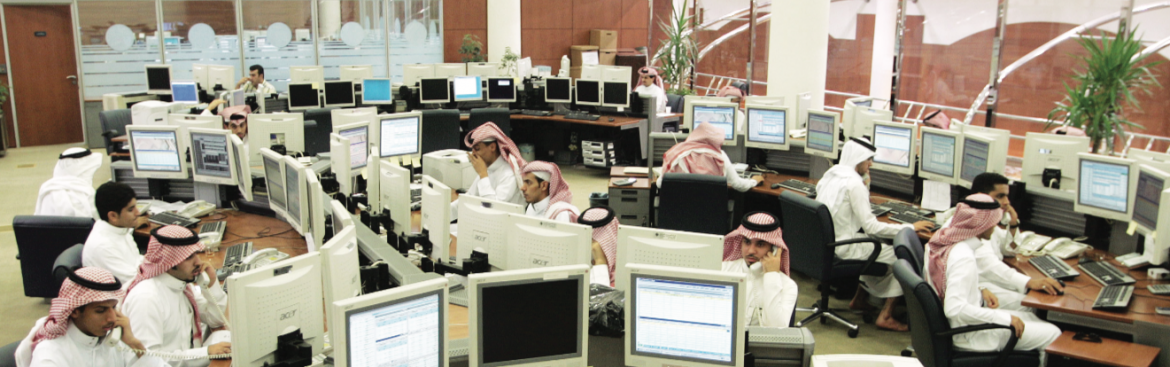
So, you are an emerging markets investor, or concerned about the volatility in the US or European markets. If you have worries about a slowing of Chinese investments, or you believe a global financial bubble is about to burst, you may want to consider pouring some of your assets into the number one emerging market in the Middle East: Saudi Arabia.

Experts say the safest emerging markets are those which are flush with liquidity. This allows investors to keep investing and buying, even when an emerging market undergoes a correction.

Case in point: Saudi Arabia and the GCC. Although the Saudi stock market and its smaller neighbors experienced substantial corrections in 2006, their fundamentals have remained strong and analysts said the drop was softened by their abundant liquidity. We all know the story of the oil price boom of the past two years and how it swept billions of dollars in windfall revenues into GCC economies, driving their stock markets up.

Until February 2006, GCC bourse indices broadly mirrored the upward price movements of oil. But then the investors caught on to the notion that price-to-earnings ratios of 30 to 40 times have moved beyond reason. It has been well reported how retail investors, who jumped on the bourse bandwagon late, lost their (borrowed) shirts in the downturn.

However, the second half of the story is that the fundamentals of corporate health—at least for blue chip firms—in GCC markets are today better than recent stock prices suggest. This has a lot to do with the way in which the high GCC oil revenues have percolated into the economy and created growth potential.

Should you trust Gulf markets, especially the Saudi Stock Exchange? You may want to take a cue from the prince, and this is not Machiavellian talk. In early February, Al Waleed bin Talal, nicknamed by Time magazine as the Arabian Warren Buffett, announced that his company, Kingdom Holding Company (KHC), has approved a plan to invest around $2.5 billion in the Saudi stock market. The money will mainly go to the banking, media and real estate sectors.

Middle East markets trending upward despite volatility

Still concerned? It is true that some Saudi investors in spring 2006 tried to prop up the Saudi bourse through loudly-announced share buying that slowed the slide but could not stop it. But this is different.

Al Waleed’s modus operandi is to buy strategic stakes in global brand name companies during times of distress on the stock exchange, and to work closely with management to engineer a turnaround. Al Waleed sees the markets in the Middle East, where most of his money was being invested since 2004, as “trending” upward.

Al Waleed’s confidence appears to be well-placed, as the latest figures of corporate earnings for the listed companies have registered strong and consistent growth in the last five years. At $458 billion, the Tadawul Stock Exchange is the fifth-largest in market capitalization within the global emerging market universe, and the most liquid.

After a 32% drop in market capitalization as of early 2006, valuations improved and positive projections are expected for the next five years. SABIC, the petrochemical and construction company for example, is selling at 15 times the expected 2006 earnings, down from a peak of 40. American and European banks, which have long scoured GCC countries almost exclusively to reel in high net worth clients, are increasingly paying attention to the development of these markets. The analysts of these global banks now recommend bouquets of strong but undervalued Saudi companies.

Sound good? There’s just one catch: To invest you must be a Saudi resident. So start making friends in Riyadh.

FADI CHAHINE is the Managing Editor of Regional Press Network (RPN)

March 1, 2007 0 comments
0 FacebookTwitterPinterestEmail
Comment

The battle for the South

by Nicholas Blanford March 1, 2007
written by Nicholas Blanford

The battle is on for hearts and minds in South Lebanon. Taking advantage of the devastating Hizbullah-Israel war last summer, the government of Prime Minister Fuad Saniora is hoping to undercut Hizbullah’s traditional dominance of the border district through a two-pronged approach of external financial assistance and international diplomacy.

The former is being conducted through a novel scheme of allowing nations to “sponsor” the reconstruction of southern villages. The purpose of direct funding is to bypass the state’s turgid bureaucracy and allow money to reach where it’s needed with minimum delay.

According to government-compiled statistics obtained by Executive, as of February 8, 2007, $145.5 million has been pledged to fund the reconstruction of 241 villages in South Lebanon and the western Bekaa; foreign direct funding accounts for $121.1 million of the total. The largest contributor is Saudi Arabia with $64.9 million for 42 villages, followed by the United Arab Emirates with $23.2 million for 16 villages and Kuwait with $19.2 million for 17 villages.

Gulf sheikhdoms rebuilding the South

Separately, Qatar is funding the reconstruction of four towns and villages in the border district—Bint Jbeil, Ainatta, Aitta Shaab and Khiam. Qatar has so far provided $34 million in housing assistance, according to the government figures. The Council of the South estimates total damage in the four towns at $124.5 million.

Apart from Syria, which is sponsoring two villages with a $3 million contribution and Indonesia which also is sponsoring two villages with $784,000, all the state sponsors are from the Gulf.

The political ramifications of the state sponsorship are not lost on Hizbullah. Indeed, it is especially ironic that Qatar—a country that houses the largest US base in the Middle East and has economic relations with Israel—is sponsoring the reconstruction of four towns in South Lebanon where Hizbullah fought its most stubborn defense against the Israeli onslaught last summer. Among the 42 towns and villages being sponsored by Saudi Arabia are Hizbullah strongholds such as Nabatieh and Zawtar Sharqiyeh.

Hizbullah has decided to bite its tongue and say nothing about the sources of funding, although it is fully aware that the motives behind it are not purely altruistic. By allowing key Sunni Arab countries a stake in the villages of the South, the government is hoping to chip away at the district’s reliance on Iranian funds delivered through Hizbullah.

To that end, Seniora is promoting the idea of constructing community libraries in southern villages complete with internet access to potential sponsor countries. In a recent conversation, Seniora explained to me that he hoped to open up the villages to the outside world through the internet.

Seniora’s preoccupation with South Lebanon is evident from a military map he keeps on a stand in the corner of his office in the Grand Serail. The map is covered in a red rash of dots marking Israeli cluster bomb strikes during last summer’s war.

The prime minister has invested much of his diplomatic and political energy in trying to convince the international community, chiefly the Americans and leading European nations, of the wisdom of an Israeli withdrawal from the Shebaa Farms. His seven-point plan—drawn up during the war as part of the negotiations over what became UN Security Council Resolution 1701—recommends that the Farms be turned over to the jurisdiction of UNIFIL pending a formal agreement between Beirut and Damascus on the sovereignty of the 25-square kilometer mountainside.

Resolving Shebaa Farms a necessity

Resolving the “bleeding wound” of the Shebaa Farms has become a cornerstone of the government’s foreign policy, Seniora says, and he wastes no opportunity to raise the subject with his international interlocutors.

“I don’t think there is an official in the world that has not heard of the Shebaa Farms,” he told me recently in an interview.

In 2000, the UN ruled that the Shebaa Farms is Syrian territory occupied by Israel, and that the Jewish state was not required to abandon the mountainside to fulfill Resolution 425 which called for an Israeli pullout from all Lebanese land.

It is a mark of Seniora’s diplomatic tenacity that the UN has agreed to take another look at the sovereignty of the Farms and to assess whether a modus vivendi can be reached that is satisfactory to all parties.

UN cartographers are presently attempting to delineate the geographical perimeters of the Farms, after which it will be up to the UN to assess what do next. Seniora hopes that an Israeli withdrawal from the Shebaa Farms will remove the last raison d’etre for Hizbullah’s military wing. What is the need for a resistance if there is no longer any occupation to resist?

However, Hizbullah long ago finessed this argument by declaring that the resistance is required for as long as Israel remains a threat to Lebanon. Such a nebulous, open-ended condition means that Hizbullah would retain its arms until at least the conclusion of a comprehensive Middle East peace—far longer than Seniora and his political allies care to contemplate.

Seniora believes that the level of foreign support for his government will be measured by the international response to his Shebaa Farms initiative. “This is one of the very important tests of support for this government. Economic support is essential, but not sufficient. We need the political support as well,” he says. He added that he was seeing the “first signs of readiness” from the international community to support an Israeli withdrawal.

Seniora’s actions may be limited

But that readiness may not translate into action. The US is reluctant to give Israel the necessary coercive shove for a withdrawal from the Shebaa Farms because of the fragility of Israeli Prime Minister Ehud Olmert’s domestic standing. The Olmert government may well yet collapse due to the continuing political backlash from the Hizbullah-Israel war. That argument is heightened by the fact that Israel can be offered no guarantees that Hizbullah will disarm if the Shebaa Farms are liberated.

“Hizbullah’s arms are an obstacle to the [proposed Israeli withdrawal from the] Shebaa Farms rather than a solution,” one Western ambassador told me recently.

For now, Hizbullah has chosen to fight its battles on a political level against the government in Beirut rather than militarily against Israel from its traditional stomping ground south of the Litani river. But that may not last much longer. Hizbullah has indicated it is willing to mould some form of national resistance force—similar perhaps to the Hizbullah-trained and -directed multi-faith Lebanese Resistance Brigades, which participated in attacks against Israeli occupation forces in the late 1990s.

If the confrontation between the government and the opposition continues to stagnate, Hizbullah may begin to look anew at the military possibilities in the South—further complicating Seniora’s efforts to reach a peaceful solution.

NICHOKAS BLANFORD is a Beirut-based journalist and author of Killing Mr Lebanon – The Assassination of Rafik Hariri and its impact on the Middle East

March 1, 2007 0 comments
0 FacebookTwitterPinterestEmail
Comment

US presidential race heats up

by Claude Salhani March 1, 2007
written by Claude Salhani

For the first time since 1952—since Dwight D. Eisenhower was in the White House—neither the incumbent president nor his vice president is in the running for the top job in the country. George W. Bush will have served two terms, making him constitutionally ineligible, and Vice President Dick Cheney? Well, realistically, his chances of being elected are about as good as his hunting skills.

The result is that the floor is wide-open and there is no shortage of candidates from both sides. But who would be most beneficial for the Middle East, especially as the Arab lobby in Washington is still light-years away from being able to influence a presidential election?

On the Democrat’s side, the leading contenders are Hillary Clinton, a senator for New York; Barak Obama, a senator from Illinois; and Sens. Joe Biden of Delaware and Chris Dodd of Connecticut. Another candidate outside of Congress is John Edwards, the former one-term senator from North Carolina and vice presidential candidate in the 2004 elections.

On the Republican side there is Sen. John McCain of Arizona; Sen. Sam Brownback from Kansas; former mayor of New York, Rudy Giuliani; Massachusetts Governor Mitt Romney; and possibly even former House Speaker Newt Gingrich—to name just a few.

While it is still far too early to draw any conclusions on the Republican side, early polls place McCain and Giuliani as the leaders of the pack, although the buzz around Republican circles predict the party’s nomination is likely to go to a more conservative candidate; Romney is a possibility, but his Mormonism might not play will with evangelical voters, who tend to be suspicious of the faith.

So far, most candidates have avoided touching on the morass that is Middle East politics, other than to weigh in on the war in Iraq, viewed from a domestic perspective; should the US stay the course, as President Bush advocates, or declare victory and bring the troops home? Without getting into too much detail, overall, Democrats favor a pullout while Republicans say the US cannot afford to abandon Iraq. Although the Democrats realize that quitting Iraq cold-turkey is unrealistic, many Republicans recognize that the war will not be won through military means alone.

Regardless of who grabs their party’s nomination as a first step in the battle for the ’08 presidency, and ultimately wins the hearts and minds of the American people, Iraq will remain a major player in the US presidential campaign.

From Hillary Clinton to John McCain, Iraq, and now Iran, are the top items of concern when it comes to foreign policy. As for the crux of the Middle East issue—the Arab-Israeli dispute—most presidential contenders are happy to steer clear of the thorny subject as long as possible. That is usually until the televised debates, when the front-runners have to demonstrate their understanding of world politics and how they would handle those issues.

So where does that leave the Middle East? Pretty much in the same mess it has been in, except maybe for Lebanon.

While most, if not all presidential contenders—Democrats and Republicans alike—are likely to come out in support of Israel in any Mideast dispute, they are also more likely to continue Washington’s support of pro-democracy movements, while mistrust of Damascus should play in Beirut’s favor and continue to ensure US support for a legitimate Lebanese government.

The bad news for Lebanon, however, might be in the new American president’s support of Israel. Again, from Hillary Clinton on the Democrat’s side to Rudy Giuliani or John McCain on the Republican’s, chances are they will show greater support for Israel than for Lebanon or the Arab world. Seeing that Israel is not about to forgive or forget its most recent entanglement with Hizbullah in Lebanon last August, there are good chances that the Jewish state will opt for a re-match, once a new occupant is in the White House.

Bush continues to back Lebanon’s government. In his State of the Union last January, Bush made a point of mentioning the assassination of Industry Minister Pierre Gemayel, stressing his administration’s support of a free and democratic Lebanon. In a private discussion with a group of journalists and think tank analysts in Washington in February, Amin Gemayel defended Bush, declaring: “Say what you want about Bush, it was thanks to his support that Syrian troops finally withdrew from Lebanon.”

CLAUDE SALHANI is International Editor and a senior political analyst with United Press International in Washington. 

March 1, 2007 0 comments
0 FacebookTwitterPinterestEmail
GCC

Dubai aims to buy Liverpool giants

by Executive Staff February 23, 2007
written by Executive Staff

Dubai looks set to enter the first division of world football, with news that the state-owned corporation Dubai International Capital (DIC) is closing in on a buyout of English Premier League giant Liverpool.

In a deal worth an estimated $880 million, DIC would acquire the majority stake in the club, winner of 18 English league titles and a number of European trophies, including the 2004-05 Champions League.

Liverpool’s chief executive officer, Rick Parry, said on Jan. 15 that DIC was in the process of putting the finishing touches to the details of its bid and completing the legal work associated with the offer.

“It is a case of finalizing the due diligence and pulling everything together, which we hope will be completed relatively quickly,” Parry said during an interview with British media. “A huge amount of work has been going on from both parts. I imagine we’ll have something to say relatively soon on that.”

Not the first foreign owners in football

If the deal goes through, as all parties expect it to, it would not be the first time that overseas buyers have gained control of one of English football’s icons. Both Manchester United, the current Premier League leaders, and Chelsea, the reigning champions, are foreign-owned, by American and Russian concerns respectively. A number of other teams in the English leagues have large shareholdings in foreign hands.

Owning a football team does not just mean getting the best seats at games. Should the DIC buyout of Liverpool go ahead, the Dubai investor would have a billion-dollar business on its hands and own an internationally recognized brand. Television rights, shirt sales, merchandising and promotional value are all the up side of such a deal.

Of course, football is a high-risk enterprise, and failure on the pitch can bring losses away from the playing field. If it becomes the owner of Liverpool, DIC will be expected to invest heavily in star talent, as well as in the new stadium the Reds have long been planning.

Football is increasingly becoming big business in Dubai, with a number of top European clubs drawn to the emirate during their mid-season breaks. Taking advantage of quality training facilities and the mild weather, teams such as Germany’s Bayern Munich, Benfica of Portugal and Italian outfit Lazio came to Dubai in January to both sharpen their training regime and recharge their batteries. Such visits not only earn money for the local tourism industry but also help promote Dubai in the overseas media, which always keeps a close watch on the doings of their sides.

Dubai is taking the task of becoming a football venue seriously, having poured millions into staging a showcase competition early in the new year. The Dubai Football Challenge 2007, which kicked off on January 8, pitted the national sides of the UAE and Iran and foreign teams such as German Bundesliga Hamburg SV and VfB Stuttgart against each other.

Played at Dubai’s showcase Maktoom Stadium, the three-day tournament drew good crowds and rated highly on television.

According to Jochen Schneider, VfB Stuttgart’s manager and sport administrator, the success of the first Dubai Football Challenge will enhance the appeal of the emirate for leading teams in the future.

High class, global appeal

To get such high class teams for the first tournament is testament to its global appeal, and the attraction of Dubai to big teams, he said. “We came to Dubai in January 2006 and that successful trip has been part of our domestic success throughout last year.”

Increasing the profile of sports such as football in Dubai is part of a wider strategy to expand the economy’s base as well as the emirate’s attraction to visitors. More than $2.5 billion is being spent to develop Dubai Sports City, a sporting and tourism project that aim to offer world-class facilities and act as a springboard for Dubai’s bid to host the 2016 Olympics.

Billing itself as the world’s first fully integrated purpose built sports city, the development will feature four major stadiums, and offer facilities for sports such as football, cricket, tennis, golf, rugby, athletics, swimming and hockey. One of its features will be a Manchester United Soccer School, continuing the strong push towards promoting football in the region.

February 23, 2007 0 comments
0 FacebookTwitterPinterestEmail
GCC

GCC sees insurance industry booming With Dubai leading the way

by Executive Staff February 23, 2007
written by Executive Staff

In tandem with the emirate’s development, Dubai’s insurance industry is set to reach new heights over the next few years. Meanwhile, throughout the Gulf Cooperation Council (GCC) the insurance sector is booming.

According to a recent study published by Nexus Insurance Brokers, the region’s largest independent financial adviser, the GCC insurance industry will enjoy a period of strong and sustainable growth, fuelled by a surge in regional demand for insurance products. The sector is expected to grow by some $2 billion by 2010, reaching $7.1 billion. In particular, it seems the UAE insurance sector is currently growing by around 20% per annum.

With over 47 insurance companies, 23 of which are locally owned, the UAE has the largest insurance sector in the region. Most of these companies are based or have an office in Dubai. The sector may appear overcrowded, but a number of small insurance companies have low risk retention and act more as captive agents than real insurance companies. In addition, risk is offset by international reinsurance companies, which play an active role in the region. Meanwhile, some insiders predict mergers between small insurance companies in the near future.

The latest official figures on the insurance sector in 2005 released by the Ministry of Economy and Planning indicate that premiums rose from $1.29 billion in 2004 to  $1.85 billion in 2005, accounting for a healthy increase of 30%. A breakdown of premiums by class of insurance reveals that the non-life segment made up more than 74% of premiums. However, the life segment is expected to grow faster over the next few years.

While local firms dominate the non-life market and collect 75% of premiums, foreign firms control the life insurance market with a similar share with giants such as Arab Insurance Group, American Life Insurance Company (Alico), Axa-Norwich Union or Allianz. Their products are mainly sold to Western expatriates.

In the non-life or general insurance market, a breakdown of segments indicate that accidents and liability account for 61.8%, fire 16.9%, the land, sea and air transport 16.7% and medical 7.6%.

Despite this, UAE market is underdeveloped

Overall, the insurance market in the UAE remains underdeveloped by international standards. Indeed, although one of the highest in the region, the insurance premium density per capita, or the average amount of money spent on insurance products per person per year, stood at $444 in the UAE, compared to $4,508 in the UK or $5,716 in Switzerland.

The GCC governments have played an instrumental role in promoting the benefits of insurance policies. In July this year, the UAE introduced a new health insurance scheme in Abu Dhabi, a move which many say will undoubtedly boost and revitalize the insurance industry for years to come. This new product is finally becoming more acceptable in the GCC. Under the scheme, companies with a staff of more than 1000 will have to provide health insurance for their employees and their close families. An estimated 500,000 people will benefit from the plan, including low-wage workers. The scheme is set to be introduced in Dubai in early 2007.

The insurance industry as a whole is already starting to reap the benefits of this rejuvenating plan, set to expand given the predominantly young population.

Aside from health insurance, a new regulator will also emerge in 2007. Although still under the auspices of the Ministry of the Economy, the new authority will work to improve relations between insurance brokers and companies, as well as consider new solutions for motor insurance and professional indemnities for each sector.

February 23, 2007 0 comments
0 FacebookTwitterPinterestEmail
GCC

UAE’s ‘du’ service Tackles foes

by Executive Staff February 23, 2007
written by Executive Staff

This year saw new UAE telecoms operator Emirates Integrated Telecommunications Company, branded as du, secure its customer base ahead of its expected launch of operations in February.

Du, which launched a campaign allowing customers to book their phone numbers with the company in November, has received approximately 500,000 subscribers booking 750,000 numbers. Under the campaign, customers are allowed to keep their old phone number but must change the prefix from ‘050’ to ‘055’. The ease of switching operators and the option for customers to retain their mobile number seems to have had a positive impact on du’s efforts to build a substantial customer base.

Etisalat and du square off

However, the imminent launch of du’s operations has led the existing operator, Etisalat, and the newcomer to adopt aggressive marketing strategies to showcase their new products, services and pricing. The mobile penetration rate in the country is extremely high, with estimates placing it at 125%—the highest mobile penetration rate in the Arab world. It also has internet penetration levels of 60%. Against such a backdrop, competition between du and Etisalat is set to be fierce.

Some analysts fear that this will not dramatically impact prices. Osman Sultan, CEO of du, said that the company will be looking to grab a 30% market share within three years of launching operations. However, this will not be achieved through a price war. According to Sultan, “We have a great deal of respect for Etisalat as a strong regional player with a very deep pocket. We will not be getting into a price war with them as such cut-throat competition would not be in the interest of either company.” However, Wisam Francis, BIS Shrapnel’s project manager for the Middle East telecom sector believes that du will struggle to achieve its ambitious targets, suggesting that it will only achieve between 10-20% market share up to 2009.

Du has been investing heavily in its infrastructure and human resources in preparation for the commencement of operations. The company has also been keen to make its mark ahead of the launch, highlighting its next-generation network and pricing structure. Particular areas of emphasis for both Etisalat and du are broadband and mobile television, both of which are expected to gain prominence in 2007. Du has also stressed its per second pricing strategy that distinguishes it from its competitor Etisalat. All customers will have the option to be charged on a second by second basis on all mobile voice calls. Sultan said that this was a particularly important development because, “It is only fair that our customers pay for precisely what they use.”

Etisalat is also preparing for the arrival of the new operator by readjusting its pricing structure. One key area that Etisalat is looking to address is international calls. The company is going to offer off-peak rates to business customers on their international calls, constituting a 35% discount on current rates. Ahmad Abdul Karim Julfar, the chief operating officer at Etisalat, seemed to concede that this decision was driven by the changing nature of the market in the UAE and recent developments. He argued, “In light of the current market environment we have reviewed our services and rates to ensure that the true cost of the service is more accurately reflected in the charges.”

VoIP still a controversial technology

However, it would appear that the rationale behind cutting prices on international calls is not simply driven by the imminent arrival of a new mobile operator in the UAE. Etisalat is also taking into account the potential changes to regulation on Voice over Internet Protocol (VoIP) in the emirates. This issue continues to dominate the telecommunications sector in the country. As it stands, the technology is still illegal with services such as Skype blocked in the UAE.

It has been rumored that the national regulatory body, the Telecommunications Regulatory Authority (TRA) is set to legalize VoIP. However, it has issued a rebuttal this week saying that the technology is still under review. The TRA’s manager for administration and public relations, Adnan al-Bahar told the local press, “Until the regulatory framework is in place VoIP is illegal.”

Nevertheless, it would appear that it is only a matter of time until the regulatory framework is put in place issuing in the legalization of VoIP. This is seen as a particularly important growth area in the telecommunications sector in the Middle East and North Africa region. According to Luke Kabamba, the Dubai-based ESM business unit head for IT software management company CA’s Europe Middle East and Africa eastern markets, The Middle East market has witnessed a huge surge in the last couple of years and many companies today have plans of investing in VoIP, which not only helps increase customer satisfaction and staff efficiency but also simplifies and reduces the cost of managing voice communication systems.

February 23, 2007 0 comments
0 FacebookTwitterPinterestEmail
GCC

UAE, Oman link exchanges

by Executive Staff February 23, 2007
written by Executive Staff

In early January, the Abu Dhabi Securities Market (ADSM) signed a cross-listing agreement with the Muscat Securities Market (MSM), reflecting its will to attract foreign investors, improve its performance and strengthen its links with regional markets.

The agreement between the ADSM, the MSM and the Muscat Depository & Securities Registration Company allows for the listing of Omani companies in Abu Dhabi. Oman and Emirates Company will be the first Omani company to list in the UAE.

According to Abdullah al-Nabhani, the general manager of Muscat Depository & Securities Registration Company, the establishment of an electronic link between the two Gulf markets has fostered greater interest in the UAE markets. “Since MSM established the electronic link with ADSM, we have seen a huge increase in demand for UAE securities in Oman. We hope this agreement will help to not only meet this demand, but also offer investors the opportunity to diversify their risks by having more choice.”

The ADSM currently has 54,000 Omani investors registered making up 7% of the total and contributing $62.62 million to the market. The agreement with Muscat is part of a wider strategy on behalf of the ADSM to broaden its investor base and the number of foreign companies listed on the market. According to Rashed al-Baloushi, the ADSM’s acting director general, “As long as we continue to bring international companies and more diverse investment opportunities to the UAE local markets, we are helping investors to spread their risks, contributing to long-term market stability and ultimately furthering economic growth in the UAE.”

Similar agreements

Qatar, Pakistan and Jordan already have similar agreements with the ADSM, facilitating cooperation and dual listing on their respective markets. Pakistan was the first non-Gulf country to sign such an agreement with the Abu Dhabi market. As a result of the memorandum of understanding between the ADSM and the Central Depository Company (CDC) of Pakistan, 10 Pakistani companies have already received approval for cross listing.

This agreement paves the way for further investment between the two countries. There are currently 2,200 Pakistani investors registered on the ADSM, with investments worth $13.61 million. However, investment from the UAE to Pakistan is seen as a key consideration in this agreement. Al Baloushi believes that this agreement will help to consolidate Emirati investment into Pakistan. “Abu Dhabi is a significant investor in Pakistani companies so it is important for us to cement close ties between our markets. We also look forward to working closely with the three Pakistan stock exchanges as we implement our best practice program and continue to improve the regulation and governance standards in the UAE financial markets,” he said.

Hanif Jakhura, the chief executive of the CDC, also pointed out that the agreement would facilitate investment from the Pakistani expatriate community into their home markets.

Similarly, the agreement between the Securities Depository Center of Jordan and the ADSM is a step forward for facilitating investment relations between the two markets. Arab Bank is likely to be the first Jordanian company listed on the Abu Dhabi market. The presence of Jordanian investors in the UAE is already well established with approximately 7000 investors registered and investments amounting to $168.8 million.

Seeking more arrangements

Al-Baloushi said that the ADSM is seeking out more agreements along the same lines. Khaled al-Suwaidi, the manager of ADSM’s listed companies department, also recently told a conference in Singapore that attracting foreign investment is a strong priority for Abu Dhabi’s stock market. He further laid out the measures taken by the ADSM to bring the market into line with international best practice. The ADSM has suggested a corporate governance code for all listed companies as well as a UAE trust and custody law.  

These measures are seen as particularly important to attract foreign and institutional investors. Currently, foreigners can invest in 38 out of the 61 listed securities on the ADSM and account for 40% of investors in the market. Al-Suwaidi believes that this figure will increase because of the positive economic development prospects for the emirate.

In spite of the current slump in the market, al-Suwaidi believes the economic conditions of Abu Dhabi are conducive to investment. “Abu Dhabi’s progressive economic agenda, promoting diversification, liberalization and an enhanced role for the private sector, demonstrates that the long-term fundamentals for growth are in place,” he said. 

February 23, 2007 0 comments
0 FacebookTwitterPinterestEmail
Levant

Jordan’s tourism industry takes hit But Amman optimistic

by Executive Staff February 16, 2007
written by Executive Staff

Figures released at the end of December 2006 by the Jordanian Ministry of Tourism for the first nine months of 2006 showed a 7.4% rise in the total number of tourist arrivals, with 4.9 million visitors entering the country. The vast majority of these were from Arab states, with Jordan’s near neighbors contributing 3.75 million tourists to the overall arrivals, with just under 1 million coming from Saudi Arabia.

However, while there was also an increase in the number of Europeans and Americans visiting the kingdom, up by 7.9% and 30.8% respectively, the ministry figures showed a far greater fall off in the amount of time these tourists stayed in Jordan. The amount of time spent by European tourists fell by 26.8% compared to the January to September period in 2005, while there was a similar drop among US visitors. There was also a marked decline in the number of package tours from both Europe and the US, down by 25.8% and 74%.

Another interesting statistic was that were far fewer visitors to Jordan’s recognized tourist sites—the ancient ruins and museums for which the country is famed—with numbers down by more than 20%.

Petra sees fall off in visitors

This was borne out by news that Jordan’s best-known tourism attraction had seen a dramatic fall off in visitor numbers. The ancient city of Petra, a marvel hewn out of living rose red rock dating back thousands of years that serves as one of the symbols of Jordan, drew just over 359,000 foreign visitors last year, 12.7% down on 2005.

Officials blamed the decline on political tensions in the region, particularly Israel’s military strike against Lebanon, launched in July. That month, Petra saw a 30% fall in tourist numbers, followed by a 52% drop in August compared to the same months in 2005, according to figures released on January 12.

Ironically, news of Petra’s waning popularity came only days before the announcement that the city had been short-listed in an international competition to name the “New Seven Wonders of the World.”

However, the drop in numbers of package tour visitors and those visiting tourist sites does not necessarily mean that Jordan is losing its appeal as a holiday destination. After all, both overall arrivals and revenue from the sector were up last year. What these conflicting figures may represent is a shift in the kingdom’s tourism industry, one towards the higher end of the international market.

Major investments soon to pay off

The past few years have seen major investments in Jordanian tourism, mainly coming from Gulf states. The latest, and indeed Jordan’s largest ever property and tourism development, is a joint project between Saudi construction firm Saudi Oger and Saraya Aqaba for a $995 million complex on the Red Sea near Aqaba. The project, to be built around a man-made lagoon, will feature shopping, dining, entertainment, hotels, freehold accommodation and cultural facilities.

Other major developments, including a number in Amman, have targeted Arab buyers not put off by the large price tags on villas and luxury apartments.

A recent report prepared by the Capital Investments Bank and the Jordan Center for Public Policy Research and Dialogue predicted a continuation of growth for both the Jordanian economy and the country’s tourism sector. The report said that not only would the industry overcome the effects of the war in Lebanon, but also in the longer term tourists from the region may tend towards choosing Amman over Beirut as a holiday destination.

Despite the damage done to both its infrastructure and visitor confidence by the war with Israel, Lebanon still managed to attract higher levels of overseas tourism investments than Jordan in 2006. Syria too has seen a sharp rise in FDI flowing into its tourism industry while Egypt remains the region’s giant in the sector.

February 16, 2007 0 comments
0 FacebookTwitterPinterestEmail
Levant

Turks’ energy

by Executive Staff February 16, 2007
written by Executive Staff

Turkey’s importance as an energy conduit feeding Europe received fresh attention in January as Greek Development Minister Dimitris Sioufas announced that the Greek section of a 285-km Greece-Turkey natural gas pipeline —bringing gas from Azerbaijan through Turkey to Europe—would be running by May 2007.

With the much-heralded Baku-Tibilisi-Ceyhan (BTC) pipeline already supplying Europe with oil from fields in the Caucasus, Europeans are now looking forward to a parallel inflow of gas, bolstering Turkey’s importance as an energy hub feeding the continent.

“When the pipeline is operational, a major step will be taken in the implementation of a natural gas corridor between Greece, Turkey and Italy,” confirmed Sioufas. Drawing from Azerbaijan’s 400 billion m3 Shah Deniz gas field, and eventually from other sources, is intended to reduce European reliance on Russian energy supplies. Indeed, Russia’s use of its vast energy supplies as a political tool to bully energy-reliant former Soviet states in 2006 caused justifiable concern in Europe, which imports 40% of its gas from Russia. Austria and Hungary were among those countries that registered a drop in supply in January 2006 as a result of Russia’s strong-arm tactics. The US accused the Russian government of using pricing as a political weapon against the likes of Georgia, Ukraine and Belarus.

Regional agreements against Moscow

While Moscow’s behavior has led Europe to diversify its sources of supply, it has also forced Turkey and its neighboring states to adjust their own energy plans. According to an agreement reached between Azerbaijan, Georgia and Turkey in 2001, the Turks are to receive almost 3 billion m3 of gas per year from the Shah Deniz field through the Baku-Tbilisi-Erzurum pipeline. But with the Georgians and Azerbaijanis concerned about minimizing imports of increasingly expensive Russian gas, Ankara has agreed to reduce its quota in 2007, which will be consumed by its two partners. Negotiations as to what the final quotas will be for the three states continue.

Yet, contrary to the experience of its smaller neighbors, Turkey has been able to resort to Russian supplies—which satiate the bulk of local demand—to fill its own energy gap. In mid-December, Iran reduced the daily supply of natural gas flowing to Turkey to 7 million m3, in spite of a bilateral agreement pledging 27 million m3 per day. Cold weather conditions, Tehran claims, led to the move. To offset the loss, the Turkish Ministry of Energy and Natural Resources increased the gas purchases from Russia’s Blue Stream from 27 million m3 to 34 million m3 per day. The move underlines Turkey’s ability to increase supplies from its main source when those from alternative markets falter.

Multiple taps for Turkey

Still, Turkey’s real strength as an energy conduit to Europe derives from the fact that it is not only able to tap reserves in Central Asia and the Caucasus to lessen dependency on Russian energy, but is also able to channel supplies from the Middle East—as demonstrated by the Arab gas pipeline that will run from Egypt through Jordan, Lebanon and Syria to Turkey, with supplies flowing on to Europe. Continental consumers will be glad to have a greater supply of Iranian energy to wean them off Russian fuel, notwithstanding concerns over Iran’s nuclear program. The Nabucco project, a 3,000 km pipeline channeling Iranian and Caspian natural gas to Europe at a cost of 6 billion euros, testifies to Europe’s concern over diversifying energy sources. A memorandum of understanding on energy cooperation between Iran and Turkey is expected to increase trade between the two states from $5 billion to $10 billion.

As Turkey continues to develop an increasingly intricate energy network and capitalizes on its geographical position as a transit route, Ankara may also be tempted to flash the energy card to gain some leverage over Europeans. Drawing parallels with Russian behavior would surely be misplaced, not least because Turkey depends on energy imports itself and is largely pro-Western. But the prospect of Ankara taking a less cooperative approach on energy matters should not be written off in the case of the EU and Turkey experiencing a larger fallout. Turkey, quite pointedly, continues to follow its own independent energy policy.

February 16, 2007 0 comments
0 FacebookTwitterPinterestEmail
  • 1
  • …
  • 596
  • 597
  • 598
  • 599
  • 600
  • …
  • 708

Latest Cover

About us

Since its first edition emerged on the newsstands in 1999, Executive Magazine has been dedicated to providing its readers with the most up-to-date local and regional business news. Executive is a monthly business magazine that offers readers in-depth analyses on the Lebanese world of commerce, covering all the major sectors – from banking, finance, and insurance to technology, tourism, hospitality, media, and retail.

  • Donate
  • Our Purpose
  • Contact Us

Sign up for our newsletter

    • Facebook
    • Twitter
    • Instagram
    • Linkedin
    • Youtube
    Executive Magazine
    • ISSUES
      • Current Issue
      • Past issues
    • BUSINESS
    • ECONOMICS & POLICY
    • OPINION
    • SPECIAL REPORTS
    • EXECUTIVE TALKS
    • MOVEMENTS
      • Change the image
      • Cannes lions
      • Transparency & accountability
      • ECONOMIC ROADMAP
      • Say No to Corruption
      • The Lebanon media development initiative
      • LPSN Policy Asks
      • Advocating the preservation of deposits
    • JOIN US
      • Join our movement
      • Attend our events
      • Receive updates
      • Connect with us
    • DONATE