• Donate
  • Our Purpose
  • Contact Us
Executive Magazine
  • ISSUES
    • Current Issue
    • Past issues
  • BUSINESS
  • ECONOMICS & POLICY
  • OPINION
  • SPECIAL REPORTS
  • EXECUTIVE TALKS
  • MOVEMENTS
    • Change the image
    • Cannes lions
    • Transparency & accountability
    • ECONOMIC ROADMAP
    • Say No to Corruption
    • The Lebanon media development initiative
    • LPSN Policy Asks
    • Advocating the preservation of deposits
  • JOIN US
    • Join our movement
    • Attend our events
    • Receive updates
    • Connect with us
  • DONATE
GCC

Bonding with China & India

by Executive Staff January 2, 2007
written by Executive Staff

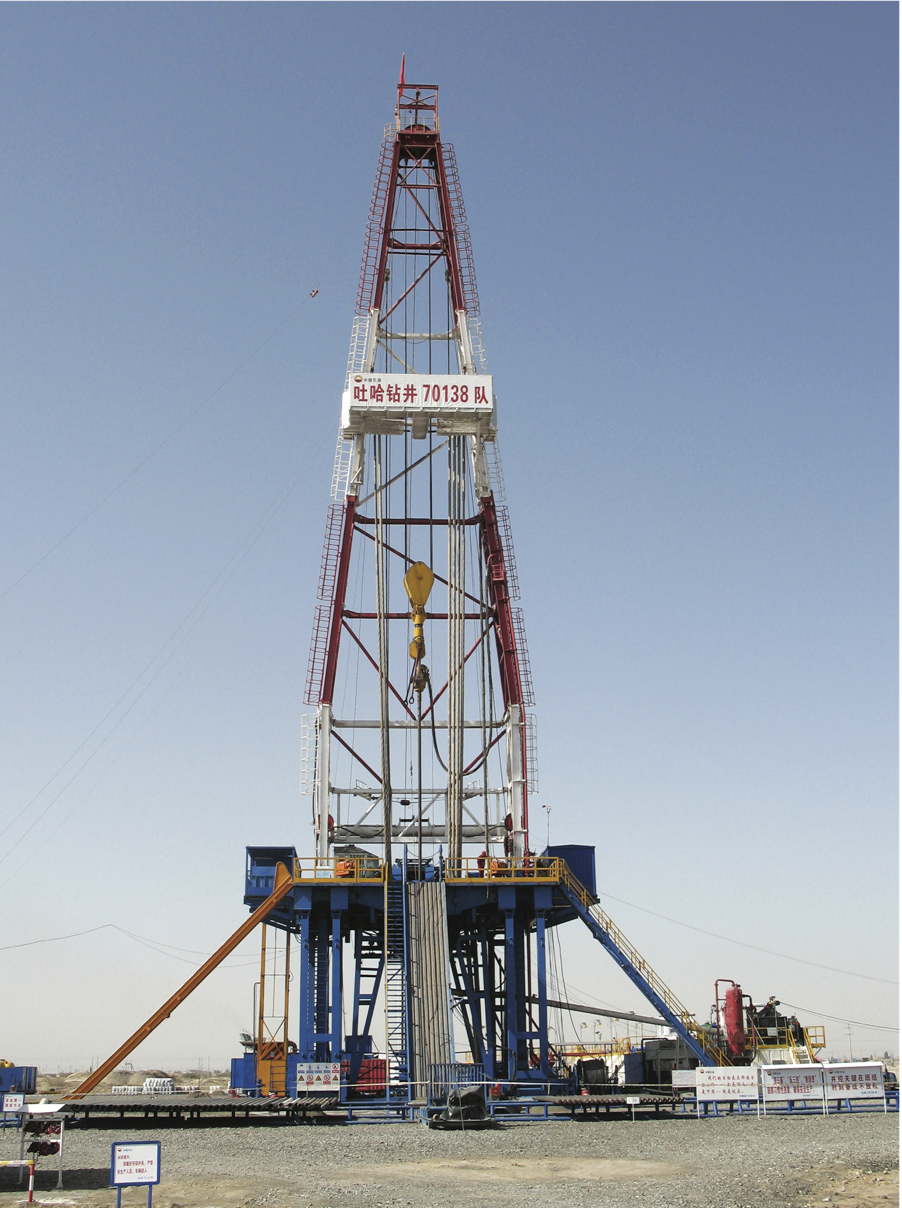
In December’s Arab Strategy Forum 2006 in Dubai, there was much discussion around the improving ties between the UAE and the Asian giants. While this may not be a new phenomenon, two-way ties have recently flourished between China and India, and the Gulf Cooperation Council (GCC) countries.

In a context where both India and China are seeking energy security, the GCC is playing an instrumental role in supplying both countries with crude oil and LNG (Liquefied Natural Gas). China and India also offer significant investment opportunities for UAE-based companies. Similarly, a great number of Chinese and Indian firms have taken root in Dubai. China and India have become the UAE’s main trading partners, with China recently overtaking India for the top position.

At the recent India-Arab World CEO summit, Kamal Nath, India’s minister for commerce and industry, announced that India and the GCC were in the process of establishing a Free Trade Area by 2007. In the meantime, the GCC is also in the final stage of talks to sign a similar agreement with China, also announced for next year.

The latest official figures indicate that bilateral trade between India and the UAE has grown steadily in recent years. Indian exports to the UAE reached $8.5 billion last year, up from $3.3 billion in 2002. UAE exports to India also grew strongly, from $956 million in 2002 to $4.3 billion last year.

Likewise, trade between China and the UAE has also boomed and reached $10 billion in 2005. In particular, China is Dubai’s main trading partner, with trade valued at $8.5 billion. In addition, it is estimated that bilateral trade between China and the UAE, for the whole of 2006, will reach $15 billion.

While the UAE primarily exports mineral products, mainly oil, and aluminium, it imports machinery, electrical and electronic goods from China, as well as textile products. These two sub-categories of imports account for around 60% of total imports.

Taking root in the UAE

Currently, some 1,000 Chinese firms are registered in the UAE and this figure is poised to increase over the next few years. But perhaps the most distinctive and symbolic feature of this Chinese presence in Dubai is leading property developer Nakheel’s Dragon Mart, the largest trading hub for Chinese products outside Mainland China. Inaugurated in 2004 by Sheikha Lubilliona al-Qasimi, UAE minister for economy and planning, the mart is jointly promoted by Nakheel and Chinamex Middle East Investment and Trade Promotion Centre and currently serves as a centre for activity in the Middle East for Chinese businesses.

Meanwhile, according to UAE official figures there are 6,000 Indian firms operating in Dubai, 10% of which are located in the Jebel Ali Free Zone and whose activities range from steel to IT. This figure is set to increase over the next few years. A visit in April this year by three high level delegations from the Indian States of Delhi, Punjab and West Bengal to the Jebel Ali Free Zone proved extremely valuable, as the delegates were able to fully appreciate the high quality of the environment for Indian companies to invest.

Reaping the benefits

Conversely, China and India have also benefited from the economic boom in the GCC, as these countries have started to invest massively in the two fast-growing economies. This can be attributed to the great number of investment opportunities offered in an array of sectors, from real estate and construction to manufacturing and IT.

While UAE-based investments in India have soared, Nath recently added that India was targeting investments from the Gulf to reach $2 billion over the next three years. UAE-based companies such as Emaar have already completed some major infrastructure projects such as the Convention Centre and the Golf Resort in Hyderabad. In addition, DP World is already operating six ports in India.

Similarly, China is getting a lot of attention from GCC investors. DP World already operates seven ports in China. Sultan bin Sulayem, Chairman of Dubai World, recently mentioned that Nakheel was considering developing high-end real estate projects in China due to strong demand. In addition, GCC investors have also shown interest in private equity investment in China. As a case in point, Jade Alternative Investment Advisors, an investment consultancy, has recently announced it intends to raise a $150 million fund to invest in private equity funds operating in China. Jade primarily serves Middle Eastern institutional and corporate investors.

January 2, 2007 0 comments
0 FacebookTwitterPinterestEmail
Levant

Turkey fishing for property buyers Home-seekers not biting

by Executive Staff January 2, 2007
written by Executive Staff

The number of real estate ads that leap out at you from Turkey’s weekend press testifies to the large supply of quality housing available in Istanbul these days. However, while real estate developers are looking for would-be consumers to take the bait, home-seekers are reluctant to bite.

Housing developers and construction companies point to a slowdown in the market. “Last year was an exceptional period, with a boom in housing sales,” said Teoman Metehan, CEO of Teknik Yapi, a leading construction and residential development company. “This year, there is difficulty in financing projects. In 2005, demand outstripped supply in up-market housing. Now, Turkey’s home-seekers are more sensitive to the price of real estate and weighing their options more carefully. A proliferation of housing development in Istanbul is providing greater choice for would-be home-owners.”

The housing market also felt the brunt of the spike in interest rates in May and June, encouraging families to delay plans to acquire housing loans, leading to a dip in demand for residential units. Now home-seekers are expected to delay their plans once again until the presidential and parliamentary elections have passed in 2007, and consumers feel confident that an extended period of market stability lies ahead, punctuated most importantly by lower interest rates. For Turkey’s yet-to-be legislated mortgage system to take flight, monthly interest rates need to decline to around 1%, insiders say.

“Monthly interest rates increased from 1.1% up to 2.5% after May,” said Yucel Ersoz, the general manager of real estate investment company Yapi Kredi Koray. “Now, they are around 1.7% to 1.8%, which is detrimental to home buying.”

Wishful thinking

Some home-seekers are also hoping for a reduction in real estate prices. A futile wish, observers say. “I don’t see a massive reduction in prices primarily because land is limited,” said Metehan, referring to the struggle of property-searchers to find attractive apartments close to downtown Istanbul. “In such up-market areas as Levent or Etiler, a 120m2 apartment in a 15 to 20 year old building would go for roughly $120,000 to $150,000 in 2000/01, with the same apartment fetching an estimated $250,000 today,” said an industrial insider. At that price, the flat may even require some refinishing and further decoration.

Real estate developers themselves are having increasing difficulty finding plots to develop close enough to the city center. This has not stopped companies from providing homebuyers with a helping hand to reduce the cost of acquiring property. “The vast majority of developers are subsidizing interest rates on loans to provide more favorable borrowing conditions. This is equivalent to a discount, in some cases as much as 20% to 30%,” said Ersoz.

Market analysts say that real estate developers offer these discount rates to register sales even for a smaller profit margin. Such is their desire to liquidate their investments and register a return.

Still, there is cause for optimism for firms in the business. Though construction companies and real estate developers are struggling for a share of the pie in the upper end of the housing market, delayed demand is likely to snowball. Insiders expect demand to be released in 2008 much as it was in 2005 – assuming that interest rates are appropriately low – spurring home-seekers to make new acquisitions.

While Istanbul’s well-heeled property-seekers have no need to hold their breath for the long-anticipated mortgage law, the new legislation will likely play an important role in fuelling a future property boom. The bulk of middle-income earners, who are forced to save, will be the main beneficiaries. Important is the fact that mortgage lending in Turkey counts for as little as 4% of GDP, representing some contrast to 55% for the US and 39% in the Eurozone. With an estimated 600,000 new home-seekers emerging every year, there is little doubt that Turkey’s real estate market has great potential.

January 2, 2007 0 comments
0 FacebookTwitterPinterestEmail
Levant

Opportunity knocks Jordan’s ICT sector booms

by Executive Staff January 2, 2007
written by Executive Staff

Jordan is looking to position itself as the region’s center of information and communications technology (ICT).

In recent years, the ICT sector has taken on an important dimension in the Jordanian economy. The sector is growing by 50% annually; the income it generates represents roughly 10% of GDP and it employs more than 6,000 people. ICT has also benefited from the government’s push to support its development, through easing investment requirements in the industry, enhancing education in information technology and, most importantly from the point of view of overseas ICT firms, passing legislation to protect intellectual property rights.

Since 1999, with the prompting of King Abdullah, the government initiated a campaign to energize the ICT sector in Jordan. Within this period, revenue has jumped from $60 million to more than $500 million, while last year it saw $90 million of direct foreign investment flow in, up from just $3 million six years earlier.

The booming ICT market has opened many new opportunities. Many software developers or designers of equipment have established companies, while many of the industry’s big names, such as Microsoft, Intel, Cisco Systems and France Telecom have also invested in the country.

Amman takes every opportunity to promote its increasing ICT industry and tries to attract overseas investment. The most recent example of this was the fourth ICT Forum, held on December 6 and 7, which focused on Jordan’s position in the region’s ICT sector and its potential for growth.

Pushing forward

Citing both King Abdullah’s ambitious challenge to the government and the private sector, and Jordan’s commitment to building on the sector, Gerri Elliot, the corporate vice president of Microsoft’s Worldwide Public Sector organization, said that Jordan is unique in the way it uses ICT.

“Jordan has the opportunity to become the technological breadbasket of the Middle East,” Elliot said, though he warned the global economy does not wait for anyone.

As part of the push to place Jordan at the heart of the region’s ICT market, the Princess Sumaya University for Technology (PSUT) is establishing a business college, which will work with the university’s ICT business incubator, iPARK, to train professionals and promote entrepreneurial creativity.

“The college, which will be set up in partnership with the Royal Scientific Society, Jordan Telecom, the Higher Council of Science and Technology and the ministry of planning and international cooperation, will enhance PSUT’s focus on academic, research and business-related activities,” said Princess Sumaya, the chairperson of the university’s board of trustees.

Jordan has also been taking its ICT promotion campaign on the road. While on a visit to India in early December, King Abdullah touted Jordan’s ICT potential to Indian business leaders. He stressed that as one of his country’s leading trade partners, India should look closely at investing in joint ICT ventures in Jordan, thus gaining access to international markets via Amman’s free trade agreements with countries, such as the US.

According to Jordanian ICT expert Zeid Nasser, the next stage in Jordan’s ICT revolution is expected to see well-established local firms hook up with regional or international partners.

“It is only natural that after several years of rapid growth, leading players in relatively maturing markets will look to consolidate their positions by partnering up with firms that will provide a competitive edge in the marketplace,” he said in an interview with the local press.

At the community level, the kingdom is working to expand a network of information access centers, mainly bases in poorer regions, to allow Jordanians to acquire ICT skills. Known as Knowledge Stations, the initiative was launched in 2003, and aims at allowing communities to use ICT in their daily lives and to link into the government electronic information system. The initial pilot stations proved so successful that more than 75 centers have been established.

January 2, 2007 0 comments
0 FacebookTwitterPinterestEmail
Levant

Syria: the gloves come off

by Executive Staff January 2, 2007
written by Executive Staff

Syria is looking to build on its already extensive textile sector in an effort to become an increasingly global player in raw materials and processed products.

However, Syria faces numerous difficulties both at home and abroad to lift its cotton production and processed materials output and quality, with massive investments needed to bring them up to international standards and make them competitive in the cut-throat world market.

Syria’s textile and apparel sector accounts for 30% of the country’s industrial employment. While figures for employment levels in the primary production of the main raw material, cotton, are seasonal, they do represent a sizeable proportion of the 25% of those engaged in agriculture.

The government has been pouring money into the cotton and processed materials sectors, improving irrigation for primary producers and spending on new plants to enhance milling, weaving and apparel production.

These efforts have met with some success, with the production of unprocessed cotton seed breaking the one million ton mark, giving 350,000 tons of cotton lint for processing, with the number of ready-made garments turned out topping 55 million, up from 35 million in 2000.

However, downstream industries still suffer from a lack of investment, with local spinning and weaving facilities only able to process 150,000 tons, the balance available for export. This lack of processing capacity has prompted the government to cut back on planting for the coming season, reducing seed cotton production to 900,000 tons for the 2007 harvest.

Gloves come off

The cotton sector has long been given a high level of government protection, with the importation of raw cotton, yarn and fabrics banned except in special cases. At the end of 2005, under international pressure, Damascus agreed to allow imports of cotton-based clothing, though with a near prohibitive 47.5% tariff. Over the past few years, there have been accusations that Syria has been dumping both processed textile products and cotton onto the global market at below cost in order to increase sales and support the industry at home.

Given that the government looks upon the cotton and textile industries as being of strategic importance to the country, the sectors have seen fewer developments in the economic reform program, with most elements, barring the ready to wear segment, still dominated by the state.

However, this too may be set to change. There have been a number of reports in the state-owned media highlighting losses and the drain on the budget. Similar reports have in the past flagged reforms in other sectors of the economy, meaning there could be a shake-up on the way for the textile industry.

The drive by Damascus to modernize and expand the sector, however, may be too late, given that most of the brakes have been taken off China’s massive apparel juggernaut. Clothing and textile producers around the world have been feeling the pressure of competition from cheap Chinese exports after the lowering of trade restrictions.

Stiff competition

Closer to home, Syria has to compete with the well-developed Turkish and Egyptian clothing and fabric production sectors, both of which have built up extensive links in existing markets in Europe and the US, and have modernized their facilities to meet the most up to date trends. Both the growing strength of China in the world’s markets and competition in the country’s neighborhood may explain the reluctance of overseas investors to put money into Syria’s textile industry.

Even with the concerted efforts of the state, Syria managed to boost its export revenue from yarn and cloth by only $2 million in 2005, bringing in a total of $96 million for the year.

However, according to Jamal al-Omar, the director-general of the Syrian Textile Industries’ Establishment, domestic sales showed a significant increase, coming in at $385 million, a 14.5% improvement on the previous year’s figures.

More significantly, al-Omar said that the industry as a whole had managed to turn a profit this year, for the first time in its history, though he added that further support would be required to allow it to compete in overseas markets.

January 2, 2007 0 comments
0 FacebookTwitterPinterestEmail
Consumer Society

Regional retail boom counting on luxury

by Executive Staff January 1, 2007
written by Executive Staff

After several years of sluggish turnover, the global luxury industry roared into life in 2006, with worldwide sales reaching a hefty $150 billion. A testament to the industry’s revival is the number of flagship stores spawning around the globe from such über brands as Louis Vuitton, Chanel, Hermes and Gucci.

By 2010, the Middle East luxury market potential is expected to hit the $100 billion mark as Gucci, Chanel et al make headway into the demand-filled region through local franchisers and retailers. Department stores, including Saks Fifth Avenue and Harvey Nichols, are also opening outlets in the region. In Dubai, Harvey Nichols opened a three storey, 12,500 square-meter store in the Mall of the Emirates, their biggest store outside London. With oil revenues and a growing population, the luxury Arab market has a seemingly insatiable appetite.

Global vision

Enter the Middle East Luxury Group (MELG). Established in 2005, the company is hoping to reap the rewards of this exciting market trend, especially when considering that 40% of all haute couture clients are Arabs. The group, which expects yearly sales of $80 million, believes it is revolutionizing the luxury industry.

“What we are actually providing here is a unified concept in luxury, encompassing everything from clothing to eateries, media and hotel businesses, and we are forcing others to keep up with this trend,” explained Elias Abi Khaled, MELG’s CEO.

The man behind MELG, Bahij Abou Hamzi, who made his name in telecom with his Global and Liban Call services, has so far invested $25 million in Beirut through his company. “The owner’s strong network base gave us contracts with popular brand names,” said Abi Khaled.

MELG’s media arm includes Fashion TV Arabia and Avenue, a fashion magazine that is currently preparing its first issue. The luxury retail activity consists of 13 exclusive brands and multi-brand stores, including Gianfranco Ferre, Vicini, IT, M for Missoni, Exte, and Just Cavalli. The group has also dipped its toes in the hospitality sector with the 109 Café.

“The MELG vision is of a global nature, as we treat the various fashion interrelated activities as one, with complementary functions interacting for the benefit of the whole entity,” explained Abi Khaled, adding that the group intends to expand its line of products and services to eventually include a luxury hotel.

At the moment, MELG employs 150 people and is expected to grow by 100 more within a year, an indication of the group’s aggressive expansion plan. Outlets are scheduled to open in Kuwait, UAE and Bahrain within a year, as well as stores scheduled to open in Qatar, KSA, Egypt and Jordan.

Unique approach

“We avoid franchising for obvious profitability concerns,” says Abi Khaled. “Opening our own points of sales underlines our concern for quality. Each outlet conveys the image of the MELG and we control every aspect of the service.”

Boasting a varied product base within its retail activity, MELG had to face conflicting interests in certain markets, where local exclusivity contracts preempted the company’s representation. As a direct consequence, MELG does not carry a uniformed basket of goods over the region. “Certain brands, including Versace Jeans Couture, Galliano, GF Ferre and Plein Sud, are however available through our multi-brand store,” said Abi Khaled, adding that “within the retail line of activity, outlets are all serviced by the Beirut purchasing platform, as it remains, after all, the fashion capital of the Middle East.”

Abi Khaled believes MELG to be currently among the top five luxury retail companies in the country (the group’s competitors are the El Tayyer group, Villa Moda and Chalhoub) but expects the group to eventually be the only one with an effective regional presence in the Middle East and GCC areas.

“Our goal is to establish a regional identity, which is built through a strong presence in most markets in the Levant and GCC areas,” he said. However, because MELG was first launched in Lebanon, the marketing campaign was kept on hold because of political unrest. “For other countries, one main marketing theme is adopted, which takes into consideration local cultural differences and is adapted to each country individually using TV, print and the group’s monthly fashion magazine, as well as other specialized shows and events.
 

January 1, 2007 0 comments
0 FacebookTwitterPinterestEmail
Editorial

Tailoring a dream

by Yasser Akkaoui January 1, 2007
written by Yasser Akkaoui

Qatar can look on its hosting of the recent Asian games as a job well done. But the Genesis of the nation’s rise to prominence from being a Gulf backwater is predicated on a vision in which it deliberately chose to differentiate itself from its glitzy neighbor Dubai and Singapore, with its thick seam of Asian diligence.

Where would be the value-added in duplicating a wining formula? Qatar finally chose education and excellence among its new set of core values. Sport and the locally-initiated Aspire campaign – launched through the prism of the Asian games – represents the latter of these values, while Doha is now a hub for foreign campuses of some of the finest international names in education like Cornell and Carnegie Mellon.

Elsewhere, the GCC real estate boom is in full swing and stretching its network across the region. This presents new challenges to those developers who are used to creating from scratch in desert expanses – a la the compound culture from which it could be argued this formula sprung. The nations of the Levant and North Africa are going concerns and any mega developments will need to embrace the cultural, social and ethnic mores of these countries. Citizens – like the SIMs in the SimCity computer game – cannot be imported like the eager westerners brought into the GCC.

But let us not forget that as the second anniversary of the assassination of Rafic Hariri draws near, that he was the granddaddy of these mega projects. Hariri, like the visionary gulf rulers, was weaned on the GCC experience and was imbued with the idea of developing a dream that he could export to Lebanon. The Beirut Central District, the Dbaye Marina and the now Rafic Hariri International Airport were the examples he set and now his template is being rolled out across Jordan and the UAE.

That Lebanon has fallen behind is more to do with its erractic political dynamic. The governments of North Africa, not to mention Syria and Jordan, can execute these projects because the central government can directly control their implementation, by fast tracking laws that directly affect the economic good.

Sadly, in the Middle East, you still need absolute power to get absolute results.

January 1, 2007 0 comments
0 FacebookTwitterPinterestEmail
Lebanon

Pioneering Real Estate

by Executive Staff January 1, 2007
written by Executive Staff

As many developers and investors eyed the Lebanese real estate market cautiously at the start of 2007, Bassil Real Estate Developers (BREI) attracted significant local and regional attention for moving forward with new projects despite political uncertainty. Last month, BREI formally unveiled plans for the seventh edition of its luxury Convivium brand, a $15 million venture with leading Kuwaiti asset management and investment banking organization MARKAZ.

The new ‘it’ neighborhood

With a total development area of 12,000m2, Convivium VII, which will be built in the Badaro area of Beirut, marks the brand’s first departure from the Gemaizeh neighborhood, where Convivium I-III are located and IV-VI are at various stages of completion. In fact, BREI was among the first companies to recognize Gemaizeh’s potential: now, as the company shifts its gaze to Badaro, many people are beginning to speculate as to whether BREI might be, once again, ahead of the crowd. Is Badaro Beirut’s next ‘it’ neighborhood?

According to Patrick Geammal, general manager of Ascot Real Estate in Beirut, Badaro’s potential is enormous. “Karim [Bassil, BREI’s CEO ] is a pioneer to have thought of the area. He’s always a pioneer,” noted Geammal, who believes that BREI’s venture will mark the first step in the development of Badaro. Three to five years from now, he predicts, the neighborhood will be on every developer’s list.

Badaro’s potential, explains Geammal, is built on three factors: its geographic location, its relative affordability, and its pleasant tree-lined mixed-use character.

On the first count, Geammal observed that “Badaro has all the geographic components for success: it is the crossway of Beirut. It’s just minutes from Verdun, Hazmieh or downtown. But it’s also right by Ashrafieh.” Proximity to Ashrafieh leads into Badaro’s second cachet: affordability.

As Ashrafieh and Sodeco have become increasingly expensive (and, to put it simply, full – there is little undeveloped land in the area), people have begun to look elsewhere for residential property. At present, prices per square meter in Badaro range from around $800 to $1,300; in Ashrafieh, average prices for new build are around $2,200/ m2. “In the future, Badaro will simply be a continuation of Ashrafieh,” predicted Geammal. “It’s already starting to emerge as an option: people realize they can get a bigger house on a smaller budget. It’s a normal extension of the market.”

In demand

This effect has already been seen in Sioufi, a residential neighborhood on Ashrafieh’s eastern edge that has seen a boom in recent years. However, Geammal believes Badaro will quickly outstrip Sioufi as the best Ashrafieh alternative. While Sioufi is almost exclusively residential, lacking commercial facilities, Badaro is mixed-use, housing residences, offices and numerous shops, banks and restaurants. Badaro also offers something rarely found in Beirut: an abundance of trees and greenery.

“Badaro gives the impression of Rabieh, but it’s just a bridge away from the BCD,” noted Geammal. “It’s a very interesting spot.”

BREI certainly thought so. The Convivium VII project was tentatively drawn up several months before the four plots in Badaro were bought in October 2006. “It’s a great location, and it goes perfectly with our concept. With the Convivium brand, we don’t want to be everywhere – we only consider places that match the brand’s identity, which means a very specific urban environment,” explained Rania Tueini, marketing and communications manager. The two-building residential project, which will be ideally-situated between the museum and the hippodrome, also includes its own 120-meter-long private garden, which Tueini cites as a way of blending the development in with the neighborhood (one of Convivium’s trademarks). So far, response has been positive: BREI policy demands that 20% of units be sold before any project is launched, to confirm sufficient demand. Construction has yet to begin, and Convivium VII was only just announced – but 35% of available units have already been snatched up by eager buyers.

Say you read it here first.


January 1, 2007 0 comments
0 FacebookTwitterPinterestEmail
Lebanon

BoB: a new Frontier

by Executive Staff January 1, 2007
written by Executive Staff

Bank of Beirut (BoB) took a leap into a new market last month by opening a branch in Oman. BoB is determined to pursue its strategy of growth and expansion despite the local political upheaval gripping Lebanon, where the bank has grown in the past 13 years into a major innovative player.

BoB is the first Lebanese bank to operate in Oman, which was chosen for its growing economy and stable environment, BoB chairman Salim Sfeir told Executive.

Apart from receiving necessary approval from the Omani authorities in mid 2006, BoB did not get any special incentives from the government in Muscat. The BoB branch office in Oman opened for business on December 12 with a capital of $26 million and a team of 20 persons.

“What is good for us is that Oman is very similar to Lebanon in terms of economies of scale. Their banks are as big as ours and the needs of the economy could easily be served by any Lebanese bank our size,” Sfeir said.

While other GCC countries have set up fancy financial hubs and harbors, these specialized centers are still untested value propositions and are tailored to host very large banks that are looking to finance mega projects outside the range of BoB. Sfeir pointed out that Oman is a “much easier and much cheaper” market than Qatar or Dubai – where BoB feels sufficiently represented through a rep office.

Established in 1963, BoB has a network of 41 branches in Lebanon. It operates on the international level through Bank of Beirut (U.K.) Ltd., a wholly owned subsidiary in London; an offshore banking unit in Cyprus; and representative offices in Dubai and Lagos, Nigeria.

Also in mid-2006, BoB was issued a license by Iraq’s central bank to open an office in Baghdad. The office was established, Sfeir said, but is a far lower priority than the Oman operation.

Experts agree that most leading Lebanese banks have taken on an expansion strategy outside Lebanon in an effort to create new revenue streams and diversify incomes. Lebanese banks, which have in recent months been increasingly scrutinized for their high exposure to local government debt, have for the last five years moved into various markets in North Africa and the Middle East.

Regardless of the underlying reasons, the trend of regional and even international expansion by Lebanese banks continues to gather momentum. Some are playing it safe, like BoB, while banks like BLOM, Audi Saradar, and others are much more aggressive. Given all the uncertainties in Lebanon, experts and even government officials encourage this trend, seeing as it positive for the banking sector.

Inasmuch as selection of markets, Oman has a very attractive foreign investment policy. In the financial sector, foreign ownership of a locally incorporated bank or financial institution is allowed up to 70%. Given these attractive regulations, two other banks from Lebanon are also eyeing opportunities in Oman.

“We are interested in expanding our retail and corporate banking services in the area,” Sfeir said, adding that he was not concerned that other Lebanese banks have also announced plans to enter the Omani market.

The Omani market is also opportune because of the government introduced expansionary budget, which will bring higher spending on infrastructure and progress on major projects in the industry and tourism sectors. In turn, this creates favorable prospects for corporate lending and could give banks more opportunity to move away from heavily relying on personal lending.

Banking highs

Despite the pressures on the Lebanese market, BoB’s performance did not suffer in 2006. In its latest forecasts for full-year 2006 performance, BoB expects its net profits for 2006 to rise by 32% to $36 million, compared with $27 million in 2005. The bank’s total assets are expected to increase 8.2% to $4.6 billion, compared to $4.3 billion in 2005, and total customer deposits are projected to grow by 11.7% to $3.17 billion. The annual deposit growth for 2006, thus, will be substantially stronger than it has been in 2005, when deposits increased by 1.2% from 2004.

BoB said in August that its net profit in the first half of 2006 surged by 72% to LBP29.21 billion ($19.47 million) from LBP16.94 billion a year earlier while shareholders equity grew by almost 51% to LBP428.36 billion from LBP283.92 billion.

Speaking on the future performance of the bank, Sfeir said the ongoing political instability in Lebanon may affect revenues in the first half of 2007 for the entire sector.

BoB expects to open a second branch in Oman within the coming six to eight months. “It is very much a question of how successful our operation will be,” Sfeir said. “The more successful our people in Oman, the larger the operation will get. We are here to support them, but if they are not successful in penetrating the market, our support will stop there.”


January 1, 2007 0 comments
0 FacebookTwitterPinterestEmail
Comment

Myth busting n Beirut

by Paula Schmitt January 1, 2007
written by Paula Schmitt

Reporting on the Middle East for Brazilian viewers is no easy task. The world has been fed so many half-truths from this region that I spend most of my time having to concentrate on the other halves. So, when my report is about Iran’s wish to enrich uranium, I must explain to my TV audience that the only country in the region with nuclear weapons is Israel. And then I must clarify the principle of MAD – mutually assured destruction – and deterrence power. Making this intelligible on television is challenging, but essential.

When I report, say, on Israel’s massacre in Beit Hanoun, I must give Israel’s official excuse for the attack. But, once I mention their justification – “to defend against the Palestinian rockets” – I feel compelled to add that, in the past five years, all the rockets launched from Gaza have killed fewer than ten people, less than half the fatalities in one day in Beit Hanoun.

Myth busting is as difficult in Brazil as anywhere else. To give an idea of the pro-Israeli bias in the Brazilian media, for the first half of the war, I was the only Brazilian reporting from Lebanon with sound and image. All the other chief correspondents were in Israel, watching the launching – rather than the landing – of the missiles.

Though we accept that objectivity doesn’t really exist, it is the duty of every journalist to present the best arguments of all sides involved. In my program, I usually have two minutes – within the 40-odd minutes allocated for all the news of that day – to tell a story. Yet, despite the short time, I don’t try to summarize with a ready-made verdict. What I do, rather obsessively, is try to know everything I can from all sides involved and present the best arguments. Like a judge, the audience deserves a good prosecutor arguing against, and a skilled lawyer speaking for, to reach the fairest judgement.

But, it is hard to even present the facts right when one has to compete with, say, that bastion of world media, CNN. On December 1, the day of the Hizbullah demonstration, Hala Gorani spent the afternoon saying there were “up to 200,000” people demonstrating. She didn’t say “at least 200,000”, a common face-saving device to avoid accuracy. But it didn’t stop there. CNN’s footage corroborated the ‘miscalculation’ by focussing the camera only on Martyrs’ Square. With only a very small part of the scene in the frame, the images miraculously backed up Gorani’s estimate. Later on, Brent Sadler ‘corrected’ the truth by upgrading the “up to 200,000” to “at least 200,000”. He was not lying, although he was probably 800,000 short of the truth.

And speaking of truth, when Christiane Amanpour makes a two-hour ‘documentary’ about Al Qaeda and chooses not to mention that America was one of its main sponsors in Afghanistan, good reporting starts to sound like a conspiracy theory, showing that even the most high-profile reporters do not know of, or choose to ignore, the whole truth.

One of the best Brazilian correspondents, a personal friend whose honesty and seriousness is beyond doubt, was here to cover the events in Martyr’s Square. When I suggested that many Lebanese thought that Israel may have been involved in Pierre Gemayel’s assassination, he looked at me like he was staring at a crackpot. But that was little wonder: he had never heard Israel accused by a former American ambassador to Lebanon of trying to kill him in 1980, nor was he aware of the USS Liberty incident or the Lavon Affair.

Yes, the Middle East is full of conspiracy theories and Israel is often the main suspect by default. But, to believe in all conspiracies is as naïve as to dismiss all of them unexamined.

Yet in Lebanon, unlike in the Palestinian-Israeli conflict, it is harder to understand who is the victim and the perpetrator – especially when the task is to give each side’s best argument. When I report that Fouad Seniora accuses the opposition of staging ‘a coup’, Brazilians will no doubt laugh: street demonstration is the ultimate weapon of democracy, and we got rid of a corrupt president using that very tool. The Hizbullah cause also has the support of left wing Brazilians who see an imbalance in the social dynamic of Lebanon, particularly in the new downtown. I have received emails from Lebanese-Brazilian viewers mockingly referring to Nijmeh Square as Rolex Square, and Martyrs’ Square as Bank Square, a reference to a new bank development.

On the other hand, Hizbullah’s tactic of accusing anyone against its agenda of being pro-Zionist has little room for appreciation, as does accusing Seniora of being pro-America, when one knows the links between Hizbullah and Iran are all too obvious. In fact, I could say with almost certainty that most Brazilians would rather live under the worst American government than under the best Islamic Republic. Freedom, for us, is sacred. Unlike Iran, but much like Lebanon, Brazil allows people to believe in what they want, and chador-wearing women will always be welcome on our bikini-infested beaches. 

Paula Schmitt is the Middle East correspondent of the Brazilian SBT and Radio France International Portuguese service

January 1, 2007 0 comments
0 FacebookTwitterPinterestEmail
Lebanon

Ecological disaster area

by Executive Staff January 1, 2007
written by Executive Staff

Damage to Lebanon’s ecology and agriculture due to the war with Israel amounts to over $400 million, according to research by Lebanon’s Ministry of Environment (MoE) and a recently published survey by the World Food Organization (FAO).

Following the bombing of the Jiyeh power plant in July, an estimated 12 to 15 million tons of heavy fuel poured into the Lebanese coast. Today, according to the MoE, the ongoing post-war clean-up operation has cost some $150 million.

Extensive clean-up operation

“Lebanon’s oil spill differs from all other spills known so far,” said Ghada Mitri, the ministry’s oil spill communications officer. “Most oil spills occur at sea. The Lebanese spill occurred on land after the Jieh storage tanks were bombed. The fuel oil then leaked into the sea, was carried by water and wind north of the site and then washed up all along the Lebanese coast.”

Some 150 kilometers of mainly Lebanese coastline have been affected and according to Mitri, the ongoing clean-up has so far recovered some 1,145 cubic meters of liquid oil and 5,434 cubic meters of polluted debris. It is difficult to estimate the spill’s long term damage, as this still needs further monitoring and research.

“No two spills are the same and habitats and ecosystems react differently,” said Mitri. “For example, the USA is still carrying out monitoring activities along its shores 17 years after the Exxon Valdez disaster.”

In March 1989, the Exxon Valdez struck a reef off the Alaska coast and spilled an estimated 50,000 to 150,000 cubic meters of crude oil into the pristine wilderness. Some 250,000 sea birds, 3,000 sea otters, 300 seals, 250 eagles, as well as billions of salmon and other fish eggs were killed. Having been found guilty of negligence, Exxon, settled a lawsuit by paying $1.1 billion in damages.

Even in 2001, researchers in Alaska found oil traces at 58% of the 91 sites they surveyed. They warned that buried oil is especially dangerous as it remains toxic. Surface oil, on the other hand, weathers and becomes a kind of natural asphalt layer preventing toxic elements from spreading.

According to Mitri, as most of the oil washed up on the shore, swimming along Lebanon’s coast will most likely not pose any health hazards. However, it is not known to what extent fish stocks have been affected.

According to the FAO, overall damage and losses to Lebanon’s agricultural sector, fisheries and forestry amount to an estimated $280 million. The organization stressed that hostilities not only directly affected crops, livestock and equipment, but also indirectly hit the sector as market opportunities and jobs were lost. Agriculture accounts for almost 70% of household income in south Lebanon and many farmers were left with crippling debts.

Farmers hit hard

“With the loss of income from harvests and lost animal produce, many farmers have become indebted, as they usually repay their debts during the May to October harvest period to secure credit for the following season,” said Anne Bauer, director of the FAO’s emergency operations and rehabilitation division. “This year, their ability to repay was reduced to a minimum, making it impossible to start the new cropping cycle .”

According to the FAO, the biggest economic losses were attributed to the lack of access to fields during the conflict – which coincided with the fruit and vegetable harvest – many crops perished. An estimated 25% of all farm land in the south will remain inaccessible until all unexploded ammunition and cluster bombs are removed.

The total loss due to damaged or lost harvests amounts to some $94 million, while the overall damage related to crop production is estimated at $232 million. In addition, some 3,000 dairy cows, 1,250 bulls, 15,000 goats and sheep, 18,000 beehives and over 60,000 broilers were lost. The FAO estimates financial losses to the livestock sector at nearly $22 million.

In the fishing sector, destruction of boats, infrastructure and equipment cost roughly $3 million, while trout farms in the Bekaa Valley lost 300 tons of fish. The overall loss to the sector amounts to $9.7 million. Finally, the estimated damage to forestry is $16 million, mainly due to the inability to fight forest fires during the conflict.

The FAO secured funding to aid some of the south’s most vulnerable farming communities. Seeds, seedling, fertilizers and irrigation equipment will be provided to, if possible, resume agriculture. Livestock farmers, traditionally the poorest of the rural population, will receive animals and beehives, as well as medication for livestock, feed and equipment.

One question mark remains over the ecological war damage. The Israeli army possesses uranium enriched ammunition, but it is not clear if it was deployed this summer and what, if any, will be the level of the fallout. While one British lab stated it found traces of uranium at two bomb craters, the UN Environmental Program announced it had not found any.


January 1, 2007 0 comments
0 FacebookTwitterPinterestEmail
  • 1
  • …
  • 601
  • 602
  • 603
  • 604
  • 605
  • …
  • 688

Latest Cover

About us

Since its first edition emerged on the newsstands in 1999, Executive Magazine has been dedicated to providing its readers with the most up-to-date local and regional business news. Executive is a monthly business magazine that offers readers in-depth analyses on the Lebanese world of commerce, covering all the major sectors – from banking, finance, and insurance to technology, tourism, hospitality, media, and retail.

  • Donate
  • Our Purpose
  • Contact Us

Sign up for our newsletter

    • Facebook
    • Twitter
    • Instagram
    • Linkedin
    • Youtube
    Executive Magazine
    • ISSUES
      • Current Issue
      • Past issues
    • BUSINESS
    • ECONOMICS & POLICY
    • OPINION
    • SPECIAL REPORTS
    • EXECUTIVE TALKS
    • MOVEMENTS
      • Change the image
      • Cannes lions
      • Transparency & accountability
      • ECONOMIC ROADMAP
      • Say No to Corruption
      • The Lebanon media development initiative
      • LPSN Policy Asks
      • Advocating the preservation of deposits
    • JOIN US
      • Join our movement
      • Attend our events
      • Receive updates
      • Connect with us
    • DONATE