• Donate
  • Our Purpose
  • Contact Us
Executive Magazine
  • ISSUES
    • Current Issue
    • Past issues
  • BUSINESS
  • ECONOMICS & POLICY
  • OPINION
  • SPECIAL REPORTS
  • EXECUTIVE TALKS
  • MOVEMENTS
    • Change the image
    • Cannes lions
    • Transparency & accountability
    • ECONOMIC ROADMAP
    • Say No to Corruption
    • The Lebanon media development initiative
    • LPSN Policy Asks
    • Advocating the preservation of deposits
  • JOIN US
    • Join our movement
    • Attend our events
    • Receive updates
    • Connect with us
  • DONATE
GCC

The on-line initiative

by Executive Staff January 2, 2007
written by Executive Staff

Last month, as a part of  Oman’s overall e-government strategy, the Ministry of Health (MoH) announced the latest set of services that will be offered online. The plan outlined the development of three digital tools to better extend the ministry’s services.

According to a statement by the MoH, the first to be launched will be an e-Referral Engine, which was successfully tested in a pilot program in August. The program will replace paper-based referrals between institutions. It will be gradually deployed to tertiary hospitals and then extended to other hospitals and health centers this year.

The engine will cover both request and appointment bookings and will also provide a notification system via SMS. Dr. Ali Moosa, the minister of health, said this will resolve all the drawbacks of the existing system. “Referral feedback … will be mandatory … thus it will ensure proper continuity of care,” he added.

Following the MoH strategy

The Directorate General of Information Technology (DG-IT) at the MoH is spearheading these efforts. Another project under construction is an e-Notification Engine that will cover birth and death notices as well as registering diseases.

The MoH also announced plans to develop Tele-Education and Tele-Medicine. Tele-Education will cater to continuous medical education for MoH staff throughout the country and Tele-Medicine will allow physicians to receive expert consultation on cases being treated from anywhere in the Sultanate.

To ensure coordination of such e-initiatives, the ITA was founded in 2006. The body has an independent status yet remains affiliated with the ministry of national economy. It replaced the Information Technology Technical Secretariat (ITTS), the government body previously responsible for digital activities.

The ITA is responsible for implementing national IT infrastructure projects and supervising all projects related to Digital Oman Strategy implementation while providing professional leadership to the various other e-governance initiatives in the Sultanate, according to a release by the body.

Salem al-Ruzaiqi, CEO of the ITA, confirmed that the three pillars of the ITA were infrastructure, to drive citizen awareness and training, and to help the government in bringing services online.

He added that all the head offices of the ministries would be linked by the end of 2007 and subsequent infrastructure would be extended to the remaining government bodies throughout the Sultanate by the end of the decade.

Meanwhile, the ITA will coordinate portals to deliver the various government services online. The portals are integration platforms, which will group different government services into a single interface.

Al-Ruzaiqi said that phase I of the portals will be launched in the first quarter of 2007. The education portal will be the first, linking a number of ministries and serving both schools and universities.

The One Stop Shop (OSS) portal will be important for the business community. The portal will deliver all the services of the OSS online, currently located at the Ministry of Commerce and Industry (MoCI). The OSS regroups six ministries and is expected to improve efficiency for entrepreneurs in their dealings with different governmental institutions.

Another important component of the ITA’s activities is the training of government employees in IT certifications. A pilot program will cover 400 employees this year and the goal is to have all government employees trained by the end of the decade, representing 106,000 people.

Meanwhile, in 2009, the educational system will produce the first batch of students from the new ‘basic education’ which includes computer courses from grade one. All schools in the sultanate are already equipped with computer labs. They will also be used as training centers for adults in the evening.

January 2, 2007 0 comments
0 FacebookTwitterPinterestEmail
GCC

Oman witnesses banking sector boost

by Executive Staff January 2, 2007
written by Executive Staff

Amid unprecedented levels of public investment in industry and infrastructure, the Omani banking sector is undergoing strong growth for the second consecutive year.

In November 2006, in an important step towards the establishment of Oman’s newest bank, the Capital Market Authority (CMA), the Sultanate’s capital market regulator, approved the release of a $51.95 million initial public offering (IPO) for Bank Sohar.

Bank Sohar, scheduled to begin operations early next year, will be the sixth locally incorporated bank in the Sultanate. There are currently 14 commercial banks, five local and nine branches of foreign banks.

Going public

The IPO – the first on the MSM since the release of Oman Telecommunication in June 2005 – opened on December 9 and runs until January 7. Bank Sohar will release 40 million shares at $1.37 on the Muscat Securities Market (MSM). This offering represents 40% – the minimum a company needs to list on the MSM – of the total paid up capital of $129.87 million, which will launch Sohar Bank early next year.

The latest figures from the Central Bank of Oman (CBO) show an expansion of all major variables in commercial banks. At the end of September, the combined balance sheet of commercial banks showed that total assets reached $17.4 billion, a 27.8% increase on the same period last year.

The growth of the sector is not unique to Oman, but is a regional phenomenon on the back of record high oil prices in 2006.

In August 2006, Standard & Poor’s ratings services issued a report focusing on banking sector growth in the Gulf Cooperation Council (GCC) region. The report concluded that the sector would see continued growth led by the sector displaying solid financials, capitalization, and liquidity well into the foreseeable future.

The CBO, the sector’s regulator, has placed special attention to high standards of governance and transparency. After several months of preparation, Basel II – a set of capital adequacy requirements – will be launched this month, according to Hamoud bin Sangour al-Zadjali, the executive president of the CBO.

High hopes on Basel II

Earlier this month, a workshop was held on Basel II implementation organized by the CBO and the US Department of Treasury. On that occasion, Zadjali told local press that Basel II implementation was challenging and would demand additional human, financial and technical resources.

Basel II will strengthen the financial stability and transparency of the sector. Zadjali described the program’s scope as having three mutually reinforcing pillars: minimum capital requirement, supervisory review and market discipline.

Meanwhile, at the end of 2006, Moody’s rating service announced some latest upgrades for the sultanate’s banks. Moody’s upgraded four of the largest banks ratings from BAA1 to A3 for long-term foreign currency deposit.

This followed Moody’s recent upgrade of Oman’s foreign and local currency country ceiling from BAA1 to A3. Moody’s attributed the upgrade to the strong likelihood of support from the authorities, should the need arise, combined with the improved capacity of the government to provide such support, as a result of the significant improvements in Oman’s economic fundamentals over the past several years.

January 2, 2007 0 comments
0 FacebookTwitterPinterestEmail
GCC

UAE Labor Laws

by Executive Staff January 2, 2007
written by Executive Staff

The UAE government has been defending the investor friendly business environment that is stimulating the construction industry in the country.

Addressing the government’s regulations within the construction sector, Ali bin Abdullah al-Kaabi, the minister of labor, said that that the labor cost in the country, including accommodation costs, fees and salaries, does not exceed 14% of the total amount of money allocated for any project.

He also pointed out that these labor fees were among the lowest in the world and defended the record of the government on granting licenses for foreign laborers to contracting companies. He asserted that the UAE had only rejected 10% of the 700,000 applications by companies to bring foreign laborers to the country. Al Kaabi also suggested that these rejections were largely because the companies had failed to provide accommodation for the laborers they sought to bring to the country.

A balanced approach

The government is, thus, keen to illustrate that it is seeking to strike the right balance between protecting the rights of laborers and providing an attractive operational environment for contractors and the construction industry in the country. However, many contractors are concerned that legislative changes and general labor costs are having a punitive effect on their business. Changes to the labor law that provide for greater ease of movement between companies for laborers are causing anxiety for many contractors who feel that their initial investment in bringing workers to the country is not protected. Contractors importing laborers pay in the region of $1,906 per laborer and have no security in retaining that laborer. However, there are currently discussions between the government and the contractor’s association on establishing a compensatory structure for such situations.

Contractors also have concerns over the price of housing workers, an issue that is affecting all housing units, particularly in Abu Dhabi.

Nevertheless, despite such concerns the sector seems to be in a healthy state. A recent report concluded that the UAE has the largest construction industry among Gulf Cooperation Council (GCC) countries. The UAE is the biggest spender on construction in the region accounting for $294 billion worth of projects, which is more than Oman, Bahrain and Qatar combined. This compares with $201 billion worth of projects in Saudi Arabia and $211 billion in Kuwait. The construction sector in the UAE has grown at an average rate of 11% a year over the past decade, according to some analysts.

Promising growth

In Abu Dhabi, the growth of the construction industry is reflected in the announcement last week that the capital will be home to a building materials city. The $1.09 billion zone is being developed by the local company, Manazel, and is expected to be completed by the beginning of 2010. The zone, which will be located five minutes from Abu Dhabi International Airport and 15 minutes from the city centre, is being touted as a hub for building materials contractors and manufacturers from the region.

According to Mohamed Mehanna al-Qubaisi, the chairman of Manazel developers, over 80% of the project is already booked out and he expects the remaining space to be filled by the end of the year. Only Emiratis will be allowed to own land in the zone with foreigners being allowed to take land on a long-term lease. The city will comprise 17 commercial towers, 32 residential towers, and an impressive 100,000 square metre shopping centre, used to house building materials showrooms. The area will also include a hotel.

Elaborating on the rationale behind the development al-Qubaisi said that the project includes the first building materials stock exchange in the Middle East to make the city a hub for attracting manufacturers, importers and suppliers.

January 2, 2007 0 comments
0 FacebookTwitterPinterestEmail
GCC

Abu Dhabi initiative Energy surge

by Executive Staff January 2, 2007
written by Executive Staff

Abu Dhabi is continuing its policy of diversifying revenue streams by building up a substantial portfolio of overseas investments. The International Petroleum Investment Company (IPIC) and the Abu Dhabi National Energy Company (TAQA) are announcing a raft of investments.

According to some local sources, IPIC is set to invest up to $5 billion in a greenfield oil refinery in Pakistan, in a free zone area near Karachi. The proposed refinery is designed to process up to 300,000 barrels per day (bpd). IPIC already has interests in Pakistan with a number of investments including a 40% joint stake in the Pak-Arab Refinery Company with OMV Aktiengesellschaft (OMV) of Austria. Pak-Arab Refinery Company operates a refinery in Multan processing up to 100,000 bpd.

IPIC’s also maintains a 20% share of OMV, the Austrian oil and gas group. This stake is estimated to be worth almost $500 million. IPIC, which was established in 1984 is a 100% government owned company, with an estimated $8 billion investment portfolio including energy related companies in Austria, Spain, South Korea, Egypt, Denmark and Pakistan.

It seems likely that the company will launch an IPO when market conditions become more favorable. Earlier in 2006, Mohammed al-Khaily, the managing director of IPIC, told local reporters that it was part of the companies strategy to off-load between $544.53 million and $816.83 million through an initial public offering (IPO), however, market conditions were not conducive to this. He went on to say that the IPO, would have also offered investors good returns. “Now we have to wait for the market to improve and then the board will take a decision,” he said.

TAQA paves the way

However, one energy investment company that has already launched an IPO is TAQA. In the summer of 2005, the Abu Dhabi National Energy Company made an IPO of $163.37 million making public a 26% stake in the company. The government, in the form of the Abu Dhabi Water and Electricity Authority (ADWEA), owns a 74% share in the company.

In 2006, TAQA raised its capital in a bid to make several investments in Asia and Europe. Speaking to local press at the annual Abu Dhabi International Petroleum Exhibition and Conference (ADIPEC), the CEO of TAQA, Peter Barker-Homek, said the company recently raised $3.5 billion on the back of a very successful bond issuance, which provides a strong basis to continue the development of business on a global basis.

It would appear that TAQA is building up a substantial international investment portfolio. The company already has more than $8.7 billion of assets in power, water and energy plants worldwide. Referring to the bond offering, Barker-Homek said: “With hundreds of billions of dollars needed over the next decade to fully develop the world’s energy infrastructure, TAQA sees enormous demand for its offering.” The company is also seeking other ways of raising capital to support its investment program. According to Barker-Homek, the company is looking to raise a total of $9.5 billion through a potential combination of banks, Islamic bonds (sukuks) and euro medium term note (EMTN). Barker-Homek said that at least $1.6 billion will be used for refinancing existing subsidiaries and the rest will go towards further acquisitions.

The company, which also has a 1% stake in the Russian oil and gas giant Rosneft and a majority share in all the power and water plants in Abu Dhabi, is in the process of making several other overseas investments. Last week, the company announced an investment in the Indian energy market.

International appeal

TAQA is entering a joint venture with India’s Infrastructure Leasing and Financial Services (IL & FS) to provide up to $1 billion of investment for power projects in the country. This would add up to 7,000 Mega Watts (MW) of power to India’s electricity output where demand outstrips supply by up to 10%. The power plants will be built over the next three to five years as part of India’s plan to invest $283 billion by 2012 to add 100,000 MW of power.

TAQA has also recently announced the acquisition of BP’s Dutch gas exploration and production assets for $694 million. This includes the onshore and offshore facilities of the company including the Piek Gas installation at Alkmaar. The net production of operations was 1.8 million cubic meters a day in 2005. This acquisition is seen as the first strategic move into the European market by TAQA. Barker-Homek said that it plans to invest substantially in its Dutch assets to triple their value and number of employees over a two to four year period. He concluded: “We will look at opportunities that BP brings as well as other potential acquisitions across Europe and the Middle East.”

January 2, 2007 0 comments
0 FacebookTwitterPinterestEmail
GCC

Shopping festival season

by Executive Staff January 2, 2007
written by Executive Staff

December 20 saw start of the Gulf’s leading retail event, the Dubai Shopping Festival (DSF), which will run until February 2. Retailing is now clearly part of Dubai’s overall strategy to promote tourism. The DSF, which was created in 1996 by the government, has been developed into a comprehensive tourist product, with state carrier Emirates offering packages for foreign shoppers. (This year, as part of its entertainment program, the DSF will also include performances by Cirque du Soleil.)

The other main shopping festival is the Dubai Summer Surprises. This year, more emphasis was put on the summer festival given that the 2006 edition of the DSF was cancelled following the death of Sheikh Maktoum bin Rashid Al-Maktoum. The festival drew 1.51million visitors, primarily from Gulf Cooperation Council (GCC) countries.

These two festivals allow retailers to make roughly 50% of their turnover. Dubai expects 15 million tourists a year by 2010, which will further boost the emirate’s retail industry, as foreign shoppers account for 65% of retail business. It is estimated that total spending could reach some $7.6 billion, in comparison to Saudi Arabia ($6 billion), Bahrain and Qatar (both with $1.4 billion).

The mall phenomenon continues

Aware of the retail industry’s potential, Emaar Properties and Nakheel, two government real estate companies, took the lead in setting up new retail outlets while the private sector, led by family-owned enterprises such as the Majid al Futtaim (MAF) and Al Ghurair groups, successfully brought the concepts of shopping malls to the region.

At the end of 2006, Dubai boasted 36 malls, and this figure is expected to reach 50 in the next two years with major mall projects underway, such as the giant Mall of Arabia as part of the Dubailand theme park project, which is expected to be four times bigger than the Mall of the Emirates. Overall Gross Lettable Area (GLA) or retail space for Dubai’s malls should reach 2.51 million square meters by 2010, which represents 30% of the total retail space in the GCC.

Neil Tunbridge, head of retail services at GRMC Advisory Services, believes there is still room for growth, especially for the mid-income market.

As the retail industry matures, the market is getting more competitive, and customers are becoming more selective as they realize that 90% of the malls offer similar entertainment concepts. Promoters now have to be more creative in their advertising and marketing campaigns and some malls are already offering novelty attractions, such as MAF Mall of the Emirates with its famous ski slope and Nakheel’s Ibn Battuta mall with its six themed malls within a mall.

In tandem with the development of the industry, the government has decided to ease existing regulations concerning the establishment of subsidiaries, in line with the WTO requirements. Currently, major international players such as Ikea and Mercedes are represented by a limited number of family-owned conglomerates as they cannot set up fully owned subsidiaries. The relaxing of the laws will give foreign companies greater flexibility, enabling them to review their contracts after the first year. As a result, more cooperation is expected between foreign companies and family-owned groups.

Another positive step towards transparency was the passing of a new consumer law in August 2006, which will protect consumers by requiring prices to be clearly indicated. The law also created a new department, the Consumer Protection Department, which was set up to receive consumer complaints and keep an eye on price hikes.

January 2, 2007 0 comments
0 FacebookTwitterPinterestEmail
GCC

Dubai’s ICT project Propelling the sector further

by Executive Staff January 2, 2007
written by Executive Staff

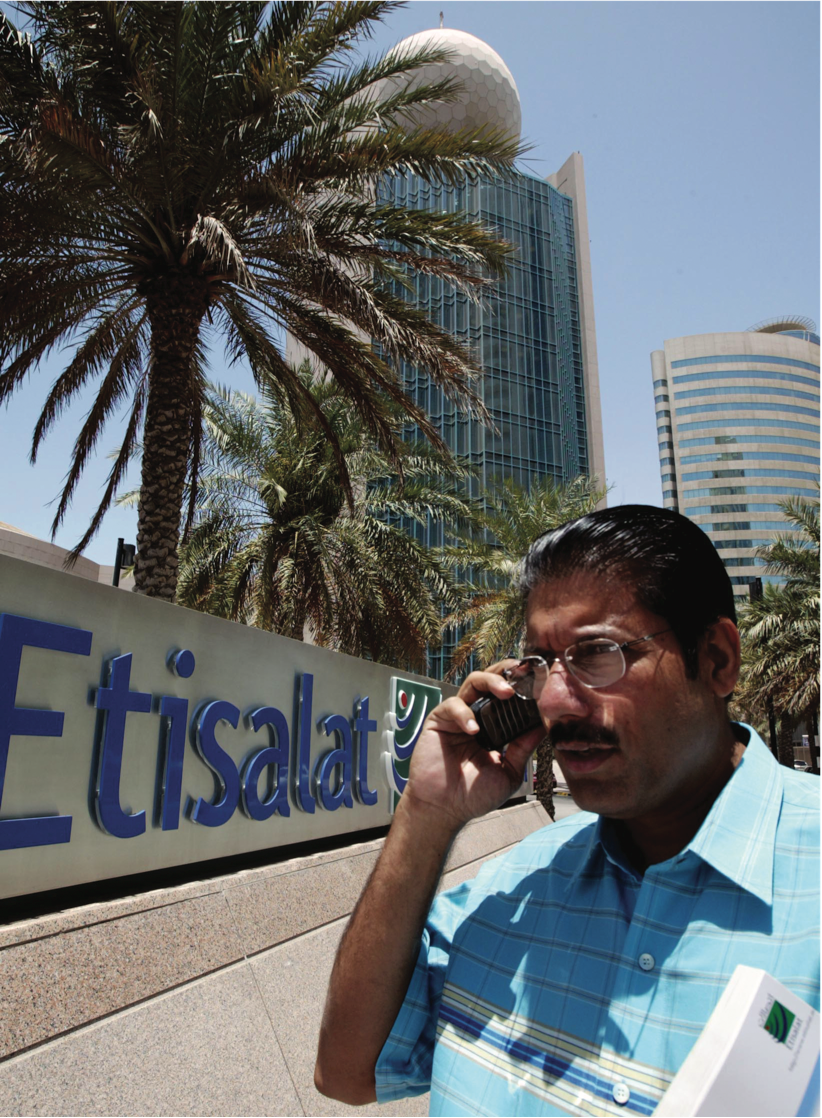
The Gulf Information Technology Exhibition 2006 – or GITEX as it is commonly known – drew in 1,347 exhibitors from 76 countries, while the inaugural GULFCOMMS, which ran concurrently, featured some of the world’s largest telecommunications firms, such as Nokia, Orange, Thuraya and local firm Etisalat.

Development of the ICT sector has become one of the main pillars of Dubai’s economic development strategy, as the government seeks to establish a successful knowledge-based economy.

Taking a front seat

In order to stimulate the ICT sector, the government initiated several projects to pave the way for the private sector. The first step was to establish infrastructure, such as the Dubai Internet City (DIC) in 2000.

Aside from the sophisticated telecommunications infrastructure, particularly advanced in a region still lagging behind in terms of ICT, a 100% exemption from personal and corporate tax, 100% ownership of business and no currency restrictions nor customs duty were some of the other measures taken to support the free zone.

The latest figures released by the DIC indicate that more than 850 companies have taken root in the free zone, up from an initial 100 in 2000. Some major firms such as Microsoft, IBM, Oracle, Samsung and Sony Ericsson have already set up regional offices within the DIC.

Currently, a $1.3 billion extension project is underway, and should be completed by the end of this year. Furthermore, the DIC is about to set up smart cities, specifically high-tech IT parks, in both Kochi, in the Indian state of Kerala, and in Malta.

The second step entailed the launch of some motivating initiatives. These include the implementation of the Dubai e-Government program, the end of mobile operator Etisalat’s monopoly and the gradual approval of Voice over Internet Protocol (VoIP), among others.

The launch of the e-Government program, one of the first of its kind in the Arab world, has not only improved the efficiency of government services, but also enhanced transparency for businesses. The target to have 90% of services online by 2007 is likely to be met. As a result, the e-Government Readiness Report 2005, published by UN Online Public Network and Finance (UNPAN), improved the ranking of the UAE to 42, up from 60 in 2004. Dubai greatly contributed to this successful ranking.

Free at last

Undoubtedly, the end of Etisalat’s monopoly was hailed as an important step towards greater liberalization of the telecom sector. New licensed operator Emirates Integrated Telecommunication Company should announce its commercial launch date at the end of November. To offer lower costs than its rival Etisalat, du has announced it will charge calls on per-second basis. In addition to the competition between the two operators, this will also generate incentives on both sides with which to woo new clients, given that Dubai’s population is growing steadily.

In addition, the Telecommunications Regulatory Authority (TRA) has just approved the use of VoIP technology, albeit for local calls within the UAE only. International calls using VoIP provider Skype remain prohibited, not for security reasons, but for financial reasons, as charges on calls represent an important source of revenue for telecom operators.

January 2, 2007 0 comments
0 FacebookTwitterPinterestEmail
GCC

Bonding with China & India

by Executive Staff January 2, 2007
written by Executive Staff

In December’s Arab Strategy Forum 2006 in Dubai, there was much discussion around the improving ties between the UAE and the Asian giants. While this may not be a new phenomenon, two-way ties have recently flourished between China and India, and the Gulf Cooperation Council (GCC) countries.

In a context where both India and China are seeking energy security, the GCC is playing an instrumental role in supplying both countries with crude oil and LNG (Liquefied Natural Gas). China and India also offer significant investment opportunities for UAE-based companies. Similarly, a great number of Chinese and Indian firms have taken root in Dubai. China and India have become the UAE’s main trading partners, with China recently overtaking India for the top position.

At the recent India-Arab World CEO summit, Kamal Nath, India’s minister for commerce and industry, announced that India and the GCC were in the process of establishing a Free Trade Area by 2007. In the meantime, the GCC is also in the final stage of talks to sign a similar agreement with China, also announced for next year.

The latest official figures indicate that bilateral trade between India and the UAE has grown steadily in recent years. Indian exports to the UAE reached $8.5 billion last year, up from $3.3 billion in 2002. UAE exports to India also grew strongly, from $956 million in 2002 to $4.3 billion last year.

Likewise, trade between China and the UAE has also boomed and reached $10 billion in 2005. In particular, China is Dubai’s main trading partner, with trade valued at $8.5 billion. In addition, it is estimated that bilateral trade between China and the UAE, for the whole of 2006, will reach $15 billion.

While the UAE primarily exports mineral products, mainly oil, and aluminium, it imports machinery, electrical and electronic goods from China, as well as textile products. These two sub-categories of imports account for around 60% of total imports.

Taking root in the UAE

Currently, some 1,000 Chinese firms are registered in the UAE and this figure is poised to increase over the next few years. But perhaps the most distinctive and symbolic feature of this Chinese presence in Dubai is leading property developer Nakheel’s Dragon Mart, the largest trading hub for Chinese products outside Mainland China. Inaugurated in 2004 by Sheikha Lubilliona al-Qasimi, UAE minister for economy and planning, the mart is jointly promoted by Nakheel and Chinamex Middle East Investment and Trade Promotion Centre and currently serves as a centre for activity in the Middle East for Chinese businesses.

Meanwhile, according to UAE official figures there are 6,000 Indian firms operating in Dubai, 10% of which are located in the Jebel Ali Free Zone and whose activities range from steel to IT. This figure is set to increase over the next few years. A visit in April this year by three high level delegations from the Indian States of Delhi, Punjab and West Bengal to the Jebel Ali Free Zone proved extremely valuable, as the delegates were able to fully appreciate the high quality of the environment for Indian companies to invest.

Reaping the benefits

Conversely, China and India have also benefited from the economic boom in the GCC, as these countries have started to invest massively in the two fast-growing economies. This can be attributed to the great number of investment opportunities offered in an array of sectors, from real estate and construction to manufacturing and IT.

While UAE-based investments in India have soared, Nath recently added that India was targeting investments from the Gulf to reach $2 billion over the next three years. UAE-based companies such as Emaar have already completed some major infrastructure projects such as the Convention Centre and the Golf Resort in Hyderabad. In addition, DP World is already operating six ports in India.

Similarly, China is getting a lot of attention from GCC investors. DP World already operates seven ports in China. Sultan bin Sulayem, Chairman of Dubai World, recently mentioned that Nakheel was considering developing high-end real estate projects in China due to strong demand. In addition, GCC investors have also shown interest in private equity investment in China. As a case in point, Jade Alternative Investment Advisors, an investment consultancy, has recently announced it intends to raise a $150 million fund to invest in private equity funds operating in China. Jade primarily serves Middle Eastern institutional and corporate investors.

January 2, 2007 0 comments
0 FacebookTwitterPinterestEmail
Levant

Turkey fishing for property buyers Home-seekers not biting

by Executive Staff January 2, 2007
written by Executive Staff

The number of real estate ads that leap out at you from Turkey’s weekend press testifies to the large supply of quality housing available in Istanbul these days. However, while real estate developers are looking for would-be consumers to take the bait, home-seekers are reluctant to bite.

Housing developers and construction companies point to a slowdown in the market. “Last year was an exceptional period, with a boom in housing sales,” said Teoman Metehan, CEO of Teknik Yapi, a leading construction and residential development company. “This year, there is difficulty in financing projects. In 2005, demand outstripped supply in up-market housing. Now, Turkey’s home-seekers are more sensitive to the price of real estate and weighing their options more carefully. A proliferation of housing development in Istanbul is providing greater choice for would-be home-owners.”

The housing market also felt the brunt of the spike in interest rates in May and June, encouraging families to delay plans to acquire housing loans, leading to a dip in demand for residential units. Now home-seekers are expected to delay their plans once again until the presidential and parliamentary elections have passed in 2007, and consumers feel confident that an extended period of market stability lies ahead, punctuated most importantly by lower interest rates. For Turkey’s yet-to-be legislated mortgage system to take flight, monthly interest rates need to decline to around 1%, insiders say.

“Monthly interest rates increased from 1.1% up to 2.5% after May,” said Yucel Ersoz, the general manager of real estate investment company Yapi Kredi Koray. “Now, they are around 1.7% to 1.8%, which is detrimental to home buying.”

Wishful thinking

Some home-seekers are also hoping for a reduction in real estate prices. A futile wish, observers say. “I don’t see a massive reduction in prices primarily because land is limited,” said Metehan, referring to the struggle of property-searchers to find attractive apartments close to downtown Istanbul. “In such up-market areas as Levent or Etiler, a 120m2 apartment in a 15 to 20 year old building would go for roughly $120,000 to $150,000 in 2000/01, with the same apartment fetching an estimated $250,000 today,” said an industrial insider. At that price, the flat may even require some refinishing and further decoration.

Real estate developers themselves are having increasing difficulty finding plots to develop close enough to the city center. This has not stopped companies from providing homebuyers with a helping hand to reduce the cost of acquiring property. “The vast majority of developers are subsidizing interest rates on loans to provide more favorable borrowing conditions. This is equivalent to a discount, in some cases as much as 20% to 30%,” said Ersoz.

Market analysts say that real estate developers offer these discount rates to register sales even for a smaller profit margin. Such is their desire to liquidate their investments and register a return.

Still, there is cause for optimism for firms in the business. Though construction companies and real estate developers are struggling for a share of the pie in the upper end of the housing market, delayed demand is likely to snowball. Insiders expect demand to be released in 2008 much as it was in 2005 – assuming that interest rates are appropriately low – spurring home-seekers to make new acquisitions.

While Istanbul’s well-heeled property-seekers have no need to hold their breath for the long-anticipated mortgage law, the new legislation will likely play an important role in fuelling a future property boom. The bulk of middle-income earners, who are forced to save, will be the main beneficiaries. Important is the fact that mortgage lending in Turkey counts for as little as 4% of GDP, representing some contrast to 55% for the US and 39% in the Eurozone. With an estimated 600,000 new home-seekers emerging every year, there is little doubt that Turkey’s real estate market has great potential.

January 2, 2007 0 comments
0 FacebookTwitterPinterestEmail
Levant

Opportunity knocks Jordan’s ICT sector booms

by Executive Staff January 2, 2007
written by Executive Staff

Jordan is looking to position itself as the region’s center of information and communications technology (ICT).

In recent years, the ICT sector has taken on an important dimension in the Jordanian economy. The sector is growing by 50% annually; the income it generates represents roughly 10% of GDP and it employs more than 6,000 people. ICT has also benefited from the government’s push to support its development, through easing investment requirements in the industry, enhancing education in information technology and, most importantly from the point of view of overseas ICT firms, passing legislation to protect intellectual property rights.

Since 1999, with the prompting of King Abdullah, the government initiated a campaign to energize the ICT sector in Jordan. Within this period, revenue has jumped from $60 million to more than $500 million, while last year it saw $90 million of direct foreign investment flow in, up from just $3 million six years earlier.

The booming ICT market has opened many new opportunities. Many software developers or designers of equipment have established companies, while many of the industry’s big names, such as Microsoft, Intel, Cisco Systems and France Telecom have also invested in the country.

Amman takes every opportunity to promote its increasing ICT industry and tries to attract overseas investment. The most recent example of this was the fourth ICT Forum, held on December 6 and 7, which focused on Jordan’s position in the region’s ICT sector and its potential for growth.

Pushing forward

Citing both King Abdullah’s ambitious challenge to the government and the private sector, and Jordan’s commitment to building on the sector, Gerri Elliot, the corporate vice president of Microsoft’s Worldwide Public Sector organization, said that Jordan is unique in the way it uses ICT.

“Jordan has the opportunity to become the technological breadbasket of the Middle East,” Elliot said, though he warned the global economy does not wait for anyone.

As part of the push to place Jordan at the heart of the region’s ICT market, the Princess Sumaya University for Technology (PSUT) is establishing a business college, which will work with the university’s ICT business incubator, iPARK, to train professionals and promote entrepreneurial creativity.

“The college, which will be set up in partnership with the Royal Scientific Society, Jordan Telecom, the Higher Council of Science and Technology and the ministry of planning and international cooperation, will enhance PSUT’s focus on academic, research and business-related activities,” said Princess Sumaya, the chairperson of the university’s board of trustees.

Jordan has also been taking its ICT promotion campaign on the road. While on a visit to India in early December, King Abdullah touted Jordan’s ICT potential to Indian business leaders. He stressed that as one of his country’s leading trade partners, India should look closely at investing in joint ICT ventures in Jordan, thus gaining access to international markets via Amman’s free trade agreements with countries, such as the US.

According to Jordanian ICT expert Zeid Nasser, the next stage in Jordan’s ICT revolution is expected to see well-established local firms hook up with regional or international partners.

“It is only natural that after several years of rapid growth, leading players in relatively maturing markets will look to consolidate their positions by partnering up with firms that will provide a competitive edge in the marketplace,” he said in an interview with the local press.

At the community level, the kingdom is working to expand a network of information access centers, mainly bases in poorer regions, to allow Jordanians to acquire ICT skills. Known as Knowledge Stations, the initiative was launched in 2003, and aims at allowing communities to use ICT in their daily lives and to link into the government electronic information system. The initial pilot stations proved so successful that more than 75 centers have been established.

January 2, 2007 0 comments
0 FacebookTwitterPinterestEmail
Levant

Syria: the gloves come off

by Executive Staff January 2, 2007
written by Executive Staff

Syria is looking to build on its already extensive textile sector in an effort to become an increasingly global player in raw materials and processed products.

However, Syria faces numerous difficulties both at home and abroad to lift its cotton production and processed materials output and quality, with massive investments needed to bring them up to international standards and make them competitive in the cut-throat world market.

Syria’s textile and apparel sector accounts for 30% of the country’s industrial employment. While figures for employment levels in the primary production of the main raw material, cotton, are seasonal, they do represent a sizeable proportion of the 25% of those engaged in agriculture.

The government has been pouring money into the cotton and processed materials sectors, improving irrigation for primary producers and spending on new plants to enhance milling, weaving and apparel production.

These efforts have met with some success, with the production of unprocessed cotton seed breaking the one million ton mark, giving 350,000 tons of cotton lint for processing, with the number of ready-made garments turned out topping 55 million, up from 35 million in 2000.

However, downstream industries still suffer from a lack of investment, with local spinning and weaving facilities only able to process 150,000 tons, the balance available for export. This lack of processing capacity has prompted the government to cut back on planting for the coming season, reducing seed cotton production to 900,000 tons for the 2007 harvest.

Gloves come off

The cotton sector has long been given a high level of government protection, with the importation of raw cotton, yarn and fabrics banned except in special cases. At the end of 2005, under international pressure, Damascus agreed to allow imports of cotton-based clothing, though with a near prohibitive 47.5% tariff. Over the past few years, there have been accusations that Syria has been dumping both processed textile products and cotton onto the global market at below cost in order to increase sales and support the industry at home.

Given that the government looks upon the cotton and textile industries as being of strategic importance to the country, the sectors have seen fewer developments in the economic reform program, with most elements, barring the ready to wear segment, still dominated by the state.

However, this too may be set to change. There have been a number of reports in the state-owned media highlighting losses and the drain on the budget. Similar reports have in the past flagged reforms in other sectors of the economy, meaning there could be a shake-up on the way for the textile industry.

The drive by Damascus to modernize and expand the sector, however, may be too late, given that most of the brakes have been taken off China’s massive apparel juggernaut. Clothing and textile producers around the world have been feeling the pressure of competition from cheap Chinese exports after the lowering of trade restrictions.

Stiff competition

Closer to home, Syria has to compete with the well-developed Turkish and Egyptian clothing and fabric production sectors, both of which have built up extensive links in existing markets in Europe and the US, and have modernized their facilities to meet the most up to date trends. Both the growing strength of China in the world’s markets and competition in the country’s neighborhood may explain the reluctance of overseas investors to put money into Syria’s textile industry.

Even with the concerted efforts of the state, Syria managed to boost its export revenue from yarn and cloth by only $2 million in 2005, bringing in a total of $96 million for the year.

However, according to Jamal al-Omar, the director-general of the Syrian Textile Industries’ Establishment, domestic sales showed a significant increase, coming in at $385 million, a 14.5% improvement on the previous year’s figures.

More significantly, al-Omar said that the industry as a whole had managed to turn a profit this year, for the first time in its history, though he added that further support would be required to allow it to compete in overseas markets.

January 2, 2007 0 comments
0 FacebookTwitterPinterestEmail
  • 1
  • …
  • 601
  • 602
  • 603
  • 604
  • 605
  • …
  • 696

Latest Cover

About us

Since its first edition emerged on the newsstands in 1999, Executive Magazine has been dedicated to providing its readers with the most up-to-date local and regional business news. Executive is a monthly business magazine that offers readers in-depth analyses on the Lebanese world of commerce, covering all the major sectors – from banking, finance, and insurance to technology, tourism, hospitality, media, and retail.

  • Donate
  • Our Purpose
  • Contact Us

Sign up for our newsletter

    • Facebook
    • Twitter
    • Instagram
    • Linkedin
    • Youtube
    Executive Magazine
    • ISSUES
      • Current Issue
      • Past issues
    • BUSINESS
    • ECONOMICS & POLICY
    • OPINION
    • SPECIAL REPORTS
    • EXECUTIVE TALKS
    • MOVEMENTS
      • Change the image
      • Cannes lions
      • Transparency & accountability
      • ECONOMIC ROADMAP
      • Say No to Corruption
      • The Lebanon media development initiative
      • LPSN Policy Asks
      • Advocating the preservation of deposits
    • JOIN US
      • Join our movement
      • Attend our events
      • Receive updates
      • Connect with us
    • DONATE