
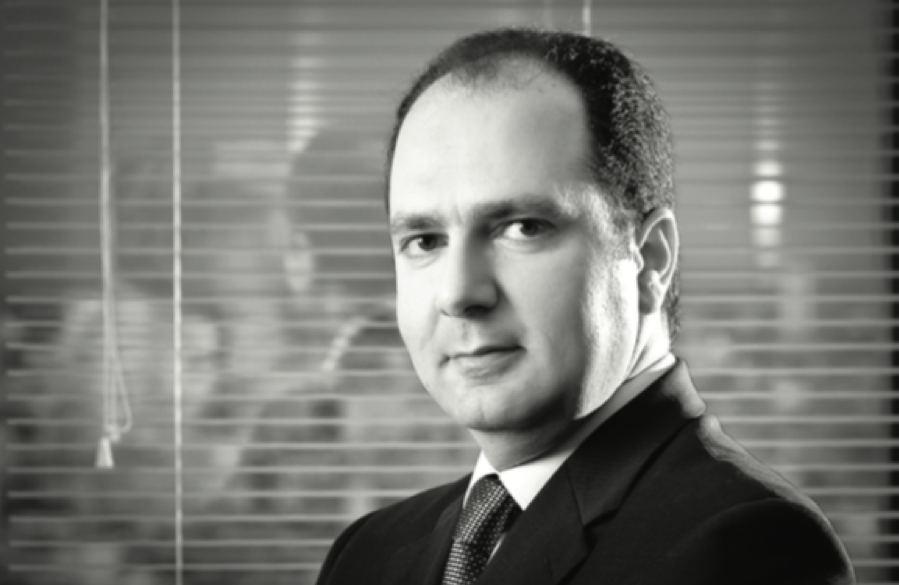
It’s not often that Executive speaks with Lebanon’s Beta Banks, but their unique operating conditions can give them varied insight into Lebanon’s banking future. This month we spoke with Tarek Khalife, chairman and general manager at Credit Bank, to get his perspective on these rough economic times.
- While lending activity may have increased in the first quarter of 2011, it grew at a slower pace than the last quarter of 2010, and loans to non-residents were much higher. How has the political stalemate impacted lending to residents?
The growth of loans seems to be subsiding and this is related to political uncertainty. People are pulling back on investments, pulling back on importing and on increasing their turnover. It is normal in this situation; it is a hesitation period. There is also a lack of performance on the banking sector side. Certain banks have grown significantly dependent on easy assets such as treasury bills. It takes time to develop a lending machine that can grow. There is a learning process that requires time, effort and experience. When it comes to non-resident lending, real estate is a main investment for non-residents and accounts for almost 85 percent of the whole banking sector.
- With the economy slowing, the deficit growing and no end in sight for the debt problem, how long can you keep lending to the government at rates of around 7 percent without incurring substantial risk and continuing to drag down your ratings?
The regulators seem to know exactly what to do. The regulator has done a wonderful job of stabilizing the currency exchange rate and continues to support and guide the sector toward a competitive and healthy benchmark in the region. The sector has had outstandingly healthy growth in the last two years of crises. Unfortunately the political turmoil that continues to plague the country has not allowed the state to benefit from all this extra liquidity that was attracted into the sector. The state could have financed its much-needed infrastructure projects and banks would have benefited from diversifying their investments into projects of privatization and infrastructure with good return. On that level, the state has come up short and on another level the uncertainty caused by a void in government has begun to stunt the growth of the sector.
- In the present climate, what do you think the next Eurobond issue will look like as we already see upward pressure on interest rates from political instability?
New bond issues by the state risk having a lower return for subscribing banks. However, the state has a stake in maintaining those subscribing banks’ interests; local banks have become partners in financing the state deficit and will continue to carry a good chunk of the internal debt. Although at this stage in the game most banks need the issue as much as the state needs the issue, political correctness dictates that the drop in rates would not be extreme. There is always oversubscription to all the issues that have been launched. I believe the state could manage to drop the rates dramatically but I think we will only see a modest drop.
- Popular opinion seems to be that Riad Salameh is the only man for the job of central bank governor; are there not others who are qualified enough?
If this is a hypothetical question, no one is indispensable. I think he has unmatched experience that very few people around could claim today. However, the overriding issue is that we have a specific situation in Lebanon—highly technical in fundamentals and highly complex in market perception—and the governor and his team have mastered it. The team at the Central Bank has experience managing crises that very few people in the world have. It goes against all international norms to have someone in such a position for such a long time, but again it would not be wise to change horses in the middle of a race. This is not the time to reengineer something that is working.
