
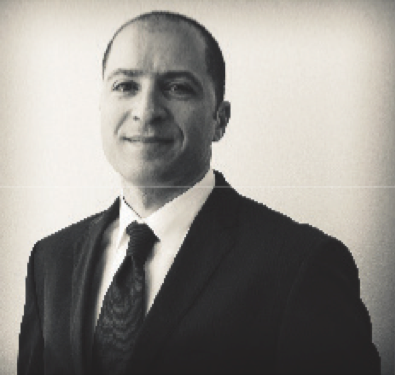
The Omnicom Group’s media and communications strategy business in the Middle East is carried by two main pillars: the OMD and PHD agencies. Executive visited Shadi Kandil, OMD chief executive for the Middle East and North Africa, in his corner office in Dubai Media City.
- How do you see the media buying environment in 2013?
Media buying is a term that I don’t assimilate with. Our industry has evolved dramatically over, maybe, the past 10 years since the formation of these specialist entities. But to answer your question, the whole advertising landscape, and I would say the whole business landscape, has been challenged since the revolutions started at the closure of 2010. We, talking about the whole industry, haven’t gone back to normalcy and the key buzzword for 2013 is uncertainty.
- You have mentioned the changes in the media industry. If I ask you to rank the business practices of media planning agencies on a scale from minus 10 for very dirty to plus 10 for absolutely clean, where is the region today?
I think we are in an organized chaos as our state of existence. If you look at the spectrum of players today, there are still agencies which are tapped in the transactional side of our business. They go out and buy media for the client at the cheapest rate, whether in a straightforward or in a dodgy manner. One can employ different tools to get to the lowest rate. The client is not concerned [with the tools]. All they want is the cheapest rate. These agencies still exist in the market.
Then, you have the agencies which have transitioned to a pseudo-strategic thinking type role. They still bank on the media buying platform but have added a layer of thinking that allows them to offer planning services. Then, there are your scientists which look at media as an investment that should be accountable toward a return. The more you move into the region of those agencies, the lower are the numbers of players that are operating in this space.
- Do you expect media ethicists to be employed by the region’s top media agencies?
It is not an expectation as much as a plan. If you don’t plan for it and put the right mechanisms into place, it won’t happen. In our talent retention and talent acquisition programs we have shifted the thinking toward individuals of a scientific background who are able to engage in those discussions comfortably.
- So you are not only out to hire individuals with marketing degrees?
Not really. We are trying for that balance, hiring people from more engineering and computer science backgrounds, mathematicians, statisticians, musicians, people who can balance the two worlds of art and science and then be exposed to the latest technology that the industry is offering.
- What do you see as the driver of your generation of Lebanese decision makers under 40 in regional advertising?
The biggest change in our generation, in my opinion, is the awakening into governance and good practice. Today we live with companies that are owned by big conglomerates which are publicly listed on stock exchanges around the globe and driven by governance protocols, and we are supposed to be aligned along compliance rules and there are certain cultures that drive us.
- Does it mean this work has become more of a job and conventional career, as opposed to an adventure?
I don’t want to give the perception that the environment is too rigid and too mathematical because that is not the reality. We still are about ideation and creativity. But at least we are more disciplined and more structured. If you want to draw a comparison, 20 years ago we were closer to a creative shop and today we are closer to management consultants, where 80 percent is structured and 20 percent is freely roaming in terms of individual innovation.
- Given the Lebanese state of affairs, do you see something that you, as an expatriate Lebanese media and communications specialist, can contribute to improve the country between now and 2030?
Whoa. As far as Lebanon as a country is concerned, my personal view is very pessimistic. I love my country, but I don’t think there is any amount of energy or brain power that we can contribute to make Lebanon better. First and foremost, it has to be the Lebanese who are living in Lebanon who need to stop putting corrupt politicians in Parliament, and from there onwards, we will be happy to contribute.
