
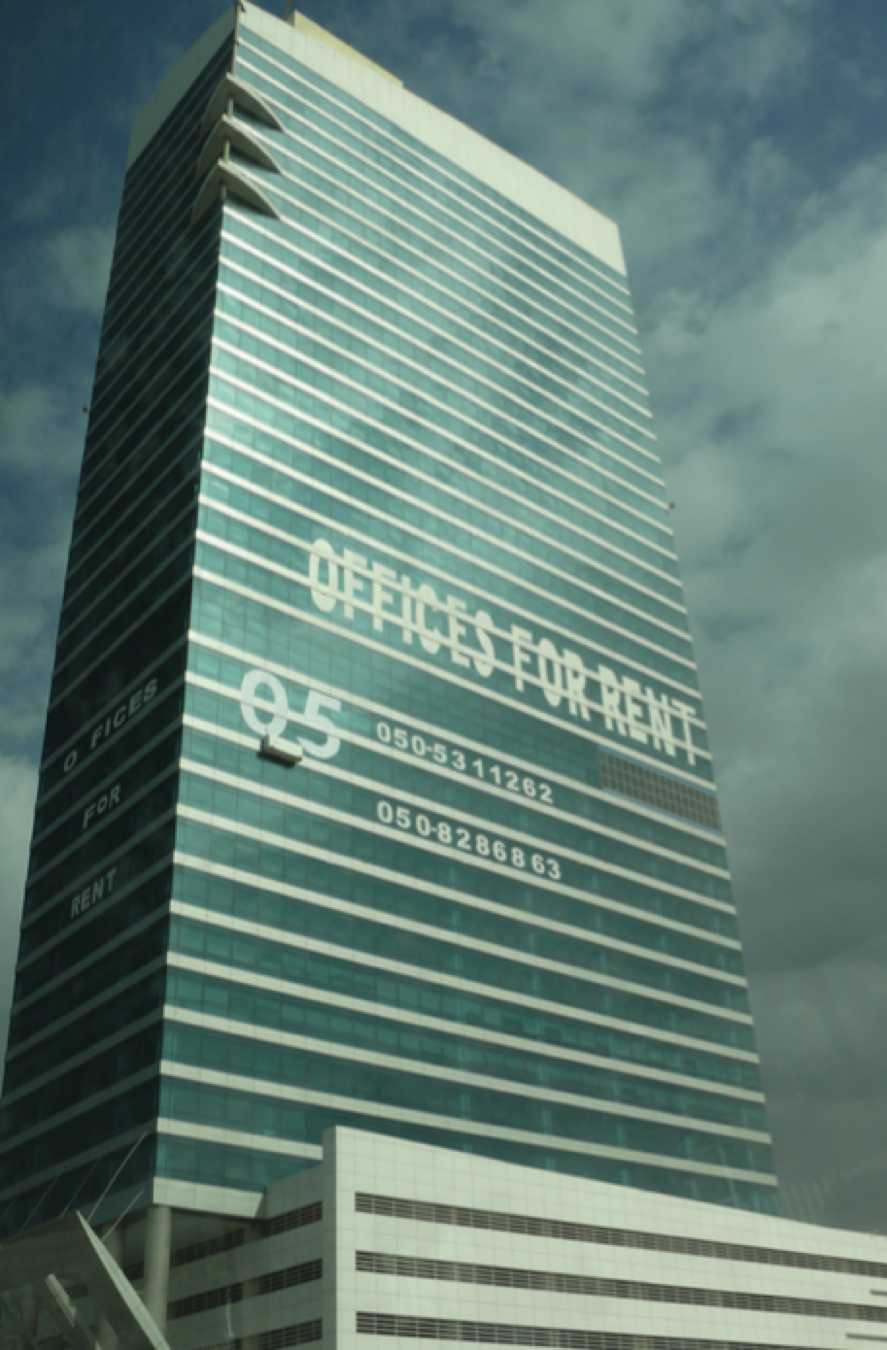
One year has passed since Dubai’s real estate sector started its downhill slide. Since then, investors have fled the market, prices and rents have dropped, property disputes have risen and many projects have been canceled or put on hold. Needless to say, it’s been a bumpy ride.
But since the second quarter of this year, things have begun to stabilize. Prices and rents are more or less steady in many areas and developers have been consolidating in a bid to try to strengthen their financial positions. These are signs that confidence in the market is starting to come back. And while the worst may seemingly be over, the emirate is still expected to witness a tough year in 2010 as more units come online in a market where demand remains fairly weak.
Slowly but surely
Buyers are now “cautiously optimistic,” said Linda Mahoney, CEO of Better Homes. “We are seeing some confidence coming back, but it is going to take more than nine to 10 months” for confidence to be strong again. Current demand, although low compared to 18 months ago, is mostly coming from end-buyers — people who actually want to live in the units — or long-term investors who find current valuations attractive.
Charles Neil, CEO of Landmark Advisory, an arm of Landmark Properties, said that from April to July the company has seen an “increase in activity” in leasing and overall sales because “people took advantage of falling rents.” He added that demand for off-plan properties is still non-existent due to the unavailability of mortgage financing for such developments and buyers having doubts over whether they will ever be completed.
In terms of properties that are finished or close to completion, it seems that mortgage financing is slowly reentering the market, even though this time around banks are being very careful with how much they lend and to whom. As such, experts are predicting that the lending situation will gradually improve.
“We are anticipating that a number of banks are looking to re-enter the mortgage market towards the end of the year or early next year,” said Ian Albert, regional director of Colliers International.
Coupled with the mild improvements of Western stock markets in recent months, experts say Dubai’s real estate sector is expected to stabilize in 2010, and perhaps even start to recover by 2011.
Residential market stabilizing
According to most experts, residential property prices have fallen some 50 percent since the beginning of the crisis. In the second quarter of this year alone, housing prices in Dubai fell around 25 percent, according to the global real estate services firm Jones Lang LaSalle.
Out of 32 countries examined by the United Kingdom-based Knight Frank real estate agents, Dubai recorded the largest year-on-year drop in housing prices (at 47 percent) for the period up to July. The company also added that prices now are falling at a slower rate.
Real estate experts have also stated that the decrease in prices is mostly contingent on the attractiveness of the area. As such, buyers are currently searching for communities that already include infrastructure, restaurants, schools and leisure facilities. Some of these developments have even witnessed some appreciation in the last few months.
Residential supply and demand

“In Dubai Marina, there are shops, office space, hotels, restaurants… there is a community where people can live and work,” said Elaine Jones, CEO of Asteco Property Management. Jones also explained that sometimes prices in the same development might differ, depending on the quality and the facilities. “And now you have the metro for example,” she added, which would make the surrounding areas more attractive.
After the hefty decrease in prices, players are also waiting for the market to hit bottom. Even though prices have begun to stabilize, most experts agree that they will drop further as new supply comes online.
For example, Saud Masud, a Dubai based analyst from UBS, the global financial services firm, told Bloomberg that housing prices in Dubai will drop about 33 percent to reach $1,754 per square meter, and the market will only bottom out in the next 12 to 18 months. According to UBS, 30,000 new homes will be completed by 2011, but it also stated in June that the new supply coupled with the decrease in population will leave one in three homes vacant by 2010.
While that may be the case, when it comes to predicting the actual oversupply amount on the market for year’s end 2009, there seems to be little consensus. Jones Lang LaSalle is expecting 22,400 new units while JP Morgan expects 30,600 new units, adding that this will lead to an oversupply of some 28,500 units.
“With the new supply coming on between now and the end of the year, given the population growth has slowed, if not contracted, it will take some time for the market to absorb the new product coming on stream. It could take up to 12 to 18 months,” said Sana Kapadia, vice president of equity research at EFG-Hermes.
Ziad Chaar, general manager of Damac Properties, adds that although prices have stabilized in some areas, the reason why they are still decreasing is because of the sale of distressed properties below the market value pushing prices down. He explains that many investors who have commitments in the emirates and abroad are still willing to sell at low valuations.
As new supply comes to its handover stage, rents are expected to drop further
Rents
Rents, like prices, are also expected to decline due to the oversupply in the market. However, the degree to which rents have decreased since the beginning of the crisis varies depending on who you ask. Chaar said they have dropped 35 percent, while Mahoney from Better Homes said the figure was as much as 50 percent and Colliers’s Albert puts the figure at 18 to 40 percent, depending on the area. Albert explained that it takes longer to deflate rental prices, mainly because people are engaged in one or two-year contracts while property prices can change every day.
Landmark’s Neil, however, said there is an “artificial shortage,” whereby landlords prefer to wait until rents go up again. “Towards the end of the year, more units will come to the market for rent and prices will come down further.”
Although rent prices have dropped, the leasing market witnessed a good amount of activity this summer. With the sales market more or less on hold, people who used to buy property now choose to rent. Moreover, those who need to renew their contracts are looking for cheaper or larger apartments, as are those living in neighboring emirates who are looking to capitalize on the current valuations.
Asteco’s Jones said her company is experiencing record numbers in term of leases and is content to go back to the “fair market prices” of late 2006. As new supply comes to its handover stage, rents are expected to experience more downward pressure depending on the attractiveness of the area and the quality of the development.
“Rents have stabilized, but there is a lot of supply coming on,” said Albert. “I think it will soften again towards the end of the year.”
Office market
Sale prices from 2008 peak to Q2 2009

Rental prices from 2008 peak to Q2 2009

Of all the real estate sectors in Dubai it seems the commercial market has been hit the hardest. This comes as little surprise since the flow of new businesses into Dubai has decreased and existing businesses are either closing down or moving to smaller office spaces due to the effects of the global downturn.
“Commercial rents could certainly have dropped 50, if not 60 percent, depending on the location,” said Better Home’s Mahoney, adding that this even applies to offices on Sheikh Zayed Road — otherwise know as the E11 highway, the main traffic artery running through most of the UAE, along which most of its skyscrapers are located. According to Jones Lang LaSalle, office rents have declined at around 45 and 25 percent in the first and second quarters of this year, respectively.
Jones Lang LaSalle’s second quarter report also said that by the end of 2011, 2.3 million square meters of additional office space will enter the market, placing even more pressure on rental prices. Moreover, investors who used to buy office space and then lease it to companies have all but disappeared from the market, which has also increased office supply.
“There is a huge supply in office space. Between 2008 and 2011, office supply would have doubled,” said Neil. He added that office rents have decreased about 50 percent and maybe 30 to 40 percent on Sheikh Zayed Road.
Most experts predict that the office market has not hit bottom yet and will continue to drop next year as new units become available and remain vacant due to a lack of interest from companies.

A year of stabilization
Most informed sources agree that 2010 will be a year of consolidation and stabilization while 2011 will see the beginnings of a recovery. That said, what is keeping analysts anxious is doubts over population sustainability coupled with the new supply that may further increase the surplus of units on the market.
Even considering the difficult times predicted for next year, if a general economic recovery does occur, Dubai’s real estate market is poised to recover quickly, due to its relatively advanced infrastructure and its attractiveness to new business ventures in the region.
“I don’t think the new supply is going to take more than one year to be absorbed. But the advantage will be that the entry cost for residential or office space will still be significantly low,” said Jones Lang LaSalle’s Regional Director Fadi Moussalli. “Dubai will still have the underlying macroeconomic benefits.”
If a general economic recovery occurs, Dubai’s real estate market is poised to recover quickly
