
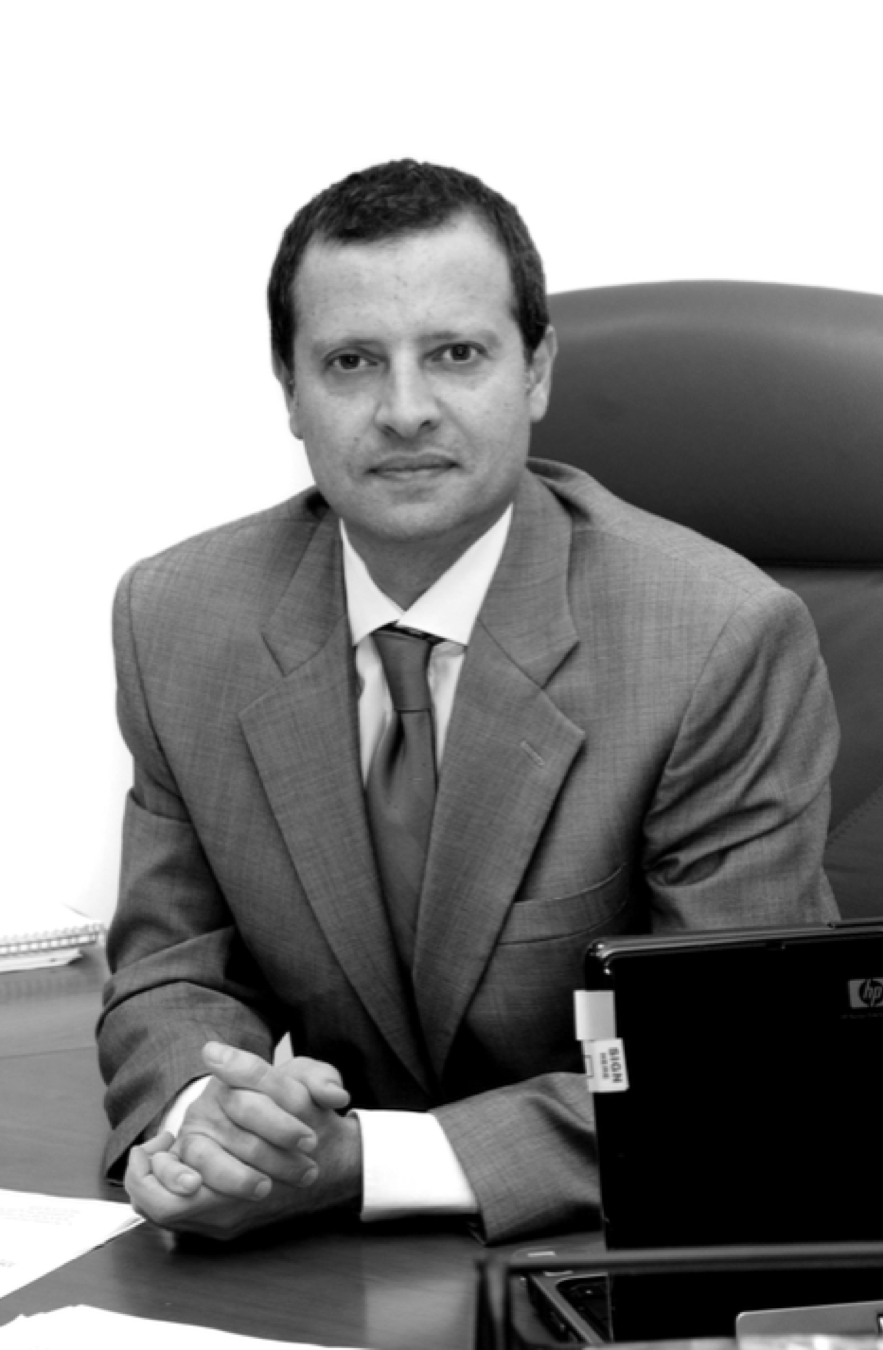
Ghassan Youssef is the managing director of Rakeen, the real estate arm of RAKIA (Ras Al Khaimah Investment Authority) in the United Arab Emirates. Rakeen recently launched its new ultra high-end project in Beit Meri, Lebanon. ‘Beit Meri Sunset’ is comprised of 10 residential villas and nine apartments. Executive sat down with Youssef to discuss issues related to the project and the company’s investment plans in Lebanon.
E I know you started the sales of your project in Beit Meri in September. How much have you sold so far? And to whom?
We secured 20 percent already in the first two weeks. People interested are half locals, half [other] Arabs. But the target [segment] in Lebanon is always the locals and Lebanese expatriates. Then it is our cousins, the Arabs who love Lebanon and want to have a stake in the country. So they target Lebanon, whether for business or residential [purposes], to have a place to stay when they go to Lebanon because they love to go to Lebanon.
E Do you think that the fact that the government formation was delayed will affect interest in your project?
This is an important question. The answer would be no, because people are used now to the unstable country which is Lebanon. People are used to the political storms, so if Lebanon is not like this, then something is wrong, and maybe then I would worry about it. But now everybody knows that if there is a cabinet or not, Lebanon is there to stay and to prosper and people are investing and the real estate market is jumping from one month to another in positive numbers.
E So you think that even if a cabinet was formed, this wouldn’t result in you having more sales?
It doesn’t affect us. If they stay like this for a year or there is cabinet in the next two weeks, it doesn’t affect me. Now, obviously, if the cabinet is up and running in the coming few days you will have the stock market up and running. You will have a momentum created in the country. Then ok, the positiveness is there and we have a cabinet. The bottom line is that the outcome of the cabinet is not the cabinet itself. In Lebanon the private sector runs the country and not the public sector. In that perspective, the outcome of having a cabinet would only be that there is a positive atmosphere that all parties in Lebanon are fine together.
If it was 10 years go, I would tell you you’re right. But now everyone knows. During the July 2006 war, Lebanon suffered for a month, and then next month, everything was up and running. Now people who don’t know it will fear it. But your target segment is the people who know Lebanon. The Arabs know Lebanon more than the Lebanese know their own culture and they love it the way it is.
E Did you start construction? And how long will it take to complete?
We took the license and we started now on the project. It is our first project in Lebanon, but not the last. It is the first project and it is a very small project. When we say 10 villas it might be big but if you compare it to our projects worldwide, it is a tiny project — it is around 10 percent of our projects overseas. Regardless of sales, we have a target of one and a half years to finish. So in two years, you as a client will be living in that house.
E So construction is independent of the sales?
True. If I sell, it would be better. If I don’t sell now, I will increase my prices later and keep on construction.
E What is the value of the project and how is it financed?
I don’t know if I can tell you the whole value of the project. But you can assume we are talking about $2 to $3 million for a villa, and we are talking about 10 villas. But I cannot give you the numbers to tell you this is how much it is going to cost me and that’s how much it is going to sell. It is financed by us, pure equity. We did not take any loans for it.
E I know that you have a diversification strategy since you have projects in so many other countries. Can you tell us about it?
Our chairman has a very strong appetite for emerging markets, and this is where we are. We are present in the emerging markets. Our strategy is not like other real estate companies who go into building luxury resorts. We are into mixed use outlets. We have a mall, an office tower, a residential tower, a hotel etc., that is our segment. That is how we build our projects. We have a beautiful project in Tbilisi, Georgia. It is an amazing market. We are building the biggest shopping center in Georgia — 70,000 square meters. We have the World Bank as partners with us through the International Finance Corporation in that project because they love it. With this shopping center comes an office tower and a residential tower. So that is the kind of scale of our projects.
E What about the financial crisis? Has it pushed you to diversify more or is it a setback?
We did not stop the projects, and we did not adopt a speedier construction model. We are still in business as usual. The only thing I would say about this crisis that affected us is that we are not starting new projects. We used to start three to four projects per year, now we will say it is one project per year or none. And it will be the strategy for the coming three years, to honor our commitments to the market. And that is what counts, our reputation.
E So can we say that when you have future plans in Lebanon, they will be in the next three years?
We are planning to expand in Lebanon, and that is the one project that I talked about. It is in Lebanon. I want to expand in Lebanon because it is a beautiful market. Not because I am Lebanese, not because I only believe in Lebanon; I truly believe in Lebanon and I know that Lebanon is there to stay. It is like Dubai. Now everyone talks about Dubai and the crisis and now bad it hit Dubai. But Dubai is there to stay and prosper again and again. And I give you my word on that.
I have a land bank in Lebanon. I started this project, but I have other lands in other areas. There is no specific time for this, but there are plans. And we are also in a position to acquire new land in Lebanon. We are only doing this in Lebanon, not in other countries. We believe that Lebanon and Syria are going to expand and prosper. There is a big need. Syria is underdeveloped. Lebanon is super developed, but yet if you take all the available land now, the plots available to construct in Lebanon are very rare.
You have four million Lebanese in Lebanon, and you have 16 million or even more Lebanese abroad. Let’s say you have 20 percent of these aboard who want to come back one day with their kids as well, plus the growth that you have within the Lebanese in Lebanon, plus the interest of the Arabs all over. The attraction of Lebanon is the hospitality of the Lebanese and the way they deal with people, how they welcome them, how they love life and know how to live it.
