
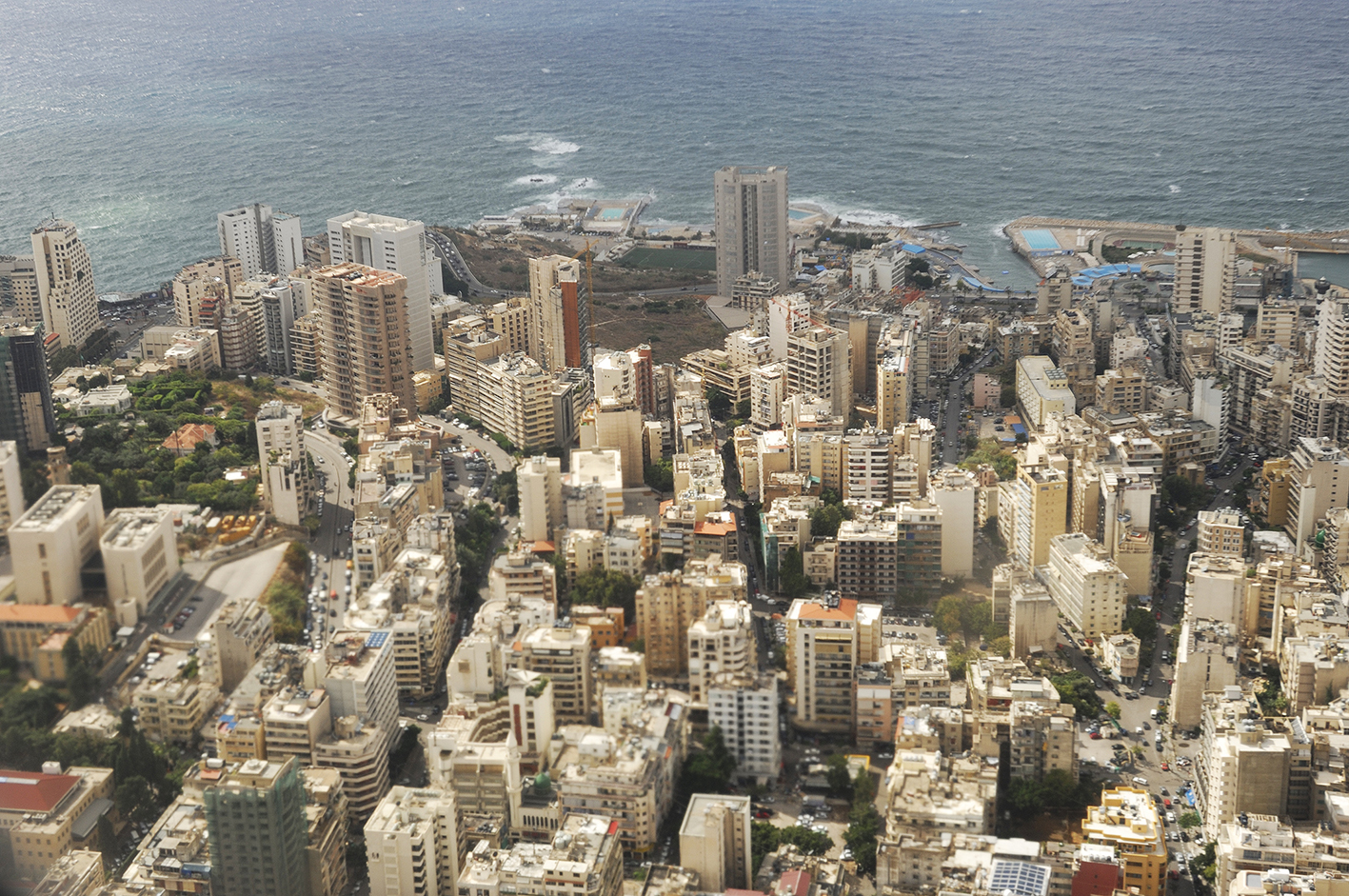
Two of the key property market indicators in 2026, the volume and value of property transactions, reflect new conflict pressures faced by the sector this year. First-quarter figures, according to the Lebanese Cadastral Registry, show a 29.3 percent year-on-year decline in the number of transactions and and a 18.2 percent decline in their total value. This reflects, alongside a significant decline in foreign investment activity, the year’s ongoing political, security, and economic uncertainty.
These first-quarter transaction developments paint quite the opposite picture of market recovery and even a certain exuberance that was presented just a few months earlier. Every self-respecting real-estate professional in Lebanon will concede that the country’s property market has long been accompanied by a strong dose of sell-side exuberance.
This optimistic self-evaluation of the property market and prominent real estate actors would actually become more pronounced when markets shifted from a seller’s bonanza to a buyer’s Eldorado. Overall, however, the property development sector, or rather the multiple real estate markets that co-exist here, has witnessed numerous episodes of cross-border conflict or economic downturn where new developments were disrupted by unexpected crises.
Disrupted optimism
The re-ignition of armed conflict over Lebanon on March 2, 2026 was certainly a violent shock and disruption of national economic life. Noting that the first 59 days of the first quarter in 2026 were not yet marked by overt armed conflict, the annual drop in transactions also betrays the presence of long-standing structural issues that weigh on the property market.
Therein lies a crisis far deeper than a simple slowdown in transactions. This crisis is rooted in the fact that the property market is not operating under one unified system but rather through several parallel markets, each functioning according to its own logic, pricing structure, demand patterns, and purchasing capacity.
The Lebanese real estate sector no longer follows traditional economic fundamentals. Instead, it has become a direct reflection of the political, security, financial, and economic crises that have affected the country for years, creating a market characterized by uncertainty, lack of visibility, and declining confidence.
Any real estate market in the world requires one essential element in order to grow: stability. This element has been absent from Lebanon for many years. Wars, security tensions, political divisions, and recurring economic crises have pushed foreign investors away from the country and weakened the confidence of local investors as well.
Today, foreign investment has almost completely disappeared from Lebanon’s real estate sector, while local investors remain in a permanent state of caution due to the absence of a clear economic or financial vision for the country.
The shaky foundation of the banking sector
However, the most critical issue remains the collapse of the banking sector that occurred half a decade ago. Historically, Lebanon’s real estate market was closely linked to its banking system, which provided housing loans, financed developers, and supplied the liquidity necessary to sustain market activity. This entire structure has collapsed by 2020 and the breakdown is not being remedied: no mortgage loans, no developer financing, no facilities for buyers, and no trust in banks.
At the same time, depositors’ funds remain trapped in Lebanese banks, freezing the purchasing power of a large segment of society, particularly the middle class that historically represented the backbone of the residential market.
Over the past years, cash payments have played a role in sustaining part of Lebanon’s real estate activity, particularly in projects under construction. Some developers preferred to receive part of their payments in cash, allowing them to cover certain operational expenses such as labor costs and the purchase of some materials and services that were partially handled outside traditional banking channels.
This model still exists in certain cases, but the use of cash in real estate transactions has recently become more limited compared to previous years. This change came to be in the wake of regulatory and supervisory measures adopted by the Lebanese government in coordination with Banque du Liban (BDL), the central bank, after the transition to new governor in 2025. BDL imposed additional controls on the movement of funds and payment mechanisms in large transactions, directly affecting the nature of some deals and the overall volume of market activity.
A segment of large real estate transactions continues to be completed through regular bank transfers. However, an important share of this liquidity is linked to wealth generated by Lebanese business activities abroad, particularly in the African continent, where many Lebanese expatriates continue to represent a key supporting component of part of the Lebanese real estate market. Their importance can be observed especially in high-value transactions.
Meanwhile, property prices and construction costs have increased significantly due to rising material and operational costs, as well as significant inflation of energy-related expenses. Yet, average salaries and household incomes of potential home buyers remain extremely low compared to market prices. This imbalance has created a massive gap between real income and property values, to the extent that the share of Lebanese citizens who are no longer realistically capable of purchasing a home has increased to an estimated 90 percent.
Demand is no longer primarily concentrated in the niche of high-value properties as it was in previous years. A growing segment of buyers is searching for more affordable and realistic options due to declining purchasing power and increasing financial caution among households.
Fragmented demand
Despite this reality, prices remain high in many areas in the absence of any clear pricing standards. In many cases, property prices are determined by personal expectations, fear of inflation, immediate liquidity needs, or emotional considerations rather than by real market fundamentals, creating a market often marked by pricing inconsistency and uncertainty.
Among the multiple niche markets of Lebanese property, one still finds a luxury market targeting wealthy residents, expatriates, and buyers with fresh dollar liquidity. Another important market, however, which in the past was serving the middle class, has become almost frozen due to the absence of financing and declining purchasing power. At the same time, another segment has emerged based on distressed sales, opportunistic investments, and selective transactions where transparency and clear pricing indicators are largely absent.
This fragmentation is also reflected in the geographical distribution of transactions across the country. While some regions seem, relative to their share in the national population, underrepresented in their real estate market presence because of price but also conflict factors, other regions account for the majority of real estate activity. In terms of first-quarter 2026 figures, the Baabda governorate ranks first with 20.9 percent of all recorded property transactions, followed by Metn (14 percent), Kesrouan (13.5 percent), the Bekaa (11.7 percent), and Tripoli (11 percent). These figures demonstrate that demand remains concentrated in specific regions where buyers perceive greater safety, stability, accessibility, and long-term value.
Despite the visible slowdown in the market, some construction indicators continue to show partial resilience, particularly in areas that still attract long-term investment interest, reflecting the continued belief among many Lebanese that real estate remains a strategic long-term asset. Paradoxically, supply remains limited in many areas despite weak purchasing power, as many owners still prefer holding real estate rather than selling it, considering property safer than cash or bank deposits.
For all these reasons, there can be no genuine recovery of the real estate sector without a real solution to the banking crisis. On the other hand, Lebanon still lacks any serious housing policy or affordable housing strategy. There are no national housing plans, no sustainable financing programs, no effective public-private partnerships, and no real incentives encouraging affordable residential developments.
The deep-rooted value of property
This double disruption – the recent one of the banking sector and the much older one of property sector governance – reinforces the insight that a healthy and sustainable real estate sector cannot exist without a healthy banking system, political and security stability, clear housing policies, and financing mechanisms capable of bringing the middle class back into the market.
Yet despite all these crises, one defining characteristic remains deeply rooted in Lebanese society: the Lebanese people continue to believe in real estate. Property ownership is not viewed merely as an investment, but as a symbol of stability, security, family achievement, and social success. This explains why demand never completely disappears in Lebanon, even during the most difficult periods, because the relationship between Lebanese society and real estate goes far beyond traditional economic logic.
Despite the current challenges, this sector remains one of the most capable of regaining its role once the right conditions are restored, given the Lebanese people’s historical attachment to real estate and the importance of this sector in wealth creation and economic activity. With the hope that political security, and economic stability will return after the dust of recent armed conflicts has settled, Lebanon’s real estate sector remains a strong candidate to be one of the first sectors to regain its momentum and flourish in the new Lebanon that we all hope to see.
