
Whatever the traditional love
or owning property,
Lebanon is beginning to
follow the worldwide trend toward
rental. International operators prefer not
to have capital tied up in real estate,
whether it is offices, shops or industrial.
They prefer to rent from pension
funds, insurance companies and real
estate companies – businesses that
have an interest in stable, long-term
yields. In developed countries, retail
will offer a yield of 5%, offices 7% and
industrial 9%. An average of around
7% is an ideal way for pension funds
and the like to help balance a portfolio
with yields of 4% on cash (no risk) and
11 % on high-tech and developing
markets (high risk).
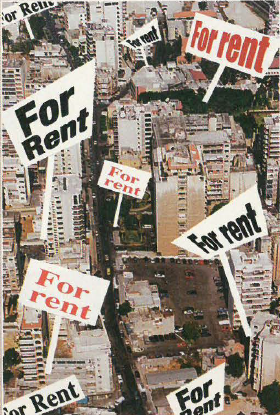
In Lebanon, yields have been higher
– around 8.5%-9% on prime retail
and perhaps 10.5% on prime office.
These yields will reduce as the market
develops and becomes more settled.
But whatever the yield, the case for rental is strong, and one that
Healey & Baker always recommends to our clients.
Imagine owning a shop worth $1 million. If you sell the freehold,
but remain in occupation on a lease at $100,000 a year, you
immediately have $900,000 to invest in other shops or, if you prefer,
to buy Nasdaq stocks. Sale and leaseback can open up all sorts
of possibilities for many companies: It is extraordinary, for example,
that banks, whose expertise is exactly one of making money
grow, tie up their capital in owning buildings, something in which
they are not specialists.
Owners need to think long term. Looking for a low yield is,
paradoxically, a sign of confidence and not of weakness. Prime
property will tend to produce capital accumulation, especially
over longer periods of time. In retail, for example, attracting a
committed tenant who can generate rising year-on-year
turnover will help increase the value of the property, and this in
turn can justify rising rent that the owner can then capitalize. (It
is even possible to relate the rental to turnover.)
This goes against much practice in Lebanon, and there are still
short-sighted owners trying to justify absurdly high yields. But
it is, nonetheless, best business practice. Take the case of
Birmingham, a city of around 1.5 million in England: Yields of
just 4% have produced rental income rising by 300% in five years.
In Paris, yields have gone down from 6% to 4% in the past two years –
a sign of the city charging from recession to boom.
This kind of growth is not possible in
small towns, only in city centers with
large catchment areas and potential
for rapid expansion. But is Beirut
very different to Birmingham or Paris
in this respect? In its Saifi village residential
development, Solidere has
produced rental figures ($80-$110 per
m1 a year, with sale starting at$1,750)
that offer a yield of just 5%, way
below the figures of 13%-14% that
developers will look for on residential.
But is Solidere wrong? Why should
owners expect returns of 14%? And
why do they leave property empty
rather than let it at realistic prices?
Residential properties generally
require more management than commercial
ones, so if Solidere can take a 5%
yield on its flagship residential, how can
owners justify returns above 9% on office and retail? Part of the
answer lies in their worries about securing payment Just as banks
are beginning to show concern about bad loans, property owners fear
that tenants will either not pay or pay late. So they look for a high
yield to hedge against future risk.
This is, without question, a problem resulting from the lack of
regulation in the market and one that needs to be addressed. It
should be a top priority of the incoming government to strengthen
the judiciary, so that contracts of all kinds are properly
enforced and that all parties come to accept that prompt payment
of dues is in everyone’s long-term interest.
Sooner or later, this will come. Here as elsewhere, rental is very
much the future. Schemes like lease-with-option-to-buy are compromises
of limited worth. They may suit the mentality of the
would-be homeowner, whether in Lebanon or Britain (though the
French of course have no such qualms about renting their homes),
but they have no obvious benefits for business professionals.
If you want to own a castle or a palace, buy one. If you want to own
real estate, invest in a real estate fund. Don’t buy a house and certainly
don’t buy an office block. Leave it to the property professionals,
and spend your time and money doing what you’ re good at.
