Like a stream of ants they swarmed to
the border, families, journalists,
tour groups and politicians. For a
few short days in May, it was carnival time
in southern Lebanon. Pepsi trucks passed out
free six packs and Daliah doled out milk. Ice
cream sellers parked in front of the once-dreaded
Khiam prison to scoop up business.
Merchants sold soft drinks to the
scores who flocked to the Kfar Kila border
crossing to taunt Israeli soldiers. Villages,
which had been nearly empty for decades,
sprang to life with visitors. Even the fishermen
of Tyre were blithe. The once forbidden
waters off Naqoura were providing some of
the biggest catches they had seen in years.
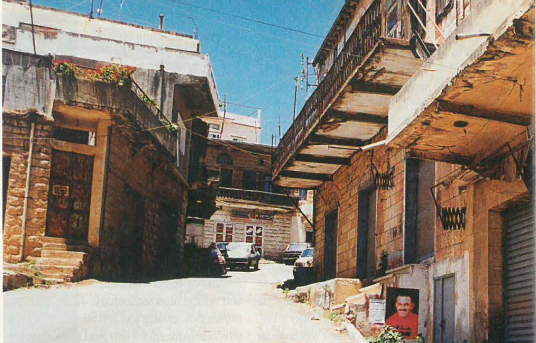
The celebrators have since gone. The
Pepsi and milk are no longer free. Many of
the villages, which for a few short days were
the center of world attention, are once
again empty. And many residents are
beginning to discover that liberation doesn’t
necessarily translate into a higher standard
of living.
“We had our honeymoon stage,” says
Jacques Hagarian, owner of a manousheh
shop in Marjayoun, as he stares out onto the
empty town square. “In a month, if things do
not get better, we are going to start going hungry.
The economy is dead.” Over 500 families,
almost one-third of the town’s roughly
9,000 residents, fled to Israel after the withdrawal,
explains another Marjayoun resident.
Many others were arrested for collaborating
with Israel during the occupation.
While Marjayoun, a former stronghold of
the Israeli-backed South Lebanon Army
(SLA), is an extreme case, across the liberated
areas the story is much the same.
Roughly one-third of the 6,000 to 6,500
households in the area derived their primary
income from the conflict, according to a
1999 United Nations Development Program
study. An estimated 3,000-plus residents
crossed into Israel to work, earning an average
salary of $600 a month. Another 3,000
men were enrolled in the SLA, also earning
$600 a month on average, and another 3,000
individuals were employed by UNIFIL or
depended on the UN soldiers for their livelihood.
A total of $80 million in annual
income was generated from the conflict out
of $300 million in total for the region. What
remained was farming, particularly state-subsidized tobacco cultivation, public sector
employment and a limited number of small
industries and service-based companies.
Fransabank, with its two branches in Marjayoun and Bint Jbeil, is the only bank in
the formerly occupied zone.
Already, much of the population is
impoverished. One quarter of households
live on less than $330 a month and around
10% earn less than the minimum wage of
$200. What’s more, a survey of residents,
done two days after the withdrawal by
Information International Research
Consultants, showed that 21% suffered a
reduction in income following the liberation.
“You had a population of people that
depended on the conflict,” says Riad Al-Assaad,
general manager of South for
Construction contracting company.
Not only will these lost jobs need to be
replaced, but new ones will also have to be
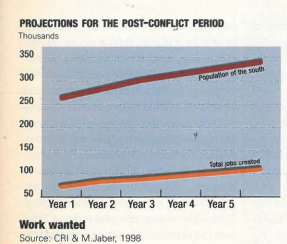
created. Currently, the resident population of
the liberated zone numbers around 65,000,
261,000 if surrounding areas are included. An
estimated 48,000 former residents are
expected to return to their homes within five
years. Most of these will likely be individuals
with limited skills and education who
have not adjusted to life in Beirut or elsewhere.
This means that 37,480 new jobs
will have to be created by the end of 2005,
according to the UNDP. If that is to happen,
investment into the region will need to start
flowing now.
The government has started the ball rolling with a $126 million cash injection,
mostly for band-aid infrastructure repairs
and as compensation for the nearly 5,000
homes that were destroyed or damaged. An
estimated $1 billion will be required to
completely rebuild the region. The money
will help generate much-needed liquidity in
the region, generate new jobs and help the
country’s beleaguered construction industry.
Pierre Dournet, CEO of Cimenterie
National, expects the South to absorb
250,000 tons of cement a year starting in
2001. “The market this year is down 25%
from last year and last year it was down 50%
from the year before. We are estimating a
10% increase in demand due to the southern
effect alone,” he says.
Improved infrastructure should spur private
investment. A few are already lining up to
penetrate what is largely a virgin market.
The central bank recently gave commercial
banks permission to open three branches a
year in the former occupied zone. For the rest
of Lebanon, current regulations allow a
maximum of two a year. Elie Abimrad,
financial controller at Credit Libanais, says
that his bank is planning to open branches in
the area, although he declines to reveal
details. Jammal Trust Bank, which specializes
in providing micro-credit and small loans to
individuals and businesses, plans to open up
to three branches in the former occupied
zone in the next few months. “If you’re looking
for small and medium-sized enterprises,
our business, I think there is lots,” says
Anwar Jammal, the bank’s executive director.
Jammal Trust is already heavily invested
in the region, with numerous branches. Roy
Badaro, owner of Kindou children’s clothes,
plans to invest $100,000 to open a small factory
in the zone in about a year. “There is
good manpower in the South because many
of the people worked in Israel and understand
what it means to work hard,” he says.
But probably one of the most promising
areas for private investment is tourism.
Thirty years of war and destruction has had
the ironic effect of preserving the region
from many of the ailments affecting the rest
of the country: overbuilding, quarrying and
pollution. The coastline is pristine while
areas near Jezzine and Mt. Sheikh provide
opportunities for hiking and horseback riding.
There have even been suggestions of developing
a resort for boar hunting in the area.
South for Construction, which has already
started repairing roads in the region, is planning
to develop a recreation area, says Al-Assaad,
declining to reveal the location as the
project is still in the early planning stages.
A big source of potential investment comes
from the South’s expat community, estimated
to number over 200 million. “Many from
the South have done well in West Africa,” says
economist Marwan Iskandar. “Together, they
have $5 billion. They could invest in tourism,
light industry and possibly even high-tech.
There is a high possibility for investment,
possibly higher than in the rest of Lebanon.”
The government will play a primary role in boosting agriculture in the South, a
potentially rich income generator
as anyone glancing across at the
lush green citrus groves on the
other side of the border would
understand. The problem here is
that less than 10% of agricultural
land is irrigated, despite the existence
of numerous sources of water
including the Litany and Hasbani
rivers. Improving the irrigation system will require hundreds of millions of dollars of public sector
investment.
The government’s policy on tobacco
subsidies needs to change, an unlikelihood
given the politically charged nature of the
policy. The government, under the guise of
helping poor southerners survive the yoke
of Israeli occupation, had been spending
$20 million a year to subsidize tobacco, a virtual
government handout since the crop is
unprofitable. Tobacco leaves are bought from
southern farmers at five to six times the international
market price. The tobacco subsidy
demonstrates one of the primary dangers to the
South’s future economic development.
Government handouts make politicians popular,
but don’t make the region productive. The
region’s long-term development could easily
be sidelined to political interests.
“The South is a clean slate,” says Iskandar.
Lebanon can either develop it properly, or
squander it. Multi-million-dollar irrigation
systems could turn the region into a breadbasket.
But if farmers are not redirected
toward profitable crops, the region’s agricultural
potential will wither away. Its scenery
could make it a tourist Mecca. But if proper
zoning and environmental regulations are
ignored to satisfy the interests of reckless
developers, its natural beauty will be scarred.
The South could be a funnel for millions of
dollars in private investment. But if investors
do not feel that the rule of law and the foot of
state authority are firmly planted on the
ground, many will be deterred. “This region
has been isolated. It needs to be reintegrated
into the Lebanese economy,” says Nassib
Ghobril, analyst at Lebanon Invest. If the
government’s foot-dragging on the deployment
of Lebanese army troops in the region is
anything to go by, we can expect political consideration
to again win out in the South.