
When Carly Fiorino was paid $100 million in stock to take over the helm at Hewlett-Packard (HP) last summer, the media went ga-ga. The spunky, blond 45-year-old was charged with jolting some life back into what had already become a dinosaur of the technology age, when veteran CEO Lewis Platt retired after 33 years with HP. The $200-million relaunching of HP, which had a turnover of $42 billion last year, has been focused on Fiorino herself, so much so that her photo was splashed on the cover of Forbes under the headline “The cult of Carly.” While few have reached her star status, women have gradually made their way into higher echelons of world business. Might that formidable glass ceiling be showing signs of cracking?
Though here in Lebanon such an example would be impossible, the status of women in the workplace is changing, albeit at a slower pace than many would like. “Versus the rest of the world the participation of women in economic activity is relatively low in the region. But I can’t deny it has increased dramatically since a few decades ago,” says Fatima Kassem, the head of the Women and Development Unit at the Economic and Social Commission for Western Asia (ESCWA). She points to the Nordic countries where women’s participation is as high as 50% compared to 19% for the Arab world. In comparison, Lebanon’s rate is high at 27%, though it still lags behind countries like Egypt or the Emirates. It is generally agreed that women’s economic activity is on the rise, but some caution that there is a discrepancy in statistics and Lebanon’s rate may be overstated.
Despite their increased number in the workforce, which most attribute to economic necessity, women are still under-represented in managerial and administrative positions compared to the United States. Administrative and managerial positions account for less than 5% of the female working force in Lebanon, according to ESCWA. Though separate statistics are not available, it is still rare to find women at the top, as is still the case in much of the Western world. So why are women still so outnumbered at work?
“We’re in a part of the world where a woman’s primary role is still considered to be a mother and wife. Norms and traditions play a very important role,” says Mona Khalaf, director of the Women’s Institute at the Lebanese American University. That makes balancing a career and family more onerous for women, while businesses here have traditionally been passed from father to son.
Others are more radical in their views. While women are accepted in certain positions, this changes drastically when they compete with men on a higher level, says Najla Hamadeh, secretary general of the Association of Lebanese Women Researchers. “Men are very threatened by a woman who feels like she’s an equal.” The demand for women is usually as assistants or in professions typically viewed as areas where women excel, says Carole Contavelis of Hunter International placement agency, but employers still demand all the qualifications of a general manager. She also claims that pay scales are often lower, even for the same position.
Claims of gender discrimination are next to impossible to quantify. Is the lack of women in top management due to a real bias, their more recent entry into the labor force, different priorities or a combination? Difficult to ascertain. “Remember that old adage? ‘Women will have gained equality with men when there are bad female managers,’” says Caroline Fattal, customer service manager of Unilever-Fattal. “Women have to make a double effort to get where they are, because there’s no place for women who under-perform.”
But women also have a part to play in pushing back the barriers. “I don’t think it’s men who have impeded women,” says Leila Kobeissi, director of human resources at Fransabank. “I think it’s that spoiled aspect of our society; I wonder if that doesn’t bring an end to ambition. Even in Europe women had to fight to get where they are. We haven’t gotten there yet.”
Many point to the lack of women in decision-making positions as a barrier to getting women’s issues on the nation’s agenda, such as changing the view that a woman’s salary is secondary and thus providing child benefits. There are just three women members of parliament in Lebanon out of a total of 138, and not one holds a post as minister. “What remains is the legal framework in which Arab women work,” says Kassem. “Although the law itself sometimes doesn’t discriminate, there is always a gap between the legislation and how it’s practiced.” Kassem and others want the law to adapt to women’s conditions, suggesting more flexible working schedules for those caught between work and family life. “Many companies have lost good female managers because they couldn’t find a solution for them to balance between family and business,” says Fattal. She believes that the ease of starting up small businesses today could create a human resource problem for companies that aren’t flexible. In some industrialized countries, companies have begun allowing such arrangements, especially with the onset of the information age.
EXECUTIVE spoke with a number of businesswomen about their careers and the issues they face at work, although most were reluctant about being featured in an article. They were virtually unanimous in saying that being a woman never impeded their careers, and in preferring to be judged by their work and success rather than on the issue of their gender.
Caroline Fattal
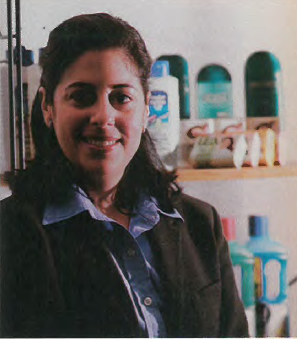
Customer service manager, Lever-Fattal
The photo hanging on her office wall says it all. At a meeting of sales managers for the Central Asia and Middle East region of Unilever, Caroline Fattal is the sole woman. Just 28, she is surrounded by mostly gray-haired or balding men. Fattal leads the sales, trade marketing and outbound logistics departments of Lever-Fattal, the Lebanese entity of Unilever Levant. Rather remarkable for her young years, especially in a field that is largely dominated by males.
Her pinned-back, shoulder-length hair might portray a school-girlish impression, but her confidence and well-spoken responses do not. “When I go out with my sales force, people initially think I’m the merchandiser or something,” says Fattal. A young woman in her position undoubtedly comes as a surprise to many.
She oversees a department of 25 local recruits, herself the only expatriate. While the average age of the sales administration team is about 26, her field sales team averages about seven years her senior. Her success could be written off as family connections, since Khalil Fattal & Sons was one of four local distributors for Unilever before opening a joint venture with the UK-based firm two years ago. But that wouldn’t be entirely fair.
“I was a good candidate for both parties. I wouldn’t negate that 50% of it was my family and 50% was Unilever,” says Fattal, who was originally returning to Lebanon after 17 years abroad to work in the family business.
Fattal had actually got her foot in the door at the fast-moving consumer goods company several years earlier. “My career with Unilever started without family interference,” she says. Her first position with Unilever was as a marketing assistant in France, following her studies in management at Université Dauphine in Paris. After a year she was transferred to another country. Her next three years were spent in Argentina, first as a marketing assistant and then as a brand manager.
Fattal has overseen sales for a company that has seen double-digit percentage growth in the past two years, though Unilever would not release exact figures for Lebanon. Lever-Fattal is one entity of Unilever Levant, which hopes to capture a 25% share, or $150 million, of the estimated $600 million market in the next five years. The combination of her youth and gender can make negotiations difficult, she says, when there is sometimes an element of disregard. “That’s where you have to stay calm, make the point and be professional,” says Fattal.
Suzanne Bacha
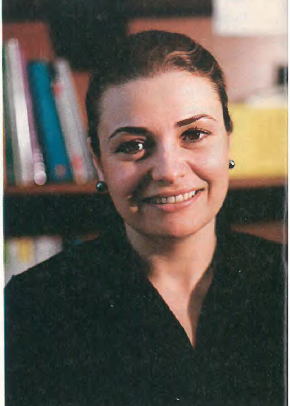
Director of internal audit, Banque Audi
When Suzanne Bacha returned to Lebanon three and a half years ago, she brought with her a wealth of international banking experience to a financial sector that needed to catch up with the rest of the world. But that was not always met with open arms.
“The older generation, mainly men, have difficulty accepting that young people, especially women, have a lot of experience and could threaten their position,” says Bacha, director of internal audit at Banque Audi. Pausing, she chooses her words carefully and adds, “Maybe it’s not only a woman’s problem; it’s the older generation that feels threatened and it’s a response to those who have outside experience.”
Nonetheless, that international background played a large part in her appointment at Audi, Lebanon’s fourth-largest bank with total assets of $3.2 billion. Last year the bank posted net profits of $38.1 million, down 11.3% from 1998.
With a degree in banking and finance, Bacha began as a trainee at Deutsche Bank, one of 200 selected for a managerial trainee program that included a diploma from Germany’s Bank Academy. She specialized in trade finance and financial analysis, working in Germany and Paris for two and a half years before spending a total of 14 years with Deutsche Bank.
When Deutsche Bank shifted from commercial to investment banking, Bacha was asked to create its internal audit department. She later became a natural fit to head Audi’s internal audit function, overseeing a team of 15 and reporting directly to the chairman and general manager.
Noting that there are few women in high positions, Bacha sees change on the horizon. “In the generation after me there is a larger number of women in the workforce with the ability, background and ambition,” says Bacha, 37. As for her own ambitions, she laughs: “If I tell you what they are, the people I want to replace will know.” She laughs.
Nadine Kurban Boutros
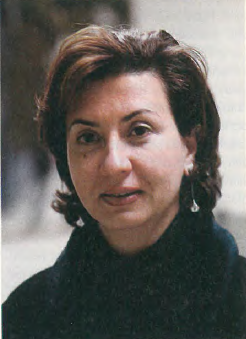
Managing director, Kurban Travel
Nadine Kurban Boutros found the working world in Lebanon not entirely hospitable when she first returned seven years ago. Coming from Canada, where she says women are on a more equal footing with men, the adjustment was difficult.
“When I came back you really had to prove yourself, to people you work with and even to your employees,” says Boutros, adding that the situation has improved as more women have entered the workforce. “But I believe a family business is completely different; we are working altogether so it’s not the same thing.”
Boutros oversees the travel agency side of Kurban Travel, including ticketing, incoming and outgoing operations, while her brother runs the local Avis office. The company has four offices and a staff of 40. Together, the siblings have increased turnover by about 20% a year since 1992, reaching roughly $8 million last year, excluding offices in Montreal and Paris run by another sister.
Founded in 1952 by their father, who remains chairman, Kurban Travel is among Lebanon’s largest agencies. About half of its business comes from corporate accounts. Boutros has stepped up marketing efforts in Europe and the United States, including international exhibitions, to promote Lebanon abroad.
After the war, business was sluggish. “Incoming is growing little by little, but not as much as we would like,” she says. “Tourism depends on peace; everyone in the tourism sector is waiting for peace.” She also points to weak coordination among local travel agencies as a structural problem.
Boutros began working in Canada at 26 at her father’s urging. Married young and a mother, she ran the Montreal office for seven years before returning to Lebanon. “When I came here I told my husband I was going to take care of the head office; I didn’t want to stay at home.”
Top of Form
Myrna Bustani
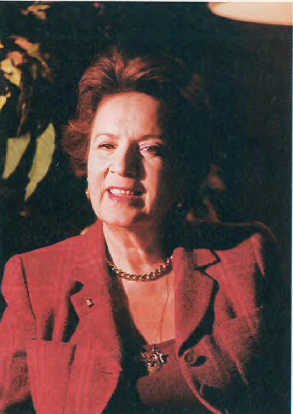
Director, Societe Hoteliere de Tourisme
‘ ‘Women in business; I hate
this topic. It’s so boring
and everybody’s had
enough of it,” says Myrna Bustani, an elegant
woman and former MP who packs an
incredible amount of feistiness in her small
frame. “And it’s unfair because I don’t
think you’d ask a businessman what he
thinks about being a man in business.”
Clearly not amused, and quickly bored, by
an apparently trite line of questioning,
Bustani happily throws a wrench in this
reporter’s idea for a “good feature”. That
same spunk and directness have undoubt-
edly been important ingredients in being a
co-owner of businesses, in which she notes
that over half the employees are women.
The topic here in Lebanon is irrelevant in
her eyes. At an international business con-
ference in the UK and another in New
York, Bustani recalls that she was one of just
two women in attendance.
As director of the Societe Hoteliere de
Tourisme, the holding company of the Al-
Bustan Hotel, she has been overseeing the
remodeling of the 100% family-owned
hotel since the end of the war. Now in its
third stage, the renovations have so far
required an investment of $30 million.
Construction of the five-star hotel in Beit
Mery, which was begun by her
father in 1962, was eventually
completed after his death and
opened in 1967. Bustani is a mem-
ber of the board of directors of
Contracting and Trading Company
(CAT), also founded by her father.
The Bustani family currently holds
a 33% share in CAT, which has a
turnover of about $150 million.
She also holds a seat on the board of
directors of la Banque de
l’Industrie et du Travail in which
the family holds a 70% share.
Assets of the bank totaled $273
million in 1998.
Bustani’s other hat, and perhaps
her most cherished, is as the direc-
tor of the Bustan Festival. Now in its
seventh edition, the festival brings
together hundreds of musicians
from around the world. At a cost of
close to $ 1 million, Like most cul-
tural events the festival is a money-loser
despite its sell-out rate of 80%.
Bustani got her start in the family business
at the age of 24 in the public affairs for CAT
in the 1960s. “I did not choose to be involved
in business at all,” she says in her somewhat
gravelly voice. “When my father died I had
to help my mother; it was not my choice.”
Now a grandmother of six, Bustani prefers to
be judged on her accomplishments. “I don’t
look at business from the financial side
only; it’s what we do,” she says. “The finan-
cial result is sometimes the result of the suc-
cess, but it’s not the success itself.”
Leila Kobeissi
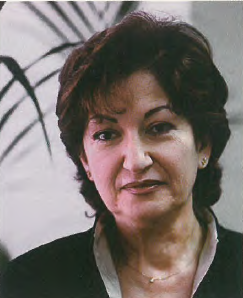
Director of human resources, Fransabank
The view from Leila Kobeissi’s spa-
cious ninth-floor office overlooking
Hamra is magnificent. As someone
“who borders on being a workaholic”,
Kobeissi didn’t get to her position at the helm
of human resources and the sole woman on the
executive committee of Fransabank by
chance. “I am someone who loves to work,
who loves to do things well and I give all my
time to what I do,” says Kobeissi. “That’s how
I have advanced; it comes naturally. I never
told myself that I must reach a certain position
and I must fight to get there.”
It’s easy to see why Kobeissi has garnered
the respect of others; professional and confi-
dent, her responses are delivered with elo-
quence. As for being a woman in business? “I
don’t think there is really a difference
between men and women in the world of
business; I never felt that people acted differ-
ently with me or that there were any con-
straints simply because I am a woman,” she
says. “I believe that from the moment a
woman demonstrates that she is there
because of her competence, a man respects her
and accepts that she might have a higher
position than him.”
Married and already a mother of two as a
student of law at Universite St. Joseph,
Kobeissi embarked on a career path somewhat
late in life, once the third child was old
enough. She came to the banking sector “by
pure chance”. Her first job came at the age of
30 when she created and ran the Centre
d’Etudes et de Documentations Econo-
miques at the chamber of commerce. From
there she moved to the Union of Arab Banks,
where she was responsible for training and
publications on banks. Following a stint with
Banque Audi, Kobeissi took up the reins at her
current position. One of the top ten banks in
Lebanon, Fransabank had assets of $2.2 bil-
lion and profits of $44.9 million in 1998.
There she is responsible for recruiting,
training and staff development of the bank’s
some 800 employees. “Today the role of
human resources is crucial to an organiza-
tion,” says Kobeissi, who looks younger
than her 52 years.
Kobeissi attributes much of her success to
the support that came from her father and hus-
band. “The most important thing is that your
husband supports you; if you don’t have the
support of your husband you won’t go far in
your career.”
Claude el-Alia
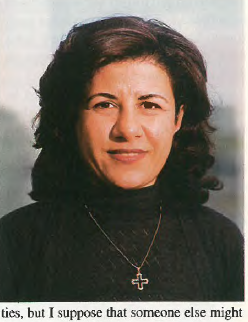
Financial and administrative manager, Abela Freres
Petite and soft-spoken, Claude El-Alia
manages the finances and adminis-
tration of pharmaceutical importer
Abela Freres. She is also in charge of the
human resources for her department. Out of
the company’s total staff of 58, El-Alia
directly manages 15 employees.
This is a company that had a turnover of $16
million last year, up more than 150% from the
$6.3 million registered in 1996. The increase
was due largely to the Glaxo-Wellcome
merger as Abela Freres won the exclusive
agency of the new entity, having previously
been the importer of Wellcome.
Switzerland’s Serona and Germany’s Asta
Medica make up the rest of Abela Freres’ phar-
maceutical portfolio, which accounts for
more than 90% of the firm’s business. The rest
of its turnover is through imports from an array
of stationery and parapharmaceutical firms.
Emirates
38
Fully family-owned until 1996, Abela Freres
has since diversified its shareholding.
El-Alia took up her current position upon
joining Abela Freres a decade ago, while her
responsibilities have increased in tune with the
company’s expansion. At the outset the firm
had a smaller portfolio of products and her staff
was a third of what it is today. A year after
graduating in accounting from Sacre Coeur
Jdeide college, she spent six years doing the
accounts for contracting firm Elie Saghbini.
One of four children, she and her twin sister
followed a similar career path, while the third
sister chose not to work. Single with no chil-
dren, 39-year-old El-Alia has no regrets for
devoting much of her time to a career. “You
have to assume the responsibility for the
choice you make,” says El-Alia. “I know my
private life is completely different from
someone who doesn’t have my responsibili-
ties, but I suppose that someone else might
want the responsibilities that I have.”
While El-Alia never encountered any bar-
riers in getting promotions, she does say that
it’s difficult for a woman to get upper man-
agerial positions in Lebanon. “Men still see
women as taking jobs away from them,” says
El-Alia, adding that it is getting easier for
women to be in high positions.
