
Risky
business
The Saudi Arabian Council of Ministers has issued operating licenses to 13 new insurance companies in a landmark effort to encourage development in the sector.
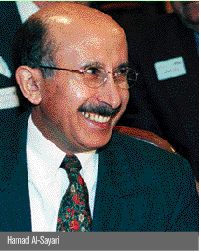
Hamad al-Sayari, the governor of the Saudi Arabian Monetary Authority (SAMA), announced that the new companies would bring approximately SAR2.6 billion ($700 million) into the market with a significant proportion being opened up to investors through initial public offerings (IPOs).
Al-Sayari said that the value of these IPOs would be some SAR936 million ($250 million) which he hoped would add more depth to the Arab region’s largest stock exchange, the Tadawul All Share Index (TASI).
The commitment to offer stock to the public is part of the license agreement—nine of the companies will offer 40% of their stock, while the proportion intended to be offered by other companies ranges from 25% to 47.49%. “Measures such as this indicate that the authorities are attempting to give both the insurance sector a solid base but also develop other contingent areas such as the stock market,” Al-Sayari said. “SAMA has taken steps to organize the market, protect the rights of investors and ensure fair competition among the firms.”
An undeveloped market
Analysts have for some time spoken of the underdeveloped nature of the Saudi insurance market. One sign of this is that a further 18 companies have applied for operating licenses, but it is unclear when a decision will be made to admit them. The relatively exacting nature of Saudi’s new insurance regulations require that all companies have a paid-up capital of SAR100 million ($26.7 million) and some of the second-wave applicants have found this hard to achieve. There have also been concerns that their financial reporting has not been sufficiently complete and that another wave of IPOs so soon after the first 13 might put unreasonable pressure on the TASI.
The kingdom’s insurance market is small for the size of its economy, with a weak and often under-enforced regulatory framework. This is in part due to the fact that the National Company for Cooperative Insurance (NCCI) has been the only licensed company operating in the kingdom—and the only Standard & Poors-rated one for that matter (A). Not having had exclusive access to a potentially huge market has stifled balanced development of the sector.
Off-shore competition
Ali al-Subaihin, CEO of NCCI, said there has been direct competition for years. Competitors have simply used offshore bases for their operations. Going forward, the competition will be on a level playing field as all players will be regulated and supervised.
Indeed, there are currently over 70 insurance companies operating in the kingdom. They received a considerable boost with the introduction of compulsory vehicle insurance some time ago and the more recent decision to make health insurance required for expatriate workers. However, there are ample reports of companies failing to honor legitimate claims and having insufficient capital. The need for greater professionalism in the market has therefore been apparent for some time. SAMA, which regulates the sector, has declared that those existing companies unable to meet the licensing requirements will be forced to close next year.
The insurance market in Saudi, which has historically been dogged by low appetite levels and a lack of overall awareness, has plenty of room for expansion. Observers say they are confident that sufficient demand exists for all the proposed new entities and more, and expect that increased competition and publicity will raise the profile of insurance as part of a business’s strategic planning, rather than something to be taken only when obliged. Industry insiders also hope that the new companies will force SAMA to play a more active role as regulator.
The insurance market has not kept pace with the changes elsewhere in the economy and is now being forced to catch up. There is no shortage of new business to be written either, while the trend for insurers across the region to grow their own underwriting, instead of using international reinsurance, is catching on. This, coupled with increasing compulsory insurance coverage, associated life coverage in the fledgling mortgage market and the considerable interest in sharia-compliant insurance, all suggest that this is an attractive area for investment. Al-Subaihin of NCCI told the press that the current market, which is valued at SAR4.7 billion ($1.25 billion), looks set to double over the next five years.
