
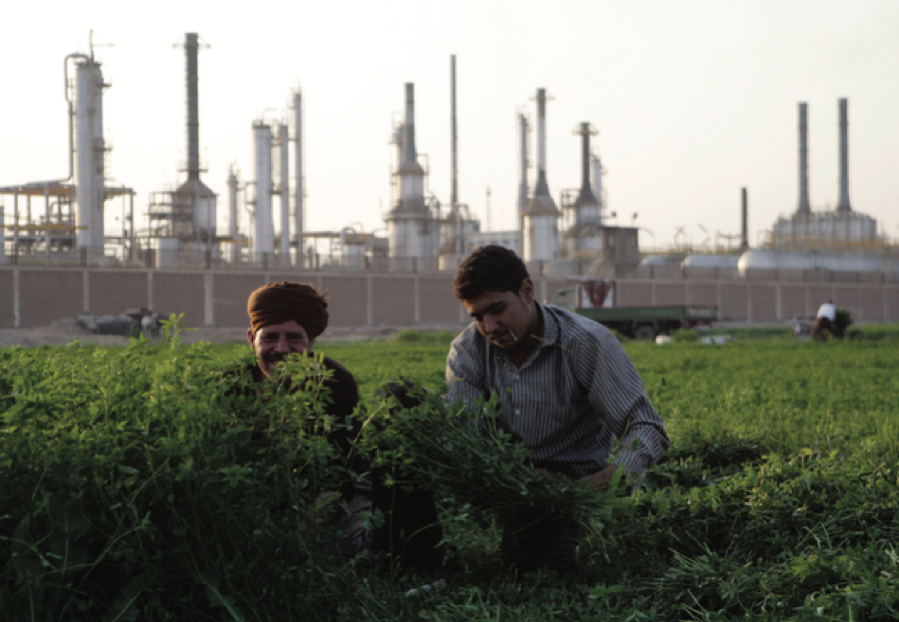
While oil and gas continue to drive Middle Eastern growth, offering abundant liquidity and available investment capital, crude is doubtlessly finite. Much like its brethren countries to the east, the North African governments of Algeria, Morocco, and Tunisia gain substantially from surpluses in hydrocarbons and liquefied natural gas (LNG), but they are now realizing the need for diversification of supplies as a necessary condition to placate domestic energy desires. To this end, the region has developed programs to establish investment and development of local renewable energy platforms for wind and solar power. Dikes and pumps are likely to remain in the medium term, but the traditional energy infrastructure of the region is being replaced by solar power endeavors aimed at establishing mirrors on the sands of the Sahara.
Demand from Europe
The push towards solar power is increasingly demand driven. With energy prices on the rise and additional costs attached to electricity usage, consumers are searching for cheaper, more abundant alternatives. Algeria, Morocco, and Tunisia all offer nearly endless opportunities to develop their respective portions of the Sahara Desert into bases of solar production, capable of transportation through a growing infrastructure via pipelines being constructed to Europe’s southernmost points in Sicily and Spain. While the supply infrastructure is intended for natural gas exports, policy makers and business leaders are working to establish tandem lines to link generation in Africa to European electricity grids.
Secured oil and gas reserves in Algeria have proved most useful for Europe as a strategy of geographically hedging supply sources for its energy demands. Recent moves by Russians playing with supply lines in Europe left missions broke and in the cold. In 2005, the pipes were closed in an attempt to push Europeans to renegotiate their contracts with Russian energy behemoths. Continued involvement in North Africa is likely to please many a European bureaucrat and the majority of green-conscientious citizens residing in its borders, who are looking for a way to guarantee future electricity consumption at cheap rates.
Thirsty for investment
Challenges, nevertheless, undoubtedly remain. Effective human capital is hard to come by and the investment climate for foreign energy firms, long looked at with disdain from national Maghreb champions — like Sonatrach in Algeria — is still weak. If North Africa is truly up to the task at providing large amounts of home-grown renewables, it must continue to change policies to favor effective exchanges of knowledge and foreign firms who are looking to turn profits in the region’s sand dunes.
Recognizing the threat of poor policies towards foreign competition, Maghreb governments undertook reform programs seeking to attract foreign direct investment (FDI) to finance industries in need of capital. The reforms had strong results and favored larger FDI flows with growth capital coming to the rescue for cash-strapped operations. This allowed research and development (R&D) departments and energy conglomerates to develop bases for solar and wind power plants along the Mediterranean’s southern rim. Tunisia, for example, reformed its corporate tax rate for foreign firms in 2000, slicing it by a third, from 75% to 50%, inducing technically savvy European and other firms to enter the market.
Algeria and Tunisia have both set ambitious goals of satisfying 10% of their electricity demand from alternative energy sources by 2030 and 2015, respectively. Such progress was due to improvements in technology, a strong position in the market, particularly for Europe, and a realization that traditional energy resources might lose ground to future alternatives. Morocco, meanwhile, has pursued alternative energy industry investment and development from domestic needs to improve self sufficiency in fulfilling its domestic energy appetite — growing at 8% a year — through overhauling the industry through a mixture of diversification and liberalization agendas.
On the supply side, the region boasts a sunny climate, coupled with a vast desert, both of which combine to form a strong geo-economic position for the solar power industry. Algeria’s Oil Minister Chakib Khelil quipped that Algeria has the “radiation,” no doubt matched by new government willingness, as noted in a recent issue of the Economist. Dress Zejli, a researcher with Morocco’s National Center for Scientific and Technical Research (CNRST), best explained the opportunity of the Maghreb’s sun, coupled with the European demand for energy security, as being an ideal mixture of resource and opportunity.
A $315 million project developed through a partnership of Spain’s Abengoe — which owns 66%, and the remainder owned by a government-controlled consortium — plans to develop a field of mirrors in Algeria stretching 33football fields. The mirrors will concentrate rays of fluid-filled tubes to produce steam used to power conventional turbines. If the project is successful and Algeria’s projections are accurate, it is likely the country will be exporting solar power to more regions than just Europe.
In-country estimates put native solar power potential at 169,000 terawatt hours a year, which is 48 times Europe’s forecasted electricity demand in 2020. Anyone doing the math can see the potential.
