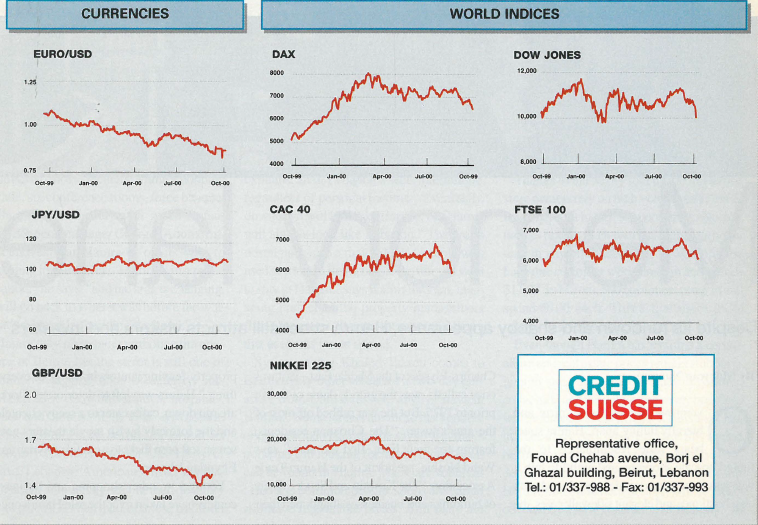
• The stock market’s major averages rose by 4% to 8% for the July-August
period, but the advance appears to be maturing. A fall correction
may be more severe in the technology sector than in the
market as a whole. We continue to favor accumulating issues in
the value areas of the market during an expected fall setback.
• Whether the market’s recent upswing is the start of a durable
advance from the major averages’ spring lows or merely an
interim recovery from those lows that will be followed by
renewed weakness may depend on the sector of the market to
which one is referring. In the case of the technology sector, we
continue to believe that its summer performance sequence was
an interim recovery, or B-wave, that will likely be followed by
a second phase of weakness, or C-wave decline.
• The non-technology/growth rest of the market consists primarily
of a wide array of mid-to-small cap value stocks,
although many large-cap basic-industry/capital-goods issues
could also be included. Those stocks, in general, have been out
of favor or correcting for the past two to three years, but now
appear to be stabilizing or recovering on a gradual or national
basis. The improvement in that wide array of stocks has
lifted the NYSE’s 25-week advance-decline ratio to its highest
level (1.27) since April 1998 and raised the percentage of NYSE
common stocks trading above their 200-day moving averages
to 63%, also the highest level since early 1998. Akey difference
between now and then: In 1998, those figures were
declining from higher preceding levels; now they are rising from
lower levels and showing improving momentum. Although a
market reaction during the next couple of months would certainly
have some effect on those stocks, it would be part of a
major uptrend rather than a reversal of it.
• Meanwhile, the recent catch-up in the previously laggard technology
sector may be the latest indication that the market’s
spring-summer recovery trend is in a mature stage. Moreover, if
that were to be followed by signs of a faltering in the recent leaders
(financial, energy, utility stocks), it would increase the evidence
that a fall pullback or corrective phase was unfolding.
• Against that background, we continue to recommend that trading
accounts raise cash reserves in coming weeks and that
longer-term investors buy on a price scale-down basis.