Global economic optimism may have lost its upward
momentum according to our February Fund Manager Survey.
The inversion in the US yield curve could be taken as a sign
that Fed rate hikes are biting and the US economy is slowing.
If this were so, it could be time to cut cash and go overweight
bonds. A peak in the global manufacturing cycle would once
more align structural and cyclical forces in favor of disinflation.
Two risks keep us on the sidelines. First, the oil price could be
allowed to spike higher if OPEC think a high oil price poses no
threat to the global “e-conomy”. Fund managers do not expect
the oil price to stay at $30, but our global oils team are warning
of $45 if production is not increased. Secondly, and more
fundamentally, there is little evidence that the US economy is
slowing beyond the technical rally in bonds. Most fund managers
think the peak in Fed Funds is a couple of hikes away. We
are not so sure. We remain overweight cash in our UK benchmarked
global mixed fund.
Growth at any price?
We have used our Global Sector “Wheel of Fortune”
model to explain the fund manager love affair with TMT
(Tech, Media and Telecoms). These stocks are the New Era’s
cyclicals, or Growth Cyclicals. Cross-checking fund manager
preferences for Growth stocks with their preferences for
Cyclicals seems to bear us out. Japanese fund managers are most taken with TMT whereas US managers are the only ones
leaning towards Growth Defensives such as Pharmaceuticals.
Growth investors could be caught out in 2000 if the global
economy stays strong and commodity prices surge as they did
in 1994. When pricing power becomes widespread, investors
refuse to pay a large premium for long-term growth. Value
stocks tend to outperform by a wide margin.
When to switch back into the UK?
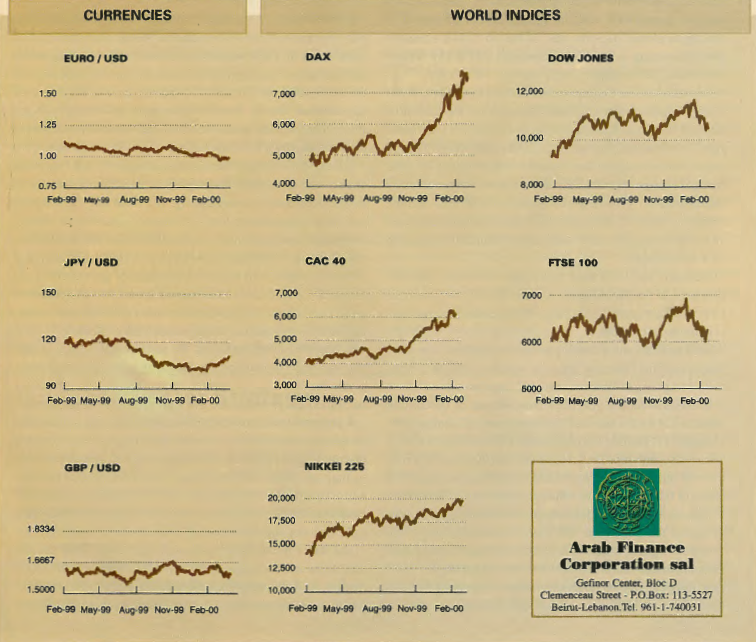
The UK equity market has underperformed Europe significantly
in the last couple of months. UK earnings
forecasts have not been downgraded. UK equities have been
de-rated by around 25% relative to Europe to reflect the fact
that fund managers expect the UK to slow while they expect
Europe to remain strong.
This period of UK underperformance could end in one of two
ways. UK economic optimism could recover as fund managers
factor in a peak in base rates and a soft landing in the economy.
Or European economic optimism could fall as the Eurozone
economy responds to more aggressive ECB rate hikes.
We expect a UK soft landing to precede any European slowdown.
But judging by Eddie George’s hawkish tone it could
still be a little early to switch back into the UK. There may be
one or two rate hikes left.
European Sector Strategy
• Extremes exist within the European equity market,
even to a greater extent than on a global basis.
• The TMT (Technology/Media/Telecoms) sector
generally has poor value, but newsflow and sentiment
are driving the sector higher.
• Differentiate within TMT – overweight IT Hardware/
Electronics, underweight Media.
• Hedge selected TMT with some value –
overweight Oils & Banks.
Extremes clearly exist within the European equity market,
where valuations are becoming somewhat meaningless.
Fear of underperforming benchmarks in the
institutional world at a time when consolidation is causing
some weighting nightmares, combined with a rush of liquidity
from the retail market into a relatively scarce space are just some
of the factors encouraging these extreme sector divergences. We
are painfully aware that trying to predict the “bursting of the bubble”
is difficult, and in any case, these sector divergences could
continue for longer than anyone anticipates.
The divergences between sector performances and valuations
are even more extreme in Europe than in the US. European TMT
trades on over 60x 2000 forecasted earnings (I/B/E/S), compared
to the US TMT constituents of the S&P, which trade in aggregate
on just over 40x, yet both groups have similar growth prospects.
And whilst 29% of the US TMT stocks have actually declined over
the past three months, this has only occurred to 12% of European
TMT stocks.
The driving forces of these extreme positions are partly global,
partly European, and are illustrated below.
• The long-term growth of the market is estimated by analysts
to be 10%, while the long-term growth rates for the IT Hardware,
Software, Media and Telecoms sector are 26%, 21%,
12% and 15% respectively and are on a rising trend.
• Penetration rates in Europe are much lower than those in the
US allowing room for catch-up.
• Consolidation is still driving the TMT sector. 1999 saw
record M&A activity where 32% of all global M&A
involved a European target, up from 23% in 1998. And this
year has started well, with the Vodafone/Mannesmann deal
beating all global M&A records. Of the top 50 M&A deals in
1999 involving a European company, 42% (by value)
involved a TMT company, up from only 3% in 1998.
• According to our Gallup survey of fund managers, Technology/
Media/Electronics and Telecoms are the four most
favored sectors in Europe and this has been the case since
April 1999 when pharmaceuticals dropped from its high
perch. And not only do they remain favored sectors, but over
the past three months, fund managers have actually
increased their preference for each of these four sectors.
Research in the UK shows that the Gallup survey is best used
as a confirming indicator rather than a contrarian indicator
on a sector basis.
• Although we don’t have ownership details yet for Pan
Europe, UK fund managers are currently only 94% weighted
in TMT and post the Vodafone/Mannesmann merger this
is likely to fall to 86%.
• News stories abound fuelling investor sentiment. Screening
Reuters and the Financial Times for stories involving companies
announcing an “Internet strategy”, there have already been
160 stories so far this year (an annualized rate of 1840) compared
to 324 for the whole of 1999 and merely 27 during 1998.
• Liquidity is pouring into the markets. Borrowing in the US
to buy securities rose at an annualized rate of over 400% over
the past quarter, which accounted for 25% of the growth in
total US bank lending. In addition, according to Trim Tabs,
US margin debt as a percentage of market cap has now
exceeded the September 1987 previous record of 1.38%.
These are signs of excess in financial markets. Although similar
comparable data is not available for Europe, we also know
that European mutual funds saw inflows into equity funds in
Q4 1999 of $40 billion – a record quarterly inflow.
• Scarcity of tech stocks is a relevant factor for European
investors. Although TMT now accounts for 32% of European
market cap (up from 18% 12 months ago), this still lags the
US where the TMT weighting is 42%. The European/US
divergence is clearly much greater in the Internet space
alone, where the European Internet sector’s market cap is
around $140 billion (up from only $17 billion at end September)
compared to close to $1 trillion in the US.
We compared European sectors with their US and Japanese counterparts
in the February Sector Strategy and they were some of the
most staggering set of charts we’ve ever run, very clearly illustrating
the extremes within sector rotation on a global scale.
Our main message is the need to differentiate within the
TMT group. It is clearly not ideal to be completely out of the sector,
but just as in the US, where more differentiation is occurring
within the TMT group as the industry matures, we suspect
this will also take place in Europe. We would differentiate within
TMT in four ways.
1. Visibility. If, for any reason, investors’ risk aversion rises, their
time horizons will most likely shorten. We therefore recommend
those areas of TMT which are currently experiencing strong
earnings growth and upgrades and where visibility is greatest for
the future. Of those reported, 1999 results have certainly beaten
expectations for the telecom equipment and semiconductor
stocks, but the same cannot be said for all telecom/media stocks
(as illustrated by BT, Deutsche Telekom, GTS and Reuters).
2. Barriers to entry. There is an increasing risk that “too much
capital is chasing too few companies” and that overall returns
may be depressed by overcapacity. The fixed-line telecoms are
currently experiencing this, with heavy competition driving
down tariffs and destroying profitability. However, as an example
of an area with high barriers to entry, Nokia, Ericsson and
Motorola, together having a market share of around 50% (and
rising) of the wireless handset market, are able to hold onto their
pricing power and are significantly better able to absorb spiraling
R&D costs at a time when volumes are exploding.
3. Nature of the business. We suspect that Europe is likely
to undergo a technologically-led capex boom in coming years,
given the low cost of capital, technology catch-up. Capex
equipment plays within the TMT group are likely to benefit.
4. Interest rate sensitivity. We continue to believe that interest
rates could rise more than equity fund managers are currently
discounting and those stocks with the highest amount of value
in their terminal value are more vulnerable under this scenario.
Bearing in mind these factors, we remain overweight IT
Hardware/ Electronics, are underweight Media, and broadly neutral
Telecoms and Software.
The sector rotation and market obsession with TMT has created
some enormous potential opportunities elsewhere in the
market. And although value alone is not a strong enough catalyst
to provoke investors’ attention, both the oils and banks sec-
tors could be beneficiaries either from a broadening out of the market,
or from a significant change of sentiment caused perhaps by
one of our suggested triggers. We still believe the global economy
has room to surprise on the upside, and there is also a high
chance that the oil price remains firmer than the market anticipates.
With current Euro weakness, cost-cutting efforts and synergy benefits
and a firm oil price driving oils’ earnings significantly higher,
we view the oil sector as one of the best plays on a continued
global upturn.
The oil sector’s price relative is almost back to Fall 1998’s lows
(when the oil price was closer to $10 per barrel), while the
prospective P/E relative of the sector is at a ten-year low. Note, the
Telecoms sector has outperformed the Oils Sector by 84% since
the start of Q4 1999. Prospective EPS Relative Price relative
European Banks have clearly been dogged by expectations of
Internet-induced structural declines in the industry combined with
rising bond yields. We suspect however, that more than enough bad news is discounted in sector valuations, and that another wave
of industry consolidation, potentially on a cross-border scale (or
even potentially involving the TMT sector), could be the catalyst
to revive the sector. However, we suspect that outperformance
from the banks could be quite limited while sentiment remains
so attached to TMT.
Previous research into sector correlations, both in Europe
and the US highlighted the significant inverse correlation
between the financials and TMT. Banks are better viewed as a
hedge against a “bursting of the bubble” rather than a long-
term theme, but are strongly favored over both insurers and life
assurers given current valuations. Our largest underweight positions,
alongside Media, are pharmas, retailers, diversified industrials
(which include German electricity stocks), transport and life
assurers. These are generally sectors whose ratings remain at risk
while their earnings are in decline relative to the market.