
Last month, Libyan leader Muammar al-Qaddafi’s son, Saif al-Islam al-Qaddafi, said the case of the Libyan convicted by a Scottish court for the bombing of PanAm Flight 103 over Lockerbie in 1988 “is over for good.”
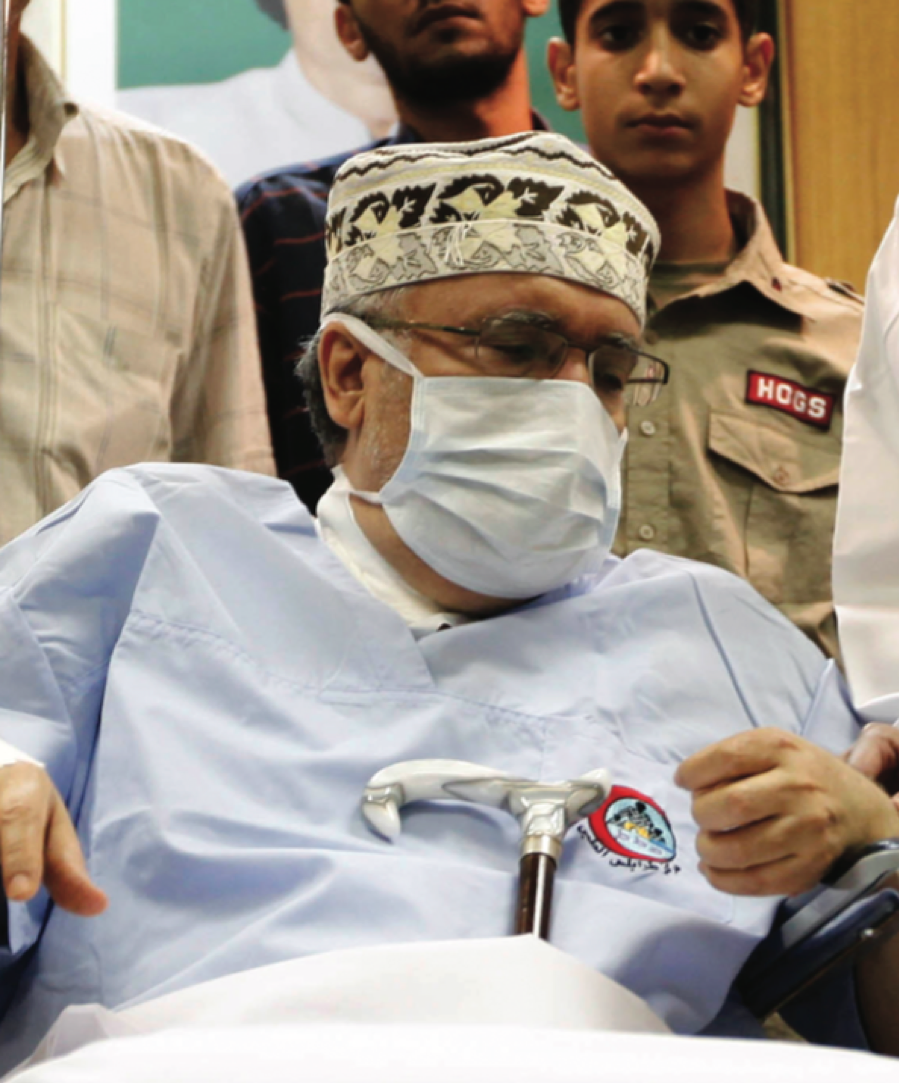
It would seem to be over for the convicted bomber, Abdelbaset al-Megrahi, who is terminally ill with cancer and was returned to Libya in August on compassionate grounds after serving eight years in prison. But the Lockerbie issue, in which 270 people were murdered, is far from over.
On an almost weekly basis, certain British publications have been running articles that something was amiss in both the decision to free Megrahi and the investigation into the bombing.
The first major story was that oil giant BP signed major oil deals with Libya in the week following Megrahi’s release. It could be coincidence, but the timing is certainly fishy. The British government of course claimed nothing of the sort. There could be no “trade for terrorists.”
BP then came out and scuppered that whole premise, saying it had lobbied the British government in late 2007 that a delay in concluding a prisoner-transfer agreement with the Libyan government could hurt a $900 million deal it had inked with Tripoli.
Then it was revealed that the new international mediator on the bloc, Qatar, had put its oar in, with the Minister for International Cooperation, Khalid bin Mohammed al-Attiyah, pressing Scottish First Minister Alex Salmond over Megrahi in June. Scotland is in talks with Qatar to fund a $3.4 billion road bridge, major subsea electricity cables and other projects.
So, this seems to be yet another case of the sleazy troika of money, oil and dirty politics coming together — but that appears to have been the case from the start. When Libya was accused of being the mastermind behind the bombing, Tripoli eventually paid out compensation to families of the murdered passengers as part of a deal to lift economic sanctions. While Tripoli paid up, it refused to accept guilt. “We thought that it was easier for us to buy peace,” said Libyan Prime Minister Shukri Ghanem in a 2004 interview with the BBC.
Adding to this curiosity was the mainstream Western media’s silence on why the Libyans were so jubilant when Megrahi touched down in Tripoli. It was seen as callous and miscalculated. Prime Minister Gordon Brown was “repulsed,” and Barack Obama “outraged;” but Libyans, publicly and privately, consider Megrahi to be innocent.
Yet if the mainstream media reported this, it would imply a cover up at worst, and a miscarriage of justice at best. Explaining all the ins and outs of a stitch-up would have been too much for a report on the 10
o’clock news. Indeed, there are a reported 600 pages of new and deliberately suppressed evidence that would have cleared Megrahi’s name if the case had continued, and if Megrahi had not been pressured by the British government to drop his appeal in exchange for immediate release. Even the Scottish judges admitted there was a “mass of conflicting evidence.”
Let’s look at a few puzzling parts of the investigation. A “key secret witness” at the original trial, who claimed to have seen Megrahi putting the bomb on to the plane in Frankfurt, was exposed by the defense as a CIA informer that would have been paid up to $4 million if Megrahi were convicted. Then there is the circuit board and bomb timer “found” around Lockerbie which a forensic scientist proved had no trace of explosives on them. But the crucial, damning evidence that put Megrahi away was the clothes found in the wreckage of the plane. A Maltese store owner claimed he sold Megrahi the clothes, yet he gave a false description of Megrahi in 19 separate statements and couldn’t even recognize him in the courtroom.
The whole saga of the actual bombing, the reasons behind it and the trial itself — held in Holland without a jury — would make for a good Hollywood thriller. The Lockerbie bombing is a story of double crosses, bribed and dodgy witnesses, government corruption, CIA rogue agents, drugs-for-hostages deals in Lebanon, and tampered evidence. It is also a story about the ongoing ‘war on terror,’ and how geopolitical strategic interests get in the way of real justice.
Qaddafi junior saying that the issue is over is somewhat true for Libya. The country has successfully come in from the cold and is now part of the club again; Megrahi is home, guilty in the eyes of the Scottish courts and much of the West but considered innocent in Libya. As for finding the culprit, the Lockerbie case is yet another file in that ever growing pile of unsolved, politically charged cases of murder and mayhem.
PAUL COCHRANE is the Middle East correspondent for the International News Service
