• Donate
  • Our Purpose
  • Contact Us
Executive Magazine
  • ISSUES
    • Current Issue
    • Past issues
  • BUSINESS
  • ECONOMICS & POLICY
  • OPINION
  • SPECIAL REPORTS
  • EXECUTIVE TALKS
  • MOVEMENTS
    • Change the image
    • Cannes lions
    • Transparency & accountability
    • ECONOMIC ROADMAP
    • Say No to Corruption
    • The Lebanon media development initiative
    • LPSN Policy Asks
    • Advocating the preservation of deposits
  • JOIN US
    • Join our movement
    • Attend our events
    • Receive updates
    • Connect with us
  • DONATE
Economics & Policy

The Bekaa boiling point

by Emma Gatten August 14, 2013
written by Emma Gatten

In the village of Saadnayel in the Bekaa Valley, 25-year-old Mohammed Hoss says refugees now outnumber locals. Around the village, there is no one whose state of mind has been unaffected by the refugee crisis, and the tension, having built up week after week, is now palpable.

Hoss himself might not be here were it not for the fact that the Lebanese economy has been stuttering for more than a year. A mechanical engineering graduate, he says he and his peers find it nearly impossible to find jobs in their field. Thus, in absence of qualified employment offers, he runs a small shisha cafe, where he actually benefits from the influx of Syrians willing to work for less than the locals.


Related articles: Lebanon’s Syria response in crisis

Interactive map of Syrian refugees in Lebanon


He employs both a Syrian and a Lebanese worker, but pays the Syrian a lower hourly wage. “What are you going to do, if you can employ a Syrian for $200 a month and a Lebanese for $400? It’s good for the companies, but not for the workers,” he says.

An elusive equilibrium

But while local businesses are benefiting from the reduced cost of labor, competition for jobs and other resources is fuelling resentment between the Syrian population and some of the young men in the village. Fights have broken out, Hoss says.

“The people that live here are losing their patience and can’t control their anger. When there’s no work, it’s tiring,” he says.

Saadnayel shopkeeper Milham Shebassy is also caught up in the pressure cooker of an increasingly divisive social environment. On the one hand, fewer Lebanese customers come into his shop since Syrians began to be a major presence. On the other, the Syrians who linger outside his store are now his customers. His shop accepts World Food Programme vouchers and Shebassy says he has around 200 regulars.

“At first I was angry with the refugees being here,” he says. Now, he’s made peace with their presence, and claims to be one of the few shopkeepers who have not raised their prices.

The refugee flood has intensified local market demand and international aid monies have boosted the habitually underpowered rural Lebanese economy. But the Syrian refugees themselves have also started new enterprises. These grey economy businesses brought sharp competition to the area, which is a real concern for the Lebanese authorities. 

In April, a security cell was established between the Ministry of Social Affairs (MoSA), and the Ministry of Interior to investigate, among other things, businesses started by Syrians in refugee areas. So far they have only looked at seven different towns in the East Bekaa, where they found that 377 new businesses have been opened by Syrians since early 2012. 

The investigation found that some of the new competitors pushed local operators out of the market. “Some of these businesses are pretty big,” says Makram Malaeb, the program coordinator for the Syrian Crisis Response Unit at MoSA. According to him  one restaurant discovered by the cell was so large and offered food at such low prices that it forced “four or five” established restaurants near it out of business. 

However, it is the smaller businesses that are causing problems in villages like Saadnayel. New sandwich shops, grocers, mechanics and other services are opening up and Syrians desperate for income are able to undercut local businesses. With profits already low, this creates a ‘race-to-the-bottom’ effect, Malaeb says.

The result is friction between the Lebanese hosts and Syrian refugees, which according to MoSA has led to a rise in attacks against refugees. The ministry sees the solution in applying the registration requirements and regulatory frameworks for businesses to the unlicensed newcomers, but it lacks both the resources and the authority to close them down.“We are asking for an implementation of the law: that they register with and abide by the laws of the ministries of tourism, health, labor and economy,” says Malaeb. “There’s a balance between offering a humanitarian environment and making Lebanon seem an attractive option for further displacement,” he adds. 

With efficient inter-ministerial cooperation not being one of the hallmarks of the national administrative mills, the task of investigating and regulating the new refugee economy may be a major test of Lebanon’s ability to manage the refugee crisis, which by all evidence from the Eastern Bekaa is going to stay with the country for years. 

Pent-up resentment

In the meanwhile, the Syrian refugees in and around Saadnayel have more immediate worries. Just outside of Saadnayel 43-year-old Khaled is not feeling too welcome.

 Along with four other families, he and his wife are being forced to leave the building they have been living in for a year and a half after fleeing Homs, because the landlord no longer wants Syrians renting from him. 

“The Lebanese consider the Syrians to be beneath them,” Khaled laments. He tells Executive that the treatment of refugees by locals has become worse in recent months. Most of the other families in the building, a stripped down shell of a home partway through construction, have no idea where they will go. Virtually all Syrian refugees who spoke with Executive in and around the village say that they feel looked down upon, and they resent it. They point to what they say was a different and much kinder treatment that the Syrians afforded to the Lebanese who came to Syria during past times of strife in Lebanon. 

However, the two countries’ relationship is historically fraught, and includes long-held resentment from many Lebanese for the years when Syria imposed its military presence. As the strained coexistence between refugees and locals stretches on, it is unpredictable how well the Lebanese will manage these old feelings and also cope with new frustrations that the tight quarters is creating on both sides. 

 “Lebanon is 10,450 km2. How many people can you possibly fit in it?” says Mohammad Hoss. With refugees dispersed among the population, and heavily concentrated in poorer areas, their presence has begun to feel like a weight. Nonetheless, and despite increasing friction, there also continues to be large-scale sympathy for the refugees among the majority of the Lebanese, and an acceptance that they are not to blame for the current situation. When it comes to the question who, then, is to blame, there is always the Lebanese perception that their government should be solving problems but is not. “The disadvantages [of the refugee influx] are because of the government. In any other place, there would be somewhere to provide for the refugees,” says Hoss. 

August 14, 2013 0 comments
0 FacebookTwitterPinterestEmail
Comment

Oil and gas should fuel negotiations

by Zak Brophy August 14, 2013
written by Zak Brophy

In recent years there have been significant strides made in Lebanon’s incipient oil and gas sector. This has in no small part been down Gebran Bassil, the caretaker minister of energy and water. His interpretation of the rules and regulations may have at times been somewhat flexible and his rhetoric hyperbolical, but there is no denying that he has gotten the show on the road. 

The passage of the offshore petroleum resources law and the Petroleum Administration regulations, the creation of the Petroleum Administration, the launch of the first licensing round and the pre-qualification of 46 international oil companies (IOCs) all have been the major landmarks in this journey. This momentum all threatens to come to a shuddering halt, however, as the political apparatus of the country descends into a debilitating funk.

A timetable was set at the beginning of the licensing round that would see the first contracts between the government and the IOCs signed in early 2014. However, if the decrees pertaining to the delineation of the offshore blocks and the revenue sharing model are not passed by September, then the government simply cannot proceed. The resignation of Prime Minister Najib Mikati in March has rendered the Council of Ministers — Lebanon’s cabinet — toothless to do little more than manage its day-to-day business with its caretaker status, impotent to pass new laws. Herein lies Bassil’s dilemma. Eyeing this fast approaching dead end, the minister is calling for an extraordinary cabinet meeting to push the decrees through. 

  Israel’s recent discovery of the Karish gas field near the disputed maritime border with Lebanon has been cited as a further reason for the Lebanese to get their act together and cooperate in this domain at least. Both President Michel Sleiman and Mikati, who remains in office as caretaker prime minister, have expressed their intention to hold an urgent session so the two decrees can be passed and the Committee of Legislation and Consultations has also given the green light — so Bassil may get his way yet. There are however other issues dividing the body politic — most notably, the dispute over the leadership of the armed forces in which the leader of Bassil’s Free Patriotic Movement Party, General Michel Aoun, is a key protagonist — that threaten to overshadow the oil and gas sector and therefore delay any consensus on a meeting.

Even if Minister Bassil is successful in pushing through the pending decrees, there are reasons to be wary of charging full steam ahead in what pretty much amounts to a political and legal vacuum in the country. In late May, Parliament voted to extend its mandate, in the first such move since the end of the civil war in 1991. Since then not only has that institution been crippled but Lebanon’s highest judicial court, the Constitutional Council, has also been seriously debilitated. 

The Constitutional Council was meant to be invulnerable to an otherwise highly corrupted body politic. However, when it was called upon to offer its verdict on the highly contentious vote by the majority of the parliamentarians to extend their own terms in office it succumbed to the same fetid forces that bastardize pretty much every institution in the nation. With several of the judges hamstrung by their loyalties to political and sectarian leaders, the 10-member council did not have a quorum and failed to convene, despite four callings. The separation of powers in Lebanon was further tarnished and the court stripped of its import. 

“This is the most sacred body in the nation… The vacuum we are seeing is a red flag to everyone who is following what is going on in the Lebanon; politically, militarily or commercially,” Roudi Baroudi, an independent energy and environmental consultant and secretary general of the World Energy Council, recently said. 

The state is inherently weak in Lebanon, and the nation is no stranger to political voids. That is reflected by its crumbling infrastructure, rampant corruption and nepotism, which permeates every area of public life. A similar mismanagement of the nascent oil and gas sector would not only line the pockets of the rich at the expense of the poor but would actually blight the whole economy. 

The efforts to push ahead with the oil and gas sector are understandable but, in the words of Baroudi, “it is essential we get our house in order first.” The vital importance of this sector should not be used as an excuse to sidestep the flawed institutions of power but rather as a reason to try to fix them.


Zak Brophy is Free Speech Radio News’ Lebanon correspondent and a freelance business journalist

August 14, 2013 0 comments
0 FacebookTwitterPinterestEmail
The Buzz

Business briefing: 14 Aug 2013

by Executive Staff August 14, 2013
written by Executive Staff

Economics and Policy

Russia has said an international peace conference on Syria is unlikely to take place before October because of "other events."

More from AFP


Saudi Arabia’s inflation rate is estimated to reach 4.5 per cent this year, due to the strong performance of the Kingdom’s non-oil sectors, projected a Kuwait Finance House (KFH) report.

More from Reuters


OPEC oil producer Libya told its customers on Tuesday it could make no promises on crude deliveries next month as on-off strikes paralysed its major sea terminals.

More from Reuters


Brent crude oil rose toward $110 per barrel Tuesday after oil exports from Libya fell to their lowest for two years.

More from Reuters


Companies and Business
 
Security at the Jiyyeh power plant in south Lebanon has been bolstered as part of efforts to protect a Turkish electricity barge that arrived a day earlier.

More from The Daily Star


Carlyle Group, the US private-equity firm in which Abu Dhabi’s Mubadala Development Company owns a 7.5 percent stake, has agreed to sell aerospace communications firm Arinc for $1.39bn to Rockwell Collins.

More from Arabian Business


Jeddah-based Alkhabeer Capital says it plans to broaden its investments around the Gulf and seek a listing on the Saudi stock exchange, underscoring an improvement of investor sentiment in the region.

More from Reuters


August 14, 2013 0 comments
0 FacebookTwitterPinterestEmail
The Buzz

Destination Lebanon

by Benjamin Redd August 14, 2013
written by Benjamin Redd

During the first year of the Syrian uprising, relatively few refugees registered with the UNHCR, the United Nations’ refugee agency. By the end of June 2012, only 25,000 had registered and they were largely concentrated in North Lebanon. Since then, the numbers have soared. By the end of the year, the count had quintupled and the flow was permeating all populated areas. And by the end of June 2013, there were nearly half a million registered refugees in more than 1,400 Lebanese communities. Most of these communities were home to fewer than 100 registrants, but more than 100 housed 1,000 or more — with several hosting more than 10,000.

Click here or on the image below to see our interactive guide to all Syrian refugees.

August 14, 2013 0 comments
0 FacebookTwitterPinterestEmail
Finance

Colony Capital

by Maya Sioufi August 13, 2013
written by Maya Sioufi

Roughly $8 billion have been transferred from the Middle East and North Africa into the care of Tom Barrack, the founder and chief executive of real estate private equity firm Colony Capital. Grandson of Lebanese immigrants to Los Angeles, Barrack founded the company in the City of Angels in 1991 and now manages $25 billion of assets. Colony is the fourth-largest real estate private equity (PE) firm in the world. 

To lure investors’ capital, 25 percent of which comes from the MENA region, Colony is diversifying its investment strategy as it adds distressed debt and media investments to its abundance of real estate projects. 

Since 2008, Colony has been acquiring distressed loans from, among others, the United States’ Federal Deposit Insurance Corporation, which has been buying out failed banks and selling their assets. Colony holds about $7.5 billion in distressed debt.

Another $5 billion are deployed in hospitality projects and $2.5 billion are in the residential real estate sector. The remaining assets are spread between investments in offices, industrial and retail projects such as French hypermarket Carrefour and media ­— most prominently, the film    distributor Miramax.

Barrack’s affiliation to Lebanon has not only led him to sit on the advisory board of the non-profit organization LIFE (Lebanese International Finance Executives), which aims to channel the influence of Lebanese financial executives for the benefit of the country, but also to choose Beirut as the regional headquarters for the firm’s Middle East operations. With Barrack’s old friend Sylvio Tabet heading a team of four, Colony’s Beirut offices, which opened in 2004, cater to a variety of clients in the region from sovereign wealth funds (SWFs) to pension funds to endowment funds to ultra-high-net-worth individuals to institutional clients such as Lebanon’s  Optimum Invest. 

A darling of gulf funds

Regional sovereign wealth funds (SWFs) feature as partners in Colony’s most prominent deals. Qatar’s wealth funds, in particular, have proven to be steadfast partners of Colony and to serve as reliable exit options for the firm.

The Fairmont Raffles Hotel Chain, for instance, is currently owned by a consortium that includes Colony Capital and Qatari Diar, a SWF. Qatari Diar, a 35 percent stakeholder in the chain, is reportedly in talks to acquire Colony’s stake of 20 percent. 

Colony’s MENA regional manager Sylvio Tabet


When Colony sold its controlling share in football club Paris Saint-Germain in 2011, it picked SWF Qatar Investment Authority (QIA). Last year, Colony sold its 100 percent stake in Sardinia’s Smeralda Holding, owner of luxury hotel resorts on the Italian island, for an undisclosed amount to Qatar Holding, a QIA subsidiary. 

And when Colony started venturing into media, it yet again turned to QIA along with California-based Tutor Saliba Corporation, a contracting and engineering group co-founded by Nassib Saliba, also of Lebanese origin, to acquire film distributor Miramax from Disney in 2010, giving it access to 700 film titles.

While media accounts for just 5 percent of Colony’s assets, Tabet, Colony’s regional manager, believes it is a sector worth betting on. He credits major upheavals in the industry for “creating a lot of unique opportunities for equity investors.” Digital media is disrupting traditional media, media conglomerates are divesting their non-core assets and banks are withdrawing from non-core lending, he says.

M.E.N.A. money, foreign investments

“Given the overall uncertainties and changes in Lebanon and the region, investors… have been looking for overseas opportunities and have shown a growing interest in the US market,” says Tabet.

While Arab investors feature among Colony’s roster of clients, the region does not appear on its investment list — 90 percent of its capital is deployed in the US.

Tabet stresses that Colony is open to making investments in the region, but the firm has so far completed just one: it acquired in 2007 a 55 percent stake in Turkey’s Mars Entertainment Group, an entertainment, cinema and sports chain, which it exited three years later generating an internal rate of return of 26 percent. The only other regional investment that Colony came close to sealing was a $2 billion contract for the development of a tourism project in Morocco. The project fell through, however, and as talks over legal repercussions are still ongoing, Tabet could not comment on this issue. 

While Tabet sees investment opportunities in Turkey, Colony’s eyes are fixed on the West, and the US in particular, where they foresee lucrative returns. To realize them, they will continue to venture hand in hand with their Middle Eastern partners. 

August 13, 2013 0 comments
0 FacebookTwitterPinterestEmail
Economics & Policy

A response in crisis

by Joe Dyke & Joe Dyke August 13, 2013
written by Joe Dyke & Joe Dyke

Everyone is overwhelmed. United Nations bodies are desperately trying to raise funds, the Lebanese government is seeking to maintain control and local and international charities are providing care to the refugees across the country, all seemingly unable to cope with the sheer scale of the crisis.

A country that is home to little more than 4 million people, Lebanon currently hosts 600,000 Syrians who are registered or awaiting registration with the UN, and the total number is estimated to be much higher. Among the refugee community needs are increasing, as those with savings run dry, while within the Lebanese population many previously poor people are increasingly destitute as cheap Syrian labor pushes down wages. Dealing with this is an unenviable task.

Related articles: Does Lebanon need refugee camps?

Interactive map of Syrian refugees in Lebanon

But while the scale of the crisis and its devastating impact on Lebanon has been so vast no single organizational structure could have dealt with it in its entirety, serious questions are being raised about the way in which all bodies have responded to the crisis. The impression insiders give is that much of the response has been inadequate, myopic and badly coordinated.

A delayed reaction

Perhaps the worst case of inertia has come from the government itself. When the Syrian crisis started in early 2011, the government’s position was to remain neutral because of its close relationship with President Bashar al-Assad. There was little discussion of the crisis continuing for more than the immediate months, partly because many expected the Syrian conflict to end quickly as other uprisings in the region had. It was not until 15 months into the crisis that the Lebanese government produced its first crisis-management plan.

Even government officials say the response has not been ideal. Makram Malaeb, program manager at the Ministry of Social Affairs, admits “there was a period of time when there was a denial,” while Ramzi Naaman, lead coordinator of Lebanon’s Syria response plan, believes that the government has failed to understand how fundamentally the crisis is changing the country. As such, he says, their response has been piecemeal, with no medium-term planning. “They are not scared enough,” he told Executive.

The health sector epitomizes many of the concerns. A recent paper in the UK-based health journal The Lancet found that “pressure on domestic health systems is immense,” with hospitals struggling to cope with a sharply increased workload, even though capacity has not increased. Among the concerns are new diseases, such as the skin disease leishmaniasis — which is common in northern Syria but not in Lebanon — brought to the country by Syrian refugees, as well as a dwindling number of available beds.

Fouad Fouad, member of the Faculty of Health Sciences at the American University of Beirut and co-author of the Lancet report, believes medium-term planning could have allowed the government to use the crisis as an opportunity to invest in much-needed infrastructure. “My feeling is that with this long-term crisis, the only way to face [this] issue is to adapt the system to absorb more, or to be the kind of system that deals with such an unexpected crisis.” Instead, he says, the government has hoped the current infrastructure will be able to cope.

Fouad was in fact tasked with drawing up part of the government’s strategic planning document for dealing with the Syria crisis. Shuffling through the files in his third-floor office he produces the document, which calls for major investment in hospitals as a way to help benefit the local population as well as aid refugees. The plan, he says, was delivered at the end of 2012 but was never published. “Can you believe that this is the only copy? Well maybe they [the government] have another copy,” he says. “It’s just all papers, and documents, there’s no action plan.”

Syrians using Lebanon’s hospitals have put a strain on the country’s infrastructure

Critics of the government argue the Syria file has not been taken seriously enough. Syria has been dealt with primarily as a humanitarian crisis and thus has fallen under the remit of the Ministry of Social Affairs (MoSA) — one of the smaller ministries with historically little sway — while the Ministries of Health, Education and Interior have played smaller roles. 

There have been numerous calls for a new strategy recognizing the scale of the crisis. Ziad Sayegh, a former advisor to the Ministry of Labor, is among the leading voices for such a framework. Speaking to Executive in late June, he called for either an independent but powerful body of around a dozen expert technocrats to coordinate the government’s response to the crisis or, more radically still, an independent ministry within the government dedicated to dealing with the crisis. “We have an executive opportunity, now this is the right time,” he says. “The new prime minister along with the president should have a serious look at this proposal without going into political agendas.”


Sayegh is, of course, referring to Tammam Salam — Lebanon’s prime minister-designate. Since former Prime Minister Najib Mikati resigned his government in April, Salam has been trying to form a new government — a process unlikely to end soon. With Parliament’s term ‘temporarily’ extended by 17 months due to the deadlock over elections, the office of President Michel Sleiman is now the only fully functional part of government.

Antoine Haddad, secretary-general of the Democratic Renewal Movement, organized one of the first major conferences on the impact of the crisis on Lebanon. Haddad, who is close to the president, thinks a prolonged period without a government could force Sleiman to take matters into his own hands and reshape the response to the crisis. “The [prime minister] is more fit to [deal with] this, but I suppose that there is a possibility that we live without a government for a long period. So what shall we do? I think in this case the presidency shall have to deal with the issue.”

A shifted burden

Without a coherent political response, much of the burden for responding to the crisis has fallen on the international community. UNHCR, the UN’s refugee body, has led the response to the crisis, simultaneously coordinating the operations, implementing them and partnering with NGOs to deliver assistance. They have launched five, six-month long Regional Response Plans (RRP) in which they have appealed for funding. But they have found the sheer scale of the crisis difficult to cope with.

Syrian women receive aid packages from one of many NGOs working on the situation

In January this year, they launched RRP4 based on an estimated 300,000 refugees coming by the end of June. By mid-February that number had been surpassed, but they had only raised 48 percent of the desired funding. As such, many assistance programs had to be scaled back dramatically. “We have to make difficult choices every day in terms of who we assist and how much assistance we can give,” Joelle Eid, information officer at UNHCR, says.

While the funding crisis is acute, questions have also been raised about UNHCR’s role. Historically, the body was not as heavily involved in Lebanon as the Palestinian relief agency UNRWA. UNHCR has thus grown rapidly, from just 50 staff in 2011 to 400 currently, and questions are being raised about its capacity.

Olivier Beucher, head of the Danish Refugee Council in Lebanon and the chair of the body that represents the top international NGOs in the country, believes the UN agency is overloaded. “Too much is demanded or required from UNHCR… Now with the size of the crisis in Lebanon, the caseload is so high that they can’t do this,” he says. Beucher suggested that there are a range of other ways in which the system could be organized, including a cluster-style system where different agencies take on different key sector coordination roles, working in closer conjunction with the government and NGOs.

Making difficult choices for the future

As it becomes increasingly clear that the crisis will continue to affect Lebanon for years to come, those in the field are concluding that a medium-term plan is necessary. The principle of aid targeting perhaps provides an example of how a lack of strategic planning early in the process can encumber the response later on.

In theory, targeting aid is the right thing to do. With a refugee crisis of this severity and funding shortages, it is not possible to provide quality care to everyone. As such, aid agencies should provide support to the most vulnerable. “Either you reduce the assistance, or you don’t deliver assistance to everybody. And we do believe that the combination of both is and was needed a long time ago,” Beucher says.

The current plan is to target aid in three particular areas: food vouchers, hygiene kits, and baby kits, starting in September. The aim is to reduce the amount of people receiving these services in order to support the most needy. But Beucher believes that poor planning has made it difficult to differentiate those who are more in need than others. 

Normally, in order to make needs-based assessments, he says, aid agencies would visit “every set of families [that register] to make sure that people are not lying [about their needs].” This is most easily done when families first register, but the UN has merely recorded the “bio data” — basic information about the families.

As such, Beucher says, there is little chance that the targeting can now be accurate. “Our worry is that the UNHCR will do the targeting on its own based on the criteria that they gathered, but this will have a big error in the selection… [then] they will ask the NGOs to verify that these people are vulnerable, and we know we will find a lot of people that are not as vulnerable as they mention, and they will need to be excluded from the assistance. And this is where you have conflict with the refugee families,” he says. 

Beucher believes this could endanger his field workers as they will be forced to tell refugees they are no longer entitled to, for example, food vouchers. A key way to avoid this is a major communication push to let refugees know. For a program due to launch in September, the UN is perhaps running a little late. UNHCR’s Eid told Executive in mid-July that the “criteria [for who is eligible for targeted assistance] has not yet been set”, but that they hoped to finalize the terms of targeting by the beginning of August. This will leave the body with a month to communicate the new policy to the huge refugee community.

Eid admits problems in the past with communication but says they are being resolved. “This time we are devising a strategy whereby we would communicate to refugees the changes that are expected to happen,” she said.

Better communication

If the UN has struggled to communicate with the refugees, then coordination with the government and NGOs is also sub-optimal. Insiders talk of communication breaking down between different bodies, meaning they are often duplicating work or failing to share information. UNHCR’s Eid denied these claims, saying, “I have not heard of these rumors.”

“Unfortunately the coordination is [poor] on many levels. You need to have a strong strategy for collaboration. I know that several UN agencies working here, but there’s no one plan for all. And many big international organizations don’t talk to UN agencies,” AUB’s Fouad says.

In recent months, however, there have been a few positive signs that the entities are starting to work together better. In June the UN launched its fifth RRP calling for funding from international donors. For the first time, the government was a partner in the bid, with $450 million of the $1.7 billion appeal aimed to support government projects. This, Eid says, was a major step toward improving the response plan.

Similarly, in recent weeks the government established a trust fund with the World Bank. While the size of the fund is still being confirmed, Naaman said the basic plan is that it “is under the government’s responsibility, along with an international partner that is concerned in the issue, so they will be doing a sort of supervision so that everything is [transparent].” In June the acting government released a new plan for dealing with the crisis. Despite the lack of details, it promises that they are tackling the matter in a more serious manner.

Related articles: Does Lebanon need refugee camps?

Interactive map of Syrian refugees in Lebanon

However, unless there is a new government, there is little hope that the response to the crisis will markedly improve. Without a carefully orchestrated national strategy, the refugee crisis is likely to remain in the hands of the overstretched UNHCR — making essential medium-term planning less likely.

Note: This article originally said Beucher proposed a cluster system

August 13, 2013 0 comments
0 FacebookTwitterPinterestEmail
The Buzz

Business briefing: 13 Aug 2013

by Executive Staff August 13, 2013
written by Executive Staff

Economics and Policy

A group representing tourism-related businesses in Lebanon has called on the government to take swift steps to remedy the problems facing the sector.

More from The Daily Star


The call comes after industry experts estimated that the kidnapping of two Turkish pilots in Beirut is likely to further disrupt Lebanon's faltering tourism industry.
 
More from The Daily Star


The UAE's central bank is under pressure to break the regulatory impasse in its negotiations with the financial industry after eight months with little to show for its latest efforts.

More from The National


Sudan has postponed its deadline for the closure of the economically vital pipeline network carrying South Sudanese oil until next month.

More from AFP


Companies and Business
 
Lenders including Deutsche Bank, HSBC and China Development Bank are resisting calls by Saudi Telecom (STC) to restructure a loan that could potentially leave them with losses of up to $600 million.
 
More from Reuters


India’s Hindustan Petroleum will resume buying Iranian crude if the government unveils an adequate backup plan for local insurers to provide cover for its refineries.

More from Reuters


August 13, 2013 0 comments
0 FacebookTwitterPinterestEmail
Economics & Policy

Increasingly destitute

by Sam Tarling August 12, 2013
written by Sam Tarling
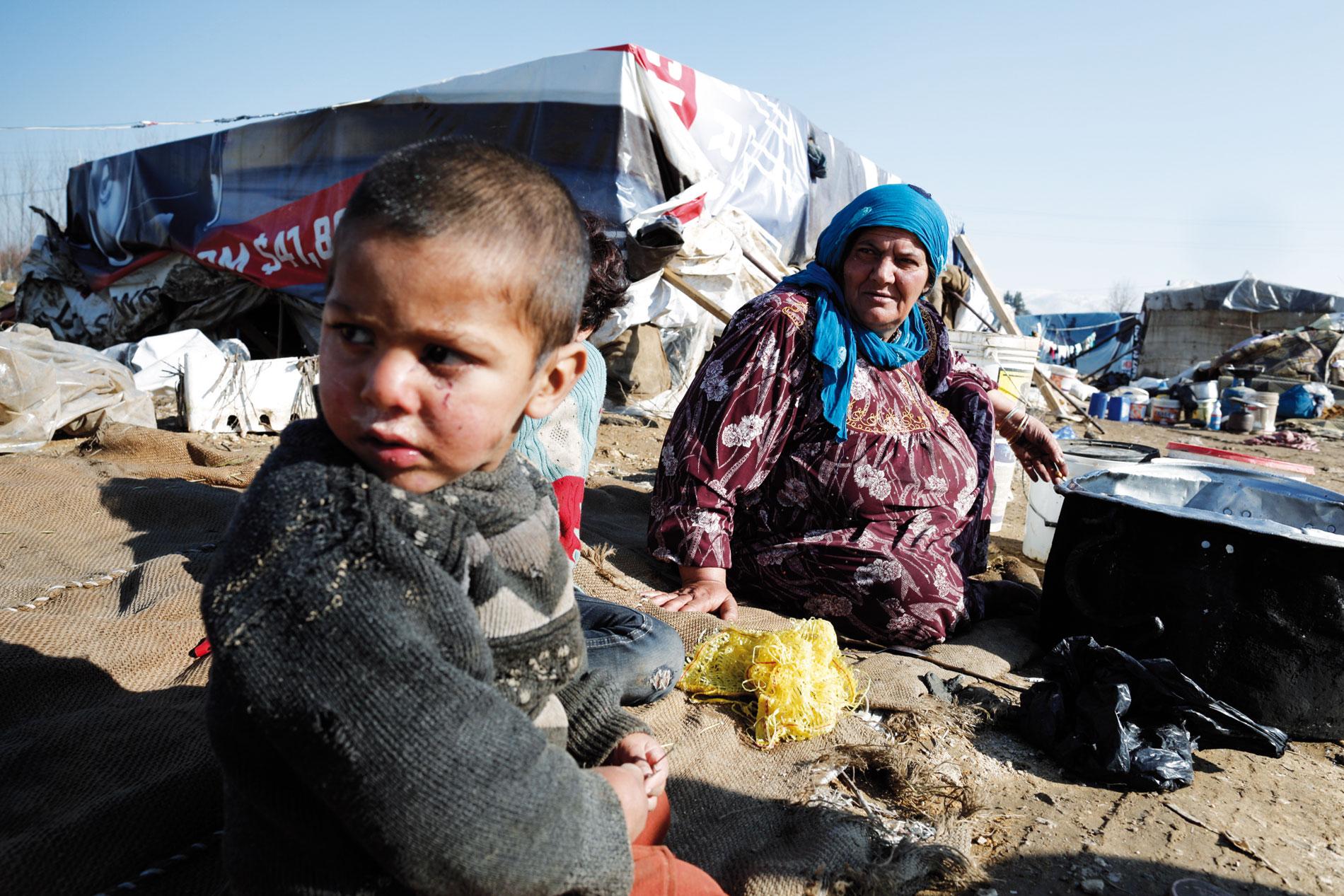
There are over 600,000 Syrian refugees registered in Lebanon, with thousands based in the sparse Bekaa district [Photo: Sam Tarling/Executive]
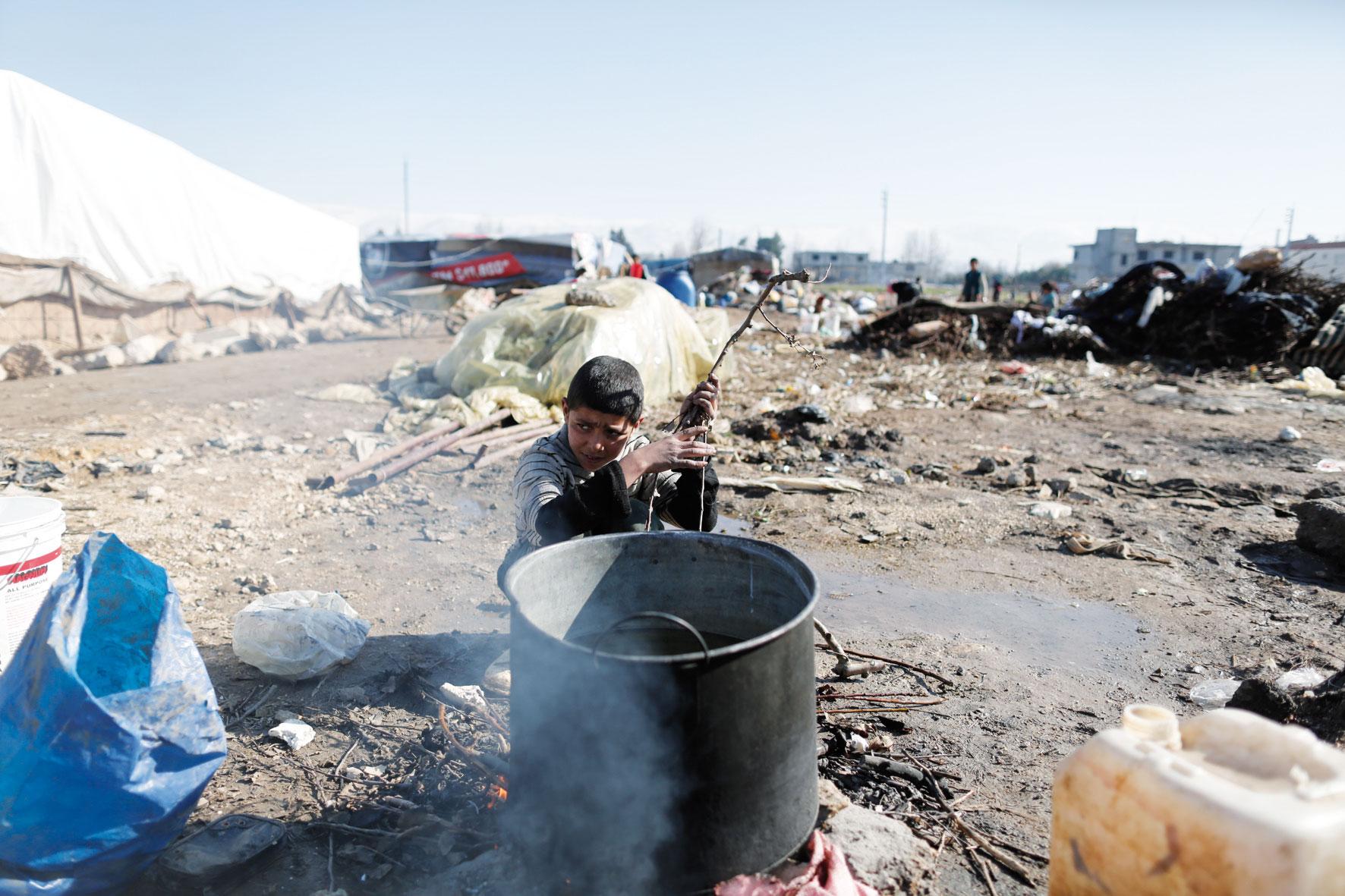
Conditions in the region are deteriorating, with the United Nations struggling to provide support [Photo: Sam Tarling/Executive]
There is not enough work for the refugees, with many poor Lebanese being angered by Syrians accepting lower wages [Photo: Sam Tarling/Executive]
A refugee fixes a waterproof layer to the outside of his tent [Photo: Sam Tarling/Executive]
Refugees from Homs prepare the ground to pitch another makeshift tent in the Bekaa [Photo: Sam Tarling/Executive]
Many children have fled the war-torn country without their families [Photo: Sam Tarling/Executive]
Lebanon has so far decided against formal refugee camps but as the country struggles to cope there are increasing pressures to do so [Photo: Sam Tarling/Executive]
August 12, 2013 0 comments
0 FacebookTwitterPinterestEmail
The Buzz

Business briefing: 12 Aug 2013

by Executive Staff August 12, 2013
written by Executive Staff

Economics and Policy

Bijan Namdar Zanganeh, a former Iranian oil minister who has been nominated by President Hassan Rouhani to take over the ministry again, pledged to boost Iran’s oil output should he be approved by the parliament.

More from Reuters

The abduction of two Turkish Airlines pilots could deal the last blow to Lebanon’s ailing tourism sector, caretaker Tourism Minister Fadi Abboud warned over the weekend.

More from The Daily Star


The unemployment rate in Bahrain rose nearly 17 percent in the second quarter of 2013, compared to the first quarter of the year, government officials said.

More from Arabian Business


Companies and Business

National Bank of Ras al-Khaimah (RAK Bank) has appointed Peter England, previously a senior banker at Malaysia’s CIMB Group, as its new chief executive.

More from Reuters


Tata Steel Europe has won an order to manufacture 60,000 tonnes of high-quality rail for a new high-speed line linking the two holy cities of Makkah and Madinah in Saudi Arabia.

More from Arabian Business

August 12, 2013 0 comments
0 FacebookTwitterPinterestEmail
Economics & Policy

Time for camps

by Joe Dyke August 11, 2013
written by Joe Dyke

“If I want to go to prison I will go back to Bashar al-Assad. He is pretty good at it,” Abou Ibrahim jokes when asked about whether he would move to a refugee camp. The father of six fled Syria two years ago and has made the town of Saadnayel in Lebanon’s western Bekaa his temporary home. He rents the land on which his homemade wooden flat is built for $200 a month, which he pays for through sporadic manual work and, in bad months, selling his family’s United Nations food vouchers for cash. But he says he would rather continue to do so than move to a refugee camp, particularly if he were not allowed free movement in and out.

Since the Syrian crisis began in early 2011, policy makers, politicians and UN representatives in Lebanon have tried to avoid talking about camps. The term conjures up imagery of hovels, destitution and, in Lebanon, violence. But increasingly these same figures are coming to the conclusion, more through force than reason, that camps in some form or another are inevitable in Lebanon.

Related article: Interactive map of Syrians in Lebanon

Lebanon’s Syria response in crisis

Currently, there are over 650,000 Syrians either registered or awaiting registration with the United Nations in Lebanon, while the government estimates another 500,000 are in the country unregistered. This equates to over 20 percent of Lebanon’s official population, the largest refugee crisis per population size in the world. Until now, no formal camps have been opened; refugees are housed within the Lebanese system. Around 80 percent live in rented accommodation, while thousands of others are staying with friends or in abandoned buildings.

But since the start of the year, the rate of refugees has expanded so rapidly — in December 2012 there were just 129,000 registered — that the system is increasingly unable to cope. Across the country, around 280 informal camps, consisting of 20-50 tents in small areas, have popped up, often with little or no sanitation or protection against the brutal summer heat and bitterly cold winters. The shelter crisis is forcing many to rethink.

The chief convert so far is the UN itself. Joelle Eid, public information associate at the body’s refugee agency UNHCR, explains that while they still believe camps to be the “least feasible option” for housing Syrian refugees, the point has been reached when Lebanon can no longer assimilate them.

“At the beginning of the crisis, we were not advocating for camps [as they are] very expensive to uphold and maintain. We would rather see refugees live in as normal a setting as possible and we would rather invest money into local public services and schools to benefit generations to come,” she told Executive. “But as the crisis progresses and…rents are on the rise, refugees are at risk of being thrown out of their homes. We see the sprouting of these informal tented settlements,” she adds.

“So today, taking into consideration all [this], there should be another option on the table, including these other solutions”, i.e. camps.

Olivier Beuchard, country director of the Danish Refugee Council (DRC) in Lebanon and chair of the Lebanese Humanitarian Forum INGO which seeks to lobby the UN and the government, is also convinced of the need for camps. Crucially, he believes the crisis will continue to worsen and thus the camps are necessary for medium-term planning.

Informal camps have sprung up across the Bekaa without official UN support


“We, as the INGO forum, do not believe that we are at the peak of the crisis [yet] … If tomorrow in Syria the regime falls, or the opposite, that the regime takes over the country like before, you might have a big wave of displacements,” he said. “And if you have a massive influx of 50,000 people coming in one or two days, then we are not ready to absorb them, accommodate them, and assist them in any manner. So then you need camps and transit sites.”

Camps are not merely the least worst option – there are some potential benefits. Currently, registration of refugees takes around three months in Lebanon, but for those in official refugee camps such as Zaatari in Jordan – which houses over 200,000 refugees and has thus become the country’s fourth largest city — the process takes only days, and subsequently support can be given almost immediately.

Similarly, Beuchard and other charity leaders Executive spoke with said it also made providing care easier as the refugees stay in one place. As such, for planning education, health, food distribution and other key services, camps can help get more for their money. Indeed in June, UNHCR launched a proposal calling for NGOs to submit bids for camp establishment and management. The results have not yet been released, but it is understood that a number of charities submitted plans.

Not so simple

But while the UN and international NGOs may be increasingly in favor of camps, it is not their decision to make: any final ruling would be made by the Lebanese government. This poses an obvious problem. Since the government of Najib Mikati fell in March, the new Prime Minister-designate Tammam Salam has been unable to form a new cabinet. The former ministers remain in their posts in a temporary capacity, but whether they have the authority to introduce camps is unclear.

Moreover, the signals coming from the government are mixed. The Ministry of Social Affairs, under whose remit the refugee crisis has fallen, has been publicly supportive of camps but other parties in the government — most notably Hezbollah and the Free Patriotic Movement — have remained opposed. 

One of the main hesitations, both for Lebanese and Syrians, is over security. Every Syrian Executive asked in the Bekaa stressed that they would not live in a camp if they did not have freedom to come and go as they liked. Forty-three-year-old Khaled highlighted the experiences of Zaatari camp in Jordan. Syrians are unable to leave the camp without permission, with protests about their conditions common. “I want freedom, not prison,” Khaled said. “The Syrians in Zaatari are treated like dirt.”

While for Syrians the experience of Zaatari serves as a warning about the lack of freedom, the Lebanese government takes a different kind of warning. There have been increasing reports of violence in the camp, with anti-Assad fighters rumored to be using the camp as a safe base, while prostitution and abuse are also on the rise. Ramzi Naaman, the lead coordinator of Lebanon’s Syria response plan, is among the key figures advising politicians on the crisis. He stresses that the security concerns over the Jordanian camp play a key role in the government’s hesitancy.

A refugee in Lebanon’s Bekaa region hangs out her family’s washing

“They [camps] can unfold into something very dangerous if not closely controlled,” Naaman told Executive. “The biggest indicator is Zaatari which is out of control, probably the most highly-populated spot in the world [and] extremely dangerous. I mean after 8:00 pm no one can move in the camp, no woman can go to the bathroom because she risks being raped,” he said.

Naaman’s comments, though perhaps exaggerating the reality, are indicative of the mentality of many government officials on the issue. Underlying this is the Lebanese experience with Palestinian camps, many of which remained populated with the families of refugees since they were expelled from their homeland in 1948. As there has been little meaningful progress for Palestinians in the intermittent years, the result has been that ‘temporary’ camps have remained for decades, with their semi-autonomous status making them hugely controversial with the Lebanese. Violence in the camps is common, and the Lebanese army fought a major war with alleged Islamist militants in the Palestinian camp of Nahr al-Bared in 2007.

DRC’s Beucher says that in negotiations with the government, the Palestinian camps have never been far from the table. “The government thinks that the camps will stay if they are put up tomorrow,” he says. “Something very temporary [such as] a shelter box is too luxurious for the government…so it’s very fine for the refugees, but it’s too fine [for the government] in terms of appearance, unfortunately,” he adds. “This is coming from the Palestinian precedent.”

A question of form

The Lebanese have long feared camps, but as they become increasingly unavoidable, the debate is turning to what form they should take, rather than whether they should exist at all. The first question is of size. Makram Malaeb, program manager at the Ministry of Social Affairs, calls for camps that “don’t exceed a capacity of 20,000 to 30,000 each.” This is largely echoed by DRC’s Beuchard — who thinks numerous camps of between 10,000 and 15,000 would be more suitable than the larger Zaatari model.

Then, there is the debate about location. All actors Executive spoke to agreed that the vast Bekaa region was the most likely to be chosen to host camps, but the specific locations will be controversial in a religiously diverse part of the country.

But perhaps the most contentious issue is around security and monitoring of the camps. Ziad Sayegh, an advisor to the Ministry of Labor, worked on the Palestinian file from 2005 to 2010. Speaking to Executive in late June, he stressed that in order to avoid a similar hostility with the Lebanese population, any Syrian refugee camps must be under the full control of the Lebanese government — with the army carrying out regular patrols unlike in the Palestinian camps. “[Do you think we] will have armed camps? How? The Lebanese army will supervise these camps. These camps [will be] protected by the Lebanese army and the internal security forces.”

Sayegh’s optimism in the capacity of the Lebanese army and the ISF to control the camps is perhaps misplaced. Both bodies are highly stretched trying to maintain control over numerous increasingly dangerous regions in the country, including the porous border with Syria. They are sometimes doing this without sufficient resources, with internal documents disclosed to Executive last year showing that the army is underfunded to the tune of $1.3 billion. The extent to which the Syrian refugee community will welcome these patrols is also disputed. The refugees Executive spoke to said they were concerned that the army was hostile toward them, with rumors of mistreatment common. Despite this, Malaeb agrees with Naaman that for the Lebanese to accept camps, security and movement controls will have to be implemented. “We have called for camps…with quite a bit of control mechanism within them,” he said. “[This would include] the influential presence of the security forces inside the camps, with the camp perimeter secured by the army and general security, and humanitarian relief coordinated by the ministry with the UNHCR, and other actors.” 

These stringent controls of movement that Malaeb appears to hint at may be the most logical way for Lebanon to avoid losing control of camps, but for many Syrians they would be anathematic. Trying to satisfy the refugees’ basic desires for dignity with the Lebanese hostility towards camps will be a tough ask. 

Since the beginning of the Syrian crisis, the idea of refugee camps has been something of an elephant in the room. No longer can Lebanon continue to put off these tough decisions.

August 11, 2013 0 comments
0 FacebookTwitterPinterestEmail
  • 1
  • …
  • 241
  • 242
  • 243
  • 244
  • 245
  • …
  • 695

Latest Cover

About us

Since its first edition emerged on the newsstands in 1999, Executive Magazine has been dedicated to providing its readers with the most up-to-date local and regional business news. Executive is a monthly business magazine that offers readers in-depth analyses on the Lebanese world of commerce, covering all the major sectors – from banking, finance, and insurance to technology, tourism, hospitality, media, and retail.

  • Donate
  • Our Purpose
  • Contact Us

Sign up for our newsletter

    • Facebook
    • Twitter
    • Instagram
    • Linkedin
    • Youtube
    Executive Magazine
    • ISSUES
      • Current Issue
      • Past issues
    • BUSINESS
    • ECONOMICS & POLICY
    • OPINION
    • SPECIAL REPORTS
    • EXECUTIVE TALKS
    • MOVEMENTS
      • Change the image
      • Cannes lions
      • Transparency & accountability
      • ECONOMIC ROADMAP
      • Say No to Corruption
      • The Lebanon media development initiative
      • LPSN Policy Asks
      • Advocating the preservation of deposits
    • JOIN US
      • Join our movement
      • Attend our events
      • Receive updates
      • Connect with us
    • DONATE