• Donate
  • Our Purpose
  • Contact Us
Executive Magazine
  • ISSUES
    • Current Issue
    • Past issues
  • BUSINESS
  • ECONOMICS & POLICY
  • OPINION
  • SPECIAL REPORTS
  • EXECUTIVE TALKS
  • MOVEMENTS
    • Change the image
    • Cannes lions
    • Transparency & accountability
    • ECONOMIC ROADMAP
    • Say No to Corruption
    • The Lebanon media development initiative
    • LPSN Policy Asks
    • Advocating the preservation of deposits
  • JOIN US
    • Join our movement
    • Attend our events
    • Receive updates
    • Connect with us
  • DONATE
The Buzz

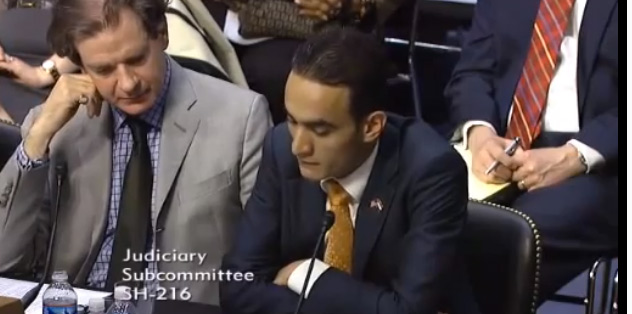
‘Drones attacked my village’

by Executive Staff April 24, 2013
written by Executive Staff

Shortly after writing an article for Executive about the US drone strikes in southern Yemen, Executive's correspondent Farea al-Muslimi was contacted by representatives of the US Senate about discussing the issue in Washington.

Yesterday, in an impassioned speech in which highlighted how he believed the US drone attacks had helped Al-Qaeda, Muslimi outlined to senators how the attack had "tore my heart."

"I have personal experience of the fear [drones] cause," he told the senators, recalling how a US drone had flown above him while in southern Yemen. "My heart sank, I felt helpless — it was the first time I had truly feared for my life," he said.

See the video of the Muslimi's speech below:

 

April 24, 2013 0 comments
0 FacebookTwitterPinterestEmail
Society

Buying goods with your phone

by Benjamin Redd April 23, 2013
written by Benjamin Redd

Imagine a day in the not-too-distant future when you sit searching an app on your phone. You find something you want to buy, but you don’t have your credit card to hand. No worries, you can purchase the item directly, with the payment being charged to your phone bill.

This is the future envisioned by Lebanese mobile carrier Touch and developer services company Apstrata. The two companies have teamed up to provide an impressive set of tools that programmers will use to develop mobile apps to make your life a little simpler.

Related articles: PayPal – a breakthrough for Lebanese e-commerce?

Beirut City Centre Mall – a work in progress

The most significant and exciting of these tools for consumers is operator billing, whereby customers can buy goods in the application, with the amount deducted from your mobile account balance or added to your monthly phone bill. “There is strong evidence [suggesting] that mobile payments will explode in the coming years,” Touch’s Chief Commercial Officer Nadim Khater says.

Apstrata’s marketing vice-president Tarek Naaman highlights the lack of credit cards and internet banking as major problems in Lebanon and the Arab world that they are seeking to counter. A recent study by pollster Ipsos found that just five percent of Lebanese people currently use online banking.

“Penetration of credit cards is very low. Even people who have cards rarely use them to shop online, and when they do it is with international websites, not local ones,” Naaman says. Apstrata and Touch’s tools will allow developers to create applications that offer services which can be bought directly without needing a card. For this reason, Naaman claims, “paying with your phone will be somewhat transformational.”

Khater adds that as the company’s customers are used to paying through their system, trust – one of the most significant barriers that prevents people paying for goods online – is already established. “60 percent of Touch’s customers already use their phone to transfer credits (dollars) between their prepaid accounts. The potential is definitely there,” he says.

Mobile connection

The motivation for Touch’s interest appears to lie in global trends – as mobile phones and apps have grown smarter and more powerful, there has been a negative effect on phone companies’ bottom lines. Applications like Whatsapp and Viber now allow low-cost text messages and voice calls over the internet, reducing the fees mobile carriers once got from these services. In Lebanon – which has the highest voice rate and third-highest SMS rate in the Arab world – this presents a huge challenge for mobile operators.

“Traditional telecom revenue streams like voice and SMS have seen considerable decline; SMS revenue alone has dropped 60 percent over a period of two years,” Khater admits. “We feel there [are] potential revenue streams in app downloads and in-app payments given the growth in app usage.”

To increase profits, Khater says that Touch will implement revenue-sharing agreements with developers that implement phone payments. However, “Touch’s initial approach is to have the revenue share component significantly to the advantage of the service or content provider to encourage usage and penetration.”

The power of potential

As such, mobile payments aren’t the only aspect to Apstrata and Touch’s tools. The developer library is extensive, allowing coders to use a single set of tools across iOS, Android and web platforms. These tools range from identity management – such as logging into a website – to secure data storage. It is believed to be the first time globally that a mobile operator has offered a full backend-as-a-service capability.

Overall, the ‘Touch Cloud’ aims to make life easier for Lebanese programmers to code useful, safe apps at a reasonable price. “The main objective of the cloud is to power these locally made apps. There’s a problem with budgets in Lebanon; [app development] is elbow grease and after-hours work, so this is where we think we can help,” says Naaman.

To get developers interested in the tools, Touch, Apstrata and AltCity teamed up to host a hackathon in March and a pitchfest earlier this month. At the pitchfest three finalists were selected to receive three months of ‘acceleration’ – including special perks such as free internet and expert advice. This summer, Apstrata will begin a larger marketing push using these three products as examples for others.

The concept appears to be piquing interest among developers outside Lebanon. Naaman claims there are currently a couple of hundred individuals and companies using Apstrata’s technology, with many of these in New York.

Once Lebanese developers begin to code using Touch and Apstrata’s tools, there’s no telling what they might come up with. Coders have already given us news aggregators, a Beirut International Airport real-time flight tracker and – somewhat ironically for the internet age – a schedule app for daily electricity outages.

As Naaman happily concedes, “We don’t have a monopoly on creativity. When Apple created the iPhone, they didn’t imagine what would happen.” He then confidently predicts: “This will shake things up.”

April 23, 2013 0 comments
0 FacebookTwitterPinterestEmail
The Buzz

Morning briefing: 23 Apr 2013

by Executive Staff April 23, 2013
written by Executive Staff

Economy and Policy

Gold edged higher due to physical buying on Tuesday, holding near a one-week peak touched in the previous session, but more outflows from gold exchange-traded funds summed up investors’ weakening confidence in the metal.

More from Reuters


Saudi Arabia’s Shoura Council has denied reports it has approved moving the weekend forward one day to Friday-Saturday.

More from Arabian Business


Also in Saudi, the country is expected to keep oil output steady throughout the second quarter as more high pace demand in Asia, its biggest oil export market, has yet to materialise.

More from Reuters


Companies and Business

Lebanon's BLOM Bank reported first-quarter net profit rose 3.4 percent to $87 million, despite what it described as difficult economic circumstances in the region.

More from The Daily Star


Abu Dhabi-listed Dana Gas is expanding its operations in Egypt and Lebanon.

More from Reuters


France’s Total aims to start offshore exploratory drilling for gas in Libya next month, in a further sign the OPEC member’s energy industry is returning to normal after the 2011 war.

More from Reuters


The developer behind Qatar's multi-billion dollar Pearl-Qatar has said its net profits for the first quarter rose 16 percent compared to the same period last year.

More from Arabian Business


April 23, 2013 0 comments
0 FacebookTwitterPinterestEmail
The Buzz

Morning briefing: 22 Apr 2013

by Executive Staff April 22, 2013
written by Executive Staff

Economics and Policy

The International Monetary Fund has further cut its growth prediction for Lebanon to 2 percent.

More from The Daily Star


The UAE economy will continue to grow at four per cent in 2013, Bank of America Merrill Lynch (BoAML) has said.

More from Khaleej Times


Qatar is the most attractive country in the world in terms of investment potential, according to the boss of the Gulf state’s national airline.

More from Arabian Business


Bahrain's real estate market has bottomed out but continuing political unrest is still holding back an upturn, CB Richard Ellis has said in a new report.

More from Arabian Business


A US$10 billion American weapons sale in the region is a signal to Iran that an Israeli military strike on its nuclear sites remains a possibility, the US defence secretary Chuck Hagel said yesterday.

More from The National
 

The National Social Security Fund could provide health care for registered Palestinian workers in Lebanon, the International Labor Organization said over the weekend.

More from The Daily Star

Companies and Business

The Middle East has the least competitive airline industry of any region in the world, with 50 percent of routes served by only one or two carriers, according to a global analysis.

More from Arabian Business


Rick Pudner, chief executive of Emirates NBD, Dubai’s largest bank, is resigning, the bank said on Sunday without giving a reason.

More from Reuters


Saudi Telecom Co (STC), the Gulf’s No.2 telecom operator, missed forecasts with a 38.5 per cent year-on-year plunge in first-quarter net profit on Sunday attributed to charges relating to an Indian affiliate.

More from Reuters


Qatar Petroleum (QP) has signed an agreement with a consortium led by France’s Total to build the $1.5 billion Laffan 2 refinery project, a statement from the Qatari firm said on Sunday.

More from Reuters


Egypt's largest steel producer, Ezz Steel, said it expects its profit to increase in 2014 thanks to a new sponge iron factory that should shave $50 to $100 off the cost of each tonne of iron it produces.

More from Reuters

April 22, 2013 0 comments
0 FacebookTwitterPinterestEmail
Society

‘Online retail is the future’

by Joe Dyke April 22, 2013
written by Joe Dyke

With global revenues of $4.7 billion annually, Landmark Groups are among the giants of the retail and hospitality sectors in the Middle East and Asia. The group has been in the Lebanese market since 2011, with stores in Beirut’s City Mall and others. In December, the company went online, launchings “Landmarkshops.com” with the aim of using the United Arab Emirates as a launchpad before moving into other markets in the coming years. Savitar Jagtiani, business head of the group’s e-commerce branch, talked to Executive about online retail in the Middle East.


Currently Landmark Groups have three of your 17 retail companies online. Are you planning on putting all of them in one portal?

Over a period of time that is the plan. We believe to really succeed in the online retail space we have to do very well in multi-concept, multi-channel, multi territory, multi-lingual, multi-currencies — a whole lot of multis!

Over what period are they going to go online?

I am not able to reveal the specifics but we will be doing so as and when we are ready.

Are you worried that you may be entering the online market a little late?

As a matter of fact, from a traditional retail perspective, we think we are one of the earlier ones to do it. As part of us differentiating ourselves from the rest of the pack, we have really thought hard about what our unique selling points will be and why.

The first part of that is building a great interface for a great user experience, to bring a great selection of our products — focusing on the best of our stores — online.

Related articles: Chart: The Middle East's online potential

Lebanon's newest online startups

One other feature we have is a beautiful ‘lookbook,’ which is our online version of an offline consumer [catalogue], and through that customers can look at goods for any of our fashion businesses.

For electronics we have the ability to compare technical aspects of products — for everything we have you can write a review. In today’s world we know how incredibly important user-generated content and users’ views are.

When you have a successful offline retail company, how do you avoid taking away your own customers as you go online?

One way to avoid that is by maintaining price parity for online and offline. That way you are kind of setting up the online businesses to complement offline and you want offline to complement online as well. So it is a very symbiotic relationship. In 99 percent of the cases, you are going to see price parity between online and offline and the only exceptions is if we want to do an online-only offer. But these will be more the exception than the rule.

With regard to markets, you have said that after the UAE you are focusing on expanding to Saudi Arabia and India. Does that mean you are not going to be offering your services in other parts of the Middle East, such as Lebanon any time soon?

We have 19 territories already that we operate in physically. The beauty of digital is that not only does it allow you to reach those countries where you have a physical presence, but to reach into countries where you do not have a physical presence. I think that is the challenge of online, the countries we decide to reach out to will be a business decision.

How developed is the online retail market in the UAE and the Middle East in general?

We think it is a rapidly growing market right now. E-commerce in the Middle East is worth over $1 billion and is set to grow to $15 billion by 2015.

In a region where many people still don’t have bank accounts, how important are cash payments?

When we started three months ago we started with pure online payments because we know that that is the most popular form of online payments. But we also know that there is a section of our target audience that may prefer paying in cash as opposed to paying with credit and debit cards. So it is an area of interest, we are keeping our eyes and ears open to it.

Moving forward, where will the site be in 10 years time?

The vision is to become an incredibly successful online retailer, in addition to the great amount of success our online business have experienced. [We want] to really make our online an incredibly relevant channel for the group and for our customers and 10 years down the line to be lord and master of the different multis I talked about.

April 22, 2013 0 comments
0 FacebookTwitterPinterestEmail
The Buzz

Morning briefing: 19 Apr 2013

by Executive Staff April 19, 2013
written by Executive Staff

Economics and Policy

Chevron, Exxon Mobil, Shell and Total are among the 46 international oil companies to prequalify to bid for offshore gas exploration contracts in Lebanon

More from Executive


Saudi crude exports rose to over 7.45 million barrels per day (bpd) in February, a rise of 363,000 from January, official figures from the Joint Oil Data Initiative (JODI) showed.

More from Reuters


Jordan said yesterday it was against military intervention in Syria, as more US troops head to Amman amid a warning by President Bashar al-Assad that the crisis could engulf the kingdom.

More from AFP


Clashes between protesters and security forces erupted in several villages across Bahrain yesterday as authorities vowed to ensure security at this weekend's Formula One Grand Prix.

More from The National


Lebanon successfully closed a $1.1 billion eurobond issue Thursday with 20 percent of the bond snapped up by foreign investors.

More from The Daily Star


Companies and business
 
International oil majors are continuing to hunt for deals in the Kurdistan region of Iraq, although merger and acquisition activity has slowed due to high asset prices and persistent political volatility.
 
More from Iraq Oil Report
 

Lebanese mobile operators Alfa and Touch will increase their 3G capacities at reduced rates as of May 1, Telecommunications Minister Nicolas Sehnaoui said Thursday.

More from The Daily Star

 
Bank Audi’s net profits in the first quarter of 2013 fell by 9.5 percent to $85.5 million, against $94.5 million in the first quarter of 2012, due to the launch of its Turkish banking subsidiary, a statement by the bank said Thursday.

More from The Daily Star


April 19, 2013 0 comments
0 FacebookTwitterPinterestEmail
The Buzz

Moving towards an Iranian deal

by Benjamin Redd April 19, 2013
written by Benjamin Redd

After the latest round of talks over Iran’s nuclear program this month, Europe’s foreign policy chief Catherine Ashton struck a cautious tone. “For the first time that I’ve seen, [there has been] a real back and forward between” Iranian and international negotiators, she told the press following this month’s talks in Kazakhstan. But, she stressed, the parties “remain far apart.”

See also: The Iranian sanctions navigator

The talks were the second round this year to discuss world powers’ concerns over Iran’s nuclear program. While Tehran claims its program is solely for peaceful purposes, the United States and European Union fear that the Islamic Republic is pursuing nuclear weapons capabilities.

To stop the nuclear push, the US, EU and the United Nations have erected ever-stiffening economic sanctions in recent years. But there exists another layer of sanctions — primarily enacted by the US — with diverse aims: stopping alleged support for terrorism and generally containing Iran. So even if Tehran were to meet international demands on its nuclear program, experts say these other sanctions would likely remain on the books.

The result is talks with little hope of a deal as neither side has confidence in the other’s intentions. “No one trusts anyone with a spoon in this process,” says Rouzbeh Parsi, an Iran expert at the European Union Institute for Security Studies, a Paris-based think tank funded by the EU. Iranian business executive Bijan Khajehpour concurs — telling Executive that the fundamental obstacle to current negotiations is “the mutual distrust between the parties.”

A messy mélange

Sanctions against Iran are nothing new — in fact, they date back to the founding of the Islamic Republic in 1979. These first sanctions had nothing to do with nuclear weapons but were in response to 1979-1981 US embassy hostage crisis. More were added in the 1990s proscribing US development of Iran’s hydrocarbons and banning all forms of US investment and trade with Iran.

But a turning point came in 2005 when negotiations over Iran’s nuclear program failed. Tehran had been discovered secretly enriching uranium in 2002, and was not fully complying with the demands of the International Atomic Energy Agency (IAEA), the global nuclear inspector. The collapse of negotiations led to the current era of sanctions — squarely aimed at Iran’s nuclear program, and involving several nations as well as the UN and EU.

UN sanctions bar the export of nuclear material and know-how, as well as conventional arms to Iran and loans to the country. EU sanctions go much further, blacklisting many Iranian individuals and institutions, boycotting oil imports, barring certain technology exports and freezing central bank assets, among other measures. In March of last year, Brussels implemented financial sanctions that cut Iran from the Society for Worldwide International Financial Transfers, or SWIFT, a clearinghouse for bank transfers. The result was to prevent Iran from making or receiving normal payments through the banking system.

US unilateral sanctions are even tougher — with formidable restrictions on trade, investment, financial services and Iranian entities alleged to be contributing in some way to the nuclear program, money laundering or the broadly-defined ‘terrorism’.

Woven into this messy mélange of UN, EU and US sanctions are similar, coordinated measures by at least seven other nations. The result is a complicated web of overlapping restrictions and regulations that affect nearly every aspect of the Iranian economy.

The hammer drops

The effect of the sanctions is an issue of much debate, with scattered dispatches describing a faltering economy. Between 2011 and 2012, Iranian oil exports dropped from 2.5 million to 1.5 million barrels per day according to the International Energy Agency. Other reports indicate that bread prices have shot up, while chicken costs three times what it did in 2009. Indeed, last October some observers drew a link between the measues and the apparent collapse of the Iranian rial — an event that led to protests and a government crackdown.

However, such dire reports fail to tell the whole story. Through the end of last year, official figures from Iran’s central bank showed inflation of 38 percent, not much higher than the historical average and nowhere near the 59 percent peak during the hyperinflation of the mid 90s. Casting further doubt that inflation is a direct result of sanctions is Iran’s expansionary monetary policy. M1, a narrow measure of money supply that counts circulating currency and some bank deposits, more than quadrupled between 2007 and 2011.

And while oil exports have plummeted, high oil prices made 2012 the third best year in recent memory in terms of revenue. This is an important metric for Tehran, since oil exports account for some 70 percent of government revenues.

The economic problems — whatever their causes — are being addressed by the state, argues Khajehpour. The response has ranged from easing regulations, to postponing deeper reforms, to subsidies. Despite these moves, “none of them are designed around a softening of the Iranian tone in nuclear negotiations,” Khajehpour claims in a recent paper. Counter intuitively, he also suggests that sanctions have actually helped parts of the government in certain respects, as Tehran can hide behind them.

Parsi echoes this view, saying that when President Mahmoud Ahmadinejad enacted a partial subsidy reform in 2010, sanctions “made it politically easier, because [he] could blame all the problems that come with structural adjustment on the sanctions.”

Public opinion appears to corroborate these claims. A Gallup poll conducted in December of last year demonstrates a stark perception of sanctions: 83 percent of Iranians surveyed said sanctions were harming their personal livelihood. People largely blame the US (48 percent) as opposed to their own government (10 percent). Moreover, nearly two-thirds want the nuclear program to continue.


Not exactly Geneva

As such the Iranian government has some leeway in charting a course through sanctions and negotiations. But public attitudes also reinforce Tehran’s strategy at the negotiating table.

According to the latest IAEA report in February, Iran has enriched 280 kg of uranium to 20 percent — enough for a crude nuclear device if processed further.

“The size of Iran’s stockpile of 20 percent [highly enriched uranium] is worrisome because it is much easier to enrich 20 percent to 90 percent than five percent to 20 percent,” says Gregory Koblentz, a nuclear security expert at the Washington-based Council on Foreign Relations. “So if Iran decided to build a bomb, it would be able to do so much more quickly if it is sitting on a large quantity of 20 percent than five percent Uranium-235.”

These dynamics make uranium enrichment the focal point of negotiations for the West, and create divergent logics among negotiators. “The Iranians know we’re obsessed with the nuclear issue, so if they’re going to give up any goodies…the big things, in the beginning, they know that after that, it’s going to be a process of diminishing returns,” says Parsi. Essentially, Iran needs to get major concessions at the beginning of any deal where they are asked to make major initial sacrifices.

On the other side of the table, that logic is flipped. “[The EU’s] negotiating mentality is that the Iranians are trying to trick different entities within the P5+1,” says Parsi, referring to the five permanent members of the UN Security Council plus Germany, who are negotiating with Iran. “[The EU] thinks the only reason the Iranians are willing to listen and are forced to negotiate is that we have the pressure of sanctions on them. This logic dictates that sanctions relief cannot be a part of the beginning of the process.”

A lack of understanding is also at play at the negotiating table, according to Dina Esfandiary, a non-proliferation expert at the London-based International Institute for Strategic Studies. “The relief has to be proportional to what is being asked of Iran because until now, the West’s position in nuclear negotiations with Iran undervalues the importance of the nuclear program to the Islamic Republic.” Esfandiary points to the example of the Fordow enrichment facility as “a symbol of self-sufficiency and pride.” As such, sanctions relief for shutting it down “will have to be proportional to that — not just removing recent sanctions on gold, which was an idea that was being floated around.”

Despite these differences, finding a solution could be simple, according to Parsi. “Solving it on a technical level isn’t that difficult; it’s just a question of finding the sequencing. Basically what you have to do is say in the next three months, you will do x and y, we will do z. In three months from now, you will do this and we will do this.”

Koblentz sketches the broad outlines of such a framework: “Presumably, Iran and the P5+1 would have to work out a phased agreement where both sides take reciprocal steps to end the stand-off. Iran would have to agree to greater oversight by the IAEA [reinstating the Additional Protocol], resolve outstanding concerns [about weaponization and other issues] and perhaps accept limits on its future nuclear activities; the P5+1 would match these actions with the lifting of specific sanctions and perhaps additional positive inducements.”

But such a solution would be difficult to achieve politically. As a recent report from the International Crisis Group (ICG) argues, “the longer the standoff endures, the higher the price Tehran likely is to demand to justify any consequential policy reversal.” Similarly for the West, “beginning to undo the sanctions regime would threaten to unravel the painstakingly constructed multilateral consensus; and it would face important political obstacles in Washington but also in European capitals.”

Who do you trust?

Further complicating matters is the sprawling and interconnected nature of the sanctions themselves. Some US measures could be lifted by a stroke of the president’s pen, but many would require congressional action — and many US sanctions deal with matters other than the nuclear file. EU sanctions may give more room for maneuver, but repealing them would still require unanimity among the 27-nation bloc. And interactions between different sanctions complicates their removal: easing restrictions on, say, insurance for oil shipments would have little effect if Iran cannot access revenues blocked by financial sanctions. In total, the ICG argues, “the sanctions’ multi-purpose and multi-layered nature has confused their strategic purpose, while constraining Washington’s and Brussels’ ability to respond to positive actions” by Iran.

The prospect of a long, complex desanctioning process makes any deal harder to achieve. Even if Iran cooperates with the West, it faces this daunting process of winding down sanctions — a procedure that could take years. Against this backdrop, Iranian Supreme Leader Ali Khamenei rejected direct talks with the US earlier this year, saying, “The US is pointing a gun at Iran and wants us to talk to them.”

Ultimately underlying the obstacles to reaching a deal — and sometimes of even talking — is a dearth of basic trust. “Given the number of moving parts involved in the desanctioning Iran is right to be concerned about not getting what is promised to it,” cautions Koblentz. “On the other hand, [in the view of the US] Iran’s past history of deception gives ample reason to be concerned that Iran will pocket the sanctions relief and just start spinning more centrifuges.”

“You need to build some basic trust, and you can do that by taking small steps,” adds Parsi. “The reason why all of this is happening [is] the non-relationship between Iran and the United States. There doesn’t have to be a rapprochement, but there does have to be a common understanding. Because as long as it’s not there, we’re going to be suspecting that they’re trying to build a bomb, and they’re going to have incentive to be able to build a bomb…because they’re afraid someone is going to overthrow them.”

On this note, one small ray of hope appeared last month. In televised remarks, Khamenei indicated a reserved willingness to open bilateral talks with the US, saying, “I’m not optimistic about these talks, but I’m not opposed to [them] either.” A US official quickly responded that US President Barack Obama “was open” to them as well.

April 19, 2013 0 comments
0 FacebookTwitterPinterestEmail
Business

Moroccan insurance spreads east

by Thomas Schellen April 18, 2013
written by Thomas Schellen

Casablanca-based Saham Finances is a virtually unknown entity in the Levant and Gulf insurance markets today, but the company is nothing if not ambitious. In June 2012 it acquired 81 percent in LIA, the Beirut-based insurance affiliate of Bank Audi Group, as an entry into the Lebanese market and, strategically, as a base for growing into the Gulf Cooperation Council (GCC).

“Our purpose is to use LIA as a platform to develop our activities in the whole Middle East region,” said Raymond Farhat, the chief executive of Saham Finances. Within the next five years, Saham Finances wants to amplify its premiums base in the GCC and Levant to $1 billion, from less than $100 million at the end of 2012, Farhat told Executive.  

The Lebanese insurance market has relatively higher maturity than other Arab markets and is definitely saturated: more than 50 providers share in a premiums pie of less than $1.2 billion per year. With slower premiums growth rates than Gulf markets, Lebanon has not been the top Arab market that foreign companies sought to expand to in recent years.

One exception was the 2010 acquisition of Compagnie Libanaise D’Assurances (CLA) by Zurich Financial Services Group, where the purchasing rationale was that CLA owned several branches in the GCC. While LIA has no GCC units or licenses, selecting it was not a difficult choice, Farhat said. “We knew the Lebanese market and that is why we did not search a lot [for an acquisition target]. We only had a few companies that we looked at, and LIA was one of these companies.”

A partner for life insurance

LIA, which released a gross premiums figure of $80.4 million for 2012, is in the top tier of profitability among Lebanese insurance companies. Such strong profitability has in recent years been common to insurance companies affiliated with leading retail banks such as Blom, Byblos and Audi, because these lenders successfully translated customer demand for their loan products into sales of life insurance policies. Loan takers are required to obtain life insurance to guarantee loan repayments in case of their death or disability, and buying these covers from bank-affiliate insurers is often the path they take or are            asked to take.

While many of the life insurance policies sold in this manner do not fall under the exact spirit of bancassurance, which is a low-cost distribution channel for marketing standardized insurance products to bank customers, it is clearly advantageous for an insurance group to collaborate with a bank in the areas of selling loan-accompanying life insurance and in the general marketing of bancassurance products. 

The bancassurance knowhow that Saham Finances found in Lebanon was an important factor in the decision to purchase LIA, said Farhat. “The partnership with Bank Audi is the most important element in this deal, and our aim is to continue to develop our relationship with them. That is why Bank Audi still is a participant in the capital, has a seat on the board, and is still the main client [of LIA].”

The Journey from Casablanca

The bancassurance knowhow augments Saham Finances in Morocco, where the group does about 50 percent of its business. “In Morocco, we are the first in non-life, but the life business is not strong because our partnership with banks there is not strong,” said Farhat.

Saham Finances is, in regional terms, a rare case of a conglomerate making its entry into the insurance market before looking at banking. The company is the holding of all of the insurance participations of privately-held Moroccan conglomerate Saham Group. The group entered the insurance field in 2005 with its first acquisition of a Moroccan insurer, CNIA, and in 2006 it acquired a second domestic company, Es Saada. “The two companies were merged in 2010 and listed on the Casablanca Stock Exchange the same year,” explained Mehdi Tazi, chief executive of Cnia Saada, the merged Moroccan insurance entity of Saham Finances. “The year after, Saham Group acquired another company, Colina, which had [a] presence in, at the time, 11 African countries besides Morocco.”

Farhat is a Liberia-born Lebanese insurance veteran with more than 30 years of experience in Africa, who built up Colina before it was acquired by Saham Group and he was appointed chief executive of Saham Finances. Further acquisitions in Africa followed with takeovers of insurers in Angola and Kenya under his leadership.

As result of its multiple acquisitions in the space of a few years, the company has the most extensive network on the African continent. “Except for South Africa, we are the first player in the insurance field in Africa,” Farhat said. Tazi added that, “our strategy is to become even bigger, and we are in the process of looking at other deals.”

Like the group’s massive thrust into Africa, the firm’s LIA acquisition represents the beginning of its aggressive expansion into the GCC. When asked if the group aims to grow LIA’s business into Levant markets such as Iraq and Jordan, Farhat said, “The answer is yes, we are looking at Iraq and Jordan but we are looking mainly at the GCC countries. We want to use LIA as platform to expand activities directly, or through LIA subsidiaries or other companies related to Saham Finances, but the aim is to be present throughout the entire region.”
In order to meet requirements for Sharia compliance in key Gulf markets, the group’s plan is to buy a Takaful insurance company next. In this context, the role intended for LIA becomes elucidated further, as Farhat confirmed, “We want to utilize Lebanon as a platform for human resources. We want to create a complementary platform of knowhow between the human resources that we can find here in Lebanon and an Islamic insurer that we are  planning to buy.”
With its rapid growth in Africa and plans for the Middle East, Saham Finances will have to increase its headcount, currently just under 100 LIA staff, by a factor seven or eight in the Gulf and the Levant.

Catering to Expats in Africa

Next to building upon the bancassurance experience of LIA and relying on Lebanon as source of human capital, which is the scarcest of all insurance resources in the Middle East, the group envisions that synergies and cost efficiencies on two levels will be created between LIA and other insurance companies under the Saham Finances umbrella. On the client side, Farhat sees much potential to serve the many Lebanese who made Africa their home and maintain business and family ties to Lebanon. The group wants to take on the task of offering these Lebanese a full range of insurance products in Africa and in Lebanon, from health insurance to retirement plans. “We can develop other synergies between Africa and Lebanon. We have many Lebanese and Moroccan investors in Africa and it makes sense for us to create products for them,” added Tazi.

A second layer of synergies will be in terms of reinsurance buying, where Saham Finances has invested in a Mauritius-based reinsurance unit and will use its size in negotiating with multinational reinsurance providers.
Also in deal flows, the group sees its position of strength in the African market opening opportunities to be a partner for multinational companies and insurers who seek correspondents for their global programs.

Challenges ahead

One of the barriers that the group will face in its regionalization is the dichotomous character of regulatory environments in the Middle East and North Africa. “We expect that it may improve in the coming years but it is a barrier. But we want to go to the market, and we will not wait until all these barriers are removed,” Farhat said.

Another challenge will be meeting mandates set by the three stockholders in Saham Finances. Besides majority owner Saham Group, there are the World Bank’s International Finance Corporation and Abraaj Group, the Dubai-headquartered investment firm. With IFC and Abraaj each owning 18.75 percent in Saham Finances beside Saham Group’s 62.5 percent, “our biggest challenge is sustaining the rhythm of the growth that is imposed by the management in all these acquisitions,” said Tazi.

Funding the aggressive growth agenda will not be the problem, according to the current perspective, Farhat said. “We don’t think about how much money we will invest in the Middle East but we think about what size we want to reach,” he explained. “We really want to be among the top players of the Middle East. This is our aim in five years and we will put in the money that we need to put.”

April 18, 2013 0 comments
0 FacebookTwitterPinterestEmail
The Buzz

Morning briefing: 18 Apr 2013

by Executive Staff April 18, 2013
written by Executive Staff

Economics and Policy

Oil prices tumbled on Wednesday, with Brent crude falling below $98 per barrel, as rising US fuel supplies added to overall concern about global oil demand.

More from Reuters


Negotiations between Egypt and the International Monetary Fund have not failed, the president’s office said Wednesday after an IMF delegation left Cairo without agreement on a $4.8 billion loan.

More from Reuters


By 2030, Abu Dhabi aims to have all taps replaced with water-saving fixtures in a bid to cut current consumption by 52 per cent.

More from The National


Lebanon's public wage and related benefits expenditures increased year on year by LL708 billion ($470 million) in 2012, according to statistics released by the Finance Ministry.

More from The Daily Star


Companies and Business

Abu Dhabi telecom group Etisalat is set to sign an $8 billion loan facility next week with as many as 16 banks to help fund its Maroc Telecom stake bid, bankers said.

More from Reuters


Union National Bank, jointly owned by the governments of Abu Dhabi and Dubai, posted a 4.2 percent increase in first-quarter net profit on Wednesday, in line with analysts' forecasts, as operating income rose at the bank.

More from Reuters


United Arab Bank said on Wednesday its first-quarter net profit surged 60 per cent in 2013 due to expanding branch network and improved product offerings.

More from Khaleej Times


Dubai’s Tecom free zone has signed a memorandum of understanding with London’s Tech City to increase investment and business relations between the city’s technology-based companies.

More from Arabian Business

April 18, 2013 0 comments
0 FacebookTwitterPinterestEmail
Business

Language beyond Lebanon

by Joe Dyke April 18, 2013
written by Joe Dyke

As Executive seeks to celebrate Lebanese successes across the globe in 2013, we will be travelling to hear their stories. But in a digital age when information can spread faster than ever, the Lebanese language can be a powerful tool for creating unity. Many second and third generation expats, however, have never learned the language of their forefathers. Hadi el-Khoury, founder of the Keefak app that aims to teach people the Lebanese Arabic dialect, plans to change that. Executive asked him how.


What made you start Keefak?

I have been living in France since 2000 and have been in contact with a lot of French Lebanese that have been living in the country for the last 20 or 30 years. They told me that their biggest regret is not being able to transmit the Lebanese dialect to their children. So the idea popped into my head that I could use new technologies to try to do something to change that.

You launched in January 2012. How big is the app right now and where is it most popular?

We have around 10,000 users worldwide, by this I mean 10,000 people that are regularly using the app. We have a large part in France and the US and with modest numbers in Latin America and Australia. But the communication and marketing has just started – in 2012 all growth was organic, by word of mouth.

If a student does the sixteen courses currently on the app, what level of Arabic would they reach?

It would be mainly conversational. We are in the middle of categorizing lessons between intermediate, beginner and advanced but I think that the sixteen courses that are already implemented in the app are something between beginner and intermediate.

How big do you think Keefak can be?

We would be glad if we can reach 100 downloads a day. We have noticed a clear correlation between marketing and download rates – it is something quite measurable. We have the benefit of having early adopters that have expressed nice reviews. We know the product is robust and fun, so we are convinced that our biggest challenge is our marketing and communication.

100 downloads a day would take you to around 3,000 a month, each at $5. Would that make you profitable?

If you look at Keefak as a technology startup it is a three-year cycle. The first year you test the product and have early adopters, the second year you start industrializing you processes – whether on a production or marketing level, and the third year you start being profitable. I think if we get to this download rate a day, we can start being profitable at the beginning of 2014.

What are you plans for expanding the app – do you plan to move into other dialects?

I have been asked to move the concept to some other dialects, including in Spain in the Basque region. We have been asked also to check if we can do it for Syrian dialect. We are open [to these ideas] – the skeleton is here, the functionality is here, we just need to find the appropriate content providers. So if we have a Syrian dialect professor willing to team up with us we can have an app for that.

Where do you see Keefak in five years time?

I would see Keefak as the main connector between the diaspora and Lebanon. I also plan to develop Keefak Junior for children between the ages of four and ten – a game-centric application with cartoon characters that they could relate to.

And even in Lebanon, what we are noticing is that because the Lebanese are very keen on teaching foreign languages to their children they are forgetting about Lebanese [Arabic]. When I go to Lebanon with my four-year-old child everyone speaks to her in French or English – I would be very pleased if they spoke to her in Lebanese.

April 18, 2013 0 comments
0 FacebookTwitterPinterestEmail
  • 1
  • …
  • 264
  • 265
  • 266
  • 267
  • 268
  • …
  • 695

Latest Cover

About us

Since its first edition emerged on the newsstands in 1999, Executive Magazine has been dedicated to providing its readers with the most up-to-date local and regional business news. Executive is a monthly business magazine that offers readers in-depth analyses on the Lebanese world of commerce, covering all the major sectors – from banking, finance, and insurance to technology, tourism, hospitality, media, and retail.

  • Donate
  • Our Purpose
  • Contact Us

Sign up for our newsletter

    • Facebook
    • Twitter
    • Instagram
    • Linkedin
    • Youtube
    Executive Magazine
    • ISSUES
      • Current Issue
      • Past issues
    • BUSINESS
    • ECONOMICS & POLICY
    • OPINION
    • SPECIAL REPORTS
    • EXECUTIVE TALKS
    • MOVEMENTS
      • Change the image
      • Cannes lions
      • Transparency & accountability
      • ECONOMIC ROADMAP
      • Say No to Corruption
      • The Lebanon media development initiative
      • LPSN Policy Asks
      • Advocating the preservation of deposits
    • JOIN US
      • Join our movement
      • Attend our events
      • Receive updates
      • Connect with us
    • DONATE