• Donate
  • Our Purpose
  • Contact Us
Executive Magazine
  • ISSUES
    • Current Issue
    • Past issues
  • BUSINESS
  • ECONOMICS & POLICY
  • OPINION
  • SPECIAL REPORTS
  • EXECUTIVE TALKS
  • MOVEMENTS
    • Change the image
    • Cannes lions
    • Transparency & accountability
    • ECONOMIC ROADMAP
    • Say No to Corruption
    • The Lebanon media development initiative
    • LPSN Policy Asks
    • Advocating the preservation of deposits
  • JOIN US
    • Join our movement
    • Attend our events
    • Receive updates
    • Connect with us
  • DONATE
The Buzz

Morning briefing: 15 Jan 2013

by Executive Staff January 15, 2013
written by Executive Staff

Economics

U.S. President Barack Obama met Saudi Arabia’s new interior minister, Prince Mohammed bin Nayef, on Monday to discuss security and regional issues, the White House said.

More from Reuters


The Heritage Foundation 2013 Index of Economic Freedom rated the Lebanon at 91st in terms of economic freedoms, out of 177 countries included in this year’s report.

More from The Daily Star
 

The Iraqi government released more than 300 prisoners held under anti-terrorism laws on Monday as a goodwill gesture to Sunni Muslim demonstrators staging protests against Shi'ite Prime Minister Nouri al-Maliki.

More from Reuters


Companies

Bank of America Merrill Lynch (BofA) plans to increase lending to businesses in the Middle East as oil-rich Gulf investors show more appetite for acquisitions, a senior banker at the U.S. financial services firm said.

More from Reuters


Savola Group is set to close an Islamic Bond issue valued at 1.5 billion Saudi riyals ($400 million) on Monday, two sources said, the company's debut sukuk and the first local currency debt offering in Saudi Arabia this year.

More from The National


Shares in Qatar National Bank made their largest one-day drop in 12 months on Monday as investors reacted to flat profit growth in the fourth quarter and no share option in its dividend, while other regional markets closed mixed.

More from Arabian Business


The Lebanese Shipping Agents Syndicate (LSAS) and the Port of Beirut authority have approved a 12 percent increase in the fees paid by maritime agencies to the port after mediation from the public works and transportation ministry.
More from AME Info

January 15, 2013 0 comments
0 FacebookTwitterPinterestEmail
Economics & Policy

Why does Lebanon flood so badly?

by Benjamin Redd January 15, 2013
written by Benjamin Redd

At least five people, including a seven-month old baby, were killed in Lebanon last week — the tragic legacy of the monster storm that struck the country. It was the worst of its kind in ten years, ripping into communities and destroying homes.

Yet while the storm was unusually ferocious, flooding happens nearly every year in the country. Heavy rains cause chaos in low-lying areas and landslides in the mountains — damaging property and injuring people, sometimes fatally. In both 2012 and 2010, at least one person was killed as a result of extreme weather in Lebanon.

The storms that cause these tragedies cannot be averted but is Lebanon’s failing infrastructure partly to blame for the extent of the destruction? That is certainly the view of Nadim Farajalla, Associate Professor of Hydrology and Water Resources at the American University of Beirut.

Deathly shallows

Farajalla identifies three major factors contributing to flooding: people living in low-lying areas, barriers to the natural flow of rivers, and refuse clogging the drainage system.

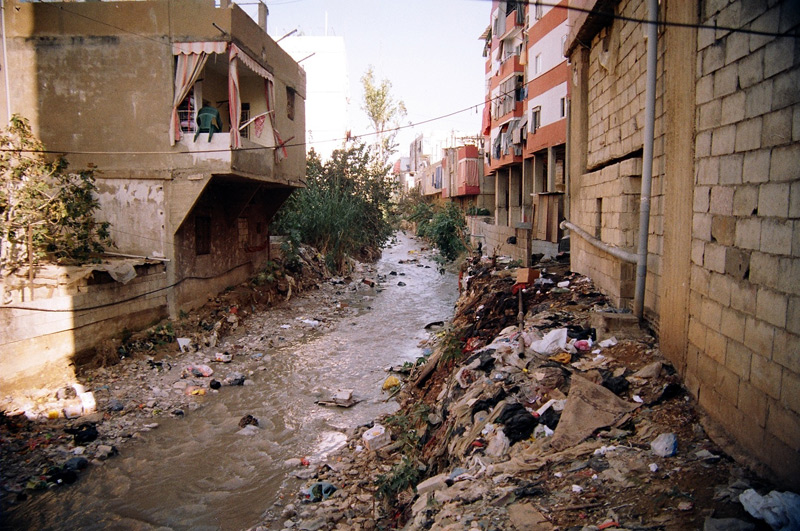
“The biggest problem during this storm was that people have been [living] in the river or along the river floodplain,” he said. In some areas, including Beirut’s southern suburb of Hay al-Solm, poorer residents in recent years have constructed homes on river banks, limiting the space for water to flow. Farajalla said that such constriction creates an effective dam, raising water levels further upstream. Furthermore once the water passes through the constriction, it flows more rapidly — and destructively — towards those downstream.

But encroaching buildings aren’t the only cause of flooding. A government official, who spoke to Executive on the condition of anonymity as he was not permitted to speak to the media, said some of the blame lies with poor bridge design. “Some bridges aren’t capable of handling such runoff and high waters,” he said. In poorer areas where government services are lacking, these bridges can be small and make-shift, built without review from officials or engineers, and lacking enough height to accommodate flood waters. Farajalla echoed this concern, saying “there are so many crossings on the rivers themselves that they have created constrictions that make backwaters” when the rivers rise.

In Beirut, this problem is only compounded by the city’s trash problem. “People dump their refuse in the river, which ends up in the [underground] drainage system,” Farajalla said, adding that it accumulates to form barriers at low bridges and clog the subsurface network of drainage pipes. Such was the case last week in Beirut’s eastern Karantina neighborhood, where drainage systems backed up so much that the main road became a river.

In the capital, this underground drainage system has been considerably upgraded since the end of the Lebanese civil war in 1990, but there are still significant issues. Maintenance of subsurface pipes involves both clearing barriers caused by trash and sediment, and inspecting and repairing cracks and natural wear of the tunnels themselves. “A network is only as good as its maintenance,” says Farajalla, adding that the work “has not been done on a regular basis.” The government official was more blunt: “no one is cleaning the drainage system before the winter rainy season,” he claimed, adding “this is the number one problem in Beirut.”

A more general complaint revolves around contractors and inspectors. Noting that contractors will sometimes cut corners, Farajalla says, “[inspecting authorities] often do not have the personnel available, either in numbers or in training… What we need is people to follow through and check the execution.”

Punishing the poorest

These problems tend to affect the most vulnerable – poor families, including many refugees – the hardest. This is a problem found in many nations where infrastructure is sub-standard: low-lying land in a floodplain is cheap and close to jobs, so during periods of light flooding, poorer people will move in, often forced to find alternative housing by a lack of government planning and oversight. However, light-flood periods do not last forever, and eventually nature takes its course — sometimes to disastrous effect.

According to a paper by Carlos Tucci of Brazil’s Federal University of Rio Grande do Sul, when this happens, governments have two options for long-term solutions: building expensive drainage networks or relocating people to higher ground. But, as Tucci points out, such solutions can be politically problematic.

In Lebanon’s case relocation would still require a large investment from the government. “These people have left their villages and come here to find a job, and it’s a horrible existence, so what do we do? Who pays for this?” asks Farajalla. “These people have paid enough by having their homes damaged.”

Building the ark together

Any solution to Lebanon’s flooding problems will have to be multifaceted, and include zoning for development, roadways and bridges, subsurface drainage, inspection regimes and maintenance. Any such remedy would have to involve several parties including individual municipalities, the Ministry of Energy and Water, the Ministry of Public Works, refuse collection companies and the general public.

Speaking about road drainage, Farajalla argued that that “there should be a ministerial team assigned to each municipality or grouping of municipalities along a highway to ensure that local roads do not generate runoff onto the highway, and then that the highway is well-maintained,” adding that “they have to generate some coordination mechanism” between the municipalities and the Ministry of Public Works. Underground, he says, “maintenance should be continuous.”

Of course, the government and waste collectors cannot shoulder all of the responsibility for keeping sewerage lines clean. “It takes one plastic bag to block a [drainage] grate,” notes Farajalla. “People have a responsibility not to throw things into the drainage network, not to litter the roads, and to help the municipality by reporting problem areas.”

Given the diverse array of parties responsible for quality stormwater management, it comes as little surprise that the government official who spoke to Executive was pessimistic about the possibility of fast implementation: “There are many plans in the government [to address this problem] but I don’t think it will be solved soon.” Given Lebanon’s weather, that may mean more pain ahead for the most vulnerable.

January 15, 2013 0 comments
0 FacebookTwitterPinterestEmail
Comment

Reaching beyond Iraq

by Riad Al-Khouri January 14, 2013
written by Riad Al-Khouri

In a region marred by old conflicts and new social unrest, semi-autonomous Iraqi Kurdistan seems to be sitting rather pretty. The Kurdistan Regional Government (KRG) is clocking strong growth in gross domestic product per capita (now well over $5,000) in an atmosphere of relative stability. Kurdish opposition protests against the KRG, which were attracting global attention between 2009 and 2011, seem to have been declining just as much as the economy has been rising. Today, watching the massive new construction projects under way and the global airlines plotting new routes to town, it does not require a PhD in macroeconomics to see that the provincial capital of Erbil is in a boom cycle.

The prosperity, of course, is oil-led: Kurdistan now produces 140,000 barrels per day (bpd) of crude, set to rise to 200,000 bpd in 2013 and 1 million bpd by 2015. This serious growth of wealth is set to last, as the KRG controls 45 billion barrels of oil reserves, out of an Iraqi total of 143 billion.

Turkey is a main partner of the KRG, and Iraqi Kurdistan imported around $5.5 billion worth of goods from Turkey last year, making the province the Turks’ eighth-biggest export destination. This Turkish-Kurdish trade relationship is also set for growth. KRG trucks presently carry crude to Turkey, but the first phase of a one million bpd pipeline bringing oil from Iraqi Kurdistan to Turkey is set to finish by end-2012, with a second stage due next year.

Yet, the story has potential downsides as well. Accusations were made at a cabinet meeting of Iraq’s central government this summer that the KRG is “smuggling” crude to Turkey. Though such charges had been leveled before, this was the first time the KRG was accused by Baghdad’s council of ministers, heightening the tension. The Kurds counter-argue that they have to export oil without recourse to Baghdad because of the federal parliament’s inability to legislate, manage and market the flow of crude.

Meanwhile, another row continues between Baghdad and Erbil over deals between the KRG and oil companies that are not, according to the central government, supposed to simultaneously operate in Kurdistan and the rest of Iraq. But it is exactly the increasing presence of major energy firms in the Kurdish north that provides the KRG with economic leverage, which allowed the Kurds in October to start exporting oil independently of Baghdad. Thus, Erbil is challenging Iraq’s central government by attracting oil companies to the Kurdish zone, while Turkey builds pipelines for the Kurds to carry crude to the Mediterranean, bypassing Iraq’s state-owned network and giving the KRG a basis for an independent economy.

Led by ExxonMobil, which signed with Erbil in late 2011, the KRG succeeded in attracting big energy companies such as Chevron, Gazprom and Total (along with dozens of smaller ones) during 2012. Baghdad had long-term production contracts with these firms, giving them fixed-rate returns on fields in southern Iraq, but the KRG offered production-sharing deals that are more lucrative, and the central government became unable to halt the drift of companies into the Kurdish zone.

In retaliation Baghdad recently froze operations in the rest of the country for ExxonMobil, which is selling its stake in southeastern Iraq, and has told Russian energy giant Gazprom to either cancel contracts in Kurdistan or abandon work in the south. But as an economic strategy, Baghdad’s attempt at strong-arm practices seems self-defeating, chasing away major oil companies just when it needs massive infrastructural investments to beef up its own oil production and revenues.

Some Iraqis like to see themselves as the world’s up-and-coming swing oil producer, replacing the Saudis in this role by mid-century. The International Energy Agency recently said that Iraq could make up “45 percent of global oil production growth by 2035”, and that if that happens, Iraq “would surpass Russia as the second-largest global oil exporter.” Yet, these figures include the Kurdish fields.

If they found a way to work together, Baghdad and Erbil could indeed turn Iraq into the preeminent global oil player, to the benefit of both. Reconciliation between the two does not seem to be a near-term prospect however — indeed, Baghdad revoking approval for Turkey’s energy minister to visit Erbil in early December can only spur Kurdish thoughts that they’d be better off going it alone.
 

Riad el-Khouri is an economist and a principal at Development Equtiy Associates Inc, Washington DC

January 14, 2013 0 comments
0 FacebookTwitterPinterestEmail
Finance

Hidden giants

by Nicole Purin January 14, 2013
written by Nicole Purin

The rise and dominance of sovereign wealth funds (SWFs) is representative of the transformation of the global financial landscape after the 2008 crisis. Two significant factors combine in powering up SWFs as the global economic shift from West to East is reinforced by the new economic status of emerging countries: the ownership of natural resources and the desire to manage financial wealth for future generations.

With 58 percent of their current assets related to revenue streams from oil and gas, SWFs have crystallized this emerging world order as their growth in markets such as the Gulf Cooperation Council (GCC) eclipsed the strength of SWFs in developed economies. It is estimated that SWF assets had grown beyond $5 trillion by mid 2012.

This proliferation of financial power in emerging market SWFs, a key part of which took place from 2005 onward, has given rise to questions regarding their transparency, governance and regulatory frameworks. Especially in the months just before the 2008 global recession, some commentators treated the fastest-growing SWFs as the “Darth Vaders” of international finance — alleging them to be opaque, mysterious and unstable.

The big players in the Gulf

In the last decade, SWF growth has been so incremental that critics have argued that an “unknown” group of investors are de facto controlling trillions of dollars. This criticism has been fueled by the fact that 11 of today’s 12 largest SWFs, each with known assets of over $100 billion, are owned by governments of emerging economies. According to watchdog organization SWF Institute, only Norway’s SWF is owned by an established ‘Old World’ player and only the Norwegian and the Singaporean SWFs are considered highly transparent among the 12 largest SWFs.

One cannot disregard that the mammoth size and limited transparency and accountability of younger SWFs from emerging economies have attracted controversy. It has been argued that SWFs have the potential to disrupt financial markets or could be used as political tools; accordingly they should be more transparent and rendered accountable to the public as a whole.

China’s SWFs have been one target of scrutiny, but the greater attention has been focused on the Gulf arena, as 35 percent of SWF wealth is based in the Middle East. In the GCC, SWFs owned by Qatar, Saudi Arabia, Kuwait, the United Arab Emirates and Oman have been estimated at a collective worth of $1.8 trillion in September 2012 by the SWF Institute. This number is not wholly conclusive and may be higher because the institute’s ranking list has no information on the assets of three SWFs in the GCC.

As developed economies have been hit quite badly by the global financial crisis, Arab SWFs have begun to be viewed less suspiciously by Western policy makers and in some developed countries, attitudes to Gulf-based SWFs have become inviting. Today, the international community regards GCC-owned SWFs collectively as a global powerhouse. Regionally, they are considered as essential tools to invest oil revenues and create wealth for the future.

Among GCC sovereigns, Abu Dhabi has gained the crown for investing substantially through its SWF. The Abu Dhabi Investment Authority (ADIA) is the second richest in the world with $627 billion (Norway’s Government Pension Fund ranks first with $656 billion). Saudi Arabia’s Sama Foreign Holdings is classified second regionally with assets of $533 billion. Kuwait and Qatar are also highly active and classified in the top 10 worldwide by asset size.
The case and legal framework

As the role of SWFs has been highlighted by global needs for cash in the economic downturn, it is today more pertinent than ever to address three crucial questions: Are SWFs beneficial forces in finance? How are they regulated? And, are more regulations required?

The global financial crisis and the Arab turmoil of the past two years have each demonstrated the stabilizing effects of SWFs. Internationally, the importance of having access to financing capacity of high-powered funds in economic downturns was highlighted by the International Monetary Fund, which was reaffirmed as a conduit of stabilization in 2008 and again since 2010 because of the IMF’s ability to mobilize funds in support of struggling European countries.
The value of long-term SWFs as an alternative or auxiliary route to stabilization has been acknowledged by Western governments, which have approached the GCC SWFs for assistance in economic recovery. The stabilizing role of GCC SWFs is even more unmistakable in a regional context, with examples such as the Qatari SWF recently assisting the Egyptian economy by investing billions of dollars in Egyptian financial institutions. 

As illustrated above, it is hard to question that SWFs can play a constructive role in global finance. All-powerful financial entities have detractors who allege they combine political motives with insufficient accountability; the IMF is the biggest example, attracting the ire of academic and political critics, all the way to violent street protests.

However, while protectionist calls against the meddling of foreign funders in the behavior of a distressed economy will generally be counterproductive, it is a fact that the roles and interests of SWFs are not governed by an extensive system of global regulation, transparency and accountability. It has been argued that the absence of regulation allows SWFs too much room to base investment decisions on political motives and makes it opaque how they determine the variety of their investment objectives. The SWF owners sought to address such concerns in 2008 when formulating 24 generally accepted principles and practices, or GAPP, known collectively as the Santiago Principles. GAPP 19, for example, emphasizes that investment decisions by an SWF should be based “on economic and financial grounds” and aim “to maximize risk-adjusted financial returns in a manner consistent with its investment policy.”

In addition to the Santiago Principles and investment rules by the World Trade Organization that are relevant for SWFs, the Organization for Economic Cooperation and Development has recommended standards to countries that receive SWF investments, and the European Union has promoted a common approach to SWFs for member countries. The EU has emphasized transparency regulation for institutional investors while pointing to the importance of the free movement of capital in a globalized system.

It is the author’s view that stringent regulation of SWFs may not be needed, as their managed assets are already constrained by the SWFs’ inherent objectives and governance protocols. These voluntary guidelines on best practices in SWFs provide a subtle and indirect regulatory framework to discipline these mammoth funds. Draconian regulations could be highly problematic as they would limit global investments and activities of funds and restrict global markets and opportunities. At a time when the world’s economy is trying to recover, protectionism via excessive regulations would have the opposite effect.
The constitutional features of SWFs and their wealth-building mission set frameworks for what they are permitted and not permitted to do. For example, the ADIA is known for placing great importance on funds’ transparency and fee structures when making allocation decisions.

Although stringent regulation may not be required, more transparency would certainly not harm the SWFs and provide numerous benefits. GCC SWFs have much room to improve disclosure of information and shareholding notification with respect to voting rights attached to shares. Secondly, accountability of individuals controlling the funds could be rendered more structured and public. Thirdly, dealing with the sovereign in all modern states entails reporting to the people. It stands to reason that today’s core requirements for successful funds management apply fully to SWFs, and these requirements are a sound performance record, proven risk-management tools and impeccable client communication.

Looking ahead

Governance and transparency have become paramount in the post-2008 financial arena. Due to their own size and the size of investment targets they require, SWFs have to avoid damages to reputation if they want to access the best opportunities and realize their financial objectives in preservation of national wealth.

As sovereign funds become more and more influential and well known to the public, their stabilizing effect on the global economy will become more widely accepted and they will be regarded as essential tools for the effective functioning of the global financial system.

January 14, 2013 0 comments
0 FacebookTwitterPinterestEmail
The Buzz

Morning briefing: 14 Jan 2013

by Executive Staff January 14, 2013
written by Executive Staff

A senior EU official has urged Egypt to conclude its talks with the International Monetary Fund on a $4.8 billion loan agreement, saying the deal would help restore international confidence in its wrecked economy.

More from Arabian Business


Abu Dhabi will inject a total of Dhs330 billion to help fund capital projects and other initiatives in the emirate up to 2017, the Abu Dhabi Executive Council has announced.

More from Gulf Business


Kuwait’s government budget surplus stood at 14.7 billion dinars ($52 billion) in the first eight months of its fiscal year thanks to strong oil revenues, data from the Gulf country’s finance ministry showed.

More from Gulf Business


Loan guarantees to small and medium sized enterprises by Lebanon’s Kafalat declined 16.4 percent in 2012 to $138 million, down from $165 million a year earlier.

More from The Daily Star


Bad weather cut oil exports from Iraq's Basra ports to 960,000 barrels per day (bpd) on Sunday from 2.35 million bpd a day earlier.

More from Reuters


Companies

Several of the UAE’s largest retail banks are still offering mortgages to with a down payment of just 20 percent, despite a move by the central bank to cap home loan lending.

More from Arabian Business


Middle East Airlines, Lebanon's national carrier, is considering launching a low cost airline, as the two year crisis in Syria, an unsettling domestic political climate in Lebanon and a dip in tourism, puts a dent into its profits, carrier's chairman Mohamad El Hout said.

More from Arabian Business


Qatar Airways is reportedly interested in buying a stake in an Indian airline following a similar move by Gulf rival Etihad.

More from Arabian Business

January 14, 2013 0 comments
0 FacebookTwitterPinterestEmail
Consumer Society

The Starch 2012-2013 Designers

by Executive Editors January 13, 2013
written by Executive Editors

New Lebanese designers recently got a hand up in entering the fashion world. At a mid-December event at their Saifi Village boutique, the Starch Foundation announced the designers it will be featuring in its store for 2013.  Starch was founded by Lebanese fashion designer Rabih Kayrouz and Tala Hajjar, Starch’s director, in collaboration with Solidere, Lebanon’s largest property developer. This non-profit organization’s aim is to help launch emerging Lebanese designers through an annual program, where four to six young designers are selected to work with the Starch Foundation to develop their concepts in preparation for debuting their collection in the Starch Boutique.  For the duration of the year, Starch offers guidance and support, in further marketing their collection and on collaborating with other designers and projects through Starch. According to Hajjar, “Designers are chosen for their discipline, alongside their creativity and passion for design, as they need discipline to commit to their ideas and to collaborate with others.” This year’s five selected designers are: fashion designers Bashar Assaf, Hussein Bazaza and Celine Der Torossian, jewelry designer Sevag Dilsizian and Stephanie Mousallem, the architect who designed the boutique’s interior this year, and who has some items on display as well.

Les Caves De Taillevent in Lebanon

Despite the rough year it has been for hospitality venues, Les Caves De Taillevent, the French wine cellar, opened the doors of its Lebanese foray in mid- December. The cellar is known for its 1,300 varieties of wines, and the events the cellar hosts during which the specificities of the different types are carefully explained to customers.  According to Laurent Gardinier, co-owner of Taillevent Group, this project has been in the works with Khalil Fattal and Sons for the past 18 months, and will also include a wine bar, as well as a wine academy for both beginners and connoisseur wine lovers, which is set to start lessons in 2013.  Gardinier says there are three reasons why they chose Lebanon for this venture: “To begin with, we have a good and humane relationship with the Fattal family which started two years ago and developed into a business relationship. Second of all, Lebanon has very good links with France and shares a similar culture and language and you have a very nice Lebanese wine culture. Finally, Lebanon is key for the hub of the Middle East, to develop our brand.”

Raghunter goes live

The endless search for the right top to go with the right skirt may just have been shortened. Raghunter, a Lebanese startup online fashion platform that went live in December, seeks to solve shopper dilemmas by directing them to the exact stores that carry the item they are looking for.  Raghunter is a search engine for fashion items currently found in Lebanese stores. While you cannot buy found items online, the website directs the user to stores where the search word they have typed is currently found, and then the user can purchase it. Users can search for specific items by filters such as ‘Type’, ‘Brand’, ‘Store’, ‘Price’, ‘Color’, ‘Gender’ and ‘Material’ (i.e. black, dress, $300, Ashrafieh). This method of shopping is more efficient and cuts down on time wasted searching — though admittedly to some the thrill of shopping lies in personally scouring stores for that unique find.

Magnolia Bakery opens in Lebanon

Yet another cupcakes and cookies venue has been introduced to the Lebanese market, and this time it’s imported from New York. Magnolia Bakery, the famous upscale bakery, launched its Lebanon expansion in ABC Dbayeh last month. The bakery already seems to be well received, judging by the lines of people waiting for their cupcakes in December. The bakery’s first expansion outside of the United States was to Dubai, with the Lebanon store marking its second outlet in the region. According to Steve Abrams, chief executive and owner of Magnolia, the company chose the Middle East as their first area of international expansion because Magnolia is a luxury brand, and Middle Easterners love luxury, as evidenced by the bakery’s success in Dubai. “We are excited to bring Magnolia Bakery to Lebanon and look forward to opening many stores throughout the country,” says Abrams, adding that Magnolia plans to open stores in Doha and Kuwait next.

January 13, 2013 0 comments
0 FacebookTwitterPinterestEmail
Real estate

The Mikati floor

by Executive Editors January 13, 2013
written by Executive Editors

Controversy was heating up last month over a murky plan to allow construction of additional floors at real estate projects in exchange for higher taxes. Prime Minister Najib Mikati’s office has been circulating the plan since autumn as part of the government’s despairing efforts to find money for paying higher public sector salaries. In December, influential Druze politician Walid Joumblatt and the Higher Council for Urban Planning both voiced opposition to the proposal on grounds that it would negatively impact the environment and heritage buildings, according to The Daily Star. The so-called “Mikati floor” proposes allowing a higher development coefficient on building permits, a scheme that supposedly could generate up to $800 million annually in fiscal income through extra building permit fees. According to data cited by Bank Audi in November, the total property taxes generated in Lebanon in the first nine months of the year amounted to $439 million. Lebanese real estate experts maintain that hundreds of millions of dollars are not collected in annual fees due to corruption and inefficiency of the system for registering property transactions.

Another tower in Sursock

A new residential tower in the Sursock neighborhood of Beirut’s Ashrafieh district will be developed over the next four years, said Capstone Investment Group, a Lebanese financial firm with a real estate development arm. The company acquired the 2,400 square meters (sqm) plot in autumn of 2012 in a transaction twice over-subscribed by domestic high-net-worth investors. Apartments in the project will be around 300 sqm in size, Capstone said, without disclosing the project’s planned total built-up area. The company said an existing Ottoman-era Lebanese house will be preserved and incorporated into the overall plan.

Dubai resurrects mega plan to build a city within a city

Just when we thought it was safe to talk of Dubai as a principality of predictable projects in easily manageable sizes, the emirate unveiled drawings for a mega real estate development, the master-planned Mohammad Bin Rashid City. The package, for which no cost estimates and implementation timelines were stated at its announcement by the ruler of Dubai, Prince Mohammed Bin Rashid al-Maktoum in November, will entail a shopping mall labeled as the world’s largest, extensive hotel and leisure facilities including a theme park in collaboration with Universal Studios, a district teeming with art galleries and a section designed to foster entrepreneurship. The key numbers made available at the announcement of Mohammad Bin Rashid City were that the shopping mall would have a capacity of 80 million annual visitors and that a super-sized park in the leisure zone could accommodate 35 million visitors. Officials in the United Arab Emirates and economic stakeholders immediately praised the project. Investment bank Shuaa Capital said in a research note that the project is expected “to have a positive impact on all economic sectors [of Dubai], specifically tourism, trade and aviation.” The new city, which entails many elements of a project that had been under discussion before the 2008 crisis, will be located near Downtown Dubai and will be developed as a joint venture of state-owned Dubai Holding and Emaar Properties. Shuaa added that a portion of funds needed for the project will likely need to be sourced from debt markets, describing land and unit sales alone “unlikely to be sufficient to fund the entire project.”

Egyptian Real Estate could be looking up, couldn’t it?

New funds the International Monetary Fund has earmarked for release to Egypt, involving a $4.8 billion loan agreement, could help lift activity in the real estate sector in 2013, said a report on the website of Dubai-based publisher CPI Financial. The preliminary agreement on the IMF loan marked an important step in the return of confidence to the Egyptian economy, said Ayman Sami, the head of the Cairo office of international real estate consultancy Jones Lang Lasalle (JLL), speaking with CPI Financial. “Many investors and corporate occupiers have been postponing real estate decisions over the past 18 months. As clarity and confidence return, we expect an increase in both market activity and performance in 2013,” said Sami. A JLL review of the third quarter real estate performance in Cairo put the residential and office rental markets at close to bottoming out and called it evident that the government of President Mohammed Morsi is “pro-investment”. However, the caveat for a better real estate climate in 2013 was that the government would be able to maintain stability, JLL noted. The Egyptian government, however, last month then asked for a postponement of the IMF loan agreement — now 22 months in the making — after further mass protests in the lead up to a referendum on the country’s new constitution.

Step two for Saudi mortgage consultations

Saudi Arabia’s central bank, the Saudi Arabian Monetary Agency (SAMA), moved the kingdom’s new mortgage law a step closer to reality as it published a draft of “Implementing Regulations”, and invited comments and observations from the public on November 19. Key stipulations of the new document say that SAMA will have the sole authority to license real estate finance companies and supervise and develop the mortgage sector. Lending contracts will have to be transparent and clear, according to the draft, which covers rights and duties of mortgage lenders and borrowers in a major section of the document. In another important provision, the central bank outlined the avenue for creating a “Saudi Real Estate Refinancing Corporation” as a joint stock corporation via the kingdom’s Public Investment Fund. This entity, designed to establish a secondary market for mortgage contracts and give it stability and liquidity, will have a minimum capital of $533 million, with the option for a partial initial public offering down the road. The public discussion of the draft regulations, for which 30 days are the set period, is an integral requirement for implementation of the Saudi mortgage law that was posted on the SAMA website on August 27. Saudi developers have already been preparing for an anticipated demand boom after the mortgage law comes into effect in the foreseeable future.

Prince al-Walid settles N.Y. Plaza Hotel stake

Kingdom Holding, the investment firm owned by Saudi Prince al-Walid bin Talal, made a $33 million gain in a financial transaction under which the 105-year-old New York Plaza Hotel was acquired by Sahara India Pariwar, an Indian conglomerate. Kingdom still retains 25 percent ownership in the hotel, which overlooks Central Park, with Sahara now owning the 75 percent majority acquired for $575 million. Back in July, Sahara acquired 60 percent of the hotel from Elad Properties, an Israeli-owned real estate company run by Israeli businessman Yitzhak Tshuva, for $400 million. Hotel management company Fairmont Hotels & Resorts, in which Kingdom Holding is a shareholder, has been managing the Plaza Hotel since 1999 and will continue on doing so according to Elad. The business holdings of Prince Walid include real estate stakes in several high-profile hotels alongside stakes in hotel management companies such as Four Seasons and Moevenpick.

January 13, 2013 0 comments
0 FacebookTwitterPinterestEmail
Economics & Policy

Lebanon officially corrupt and lawless

by Executive Editors January 13, 2013
written by Executive Editors

Lebanon won a rather inglorious ranking of 128 out of 176 countries in Transparency International’s 2012 Corruption Perception Index (CPI). The data collected from independent institutions specializing in governance and business climate analysis reflects the perceived degree of corruption in the public sector. In comparison to its regional neighbors, Lebanon was 14th out of 20 Arab countries, and with regards to its economic strata placed 35th among 41 upper-middle-income countries. The poor CPI ranking came on the back of another bad show in The World Justice Project’s Rule of Law Index 2012, in which Lebanon came 44th out of 97 countries. The gauge measures the implementation of the rule of law by aggregating 48 sub-factors into eight factors; limited government powers, open government, absence of corruption, regulatory enforcement, order and security, fundamental rights, civil justice and criminal justice. Perhaps the most disconcerting result was Lebanon’s ranking of 85th place in the regulatory enforcement factor, which measures the extent of fair and effective enforcement of regulations.

Remittances flat-line

Expatriate remittances to Lebanon amounted to 18 percent of gross domestic product in 2012 according to World Bank estimates. That is the ninth highest such ratio in the world behind Tajikstan, Liberia, Kyrgyz Republic, Lesotho, Moldova, Nepal, Samoa and Haiti. The nominal value of the estimated remittances for the year totaled $7.8 billion, which amounted to a marginal increase of only 0.4 percent on 2011. In comparison, remittances inflows to Arab countries are projected to have increased 8.3 percent (Egypt is the only Arab country to receive more in expatriate remittances than Lebanon). The amounts sent home from the Lebanese diaspora have been roughly flat since 2009 compared to an annual growth rate of 13.4 percent during the 2005 to 2008 period. Looking forward to 2013, the World Bank forecasts the flow of remittances to the Middle East and North Africa region to increase 5.5 percent to $50 billion, constituting the slowest growth rate among all developing regions.

Income disparity growing globally

The gap between the top and bottom earners within the global workforce is widening according to the International Labor Organization’s 2012/2013 Global Wage Report. Wage earners may also be disheartened to read that the gap between wage growth and labor productivity growth is expanding and the labor income share (as opposed to capital income) is declining. Real average wage growth has remained far below pre-financial crisis levels globally, going into the red in developed economies, although it has remained significant in emerging economies. The impact of the economic crisis has varied considerably between regions, with wages having suffered a double dip in developed economies whereas they continued to rise in Latin America and the Caribbean, and even more so in Asia. In the Middle East real average wages appear to have declined since 2008. The study found that the economic crisis has instigated widespread changes in working practices, such as shorter working weeks, work sharing and frozen or reduced hourly rates.

Inflation over 10% in October

The  Consumer Price Index (CPI) increased 11.1 percent in October 2012 from October 2011, according to the most recent statistics from The Central Administration of Statistics. The increase is mainly attributed to a 44 percent adjustment of the cost of housing in July 2012, which had remained unchanged in the CPI for the previous three years. Other sectors recorded significant price increases over the past year, such as education (14.5 percent), alcoholic beverages and tobacco (9 percent), water, electricity, gas and other fuels (7.7 percent), recreation and entertainment (7.1 percent) and food & non-alcoholic beverages (6.3 percent).

Oil gets gassed

More than 330 people from 17 countries took part in the Lebanon International Oil and Gas Summit in early December. Lebanon’s fledgling hydrocarbons industry has come back into the spotlight after the long-awaited appointment of the board for the Petroleum Administration in November. A political deadlock had delayed the assignment of the six-member board, which effectively stalled development in the sector. The government can now proceed to invite companies to tender bids on exploration blocks. A ministry representative told delegates they could expect the first licensing round early in the new year. Specialists from both the government and the private sector gave speeches on a range of topics from tax regimes to international gas market dynamics. Lebanon has extensive 2D and 3D seismic surveys that indicate a high chance that there are offshore hydrocarbons to be tapped and the recent discoveries of major fields in Israeli and Cypriot waters also increase Lebanon’s prospects for recoverable finds. If Lebanon proceeds on a standard course it is unlikely that it will be producing commercial hydrocarbons in less than six to eight years. Royal Dutch Shell, Cairn Energy and Cove Energy are among firms expressing interest in bidding for a license.

The C.D.R.’s epoch of building

The Council for Development and Reconstruction (CDR) sealed contracts for a total value of $10.7 billion from 1992 to 2011, and $7.4 billion worth of the projects have been completed while $3.3 billion of them are still to be implemented. The CDR was created in 1977 and is engaged in all phases of project implementation on most public facilities on behalf of the government. The solid waste sector attracted $1.6 billion of signed contracts during the covered period, followed by the electricity sector with $1.4 billion, education with $1.1 billion, potable water with $832.6 million, post and telecommunications with $789.5 million, sanitary water systems with $604 million and public health with $313.1 million. The lion’s share of the realized financing over this period was external, which amounted to $9.4 billion; $6.6 billion in soft loans and $2.8 billion in grants. The biggest sources of financing for CDR projects were the Arab Fund for Economic and Social Development (14 percent), the Facility for Euro-Mediterranean Investment and Partnership (11 percent) and the Kuwait Fund for Arab Economic Development and the Kuwaiti government (11 percent each).

Strikes in absence of wage hike

Teachers and public sector employees continued to stage strikes and street protests into late December as the government stalled on referring a public sector wage pay scale to the Parliament. In September the cabinet agreed on the wage hike without first determining how it would cover the anticipated $1.5 billion extra burden on the treasury [see page 54]. The cabinet has considered a number of different tax schemes but has been met with fierce criticism from the banking and private sector on the presumption that the new scale would push up inflation and the tax hikes would hobble an already embattled economy. The proposed pay scale would see category one employees (such as general directors of public departments) receive an increase of LL2.9 million ($1,933) a month; category two employees will get a LL1.7 million ($1,133) hike; category three employees will get a LL940,000 ($626) increase; and the state’s lowest-ranking clerks will receive a LL210,000 ($140) hike. Public highschool teachers, the main advocates of the new scale, will receive around LL1 million ($667) in raises, while public elementary school teachers will receive LL789,000 ($526). 

Industrial exports down, planning up

Industrial exports, which are the most reliable indicator of the vitality of the sector, totaled $2.2 billion in the first nine months of 2012, amounting to a 11.3 percent decrease on the same period in 2011. Machinery and mechanical appliances accounted for $364.4 million, or 16.6 percent of total industrial exports in the first nine months of last year, followed by pearls and precious or semi-precious stones with $351.6 million (16 percent), and base metals and articles of base metals with $326.1 million (14.8 percent). While the sector’s exports have fallen on 2011’s performance, the value of industrial imports increased over the same period by 25 percent, totaling $220.2 million. However, the value of imports of industrial equipment and machinery, which can be seen as an indicator of planning for industrial activity, reached $18.8 million in September, an increase of 12.3 percent year on year.

E.U. aid for economic, social development

The European Commission has extended 32 million euros worth of grants to the Lebanese government to fund three programs focusing on improving the quality of the public sector, vocational training and education and the promotion of social justice. The Annual Action Program 2012 Part II for Lebanon builds on past commitments, with the new projects complementing existing European Union-supported initiatives. Some 12 million euros will go toward programs intended to stimulate sustainable job growth, the same amount again has been earmarked for projects promoting social justice through democracy, human rights and social dialogue, while 8 million will be spent on education reform programs targeting community and labor orientated schemes.

Lebanese privacy partially maintained

The cabinet refused a request by the Internal  Security Forces (ISF) to access all telecoms data for the entire population, but it approved access to data from “suspicious telephone numbers”. It is reported that as part of the compromise the intelligence bureau will be handed text message data over two stages. At the first stage they will provide the movement of the text messages in Beirut and Mount Lebanon, but not the content of the texts, whereas in the second stage the ministry will provide the content of text messages between “suspicious” numbers. The ISF had also requested the passwords for Lebanese email accounts and other social media sites, but this request was both rejected by Minister of Telecommunications Nicolas Sehnaoui and likely unfeasible anyway, given that it would require the cooperation of Facebook, Google and other multinational Internet companies. The dispute over the level of access to be accorded to intelligence services has pitted the rival March 14 and March 8 coalitions against each other since the assassination of intelligence chief Brigadier General Wissam al-Hassan. The opposition March 14 has broadly supported the ISF requests while leading members of the ruling March 8 have resisted the calls; Sehnaoui has rallied against them, saying they are a violation of privacy and constitutional rights. Minister of Interior Marwan Charbel has been at the heart of the negotiations between the ISF and the Ministry of Telecommunications.

January 13, 2013 0 comments
0 FacebookTwitterPinterestEmail
Banking & Finance

Economic stimulus en route

by Executive Editors January 13, 2013
written by Executive Editors

Banque du Liban (BDL), Lebanon’s central bank, is preparing an economic stimulus to help the struggling Lebanese economy, which is under pressure from the ongoing unrest in Syria, BDL Governor Riad Salameh said. Incentives for loans directed at the housing, productive and renewable energy sectors were on the agenda with further details to be announced at the end of the year. Salameh says he expects gross domestic product growth in Lebanon to stand at 2 percent, above Finance Minister Mohammad Safadi’s forecast of a 1 to 1.5 percent growth. The governor expects inflation to reach 6 percent in 2012 and deposit growth to stand at 7 percent, mainly driven by domestic deposits. For the first nine months of 2012, total deposits in the banking sector grew by 5.4 percent.

First Iraqi IPO since Saddam

The first initial public offering of an Iraqi company on the country’s stock exchange since the reign of Saddam Hussein is due to take place at the start of 2013. Asiacell, with 9.5 million users, will start trading on the Iraqi Stock Exchange (ISX) by listing one quarter of its shares between January 3 and February 2 with the share price to be determined by December 25, news agencies reported on December 2, after the ISX placed a brief announcement on its website. Qatar Telecommunications owns 60 percent of Asiacell, after deploying $1.47 billion to double its stake in 2012, and the listing is expected to raise about $1 billion. Asiacell is one of the three Iraqi telecom operators — the other two being Zain Iraq, a unit of Kuwait’s Mobile Telecommunications Company, and France Telecom-affiliate Korek — required to list 25 percent of their stock as part of their 2007 awarding of operator licenses, but all three companies missed the initial deadline of August 2011. Once achieved, the listing of the telecom companies is expected to double the market capitalization of the stock exchange that stood at approximately $4 billion in December 2012.

$1.5 billion Eurobond swap

All Eurobonds maturing in 2013, totaling $1.52 billion, were exchanged for new and longer-dated bonds by the Lebanese Republic. An $875 million bond with a coupon of 9.125 percent, maturing in March 2013, and a $650 million bond with a coupon of 8.25 percent, maturing in June 2013, were both renewed through the issuance of three Eurobonds: a $525 million Eurobond maturing in November 2018 with a 5.15 percent coupon, a $500 million Eurobond maturing in January 2023 with a coupon of 6 percent — the lowest rate ever on a Lebanese Eurobond for a maturity exceeding 10 years — and finally a $500 million Eurobond maturing in November 2027 with a coupon of 6.75 percent. The Eurobond exchange was led by Byblos Bank, Blom Bank and Credit Suisse.

Shipping giant restructures debt

The world’s third-largest container shipping group, CMA CGM, headed by Lebanese Jacques Saade, reached a deal to restructure debt worth $4.6 billion. According to Michel Sirat, chief financial officer of the French shipping company, an agreement was reached with 72 banks whereby a $400 million tranche of debt maturing February 2013 was extended by two years. The group’s covenants were also amended, tying them to the company’s gearing instead of its profitability. CMA CGM has also agreed to get rid of some of its assets, mainly the sale and leaseback of 100 vessels among the 394 it operates, as well as the sale of a 49 percent stake in Terminal Link, its terminal operating business with operations worldwide. The Saade family owns 70 percent of the container shipping giant. Earlier in October, the family gave up 10 percent of the group for a $250 million injection, shedding 6 percent to Fonds Stratégique d’Investissement, a French state-owned fund, and 4 percent to Turkish-based Yildirim Group.

H.S.B.C and Standard Chartered pay heavy fines to settle U.S. investigation

UK-based banking behemoth HSBC has agreed to pay a record $1.92 billion to United States authorities to settle a money-laundering case that accuses the bank of transferring billions of dollars on behalf of nations under sanction, such as Iran, and on behalf of Mexican drug cartels. The $1.92 billion penalty includes $1.25 billion in forfeiture — a record fee — and $655 million in civil penalties. “We have said we are profoundly sorry for them, and we do so again,” said Stuart Gulliver, the bank’s CEO. HSBC’s settlement follows on the heels of that of another UK-based bank, Standard Chartered, which agreed to pay $327 million to settle accusations of money laundering on behalf of four countries subject to US economic sanctions, including Iran and Sudan. This charge came on top of the $340 million fine Standard Chartered paid in August 2012 to New York’s state banking regulator over Iranian sanctions.

A 0.6% growth forecast

Lebanon’s economy is forecast to grow just 0.6 percent in 2012, down from 1.8 percent in 2011 and 7 percent in 2010, due to clashes and political disputes linked to Syria’s ongoing unrest, according to the Institute of International Finance (IIF), the world’s global association of financial institutions. “If Lebanese politicians were to reach a consensus on effective government, improve domestic security and implement fiscal and structural reforms, then the 2013 GDP forecast could reach 3.5 percent at best,” said Garbis Iradian, deputy director of the IIF’s Africa and Middle East department. The IIF also expects Syria’s economy to shrink by 20 percent in 2012 and to see its foreign reserves depleted by the end of 2013. Since the start of the strife in March 2011, inflation has risen by 40 percent and the Syrian pound’s official exchange rate against the dollar is down 51 percent, according to the IIF.

N.C.B. GOES IRISH

Saudi Arabia’s largest asset manager, NCB Capital, is launching a range of Islamic mutual funds domiciled in Ireland in an effort to widen its investor base and appeal to emerging market investors. The firm has established two funds, which invest in Saudi Arabian and GCC equities and they have plans to launch other funds, including one that will invest in sukuk, or Islamic bonds. NCB Capital, part of unlisted National Commercial Bank, which already manages $12.1 billion in assets, is targeting each fund to have between $50 million to $100 million in assets. The funds, which have institutional and retail share classes, will be distributed to investors in Turkey, Malaysia and Indonesia as well as European and Gulf regions and will be registered as UCITS (Undertakings for Collective Investment in Transferable Securities), a European regulatory framework that allows funds to be sold in any European Union country after approval from a single member state. UCITS can also be sold outside of Europe, with NCB Capital planning to market the funds internationally in conjunction with global asset manager Amundi, with whom it entered into a strategic alliance in March.

January 13, 2013 0 comments
0 FacebookTwitterPinterestEmail
Economics & Policy

Battling cyber crime in the Gulf

by Nicole Walter January 11, 2013
written by Nicole Walter

Moving into cyberspace has done wonders for increasing the speed and ease of many work and communication processes. Yet it has done nothing for changing basic patterns of human behavior — wealth and success attract online crime like mead attracts flies; and the Middle East’s high profile as a rare hub for economic boom in a world full of gloom speaks to both qualities: wealth and success.

“The Gulf represents a prime target for individuals, organizations and nations conducting cyber espionage. Now is an opportune time for [governments of the Gulf Cooperation Council] and the companies operating in the region to take pre-emptive measures against a new and growing threat,” warns Roger Cressey, a senior vice president at consultants Booz Allen Hamilton (BAH) and a noted expert on counterterrorism and cyber security.

The region’s vibrant economic environment means that there are many company formations and expansion projects along with the rapidly growing embrace of social media by companies and individuals. This translates into huge demand for information and communications technology (ICT) in the GCC. According to a five-year research by Markaz, the Kuwaiti Financial Centre, the GCC will spend on average $64 billion every year on ICT products and services until 2015.

Such a rate of growth and overall ICT investment create a double “downstream market opportunity” for the cyber sphere’s powers of light and darkness, where on the one hand security experts can sell their solutions but on the other hand cyber criminals are drawn to assault governmental and corporate networks with increasing attempts to steal their secrets.

“Across the Gulf, the cyber espionage threat poses serious long-term consequences to company profitability and competitiveness, and national security,” Cressey says. “The region’s strong energy and financial sectors are particularly vulnerable, as witnessed by recent cyber-attacks in the GCC.”
Regional companies’ desirability and vulnerability to cyber criminals has been exposed in high-profile hacking attacks on oil and gas majors Aramco in Saudi Arabia and RasGas in Qatar that caused many millions of dollars in damages this summer. These incidents, coupled with other cases, such as the hijacking at Al-Jazeera news network and the alleged attempt to take over the Saudi and United Arab Emirates stock exchanges, are a wake-up call, industry experts say.

Cyber-security

Investments in security software and appliances have been on the rise globally, with one assessment, by research firm RNCOS, putting the increase at 25 percent compounded annual growth rate (CAGR) for the period of 2010 to 2013. Research by consulting firm Frost & Sullivan (F&S) sees the CAGR of spending in the network security market at 18.31 percent for 2012-2018. For the GCC-wide expenditure in this sector, the implication is an increase from currently around $340 million to nearly $1 billion in 2018.

Cyber attacks, and damage incurred from these intrusions to companies in the Middle East and North Africa (MENA), are not always reported. “The high profile attacks have made people here more aware of the risk to your image and costs if customer [information] is lost, for example. However, a lot of attacks are not being reported for the same reason,” F&S Director — ICT Practice MENA Andy Baul-Lewis tells Executive.

Organized crime, motivated by the prospect of illicit financial gain, is a main source of cyber attacks, according to F&S. The stakes to be gained from stealing valuable data or from harming companies are so high that threats to Arab companies can include foreign governments, unscrupulous competitors or disgruntled employees and even ideologically driven enemies within.

The use of malware has become a more pertinent issue, as today’s hackers share their knowledge in web forums. According to F&S, criminals go for corporate secrets as much as private data, mainly banking related, when planning an attack. F&S projects the use of malware will grow tenfold over the next three years to just under 2.5 million incidents. This would lead to the cost of detection, containment and recovery of advanced persistent threats increasing 20 percent annually to $9.2 billion in 2014.

“Until you’ve been attacked you don’t know what damage it causes,” says Baul-Lewis. “The truth is that even when an attempted attack is thwarted, criminals persevere until they achieve their goal. Many organizations are investing in the front-line of protection but there isn’t enough awareness at the back-end; more employee education is required.

BAH’s Cressey points out that publicized cyber attacks originating in the Middle East and targeting Western organizations can create a false impression that governments and organizations in the Middle East are not a target.

“This could not be further from the truth. Key targets include the information-technology, oil and gas, defense and pharmaceutical industries. Virtually every organization inside and outside government with valuable intellectual property is now a likely target for cyber-attack,” he explains.


On top of that, the price of even normal growth can entail punishing risks to companies in a region where public and private sectors are racing ahead in adopting new ICT at uneven speeds. “Technological infrastructure doesn’t always keep pace with change. Internet outages and power supply, along with security threats, can be a problem in the GCC,” says Pierre Havenga, managing director for Emerson Network Power Systems MENA.

According to research cited by him, an outage can cost an organization an average of about $5,000 per minute, or $300,000 in just an hour. “For a business under pressure in this region, that could be the difference between survival and extinction,” he adds. Network Power is one of five business divisions of United States-based engineering and technology company Emerson, which is investing $33 million into an ongoing expansion of its regional hub in Dubai’s Jebel Ali Free Zone, or JAFZA. The corporation sees the Middle East as a growth driver and Network Power just signed an agreement with a regional distributor to boost its reach to small and medium-sized businesses in MENA.

But within the menagerie of their many ICT trials, regional companies have to contend more than ever with security challenges that range from confrontation with the never-before-seen to the dangers of complacency. Fortinet, a US-based network security company that serves Arab markets from a Dubai office, warns that certification according the International Standards Organization can lull companies into false perceptions of doing enough.

“Awareness has grown but a significant amount of customers in all economic sectors think they are covered when they are not because security is a continuous cycle. They don’t do the necessary check ups throughout the year and when the ISO renewal comes around they go into panic mode when [the check ups] should be a way of life,” says Bashar Bashaireh, regional director, Middle East, at Fortinet.

Head in the cloud

In dealing with their ICT needs, the cloud has been presented to the corporate world, and increasingly to small and medium businesses, as the best-ever advancement for improving their ICT performance and lowering costs. Optimists and companies providing services that are grouped under cloud computing in the Middle East have also argued that the cloud is a new rampart available in the defense against cyber criminals, because clients who concentrate data in the highly specialized hands of the cloud operators benefit from their constant security efforts.

However, the cloud has already seen its big security breaches and new cloud applications with wider integration options spell new risks. Increased security concerns loom for companies who follow the trend of empowering staff to “bring your own device” (BYOD). Under the BYOD approach, employees use their smartphones and tablets in work environments, but the larger number of devices and diverse usages constitute a risk that was highlighted by 14 percent of users in the Middle East admitting that their knowledge of online threats is only “in general terms”.

A BYOD policy could help a company optimize investment in hardware, but with a trade-off in higher technical cost to control security of devices and data, says Nicolai Solling, director of technology services at help AG, an IT security consultancy that is active in the GCC since 2004.

“I meet too many organizations that think that a simple investment in hardware and software will be the silver bullet for keeping them secure,” he says. “Of course the right technology is important, but you also need to have the governance for control of your users; without it you will never be able to create a secure information environment no matter how much money you spend.”

According to F&S research, corporations’ focus in terms of securing themselves is mostly on buying IT technologies (36 percent) to cover their backs, followed by compliance (27 percent) and business continuity (21 percent); only 6 percent of their attention is given to creating more awareness about security.

But it is not only corporations that need to be more alert. Cressey holds vendors equally responsible for weaknesses in the protective umbrellas. “Effective cyber strength is critical to the growth and sustainable prosperity of the UAE and the GCC countries. Most GCC-based organizations do take the cyber security threat seriously, but spending on protection can often be driven by what the vendor promises, not what the organization really needs,” he says.

January 11, 2013 0 comments
0 FacebookTwitterPinterestEmail
  • 1
  • …
  • 288
  • 289
  • 290
  • 291
  • 292
  • …
  • 696

Latest Cover

About us

Since its first edition emerged on the newsstands in 1999, Executive Magazine has been dedicated to providing its readers with the most up-to-date local and regional business news. Executive is a monthly business magazine that offers readers in-depth analyses on the Lebanese world of commerce, covering all the major sectors – from banking, finance, and insurance to technology, tourism, hospitality, media, and retail.

  • Donate
  • Our Purpose
  • Contact Us

Sign up for our newsletter

    • Facebook
    • Twitter
    • Instagram
    • Linkedin
    • Youtube
    Executive Magazine
    • ISSUES
      • Current Issue
      • Past issues
    • BUSINESS
    • ECONOMICS & POLICY
    • OPINION
    • SPECIAL REPORTS
    • EXECUTIVE TALKS
    • MOVEMENTS
      • Change the image
      • Cannes lions
      • Transparency & accountability
      • ECONOMIC ROADMAP
      • Say No to Corruption
      • The Lebanon media development initiative
      • LPSN Policy Asks
      • Advocating the preservation of deposits
    • JOIN US
      • Join our movement
      • Attend our events
      • Receive updates
      • Connect with us
    • DONATE