This article was published as part of a special report in Executive's July 2012 issue
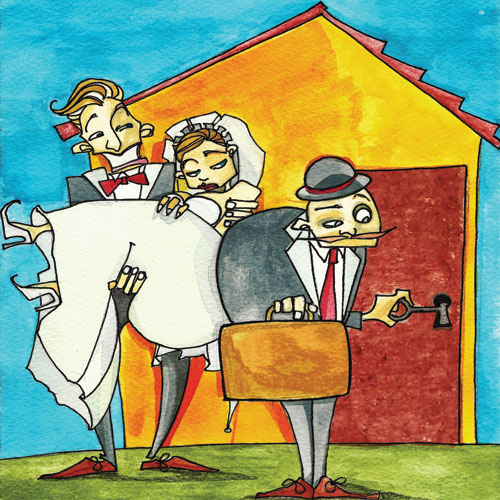
The happy marriage between Mr. Bank and Ms. Real Estate seems to have lost some of its luster of late, becoming more of a relationship that both parties are resigned to accept for the sake of keeping the house — Lebanon — together.
On the surface, if we do the math, there is no need for the couple to seek counseling over the current exposure of Lebanese banks to the real estate sector. Out of the $44 billion which was lent to the private sector by Lebanese banks last year, a total of $13 billion was handed to the real estate sector in the form of housing loans or construction loans — that is around 30 percent of the total private sector loan book of banks and 19 percent of the total loan book. By comparison, the Spanish real estate and housing market, which is under severe pressure, accounts for 54 percent of the total loans of their local banks, forcing the banking sector to ask for a hefty bailout. Demand in Lebanon, according to experts Executive spoke with, is also primarily based on end users as opposed to speculation; given this, the banking sector’s exposure may not be worth rattling about. Of the $6 billion the construction sector added to economy last year, according to Bank Audi estimates, developers received $1 billion from banks and had to fund the rest themselves either through presales of flats or their own capital. “The real estate sector relies on around 80 percent of their own financing so it is not highly leveraged and it is not pressured to sell,” says Marwan Barakat, chief economist at Bank Audi. “That’s why there isn’t much pressure on [housing] prices.”
Omar Shantouf, general manager at FFA Real Estate, concurs: “Developers are not that highly leveraged and they can afford to sit on projects. They might sell one or two apartments at lower prices but they won’t advertise this, there is no such thing as a fire sale in Lebanon.”
As for housing loans, 36 percent of total property sales were funded by loans from the banking sector in 2011, up from 9 percent in 2007, and the remainder was funded by homeowners’ capital according to Bank Audi research. “That’s a moderate level even though it increased in past years,” says Barakat.
The honeymoon is over
Many heated debates at the dinner table, however, have centered on whether Lebanon’s lady of real estate has gotten a little big for her britches in recent years. Indicators of activity within the real estate sector are starting to paint a gloomier picture. Cement deliveries, an indicator of current construction activity, dropped 4 percent in the first quarter of 2012 after increasing 6 percent in 2011. Construction permits, an indicator of future supply, dropped 4 percent in the first quarter after dropping more than 6 percent in 2011.
Economists and financial experts Executive spoke with played down any concerns: “95 percent of our projects are sold to end users, people buying to live in it and not to speculate,” says Ziad Maalouf, chief executive of Capstone, a private investment firm. “Today, there is no risk of seeing a bubble in the market explode.” In the construction sector, banks have handed out a total of $7 billion in loans, which represents 16 percent of total lending to the private sector. “The share of the construction sector to total loans is similar to the one of the construction sector to GDP so we didn’t over lend to [real estate]” adds Barakat, given that the share of the construction sector to the country’s gross domestic product stood at 15 percent, according to the 2010 National Accounts of Lebanon, the latest official breakdown of figures for GDP available.
While banks may lend according to the economic logic they devise, they are now faced with developers who are finding it more challenging to offload flats, which a few years ago were selling like hotcakes. “Banks are becoming more selective because of the situation in the real estate market today. They are worried about demand and supply,” says Maalouf. As banks become pickier, they look for trendier projects. Demand has shifted from large-sized apartments, over 200 square meters, to medium-sized apartments, between 100 and 200 square meters, and from Beirut to the suburbs according to Bank Audi research. “If you go to the bank and ask for financing for a project with flats of 600 square meters in size, no one gives you a loan. You have to go with the right project and the right sizes,” adds Maalouf. With land prices still increasing and flat prices in tow — albeit at lower levels than in previous years — homebuyers are finding it more and more difficult to pay for a roof over their heads. “Homebuyers can’t afford to buy houses anymore because the prices of land have gone up in the lift and our income is going up the stairs,” says Antoine Chamoun, general manager at Bank of Beirut Invest.
Competition on the rise
Homebuyers have also been visiting bankers more regularly in recent years. Housing loans leapt by 33 percent last year — receiving the bulk of the increase in private claims — to reach $6 billion. The central bank had a significant role to play in giving banks incentive to lend their liquidity and in helping the Lebanese folk fund their pads. The central bank’s circular of May 2009 provided an incentive for banks to lend in Lebanese lira by reducing their reserve requirements as long as rates applied to clients are within a certain limit — 40 percent of a one year Lebanese Treasury bill plus 3 percent. “It created a boost in terms of supply and demand,” says Basil Karam, head of retail at BankMed.
“The central bank helped us developers by helping home owners buy flats, helping banks to lend and helping activity in the country,” adds Maalouf. “It is the best thing that happened to the sector.” This has fueled the development of a love-hate relationship between homeowners and bankers. For bankers, it became a lucrative business. Struggling to deploy their excess liquidity — deposits stood at $120 billion, or around three times GDP, in the end of the first quarter — with interest rates globally at record low levels and a dearth of investment opportunities within Lebanon and in the shaken region, extending loans to the housing sector became a thriving business and everyone jumped on the bandwagon. Yet what that also meant was that the central bank indirectly propped up a housing market, where prices were continuously rising and thus impacting the affordability of housing in the country.
“Banks have been under pressure on their interest margins in the past few years because their liquidity is not yielding [returns] anymore both outside and inside Lebanon, so they are having to lend more,” says Barakat. As banks increase their offering for home loans, competition is getting fiercer and along with it, the advertising wings of the banks are becoming more active to lure clients their way. Billboards for home loans seem to be popping up on almost every corner.
With rates on loans in Lebanese lira being controlled by the central bank, the competition is now on the dollar loans. “Some banks are reaching their allowable limits in extending subsidized loans in Lebanese pounds,” says BankMed’s Karam. “They will have to focus more on dollar-based loans and cut prices to attract more loans. In dollars, there is price competition, big time.”
Chamoun agrees, saying that, “The competition on loans in Lebanese pounds [subsidized loans with the central bank and with the Public Corporation for Housing] is low because the features of the loan are imposed and there is very little difference among banks on these loans, but on the dollar, banks are putting their own features.”
While there is room to increase lending further to the housing sector, growth is unlikely to be as significant as in previous years given that it was coming off a low base, according to Barakat. This could lead to continued competition in the sector and “it should be like this and the best offer should win,” adds Chamoun.
Increasing competition would be a welcome respite for homebuyers struggling to keep up with the elevated real estate prices. As for developers who have funded their current projects with low leverage, they are largely sitting on their pile of stock, putting upcoming projects on hold and staying firm on prices. For developers quick to adapt to the changing dynamics, projects outside Beirut with smaller flat sizes are being developed, and thus those selling homes will likely have to do with transactions that were not as large as they previously enjoyed.
As BankMed’s Karam points out: “Lebanese will continue to borrow to buy homes but the average ticket size wont be the same.”
This article was published as part of a special report in Executive’s July 2012 issue
The endless struggle over what constitutes a cultural heritage site and what real estate developers can build over continues to spur heated debates in Lebanon. There are many sites at issue. Beirut’s Ottoman and French colonial-style homes, or at least the ones that survived the civil war and reconstruction efforts, are under constant threat. Several remnants of the area’s ancient past as a center for global commerce and culture are also at risk of being lost in the name of profit.
Land scarcity only heightens property developers’ appetite for demolition of sites that may or may not be under protection. Weak government regulations, mostly holdovers from the French mandate-era, have left countless loopholes open for exploitation.
The onus to protect these sites, by protesting against great odds, has fallen on a loose affiliation of activists, archaeologists and everyday citizens. And in many ways, real estate developers are simply taking advantage of rights set aside for them by previous governments, most notably that of former Prime Minister and real estate mogul Rafiq Hariri, although other governments did their part as well.
An ancient past discarded
One of the most controversial heritage issues of late is the Venus Towers project in downtown Beirut. The original plan calls for three luxury residential towers with the promise of “recapturing the traditional context of Lebanese housing in a new modern style”. After ground was broken what appeared to be an ancient Phoenician-era port was discovered, spanning some 7,000 square meters of prime real estate. The project developer, Venus Real Estate Development Company, says the site’s significance has been overblown. But archaeologists not associated with Venus Real Estate say the alleged port is a cultural heritage site that should have been preserved at all costs.
A fierce public debate over the site ensued, followed by at least five archeological reports, which were submitted last year to then Culture Minister Salim Warde. Last spring, Warde told Executive, “It might be a port, a shipyard, or even a quay, but it is surely something very interesting, and we are seeing how we can work with the owners of the land to save this site.” An official from Venus Real Estate told Executive in late June that the archaeologists and experts contracted by the company had recently finished their assessment and submitted a report to the Minister of Culture Gaby Layoun, and were waiting on a response. “It’s in the minister’s hands now,” the official said.
The next day, Venus Real Estate completely demolished the remnants of the site after gaining approval from Layoun.
Joseph Haddad, founding member and secretary of the Association for the Protection of the Lebanese Heritage, called the action “illegal” and promised to continue with protests. Announcing the decision, Layoun said in a statement, “The entire case involves no proof that points to the presence of a Roman or a Phoenician port and the trenches within the rocks could not have been used as dry docks for ships or their maintenance.” Media reports later stated Layoun had distanced himself from the decision and his office was not avaliable for clarification as Executive went to print.
A similar dispute has arisen over a Roman-era hippodrome, also in the heart of downtown Beirut. Solidere built luxury homes directly on top of much of the site, one of which is owned by former Prime Minister Saad Hariri. The hippodrome is one of two in Lebanon, out of only five of its kind in the Levant. The second hippodrome in Lebanon is in Sour, and was added to the United Nations Educational, Scientific and Cultural Organization (UNESCO) World Heritage list in 1979, long before the construction craze took hold across the country.
Solidere has proposed moving the remnants of the hippodrome to a site nearby, where a former Roman-era bath was also moved. However, this will do little to appease preservationists. “It is very easy to protect something,” says Jeanine Abdul Massih, professor of archaeology at the Lebanese University, and a proponent of keeping the hippodrome in its original location. “The problem is, it is also very easy to move it.” For its part, the Culture Ministry seems more intent on using the episode to publicly attack Hariri on television than to preserve the site.
Outreach efforts by preservation groups such as the Association for Protecting Natural Sites and Old Buildings in Lebanon (APSAD) have proved moderately successful, at least in attracting awareness. In late May the group held a ‘National Heritage Day’ with assistance from the Ministry of Culture, and with a focus on cultural heritage sites in Sour and Hermel.
Despite its efforts, APSAD says it is up against powerful real estate companies that are tough to counter. “Anything is better than nothing,” says Mona El Hallak, architect and executive committee member of APSAD. “Really it is in that desperate a state. They do everything to make buildings fall apart and then lobby to be able to pull it down.”
LU’s Massih echoes that sentiment, saying, “We are all used to it. For 25 years we destroyed all of the history. The problem is patrimonial. Maybe the money at stake is too much, I don’t know. There must be something to do because the people cannot enjoy any of these sites.”
Foreign elements
While most preservation efforts are focused on specific buildings and historical sites in Beirut and surrounding areas, the sale of large swaths of land to foreigners across the country is also attracting the ire of activists and citizens. One example is a brewing fight over the sale of some 7,700 square meters of land near the Keserwan village of Dlebta to Saudi Prince Muqrin bin Bdul Aziz, allegedly without consultation with the local municipality. As Executive went to press, repeated attempts to contact the municipality went unanswered. A presidential decree, #7983, approved the sale in April and residents say they only learned of it once an announcement was made in the Official Gazette.
A campaign to revoke the sale has attracted attention, and local residents have mobilized. But some elements involved in protesting the transaction show hints of xenophobia rather than a genuine concern for the land. As it stands, a petition is circulating demanding the revocation of the sale and it appears that this, like other land issues, will not be resolved soon.
Past attempts at historical and cultural preservation have shown mixed results. A senior advisor to Minister Layoun, Michel de Chadarevian, touts the Sour hippodrome as a preservation success story. “The hippodrome in Tyre has been handled with great care and this is something that Lebanese should be proud of,” he says. But that effort was undertaken more than 30 years ago, and nothing approaching the level of UNESCO protection has happened since.
This article was published as part of a special report in Executive's July 2012 issue
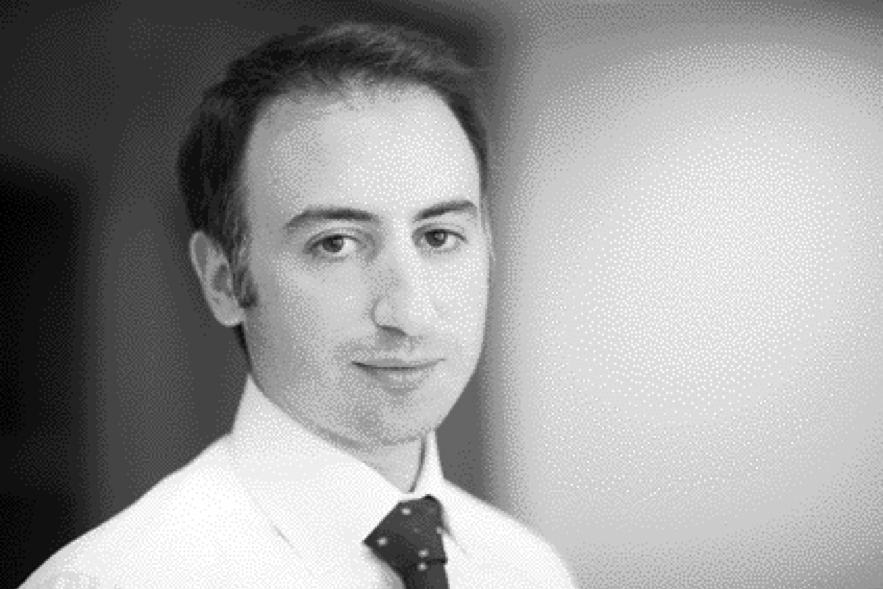
Professor Theo Vermaelen, the Schroders Chaired Professor of International Finance and Asset Management at the INSEAD business school discusses with Executive how the ‘small people’ caused the 2008 financial crises, Facebook’s IPO flop and Lebanon’s conservative stance on derivatives trading on the sidelines of a recent conference titled ‘Challenges of the New World Economy: Are we in a Post Globalization Era?, at the Phoenicia in Beirut.
Political tensions, market volatility hit Solidere
It has been a roller coaster ride for Solidere so far this year, mostly due to a shaky security situation in Lebanon, but also because of a sector-wide drop in sales. The property developer’s A and B shares dropped of 3.1 percent and 4.19 percent, respectively, in the third week of May on the Beirut Stock Exchange after violent clashes across the country. However, share prices climbed back up to $12.5 and $12.34 by the end of trading on May 25. As Executive went to press at the end of May, the developer’s global depository receipts listed on the London Stock Exchange were down 29.6 percent since anti-government protests began in Syria last spring. Many local analysts predict that if Solidere shares remain in free fall, major shareholders Bank Audi and BankMed would initiate a buyback scheme to boost prices, as they have done in the past.
Construction down, again
According to figures released by the Order of Engineers in Beirut and Tripoli, construction in the first four months of this year is down 10.5 percent from the same time last year. The most significant drop was in April, which saw a 26.5 percent dip in the number of new building permits over the same period in 2011. The Order of Engineers attributed much of the decline to the worsening situation in Syria and its effect on Lebanon. These figures follow a general downward trend over the last year for the entire sector. A Citi Research report, MENA Construction Project Tracker, showed in April a regional drop of 30 percent in the number of new projects awarded across the Middle East and North Africa.
Cityscape award goes to Abu Dhabi’s Sorouh
Sorouh Real Estate Company won the 2012 Cityscape Abu Dhabi award for the best mixed-use project in the region for its Sun & Sky Towers development in Abu Dhabi. Sorouh Chief Operating Officer Gurjit Singh said the development had attracted “over 900 families” after the award announcement. The Sky Tower stands at 74 floors, and the Sun Tower is 65 floors, making them the tallest buildings in Abu Dhabi. The company broke ground on the towers in 2007 and the first tenants were able to move in last year.
Beirut Property Fair
The annual three-day Beirut International Property Fair took place at the Conference Center of Hilton Beirut Habtoor Grand Hotel at the end of May. The event featured talks on attracting foreign investors to Lebanon, social media marketing strategies, investment in green technologies, and construction site safety. A general theme of smaller, more affordable apartments highlighted this year’s conference as Lebanese property developers slowly adjust to the realities of a general downturn in the local real estate market. Beirut-based investment firm MENA Capital used the event to launch its new 10,000-square-meter Bella Casa gated community in Beirut (see page 88).
UAE property agency welcomes criticism
Emirates-based property agency Better Homes is attempting to take the lead in a transparency drive for the sector, by creating an online rating system where customers can rank the performance of individual real estate agents directly on its website. The idea is to enable prospective buyers, and those who have already purchased property, a chance to rate and discuss their experiences in a public forum. “Honest and open customer reviews will enable new customers to find the best agents,” Ryan Mahoney, chief executive of Better Homes, told the Abu Dhabi-based newspaper The National shortly after the rating system was launched last month.
Palm Jumeirah courts young buyers
Emirates property developer Nakheel will soon expand its residential offerings on the Palm Jumeirah after it said financing had been secured for 192 studio apartments. The new development, Palm Views, “will appeal to young, vibrant individuals and couples who want a prestigious address at a price they can afford,” Nakheel chairman Ali Rashid Lootah said at a press conference. Studio apartments are 150 square meters, and start at AED1 million ($272,000). Palm Views will be split into two towers, each with 96 residential units. Construction is slated to begin by the end of this year, with first delivery expected in the first quarter of 2014. Palm Views will follow a regional trend that has new developments moving away from the higher end of the market to focus on first-time buyers.
Awards handed out at Cityscape Qatar 2012
Cityscape Qatar 2012 awards were announced on the last weekend of May. Notables included Best Sustainable Development Award, which went to Msheireb Properties for its Msheireb Downtown Doha project, and the Residential Project Award, given to Qatar-based United Development Company for its offering, The Pearl Qatar, which won for Mixed-Use Project. Other winners included Hamad Medical Corporation, Barwa Real Estate, and Qatar National Hotels Company. A number of large deals were also announced at Cityscape Qatar, and Barwa Real Estate Group used the conference to officially launch its Lusail Golf Residential Development. “The number of agreements signed at the event are themselves a testament to the leading role Barwa continues to play in Qatar’s development,” Barwa’s chief executive officer Abdulla Abdulaziz Al Subaie told reporters after the launch.
Bahrain property sold ‘at a loss’
According to a report by international real estate consultancy CBRE, Bahrain’s residential property market has taken a serious beating since anti-government protests began there last year. The report noted that: “Several middle-income housing projects have been launched in Bahrain in the last three months, and sales have reportedly been brisk to date.” But things are so bad that “that some of these projects are effectively being sold at a loss, or at best, cost price, in order to stimulate the market and raise the profile of the ongoing master-planned projects of which they are merely [at] a very early phase,” the report said. CBRE offered little hope for the immediate future as Bahrain’s public image remains tarnished by a brutal government crackdown on dissidents in the Gulf country.
In its drive to become an oil and/or gas producing country, Lebanon currently faces the challenges of establishing and implementing a sound regulatory framework and an effective Petroleum Administration, the sector’s (supposedly) independent regulatory body.
Some of the most crucial aspects of the required system include creating farsighted mechanisms that will first prevent the occurrence of a number of problems that are commonly encountered in hydrocarbon producing provinces, and second, equip the Lebanese government with sufficient powers to address such problems swiftly and efficiently as they arise throughout the development of the upstream oil and/or gas industry in the country.
National vs. IOC interests
Arguably one of the worst oversights that can be committed by the early drafters of oil and gas legislation is the assumption that International Oil Companies (IOCs) would be always seeking to diligently explore their acreages in search of hydrocarbons, and that once they have found oil and/or gas, they would be eager to exploit it effectively and quickly.
Experience around the world shows that not long after licenses are granted or discoveries are made, some areas are often left to lay fallow and national governments discover that they do not have adequate powers to impose work obligations on the IOCs. As a prominent observer of the United Kingdom offshore licensing regime once noted, “the idea that licensees might make significant discoveries but then not develop them does not appear to have occurred to those who first drafted the offshore licensing arrangements in 1964/1965”.
In the UK, for example, rigorous state action was needed to address this problem and the government had to undergo the complexities of enforcing a “voluntary” scheme in order to rectify the situation of fallow areas and discoveries. The result was a shy governmental process that raised some concerns about the legality of such measures.
The efforts undertaken so far by the Lebanese government in drafting the offshore hydrocarbon legal framework suggests that the country is slowly making steady progress in the right direction. It is imperative to continue along this positive trajectory by appointing a Petroleum Administration that can play an effective role in monitoring, at a close distance, the petroleum operations to be undertaken by the IOCs.
Foresight needed
It can be also predicted that, in light of the current position of the Lebanese economy, the mere discovery of commercial oil and/or gas reserves would understandably be interpreted as a promising sign of future wealth, regardless of the quantities that would actually be produced.
Yet, once the initial joy of the first few barrels fades away, the Lebanese government must be well prepared to monitor the efficiency of its production and to make sure that its licensees are conducting their operations using the best practicable standards and methods to ensure acceptable recovery levels out of each reservoir.
The technical expertise and skills of the licensees (the operators) usually play a crucial role in determining the levels of recovery (i.e. how much oil and/or gas could be practicably produced).
For instance, a 70 percent oil recovery from an oil reservoir is considered to be a high percentage as it is almost impossible to extract entire reserves of any particular reservoir due to the constant reduction of pressure and the interference of other factors, such as oil density and depth of the reservoir, amongst others.
Countries such as Saudi Arabia are constantly aiming to increase their investments in enhanced recovery technologies, as they recognize how vital this is in order to boost recovery rates at their reservoirs from around 50 percent to 70 percent.
Once again, the Lebanese regulator must ensure that the government’s powers under any exploration and production agreement offer useful mechanisms for pushing the licensees towards more efficient recoveries, that is to say better stewardship.
In due course the government must put in place adequate mechanisms whereby field activities would be surveyed (preferably on a yearly basis) to determine the performance of each licensee (operator).
A process to deal with underperforming fields must also be decided. Such a process could, for example, include an initial consultation exercise between the government and the licensee (operator) to study possible ways to enhance stewardship. A set of targets could thereafter be agreed in conjunction with a clear and firm set of sanctions.
Failure to address certain crucial issues in the initial text of petroleum regulations and agreements could have disastrous consequences on the national interest and result in huge resources being lost or at least deferred.
Effective revenue management
In addition to operational efficiency, an important matter that Lebanon must consider is the efficient management of its hydrocarbon revenues. Hydrocarbon resources are known to inject considerable financial revenues into state accounts. These revenues would usually have two main characteristics: one, they are likely to constitute a large percentage of the total yearly revenues of the state; and two, they are temporary. As a result, several unfavorable consequences could be noticed in the national economy:
(i) Inflation due to the sudden increase in money supply.
(ii) An occurrence of the Dutch Disease, meaning the depreciation of the productive sectors as they becomes less competitive due to the oil-related increases in exchange rates.
(iii) An unstable budget balance due to the volatility of oil prices.
(iv) A decrease in income when the resources of the province begin to decline.
As part of the economic strategies that governments undertake to surmount the above challenges, national oil funds are often created by governments to accumulate and manage part of, or the entirety of, the state’s oil and gas revenues. In total, close to 20 petroleum-producing countries are known to have established national oil funds.
The specific purposes of such funds varies between countries; for instance, Norway’s aim is to use its fund to stabilize of the economy and to secure a steady income for future generations, even after the resources dry-up. Russia, however, does not give priority to saving for future generations and the purpose of its oil fund is, according to Vasily Astrov, an economist at the Vienna Institute for International Economic Studies: “reduce the vulnerability of the state budget to the volatility of world oil prices,” and to sterilize “the impact of oil-related foreign exchange inflows on the money supply and inflation.”
To Lebanon’s credit, the Lebanese Offshore Hydrocarbon Resources Law provides a clear provision that state hydrocarbon proceeds shall be injected into a sovereign fund.
The strategy shall be to keep the capital and part of the proceeds in an “investment fund for future generations”, while using the remaining funds to “guarantee the rights of the state and avoid serious, short or long-term negative economic consequences”.
In theory this is an excellent provision, however, the practical benefits thereof shall be largely affected by the seriousness of the special law that needs to be enacted by the Lebanese parliament to define the management structure of the sovereign wealth fund, and its investment principles, not to mention the effective implementation of such law. A close eye should be kept at how the Lebanese authorities will perform in the coming years in this respect.
Worthless oil and gas?
Indeed, some critics may argue that Lebanon’s oil and gas resources would be worthless to the country if they are badly managed and exploited. As the coming decades will show, the true worth of these ‘valuable’ resources will come down to the ability of the Lebanese authorities to manage this industry with high technical capabilities, foresight and transparency.
MALEK TAKIEDDINE is a legal consultant in the oil and gas sector and managing director at Al Jad legal firm
NSSF raises coverage costs
The National Social Security Fund (NSSF) has increased its rate to cover an overnight stay in private hospitals from LL30,000 to LL90,000. The move came after private hospitals threatened to stop taking NSSF patients because the rate was too low in the face of increasing costs of care. This increase in coverage will be met with a rise in the ceiling of employees’ monthly contributions to the sickness and maternity category from LL30,000 ($20) to LL50,000 ($33). In this category, employers pay 2 percent from an employees’ salary, but this was previously capped at LL30,000 for salaries over LL1.5 million ($1,000). Under the new agreement the maximum contribution has been increased to LL50,000 by raising the salary cap to LL2.5 million ($1,666). The NSSF suffers from serious problems relating to underfunding and understaffing, with 45 percent of its positions vacant and the average age of employees exceeding 51 years old. According to the fund, the government’s accumulated obligations at the end of 2011 amounted to LL829 billion ($550 million), while they only received some LL120 billion ($80 million) from the state’s coffers that same year.
Spending in uncertainty
The Lebanese are continuing to spend, with private consumption for the first quarter of 2012 up on the same period in 2011. Investment spending is also up but at a markedly lower pace. Total spending, measured by the aggregation of cleared checks, point of sale and ATM transactions, edged up by 3.1 percent year-on-year in the first quarter of 2012, reaching $19.2 billion. This compares to the 1.5 percent increase in spending registered in the same period in 2011. The total cash withdrawals from ATMs by Lebanese residents increased by 7.9 percent annually, while point of sale purchases increased by 24.6 percent on a yearly basis. The figures show the Lebanese are continuing to increase expenditures despite the fragile economic and political environment that has prevailed, locally and regionally, since early 2011. The investment component was up at a comparatively lower pace due to uncertainty over the Lebanese and Syrian security situation. Imports of investment products went up a mere 2.3 percent year-on-year in the first quarter of 2012.
Logistical failure
Lebanon has crossed the finish line in 96th place in a global survey on logistics, slipping from its place at number 33 in the same survey in 2010. The World Bank’s Logistics Performance Index (LPI) assesses the logistics gap among 155 countries and reflects perceptions of the logistics environment of trading partner countries. Lebanon also fell from 4th place to 26th from 2010 to 2012 among the upper-middle income countries category. The results are based on a survey of operators across the world who give feedback on the logistics of “friendliness” of the countries in which they work. It assesses customs procedures, logistics costs, infrastructure quality, the ability to track and trace shipments and timeliness in reaching destinations.
Upping industry, outing taxes
The Ministry of Industry has signed a deal with the American University of Beirut (AUB), the National Council for Scientific Research and the Lebanese Industrial Research Achievements program (ILRA) to improve the quality of industrial research in Lebanon. It is hoped the agreement will contribute to helping Lebanon generate industrial high value-added products for the economy while enabling AUB students to conduct academic research relevant to industry. Elsewhere, the Ministry of Industry said that a long sought-after law to reduce taxes on industrial exports by 50 percent was approved by the cabinet but was awaiting ratification from Parliament. Industrial exports amounted to $527.1 million in the first two months of 2012, up 10.6 percent from the same period in 2011. The sector as a whole constitutes 7 percent of gross domestic product according to the most recent figures. In 2002 the sector constituted around 11.5 percent of GDP.
MEA profits crash
The nation’s flag carrier Middle East Airlines (MEA) announced a 55.9 percent drop in operating profits between 2010 and 2011. It is not possible to verify the actual financial statement of MEA as it does not publish a detailed balance sheet or income statement, but the company’s chairman Mohammad Hout said the operating profits had dropped from $90.6 million in 2010 to $40 million in 2011. He blamed rising fuel prices, increases in wages and turmoil in the Arab region. Lebanon entered into the top bracket of the open skies policy in 2002, which liberalized aviation and increased competition in and out of the country, but Hout has complained that not all countries in the region are abiding by the agreement’s rules. The ex-head of Lebanon’s civil aviation authority, Hamdi Shawk, claims the Minister of Transport and Public Works, Ghazi Aridi, and MEA are retreating from the policy of liberalization. Neither the minister nor MEA responded to Executive’s repeated requests for comment. The company is more than 99 percent owned by Lebanon’s central bank and previously mooted plans to partly privatize the carrier by listing on the Beirut Stock Exchange appear to have been shelved.
Electrified employees
The government-owned electricity provider Electricite du Liban (EDL) was wracked by open-ended strikes, protests and sit-ins by part-time and contract workers last month. As workers protested against the cabinet’s failure to endorse their full-time employment draft law. The workers have been pushing for permanent employment with full benefits, voicing fears that they will lose their work to service providers. The EDL employees association claims that there are only 1,700 full-time employees at the company while it needs more than 5,000. The Minister of Energy and Water, Gebran Bassil, told reporters that “the company cannot contain more [permanent employees] than it can bear.”
Gray days ahead
Lebanese youth have a more downbeat view of their economic prospects than their Arab counterparts, according to a new report. The ASDA’A Burston-Marsteller 2012 Arab youth survey indicated that 63 percent of Lebanese youth are very concerned about the rising cost of living, 63 percent are worried about the economy and 60 percent are worried about unemployment. While the same proportion of Arab youth are concerned about the rising cost of living, only 48 percent are worried about the economy, and 44 percent are worried about unemployment. More than half of the respondents said that they had fewer opportunities than they did 12 months earlier. The survey covered the United Arab Emirates, Oman, Qatar, Bahrain, Saudi Arabia, Kuwait, Egypt, Jordan, Lebanon, Iraq, Tunisia and Libya.
Typically below potential
Lebanon’s projected real gross domestic product growth (GDP) of 3 percent in 2012 is well below the economy’s potential, according to the International Monetary Fund (IMF). It identified the implementation of strong domestic policies as essential to stimulating confidence, which requires good fiscal discipline to reduce the debt-to-GDP ratio downwards from its current standing somewhere around 140 percent. The IMF identified the need for reforms in infrastructure, as well as improvements in the business climate to help create a dynamic economy and boost job creation. This comes on the heels of a UN study that highlights that the labor-intensive productive sectors have been marginalized in Lebanon, contributing to lower productivity, higher unemployment and the exodus of much of the nation’s young talent.
