• Donate
  • Our Purpose
  • Contact Us
Executive Magazine
  • ISSUES
    • Current Issue
    • Past issues
  • BUSINESS
  • ECONOMICS & POLICY
  • OPINION
  • SPECIAL REPORTS
  • EXECUTIVE TALKS
  • MOVEMENTS
    • Change the image
    • Cannes lions
    • Transparency & accountability
    • ECONOMIC ROADMAP
    • Say No to Corruption
    • The Lebanon media development initiative
    • LPSN Policy Asks
    • Advocating the preservation of deposits
  • JOIN US
    • Join our movement
    • Attend our events
    • Receive updates
    • Connect with us
  • DONATE
Society

The Formula One family car

by Yasser Akkaoui June 3, 2012
written by Yasser Akkaoui

Ferrari has been on something of a new trajectory in recent years, and to get the word out on how things have been shaping up for the automaker, Executive was invited on an all-expenses-paid, one-day trip to the Modena province of Italy to sit with company officials, tour the Ferrari factory and test drive the new 2012 California model.

The company’s course of late could be seen as an assault on the turf of rival Porsche. In the 1990s, the German luxury carmaker made strategic decision to position itself as the manufacturer of the racecar one can also drive to the grocery store and pick up the kids with — magnificent engineering and performance potential paired with practical, everyday sensibilities.

First launched at the 2008 Paris Motor Show, Ferrari’s California was an offering of a similar genre, aiming to attract customers who might otherwise have been looking at a Porsche 911 Turbo, a Mercedes SL or even the Bentley GT. The four-seat, eight cylinder California was intended not only for those dazzled by the Ferrari brand, the curving lines of beauty and Formula One racing capabilities, but also those who want to throw their gym bag in the front and look good with the soft-top down on their commute to the office; the sort of versatility Porsche has made its hallmark.

If you’d fallen for the California in 2009, however, you might hardly think a square inch of her has aged in the 2012 model. Indeed, Ferrari has kept the appearance of the California almost exactly the same, instead focusing the evolutionary process on the DNA of the automobile, honing the mechanism inside the machine. The new model is 30 percent more fuel efficient, which helps to rebalance the environmentalist’s guilt-pleasure ratio when flying down the highway with 40 more horsepower and 30 less kilograms. That improved weight-to-power ratio has also trimmed 0.2 seconds off of the zero-to-100-kilometers-per-hour acceleration time — in the 2012 California, one can go from a dead stop at the lights to the highway speed in 3.8 seconds, bringing it equal to the Porsche 911 Turbo in the race to accumulate speeding tickets most rapidly.

Among the many other less apparent improvements are the software upgrades, new pistons and manifolds. A new body structure redistributes impact and shock absorption, improving one’s chances of walking away if, by chance, one were to blink or sneeze while rocketing towards the sound barrier and miss that hairpin turn. And while one’s insurance broker would likely have to cover the cost of removing your California from the crater in someone’s living room wall, for almost everything else, call Ferrari, as the company’s complimentary seven-year maintenance program will have you covered.

Why Executive was of particular interest to Ferrari is that the company sees Lebanon as a mature market and a trend setter for the region — cultivating a cool and sophisticated market positioned in fashion-conscious and notoriously fickle Beirut pays off in big money sales in Abu Dhabi, Dubai and Doha. And Ferrari’s strategy seems to be working. Not only did 70 percent of their new customers last year migrate from Porsche, Mercedes and Bentley, according to company officials, but of the 3,000 California’s manufactured last year, some 450 were sold in the Middle East and South Africa, with the United Arab Emirates being the top customer. Interestingly, the company has no part in the operations of Abu Dhabi’s Ferrari World theme park on Yas Island, but rather offers up its name and branding for the Emirate to use for the modest compensation of $40 million annually.     

Perhaps the most endearing aspect of the California is that Ferrari has made the design so enduring. When you pull up to the stoplight, no one watching could guess whether you bought it yesterday or four years ago; you’ve opted out of the race to catch up with the latest model. Rather, with Ferrari’s California there is a sense of elegant timelessness, and in that lies the making of an icon.

June 3, 2012 0 comments
0 FacebookTwitterPinterestEmail
Economics & Policy

Executive Insight – Doubts for Arab democracy

by Executive Contributor June 3, 2012
written by Executive Contributor

Several countries at the heart of the 2011 Arab uprisings have held parliamentary or presidential elections. While it seems more than fair that it should now be the Arab world’s turn at democratization, the question has to be raised if citizens of the region’s changeover countries are united in the belief that equitable social development under newly won political and economic freedoms is a realistic promise.

A dynamic and equitable market is a requirement for a democracy that works and the unified belief in a better economic future can make or break a successful transition from an uprising to a resilient democracy and a healthy, just and efficient, economy. It is a crucial need for Arab societies to achieve this democratic consolidation in order to avert dangers of new dictatorships or civil wars, and there are some legitimate doubts whether the Arab world is itself sufficiently prepared and equipped with enough international support to meet this condition.

For one, many Arab citizens today question their states’ legitimacy. They can point to good reasons for this, because at the formation of many of today’s countries stood colonial rulers who lumped different tribes into new countries in the space of a few years. However, when democratization swept over Latin America or over Central and Eastern Europe after the fall of the Berlin Wall, states with strong national identities mastered the transition more easily than states with weak national identities; for example, the former Soviet States or the Balkan countries. As Arabs now question their heritages of nationalities construed by foreign powers, there are signs of suppressed identity-conflicts. As these have been breaking out in the past year, they could carry on with the same ferociousness as they have in the Balkans. And the Arab world has many Balkans: Syria, Iraq, Libya, and Yemen.

Inequity’s undermining of democracy
The next barrier is engrained inequality. Equitable social development is the ultimate insurance for successful democratic consolidation. The thought that the middle class is the stabilizing element in a society goes back to ancient Greek philosopher Aristotle, in whose mind a democracy was built upon a society with a strong middle class. The Arab world, on the other hand, has to transform unequal societies into equal ones. Relying on democracy as the means to achieve this transformation might be asking too much from democratization.

To have a chance for non-violent transition from ownership concentrated in the hands of a few to a society prospering peacefully under freedom, equal opportunities must be present, or as renowned Arab medieval philosopher Ibn Khaldun wrote: “Justice is a balance set up among mankind.”

Again there are many examples, such as the opportunities of American settlers to stake land claims out West and land reforms in East Asian economies after World War II, showing that developmental success of democratizing countries can be attributed to the creation of equal opportunities. Inversely, social conflict and entrenched economic inequality in Latin America and Sub-Saharan Africa can today still be traced to the lack of opportunities during and after colonialism. In many Arab countries fertile land is scarce and ownership of land and natural resources are presently concentrated in the hands of political elites. Democratization therefore is bound to generate many redistributive demands. It remains to be seen whether majority demands for reform of ownership will be democratically accepted by the privileged minority.

Societies without trust
One source of doubt in the mutual will of the voting majority and privileged minority is the high level of social mistrust in the Arab world. In 2007, the PEW Research Center’s Global Attitudes Project included six Arab countries in a survey of 46 countries: Lebanon, Egypt, Jordan, Kuwait, Morocco, as well as the West Bank and Gaza. Asked about the statement “Most people in this society are trustworthy,” 57 percent of the surveyed people in the Arab countries responded with “disagree” or “strongly disagree.” This mistrust does not bode well for economic growth by democratization. Democratic effectiveness originates in trust; it does not build it, and thus requires a cooperative platform for decision making.

Lebanon, which is the country with the greatest democratic legacy in the Arab world, can serve as a reference case for other countries. Like many other Arab countries, Lebanon has a long history of political and economic elitism and redistributive conflict that led to internal divides. These divides ultimately invited outside intervention and third-party meddling.

Internal conflict and third party meddling can also be observed now in Libya, Bahrain, Iraq, and Syria. The political and economic grievances that have built up over decades may pose greater challenges than today’s fledgling democratic practices can resolve.

Challenges to development
The Arab region’s economic development prospects are also unlikely to help promote and safeguard the advance of democratic consolidation. Where my home country, Germany, could make strong fiscal commitments to developing the eastern German states after national unification in 1989, and where the prospect of joining the European Union provided a strong tailwind for fast democratic consolidation to economies in Central and Eastern Europe, the outlook for economic development as a driver of successful democratic consolidation is by comparison dismal in the Arab world on at least three counts.

Firstly, Central and Eastern Europe’s reform movement was sustained by a collective memory of private farming and free entrepreneurship. In the absence of such a collective memory, it seems not yet convincing to me that entrepreneurship will emerge strongly and fast enough to accelerate economic growth to the needed levels. It is simply not yet clear what kind of economic development paradigm will eventually emerge after the Arab uprisings.

Secondly, economies in Central and Eastern Europe benefited from starting with a clean slate in parallel political and economic reforms. New political leaders in Prague or Warsaw also had strength in the knowledge that the West had come out in support of democracy-demanding protesters on the streets. By contrast, the Arab world has already experimented with top-down economic reforms since the 1990s and the results were mixed at best. Although the World Bank and International Organizations praised the efforts of the “Maghreb tigers”, these reforms failed to create jobs.

Nepotism and unequal socioeconomic development prevented economic reforms from reaching the youth, and instead economic liberalization bred new economic elites whose fortunes were not based on hard work and entrepreneurship, but on favoritism and tribalism. Additionally, the international community and so-called Western economic reforms have greatly lost credibility among Arab citizens, as the West has for a long time supported autocrats ruling from palaces in Tunis, Cairo, and even Tripoli.

Third, there is much reason to doubt that the West has a sincere interest in true economic reforms in the Arab world. When comparing the West’s economic gain potentials in Central and Eastern Europe with what it could stand to reap from the changes in the Arab world, the reform dividend from the fall of the Berlin Wall was much greater than any reform dividend in the Arab world.

Consequently, the West surely will not commit to the Arab world as it did to Central and Eastern Europe. All rhetoric aside, oil remains what primarily makes Arab economies attractive to the West. The international community is not so much interested in developing new economic opportunities in the Arab world, but in preserving the existing ones. 

What awaits
The Arab uprisings will hopefully be remembered as marking the end of dark chapters of the past, but until a bright new chapter is clearly written and the twin pillars of efficient democracy and healthy economy have been tested, smoke will likely continue to rise up and shroud the future of the Arab world.

June 3, 2012 0 comments
0 FacebookTwitterPinterestEmail
Real estate

History under siege

by Jeff Neumann May 6, 2012
written by Jeff Neumann

In the arena of Lebanese architectural heritage some combatants are better at the game than others. Today activists, archaeologists, politicians and real estate developers have entered the stadium to battle it out over what is probably Lebanon’s oldest sporting venue. At issue is the fate of a Roman-era hippodrome downtown in Wadi Abu Jamil. Unchecked construction and the rush to build mega-sized steel and glass towers have taken a toll on historical sites in the city for nearly 20 years. The hippodrome site is privately owned and most of it has already been developed and built over, but a remaining plot of land in the middle of the former track has become the focus of many interests, all angling for different outcomes.

Some two thousand years ago the hippodrome hosted horse and chariot races. Today, it sits neglected in the heart of Beirut’s rebuilt downtown of exclusive villas and upscale shopping areas. Overgrown with tall grass and littered with garbage from nearby construction sites, it is almost impossible to imagine the hippodrome’s former glory. Assuming that you can get past the heavy security to even approach the site, the hippodrome today is virtually indistinguishable from any other neglected ancient ruins. But in spite of its current state, it has great significance: Lebanon is home to two out of five Roman hippodromes in the Levant — one in Tyre, and its twin in Beirut. The hippodromes of Lebanon are unique because they are the only ones in the world adjacent to Roman baths.

The great irony of the situation is that some of the loudest critics are largely responsible for the current state of the hippodrome. In March, former culture ministers Tamam Salam and Tarek Mitri held a press conference denouncing plans to build over the open remainder of the site. But the sale and development of various plots at the site in the preceding years were approved by both of them. Solidere, the private company in charge of reconstructing Beirut Central District, justified this earlier development using in-house archaeology experts. Development started by moving Roman-era baths to a different location nearby [see map], and progressed to the point where former Prime Minister Saad Hariri built a large private residence and garden squarely on top of the hippodrome.

So tight is the security at the site that current Culture Minster Gaby Layoun and his top advisor, Michel de Chadarevian, were not allowed past the rusty metal walls that have long encircled the area. “I went there with the minister last month and they would not allow us to even have a look,” de Chadarevian says. “We asked Saad Hariri’s office to let us look around, but we were denied access. We are not even allowed in to remove the grass.” Executive was directed by Hariri’s office to Future Movement Members of Parliament Salam and Nabil de Freige for comment, but neither was available for comment.

Build over, preserve under?

After signing off on development of much of the site, in 2009, Salam, then culture minister, placed the hippodrome on a list of protected historical sites, but the damage was already done. An area surrounding the reconstructed Maghen Abraham Synagogue was all that was left and today represents the plot of contention.

According to the culture ministry, the owner of the undeveloped plot, Nazem Ali Ahmed, consulted Italian architects to find a solution that would generate revenue, while also meet the requirement of having the ruins available for public viewing. His solution, while still in the early stages of development, is to construct a roofed, open air museum. The ruins would be viewable underneath thick glass flooring from walkways and landings. A second level would be reserved for retail and commercial space. Its height will be limited by the current regulations laid out by Solidere, the ministry says. Solidere did not respond to repeated requests for comment.

De Chadarevian says that the current plan to preserve the hippodrome is based on similar efforts in Greece to enclose ruins under glass and install modern walkways and viewing areas. He explains to Executive that the ministry is “happy to have an investor interested in creating and building a museum for free. We will not pay anything. He will do everything and we will all benefit.” (There have been unconfirmed media reports of a $30 million Kuwaiti-funded hotel and museum on the plot.)

This plan set off a public outcry from preservationists and archaeologists. Josef Haddad, founding member and current secretary of the Association for the Protection of the Lebanese Heritage, disputes the notion that a glass enclosure would preserve the ruins. “The glass will trap the heat and humidity and accelerate the deterioration of the site,” he says, pointing to the fact that Rome’s ancient ruins are largely out in the open and exposed to the elements. Under the current plan, portions of the ruins downtown, excluding the fragile section that was once spectator seating, will be removed during construction and replaced when the building is complete.

“We are surprised that out of all ministries, the Ministry of Culture is working the hardest to destroy the hippodrome,” Haddad says. “It belongs to the Lebanese people, not private landowners.” Haddad says that he and the Association for the Protection of the Lebanese Heritage “are doing our best to halt the process,” but adds that a real solution can only come from Solidere, Nazem Ali Ahmed, and the culture ministry.

Jeanine Abdul Massih, professor of archaeology at the Lebanese University, does not believe that constructing what would essentially be a shopping mall over the ruins would do the site justice. “If you want to really preserve it you need to take the whole thing, not just a part of it,” she says. “If you only preserve part of it, what do you really have left of this beautiful stadium? You cannot preserve just a part of a stadium to give an idea of what it was like.” Abdul Massih suggests protecting and restoring the entire site, and adding it to a Beirut historical walking trail. “We need to connect the people with the history,” she says.

Little room left to fight

“We are preserving this place — if the ministry could destroy all that Solidere has done in order to regain all of our antiquities, we would be very happy,” de Chadarevian says, striking a somewhat populist tone. In preservationist circles that might normally be a welcome statement, but he does not hide his contempt for activists seeking to reach a new deal for the hippodrome. “All the campaigns on Facebook, this is rubbish,” he says. “I asked them, ‘do you know what this is? Have you ever gone there and had a look around?’ No, they have not. So why are they even talking about this?”

According to de Chadarevian, the root of the problem is the location of Hariri’s home, and his former cabinet members using their influence to steer development deals. “The only problem is that new construction will block the view from Saad Hariri’s residence,” he claims, and points blame squarely at the two previous culture ministers: “[Tarek Mitri and Tamam Salam] agreed to destroy what remained of the hippodrome years ago.” Several members of Hariri’s Future Movement have rejected this claim.

Professor Abdul Massih suggests a land swap between the Beirut municipality and Nazem Ali Ahmed could resolve the dispute and come as close to satisfying all parties as possible. But the prime location of the hippodrome means this is a highly unlikely outcome. The current construction plan for the hippodrome site has top-down blessing, from Prime Minister Najib Mikati to the Ministry of Culture, as well as Solidere and the Beirut Municipality. Now, the municipality’s final approval of the building plans is all that stands in the way of commercial development at the hippodrome site. [No one from the Beirut Municipality was available for comment].

For those seeking full preservation, the overall outlook is grim. It is also nothing new, says Abdul Massih. “So many other beautiful things here have been destroyed, so nothing would surprise me,” she says. “But I will fight to preserve it.”

May 6, 2012 0 comments
0 FacebookTwitterPinterestEmail
Real estate

For your information

by Executive Editors May 6, 2012
written by Executive Editors

Real estate market “flat”

The overall number of real estate transactions in Lebanon dropped 4.29 percent between January and February. But while the number of overall transactions was down — 5,156 in February from 5,387 in January — the nationwide average value per transaction rose 6.66 percent over the same time period.  The total number of real estate transactions fell by 12.02 percent last year to 82,984, compared with 94,320 transactions in 2010. Over the same year, the value of real estate transactions fell to $8.84 billion, compared to $9.48 billion in 2010. According to a Bank Audi report, Lebanon’s property market has shown “a somewhat flat performance” during the first two months of the year. According to year-on-year data, the total number of transactions fell 0.82 percent in the first two months of 2012, while the total value of transactions dropped $40 million to $1.16 billion. Using figures provided by the Order of Engineers, the report also notes a 3.5 percent overall rise in the number of construction permits issued across Lebanon this year. The data shows a 9.1 percent drop in new permits in Beirut and a 19.2 percent rise in the Mount Lebanon region.

Rent-to-own law passes cabinet

The Council of Ministers, Lebanon’s cabinet, approved a new draft rental law in late April, which would allow low-income families to buy property by making yearly or monthly payments. The Cabinet also agreed to amend a controversial rental law that, if passed, would allow landlords to raise rents by 20 to 80 percent over a four-year period [see page 30]. The Association of the Owners of Rental Buildings issued a statement the following day praising the passage of draft law 767, but also asked the Administration and Justice Committee of Parliament to “enter a new stage that ends the accumulated injustice against old landowners on the issue of rents” by quickly passing the law on to the General Assembly, and to establish a government fund to assist low-income renters who intend to buy residential property.

MENA construction drops

The value of construction projects awarded in the first quarter of 2012 across the Middle East and North Africa (MENA) has fallen more than 30 percent from the first quarter in 2011, according to Citi Research and Analysis. Approximately $18.5 billion in projects have been awarded between January 1 and March 31 in the MENA region, the research unit of Citigroup Global Markets said in its MENA Construction Project Tracker, a monitor that tracks projects from announcement to completion. The comparison figure for the first quarter of 2011 was $27 billion. The cumulative value of projects awarded in March was $4.3 billion, the lowest figure for the year-to-date according to Citi Research. With 76 projects awarded in the year so far, the number of projects was similar to the same period in 2011. “Project awards are generally lumpy,” the report says, while forecasting spending to show “ongoing strength” because of MENA governments’ “desire to avoid unrest” in the wake of the Arab Spring. Kuwait accounted for 38 percent of project values in the first quarter, followed by Saudi Arabia and the United Arab Emirates with 16 percent, or $2.9 billion, each. However, the report noted that Kuwait’s leading share is derived mainly from one single $5.9 billion aviation-related project.

Needing more malls

An apparent dearth of retail space in new residential areas across Abu Dhabi is dragging down property prices, according to a report by UK-based property consultancy Cluttons. “A shortage of retail facilities at many of the new residential developments needs to be addressed, the lack of which is seen as a culprit to falling values,” the report said, before the opening of Cityscape Abu Dhabi last month. According to Cluttons, “Apartment values have been affected the most, with Al Reem and Marina Square apartments falling 7.4 percent and 7.3 percent, respectively, on third-quarter 2011 prices.” Abu Dhabi-based real estate consultancy CBRE also released data that shows residential apartment rents in the city are down 18 percent in the first quarter over the same period last year, and are down 3.5 percent since last quarter. Also at Cityscape, the National Bank of Abu Dhabi (NBAD) announced that its new wholly-owned subsidiary, NBAD Investment Management (DIFC) Limited, had been approved to start a real estate investment fund focused on “income-generating properties.” Zain Abdullah, senior executive officer of NBAD’s new unit said in a statement, “We believe that this fund will offer regional and international institutional investors a diversified avenue to access the UAE real estate market within a strong regulatory environment.”

UAE banks boost credit, offer 100% mortgages

As the United Arab Emirates’ property market continues to struggle, Emirates Islamic Bank announced in mid-April that it would offer 100 percent mortgages to UAE nationals. “For most people, owning a home is one of the biggest lifetime investments and provides an opportunity to build equity in real estate,” said general manager Faisal Aqil, speaking to The National in April. The new loans will be available for first time buyers or for buying off-plan, and can be approved within 24 hours. Variable rates will start at 4.99 percent. Home prices throughout the UAE have been trending downward in recent years, with Dubai as the exception, posting a meager 0.5 percent rise in home prices in 2011. In a statement to reporters, Abu Dhabi’s Aldar Properties announced a $1.09 billion credit facility from the 70 percent state-owned National Bank of Abu Dhabi. In addition to helping the developer manage its liquidity, the deal will be a three-year revolving facility to cover everyday operating costs.

Corruption ties and net loss for Egypt’s SODIC

Egypt’s third-largest property developer, Six of October Development and Investment (SODIC), posted a net loss of $32 million for 2011, after registering a profit of $22.4 million one year prior. In a statement, the company offered a stronger assessment of its operations, saying, “During a tough 2011 SODIC preserved the strength of its balance sheet, improved cash collection delinquency rates, increased receivables and maintained healthy levels of cash on hand.” Prior to the report, SODIC issued a statement about its former chairman Magdi Rasekh, who in April of last year was sentenced to five years in prison and fined $388 million for his role in an illegal land deal under the Mubarak regime, saying the ruling would not affect “the firm’s assets or the assets of the rest of its shareholders.” Also, last month, the Egyptian government announced a plan to sell nearly 8,000 plots of city land and certificates of deposit to expatriates living in the Gulf. By appealing to wealthy Egyptians living outside the country, the government hopes to raise some $4.5 billion with the new plan, which would also allow Egyptian joint stock companies to purchase land with a guaranteed 4 percent, one-year return on the investment. Additionally, any financing for the properties must be done through financial institutions based outside of Egypt.

Saudi prince seeks big tower loan

Kingdom Holding Co, Saudi Prince Alwaleed bin Talal’s investment company, is seeking a loan worth as much as $533 million by this summer to help pay for the construction of the Kingdom Tower in Jeddah, according to a Bloomberg report last month. According to plans, the Kingdom Tower will be more than 1,000 meters tall, with an estimated finishing cost of $1.2 billion. The building plans, drafted by Saudi Binladen Group — a 16.63 percent stakeholder in the project’s owner, Jeddah Economic Co — were approved by municipal authorities in February, and the project is expected to take over five years to complete after construction starts. When finished, the Kingdom Tower will become the world’s tallest building, surpassing Dubai’s Burj Khalifa, which stands at 829.84 meters.

May 6, 2012 0 comments
0 FacebookTwitterPinterestEmail
Banking & Finance

Financial quotes of the month

by Executive Editors May 6, 2012
written by Executive Editors

“How can we grant bills of health from these [government run] labs when rats are running everywhere?”

Mohammad Choucair, head of the Beirut Chambers of Commerce

“The country will manage well, even if we don’t sell a single barrel of oil for two or three years.”

Mahmoud Ahmadinejad, Iranian President

“In Silicon Valley, there’s still too much money chasing too few ideas. If your idea is brilliant and your timing is right, you can become a multimillionaire overnight.”

Paul Saffo, Silicon Valley forecaster on Facebook’s $1 billion acquisition of popular photo application Instagram

“Spain is not going to be rescued; it’s not possible to rescue Spain, there’s no intention to, it’s not necessary and therefore it’s not going to be rescued.”

Mariano Rajoy,Spanish Prime Minister

“God willing, we will take the loan before a president for Egypt is in place.”

Mumtaz al-Saeed, Egyptian Finance Minister, on the proposed $3.2 billion International Monetary Fund loan

“Tonight, Senate Republicans voted to block the Buffett Rule, choosing once again to protect tax breaks for the wealthiest few Americans at the expense of the middle class.”

Barack Obama, President of the United States

“I feel great — as if I were in my normal excellent health. And my energy level is 100 percent.”

Warren Buffett, billionaire investor legend when diagnosed with prostate cancer

“Investments in tourism are extremely good despite the fall in the number of tourists entering Lebanon through Syria.”

Fadi Abboud, Lebanon’s Minister of Tourism

“At times, elections can lead to uncertainties and, for investors, to a changing configuration of opportunities and risks. We are entering such a phase in Europe.”

Mohamed el-Erian, CEO of Pimco, the world’s largest bond investor, on the upcoming French, Greek and Irish elections in Europe

“If you wake up the morning after and still feel like the gazelle is running from the lion, or the lion is running for the gazelle, then everything is ok.”

Fadi Ghandour, after resigning as CEO of Aramex, the delivery and logistics company he founded and managed for 30 years
May 6, 2012 0 comments
0 FacebookTwitterPinterestEmail
Banking & Finance

The expert opinion MENA stock tips

by Executive Editors May 6, 2012
written by Executive Editors

Black is still the dominant color on the market screens this year as equities continue their upward drift. In the midst of first-quarter corporate earnings season, which so far have proved resilient, investors are increasingly concerned that a correction is on the horizon as macroeconomics headlines remain frail. For this month, Executive speaks to Elie Khoury, cheif executive of Berytus Capital and Nour Eldeen al-Hammoury, chief market strategist at Amana Capital for their investment recommendations.

Elie Khoury

Bullish or bearish? 

Khoury is conservatively bullish on the markets in the United States  and slightly bearish on Europe, as the US enjoys much better fundamentals than Europe. He believes equities  will continue their upward trend because, “With central banks from the US to Europe to England pumping all this money, they are inflating everything which is why equity markets performed so well since beginning 2012 until today.” He adds that if the US unemployment and housing picture improves, he will be buying equities more aggressively.

Main concerns? 

Khoury’s greatest concern is banks’ exposure to derivatives. “At $188 trillion, this exposure is 14 times the size of the United States’ [gross domestic product]” he warns. In the short term, Khoury is mainly concerned with the economic issues in Spain and Italy; he adds that issues in Greece might resurface in May during the upcoming elections.

Favorite asset classes? 

Khoury favors equities. “The summer time will provide us with many opportunities. Markets will correct and investors will get the opportunity to invest,” he says. Khoury’s top sectors to invest in are technology and consumer products.

Specific names? 

He likes Pfizer in the pharmaceutical sector, Kraft in the non-cyclical consumer goods sector and Microsoft, Intel and Qualcomm in the technology sector. Khoury also highlights Costco, Home Depot, McDonalds and Starbucks as stocks he would be buying on the basis of their relative weakness to benefit from lower entry points.

MENA equities? 

While deterred by the unrest in the region he notes that it is “putting a floor on the price of crude which is good for Saudi Arabia so it is the only country in the region we could be positive on.”

Nour Eldeen al-Hammoury

Bullish or bearish? 

Hammoury warns against buying aggressively due to the very slow economic growth and the fact that the United Kingdom is back in recession. “The crisis is not over yet and it needs a minimum of 10 years to solve,” says Hammoury. He does not expect the recent rally in equities to continue and he is awaiting a correction in the markets, as “the waves of the tsunami are still rolling.”

Main concerns? 

Hammoury’s largest concern is the oil market, as a “higher oil prices are not good for the global economy.” He is also concerned with the sovereign debt crisis in Europe and the lack of transparency from politicians. “We saw an ‘Arab Spring’, we could see something of the sort in Europe as well,” warns Hammoury.

Favorite asset class? 

He would stick to gold and recommends buying between $1610 and $1625 per ounce. Within equities, Hammoury would remain in defensive sectors (such as utilities, consumer goods and telecoms).

MENA equities? 

He is not interested in investing in the region at this point, but he does highlight that the abundant cash reserves in MENA governments’ coffers provide support in these turbulent times and “the continuous high prices of oil that will carry on stimulating reserve cash for governments.”

Specific buy? 

His top stock globally is Apple. He sees it going to $700 or to $800.

Any name in the MENA region? 

He likes Dubai-based Tabreed, also known as the National Central Cooling Company.

May 6, 2012 0 comments
0 FacebookTwitterPinterestEmail
Banking & Finance

For your information

by Executive Editors May 6, 2012
written by Executive Editors

Banking secrecy exceptions

Banking secrecy was lifted on 18 accounts in Lebanon last year according to the annual report of the Special Investigation Commission (SIC), an independent entity established 10 years ago by the Banque du Liban (BDL), Lebanon’s central bank, to fight money laundering. Of the 18 cases, five were referred from abroad and 13 were from domestic sources. In 2011, the SIC received 335 suspected cases, up from 245 in 2010 and 202 in 2009. Of the suspected cases, 100 were from foreign sources and 235 from local sources and the SIC investigated 285 cases. Counterfeiting, accounting for 13 percent of all reported cases, was the most common crime, followed by terrorism funding at 8.5 percent of reported cases, fraud of private funds at 6 percent, narcotics trade at 4.5 percent and embezzlement of public funds at 3 percent. Sixty five percent of the cases were not categorized. “Reporting entities were assessed via extensive on-site examinations and follow-up corrective measures were imposed,” according to central bank Governor Riad Salameh.

Eurobond oversubscribed

A $700 million Lebanese Eurobond issued last month was 30 percent oversubscribed, resulting in a boost to the finance ministry’s coffers. The first tranche of the Eurobonds brought in $600 million, up from the original plan to raise $350 million. It carries a 5 percent yield and matures October 12, 2017. The second tranche brought in $350 million as originally planned. It carries a 6.4 percent yield and will mature on April 27, 2026. Non-Lebanese accounted for 30 percent of the subscribers with the remaining issuance taken up by the local banks, holders of the majority of Lebanon’s hefty debt. Byblos Bank and Bank of America-Merrill Lynch were the lead managers on the Eurobond. The proceeds of this issue are to refinance $293 million and 115 million euros ($151 million) in Eurobonds which matured in March and April 2012, respectively. Lebanon’s finance ministry revealed earlier this year that it will be issuing $5 billion worth of Eurobonds and treasury bills to cover the public debt in 2012.

Qatar-Swiss mining mega merger

Qatar’s sovereign wealth fund, Qatar Investment Authority (QIA), has invested a whopping £1.7 billion ($2.7 billion) into Switzerland-based mining giant Xstrata. With a five percent holding, QIA now becomes Xstrata’s third largest investor after Glencore, the largest publicly traded commodities supplier, with a 34 percent stake, and asset manager Blackrock, with a five percent stake. This aggressive move comes ahead of a planned £23 billion ($36 billion) mega merger between Xstrata and Glencore and increases the chances of the deal tilting in Glencore’s favor. Aside from Blackrock, most of the top 10 investors are critical of the deal and want better terms from Glencore. Under the proposed deal, Xstrata shareholders would receive 2.8 Glencore shares for every share they own, but many shareholders want at least 3.6. Ivan Glasenberg, chief executive officer of Glencore and Mick Davis, CEO of Xstrata, are going on a global road show in the coming weeks to convince investors to agree to the “merger of equals”.  

Egypt close to IMF loan

Egypt’s finance ministry expects to secure a $3.2 billion loan from the International Monetary Fund (IMF) by May 15, before a new president is elected to run the country at the end of June. However, the deal, which has already been delayed from March, faces a significant obstacle. The Freedom and Justice Party, the Muslim Brotherhood’s political arm that holds almost half the seats in the new parliament, is heavily critical of the IMF loan, and has suggested several other options, such as collecting overdue taxes or re-evaluating gas export deals. The party says it is not outright opposed to the loan, but wants either better terms or the creation of a new government — not due until after the presidential elections — to oversee the distribution of the funds. According to Egypt’s finance minister Mumtaz al-Said, “Egypt needs $10 billion to $11 billion in the next 18 months to bring back economic stability.” Egypt has hemorrhaged more than $20 billion in currency reserves since the February 2011 revolution, which overthrew former president Hosni Mubarak. Whether Egypt succeeds in securing the loan remained unclear as Executive went to print.

Kafalat loans drop

The loan guarantee company Kafalat gave out $33 million loans to small and medium enterprises in the first three months of the year, down 21 percent from the same period last year. The number of loans dropped 20 percent to reach 240. The industry sector accounted for 36.7 percent of the total guarantees; the agriculture sector took 36.3 percent of total guarantees, while tourism accounted for the next 20 percent of the guarantees. Geographically, Mount Lebanon accounted for the majority of borrowing, taking up 44 percent of the loans, followed by North Lebanon at 16.3 percent, Bekaa at 15.4 percent and South Lebanon at 10 percent. Beirut accounted for just 7 percent of the loans.

$100 million for MENA infrastructure

The International Finance Corporation (IFC), part of the World Bank Group, and the Islamic Development Bank (IDB) plan to invest $100 million in infrastructure projects in the Middle East and North Africa region. Each institution will be investing $50 million into the Arab Infrastructure Investment Vehicle, part of the Arab Financing Facility for Infrastructure (AFFI), an initiative led by the World Bank, the Islamic Development Bank and IFC. The AFFI assists in financing and technical issues for cross-border infrastructure projects and encourages governments and the private sector to contribute to the development of these projects. The purpose of the investments is to spur economic growth in the region. MENA countries need to invest $70 billion annually in infrastructure to sustain their growth rates, according to the IFC, which invested approximately $2 billion in the region in 2011.

Financing Tunisia

Qatar has agreed to lend Tunisia $500 million at an interest rate of 2.5 percent, to be repaid in five years. The Gulf state was one of the main foreign backers of the revolution which overthrew longtime president Zine el-Abidine Ben Ali and resulted in the Ennahda party coming to power in Tunisia in October last year. Earlier this year, Turkey opened a $500 million credit line to Tunisia, repayable over 10 years. The United States recently announced that it aims to help finance the economic recovery in Tunisia by providing “several hundred million dollars” of loan guarantees before the end of June, according to the US Department of the Treasury. The Tunisian economy is still struggling following the political upheaval that shook the country last year. The International Monetary Fund forecasts 2.2 percent gross domestic product growth in 2012 and 3.5 percent in 2013, while expecting the unemployment rate to drop 2 percent this year to 17 percent.  

Aabar dumps Daimler

Abu Dhabi’s Aabar Investments, a government-owned company engaged in investing across sectors and countries, is reviewing its portfolio of overseas investments and intends to completely exit its investment in Daimler, as well as in the Formula One cooperation and Tesla Motors, the luxury electric carmaker, according to Germany’s Manager Magazin. Aabar acquired a 9 percent stake in the luxury carmaker by injecting 1.95 billion euros ($2.56 billion) in March 2009, which it reduced to a 3 percent holding in February after the surge in the price of the shares. The share price at the time of the investment stood at 20.27 euros ($27); as of 21st of April it was trading at 41 euros ($54), up 100 percent from the price that Aabar paid. Abu Dhabi National Energy (TAQA), an oil explorer and power supplier majority owned by the government, sold its 7 percent stake in Tesla Motors in April, making a profit of $113 million. In April, Aabar nearly doubled its stake in Dubai builder Arabtec to 10.45 percent. 

May 6, 2012 0 comments
0 FacebookTwitterPinterestEmail
Economics & Policy

For your information

by Executive Editors May 6, 2012
written by Executive Editors

Popped for pills

The Pharmaceutical Research and Manufacturers of America (PhRMA), which represents most of the major pharmaceutical corporations in America, has petitioned the United States Trade Representative to put Lebanon on the 2012 Priority Watch List. They have complained that there is a lack of adequate intellectual property protection in the Lebanese pharmaceutical market. While it was noted that the new industrial property law passed in 2000 represented a major step forward from the 1924 law, PhRMA claim it does not provide sufficient pipeline or transitional patent protection and gives an incomplete definition of confidential information. Another point of contention the US body raised was the ministry of public health’s failure to implement sound regulation practices to distinguish between innovative and generic medicines. The Ministry of Public Health was also mentioned for having failed to successfully crack down on parallel imports, which result in a ‘grey’ market of counterfeit medicinal products in the country. Lebanon was one of 17 countries from the region recommended for the black list, including Israel and Algeria. 

Figures for thought

The most recent figures from the Ministry of Finance indicate that the total fiscal deficit for 2011 of LL3.5 billion ($23 million) was LL833 million ($555,333) less than its 2010 equivalent. These figures are the result of a LL1.37 trillion ($924 million) increase in revenues, or 11 percent, which offset the 3 percent increase in expenditures of LL553 billion ($368.7 million). It is important to note that the fiscal deficit saw a healthy decrease in November 2011 when the budget surplus from the telecoms ministry was paid, which was LL2.3 trillion ($1.53 billion) compared to LL957 billion ($638 million) in 2010. Despite the growth in total revenues, the tax contribution to the public purse actually decreased mainly due to a slowdown in the taxes on international trade, with decreases in excises and customs by LL590 billion ($393.3 billion) and LL33 billion ($220 million), respectively. Lebanon’s loss-making electricity company significantly increased its burden on the public purse, requiring an extra 46 percent in transfers reaching LL2.6 billion ($173 million) in 2011. Gross public debt continued to creep up over the same period, rising by just less than 2 percent to LL80,869 billion ($53.6 billion) in 2011.

Lebanon failing its women

Lebanon ranked 6th in a survey on women’s socio-economic advancement from a selection of 8 Middle Eastern countries. The MasterCard Worldwide Index on Women’s Advancement used indicators such as tertiary education, employment, business ownership and leadership positions to assess the standing of women in society in comparison to their male compatriots. Only Egypt and Saudi Arabia scored lower than Lebanon, while Bahrain, the United Arab Emirates, Qatar, Kuwait and Oman were deemed to have a better record in women’s advancement. Interestingly, Lebanon had the lowest proportion of female business and government leaders.  Conversely, Lebanon had the highest rate of regular employment opportunities for women.

Prizing open the bandwidth

Lebanon’s Internet capacity will be increased from the current 23 Gigabits per second (Gbs) to 33Gbs within two months and to 43 Gbs within four months, according to plans unveiled by the Ministry of Telecommunications (MoT). The government intends to increase capacity by making increased use of the India-Middle East-Western Europe (IMEWE) submarine cable, which runs from Mumbai to Marseille. Lebanon became a member of IMEWE consortium in December 2010 and started limited use of the fibreoptic cable in June 2011. What’s more, Lebanon and Cyprus agreed in February on the principles of cooperation for the Europa submarine cable, which would complement the IMEWE, but Lebanon’s cabinet is yet to endorse financing of the project. With regards to the tariff structure, MoT proposals for unlimited nighttime usage between 12:00 am and 7:00 am have been approved.

The MENA’s stunted growth

Growth has stalled and the outlook is uncertain in the Middle East and North Africa (MENA) region, according to the International Monetary Fund’s (IMF) 2012 World Economic Outlook. Among oil exporters, high oil prices contributed to growth of 4 percent, while among oil importers growth was only 2 percent in 2011, even after the exclusion of data from Syria. Looking forward the baseline forecast is for growth of 4.25 percent in 2012 and 3.75 percent in 2013. Among the oil importing nations, strong oil prices, anemic tourism associated with social unrest, and lower trade and remittance flows reflecting ongoing problems in Europe are the major challenges that lay ahead. The IMF identifies the reorientation of fiscal policies toward poverty reduction and the promotion of productive investment as a key medium-term fiscal policy objective.

Less tourists spending more money

The number of tourists coming to Lebanon in the first quarter of 2012 decreased nearly 8 percent on the same period in 2011. However, despite the fact the number of visitors to Lebanon fell, the amount of money they spent actually increased. According to Global Blue, the VAT refund operator for international shoppers, total tourist spending increased by 36 percent in the first three months of 2012 compared to the same period in 2011. The rise in spending by visitors was in a large part due to the fact that there had been a severe contraction in tourism in 2011, especially in the first half of the year. In early 2012 visitors from the Gulf flashed the most cash, with guests from Saudi Arabia accounting for 22 percent of total tourist spending in January.

Fueling the future

Starting in 2015, Lebanon looks set to turn to Liquid Natural Gas (LNG) to meet its growing energy demand. In early April, The Ministry of Energy and Water, launched a call for expressions of interest to build, own and operate a floating storage and regasification unit (FSRU), which is recommended to be at least 125,000 cubic meters (m³) in size with a regasification capacity of up to 3.5 million tons per annum (mtpa), according to the tender document. The deadline for companies’ proposals, which can be used for a new FSRU, existing FSRU or a vessel conversion, is June 4. Lebanon already has two combined cycle gas turbines (CCGT), but according to the MoEW the country also plans to increase the number of gas-fired power plants, which will gradually lift its LNG requirement from 1.2 mtpa in 2015 to 1.7mtpa in 2016, and up to 3.5mtpa by 2022. The FSRU will be located in the north of the country near the majority of its current and planned CCGT capacity and it is slated to operate on a tolling structure, whereby MoEW would pay a fixed monthly capacity fee to the FSRU owner, and then a monthly throughput fee for operating costs incurred for actual usage.

May 6, 2012 0 comments
0 FacebookTwitterPinterestEmail
Editorial

Parliament’s reckoning

by Yasser Akkaoui May 6, 2012
written by Yasser Akkaoui

Given the opaque functioning of the Lebanese state, it is good that sessions of the Parliament are open for the public to see. Unfortunately, they are akin to vultures tearing apart a carcass. In some 62 speeches and 28 hours of debate that took place over the three-day session last month, there were screams and accusations, name-calling and finger pointing, with hardly an allusion to progressive public policy.

In utopia, parliamentarians represent their constituents’ demands before the convention of government, which then attempts to fulfill these demands within resource constraints. In Lebanon, the Parliament is utterly detached from the lives of the Lebanese, its members asserting the interests of their sectarian overlords and the public purse fought over for plunder.

For years now Lebanon’s enterprising and entrepreneurial private sector has been surrogate mother to a people abandoned by the state, spurring new business and generating new wealth and employment. But even the private sector can only slow Lebanon’s current slide. Among many other issues, Beirut has become expensive well beyond the means of most of its residents.

Paying “old rent” has allowed hundreds of thousands of Lebanese to scrape by and afford their other costs of living, but it has effectively been a subsidy the private sector pays in place of government policy to address public housing needs. This warped rental market has led to dangerously dilapidated buildings, the decay of heritage structures and stunted economic development. A draft rental law that has resurfaced after lying dormant for years would phase out old rents, but its vagaries on public housing mean it will almost certainly fail to help people afford homes.

In utopia, parliamentarians would engage in earnest debate and develop legislation that would leave a lasting legacy. In Lebanon, pursuing policy development seems far from parliamentary minds, but at least they let us know.

Their reckoning may be nigh, however, with increasing public protests in the country showing a gathering rage that may soon force accountability upon those who were elected to serve the public good.

May 6, 2012 0 comments
0 FacebookTwitterPinterestEmail
Business

The shifting wings of Abu Dhabi

by Thomas Schellen May 3, 2012
written by Thomas Schellen

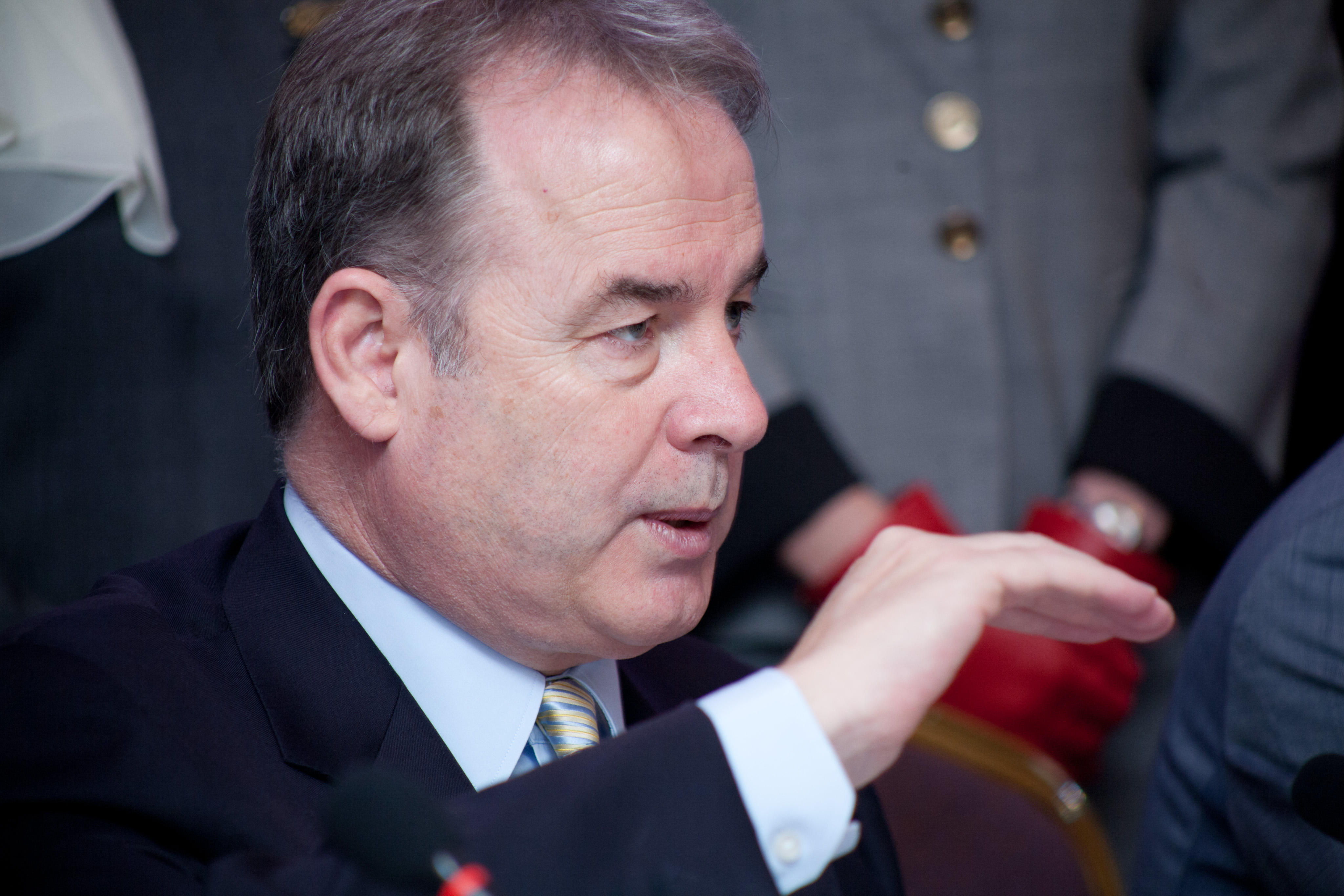
Eithad Airways, the Abu Dhabi-based carrier that recently canceled an order of seven Airbus A350 passenger jets, will reduce its original order with the plane-maker and substitute canceled planes to meet expansion targets, Etihad Chief Executive James Hogan told journalists in Beirut.“We are still committed to 10 options and 15 purchase rights. At the right time, we will take those aircraft,” Hogan said. Options and purchase rights are commitments that airplane manufacturers and their customers commonly enter into when agreeing on firm orders. Options and purchase rights can give jet buyers access to production slots and prices based on the agreements they negotiate with manufacturers. Hogan did not comment on the 12 remaining firm orders for A350 jets.

“I substituted to meet the growth strategy,” Hogan said, explaining that the carrier had ordered the 25 A350s plus placed additional 25 options and purchase rights back in 2008 “to meet our network expansion and expected them to come at a certain time.” 

As the schedule for delivery of the A350s started sliding and the manufacturer was still working on the specifications of the A350-1000, “we took a view to reduce the firm commitments to 12 and canceled six in 2011 and seven in 2012. We still believe in the aircraft but we have bridged that with [Boeing] 787 [version]9 where we increased our order to 41. That’s business,” he said.

Etihad’s initial order for B787s, signed at the 2008 Farnborough International Airshow, was for 35 planes. The company said at the time that the total value of its order with Boeing, which also included 10 B777-300 planes, was more than $9 billion.   

The original Etihad order for the 25 A350s, also signed at Farnborough in 2008, was part of a deal for 55 jets also including 10 A380s and 20 A320s with a value of approximately $12 billion, according to Etihad. Media reports put the value of the recently canceled seven A350s at $2.2 billion. 

The cancellation of seven A350s was first reported earlier this month by Reuters, based on data from Airbus. Media in the United Arab Emirates this week quoted analyst speculations that Etihad would fully step away from the wide-bodied Airbus in favor of the competing 787 but Hogan said this is incorrect.

Airbus and Boeing have been intensely competing with their long-range, wide-bodied A350 and 787 model lines, both designed to become workhorses in the next generation of fuel efficient passenger aircraft. Each highly-touted model, however, also had shares of technical challenges to contend with.

Fleet purchases by Etihad in the carrier’s first years of operation have favoredAirbus jets . When asked if the shift to 787s signified an end of his love affair with Airbus, Hogan said, “I love both Boeing and Airbus, equally. In this business, you have to work with Boeing and Airbus.”  He emphasized that Etihad has a considerable fleet of Airbus planes and in addition to the A350s, more A321s and 10 A380s will be added to its fleet in the next few years.

According to Hogan, Etihad will report a financial revenue performance of $5 billion, implying growth above 22 percent when compared with 2011 results of $4.1 billion. Last year was the first time the airline reported a profit as its revenue improved 36 percent on 2010.  

On the sidelines of the press conference Hogan told Executive that Etihad will achieve the targeted ten-million passenger mark this year. In 2011, the airline reported passenger growth figures of 17 percentwhile registering a first quarter year-on-year increase in passengers by 27.4 percent to 2.36 million from 1.85 million, according to an April 4 announcement. 

The Lebanese connection

Hogan came to Beirut to celebrate the success of Etihad’s eight-year service to the Lebanese capital, which commenced in November 2003. Beirut was Etihad’s first commercial destination.

According to Hogan the carrier’s strongest demand from Beirut-originating travelers  is for flights to Sydney, followed by Abu Dhabi. In 2012, Etihad’s Beirut office has a revenue projection of $31 million, he added. 

Joseph Chamoun, Etihad’s country manager for Lebanon, also told Executive that the operation is the airline’s top performing market in the Levant and Africa. In important long-haul services from Beirut to Australia and some Southeast Asian destinations Etihad’s share of the outbound Lebanese travel is above 40 percent, he claimed. 

During the first quarter of this year Beirut airport saw 204,670 outbound passengers, according to Lebanon’s Civil Aviation Authority At the time of posting, statistics on the number of travelers to Oceania within that total were not available. 

Etihad also anticipates that its network’s expansion intoLagos, Nigeria this summer and next year’s expansion to Brazil as the first Latin-American destination will be drawing in many travelers from the large expatriate Lebanese communities in those two nations, Hogan said. In previous press statements, Etihad had announced the start of its service to Latin America for 2013 but did not specifically say that it would serve Brazil as its first destination in the continent. 

May 3, 2012 0 comments
0 FacebookTwitterPinterestEmail
  • 1
  • …
  • 330
  • 331
  • 332
  • 333
  • 334
  • …
  • 687

Latest Cover

About us

Since its first edition emerged on the newsstands in 1999, Executive Magazine has been dedicated to providing its readers with the most up-to-date local and regional business news. Executive is a monthly business magazine that offers readers in-depth analyses on the Lebanese world of commerce, covering all the major sectors – from banking, finance, and insurance to technology, tourism, hospitality, media, and retail.

  • Donate
  • Our Purpose
  • Contact Us

Sign up for our newsletter

    • Facebook
    • Twitter
    • Instagram
    • Linkedin
    • Youtube
    Executive Magazine
    • ISSUES
      • Current Issue
      • Past issues
    • BUSINESS
    • ECONOMICS & POLICY
    • OPINION
    • SPECIAL REPORTS
    • EXECUTIVE TALKS
    • MOVEMENTS
      • Change the image
      • Cannes lions
      • Transparency & accountability
      • ECONOMIC ROADMAP
      • Say No to Corruption
      • The Lebanon media development initiative
      • LPSN Policy Asks
      • Advocating the preservation of deposits
    • JOIN US
      • Join our movement
      • Attend our events
      • Receive updates
      • Connect with us
    • DONATE