• Donate
  • Our Purpose
  • Contact Us
Executive Magazine
  • ISSUES
    • Current Issue
    • Past issues
  • BUSINESS
  • ECONOMICS & POLICY
  • OPINION
  • SPECIAL REPORTS
  • EXECUTIVE TALKS
  • MOVEMENTS
    • Change the image
    • Cannes lions
    • Transparency & accountability
    • ECONOMIC ROADMAP
    • Say No to Corruption
    • The Lebanon media development initiative
    • LPSN Policy Asks
    • Advocating the preservation of deposits
  • JOIN US
    • Join our movement
    • Attend our events
    • Receive updates
    • Connect with us
  • DONATE
Real estate

For your information

by Executive Editors May 6, 2012
written by Executive Editors

Real estate market “flat”

The overall number of real estate transactions in Lebanon dropped 4.29 percent between January and February. But while the number of overall transactions was down — 5,156 in February from 5,387 in January — the nationwide average value per transaction rose 6.66 percent over the same time period.  The total number of real estate transactions fell by 12.02 percent last year to 82,984, compared with 94,320 transactions in 2010. Over the same year, the value of real estate transactions fell to $8.84 billion, compared to $9.48 billion in 2010. According to a Bank Audi report, Lebanon’s property market has shown “a somewhat flat performance” during the first two months of the year. According to year-on-year data, the total number of transactions fell 0.82 percent in the first two months of 2012, while the total value of transactions dropped $40 million to $1.16 billion. Using figures provided by the Order of Engineers, the report also notes a 3.5 percent overall rise in the number of construction permits issued across Lebanon this year. The data shows a 9.1 percent drop in new permits in Beirut and a 19.2 percent rise in the Mount Lebanon region.

Rent-to-own law passes cabinet

The Council of Ministers, Lebanon’s cabinet, approved a new draft rental law in late April, which would allow low-income families to buy property by making yearly or monthly payments. The Cabinet also agreed to amend a controversial rental law that, if passed, would allow landlords to raise rents by 20 to 80 percent over a four-year period [see page 30]. The Association of the Owners of Rental Buildings issued a statement the following day praising the passage of draft law 767, but also asked the Administration and Justice Committee of Parliament to “enter a new stage that ends the accumulated injustice against old landowners on the issue of rents” by quickly passing the law on to the General Assembly, and to establish a government fund to assist low-income renters who intend to buy residential property.

MENA construction drops

The value of construction projects awarded in the first quarter of 2012 across the Middle East and North Africa (MENA) has fallen more than 30 percent from the first quarter in 2011, according to Citi Research and Analysis. Approximately $18.5 billion in projects have been awarded between January 1 and March 31 in the MENA region, the research unit of Citigroup Global Markets said in its MENA Construction Project Tracker, a monitor that tracks projects from announcement to completion. The comparison figure for the first quarter of 2011 was $27 billion. The cumulative value of projects awarded in March was $4.3 billion, the lowest figure for the year-to-date according to Citi Research. With 76 projects awarded in the year so far, the number of projects was similar to the same period in 2011. “Project awards are generally lumpy,” the report says, while forecasting spending to show “ongoing strength” because of MENA governments’ “desire to avoid unrest” in the wake of the Arab Spring. Kuwait accounted for 38 percent of project values in the first quarter, followed by Saudi Arabia and the United Arab Emirates with 16 percent, or $2.9 billion, each. However, the report noted that Kuwait’s leading share is derived mainly from one single $5.9 billion aviation-related project.

Needing more malls

An apparent dearth of retail space in new residential areas across Abu Dhabi is dragging down property prices, according to a report by UK-based property consultancy Cluttons. “A shortage of retail facilities at many of the new residential developments needs to be addressed, the lack of which is seen as a culprit to falling values,” the report said, before the opening of Cityscape Abu Dhabi last month. According to Cluttons, “Apartment values have been affected the most, with Al Reem and Marina Square apartments falling 7.4 percent and 7.3 percent, respectively, on third-quarter 2011 prices.” Abu Dhabi-based real estate consultancy CBRE also released data that shows residential apartment rents in the city are down 18 percent in the first quarter over the same period last year, and are down 3.5 percent since last quarter. Also at Cityscape, the National Bank of Abu Dhabi (NBAD) announced that its new wholly-owned subsidiary, NBAD Investment Management (DIFC) Limited, had been approved to start a real estate investment fund focused on “income-generating properties.” Zain Abdullah, senior executive officer of NBAD’s new unit said in a statement, “We believe that this fund will offer regional and international institutional investors a diversified avenue to access the UAE real estate market within a strong regulatory environment.”

UAE banks boost credit, offer 100% mortgages

As the United Arab Emirates’ property market continues to struggle, Emirates Islamic Bank announced in mid-April that it would offer 100 percent mortgages to UAE nationals. “For most people, owning a home is one of the biggest lifetime investments and provides an opportunity to build equity in real estate,” said general manager Faisal Aqil, speaking to The National in April. The new loans will be available for first time buyers or for buying off-plan, and can be approved within 24 hours. Variable rates will start at 4.99 percent. Home prices throughout the UAE have been trending downward in recent years, with Dubai as the exception, posting a meager 0.5 percent rise in home prices in 2011. In a statement to reporters, Abu Dhabi’s Aldar Properties announced a $1.09 billion credit facility from the 70 percent state-owned National Bank of Abu Dhabi. In addition to helping the developer manage its liquidity, the deal will be a three-year revolving facility to cover everyday operating costs.

Corruption ties and net loss for Egypt’s SODIC

Egypt’s third-largest property developer, Six of October Development and Investment (SODIC), posted a net loss of $32 million for 2011, after registering a profit of $22.4 million one year prior. In a statement, the company offered a stronger assessment of its operations, saying, “During a tough 2011 SODIC preserved the strength of its balance sheet, improved cash collection delinquency rates, increased receivables and maintained healthy levels of cash on hand.” Prior to the report, SODIC issued a statement about its former chairman Magdi Rasekh, who in April of last year was sentenced to five years in prison and fined $388 million for his role in an illegal land deal under the Mubarak regime, saying the ruling would not affect “the firm’s assets or the assets of the rest of its shareholders.” Also, last month, the Egyptian government announced a plan to sell nearly 8,000 plots of city land and certificates of deposit to expatriates living in the Gulf. By appealing to wealthy Egyptians living outside the country, the government hopes to raise some $4.5 billion with the new plan, which would also allow Egyptian joint stock companies to purchase land with a guaranteed 4 percent, one-year return on the investment. Additionally, any financing for the properties must be done through financial institutions based outside of Egypt.

Saudi prince seeks big tower loan

Kingdom Holding Co, Saudi Prince Alwaleed bin Talal’s investment company, is seeking a loan worth as much as $533 million by this summer to help pay for the construction of the Kingdom Tower in Jeddah, according to a Bloomberg report last month. According to plans, the Kingdom Tower will be more than 1,000 meters tall, with an estimated finishing cost of $1.2 billion. The building plans, drafted by Saudi Binladen Group — a 16.63 percent stakeholder in the project’s owner, Jeddah Economic Co — were approved by municipal authorities in February, and the project is expected to take over five years to complete after construction starts. When finished, the Kingdom Tower will become the world’s tallest building, surpassing Dubai’s Burj Khalifa, which stands at 829.84 meters.

May 6, 2012 0 comments
0 FacebookTwitterPinterestEmail
Banking & Finance

Financial quotes of the month

by Executive Editors May 6, 2012
written by Executive Editors

“How can we grant bills of health from these [government run] labs when rats are running everywhere?”

Mohammad Choucair, head of the Beirut Chambers of Commerce

“The country will manage well, even if we don’t sell a single barrel of oil for two or three years.”

Mahmoud Ahmadinejad, Iranian President

“In Silicon Valley, there’s still too much money chasing too few ideas. If your idea is brilliant and your timing is right, you can become a multimillionaire overnight.”

Paul Saffo, Silicon Valley forecaster on Facebook’s $1 billion acquisition of popular photo application Instagram

“Spain is not going to be rescued; it’s not possible to rescue Spain, there’s no intention to, it’s not necessary and therefore it’s not going to be rescued.”

Mariano Rajoy,Spanish Prime Minister

“God willing, we will take the loan before a president for Egypt is in place.”

Mumtaz al-Saeed, Egyptian Finance Minister, on the proposed $3.2 billion International Monetary Fund loan

“Tonight, Senate Republicans voted to block the Buffett Rule, choosing once again to protect tax breaks for the wealthiest few Americans at the expense of the middle class.”

Barack Obama, President of the United States

“I feel great — as if I were in my normal excellent health. And my energy level is 100 percent.”

Warren Buffett, billionaire investor legend when diagnosed with prostate cancer

“Investments in tourism are extremely good despite the fall in the number of tourists entering Lebanon through Syria.”

Fadi Abboud, Lebanon’s Minister of Tourism

“At times, elections can lead to uncertainties and, for investors, to a changing configuration of opportunities and risks. We are entering such a phase in Europe.”

Mohamed el-Erian, CEO of Pimco, the world’s largest bond investor, on the upcoming French, Greek and Irish elections in Europe

“If you wake up the morning after and still feel like the gazelle is running from the lion, or the lion is running for the gazelle, then everything is ok.”

Fadi Ghandour, after resigning as CEO of Aramex, the delivery and logistics company he founded and managed for 30 years
May 6, 2012 0 comments
0 FacebookTwitterPinterestEmail
Banking & Finance

The expert opinion MENA stock tips

by Executive Editors May 6, 2012
written by Executive Editors

Black is still the dominant color on the market screens this year as equities continue their upward drift. In the midst of first-quarter corporate earnings season, which so far have proved resilient, investors are increasingly concerned that a correction is on the horizon as macroeconomics headlines remain frail. For this month, Executive speaks to Elie Khoury, cheif executive of Berytus Capital and Nour Eldeen al-Hammoury, chief market strategist at Amana Capital for their investment recommendations.

Elie Khoury

Bullish or bearish? 

Khoury is conservatively bullish on the markets in the United States  and slightly bearish on Europe, as the US enjoys much better fundamentals than Europe. He believes equities  will continue their upward trend because, “With central banks from the US to Europe to England pumping all this money, they are inflating everything which is why equity markets performed so well since beginning 2012 until today.” He adds that if the US unemployment and housing picture improves, he will be buying equities more aggressively.

Main concerns? 

Khoury’s greatest concern is banks’ exposure to derivatives. “At $188 trillion, this exposure is 14 times the size of the United States’ [gross domestic product]” he warns. In the short term, Khoury is mainly concerned with the economic issues in Spain and Italy; he adds that issues in Greece might resurface in May during the upcoming elections.

Favorite asset classes? 

Khoury favors equities. “The summer time will provide us with many opportunities. Markets will correct and investors will get the opportunity to invest,” he says. Khoury’s top sectors to invest in are technology and consumer products.

Specific names? 

He likes Pfizer in the pharmaceutical sector, Kraft in the non-cyclical consumer goods sector and Microsoft, Intel and Qualcomm in the technology sector. Khoury also highlights Costco, Home Depot, McDonalds and Starbucks as stocks he would be buying on the basis of their relative weakness to benefit from lower entry points.

MENA equities? 

While deterred by the unrest in the region he notes that it is “putting a floor on the price of crude which is good for Saudi Arabia so it is the only country in the region we could be positive on.”

Nour Eldeen al-Hammoury

Bullish or bearish? 

Hammoury warns against buying aggressively due to the very slow economic growth and the fact that the United Kingdom is back in recession. “The crisis is not over yet and it needs a minimum of 10 years to solve,” says Hammoury. He does not expect the recent rally in equities to continue and he is awaiting a correction in the markets, as “the waves of the tsunami are still rolling.”

Main concerns? 

Hammoury’s largest concern is the oil market, as a “higher oil prices are not good for the global economy.” He is also concerned with the sovereign debt crisis in Europe and the lack of transparency from politicians. “We saw an ‘Arab Spring’, we could see something of the sort in Europe as well,” warns Hammoury.

Favorite asset class? 

He would stick to gold and recommends buying between $1610 and $1625 per ounce. Within equities, Hammoury would remain in defensive sectors (such as utilities, consumer goods and telecoms).

MENA equities? 

He is not interested in investing in the region at this point, but he does highlight that the abundant cash reserves in MENA governments’ coffers provide support in these turbulent times and “the continuous high prices of oil that will carry on stimulating reserve cash for governments.”

Specific buy? 

His top stock globally is Apple. He sees it going to $700 or to $800.

Any name in the MENA region? 

He likes Dubai-based Tabreed, also known as the National Central Cooling Company.

May 6, 2012 0 comments
0 FacebookTwitterPinterestEmail
Banking & Finance

For your information

by Executive Editors May 6, 2012
written by Executive Editors

Banking secrecy exceptions

Banking secrecy was lifted on 18 accounts in Lebanon last year according to the annual report of the Special Investigation Commission (SIC), an independent entity established 10 years ago by the Banque du Liban (BDL), Lebanon’s central bank, to fight money laundering. Of the 18 cases, five were referred from abroad and 13 were from domestic sources. In 2011, the SIC received 335 suspected cases, up from 245 in 2010 and 202 in 2009. Of the suspected cases, 100 were from foreign sources and 235 from local sources and the SIC investigated 285 cases. Counterfeiting, accounting for 13 percent of all reported cases, was the most common crime, followed by terrorism funding at 8.5 percent of reported cases, fraud of private funds at 6 percent, narcotics trade at 4.5 percent and embezzlement of public funds at 3 percent. Sixty five percent of the cases were not categorized. “Reporting entities were assessed via extensive on-site examinations and follow-up corrective measures were imposed,” according to central bank Governor Riad Salameh.

Eurobond oversubscribed

A $700 million Lebanese Eurobond issued last month was 30 percent oversubscribed, resulting in a boost to the finance ministry’s coffers. The first tranche of the Eurobonds brought in $600 million, up from the original plan to raise $350 million. It carries a 5 percent yield and matures October 12, 2017. The second tranche brought in $350 million as originally planned. It carries a 6.4 percent yield and will mature on April 27, 2026. Non-Lebanese accounted for 30 percent of the subscribers with the remaining issuance taken up by the local banks, holders of the majority of Lebanon’s hefty debt. Byblos Bank and Bank of America-Merrill Lynch were the lead managers on the Eurobond. The proceeds of this issue are to refinance $293 million and 115 million euros ($151 million) in Eurobonds which matured in March and April 2012, respectively. Lebanon’s finance ministry revealed earlier this year that it will be issuing $5 billion worth of Eurobonds and treasury bills to cover the public debt in 2012.

Qatar-Swiss mining mega merger

Qatar’s sovereign wealth fund, Qatar Investment Authority (QIA), has invested a whopping £1.7 billion ($2.7 billion) into Switzerland-based mining giant Xstrata. With a five percent holding, QIA now becomes Xstrata’s third largest investor after Glencore, the largest publicly traded commodities supplier, with a 34 percent stake, and asset manager Blackrock, with a five percent stake. This aggressive move comes ahead of a planned £23 billion ($36 billion) mega merger between Xstrata and Glencore and increases the chances of the deal tilting in Glencore’s favor. Aside from Blackrock, most of the top 10 investors are critical of the deal and want better terms from Glencore. Under the proposed deal, Xstrata shareholders would receive 2.8 Glencore shares for every share they own, but many shareholders want at least 3.6. Ivan Glasenberg, chief executive officer of Glencore and Mick Davis, CEO of Xstrata, are going on a global road show in the coming weeks to convince investors to agree to the “merger of equals”.  

Egypt close to IMF loan

Egypt’s finance ministry expects to secure a $3.2 billion loan from the International Monetary Fund (IMF) by May 15, before a new president is elected to run the country at the end of June. However, the deal, which has already been delayed from March, faces a significant obstacle. The Freedom and Justice Party, the Muslim Brotherhood’s political arm that holds almost half the seats in the new parliament, is heavily critical of the IMF loan, and has suggested several other options, such as collecting overdue taxes or re-evaluating gas export deals. The party says it is not outright opposed to the loan, but wants either better terms or the creation of a new government — not due until after the presidential elections — to oversee the distribution of the funds. According to Egypt’s finance minister Mumtaz al-Said, “Egypt needs $10 billion to $11 billion in the next 18 months to bring back economic stability.” Egypt has hemorrhaged more than $20 billion in currency reserves since the February 2011 revolution, which overthrew former president Hosni Mubarak. Whether Egypt succeeds in securing the loan remained unclear as Executive went to print.

Kafalat loans drop

The loan guarantee company Kafalat gave out $33 million loans to small and medium enterprises in the first three months of the year, down 21 percent from the same period last year. The number of loans dropped 20 percent to reach 240. The industry sector accounted for 36.7 percent of the total guarantees; the agriculture sector took 36.3 percent of total guarantees, while tourism accounted for the next 20 percent of the guarantees. Geographically, Mount Lebanon accounted for the majority of borrowing, taking up 44 percent of the loans, followed by North Lebanon at 16.3 percent, Bekaa at 15.4 percent and South Lebanon at 10 percent. Beirut accounted for just 7 percent of the loans.

$100 million for MENA infrastructure

The International Finance Corporation (IFC), part of the World Bank Group, and the Islamic Development Bank (IDB) plan to invest $100 million in infrastructure projects in the Middle East and North Africa region. Each institution will be investing $50 million into the Arab Infrastructure Investment Vehicle, part of the Arab Financing Facility for Infrastructure (AFFI), an initiative led by the World Bank, the Islamic Development Bank and IFC. The AFFI assists in financing and technical issues for cross-border infrastructure projects and encourages governments and the private sector to contribute to the development of these projects. The purpose of the investments is to spur economic growth in the region. MENA countries need to invest $70 billion annually in infrastructure to sustain their growth rates, according to the IFC, which invested approximately $2 billion in the region in 2011.

Financing Tunisia

Qatar has agreed to lend Tunisia $500 million at an interest rate of 2.5 percent, to be repaid in five years. The Gulf state was one of the main foreign backers of the revolution which overthrew longtime president Zine el-Abidine Ben Ali and resulted in the Ennahda party coming to power in Tunisia in October last year. Earlier this year, Turkey opened a $500 million credit line to Tunisia, repayable over 10 years. The United States recently announced that it aims to help finance the economic recovery in Tunisia by providing “several hundred million dollars” of loan guarantees before the end of June, according to the US Department of the Treasury. The Tunisian economy is still struggling following the political upheaval that shook the country last year. The International Monetary Fund forecasts 2.2 percent gross domestic product growth in 2012 and 3.5 percent in 2013, while expecting the unemployment rate to drop 2 percent this year to 17 percent.  

Aabar dumps Daimler

Abu Dhabi’s Aabar Investments, a government-owned company engaged in investing across sectors and countries, is reviewing its portfolio of overseas investments and intends to completely exit its investment in Daimler, as well as in the Formula One cooperation and Tesla Motors, the luxury electric carmaker, according to Germany’s Manager Magazin. Aabar acquired a 9 percent stake in the luxury carmaker by injecting 1.95 billion euros ($2.56 billion) in March 2009, which it reduced to a 3 percent holding in February after the surge in the price of the shares. The share price at the time of the investment stood at 20.27 euros ($27); as of 21st of April it was trading at 41 euros ($54), up 100 percent from the price that Aabar paid. Abu Dhabi National Energy (TAQA), an oil explorer and power supplier majority owned by the government, sold its 7 percent stake in Tesla Motors in April, making a profit of $113 million. In April, Aabar nearly doubled its stake in Dubai builder Arabtec to 10.45 percent. 

May 6, 2012 0 comments
0 FacebookTwitterPinterestEmail
Economics & Policy

For your information

by Executive Editors May 6, 2012
written by Executive Editors

Popped for pills

The Pharmaceutical Research and Manufacturers of America (PhRMA), which represents most of the major pharmaceutical corporations in America, has petitioned the United States Trade Representative to put Lebanon on the 2012 Priority Watch List. They have complained that there is a lack of adequate intellectual property protection in the Lebanese pharmaceutical market. While it was noted that the new industrial property law passed in 2000 represented a major step forward from the 1924 law, PhRMA claim it does not provide sufficient pipeline or transitional patent protection and gives an incomplete definition of confidential information. Another point of contention the US body raised was the ministry of public health’s failure to implement sound regulation practices to distinguish between innovative and generic medicines. The Ministry of Public Health was also mentioned for having failed to successfully crack down on parallel imports, which result in a ‘grey’ market of counterfeit medicinal products in the country. Lebanon was one of 17 countries from the region recommended for the black list, including Israel and Algeria. 

Figures for thought

The most recent figures from the Ministry of Finance indicate that the total fiscal deficit for 2011 of LL3.5 billion ($23 million) was LL833 million ($555,333) less than its 2010 equivalent. These figures are the result of a LL1.37 trillion ($924 million) increase in revenues, or 11 percent, which offset the 3 percent increase in expenditures of LL553 billion ($368.7 million). It is important to note that the fiscal deficit saw a healthy decrease in November 2011 when the budget surplus from the telecoms ministry was paid, which was LL2.3 trillion ($1.53 billion) compared to LL957 billion ($638 million) in 2010. Despite the growth in total revenues, the tax contribution to the public purse actually decreased mainly due to a slowdown in the taxes on international trade, with decreases in excises and customs by LL590 billion ($393.3 billion) and LL33 billion ($220 million), respectively. Lebanon’s loss-making electricity company significantly increased its burden on the public purse, requiring an extra 46 percent in transfers reaching LL2.6 billion ($173 million) in 2011. Gross public debt continued to creep up over the same period, rising by just less than 2 percent to LL80,869 billion ($53.6 billion) in 2011.

Lebanon failing its women

Lebanon ranked 6th in a survey on women’s socio-economic advancement from a selection of 8 Middle Eastern countries. The MasterCard Worldwide Index on Women’s Advancement used indicators such as tertiary education, employment, business ownership and leadership positions to assess the standing of women in society in comparison to their male compatriots. Only Egypt and Saudi Arabia scored lower than Lebanon, while Bahrain, the United Arab Emirates, Qatar, Kuwait and Oman were deemed to have a better record in women’s advancement. Interestingly, Lebanon had the lowest proportion of female business and government leaders.  Conversely, Lebanon had the highest rate of regular employment opportunities for women.

Prizing open the bandwidth

Lebanon’s Internet capacity will be increased from the current 23 Gigabits per second (Gbs) to 33Gbs within two months and to 43 Gbs within four months, according to plans unveiled by the Ministry of Telecommunications (MoT). The government intends to increase capacity by making increased use of the India-Middle East-Western Europe (IMEWE) submarine cable, which runs from Mumbai to Marseille. Lebanon became a member of IMEWE consortium in December 2010 and started limited use of the fibreoptic cable in June 2011. What’s more, Lebanon and Cyprus agreed in February on the principles of cooperation for the Europa submarine cable, which would complement the IMEWE, but Lebanon’s cabinet is yet to endorse financing of the project. With regards to the tariff structure, MoT proposals for unlimited nighttime usage between 12:00 am and 7:00 am have been approved.

The MENA’s stunted growth

Growth has stalled and the outlook is uncertain in the Middle East and North Africa (MENA) region, according to the International Monetary Fund’s (IMF) 2012 World Economic Outlook. Among oil exporters, high oil prices contributed to growth of 4 percent, while among oil importers growth was only 2 percent in 2011, even after the exclusion of data from Syria. Looking forward the baseline forecast is for growth of 4.25 percent in 2012 and 3.75 percent in 2013. Among the oil importing nations, strong oil prices, anemic tourism associated with social unrest, and lower trade and remittance flows reflecting ongoing problems in Europe are the major challenges that lay ahead. The IMF identifies the reorientation of fiscal policies toward poverty reduction and the promotion of productive investment as a key medium-term fiscal policy objective.

Less tourists spending more money

The number of tourists coming to Lebanon in the first quarter of 2012 decreased nearly 8 percent on the same period in 2011. However, despite the fact the number of visitors to Lebanon fell, the amount of money they spent actually increased. According to Global Blue, the VAT refund operator for international shoppers, total tourist spending increased by 36 percent in the first three months of 2012 compared to the same period in 2011. The rise in spending by visitors was in a large part due to the fact that there had been a severe contraction in tourism in 2011, especially in the first half of the year. In early 2012 visitors from the Gulf flashed the most cash, with guests from Saudi Arabia accounting for 22 percent of total tourist spending in January.

Fueling the future

Starting in 2015, Lebanon looks set to turn to Liquid Natural Gas (LNG) to meet its growing energy demand. In early April, The Ministry of Energy and Water, launched a call for expressions of interest to build, own and operate a floating storage and regasification unit (FSRU), which is recommended to be at least 125,000 cubic meters (m³) in size with a regasification capacity of up to 3.5 million tons per annum (mtpa), according to the tender document. The deadline for companies’ proposals, which can be used for a new FSRU, existing FSRU or a vessel conversion, is June 4. Lebanon already has two combined cycle gas turbines (CCGT), but according to the MoEW the country also plans to increase the number of gas-fired power plants, which will gradually lift its LNG requirement from 1.2 mtpa in 2015 to 1.7mtpa in 2016, and up to 3.5mtpa by 2022. The FSRU will be located in the north of the country near the majority of its current and planned CCGT capacity and it is slated to operate on a tolling structure, whereby MoEW would pay a fixed monthly capacity fee to the FSRU owner, and then a monthly throughput fee for operating costs incurred for actual usage.

May 6, 2012 0 comments
0 FacebookTwitterPinterestEmail
Editorial

Parliament’s reckoning

by Yasser Akkaoui May 6, 2012
written by Yasser Akkaoui

Given the opaque functioning of the Lebanese state, it is good that sessions of the Parliament are open for the public to see. Unfortunately, they are akin to vultures tearing apart a carcass. In some 62 speeches and 28 hours of debate that took place over the three-day session last month, there were screams and accusations, name-calling and finger pointing, with hardly an allusion to progressive public policy.

In utopia, parliamentarians represent their constituents’ demands before the convention of government, which then attempts to fulfill these demands within resource constraints. In Lebanon, the Parliament is utterly detached from the lives of the Lebanese, its members asserting the interests of their sectarian overlords and the public purse fought over for plunder.

For years now Lebanon’s enterprising and entrepreneurial private sector has been surrogate mother to a people abandoned by the state, spurring new business and generating new wealth and employment. But even the private sector can only slow Lebanon’s current slide. Among many other issues, Beirut has become expensive well beyond the means of most of its residents.

Paying “old rent” has allowed hundreds of thousands of Lebanese to scrape by and afford their other costs of living, but it has effectively been a subsidy the private sector pays in place of government policy to address public housing needs. This warped rental market has led to dangerously dilapidated buildings, the decay of heritage structures and stunted economic development. A draft rental law that has resurfaced after lying dormant for years would phase out old rents, but its vagaries on public housing mean it will almost certainly fail to help people afford homes.

In utopia, parliamentarians would engage in earnest debate and develop legislation that would leave a lasting legacy. In Lebanon, pursuing policy development seems far from parliamentary minds, but at least they let us know.

Their reckoning may be nigh, however, with increasing public protests in the country showing a gathering rage that may soon force accountability upon those who were elected to serve the public good.

May 6, 2012 0 comments
0 FacebookTwitterPinterestEmail
Finance

Money Makers

by Maya Sioufi May 3, 2012
written by Maya Sioufi

With the macroeconomic blues still singing in the headlines, the prospect of earning big returns through conventional market investments — such as buying stocks, bonds or trading foreign currency — seems increasingly uncertain. Investors are looking for alternative assets, for real deals, for something they can touch, such as acquiring property or investing in a start up. 

Lebanon has its share of alternative investment opportunities to offer those looking to place their capital. But these opportunities will not to be found at local banks, which have largely run dry on deals; it is the small number of private equity firms in the country that hold the keys to the lion’s share of these investments. Small and medium-sized enterprises represent the vast majority of Lebanese companies, but increasing limitations on their access to leverage means raising equity through selling stakes in their companies often becomes the only solution if they wish to grow.

This urgency to access capital, combined with the increasing awareness of the financial benefits of raising equity — no regular interest payments — is intensifying SMEs willingness to chase this route. Private equity funds have taken note. New funds dedicated to Lebanon — such as Riyada Enterprise Development’s Lebanon Growth Capital Fund and Middle East Venture Partners’ Building Block Equity Fund (BBEF) — are jumping on the bandwagon. Other funds dedicated to the Middle East and North Africa are also looking to invest in Lebanon — such as Wamda’s and Capital Trust’s Euromena funds, which have already made two of their last three investments in Lebanon. SMEs need capital to expand, but this expansion is often outside of their home market as the prospect for further internal growth remains small. Lebanon is the lab in which concepts are tested, with successes here then taken abroad.

In the following pages, Money Makers details close to $200 million worth of investment opportunities in Lebanon, with this new regular feature of Executive catering to those enterprising individuals looking for alternative avenues to expand their financial portfolios and change the country’s financial landscape.


1- Building Block Equity Fund

What’s the deal? Participate in a fund that will invest in Lebanese enterprises.> Who is running the fund? Middle East Venture Partners (MEVP) headed by Walid Hanna.

What type of companies will the fund invest in? The fund is opportunistically looking to invest in Lebanese start up companies in any sector with a preference for those that have a tech component. “The magic word is scalability,” says Hanna, noting that MEVP is looking for small companies with rapid growth potential.

What is the size of the fund? BBEF currently has $8 million in assets (none invested yet) and will start raising another $7 million this month. Hanna expects to have completed the financing within three months.

What is the minimum ticket (investment)?$200,000; there is also a maximum ticket of $2 million.

What is the term of the fund? Six years with a one-year extension option

How much will the fund invest in each company?The fund will take minority stakes by investing between $200,000 and $1.5 million per company.

What is the target rate of return? The target internal rate of return of the fund is 30 percent.

How will MEVP exit the companies? By selling their stake to a strategic investor in the same line of business, to a private equity fund, or to an investor looking for a high growth company.

What if MEVP can’t exit an investment? “We can force majority shareholders to buy us out at a multiple of 2 within 5 years” says Hanna.

Give me more details: This is MEVP’s second fund. Its first fund, Middle East Venture Fund, raised $10 million by June 2010 and has so far invested $6 million in a total of eight companies. 

How to invest in this fund? Contact MEVP at [email protected]

"Banks tell small and medium enterprises (SMEs) your debt-to-equity ratio does not make sense, we can’t lend to you, you need equity but no one is providing equity to SMEs. That’s why they need a fund like BBEF and then they can leverage the equity with bank debt”, says Walid Hanna, Chief Executive of MEVP. "


2- Lebanon Growth Capital Fund

What’s the deal? Participate in a fund that will invest in Lebanese enterprises.

Who is running the fund? Riyada Enterprise Development (RED) owned by Abraaj Capital, the Middle East’s largest private equity firm.

What type of companies will the fund invest in? The fund does not have a sector focus. “We will invest across multiple sectors, some are very low risk, low growth and some are high risk and high growth,” says Elie Habib, Lebanon country manager of RED. For a company to be considered, it has to have a minimum worth of $7 million.

What is the size of the fund? It already has $30 million of committed capital from Cisco, the European Investment Bank and Abraaj Capital. RED is now looking to secure $20 million from Lebanese investors. “The sooner, the better; there is no set date,” to meet the target, says Habib.

What is the minimum ticket? The minimum ticket is $500,000 and there is no maximum. If investors want to come in for less, a feeder fund can be put in place in which investors place their capital and then the total is invested in the fund.

What is the term of the fund? Eight years, which consists of an investing period lasting four years during which the funds should be invested in Lebanese companies, and a harvesting period of four years during which the investments should be exited. There is a one-year extension option for each period. 

How much will the fund invest in each company? The fund aims to invest $3 million to $4 million per company by taking minority stakes (minimum 20 percent).

What is the target rate of return? The target IRR for the fund is 30 percent.

How will RED exit the investments? “Before we enter, we study the exits,” says Habib. Exits will be achieved through a merger with another company, through a buyout by another private equity firm or a strategic buyer such as an international company looking to expand into the Middle East, or through the founders buying out RED’s stake.

What if RED can’t exit an investment? “We put in a ‘forced realization’, that is if after five years there is no sale or we rejected all the offers then we can force an exit; either the founders buy us out or we find them a buyer. It is a joint decision with the founders,” says Habib.

Give me more details: Lebanon Growth Capital Fund has so far invested in just one company by injecting $3.25 million in Nymgo, a software application allowing users to make calls from computers to phones over the Internet. Founded by Omar Ounsi, Nymgo differs from Skype by having a 100 percent paying customer base for voice offerings.

How to invest in this fund? Contact Elie Habib at 01-983640


3- Beirut Terraces

What’s the deal? Shares in a high-end residential property project in Beirut Central District’s Minet El Hosn area.

What is the size of the offering? $100 million

What am I acquiring? Shares in a residential apartment with prices starting at $1.5 million; price is subject to a 20 or 30 percent discount.

What is the term of investment? Four years from closing date, which has been postponed from March 31, 2012, to an undetermined date.

What is the coupon rate (rate of return)? 7 percent of the investment’s value per year.

What are the exit strategies? Shareholders have a call option (the right to purchase a unit) at a 10 percent discount at the end of the third year. If this option is not exercised, then in the fourth year, the owners have a put option (the right to sell the unit) to the shareholder at a 20 or 30 percent discount. If the options are not exercised then the shareholder is paid back his initial investment with the 7 percent annual coupon.

Can I get access to leverage? BankMed is offering a loan facility for 70 percent of the investment.

Developers/Owners/Architects? Benchmark Development, also behind Wadi Hills Residences, are the developers of the project. It is owned by DIB Tower and Town Tower and designed by Swiss architects Herzog and de Meuron, those behind the Tate Modern museum in London.

Give me more details: Beirut Terraces, a vertical village overlooking the Beirut Waterfront, is comprised of 25 residential floors with 130 apartments. It also has one retail floor and 5 underground parking floors. Each apartment will have its own terrace and selling prices will start at $5,200 per square meter. The building is expected to be completed in 2015.

Interesting extra: There is a free iPhone application.
How to invest in this real estate project? Contact BankMed at 01-361380

"There are two key features of this product: the coupon payment which allows the investor to earn while he/she waits for the unit to be delivered, and locking in the price of the unit for a significant period of time, says Khaled Zeidan, general manager of MedSecurities, a BankMed subsidiary "


4- Wamda Fund

What’s the deal? Invest in an early stage MENA fund run by Lebanon-based Wamda.

What type of companies will the fund invest in? The Wamda fund is part of a wider entrepreneurial ecosystem looking to empower entrepreneurs in the MENA region. The fund hopes to invest in the early stages of two types of companies throughout the region. “The first type are technologically advanced companies that can succeed globally, and the second type we call ‘copy paste innovate’,” says Wamda’s CEO Habib Haddad. “Its not that we want to promote clones but we think there is so much value and white space that can be filled in the regional market so a good team with good execution can go after that.”

What is the size of the fund? So far the six-month-old fund has only one anchor investor (though the amount invested remains undisclosed) and it is looking to raise $15 million this year with an aim to eventually reach $25 million.

What is the term of the fund? The fund is looking to invest between $50,000 up to $1 million per company over the four years and expects to have exited the investments within six years.

What is the minimum ticket? $100,000

What is the target rate of return? The target IRR for the fund is 45 percent.

How will Wamda exit the investments? Haddad sees three types of exits for the fund: A buyout of investments by European and US companies looking to enter the regional market, a buyout by companies in emerging markets such as Turkey, China and South Africa, and finally a buyout by local companies. “Local markets present the biggest opportunity; it might be time for them to wake up and start acquiring,” says Haddad.

How to invest in this fund? Contact Wamda at [email protected]


5- Mach-3D

What’s the deal? Invest in the development of an online social platform looking to open a lab 
in Lebanon.

What is Mach-3D?

Headquartered in Luxembourg, Mach-3D offers a ‘mood-based’ platform that enhances the web and mobile experiences through personalized 3D profiles, interacting and sharing emotions. It uses a core technology called 3DoM (3D Operated Motion), that transforms pictures into realistic, emotional and customizable 3D avatars, called Living Portraits (LP). Through its cloud platform and the users' favorite social networks, LPs can interact with one another by sharing emotions, communicating and exchanging virtual gifts.

Who founded the company? There are three co-founders: Chief Executive Chandra de Keyser, Chief Technology Officer Massimiliano Tarquini, and Alessandro Ligi, the senior software architect.

What are the expected revenues of the start up? The founders expect revenues to reach $900,000 in 2013 and grow significantly to reach $9 million in 2014. It projects a positive cash flow by the first quarter of 2014 and it expects to break-even by the end of 2014.

What’s the link to Lebanon? They plan on opening a lab in Lebanon and they aim to hire 8 people. They have partnered with the Investment Development Authority of Lebanon (IDAL) for their expansion.

How much capital do they want to raise? They have €200,000 ($263,000) of seed money taken as equity from the two founding companies, Internationalize-IT based in the United States and 4IT based in Italy. They are looking to raise another €500,000 ($657,000) to hire more talent. “We are keen to have a ‘hands on’ investor who can coach us, help us develop strategic relations with clients, partners and give us visibility,” says de Keyser.

How to invest? Contact Capital Trust on 01-368968

How to invest in this start up? Contact IDAL at [email protected] or 01 983 306 Extention 233


6- Euromena II

What’s the deal? Capital Trust has already raised the total amount for its second fund dedicated to the MENA region, Euromena II. It is now deploying the funds into companies in the region. For two of the upcoming deals, it is looking to invest $20 million: $13 million (the maximum limit allowed by the fund) will come out of the Euromena II fund and Capital Trust is looking to raise an additional $7 million for each deal from private investors.

What are the two companies it is looking to invest in? One of the investments will be in an oil business in the Levant area and the other one is in a recycling business in North Africa. Capital Trust cannot disclose more information on the potential investments at this point. The two investments will be made out of Lebanese holdings.

What is the minimum ticket? Investors have to come in for a minimum of $1 million.

What is the target return on these deals? Capital Trust targets an internal rate of return (IRR) of 20 to 25 percent over four to five years. “If we can’t make at least twice our money then we don’t invest” says Romain Mathieu, the managing director of the Euromena funds.

When will the fund exit these investments? After four to six years.

How will they exit? All the options are on the table from a strategic sale to a secondary buyout to listing on the stock exchange. “What is important to know is that we never invest before having a very clear idea of the exit route of the deal. Investors know the most likely exit route,” says Mathieu.

What is in it for investors? As they would be investing in a company and not in a fund, investors would be taking a specific risk. They would invest because they like the sector, the region or the management, or “most of the time because they want to try us before investing with us in upcoming funds” says Mathieu.

Tell me a bit more about Euromena funds? Euromena I raised $64 million and has invested in nine companies, of which three have already been exited returning more than 50 percent of the commitment. Three of the investments were made in Lebanon: chemicals company Sodamco, Intercontinental Bank Lebanon and Chedid Re, a reinsurance company. The second MENA dedicated fund, Euromena II has raised $100 million and has so far invested in three companies, of which two are from Lebanon: First National Bank and Khoury Home, a retailer of household products.

How to invest this fund? Contact Capital Trust at 01-368968

7- Grade ‘A’ office space in Beirut

What’s the deal? Invest in prime property in Beirut’s Central District on which a multi-use modern office tower will be built. The project will consist of two towers of 25 to 30 floors. Each floor will be made of 700 square meters of office space.

What is the size of the offering? Capstone is looking to raise $18 million. “We will start raising capital in a few weeks,” says Ziad Maalouf, Chief Executive of Capstone. He expects the raising of capital to be completed in a couple of months. They will be taking on leverage for the project. For every dollar of equity raised, they will take a dollar of debt.

What are the expected returns? 30 percent annual returns.

What am I acquiring?Investors will acquire shares in a company, which will own the land and the entire project.

What is the minimum ticket? Investors wanting to pour funds in this deal need to come in with a minimum of $500,000. There is no maximum.

What is the term of the investment? The project will be completed within four years, after which investors’ capital and profits should be returned.

Who are the developers/architects? Capstone is the developer and they intend to retain an international architect for the project.

How to invest? Contact Capstone at 01-993311

May 3, 2012 0 comments
0 FacebookTwitterPinterestEmail
Economics & Policy

Tomorrow’s ‘good society’

by Ghassan Hasbani May 3, 2012
written by Ghassan Hasbani

The ‘good society’, in a connected world, is one that provides a framework for people to realize their potential in a meaningful and dignified manner. Steps toward this society, and economic growth, are being realized today by developments in information and communication technology (ICT), and by people who have grown up connected to the Internet. 

Those who are getting their first job today, those born around 1990, are the spearhead of the future economy: the first generation to know the World Wide Web for the entire course of their lives. They are at the vanguard, leading future generations into an increasingly borderless society and an economy that is global and highly connected. For them to build the good society of tomorrow, they must be allowed to operate within a framework that provides connectivity and basic business infrastructure, one with regulations that fit the realities they face, and one that provides access to investments to fund the realization of their visions. 

However, looking at the prospective opportunities, we must acknowledge the challenges and risks that are likely to dominate the global socio-economic and political scenes over the next 10 years. At the 2012 World Economic Forum in Davos, world leaders agreed on three risk dimensions, as published by the WEF’s Global Risks Report. 

The first category of risks entails growing income disparities and widening social gaps among young and old between East and West and within the West. The combination of these factors could create a dystopia, a global society full of hardship and void of hope. The second risk relates to the readiness and speed with which governments and governance systems respond to change and the third risk stems from the rise of hyper-connectivity that creates the specter of cyber attacks. 

Responsibility for addressing these risks falls to national governments and stakeholders in international governance systems on the one hand, and on the other to companies such as the leading telecommunications and ICT firms that provide the infrastructure for the connected global economy. 

So how can these global risks be addressed and a good society created over the next decade? The answers lie somewhere within the risks themselves; hyper-connectivity and the cyber world, while creating the majority of risks, also provide many of the solutions if handled well. 

Where we are threatened by income gaps and polarization of societies with chronically unemployed youth and state-dependent impoverished retirees, connectivity can help economies to reach sustainable prosperity. In three examples where ICT can be a major factor in building a good society, I want to highlight education, healthcare, and e-government.     

Education: The use of technology and provision of a connected infrastructure for universal learning in the classroom of the future can simultaneously increase the quality of education and improve its affordability in all corners of the world. Students in rural areas or urban ghettos, which have been historically deprived of quality education, will have better chances to realize their economic potentials through connected education.

Healthcare: Connectivity in healthcare will reduce the burden of skyrocketing medical costs on older population groups and help in creating a healthier society with huge positive implications for increased and extended productivity of citizens. Realistic examples are remote diagnosis and also remote operations, where a surgeon in the United States can perform surgery in Lebanon using cyber-controlled robotics. Similarly, connectivity in healthcare could allow remote heart monitoring or tests for blood sugar levels. Faster, more efficient and more affordable care for the most wide-spread medical problems of our time will result not only in greater well-being of people and create healthier workforces, but also keep in check the healthcare cost for the state and families. 

Government services: Connectivity in provision of governmental services, e-government, represents a third immense potential to use ICT for building a good society through reduction of public sector costs and through decentralization. In adapting all administrative government processes to electronic infrastructure, we can apply for a passport, legal documents and register property transactions without the need to go a government office. This decentralizes access to services while it maintains control centrally to reduce the possibility of human error or fraud and thereafter creates efficiency.

There is a need for proper regulation, however. Too much government intervention and protectionism would stifle progress; too little, and it will open the room for greed, and abuse of power. The balance will be struck by creating an efficient yet largely liberal economy in which governments create the necessary policies and regulatory safeguards for the emerging world, while allowing the private sector to compete in a fair and transparent environment. This approach will require policy makers to set clear rules and enact governance systems that are suited for managing a connected world. 

As the breakneck speed of technological change and the rise of new trends in hyper-connectivity create new opportunities and risks, the governance systems need to be able to respond to changes faster than ever before. The liberal management of economic sectors will also need to create sufficient reasons and incentives to attract investments in sectors best suited for private initiative while maintaining sovereign authority in other areas. 

These examples are based on solutions available today, but will require some time to achieve mass-market adoption. Implementing these effectively will require things such as everyone having access to a mobile phone and an internet connection, and for the fixed internet to work with high reliability. ICT readiness and quality are key to tomorrow’s good society.

May 3, 2012 0 comments
0 FacebookTwitterPinterestEmail
Economics & Policy

Failing the Arab people

by Zak Brophy May 3, 2012
written by Zak Brophy

Arab states have failed to successfully translate their material wealth into human welfare, according to a new study by the United Nations (UN). Were it a school report card it may well have read: “Has great potential, but must try harder.”

Taking 1970 as the base year, the Arab Development Challenges Report 2011 found that the Arab region made some considerable gains in human development throughout the 1970s and 1980s. This was due both to the very low starting point and the large investment in social services undertaken by most Arab governments. However, the rate of progress on human development has slowed considerably since 1990.

While the usual culprits of poor governance and ineffective accountability frameworks receive their share of the blame, the report also lays bare structural defects and policy blunders that have contributed to the reality that “the region has patently failed to transform its wealth into a commensurate improvement in human welfare.”

Poverty is an important indicator in assessing human development and, at least on the surface, the Arab region has managed respectably. On the human poverty index — the UN's measure of living standards in a country — the Arab region as a whole improved 24 percent in the decade between 1997 and 2007, while, perhaps unsurprisingly, Gulf Cooperation Council countries registered a 45 percent improvement over the same period.

However, measuring poverty is notoriously complex and initial impressions can be deceptive. In 2009, 36 percent of the population across all Arab states were living on between the $1.25 per day and $2.75 per day. The implication of this is that any small shock to disposable income levels or income distribution could have a massive impact on more than a third of the region. This precarious existence for such a large proportion of the Arab world means, while the Middle East and North Africa has so far remained relatively unscathed by the global financial crisis it, “may suffer more than any other region if growth falters,” the report stated.

Afloat on oil, if nothing else

A structural weakness within the economies of the Arab region is that their vitality is dependent on the vagaries of the oil markets. Following peak oil prices in 1980, average real gross domestic product per capita in the MENA hobbled along at 0.1 percent. Conversely, the uptrend in oil prices since the early 1990s has resulted in relatively high and stable average GDP growth per capita of 2.4 percent. 

The report outlined, however, how oil dependent growth has retarded the structural transformation processes that normally occurs during sustained increases in per capita real GDP. It may be a cliché to say oil is both a blessing and a curse, but it still rings true, for while black gold may have bought exorbitant wealth to some Arab states and driven growth numbers across the whole region, it has also propagated a service led path of economic development at the expense of the productive sectors, such as agriculture and manufacturing.

Today, the Arab world is now the least industrialized among the developing regions, including sub-Saharan Africa, increasingly becoming import orientated and service based. What is more, the UN says the nature of most services found in Arab countries are at the lower end of the value chain, such as travel and transport, whereas services that use and advance the knowledge base of the societies, such as communications and financial services have, for the most part, made little progress.

Structurally retarded

Trade is pivotal to the economies of the Arab region and the meager developments realized in industry, along with the relatively low quality but high quantity of services emerging from its economies, has resulted in a somewhat primitive export structure compared to a relatively diversified import structure. The UN report concludes that the very slow rate of increase in high value-added exports is, “a reflection of the structural retardation of the region.”

Considering that, according to data from the World Bank and United Nations Statistics Divison, trade accounted for 84 percent of the Arab world’s GDP in the 2000s, this is a cause for concern. The study goes further in stating that for much of the region, “the transition to indiscriminate premature liberalization at a time of low productivity levels has rendered manufacturing uncompetitive and exports concentrated in primitive products and natural resources.” 

Lining up for work

The tumultuous upheavals across the Arab world this past year and a half have cast an unforgiving light on the lack of opportunity for huge swathes of the region’s youth. This is in a large measure due to an unhappy confluence of economics and demographics: the Arab world is at a relatively early stage of its demographic transition, meaning it can expect a sustained increase in its working age population.

Although Arab countries managed impressive average annual growth in employment between 1991 and 2009 of 3.3 percent, the region still maintains one of the highest unemployment rates in the world. The burden is highest among the youth, with data from the International Labor Organization and the UN indicating rough a quarter of all Arab youth were out of work between 2005 to 2011, more than double the world average of 11.9 percent.

The distortion of the Arab economies away from the productive sectors results in a failure to stimulate “job creating” growth, the report states. Moreover, the education system and vocational training available are creating a divergence between educational outcomes and market demand.

The UN report put the price tag on the investment needed for the MENA (excluding the GCC) to reach “full and productive employment” by 2030 at an ominous $4.4 trillion (in 2005 constant prices). This entails an average annual investment bill of $220 billion for the region outside the GCC, or roughly half these countries' collective GDP in 2009. This is in contrast to their actual average investment-to-GDP ratio of 27.8 percent for 2004 to 2009. 

Finding new revenue

According to the report Arab states have “fiscal space” to contribute to the necessary “employment centered transformation” and certain policy choices can increase the margin for stimulus. However, Jordan, Egypt and Lebanon are singled out as having to “urgently address the budgetary burden of their subsidies and interest payments in order to free up meaningful fiscal space for needed capital investments.”

 The UN also suggested that the Arab world could benefit from considerable tax revenue expansion. Comparing the Arab world with Latin America, the Caribbean and South East Asia, the UN concluded that the taxes to per capital income were still much lower on average. The argument follows that the Arab states could undertake fiscal reform to increase tax revenues to facilitate “positive structural transformation and at the same time reduce distortions inherent to excessive dependence on non-tax revenues.” Of course, with higher taxes would come greater implicit obligations to the public, something policy makers may be weary of in a region that has shown itself ripe for unrest.

The massive task at hand

While a failing of the study is that it does not factor in the huge upheavals that have shaken the economic, social and political strata of the Arab world over the past year and a half, its findings help give insight into the economic dysfunctions and societal malaise that precipitated the uprisings. What it does most, however, is illustrate the magnitude of the task ahead that cannot be met without serious, and long overdue, structural reforms.

May 3, 2012 0 comments
0 FacebookTwitterPinterestEmail
Real Estate

Landlord versus tenant

by Paul Cochrane May 3, 2012
written by Paul Cochrane

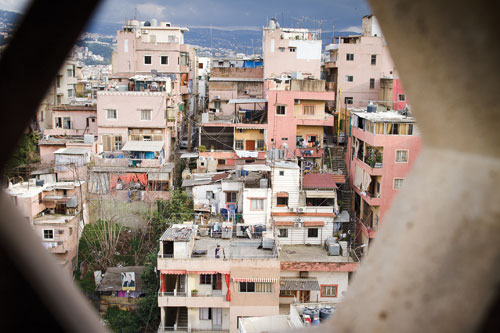
Say you’re one of those unlucky landlords whose tenants have an “old rent” contract, meaning they inked their deal before existing laws were passed in 1992. Annual rent can be as low as $100, or if you were slightly luckier, around $250 — the cost of a decent bottle of champagne. So while such low rents can keep your tenants sipping bubbly, paying for nice trips abroad or having the disposable income to buy their kids a BMW, you are left scraping the bottom of the barrel. So, as a landlord, what do you do if one day you see your tenant’s 18-year old son drive by you in a convertible with a bottle of Moet on the way to the airport, and you've had enough? 

You can: 

1. Prove (or frame) the tenant has reneged on the contract by removing windows, doors or making major renovations without your expressed approval. 

2. Get your video camera out and fix it to their door to prove that no one has been in the house for a whole year. You may need to buy some extra film.

3. When your tenant comes around to pay his measly fee, don't give them a receipt and claim they have not paid rent for 6 consecutive months. 

4. Keep coming around to the house and telling the tenant there are cracks in the outside walls and you hear the building groaning, hoping they will up and leave.

5. If you have the financial wherewithal or a real estate developer that will ‘loan you the money’ to buy your property, you may find yourself buying your apartment again by forking out 25 to 50 percent of the total value of the property (not the land), generally settled out of court. Of course, a little sweetener to the ‘registered experts’ can make that financial medicine go down a little easier. 

6. If your tenant is in the business of anything other than ‘residential activity’ you can claim the red lighting is proof of business activity and claim the residential contract has been breached. 

Now, if you are that tenant indulging in the bubbly and luxury cars, and want to stay put, consider the following:

1. Remember “the tenant is the owner” and you are in the right. So whatever that whiney landowner says is of no consequence as long as you follow your original contract to the ‘T’ for tenant. 

2. If he takes out a legal case against you, stall. Tell the judge you have no money for a lawyer so the courts can take another half-year to appoint one. 

3. If your landlord is trying to buy you out and appoints an ‘expert’ to appraise your apartment all of a sudden, somehow, no one is ever home during his working hours. Beware however, if you are caught unaware opening the door adorned in a towel (or a more risqué form of dress) it is a crime not to let the expert in, even if he does look like a peeping Tom. 

4. After you have succeeded in stalling for three to five years you can then go to the First Court of Appeals whereby you will pull at the judge’s heartstrings (and perhaps his ‘public’ purse) with stories of your kids first footsteps in the corner of your lounge and where your dying mother expressed her final wishes that you stay in the neighborhood to water her favorite plant that has grown up the side of the walls. 

5. Never park your new Hummer in front of the house, even if it’s late at night and you’ve hit the bubbly particularly hard. Compensation for getting you out will vary according to your financial standing. If you are ‘poor’ you can get the higher amount of 50 percent of the value of your rental. The old Renault 12 will do well at the courthouse, especially pushed the final 100 meters by your wheezing grandfather. 

6. If all fails don't panic, the snails pace of the Lebanese judiciary kept one case going for 47 years.

Landlords get the keys back

The 1992 Rent Act put the landlord back in the driver’s seat of many of those luxury SUVs seen around town. For starters, any rental contract that expired between January 1, 1987 and December 31, 1991 is subject to a series of multiples, while anything after that date, the tenant is no longer the “owner”. Contracts usually last for three years, after which the landlord has free reign to up your rent or turf you out. So what do you do if your part of this class of renters and like your five-meter ceilings? 

1. You are basically out of luck. But if you know a notary, the judge and a few bad boys you may be able to stay for a year or two. 

2. If your three-year contract is up, you will have to go to court. See above stalling methods for reference but keep in mind that you will need to butter up the right people and if you lose the case, you might end up paying for that slimy landlord’s lawyer. In the meantime, do not pay rent and save up for that penthouse on the Corniche, the eventuality of a basement abode, or maybe a tent in the park.

3. Make sure that you agree on things that cannot be delivered by your landlord: cue contractual obligation for helipad written in small letters your landlord couldn't see with his bifocals. If you can prove that the landlord did not deliver on the contract, you can stay, rent free.

Underhanded tenant turfing

If your tenant is proving difficult, the legal route is not always the quickest road to liberate your property of that noisy ragtag occupant. 

You might consider:

1. That there are many plugs, many wires and many pipes that no one really keeps tabs on. They can come undone, burst or just disappear at anytime. Just saying. 

2. If your unruly inhabitant has any acute fears, say arachnophobia, then a trip to the pet store for a few rather hairy tarantulas will do well crawling over the balcony. Rabid canines have also been known to raise a few hairs and eyelids, especially if they can bark into the night or enjoy romantic moments with the tenant’s ankles. 

3. By this time you will have noticed the affinity the resident of your own property has with his auto. Small notes written with newspaper clippings attached to destroyed windshields have been known to prove useful, as does spray-painting the car a lurid color. Just be sure to stock up on the turpentine to clean away the evidence from your fingernails. 

No need for contracts

More often than not a gentlemen’s agreement is the best way to do a deal. Such is the case with rents too. If no contract between the tenant and the owner exists, it is the person living in the house who has the upper hand. So if you are looking to sell off that old part of your family heritage and think you pulled a fast one by not inking a contract or paying municipality fees: think again. 

1. In order to tear down any building, permits from the municipality are required. But if someone is living in your house and paying the bills, the receipts are proof of tenancy and the fact that you don't have a contractual right to boot out anyone since, simply there is no contract. Tenants without contracts should note that buddying up to the electricity guy with the green slips can mean the difference between a bed and the street. 

2. If your tenant has not been paying rent and knows they are on the better side of the law, the best course of action for a landlord, when there is no ink on paper, is simply to come around during working hours when no one is around and change the locks on the door. When the renter comes out of the building confused and looking for a crowbar you can remind them that you hold the key to their furniture, not to mention to the flat screen TV as well.

Things of course are rarely this vindictive or unruly. Most contracts are clear and the tenant/landlord relationship can be managed with a little cunning and a lot of reason when it comes to upping the rent every few years. Even if a new rental law comes into play, the basic legal procedures will hardly change. Thus, it may be preferable to leave the antics to these pages and proceed to the next page to find out what is being cooked up for the country’s rental market.

May 3, 2012 0 comments
0 FacebookTwitterPinterestEmail
  • 1
  • …
  • 331
  • 332
  • 333
  • 334
  • 335
  • …
  • 696

Latest Cover

About us

Since its first edition emerged on the newsstands in 1999, Executive Magazine has been dedicated to providing its readers with the most up-to-date local and regional business news. Executive is a monthly business magazine that offers readers in-depth analyses on the Lebanese world of commerce, covering all the major sectors – from banking, finance, and insurance to technology, tourism, hospitality, media, and retail.

  • Donate
  • Our Purpose
  • Contact Us

Sign up for our newsletter

    • Facebook
    • Twitter
    • Instagram
    • Linkedin
    • Youtube
    Executive Magazine
    • ISSUES
      • Current Issue
      • Past issues
    • BUSINESS
    • ECONOMICS & POLICY
    • OPINION
    • SPECIAL REPORTS
    • EXECUTIVE TALKS
    • MOVEMENTS
      • Change the image
      • Cannes lions
      • Transparency & accountability
      • ECONOMIC ROADMAP
      • Say No to Corruption
      • The Lebanon media development initiative
      • LPSN Policy Asks
      • Advocating the preservation of deposits
    • JOIN US
      • Join our movement
      • Attend our events
      • Receive updates
      • Connect with us
    • DONATE