• Donate
  • Our Purpose
  • Contact Us
Executive Magazine
  • ISSUES
    • Current Issue
    • Past issues
  • BUSINESS
  • ECONOMICS & POLICY
  • OPINION
  • SPECIAL REPORTS
  • EXECUTIVE TALKS
  • MOVEMENTS
    • Change the image
    • Cannes lions
    • Transparency & accountability
    • ECONOMIC ROADMAP
    • Say No to Corruption
    • The Lebanon media development initiative
    • LPSN Policy Asks
    • Advocating the preservation of deposits
  • JOIN US
    • Join our movement
    • Attend our events
    • Receive updates
    • Connect with us
  • DONATE
Comment

Devastated by laissez-faire

by Peter Speetjens May 3, 2012
written by Peter Speetjens

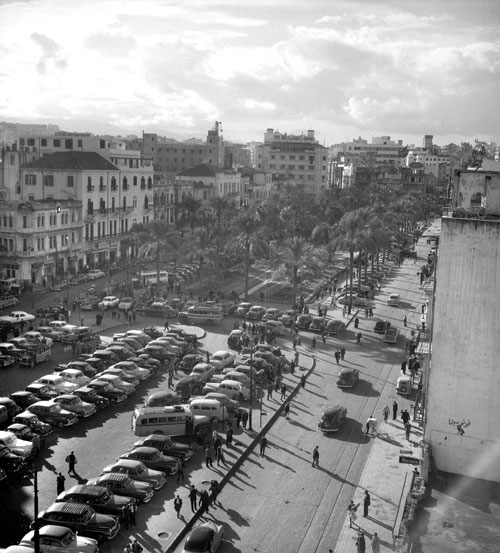
If Michel Ecochard were alive today to see his beloved Beirut, he would arguably want to drop dead on the spot. Beginning in the 1930s, the French architect and urban planner worked for some 30 years in Lebanon and the region. He had especially high hopes for Beirut, as it was blessed with what he called, “One of the most beautiful sites in the world.”

In 1943, he was asked to produce an urban blueprint that could accommodate Beirut’s future growth. Taking into account the city’s existing character and natural setting, he proposed strict zoning, a modern infrastructure to cope with the growing popularity of the car, and a string of gardens and parks as the city’s green lungs. 

Today, the AUB campus and Sanayeh Garden offer a rare glimpse of what Beirut could have been, while the city’s ever increasing traffic jams echo the fact that Ecochard’s plan was never approved in Parliament. Not surprisingly, the most vocal opposition stemmed from Beirut’s property owners and landed elite.

The situation did not improve following World War II. The newly independent “merchant republic” under the presidencies of Camille Chamoun and Bechara Khoury were neoliberal avant la lettre, in the sense that the state was to stay out of social and economic affairs in order not to hamper the private sector’s potential to generate profit. Urban planning was among the least of its concerns.

Having worked in such cities as Casablanca, Damascus and Aleppo, Ecochard returned in 1961 when President Fouad Chehab asked him to again produce a master plan for Greater Beirut. Despite his earlier disappointment, Ecochard accepted. “Beirut can still be saved, but action must be taken immediately,” he said.

Again, Ecochard called for zoning, the creation and protection of green spaces and an improved infrastructure. He also proposed building government cities to decongest the capital, and social housing schemes for east and south Beirut to raise the living standards among the many new arrivals in search of a better future. Finally, he advocated strict building regulations to discourage speculation. Again, his plan came to nothing. Parliament, in 1964, adopted a watered down version of his proposal, in which some industrial zoning remained and construction along beaches was (temporarily) frozen. 

Ecochard disassociated himself from the plan and soon after left the country. Contrary to what many Lebanese think, the urban chaos that characterizes Beirut today has not been the result of 15 years of Civil War. Ecochard was hardly the only planner that tried to tame Beirut. Before him, there was 1930s French urbanist Rene Danger. After him there were Greek, Swiss and homegrown plans. The problem was that, time and time again, plans were compromised or shelved entirely. In other words, the lack of urban planning dates straight back to Lebanon’s independence in 1948, and is directly linked with the impotence of the Lebanese state. “[Ultimately,] Beirut’s urban landscape symbolizes the difficulty of the state to affirm its authority,” concludes modern urban historian Eric Verdeill in his book ‘Beyrouth et Ses Urbanistes’. 

The consequences of this inability are plenty. The lack of proper public transport and the ever increasing fleet of wheels, for example, is strangling the city. There are hardly any parks and there is little or no sense of social, aesthetic or historic value, as everything is measured by the mighty $-sign. As a result, Beirut’s cultural heritage is rapidly making way for ever higher high-rise that makes you wonder: what ever happened to the art of architecture? 

A recent low point on a long list of urban disasters was the adoption of the 2004 building law. While in the 1960s a building was allowed to be only as high as 1.5 times the width of a street it faced, since 2004 it can be 2.5 times the street’s width. This change prompted a forest of towers to be erected everywhere, even along the Corniche. While most are a slap in the face of beauty, they also have disastrous consequences for the city’s air and traffic circulation. 

“It was the private domain… that invaded the public domain and hacked away at its flailing carcass,” wrote the late Samir Kassir in summing up the sad history of urban planning in his book ‘Beirut’. “The metropolitan area was little more than a mass of infringements and trespasses against the ability to breathe that is no less essential to a city than a person.” 

Sweet dreams, Monsieur Ecochard.

May 3, 2012 0 comments
0 FacebookTwitterPinterestEmail
Society

A watch for life

by Michael Karam May 3, 2012
written by Michael Karam

A watch has become a necessity but not necessarily for telling the time,” explains Mhir Atamian, whose family business is one of Lebanon’s leading watch importers. “For men, it is one of the few pieces that they can wear, but for both male and female consumers, it has become as important as what clothes they wear or the car they drive. Among their peers, it is important to be seen to have the ‘right’ watch.”

So which is the right watch? It’s not just a case of what you like in terms of design or functionality or price; what Atamian might have been alluding to was that, in modern Lebanon, or anywhere else for that matter, is that you may often be judged — in terms of status, taste and even credibility — by the watch on your wrist.

To many people, a watch is a watch. It tells the time. You could be wearing a $250,000 Patek Phillipe chronograph and many people would not be the wiser; but to the trained eye your watch can say a lot about you. Are you an arch-vulgarian, an aficionado, or simply someone who wants to wear a decent piece of engineering success on the wrist?

It is fun to match watches to certain jobs. The photographer, designer or creative director might demand a watch that is both functional and a design classic. He or she will want us to know that form is appreciated just as well as function. Where others see cliché, they see an icon.

So what are we talking about? Omega’s Speedmaster Professional that was designed for astronauts, together with Breitling’s Navitimer, a pilot’s watch, and the Rolex Explorer (the white face “polar” edition in particular) all fit the bill. They are proven designs that have hardly changed over the years. While fads come and go, the classics still remain.

But remember, while these watches are not cheap — the Speedmaster is the most affordable at around $3,000 — they do not belong to the true elite of the watch world. This brings us to the banker or the businessman: which is the right watch for the man or woman who lives in life’s first class lounge? For the person who takes life at a calculated, more measured pace and who, whenever they shoot a cuff, want the world to see understated elegance? 

For those who have plowed their professional furrow and are looking to reap a rich harvest, there are four of five watch houses from which to draw horological inspiration. Patek Philippe – naturally – A. Lange Sohne, Vacheron Constantin, Girard Perregaux and perhaps a Jaeger LeCoultre constitute   grown-up watches and, in many cases, potential family heirlooms. 

Which leaves us with the man who simply wants to reward himself and send a signal to the world that he has ditched that Swatch; a man that has between $5,000 and $10,000 to blow on a watch that will be a friend for life but which won’t let him down at the beach, the club or the boardroom. IWC, Jaeger LeCoultre, Omega and of course Rolex are my top picks. Women can have all these too and they can mine Cartier’s rich deposits of classic designs.

In fact, women consumers can often have more fun. With the fad for oversized watches, they can really make a statement. Cartier’s oversized Ballon Bleu in particular is a current favorite as is the 42mm IWC Portuguese, steel on a black strap.

You will have noticed some brands (perhaps unfairly) have not made the cut. Tag Heuer, Longines and Baume and Mercier are all fantastic watches and, in the case of Longines and Tag in particular, have an enviable heritage, but, and this is just my opinion, they just fall outside the “watch for life” segment. They are perfect “step-up” or “second” watches.

Also absent are Panerai — too big and brash (even if many of us secretly want one) — and Tudor, which needs more time to win over a new generation of fans, although the new Black Bay Diver and the Chrono Heritage are both destined for cult status.

Finally, if you are reading this and are thinking that this is all a load of elitist tosh and you are very happy with your trusty Seiko, take comfort from knowing you wear one of the best made and most reliable watches on the planet. Fact.

May 3, 2012 0 comments
0 FacebookTwitterPinterestEmail
AdvertisingSpecial Report

Ad-vice from the top

by Executive Editors April 14, 2012
written by Executive Editors

“The problem is this [‘Arab Spring’] came in the wake of the remnants of financial struggle. The environment is not conducive to a high level of investments. Clients are maintaining their strategies rather than implementing aggressive ones.”

Roy Haddad, chairman of JWT MENA

“At times like the ones we are in today, tactical or immediate-result advertising becomes the main requirement. The pressure is definitely on creatives today to deliver immediate or short-term results. I can see that 2012 will be similar to 2011 and 2013 will also be similar in the way that everybody is looking for immediate results. The big ideas and big deliveries will not disappear but they will be less and less.”

Joseph Ghossoub, chairman and chief executive officer, Menacom Group

“We have come a long way in developing planning and doing campaigns that no longer address a single media but are integrated. Our creative people are now thinking in a broad spectrum way of thinking, rather than in the silos of the media disciplines.”

Ramzi Raad, group chairman and chief executive officer, TBWA Raad

“The agencies are being put under pressure and our margins are suffering because of the pressure, but at the end of the day you have to stand for something and if you stand for quality and a certain standard, you have to find a way or quit this business.”

Raja Trad, chief executive officer, Leo Burnett Group MENA

“Mobile, specifically in our markets, will take up more and more share of the digital spending. The opportunity to connect with people on a 24/7 platform will generate exponential growth, especially [since] we’re starting from such a low base.”

Tarek Miknas, chief executive officer, Promoseven Group

“With the apps model we finally have a way where people can pay one dollar for something. With a paid website you obviously want people to pay but more importantly you want some people to think it is so valuable that they are willing to pay for it.”

Jimmy Wales, Internet entrepreneur, founder, Wikipedia

“I would say 2011 was the year when companies significantly improved their online investments. Better infrastructure means more users in the GCC. North Africa and the Levant also show significant improvements in [online] usage, so ads [will] follow.” 

Ari Kesisoglu, Google regional director for MENA

Hussein Friejeh, commercial director, Yahoo Middle East:“The industry is dominated by 30 clients. Out of those 30, you have 10 who spend up to 10 percent of their ad budgets online. Once other clients get onboard, market will jump.”

Ajay Shrikhande, chief executive officer, DDB Gulf:“Perhaps one can compare the advertising industry awards with the air cargo industry awards, and how is the public excited with the air cargo industry awards?”

“We still have high hopes for Syria. It is a big market, a manufacturing market, and we believe that a lot of Syrian manufacturers and services providers will eventually grow into the region, including Iraq and Lebanon.”

Mark Daou, chief operating officer overseas, Rizkgroup Communications
April 14, 2012 0 comments
0 FacebookTwitterPinterestEmail
Feature

Syria rendez-vous with the rebellion

by Executive Editors April 14, 2012
written by Executive Editors

The deep, single boom announces a symphony of staccato gunfire, and the calm spring morning in Syria’s eastern mountains descends into chaos.

Two rag-tag groups of Syrian Army defectors, part of a loose umbrella group commonly known as the Free Syrian Army (FSA) have just detonated a gas canister full of explosives beneath a Syrian army tank which was patrolling outside their village. Having left their hilltop hideouts late the night before, the 11 rebel soldiers are now executing their hastily planned attack. Their payload delivered, the rebels fight their way home beneath airburst anti-personnel artillery and withering fire from the Syrian Army; of the three wounded that day one would later die.

Holed up in a small farm building on a cliff-top near the village of Janoudiyeh, this small group of defectors operating autonomously but in loose collaboration with similar groups in the area, is one of many such units striving to write the next page in the Syrian uprising. Saying they have learned from the mistakes of Homs, where the FSA was forced to make a “tactical withdrawal” after a month-long artillery bombardment, these fighters have taken to the hills, preferring quick surprise attacks over a protracted urban struggle.

But while they may maintain the element of surprise, supplies are scarce. This group relies on FSA comrades in a nearby village to keep them stocked up with food, but on a bad day lunch is foraged from the ground outside: cabbages, greens and spring onions.

A string of government assaults have recently driven the FSA from many of its strongholds, but the group’s fortunes may be on the rise. On Saturday, March 24, FSA chief Colonel Riad al-Asaad joined forces with a unit led by the most senior army deserter, General Mustafa al-Sheikh, to form a united military council.

The FSA needs to move beyond its fractious nature if it is to prove a substantive oppositional force. Foreign states with an interest in seeing the FSA succeed would then find it far easier to supply the weapons and support it with what it desperately needs.

“Given the weapons we have and what they have, we can’t do anything. Of course we don’t want outside interference but if things keep going the way they are then of course I hope that NATO would interfere,” said Lieutenant Mohammed el-Hajj. “Any kind of alliance…let Israel come into the country and it would be better than Bashar al-Assad… At least if they are bombing our children we would know it is not our brothers, cousins, our [own] army bombing us.”

April 14, 2012 0 comments
0 FacebookTwitterPinterestEmail
Consumer Society

For your information

by Executive Editors April 6, 2012
written by Executive Editors

Hello again, Mr. Moto

After 2011’s less robust showing in terms of new car sales — a major economic indicator of consumer confidence — automobiles are again flying off the lots. According to figures from the Association of Automobile Importers in Lebanon, which are compiled from car registration statistics, the sector has seen a 17.7 percent rise in the first two months of 2012, with 3,796 cars sold in the first two months of 2011 and 4,469 new passenger cars sold in the first two months of 2012. Again, Korean brand Kia was the big winner in these new statistics, selling 1,252 new cars,  against 938 in the same period last year. Korean models also took second place, with Hyundai selling 702 cars versus 538 in 2011. Third, fourth and fifth in the rankings were Japan’s Nissan, Japan’s Toyota, and rounding out the pack was the US brand Chevrolet.

The power of women

Of the CEO Middle East’s 2012 list of the 100 most powerful Arab women, 12 were Lebanese. The majority of Lebanese entries came from the entertainment sector, with Fairuz, Elissa, Nancy Ajram and Haifa Wehbe all making an appearance, at rankings 13, 41, 65 and 69 respectively. This trend to celebrate women’s roles in the ‘culture and society’ category was apparent across the list, with 43 out of the 100 overall listed being from this background. Other notable Lebanese entries include filmmaker and face of Johnnie Walker’s ‘Keep On Walking’ campaign in Lebanon 2012, Nadine Labaki (14), CEO of Treats Holding (Dunkin Donuts, Semsom) Christine Sfeir (15), and journalist and political analyst Maria Maalouf. The most powerful Arab woman was listed as the United Arab Emirates’ Minister of Foreign Trade, Sheikha Lubna al-Qasimi, for the second year in a row, ahead of Yemeni Nobel peace prize winner Tawakkul Karman in second place.

Organic food takes off

The well-established global trend toward organic foods will soon be reaching new heights, as Abu Dhabi-based carrier Etihad airways announces the introduction of organic produce to its in-flight menu, in exclusive partnership with Abu Dhabi Organics Farms. First class diners will find fresh organic food products on their plates, from eggs to vegetables to honey. Organic products are produced by sustainable farming practices and internationally certified, making them popular with discerning eaters. Etihad has plans to extend the provision of organic ingredients across all cabin classes in the future. The initiative comes after Etihad launched an on-board five-star restaurant service for First class last October, recruiting international chefs.

Superhero Con

The Middle East region’s first consumer convention devoted exclusively to pop culture, comic books and cult entertainment is being held this month, from April 20 to 21 in Dubai. Tickets for the Middle East Film and Comic Con (MEFCC) range from AED 55 ($14) for a day pass to AED 500 ($136) for a VIP festival pass.  The festival will feature blockbuster movie previews, gaming and competitions, workshops, panels and Q&As. To promote local talent, artists from all over the region are invited to set up stalls in ‘Artist Alley’ to promote or sell their collections. Areas covered by the MEFCC include science fiction, fantasy, manga, anime, animation, illustration and collectables.

The call of the camel

Demand is growing worldwide for camel milk products, according to Emirati chocolatiers Al Nassma. They launched their camel milk chocolate in August 2011, and it has just been announced that Al Ain Dairy, one of the biggest producers of dairy products in the UAE, will shortly be introducing camel milk ice cream flavored with dates, caramel, saffron and chocolate. The company plans to renovate its facilities at a cost of AED 10 million (nearly $2.7 million) in order to produce the range commercially, according to CEO Abdullah Saif al-Darmaki in UAE daily Gulf News. Camel milk is an essential part of the traditional Arab diet.  Research has shown  that the milk offers plenty of health benefits as well.Al Nasmaa chocolatiers — which also sells drinks like Camelcinos and Camelattes at its coffee shop in Mall of Emirates — is available in 60 outlets in Switzerland, as well as in Japan, Europe and the Gulf, where the product has proved extremely successful. Global expansion, however, is currently stalled by the EU, which is unlikely to give permission for the export of fresh camel milk until 2013. 

April 6, 2012 0 comments
0 FacebookTwitterPinterestEmail
Real estate

For your information

by Executive Editors April 6, 2012
written by Executive Editors

Hyperactivity around the Hippodrome

Solidere, the largest real estate developer in the country, and Minister of Culture Gaby Layoun are getting an earful of objection regarding a decision to dismantle ancient ruins once part of the Roman Hippodrome — to build a luxury residential development on a construction site in downtown Beirut. Layoun dismissed the decisions of three of his predecessors when he gave permission on March 15 for the destruction of the ancient ruins on the site to make way for development. For his part, he said the process would be respectful to archeological interests since it would involve dismantling and then recombining certain walls of the hippodrome to integrate them into the new structure. In response, the Association for the Protection of Lebanese Heritage called for a rally on March 24 near the site to voice their opposition to the destruction of the ancient ruins. The group’s Facebook page says the protest is “to protect the Phoenician port of Beirut, on plot 1398… and work for the reversal of the Ministry of Culture’s decision to allow the ‘integration’ of the Beirut Roman Hippodrome in Wadi Abou Jmil, into a development project, especially because the Hippodrome is on the list of culturally relevant monuments in Beirut.” Other politicians are taking a stance as well. A March 20 statement from the media office of Progressive Socialist Party leader Walid Joumblatt clarified his earlier published statements about the ordeal in Al Anbaa newspaper, placing full blame on Solidere rather than the Beirut Municipality, which is tasked with preserving archeological sites in collaboration with the General Directorate of Antiquities.  Former Culture Minister Tammam Salam urged Parliament on March 15 to reject the decision, calling it an “unacceptable crime” against the Lebanese, according to The Daily Star.

Fashionable arrival

While there are currently two “So by Sofitel” boutique hotels globally, the French hotel group, Sofitel, plans to expand that brand to 18 properties worldwide in the next five years, Sofitel CEO Robert Gaymer-Jones told Hotelier Middle East in a March 14 article. “Eventually we’ll have somewhere between 15 and 18 Sos operating around the world in the next five to seven years,” he said. “I’d love to bring it to Dubai, Cairo and other parts of the Middle East. We’re looking at an opportunity in Beirut.” The two existing properties are the original in Mauritius and a property in Bangkok, which featured the design collaboration of Kenzo Takada and Christian Lacroix, respectively. The Lifestyle-hotels heavily depend on a fashion-centered brand identity, where employee uniforms, bath robes and even toiletries like soap are designer products. Sofitel opened 9 more hotels in 2011 and its Bahrain property, Sofitel Bahrain Zallaq Thalassa Sea & Spa, contains the first thalassotherapy (therapy that uses seawater) in the Middle East. After three years of construction work, the company’s Egyptian property, the Sofitel Legend Old Cataract Aswan, reopened its doors in 2011.

Luxury incentives

Adding to the bevy of luxury hotels in downtown Beirut, a new five star hotel has been announced by the Investment Development Authority of Lebanon (IDAL), which gave the project owner, Sabah Barakat, a handy incentive package on March 16, according to Byblos Bank. Barakat, the general manager of Al Bashoura Company, will build a hotel that will hold 153 rooms, 62 suites and 35 apartments, costing $208 million to include retail area, a pool, and a conference room. Since the project will reportedly create 250 jobs and contribute to tourism, the 10-year incentive package will allow the owners to skip paying income tax for a decade while reducing construction fees by half. IDAL expects that close to $1 billion worth of projects will receive similar incentives in 2012.

Shop ‘til you drop

While the external work is already complete on what will be Lebanon’s largest shopping mall, Beirut City Center in Hazmieh, its Dubai-based developer, Majid Al Futtaim, announced that the $300 million development would be complete by early 2013. Originally, the mall, which will contain 200 stores within 60,000 square meters of retail space, was to be completed by this summer. MAF has developed 10 malls in the Arab region, including the United Arab Emirates, Egypt, Oman and Bahrain, and has two more under development in Fujairah, UAE and Cairo, in addition to its first mall development in Lebanon. In the fourth quarter 2011 report by Ramco Real Estate Advisors on the Lebanese real estate sector, it noted that Lebanon has a total of 240,000 square meters of gross leasable area (GLA) within six existing shopping malls and five shopping galleries, but that there is need for more malls outside the capital. There are four malls under construction, which will add another 130,000 square meters of GLA. These are Le Mall Dbayeh, the Landmark in downtown, Beirut City Center and the expansion of Beirut Souks on the North Side.

Investor–friendly rooms

While Saudi Arabia’s Mecca and Medina came in first and second place in a poll of hospitality performance among Arab cities, Beirut came in 16th place. A February 29 report in Arabian Business, based on data from Ernst & Young, showcased the best Arab cities for hotel investment, ranking them by hospitality performance based on occupancy and room rates from the year 2011. Beirut had an average hotel occupancy rate of 57 percent and an average room rate of $220, while the average room yield (the average revenue per room per night) was $126. The report indicated that less Arab visitors came to Lebanon because of political upheavals in the surrounding area. Mecca had an average occupancy rate of 73 percent in 2011, partly due to an increase in religious tourism.

Dubai, which saw an increase in tourists (and 78 percent occupancy rate) in 2011, came in 3rd, while Abu Dhabi ranked 9th place. By  January, however, Lebanon’s local hospitality industry had picked up. Hotel occupancy rose by 16 percent compared to January 2011, reaching 60 percent, and the average room rate increased 4 percent to $229 by the first month of this year, compared to January 2011, according to Ernst & Young. The room yield, which shot up 40.4 percent in comparison to January 2011, was the second highest rise in the region after Medina, where it was 114 percent.

Sales slow but values rise

According to figures from the General Directorate of Real Estate and Cadaster, the number of property transactions fell 1.2 percent in January compared to January last year, hitting 5,387 total transactions. It is important to note that this represents a fall of 44.9 percent compared to December 2011 figures. Ninety-seven  of the sales in January 2012 were to foreigners, showing a 12.8 percent rise in sales to foreigners compared to January 2011. The value of property sales, however, was up 17.4 percent in January 2012 compared to January 2011, reaching $562.1 million. Newly issued construction permits covered an area of 793,988 square meters in January 2012, up 5.81 percent compared to January 2011, while 61.63 percent of the area which received a construction permit is in Mount Lebanon, according to the Order of Engineers.

April 6, 2012 0 comments
0 FacebookTwitterPinterestEmail
Banking & Finance

Financial quotes of the month

by Executive Editors April 6, 2012
written by Executive Editors

“The idea that ‘drill, baby, drill’ can cure our jobs deficit is basically a joke.”

Paul Krugman, American economist, regarding former US vice presidential candidate Sarah Palin’s statement

“We call on banks to continue stimulating growth in their deposits, even at the expense of slowing growth in profits.”

Riad Salameh, Governor, Banque du Liban

“The Turkish lira now has a symbol, just like the US dollar, the euro and the yen.”

Recep Tayyip Erdogan, Turkish Prime Minister

“They [the Bahrainis] will pay if there is no race. The money is in the bank already. So we’re not going because we’re going to get paid. That has nothing to do with it.”

Bernie Ecclestone, the Formula One tycoon, defending his decision to go ahead with the Grand Prix in Bahrain in April

“We used to be the people of the Book. Now we became the people of the Facebook. Much better.”

Shimon Peres, Israeli President who recently opened a Facebook page

“The risks of turning away from Greece now are incalculable. No one can assess what consequences would arise for the German economy, on Italy, Spain, the Eurozone as a whole and finally for the whole world.”

Angela Merkel, German Chancellor

“I hope US companies would come. Even the US oil companies haven’t started coming back.”

Abdurrahim al-Keib, Libyan Prime Minister

“Britain seeks to protect Lebanon’s lucrative banking sector from sanctions against Syria, and we will do our utmost to safeguard its credibility.”

Tom Fletcher, British ambassador to Lebanon

“Over the last 12 months I have seen five different managing directors refer to their own clients as ‘muppets’.”

Greg Smith, ex-Goldman Sachs banker, in his resignation letter published in The New York Times

“We do realize that a 25 percent increase on the third salary bracket would not be realistic, but this is our legal right.”

Assad Khoury, head of Lebanon’s Association of Bank Employees

“We received a letter from Exxon on March 5 saying they are freezing the contract with the Kurds.”

Abdul Kareem Luaibi, Iraq’s oil minister after US oil company Exxon infuriated Baghdad by signing a contract with Kurdistan
April 6, 2012 0 comments
0 FacebookTwitterPinterestEmail
Banking & Finance

Investment guide MENA stock tips

by Executive Editors April 6, 2012
written by Executive Editors

Stock indices continue their upward trend this year despite investor skepticism, with global fundamentals remaining weak as March came to a close. Last month markets were wavering between signs of improvement in the United States and the continuing European debt crisis, while in the Middle East and North Africa, several countries’ continuing instability kept investors wary on where to invest their money. Executive spoke to Lina Makarem, head of treasury at Lebanon’s BBAC Bank and Raj Madha, financial analyst at Rasmala, a Dubai-based investment bank, for their investment recommendations in these topsy-turvy complex times.

Lina Makarem

View on global markets:

Makarem is cautious with regards to the markets, as she does not believe we have seen the full extent of the negative repercussions from the European sovereign debt issues. “The measures taken so far are only postponing the problems and not solving them; the authorities are taking money to pay the bondholders but the population still has problems.”

Where would you put your money?

Her preferred sectors to invest in would be technology, “As it is hot now with the upcoming Facebook initial public offering.” She would also recommend the telecommunication and energy sectors. Having said that, she would prefer to hold onto liquidity in these challenging times, as there is too much volatility in the markets. She is not convinced that there are any solid opportunities anyway at this point. “You don’t know where you can go with your money with all that’s happening in the markets from the downgrades by rating agencies to new regulations; it is better to keep your money.”

Thoughts on investing in the MENA?

Makarem believes with all the turmoil still going on in the region, it is best to sit on the sidelines for at least the next six months. “Hopefully when new governance is put in place, there might be real opportunities.” For the time being, she likes Qatar and Saudi Arabia for the safety of the investments rather than for their returns. She is also optimistic on the United Arab Emirates. She is keeping an eye on Libya, but waiting for good governance to put be in place before starting to invest.

Thoughts on Lebanese securities?

Makarem believes stocks listed on the Beirut Stock Exchange are cheap but she is not that enthusiastic about them, as they remain highly dependent on the political situation. With some stability, she would look into the BSE as the listed companies have solid fundamentals. She also likes Lebanon’s government bonds despite the high level of sovereign debt, as she believes that the highly liquid banking sector, which owns around 70 percent of the sovereign bonds, can defend the security in case the value drops. “We have a lot of liquidity so that’s why you see some resilience.”

Raj Madha

Your thoughts on the markets?

Madha is cautious on the external environment and its effect on the MENA region. He sees potential for Europe to create more risk aversion in the region going forward. He also believes that the recent run in local markets, especially in the UAE and Egypt, will not last. “Not much has changed since the beginning of the year and we may see some caution going back into the market. I wouldn’t be aggressively buying for now.”

Main concerns?

Because Madha focuses on the financial sector in three markets — the UAE, Egypt and Qatar — his main concerns depend on the market in question. In the UAE, he is worried about future growth and believes the growth in lending will be difficult this year. In Egypt, there is no clear path to democracy at the moment and Madha is looking for further assurance on this front. For Qatar, he needs to see the projects that were put on the table throughout 2011 come to fruition and the government spending filter down to the economy.

Thoughts on Egypt given its strong rally year-to-date?

Madha believes the main question in Egypt is whether the political transition has gone far enough. One of the main risks at the moment is the balance of payments as the central bank’s reserves are drying up and Egypt will be facing trouble funding the current account deficit. According to Madha, the ideal scenario would be for tourism to come back strongly, which would narrow the current account deficit. Another option would be for an increase in foreign direct investment.

Top financial stocks in the region?

For the financial sector in the MENA region, Madha would buy Commercial Bank of Qatar, Emirates NBD and First Gulf Bank.

April 6, 2012 0 comments
0 FacebookTwitterPinterestEmail
Banking & Finance

For your information

by Executive Editors April 6, 2012
written by Executive Editors

M1 upping the stake in Sainsbury’s

Investment fund M1 group, owned by Prime Minister Najib Mikati and his brother, Taha, raised its share to just over 3 percent in J Sainsbury, owner of the third-largest chain of British supermarkets, the level at which it needs to be declared to the stock market in the United Kingdom. At the current market capitalization of $8.9 billion (as of March 15), the Mikatis’ stake is worth $265 million. The interest in the British retailer is ostensibly due to its significant property portfolio valued at $17 billion at of the end of 2011, almost twice the size of its market capitalization. Sainsbury’s largest shareholder remains the Qatar Investment Authority sovereign wealth fund, with a 26 percent stake. Despite withdrawing a £10.3 billion bid ($20.6 billion at the time of the offer) to acquire the entire company in 2007 due to shaky credit markets, speculation still lingers that the Qataris could renew a bid in the future.

SWIFT to cut Iranian bank ties

The European Union is banning all financial transactions with blacklisted Iranian financial firms, which include Iran’s central bank and more than a dozen financial institutions. Belgium-based Society for Worldwide Interbank Financial Telecommunication (SWIFT), which operates a financial messaging network linking most of the world’s major banks, is abiding by the EU’s ban. Nineteen banks and 25 financial institutions from Iran are being blocked from using SWIFT. The United States is pressuring for more action, as their policy makers are demanding an end to financial transactions with all firms and not just selected ones. The US is threatening penalties against SWIFT, arguing that Iran could shift financing for its nuclear program from the sanctioned financial firms to other firms. The US, which has blacklisted 23 Iranian banks, believes that Tehran is using more than 20 banks to finance its nuclear program and assist militant regional groups. Lebanese officials and banks confirmed to David Cohen, the US Treasury Undersecretary for Terrorism and Financial Intelligence, that Lebanon is complying with the financials sanctions imposed to Syria and Iran. With increasing pressure from Western sanctions and with a rising demand for dollars, Iran’s central bank lifted its strict foreign exchange policy, which was imposed in January this year, allowing money traders to exchange dollars at the unofficial rate as opposed to the unprofitable and artificially fixed official rate of 12,260 rials to the dollar. An illicit trading of foreign exchange had pushed the unofficial rate to around 19,000 rials to the dollar.

Lumber for La Resistance

The Democratic Republic of Congo has awarded profitable forestry concessions to Trans-M, a company owned by Lebanese businessman Ahmed Tajideen, according to a Reuters report. Tajideen also runs Congo Futur, a sawmilling factory accused by the United States federal prosecutors of being a cover for Hezbollah. It has been put under US sanctions since 2010 for being part of a network of businesses controlled by Tajideen’s three brothers, Kassim, Hussein and Ali, which generated “millions of dollars in funding” for Hezbollah. The US measures are part of a wider attempt at countering rising business activity in Africa by Hezbollah. The concessions granted by Congo’s environment ministry to Trans M consist of 25-year leases for hundreds of thousands of hectares of rainforest which, according to forestry experts, could bring hundreds of millions of dollars in revenues if they are fully exploited. Ahmed Tajideen denies his brothers’ involvement in the companies, the link between the two companies as well the accusation of being a Hezbollah front. John Sullivan, a US Treasury spokesman, recently warned that Trans M would face sanctions if Congo Futur owned a majority.

Lebanese credit worthiness drops

In a credit worthiness survey of 179 countries conducted semiannually by Institutional Investor and published in March, Lebanon ranked 105th globally, down from its 99th spot in the September 2011 survey due to local instabilities as well as political unrest in the region. Lebanon ranked 12th among the 18 countries from the Middle East and North Africa. Qatar had the highest rank among the MENA countries (20th globally) followed by United Arab Emirates (27th globally) and Kuwait (28th globally); Syria ranked 126th globally, down from 124th in September. The survey rates the creditworthiness of a country on a scale of 0 to 100, with 100 representing the least chance of credit default. Lebanon’s score stood at 32.5 points in March 2012, down 3.2 points from September’s score. Its score is below the global average of 44.3 points (excluding South Sudan with a score of 10.3 points) and is also below the MENA average of 48.2 points.

The billionaires among us

Forbes’ 2012 billionaires ranking is out and includes 1,226 names, an all time high with a combined net worth of $4.6 trillion. Mexican telecom tycoon of Lebanese origin Carlos Slim topped the list with a fortune estimated at a whopping $69 billion, followed by Microsoft’s Bill Gates with $61 billion and business magnate Warren Buffett with $44 billion. Rotation is the biggest feature this year with almost as many billionaires dropping out of the list (441) as those making it (460). From the Middle East, 33 billionaires made the list. Prince al-Waleed bin Talal, chairman of Riyadh-based Kingdom Holdings, which owns stakes in the Four Seasons Hotel, Apple, Newscorp and Citigroup, tops the Arab list with an estimated $18 billion fortune. From Lebanon, Prime Minister Najib Mikati and his brother Taha top the list with $3 billion each. They are followed by the Hariri brothers Baha ($2.5 billion), Saad ($1.7 billion), Fahd and Ayman ($1.3 billion each).

Middle East carriers up in a downwind

The International Air Transport Association (IATA) expects profits for Middle East carriers to increase this year to $500 million from $300 million in 2011, bucking the worldwide trend. Global profits for the industry are forecasted to fall by $500 million to $3 billion, mainly due to higher oil prices. “2012 continues to be a challenging year for airlines. The risk of a worsening Eurozone crisis has been replaced by an equally toxic risk: rising oil prices,” says Tony Tyler, CEO of IATA, which represents 230 airlines making up 93 percent of scheduled international traffic. With a price of oil forecast of $115 per barrel, IATA expects fuel costs to constitute 34 percent of average operating costs of airlines and total fuel costs in the overall industry to reach $213 billion. Passenger demand is expected to increase 4.2 percent this year. Asia-Pacific carriers are expected to report a profit of $2.3 billion, the largest profit by region. European carriers are expected to face the toughest conditions with a forecasted $600 million net loss this year.

Bank Audi bonanza in Turkey

Bank Audi plans on opening 50 to 60 branches in Turkey in the next few years, of which 15 will be in Istanbul according to Chief Financial Officer Freddie Baz. The bank received in October last year a license to establish a deposit bank in Turkey with a starting share capital of $300 million, the first permission of this sort by the Turkish regulator in more than a decade. Turkey has not granted any new bank licenses since 2001 when a financial crisis brought down the number of lenders in the county to 61 from 81 two years earlier. During the economic crisis of 2008, Turkey did not have to bail out any of its banks. The banking sector’s profits fell 10 percent in 2011 to $11.3 billion, with loans growing by 22 percent to $388 billion. The chairman of the Turkish Banking Regulation and Supervision Agency Tevfik Bilgin expects the profits in 2012 to be in line with 2011. He also expects new banks to enter the country this year.

April 6, 2012 0 comments
0 FacebookTwitterPinterestEmail
Economics & Policy

For your information

by Executive Editors April 6, 2012
written by Executive Editors

Still searching for power

Yet another plan to resolve Lebanon’s chronic electricity shortage is on the ropes, thanks to political squabbling. While visiting Lebanon late last month, Georgian Prime Minister Nika Gilauri, at a joint press conference with Prime Minister Najib Mikati, said that transmitting low-cost electricity from Georgia to Lebanon “through Syria or by installing pipes under the sea” is feasible. The plan, which would include leasing power generators at a cost of some $1.2 billion, is backed by Energy Minister Gebran Bassil, who says the ministry will begin issuing tenders in May. Throughout the month the minister and Mikati were at loggerheads over Bassil’s plan to bring power-generating barges offshore to provide extra capacity. The premier believes that Bassil’s plan is too costly and was said to be preparing alternative approaches to provide electricity in the coming months, when consumption peaks. Speaking to As-Safir, Mikati said the ministerial committee setup to appoint a new board at Électricité du Liban and amend the electricity law had “exhausted all means available without making recommendations” to resolve the electricity crisis, and therefore its members were not invited to the meeting. “Let the cabinet assume its responsibility in taking the appropriate decision after all opinions are heard,” he said. Presently, Lebanon has around 1,500 megawatts (MW) available, including generation and imports, but demand requires roughly 2,500 MW, leading to rolling blackouts across the country.

US warns Lebanese banks on Syria

On his first visit to Lebanon, United States Treasury Under Secretary for Terrorism and Financial Intelligence David Cohen met with Prime Minister Najib Mikati and central bank Governor Riad Salameh to discuss issues ranging from sanctions on Syria to banking transparency. In a statement, the US embassy in Beirut said that Cohen, Mikati and Salameh “discussed the steps Lebanon should take to ensure a transparent and well-regulated financial sector for Lebanon’s continued prosperity.” Cohen also warned of “potential attempts to evade US and international financial sanctions,” referring to Syria. Currently, sanctions against Syria’s central bank, as well as private banks with Assad regime ties are being enforced by Bank du Liban (BDL), Lebanon’s central bank, a bank official told AFP. The official said BDL is “keen on respecting international decisions and cooperating with financial and international authorities.” Days after the meeting, Salameh told Hezbollah’s Al Manar TV that Lebanon’s banking sector “is under a [smear] campaign from certain parties irked by its success.” Last month, Salameh also said banks needed to cooperate with the BDL’s Banking Control Commission to conduct stress tests following information that payments to the accounts of Syrian borrowers were becoming problematic, according to Lebanon’s Byblos Bank. In related news, Salameh also urged banks to distribute dividends of just 25 percent of profits, with the remaining amount to go to meeting capital requirements of Basel III by 2015. The governor also made a turn around in his policy and stated that banks should apply the new United States Foreign Account Compliance Tax Act (FACTA), which would allow the US Internal Revenue Service to circumvent Lebanon’s long-standing banking secrecy to tax US citizen’s wealth in the country.

Prison sentences cut

Seeking to relieve overcrowding in Lebanon’s prisons, parliament last month approved a draft law that reduces prison sentences by three months for every year served. For inmates serving less than one year, each month will count as 20 days. Life sentences, death sentences and repeat offenses are excluded from the reduction. The Kataeb, Future Movement and Walid Joumblatt’s Democratic Gathering members of Parliament opposed the law. In a country report last year, Human Rights Watch said, “Conditions in [Lebanese] prisons remain poor, with overcrowding and lack of proper medical care a persistent problem.” Roumieh prison, which was originally built to hold 1,500 prisoners, currently houses at least 3,700 inmates and is regularly the scene of riots protesting overcrowding and poor living conditions. Many prisoners have been in prison for months awaiting trial.

Chinese workers leave Syria

China’s Commerce Minister early last month said around 100 Chinese nationals working inside Syria were pulled from the country over security concerns.  “The Chinese government and ministries must seriously undertake the protection of Chinese firms’ production and projects overseas, and the protection of the lives of Chinese citizens overseas, especially engineering teams,” the minister told reporters in early March. No figures are available on how many Chinese workers are currently in, or have left, Syria. Chinese workers had to be rescued from Libya during the civil war there last year. According to Reuters, Chinese firms were involved in $17 billion worth of Libyan projects before the war began, and the companies are now seeking “compensation for these projects in accordance with international norms.”

Penetrating communication

In a report last month, the International Telecommunication Union said that by the end of 2011, Lebanon’s mobile penetration rate, the ratio of mobile phones to people, rose to 72.2 percent, a 6.5 percent rise on 2010. By the end of last year, 3.06 million Lebanese were using mobile phones, up from 2.88 million users at the end of 2010. The number of broadband Internet subscriptions also rose last year. By July 2011, broadband Internet subscriptions were up 43 percent, with roughly 286,000 fixed-line broadband connections in the country. Also, according to the report, the most popular Lebanese website, measured by unique monthly visitors, is Tayyar.org, the digital mouthpiece for Michel Aoun’s Free Patriotic Movement.

Maritime border beef

After the United States said it would help mediate the maritime border dispute between Lebanon and Israel, Lebanese Foreign Affairs Minister Adnan Mansour told As-Safir that “If it succeeds in finding a solution regarding the Exclusive Economic Zone then the US would have scored positive points in [the eyes] of Lebanon and concerned countries and that is what we want.” A 2010 report by the United States Geological Survey estimated that an average of 1.7 billion barrels of recoverable oil and 3.5 trillion cubic meters of recoverable gas sits in the Levant Basin Province, a geological formation in the Eastern Mediterranean extending from Syria to the Sinai.  Three years ago, Israel discovered an estimated 8 trillion cubic feet of natural gas in the Tamar reservoir, followed by the 2010 discovery of the Leviathan Basin, which is said to hold 16 trillion cubic feet of natural gas. Israel has drawn its maritime border in the area, with around 850 square kilometers of territory in dispute.

New bioenergy plan

The Ministry of Energy and Water, together with the United Nations Development Program’s ‘Country Energy Efficiency and Renewable Energy Demonstration Project for Lebanon’ (CEDRO) have developed a National Bioenergy Strategy for Lebanon. The plan largely focuses on building waste-to-energy plants and the development of liquid fuels production. Under this strategy, 12 percent of Lebanon’s total energy needs will come from renewable energy sources, something that was promised at the Copenhagen climate conference in 2010. If all goes according to plan, within the next eight years Lebanon will produce biofuels equivalent to around 17 percent of the country’s transportation-related fossil fuel consumption.

Gender gap

Lebanon was ranked 118 among 135 countries on the World Economic Forum’s (WEF) 2011 Global Gender Gap Index, putting the country in eighth place among 15 Arab states. Among upper-middle class countries, Lebanon was ranked 29 out of 32. The index is ranked by countries’ gender equality and is meant to put focus on gender-based disparities in each nation listed. On the WEF’s Economic Participation and Opportunity Sub-Index, which measures the participation, remuneration and advancement gaps between men and women in the workplace, Lebanon ranked ahead of Iran and Algeria, but fell behind Egypt and Nepal.  Last month saw increased legislative activity surrounding an amendment to the nationality law, which if passed would allow Lebanese women married to foreigners to pass on their nationality to their spouse and children. Discussions over the law have been postponed because they require “further study.”  

April 6, 2012 0 comments
0 FacebookTwitterPinterestEmail
  • 1
  • …
  • 334
  • 335
  • 336
  • 337
  • 338
  • …
  • 696

Latest Cover

About us

Since its first edition emerged on the newsstands in 1999, Executive Magazine has been dedicated to providing its readers with the most up-to-date local and regional business news. Executive is a monthly business magazine that offers readers in-depth analyses on the Lebanese world of commerce, covering all the major sectors – from banking, finance, and insurance to technology, tourism, hospitality, media, and retail.

  • Donate
  • Our Purpose
  • Contact Us

Sign up for our newsletter

    • Facebook
    • Twitter
    • Instagram
    • Linkedin
    • Youtube
    Executive Magazine
    • ISSUES
      • Current Issue
      • Past issues
    • BUSINESS
    • ECONOMICS & POLICY
    • OPINION
    • SPECIAL REPORTS
    • EXECUTIVE TALKS
    • MOVEMENTS
      • Change the image
      • Cannes lions
      • Transparency & accountability
      • ECONOMIC ROADMAP
      • Say No to Corruption
      • The Lebanon media development initiative
      • LPSN Policy Asks
      • Advocating the preservation of deposits
    • JOIN US
      • Join our movement
      • Attend our events
      • Receive updates
      • Connect with us
    • DONATE