• Donate
  • Our Purpose
  • Contact Us
Executive Magazine
  • ISSUES
    • Current Issue
    • Past issues
  • BUSINESS
  • ECONOMICS & POLICY
  • OPINION
  • SPECIAL REPORTS
  • EXECUTIVE TALKS
  • MOVEMENTS
    • Change the image
    • Cannes lions
    • Transparency & accountability
    • ECONOMIC ROADMAP
    • Say No to Corruption
    • The Lebanon media development initiative
    • LPSN Policy Asks
    • Advocating the preservation of deposits
  • JOIN US
    • Join our movement
    • Attend our events
    • Receive updates
    • Connect with us
  • DONATE
Business

Q&A – Karim Makhlouf

by Zak Brophy January 3, 2012
written by Zak Brophy

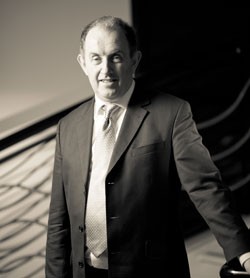
Gulf Air, Bahrain’s national carrier, was the Arabian peninsula’s original pioneer in aviation, boasting more than six decades of in-the-air experience. However, in recent years it has fallen from profit and the political tumult in Bahrain and across the region has accentuated the nosedive. Executive met with Gulf Air’s Chief Commercial Officer Karim Makhlouf to hear how the airline fell from favor and about its attempts to claw back market share.

Gulf Air has fallen from profit and lost significant market share in recent years. Why?

More and more competition entered the market so customer choice got divided between the airlines, and commercially we were not aggressive or innovative enough in order to introduce quickly to the market the things that the customers need. We have corrected that this year with many new initiatives, with a clear target of winning back the market share to Gulf Air. 

What initiatives are being offered to win back your market share?

The new initiatives can be summarized in four areas where we are investing. The first is the Falcon Corporate Plus. Then we re-launched our frequent flyer program, called Falcon Flyer, and we have a new initiative for families called Family First. We are also now investing much more heavily in travel agent incentives.

What customer groups are you targeting with these initiatives?

When looking into the new commercial strategies we defined exactly the different customer segments and they are youth… business and corporate, religious traffic and we defined families as a new and important segment. 

Can you expand on the corporate strategy?

It is called Falcon Corporate Plus whereby companies receive special prices and become gold and silver members; there are other features such as complementary upgrade, marketing support, incentive deals and so on. The target is to have 500 deals signed by 2012 and so far we have had 500 deals signed and we have had a good market response from Lebanon. The target here is clear; that we want to increase our market share with the corporate traveler. Companies, especially small and medium ones, can collect [frequent flyer] points with the Falcon Flyer program — that is new.

We have redesigned the Falcon Flyer program with three tiers. Every tier has different advantages besides upgrades, lounge access, baggage access, and obviously the redemption of tickets is the main thing. We are promising that we have the most attractive redemption scheme in the region.

And you said family travelers were a target group?

We really want to position ourselves as the family friendly airline. We are the only airline in the world to offer a sky nanny service and soon we will have this service also in the lounge areas. Also, we are designing kids’ menus and we have kid focused in-flight entertainment systems. We see this as a very attractive target group.

How is Gulf Air developing its routes to take on the regional competition?

We are completely restructuring our network. We aim to avoid the heavy competition of our fast growing neighbors to position ourselves stronger into under-served niche markets. This is why we opened routes to Isfahan in Iran, Addis Ababa, Milan, Geneva, Basra, Kabul, Copenhagen, Nairobi, Rome, Entebbe and we are going to open Juba in March 2012.

E:  And how are you developing your regional network?

The target of double daily flights is not just to here in Lebanon but to all regional capitals. This is the difference from Emirates, Qatar Airways or Etihad; we try to make flying a commodity in the region. We think the Gulf and the Middle East will develop like Europe where it is normal for people to commute by flying, so we want to connect the regional capitals on a double daily basis. This is the differentiator, because we are not focusing on long haul to long haul — competing with the European carriers like our neighbors — but we really want to develop here an excellent choice for the people flying throughout the region.

What investments are being made in the fleet to accommodate your new strategy?

We undertook a major investment into the products, so we are refurbishing the whole of the business class compartment with new state of the art seats, which will be ready by the first quarter next year. With Panasonic we have invested in a new-state-of-the art in-flight entertainment system where we are the world’s first airline offering broadband internet, live television and phoning on board.

How about the actual planes in the fleet?

We are in the process of renegotiating our order book. In recent years there were a lot of orders placed with both Boeing and Airbus and we are fine-tuning that. Because we want to develop further the strategy of high frequency regional flying we are going to start flying with narrow bodies, 320s, with an extra tank and a full lie-flat business class to fly to Europe as of next year. We have six extra range A320s coming in next year.

How many jobs have been or are going to be lost as a consequence of the restructuring program?

Staff [numbers] have been reduced by 30 percent in 2010 and we also managed to reduce losses by 30 percent.

Due to political upheavals this year Gulf Air suspended its Beirut routes and is still not flying to Iraq or Iran. How serious an impact has this had on business?

We were hit very hard in March but in the meantime we managed to partly compensate for these losses with new routes, mainly to Europe and Africa. Of course we hope that the flights to Iraq and Iran will be back soon. 

I think the Lebanese market is somehow used to the political ups and downs. I think it is also clear that [Gulf Air was not] behind the decisions to suspend flights. I think the customer can very well differentiate between politics and Gulf Air. Obviously we see now the customers are coming back and flying with Gulf Air and that is why we are intending to increase the frequency of our flights for the Lebanese market.

How significant a portion of business is cargo and how does this fit into the overall strategy?

Cargo is integrated into our carriers but we don’t have specific freighters. Cargo business contributes around 25 percent to the revenue of the airline. It is very good ancillary revenue for us which we are developing further. By going toward a narrow body fleet we are focusing on high value cargoes.

With the sector becoming increasingly fractured between traditional carriers and low cost airlines, how is Gulf Air positioning itself?

Low cost doesn’t really work as well in the Arab world as it does in the US or Europe because we don’t have this infrastructure of periphery airports. That is where low cost can benefit from lower costs. So in the Arab world it is very difficult to get those low costs. I think in the Arab world ‘low cost’ is hype, which has more marketing content than real economics behind it. Of course, low cost airlines are competition and we treat them as such, but by offering the right service at the right price, especially in the Arab world, it is easier to maintain the customer loyalty than in, say, Europe, where low cost is spreading very aggressively.

January 3, 2012 0 comments
0 FacebookTwitterPinterestEmail
Comment

Ditching diplomacy in Iran

by Gareth Smith January 3, 2012
written by Gareth Smith

The historical parallels are dismal. Iran’s display of a captured United States Sentinel drone sparked painful memories, both of the shooting down of Gary Powers’ U2 spy plane over the Soviet Union in 1960 and of two American helicopters abandoned in an Iranian desert in 1980 while trying to free US hostages held in the Tehran embassy. Both examples speak of the failure — or abandonment — of diplomacy. At their best, diplomats are better than soldiers at defusing potentially dangerous situations. Hence the freezing of relations between Tehran and London should be seen as a new escalation in tension between Iran and the West. 

When students stormed the British embassy in November in protest at new sanctions, their actions were vindictive. “They even slashed the paintings,” a British foreign office employee, formerly based in Iran, told me. “What’s the point of that?” There is one painting I remember from my own visits to the embassy. A British ambassador during the 19th-century refused to take off his boots in the Shah’s presence. “I take off my boots only for the Queen of England,” he insisted. Fortunately, a compromise was drawn up in which the ambassador wore outsize socks over his boots — a story told to me by a more recent ambassador who clearly enjoyed the diplomatic ingenuity. 

In our own time, politicians seem set on denying diplomats the space for such initiative. The US Congress is even considering legislation to outlaw any contact with Iranian officials without specific presidential approval, while several leading deputies in Iran applauded the students’ actions in trashing the British embassy.

Back in November, as leaks abounded about the negative content of a looming report on Iran from the International Atomic Energy Association (IAEA), Ali Akbar Salehi, Iran’s foreign minister, used an old Farsi expression, ‘Marg yek bar, shivan yek bar’, meaning: ‘You die once, you are mourned once’. With a background in nuclear physics, the US-educated Salehi is more of a technocrat than a politician. Evidently frustrated, he may have meant that if the IAEA had incriminating evidence of Iran working on nuclear weapons, then it should publish it. I don’t think he meant that if the US and Israel planned to attack Iran’s nuclear facilities, then they should go ahead.

In practice, while the IAEA report led to new sanctions from the US, Britain, the European Union and Canada, it was not sufficient for Russia and China to abandon their calls for renewed diplomacy and instead support increased United Nations sanctions. And in Tehran it was seized on — especially after the pre-launch leaks and hype — as proof of the credibility gap between US claims over the nuclear program and the reality of Iran’s peaceful, civil intentions. 

As for the new sanctions, the EU added 180 Iranian officials and entities to a list of those whose assets may be seized, but it remains in doubt whether Europe will ban Iranian oil imports. Canada’s new measures, prohibiting exports to Iran’s energy sector and blocking monetary transactions, are largely symbolic. The UK has banned its financial sector from involvement in Iran, significantly raising the costs for British companies trading there.

As ever, the real damage could come from Washington. New energy measures prohibiting any person, US or foreign, from providing support — defined as annual investment of $20 million or more — to Iran’s petrochemical industry, will have limited effect, as existing measures already prohibit American companies from dealing with the Iranian energy sector and give the administration power to bar from the US market any foreign companies that do. But the US Treasury finding that Iran, including its central bank, is a “jurisdiction of primary money laundering concern”, may encourage greater international wariness over dealings with the country.

Washington’s new sanctions, like many existing ones, are extra-territorial, and hence enforcement by the administration against third parties will involve calculation. The Obama administration is being driven by pressures from congressmen and lobbyists vexed over China’s role in Iran. 

But how far to go? While the State Department may now identify more Chinese or other foreign companies as engaged in sanctionable conduct in Iran, it remains to be seen whether Washington will completely dump diplomacy in the dust and bar them from the US market.


GARETH SMYTH has reported from around the Middle East for nearly two decades and was formerly the Financial Times correspondent in Tehran 

January 3, 2012 0 comments
0 FacebookTwitterPinterestEmail
Comment

John Newland Redwine

by Executive Staff January 3, 2012
written by Executive Staff

John began working with Executive Magazine in 2007, first as a journalist and then later earning his way into the editor’s chair, before amicably departing his post to pursue further career interests in 2009. In his time here John was a standard bearer for professionalism, integrity and quality, imbuing the office with a sense of kinship through his intense loyalty to his colleagues and his dedication to his work.

Many were the nights when the blistering hours of production would stretch into the morning, and as we closed that next month’s issue and walked wearily out of the office John would inevitably find a smile to greet the morning sun. Rare are those who one can count on so thoroughly that they seem among the forces of nature, so devoid of excuses and frailties. Now, some two years since John left Executive, his indelible mark on the organization remains, as do the friendships that were forged.

Accompanying his professional prowess was a rugged outdoorsman, a man of intellect, easy charm and empathy, a husband dedicated to his amazing wife Irina — whose passport-sized photo John would have always near his hand whenever he wrote — and an adoring father to their newborn baby boy, Winston.  

It is with profound sadness that we received the tragic news that our dear friend, who had a contagious passion for climbing, had died in an accident in the mountains. Our thoughts, hearts and prayers are with his family and everyone that had the privilege of knowing this exceptional human being.

John, may you rest in peace.

January 3, 2012 0 comments
0 FacebookTwitterPinterestEmail
Comment

Revolutionary roles for Yemen’s women

by Farea al-Muslimi January 3, 2012
written by Farea al-Muslimi

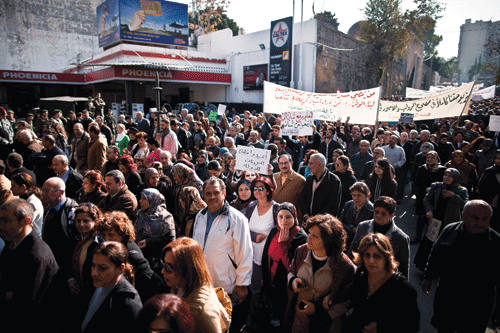
Yemenis, from the deposed dictator Ali Abdullah Saleh to the angry street protesters, can all agree on one thing: Their country’s women have amazed the world with their extraordinary work during the 2011 uprisings. That recognition reached its zenith when the Nobel committee acknowledged the well-known Yemeni activist Tawakul Karman by awarding her the Peace Prize, along with two Liberians.  

Since Saleh signed the Gulf Cooperation Council deal in November, which declares that he will step down next February, Yemenis have debated whether the political revolution is complete and what new political freedoms will emerge. Yet while the outcome of the political revolution is still unclear, the cultural one has brighter prospects. Art has emerged on Yemeni streets, scribbled by angry youths, while poets, singers and rappers have had a newfound impact on society. Even in the middle of ‘Change Square’, where Islamists play Quranic and Islamic songs on stage, musicians and rappers are offered the chance to express themselves. This cultural revolution is definitely more promising than the political one, but is it complete yet? 

The question is very difficult to answer as it is still too soon to evaluate such a sociological shift, but there can be little doubt that women’s participation has been more significant than ever before. Women’s role in the street protests and their participation in political discussions have raised hopes that they will finally be granted their political and social rights. The spectacle of tribal leaders praising Karman for her bravery when she was awarded the Nobel Prize was something profoundly new in this conservative society. More importantly, when Hooria Mashhoor, a well-known Yemeni woman, was named speaker of the National Transitional Council, before later becoming Minister of Human Rights, many considered it a real shift in Yemen’s culture. The council consists of some very conservative religious and military leaders, many of whom have consistently resisted women’s empowerment on the basis of religion and culture. 

Back in April, President Saleh tried to provoke Yemenis into supporting his regime by condemning the mixing of women and men in ‘Change Square’, calling it an anti-Sharia act. Initially the speech caused controversy, with conservative elements wary of the president’s accusations. The television footage of women peacefully protesting changed some attitudes, but it still did not get rid of the old mindset. Later, groups of Yemeni women burned their veils in the streets as a symbolic action to condemn some of the tribes’ support of Saleh. This sent a strong and very symbolic message to the leaders, partly about their political allegiances but also about their continued support of a patriarchal system.

Saleh’s gamble backfired, with the majority of Yemenis realizing it was a political ploy and many claiming the statement insulted the honor of Yemeni women. That has proved a significant moment; in the future politicians will think twice before using the veil of culture as an excuse to prevent women’s emancipation.

However, these positive trends are possibly too good to be true and some hard questions remain unanswered regarding Yemeni women in politics. What percentage of Yemeni women actually live in cities and participated in the revolution? Are the women in the streets reflective of their rural counterparts, who continue to be deprived of their basic rights? Is engaging in politics really the ultimate aim for Yemeni women? While there has been significant improvements in the political empowerment of Yemeni women, is it comprehensive? Not yet and progress can be frustratingly slow. Three women have now been appointed in the transitional cabinet, only one more than the previous government. 

The hope is that Yemen’s women, as in many other Arab countries, are entering a new phase, but there have been false dawns before. If you meet a Yemeni man protesting for more freedom, ask him this simple question, “While you say you are in favor of women protesting in the streets would you support your sister doing the same?” Some confirm that they would be, but too many still answer the question with an awkward smile and a red face.  


FAREA AL-MUSLIMI is a Yemeni activist and writer for Almasdar

January 3, 2012 0 comments
0 FacebookTwitterPinterestEmail
Economics & Policy

Q&A – Fadi Abboud

by Executive Staff January 1, 2012
written by Executive Staff

As minister of tourism, Fadi Abboud has seen Lebanon through the heyday of visitor arrivals in 2010 to the more barren roads of 2011, as well as the change in government from last year to this. At the helm of one of the most underfunded ministries in the government while overseeing an industry accounting for nearly a quarter of the country’s gross domestic product, Abboud pulled no punches when laying out the challenges for tourism in Lebanon as he sat down for an exclusive one-on-one with Executive.

E  Following a fantastic 2010, how bad was 2011 for tourism? 
We broke all records in 2010. Some 2.2 million tourists visited Lebanon, with total tourist spending up to an estimated $8 billion. In 2011, I think we will be down by some 300,000 tourists, most of whom come by road. Because of what happened in Syria, we lost roughly some 100,000 Jordanians, 100,000 Iranians and 100,000 Gulf Arabs. However, total spending in 2011 seems up, though I should add that buying residential property is included in tourism spending. What may also play a role is the fact that we are a dollar-based economy, and the euro went down.

E  What has been done or what could have been done to counter the negative consequences of the Syrian crisis?
In all honesty, we should have taken some measures much earlier, but we did not do anything to compensate what we lost by road. For example, we could have had planes to Jordan for $50 a flight. Most Iranians only come for 24 to 48 hours, as part of a trip to Syria, and they do not spend much. But I think we could work harder in attracting the some 1.5 million Iranians who visit Turkey. In other words, we should attract more Iranians flying to Lebanon. Generally speaking, we are not taking advantage of what is happening around us. We should grasp the opportunity to, for example, build a civil airport in the Bekaa Valley, or use the existing airport to create a regional hub for so-called low-cost carriers. I just came back from the World Travel Market in London, where I had a word with Monarch, which is one of the smallest low-cost carriers in the world. Still, with 34 jets and a turnover of some $1.3 billion, it is twice the size of MEA (Middle East Airlines). On average, they offer a return ticket from London to Cyprus for some $450. Compare that to flights to Lebanon. Also, open the travel section of the Sunday Times and you can fly anywhere in the world on a package deal. But not to Lebanon. As long as we have a monopoly in Lebanon, or a duopoly between MEA and BMI (British Midland International), which is technically bankrupt, prices will not come down. 

E  External factors aside, what do you think is the main internal problem facing the Lebanese tourism industry?  
I’d say a lack of professionalism. Lebanon is like a mezze. You eat a bit of everything but you never get full. For example, we have a casino, but we are not a gambling destination. Our casino is more like a hospital to treat the locals. We have ski slopes, but are not a skiing destination. Do you know any skiing destination in the world that does not have snow cannons? With all due respect, these days we can no longer rely on God alone. Another problem is that the owners of the separate ski stations do not want to cooperate. Yet to create a true ski destination we need lifts from Faqra all the way to the Cedars and snow cannons. Then, and only then, can we become a ski destination.
Likewise, we are not a Mediterranean destination. We need a coastal resort, where you have all the facilities in one place not to get bored for a few weeks. We are not a serious religious destination, even though we have all the sites in the world and no less than four saints. We are not even a serious destination in terms of nightlife. I’ll be frank, a lot of people come here for prostitution, yet the Emirates have much more to offer. In terms of diving we have the Victoria, the only ship in the world in a vertical position, and underwater archeology at Tyre, yet we are not a diving destination. Even when it comes to hiking, we do not take things seriously.   There are a lot of jacks-of-all-trades anywhere in the world, yet people want professionalism. We do not take anything seriously. And that is what I’m trying to change. In Arabic we have a saying ‘you do not drink from a well and throw a stone.’ I am embarrassed to say what we throw in this well. It is not just stones. It is rubbish. Tourism represents 22 percent of our GDP. We should invest in it. You cannot create an industry if you do not promote it.

E  Talking about promotion, what happened to the LL5,000 ($3.33) airport tax you suggested in 2010? 
It did not happen. It was refused as usual. It was meant to be an extra LL5,000 departure tax, which would have enabled us to promote Lebanon. But the whole 2010 budget was refused, including the extra tax. It was not even debated properly. The Ministry of Finance always emphasizes the unity of the budget, but, personally, I don’t see what a LL5,000 promotion tax has to do with the budget of, say, the CDR (Council for Development and Reconstruction).

E  What is the budget of the ministry?
It’s ridiculous. It’s less than $20 million, which includes all wages. It is by far not enough to promote the country. But suppose they give me $30 million, even then I cannot spend them. If I tell the World Travel Market I want to participate and ask if I can pay six months later, they will ask me politely to f*** off. For a stand at a fair you pay up front, regardless of what is the official way of doing things in Lebanon.

E  Will attracting more Western tourists be difficult considering travel warnings issued by many Western embassies?
Usually, we are not in the market of mass tourism. We cannot compete really. That does not mean we only want jet setters staying in 5-star hotels in Solidere. I love them, don’t get me wrong, but we cannot only rely on them. Fortunately, most educated people in the West know that these travel warnings are political. For example, why did England not issue a travel ban when earlier this year two young Britons were massacred in [Florida]? Is Beirut more dangerous than Bogota? I feel safer in Beirut with an expensive watch than in London, Paris or any city in the United States. Now, I don’t think these bans and warnings are working, but is it making our life any easier? No, not at all.

E  In a few words, how would you describe 2011?
2011 was not as good as 2010, yet it could have been much worse. Overall, certainly seeing what is happening in countries around us, I’m happy.

E  What to expect for 2012?
Of course, security is very important, but all things being equal, 2012 could be a good year. But, unfortunately, we are experts in losing opportunities. We have an excellent opportunity to build our position. We are currently one of the safest countries in the region. We should grasp this opportunity. 

E  What are the main challenges?
Well, regional politics of course. Look, if I were responsible for Israeli security I would have only one thing on my mind: a Shiite-Sunni war. Israel is usually very good at studying our weak points, and that is one of our weak points. Today, with the rise of Sunni fundamentalism everywhere, it is very feasible to instigate such a conflict. And the US would be happy with that, as they need a market to sell their weapons. If this scenario becomes reality, all hell will break loose.   Closer to home, we really need to redefine tourism in Lebanon. We really need to become a serious destination for the hiker, the religious tourist, the diver, etc. We really need world-class facilities. In addition, I strongly believe that monopolies, and the sisters and brothers of monopolies, are still controlling the Lebanese economy. This has to stop. I don’t believe that Lebanon should have just one casino, one airport and one port. We have to free the travel market, especially when it comes to flights. If you talk to tourism professionals in Jordan and Egypt, they will tell you that they could only break their records once they broke the travel monopoly. If we don’t free the market, we will never substantially expand.

January 1, 2012 0 comments
0 FacebookTwitterPinterestEmail
Tourism

Fadi Abboud

by Executive Editors December 25, 2011
written by Executive Editors

A s minister of tourism, Fadi Abboud has seen Lebanon through the heyday of visitor arrivals in 2010 to the more barren roads of 2011, as well as the change in government from last year to this. At the helm of one of the most underfunded ministries in the government while overseeing an industry accounting for nearly a quarter of the country’s gross domestic product, Abboud pulled no punches when laying out the challenges for tourism in Lebanon as he sat down for an exclusive one-on-one with Executive.

  • Following a fantastic 2010, how bad was 2011 for tourism? 

We broke all records in 2010. Some 2.2 million tourists visited Lebanon, with total tourist spending up to an estimated $8 billion. In 2011, I think we will be down by some 300,000 tourists, most of whom come by road. Because of what happened in Syria, we lost roughly some 100,000 Jordanians, 100,000 Iranians and 100,000 Gulf Arabs. However, total spending in 2011 seems up, though I should add that buying residential property is included in tourism spending. What may also play a role is the fact that we are a dollar-based economy, and the euro went down.

  • What has been done or what could have been done to counter the negative consequences of the Syrian crisis?

In all honesty, we should have taken some measures much earlier, but we did not do anything to compensate what we lost by road. For example, we could have had planes to Jordan for $50 a flight. Most Iranians only come for 24 to 48 hours, as part of a trip to Syria, and they do not spend much. But I think we could work harder in attracting the some 1.5 million Iranians who visit Turkey. In other words, we should attract more Iranians flying to Lebanon. Generally speaking, we are not taking advantage of what is happening around us. We should grasp the opportunity to, for example, build a civil airport in the Bekaa Valley, or use the existing airport to create a regional hub for so-called low-cost carriers. I just came back from the World Travel Market in London, where I had a word with Monarch, which is one of the smallest low-cost carriers in the world. Still, with 34 jets and a turnover of some $1.3 billion, it is twice the size of MEA (Middle East Airlines). On average, they offer a return ticket from London to Cyprus for some $450. Compare that to flights to Lebanon. Also, open the travel section of the Sunday Times and you can fly anywhere in the world on a package deal. But not to Lebanon. As long as we have a monopoly in Lebanon, or a duopoly between MEA and BMI (British Midland International), which is technically bankrupt, prices will not come down. 

  • External factors aside, what do you think is the main internal problem facing the Lebanese tourism industry?  

I’d say a lack of professionalism. Lebanon is like a mezze. You eat a bit of everything but you never get full. For example, we have a casino, but we are not a gambling destination. Our casino is more like a hospital to treat the locals. We have ski slopes, but are not a skiing destination. Do you know any skiing destination in the world that does not have snow cannons? With all due respect, these days we can no longer rely on God alone. Another problem is that the owners of the separate ski stations do not want to cooperate. Yet to create a true ski destination we need lifts from Faqra all the way to the Cedars and snow cannons. Then, and only then, can we become a ski destination.

Likewise, we are not a Mediterranean destination. We need a coastal resort, where you have all the facilities in one place not to get bored for a few weeks. We are not a serious religious destination, even though we have all the sites in the world and no less than four saints. We are not even a serious destination in terms of nightlife. I’ll be frank, a lot of people come here for prostitution, yet the Emirates have much more to offer. In terms of diving we have the Victoria, the only ship in the world in a vertical position, and underwater archeology at Tyre, yet we are not a diving destination. Even when it comes to hiking, we do not take things seriously.   There are a lot of jacks-of-all-trades anywhere in the world, yet people want professionalism. We do not take anything seriously. And that is what I’m trying to change. In Arabic we have a saying ‘you do not drink from a well and throw a stone.’ I am embarrassed to say what we throw in this well. It is not just stones. It is rubbish. Tourism represents 22 percent of our GDP. We should invest in it. You cannot create an industry if you do not promote it.

  • Talking about promotion, what happened to the LL5,000 ($3.33) airport tax you suggested in 2010? 

It did not happen. It was refused as usual. It was meant to be an extra LL5,000 departure tax, which would have enabled us to promote Lebanon. But the whole 2010 budget was refused, including the extra tax. It was not even debated properly. The Ministry of Finance always emphasizes the unity of the budget, but, personally, I don’t see what a LL5,000 promotion tax has to do with the budget of, say, the CDR (Council for Development and Reconstruction).

  • What is the budget of the ministry?

It’s ridiculous. It’s less than $20 million, which includes all wages. It is by far not enough to promote the country. But suppose they give me $30 million, even then I cannot spend them. If I tell the World Travel Market I want to participate and ask if I can pay six months later, they will ask me politely to f*** off. For a stand at a fair you pay up front, regardless of what is the official way of doing things in Lebanon.

  • Will attracting more Western tourists be difficult considering travel warnings issued by many Western embassies?  

Usually, we are not in the market of mass tourism. We cannot compete really. That does not mean we only want jet setters staying in 5-star hotels in Solidere. I love them, don’t get me wrong, but we cannot only rely on them. Fortunately, most educated people in the West know that these travel warnings are political. For example, why did England not issue a travel ban when earlier this year two young Britons were massacred in [Florida]? Is Beirut more dangerous than Bogota? I feel safer in Beirut with an expensive watch than in London, Paris or any city in the United States. Now, I don’t think these bans and warnings are working, but is it making our life any easier? No, not at all.

  • In a few words, how would you describe 2011?

2011 was not as good as 2010, yet it could have been much worse. Overall, certainly seeing what is happening in countries around us, I’m happy.

  • What to expect for 2012?

Of course, security is very important, but all things being equal, 2012 could be a good year. But, unfortunately, we are experts in losing opportunities. We have an excellent opportunity to build our position. We are currently one of the safest countries in the region. We should grasp this opportunity. 

  • What are the main challenges?

Well, regional politics of course. Look, if I were responsible for Israeli security I would have only one thing on my mind: a Shiite-Sunni war. Israel is usually very good at studying our weak points, and that is one of our weak points. Today, with the rise of Sunni fundamentalism everywhere, it is very feasible to instigate such a conflict. And the US would be happy with that, as they need a market to sell their weapons. If this scenario becomes reality, all hell will break loose.   Closer to home, we really need to redefine tourism in Lebanon. We really need to become a serious destination for the hiker, the religious tourist, the diver, etc. We really need world-class facilities. In addition, I strongly believe that monopolies, and the sisters and brothers of monopolies, are still controlling the Lebanese economy. This has to stop. I don’t believe that Lebanon should have just one casino, one airport and one port. We have to free the travel market, especially when it comes to flights. If you talk to tourism professionals in Jordan and Egypt, they will tell you that they could only break their records once they broke the travel monopoly. If we don’t free the market, we will never substantially expand.

December 25, 2011 0 comments
0 FacebookTwitterPinterestEmail
Real estate

Business talk

by Executive Editors December 25, 2011
written by Executive Editors
Zardman: Guy Manoukian, CEO

“Beirut is reaching its normal prices, but it’s still undervalued compared to Jordan, Syria and all the countries around us, although not as undervalued as the Metn [area]. The most undervalued area for me is the Mechref area [south of Beirut]; it’s nicer than Rabieh and Faqra, and I think it’s on the way up.”

Capstone Investment Group: Ziad Maalouf, CEO

“We have only seen a slowdown in sales but it has not affected prices of land, which remain high. Expectations of landowners keep increasing despite new realities in the market today. If I were to buy land today in Ashrafieh, I would have to sell at a starting price above $6,000 per square meter, which should not  be the case… The owners have to readjust their expectations to market realities. Since 2005, land prices have increased exponentially per year, so they assume that this will continue. But that was when Lebanon was underpriced in the region; it’s not true anymore. Growth of land prices and apartment prices should be around 5 percent per year, if there is any at all.”

Seven Invest Developers: Fawaz Sawaf, Director 

“The biggest problem in Ashrafieh is parking. The government is trying to improve roads in Ashrafieh, but it wasn’t originally made for this many cars, if all the buildings come up in the area.”

FFA Real Estate: Mireille Korab Abi Nasr, Head of Sales and Marketing

“While prices have generally risen for the past several years, in 2011 we have noticed a standstill in the market in some areas which has caused some developers to resort to giving discounts to sell their apartments. This is all due to the mismatch between the market needs and the supply. This has been the case especially with large-scale apartments. The market will always correct itself, and this is very healthy in order to regain the balance between supply and demand.”

Ramco Real Estate Services: Karim Makaram, Director

“A couple of years ago, a project would have sold half by the time excavation was complete… The absorption rate would have been 80 percent by the time it was delivered; now it is about 60 percent. But if you’re selling the right size in the right area, there is still demand.”

Benchmark Real Estate: Zina Dajani, Managing Director

“Last year you could get a 5 percent or 10 percent discount at best, if you are a serious buyer, except at the launching of new projects where discounts were more substantial. This year, buyers are expecting around 20 percent and 25 percent discounts and are making counter offers to developers before they accept a deal. Given that the sales momentum has slowed down, these numbers may have been achievable in some projects.”

Prime Consult: Massaad Fares, General Manager

“Clients tend to be more selective; they know what they are looking for… the ones interested in city living tend to require mostly smaller sizes but very sophisticated buildings. Being environmentally friendly is very important [and] tall buildings are becoming more and more interesting as views of the city can be guaranteed, and as you know this is not always available. Environmentally friendly projects and gated communities will be more and more in demand.”

December 25, 2011 0 comments
0 FacebookTwitterPinterestEmail
Banking & Finance

Markets review

by Executive Editors December 25, 2011
written by Executive Editors

Beirut SE  

Review period: Jan 1, 2011 to Nov 24, 2011

>  Closed at 728.99 points                  Period change: -25.01%

One has to wonder what is worse for the economically-minded living in the country once hailed as the Switzerland of the Middle East  — the muddled perspective on economic and fiscal policies by the national government, the slide of equity values on the Beirut Stock Exchange or the external risks of exposure to trade disruption and internal warfare in one neighboring country and to unabated dangers of intrusion and armed interferences from a second. Although there is a link between external risks to the reduction of total turnover on the BSE to $405 million in 47 weeks of 2011, from $1.4 billion in the same period in 2010, this is not the primary factor affecting the country economically.

Amman SE  

Review period: Jan 1, 2011 to Nov 24, 2011

>  Closed at 1,997.55 points   Period change: -16.63%

Sitting on fences is generally a disingenuous activity and Jordanian equities certainly did not benefit from the country trying to keep one leg on either side during the Arab spring. Whereas the market capitalization of the Amman Stock Exchange (ASE) has been ahead of GDP in better years, the $26.7 billion market cap reading on Nov 24 suggests that it will close the year below $30 billion for the first time since 2006. Arab Bank, while weakened considerably with a 23.5 drop, remained the ASE’s most valuable company. Industrial assets Arab Potash Co. and Jordanian Phosphate Mining Co. closed the period 9.9 and 24.2 percent lower respectively but the stock of Northern Cement Co., which debuted on the ASE in spring 2011, managed to defend its value and was best nominal performer, with a share price gain of over 200 percent when compared with its initial public offering.

Abu Dhabi SE  

Review period: Jan 1, 2011 to Nov 24, 2011

>  Closed at 2,418.13 points   Period change: -11.78%

Representing a drop of 28 percent from the same period in 2010, the Abu Dhabi Exchange’s (ADX) total 2011 traded value up to market close on Nov 24 reached $6.2 billion, according to data company Zawya. Compared with the hyperactive 2008 and the pre-crisis year 2007, traded values in 2011 were down about 90 and 84 percent respectively. The last time the ADX had hovered lower than this was in February 2009, when the index fell below 2,200 points. The finance sector indices fared better than the benchmark, while the consumer, construction and industry indices underperformed the market thoroughly. Market leader Etisalat dropped under pressure in the second half of the review period but the NBAD, the largest bank registered, stayed in positive territory despite sliding from September. A brief upward ADX index interlude in June on the back of hopes of UAE inclusion in the MSCI’s Emerging Markets proved an aberration.

Dubai FM  

Review period: Jan 1, 2011 to Nov 24, 2011

>  Closed at 1,348.59 points   Period change: -19.16%

Those who believed that the UAE was an island of stability in a sea of uncertainty need only have paid a little more attention to the downswing of the Dubai Financial Market (DFM) to realize that UAE exchanges are nowhere near immune from global and regional concerns. Although not suffering the worst index fall in either the Gulf Cooperation Council or North Africa, the DFM on Nov 24 had moved only a millimeter away from a seven-year bottom. The exchange’s market cap was lower than at the end of November 2009, when the Dubai debt crisis was rattling international financial markets. Among the few gainers on the DFM were market cap leader Emirates NBD, albeit they were unable to hold onto most of their intra-year gains. Developer Emaar Properties was less fortunate, registering a 30 percent drop in its share price.   

Kuwait SE  

Review period: Jan 1, 2011 to Nov 24, 2011

>  Closed at 7,782.00 points   Period change: -16.63%

Whatever Kuwaiti citizens did with the $4 billion in free cash the government gave them to celebrate 50 years of independence last January, there is no sign that any of it worked its way into the domestic stock market. The Kuwait Stock Exchange (KSE) market cap stood at $101.3 billion on Nov 24, down more than $20 billion from the end of 2010. When compared with the same period in 2010, total traded value from Jan 1 to Nov 24 dropped more than 50 percent. The National Bank of Kuwait, the KSE market cap leader, dropped 12.9 percent but the second largest, telecommunications firm Zain, weakened by 40 percent. Developers MENA Holding, troubled airline Wataniya Airways and investment bank Gulf Finance House were among the KSE’s worst losers but the budget flyer Jazeera Airways showed a steep ascent. The banking and food sector indices were among the market’s better performers.      

Saudi Arabia SE   

Review period: Jan 1, 2011 to Nov 24, 2011

>  Closed at 6,086.10 points   Period change: -8.54%

Unlike many other markets in the Middle East and North Africa, the Saudi Stock Exchange (SSE) sported a broad range of stocks that achieved substantial gains in the 47 weeks covered by this review. However, the most valuable companies on the SSE, chemicals giant Sabic, Banking group Al Rajhi and telecom operator STC, all experienced double-digit drops in share prices. On the positive side, a number of smallish insurers were among the fewer than 10 stocks that closed the period between 50 and 125 percent higher, with agro firm Jazan Development Co the only non-insurer among the five top advancers. While there was a deep v-shaped cut in the first-quarter performance of the TASI benchmark index, caused by the political jitters that affected the kingdom during the Arab Spring’s initial period, the index curve in following months appeared more reflective of global market volatility than of domestic dissent.  

Muscat SM  

Review period: Jan 1, 2011 to Nov 24, 2011

>  Closed at 5,428.52 points               Period change: -20.24%

The Muscat Securities Market (MSM) seems to be a case study in both contagions and fear, as the decline in its index appears to exceed any domestic threats, either economic or political. The total traded value on the MSM during the review period was down for the third year in a row. The only lines in Oman looking worse in 2011 than the MSM general index were those of the banking and industrial sector indices, which both underperformed this underperforming securities market. The services index was no anomaly, but it dropped a comparatively benign 12 percent from the start of 2011. Market heavies Bank Muscat, Omantel and Bank Dhofar were all trading down in the review period. However, unlike in Bahrain, there were also some strong gainers, led by leasing firm United Finance and by agricultural firm Salalah Mills. 

Bahrain SE  

Review period: Jan 1, 2011 to Nov 24, 2011

>  Closed at 1,161.34 points   Period change: -18.67%

One extremely hard political bump in February killed of any idea of a normal year on the Bahrain Bourse and sent the small market’s index sliding to a dismal close on Nov 24. Although it is not the year-to-date’s lowest point, having bottomed out another 17 points further down on Oct 20, the scale of the crisis is captured by the fact that the index has not stooped this low at any moment since September 2003. Notwithstanding the impact of global crises, the domestic political connotations of the Bahraini equity market’s depression cannot be denied; the best hope for the Bourse in 2012 may be that the insular Kingdom’s professed will to reform will prove to be genuine.

Doha SM 

Review period: Jan 1, 2011 to Nov 24, 2011

>  Closed at 8,564.59 points               Period change: -2.02%

With roughly 90 percent of the year’s trading sessions in the bag, Qatari investors will be thankful that by November 24, 2011 the market capitalization of the Qatar Exchange (QE) was actually $4.4 billion higher than a year ago, at $123.5 billion, while the exchange’s total traded value of $19.3 billion in the period also exceeded the corresponding 2010 figure. In total, the QE, despite its marginal drop for the review period, was the best of a bad bunch in terms of markets across the Middle East and North Africa. If there was a slight dampener it was in real estate, where Mazaya Qatar (-21.2 percent) and Barwa (-19.2) rolled downhill the most of QE-listed stocks. Except for the Commercial Bank of Qatar, lenders stayed on top and the banking sector index outperformed the QE index. 

Tunis SE 

Review period: Jan 1, 2011 to Nov 24, 2011

>  Closed at 4,722.67 points               Period change: -7.06%

The greatest relief currently available for any regional investor whose sentiments are torn between the profit motive of engaging in financial markets and enthusiasm for democratic change comes from the trading hall in Tunis. The Tunindex, pulled down 1,000 points or 20 percent in the hot revolutionary weeks from January through early March, has regained almost 700 points since March 7, displaying surprisingly little volatility during its steady rise in the past six months. While the remoteness and small dimension of the Tunis Stock Exchange (TSE) — market cap $9.6 billion on Nov 24 — do not lend themselves to extrapolating the local experience in the same way that Tunisia’s politics has influenced other countries, the rebound of the TSE demonstrates that good business, principled profits and freedom with dignity are indeed interconnected.

Casablanca SE  

Review period: Jan 1, 2011 to Nov 24, 2011

>  Closed at 10,909.13 points             Period change: -13.8%

While many stock market analysts had seen Morocco, before the start of the Middle East’s migration into the new and unknowable future, as the region’s best bet for investing in securities, the Casablanca Stock Exchange (CSE) has failed to meet expectations. Inverse to the trajectory in Tunisia, the MASI held relatively steady in the first five months, with a minimal net drop during that period, but has bowed to downward pressures in the six months since then. Speedier political reform in the country would have meant better performance for the CSE, though it is to be noted that Morocco’s bourse is presently the largest securities exchange in North Africa, with $60.65 billion in market capitalization versus the Egyptian Exchange’s $48.4 billion.  

Egypt SE  

Review period: Jan 1, 2011 to Nov 24, 2011

>  Closed at 3,332.87 points               Period change: -46.86%

In the country’s social and political storms of 2011, market buying emerged as the only upward impulse on the EGX, with two periods of gains in May/June and October paling in insignificance when compared to the overall erosion of financial value. The drops are indicative of the poisonous mix of factors that have marred the state since Mubarak fell, including political uncertainty, social unrest, international fears of extremism, unclear relations with global funders and lethal patterns of oppression. In 2011, $32.7 billion in market cap has been wiped out on the EGX and, with minimal exceptions, stocks were in the red. In international investor parlance, the time for buying is good when blood is pumping, but that adage gets exposed for its financial fallacy when the real red stuff is being shed.  

December 25, 2011 0 comments
0 FacebookTwitterPinterestEmail
Banking & Finance

Banking Talk

by Executive Editors December 25, 2011
written by Executive Editors

“The global picture is gloomy and the regional picture is not clear. Oil prices are still maintained but if the crisis persists there will not be enough global demand for oil. Syria is another question mark, and because of its historical and political ties to Lebanon there will be an impact on the local scene, whatever the outcome will be. These unclear issues lead me to believe that prospects for 2012 won’t be much better than 2011.”

Bank Audi: Freddie Baz, CFO

“Lebanon cannot afford a crisis. You have seen what happened to Greece. Greece being a European country, having a strong currency, not having political or security problems, saw interest rates at 40 percent and was on the brink of defaulting, despite all the backing it had from very strong countries and the IMF (International Monetary Fund). Lebanon doesn’t have these advantages so we have to work on building up a real economy, and we have to keep our tradition of commercial banking. We want to have investment bankers and capital markets, but let it be outside of the commercial banking.”

Banque du Liban: Riad Salameh, Governor

“We expect next year to witness a better growth than this year. Regionally, the situation is affecting us negatively, as the instability is leading to lower growth. However, over the medium to long term, as the situation improves, stability is regained and economies enjoy more openness, the impact on us will be positive. It may also open doors for us to expand in other countries.”

BLOM Bank: Saad Azhari, Chairman

“Lebanese banks are proving to be resilient so far to what is happening in Lebanon, in the region and over the world. Going into 2012, we have a lot of concerns: how things will develop in Syria is very important and critical for the banks and how the Lebanese government will tackle the budget deficit and the issue of the Special Tribunal for Lebanon. Lebanese banks are already very conservative and will continue to be so next year.”

Byblos Bank: Alain Wanna, Deputy General Manager – Head of Group Financial Markets Division

“I think the banking sector will remain stable during 2012, and I don’t believe we will see very interesting local growth opportunities. The challenge for the banking sector will be how to continue the high pace of growth. ”

BankMed: Khaled Zeidan, General Manager of Securities & Structured Products at MedSecurities

“In the current situation it is very difficult to make a forecast and see exactly what will happen tomorrow in Lebanon and the region; 2012 will definitely be a tough year. The situation in Syria is a concern, elections are coming up in the United States and in France, and the European crisis will continue and will have a strong impact. With all this, one will have to be cautious.”

BLF: Walid Raphael, Chairman

“I think great companies as well as great banks are built during tough times, so for me these times present both an opportunity and a challenge for Lebanese banks. If they know how to weather the crisis, especially the banks exposed to countries such as Syria and Egypt, and even Jordan to a certain extent, they will emerge stronger. All these troubles will end, and when they do the banks will  probably be able to grab the opportunity.”

FFA: Jean Riachi, Chairman

“There is still an increase in deposits in the banking industry, which is a sign of confidence in Lebanon. If you look at the rates paid on the Eurobonds and the rate achieved on the latest Eurobond issued in May 2011, you can see the rate has dropped and not increased. That’s really a sign of confidence in Lebanon.”

HSBC: Francois Pascal de Maricourt, CEO Lebanon

“Going into 2012, I am quite optimistic about the banking sector in Lebanon, and I think economically Lebanon will fare much better next year. I am not worried about the outcome from Syria as I think we have already seen the worst and I only see things improving. The main opportunity looking forward will be the development of the capital market in Lebanon. The new law passed in August will definitely help.”

AFS: Sami Akhras, CEO

“I wish for economic prosperity and political stability so that Lebanon can continue to prosper and grow to the best of its ability. We have a strong banking sector and a strong regulatory environment; there are always opportunities for growth. Unfortunately, growth this year has been affected by lots of events but, I hope that we will go back to the growth momentum we enjoyed in previous years.”

Standard Chartered: Pik Yee Foong, CEO Lebanon

Credit Agricole: Mario Jamhouri, General Manager

“[For private banking portfolios] in terms of investments, cash in 2011 was king and bonds and commodities were also part of clients’ allocation. In the middle of a crisis people look for real assets, as witnessed by the real estate boom we saw in the past years in Lebanon. We are seeing our clients invest in real estate in Europe as well, as part of their asset allocation.”

December 25, 2011 0 comments
0 FacebookTwitterPinterestEmail
Editorial

Pride, if nothing else

by Yasser Akkaoui December 25, 2011
written by Yasser Akkaoui

The year began with hope — it was contagious after seeing Tunisians rise up and send the tyrant Zine el-Abidine Ben Ali fleeing the presidential palace for exile in Saudi Arabia. Next came Egypt, where the awe-inspiring resolve of millions of Egyptians not to yield Tahrir Square to the regime’s security forces and thugs led to the removal of President Hosni Mubarak.

However, nations of people rising up for the freedom to claim their own destiny was a veneer that became sullied shortly after the beginning of the Libyan revolution. As the NATO bombing campaign ramped up and global powers began jockeying for position in anticipation of the post-Qadhafi era, the work of foreign hands pulling strings in Arab affairs again became apparent.

Given the strategic importance of Bahrain to Western powers, the Saudi decision to invade and crush the uprising there could not have been made in a vacuum; Ali Abdullah Saleh’s dubious cooperation with the West against Al Qaeda led to the continued support for his regime,  long after its brutality against protesters was exposed, while Syria, at the crossroads of a myriad of Middle Eastern conflicts, is a veritable playground for foreign interference from every direction.

But look around the world in 2011 and it is no longer clear that the global powers know what they are doing anymore. Currencies and economies are crumbling everywhere while mass public protests have taken hold throughout much of the West. There would seem to be a fundamental reordering of the global geopolitical and economic structures taking place, and with so many moving parts, where the world will settle in five years is beyond any plausible guess.

What is certain is only uncertainty. And, almost ironically, there are few people more schooled at adapting to, and thriving in, instability than the Lebanese — when the sky is falling, who else would think to begin exporting umbrellas?

Whatever the future of the uprisings across the Middle East and North Africa, however, and no matter how foreign influence contorts the counter revolutions, the one thing the Arabs have taken back in 2011, what will not be easily stolen again, is their pride.

December 25, 2011 0 comments
0 FacebookTwitterPinterestEmail
  • 1
  • …
  • 352
  • 353
  • 354
  • 355
  • 356
  • …
  • 696

Latest Cover

About us

Since its first edition emerged on the newsstands in 1999, Executive Magazine has been dedicated to providing its readers with the most up-to-date local and regional business news. Executive is a monthly business magazine that offers readers in-depth analyses on the Lebanese world of commerce, covering all the major sectors – from banking, finance, and insurance to technology, tourism, hospitality, media, and retail.

  • Donate
  • Our Purpose
  • Contact Us

Sign up for our newsletter

    • Facebook
    • Twitter
    • Instagram
    • Linkedin
    • Youtube
    Executive Magazine
    • ISSUES
      • Current Issue
      • Past issues
    • BUSINESS
    • ECONOMICS & POLICY
    • OPINION
    • SPECIAL REPORTS
    • EXECUTIVE TALKS
    • MOVEMENTS
      • Change the image
      • Cannes lions
      • Transparency & accountability
      • ECONOMIC ROADMAP
      • Say No to Corruption
      • The Lebanon media development initiative
      • LPSN Policy Asks
      • Advocating the preservation of deposits
    • JOIN US
      • Join our movement
      • Attend our events
      • Receive updates
      • Connect with us
    • DONATE