• Donate
  • Our Purpose
  • Contact Us
Executive Magazine
  • ISSUES
    • Current Issue
    • Past issues
  • BUSINESS
  • ECONOMICS & POLICY
  • OPINION
  • SPECIAL REPORTS
  • EXECUTIVE TALKS
  • MOVEMENTS
    • Change the image
    • Cannes lions
    • Transparency & accountability
    • ECONOMIC ROADMAP
    • Say No to Corruption
    • The Lebanon media development initiative
    • LPSN Policy Asks
    • Advocating the preservation of deposits
  • JOIN US
    • Join our movement
    • Attend our events
    • Receive updates
    • Connect with us
  • DONATE
Banking & Finance

Markets review

by Executive Editors December 25, 2011
written by Executive Editors

Beirut SE  

Review period: Jan 1, 2011 to Nov 24, 2011

>  Closed at 728.99 points                  Period change: -25.01%

One has to wonder what is worse for the economically-minded living in the country once hailed as the Switzerland of the Middle East  — the muddled perspective on economic and fiscal policies by the national government, the slide of equity values on the Beirut Stock Exchange or the external risks of exposure to trade disruption and internal warfare in one neighboring country and to unabated dangers of intrusion and armed interferences from a second. Although there is a link between external risks to the reduction of total turnover on the BSE to $405 million in 47 weeks of 2011, from $1.4 billion in the same period in 2010, this is not the primary factor affecting the country economically.

Amman SE  

Review period: Jan 1, 2011 to Nov 24, 2011

>  Closed at 1,997.55 points   Period change: -16.63%

Sitting on fences is generally a disingenuous activity and Jordanian equities certainly did not benefit from the country trying to keep one leg on either side during the Arab spring. Whereas the market capitalization of the Amman Stock Exchange (ASE) has been ahead of GDP in better years, the $26.7 billion market cap reading on Nov 24 suggests that it will close the year below $30 billion for the first time since 2006. Arab Bank, while weakened considerably with a 23.5 drop, remained the ASE’s most valuable company. Industrial assets Arab Potash Co. and Jordanian Phosphate Mining Co. closed the period 9.9 and 24.2 percent lower respectively but the stock of Northern Cement Co., which debuted on the ASE in spring 2011, managed to defend its value and was best nominal performer, with a share price gain of over 200 percent when compared with its initial public offering.

Abu Dhabi SE  

Review period: Jan 1, 2011 to Nov 24, 2011

>  Closed at 2,418.13 points   Period change: -11.78%

Representing a drop of 28 percent from the same period in 2010, the Abu Dhabi Exchange’s (ADX) total 2011 traded value up to market close on Nov 24 reached $6.2 billion, according to data company Zawya. Compared with the hyperactive 2008 and the pre-crisis year 2007, traded values in 2011 were down about 90 and 84 percent respectively. The last time the ADX had hovered lower than this was in February 2009, when the index fell below 2,200 points. The finance sector indices fared better than the benchmark, while the consumer, construction and industry indices underperformed the market thoroughly. Market leader Etisalat dropped under pressure in the second half of the review period but the NBAD, the largest bank registered, stayed in positive territory despite sliding from September. A brief upward ADX index interlude in June on the back of hopes of UAE inclusion in the MSCI’s Emerging Markets proved an aberration.

Dubai FM  

Review period: Jan 1, 2011 to Nov 24, 2011

>  Closed at 1,348.59 points   Period change: -19.16%

Those who believed that the UAE was an island of stability in a sea of uncertainty need only have paid a little more attention to the downswing of the Dubai Financial Market (DFM) to realize that UAE exchanges are nowhere near immune from global and regional concerns. Although not suffering the worst index fall in either the Gulf Cooperation Council or North Africa, the DFM on Nov 24 had moved only a millimeter away from a seven-year bottom. The exchange’s market cap was lower than at the end of November 2009, when the Dubai debt crisis was rattling international financial markets. Among the few gainers on the DFM were market cap leader Emirates NBD, albeit they were unable to hold onto most of their intra-year gains. Developer Emaar Properties was less fortunate, registering a 30 percent drop in its share price.   

Kuwait SE  

Review period: Jan 1, 2011 to Nov 24, 2011

>  Closed at 7,782.00 points   Period change: -16.63%

Whatever Kuwaiti citizens did with the $4 billion in free cash the government gave them to celebrate 50 years of independence last January, there is no sign that any of it worked its way into the domestic stock market. The Kuwait Stock Exchange (KSE) market cap stood at $101.3 billion on Nov 24, down more than $20 billion from the end of 2010. When compared with the same period in 2010, total traded value from Jan 1 to Nov 24 dropped more than 50 percent. The National Bank of Kuwait, the KSE market cap leader, dropped 12.9 percent but the second largest, telecommunications firm Zain, weakened by 40 percent. Developers MENA Holding, troubled airline Wataniya Airways and investment bank Gulf Finance House were among the KSE’s worst losers but the budget flyer Jazeera Airways showed a steep ascent. The banking and food sector indices were among the market’s better performers.      

Saudi Arabia SE   

Review period: Jan 1, 2011 to Nov 24, 2011

>  Closed at 6,086.10 points   Period change: -8.54%

Unlike many other markets in the Middle East and North Africa, the Saudi Stock Exchange (SSE) sported a broad range of stocks that achieved substantial gains in the 47 weeks covered by this review. However, the most valuable companies on the SSE, chemicals giant Sabic, Banking group Al Rajhi and telecom operator STC, all experienced double-digit drops in share prices. On the positive side, a number of smallish insurers were among the fewer than 10 stocks that closed the period between 50 and 125 percent higher, with agro firm Jazan Development Co the only non-insurer among the five top advancers. While there was a deep v-shaped cut in the first-quarter performance of the TASI benchmark index, caused by the political jitters that affected the kingdom during the Arab Spring’s initial period, the index curve in following months appeared more reflective of global market volatility than of domestic dissent.  

Muscat SM  

Review period: Jan 1, 2011 to Nov 24, 2011

>  Closed at 5,428.52 points               Period change: -20.24%

The Muscat Securities Market (MSM) seems to be a case study in both contagions and fear, as the decline in its index appears to exceed any domestic threats, either economic or political. The total traded value on the MSM during the review period was down for the third year in a row. The only lines in Oman looking worse in 2011 than the MSM general index were those of the banking and industrial sector indices, which both underperformed this underperforming securities market. The services index was no anomaly, but it dropped a comparatively benign 12 percent from the start of 2011. Market heavies Bank Muscat, Omantel and Bank Dhofar were all trading down in the review period. However, unlike in Bahrain, there were also some strong gainers, led by leasing firm United Finance and by agricultural firm Salalah Mills. 

Bahrain SE  

Review period: Jan 1, 2011 to Nov 24, 2011

>  Closed at 1,161.34 points   Period change: -18.67%

One extremely hard political bump in February killed of any idea of a normal year on the Bahrain Bourse and sent the small market’s index sliding to a dismal close on Nov 24. Although it is not the year-to-date’s lowest point, having bottomed out another 17 points further down on Oct 20, the scale of the crisis is captured by the fact that the index has not stooped this low at any moment since September 2003. Notwithstanding the impact of global crises, the domestic political connotations of the Bahraini equity market’s depression cannot be denied; the best hope for the Bourse in 2012 may be that the insular Kingdom’s professed will to reform will prove to be genuine.

Doha SM 

Review period: Jan 1, 2011 to Nov 24, 2011

>  Closed at 8,564.59 points               Period change: -2.02%

With roughly 90 percent of the year’s trading sessions in the bag, Qatari investors will be thankful that by November 24, 2011 the market capitalization of the Qatar Exchange (QE) was actually $4.4 billion higher than a year ago, at $123.5 billion, while the exchange’s total traded value of $19.3 billion in the period also exceeded the corresponding 2010 figure. In total, the QE, despite its marginal drop for the review period, was the best of a bad bunch in terms of markets across the Middle East and North Africa. If there was a slight dampener it was in real estate, where Mazaya Qatar (-21.2 percent) and Barwa (-19.2) rolled downhill the most of QE-listed stocks. Except for the Commercial Bank of Qatar, lenders stayed on top and the banking sector index outperformed the QE index. 

Tunis SE 

Review period: Jan 1, 2011 to Nov 24, 2011

>  Closed at 4,722.67 points               Period change: -7.06%

The greatest relief currently available for any regional investor whose sentiments are torn between the profit motive of engaging in financial markets and enthusiasm for democratic change comes from the trading hall in Tunis. The Tunindex, pulled down 1,000 points or 20 percent in the hot revolutionary weeks from January through early March, has regained almost 700 points since March 7, displaying surprisingly little volatility during its steady rise in the past six months. While the remoteness and small dimension of the Tunis Stock Exchange (TSE) — market cap $9.6 billion on Nov 24 — do not lend themselves to extrapolating the local experience in the same way that Tunisia’s politics has influenced other countries, the rebound of the TSE demonstrates that good business, principled profits and freedom with dignity are indeed interconnected.

Casablanca SE  

Review period: Jan 1, 2011 to Nov 24, 2011

>  Closed at 10,909.13 points             Period change: -13.8%

While many stock market analysts had seen Morocco, before the start of the Middle East’s migration into the new and unknowable future, as the region’s best bet for investing in securities, the Casablanca Stock Exchange (CSE) has failed to meet expectations. Inverse to the trajectory in Tunisia, the MASI held relatively steady in the first five months, with a minimal net drop during that period, but has bowed to downward pressures in the six months since then. Speedier political reform in the country would have meant better performance for the CSE, though it is to be noted that Morocco’s bourse is presently the largest securities exchange in North Africa, with $60.65 billion in market capitalization versus the Egyptian Exchange’s $48.4 billion.  

Egypt SE  

Review period: Jan 1, 2011 to Nov 24, 2011

>  Closed at 3,332.87 points               Period change: -46.86%

In the country’s social and political storms of 2011, market buying emerged as the only upward impulse on the EGX, with two periods of gains in May/June and October paling in insignificance when compared to the overall erosion of financial value. The drops are indicative of the poisonous mix of factors that have marred the state since Mubarak fell, including political uncertainty, social unrest, international fears of extremism, unclear relations with global funders and lethal patterns of oppression. In 2011, $32.7 billion in market cap has been wiped out on the EGX and, with minimal exceptions, stocks were in the red. In international investor parlance, the time for buying is good when blood is pumping, but that adage gets exposed for its financial fallacy when the real red stuff is being shed.  
December 25, 2011 0 comments
0 FacebookTwitterPinterestEmail
Banking & Finance

Banking Talk

by Executive Editors December 25, 2011
written by Executive Editors

“The global picture is gloomy and the regional picture is not clear. Oil prices are still maintained but if the crisis persists there will not be enough global demand for oil. Syria is another question mark, and because of its historical and political ties to Lebanon there will be an impact on the local scene, whatever the outcome will be. These unclear issues lead me to believe that prospects for 2012 won’t be much better than 2011.”

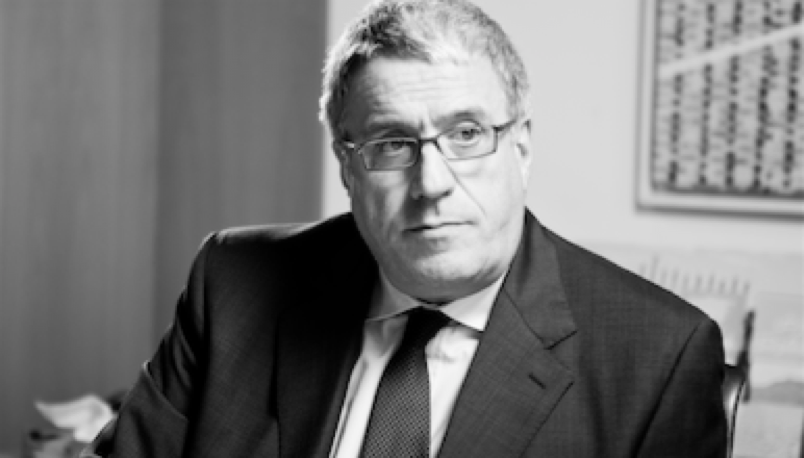
Bank Audi: Freddie Baz, CFO

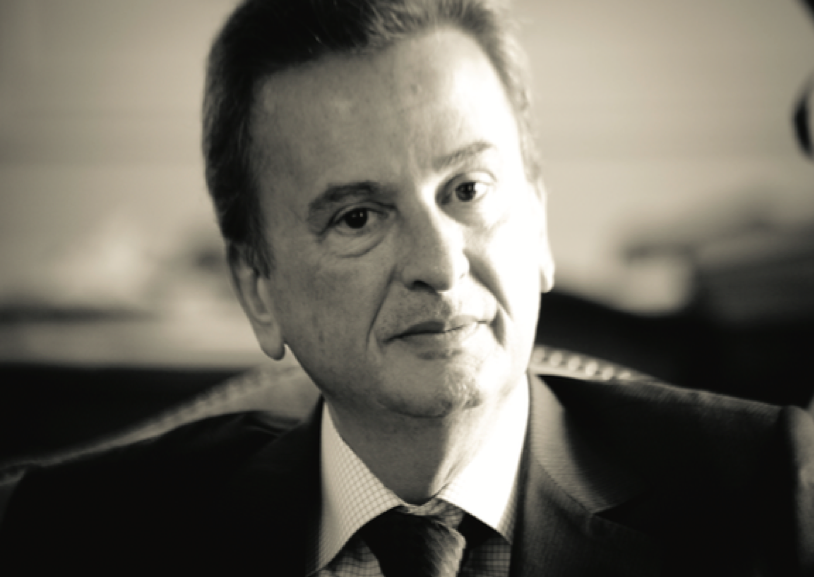
“Lebanon cannot afford a crisis. You have seen what happened to Greece. Greece being a European country, having a strong currency, not having political or security problems, saw interest rates at 40 percent and was on the brink of defaulting, despite all the backing it had from very strong countries and the IMF (International Monetary Fund). Lebanon doesn’t have these advantages so we have to work on building up a real economy, and we have to keep our tradition of commercial banking. We want to have investment bankers and capital markets, but let it be outside of the commercial banking.”

Banque du Liban: Riad Salameh, Governor

“We expect next year to witness a better growth than this year. Regionally, the situation is affecting us negatively, as the instability is leading to lower growth. However, over the medium to long term, as the situation improves, stability is regained and economies enjoy more openness, the impact on us will be positive. It may also open doors for us to expand in other countries.”

BLOM Bank: Saad Azhari, Chairman

“Lebanese banks are proving to be resilient so far to what is happening in Lebanon, in the region and over the world. Going into 2012, we have a lot of concerns: how things will develop in Syria is very important and critical for the banks and how the Lebanese government will tackle the budget deficit and the issue of the Special Tribunal for Lebanon. Lebanese banks are already very conservative and will continue to be so next year.”

Byblos Bank: Alain Wanna, Deputy General Manager – Head of Group Financial Markets Division

“I think the banking sector will remain stable during 2012, and I don’t believe we will see very interesting local growth opportunities. The challenge for the banking sector will be how to continue the high pace of growth. ”

BankMed: Khaled Zeidan, General Manager of Securities & Structured Products at MedSecurities

“In the current situation it is very difficult to make a forecast and see exactly what will happen tomorrow in Lebanon and the region; 2012 will definitely be a tough year. The situation in Syria is a concern, elections are coming up in the United States and in France, and the European crisis will continue and will have a strong impact. With all this, one will have to be cautious.”

BLF: Walid Raphael, Chairman

“I think great companies as well as great banks are built during tough times, so for me these times present both an opportunity and a challenge for Lebanese banks. If they know how to weather the crisis, especially the banks exposed to countries such as Syria and Egypt, and even Jordan to a certain extent, they will emerge stronger. All these troubles will end, and when they do the banks will  probably be able to grab the opportunity.”

FFA: Jean Riachi, Chairman

“There is still an increase in deposits in the banking industry, which is a sign of confidence in Lebanon. If you look at the rates paid on the Eurobonds and the rate achieved on the latest Eurobond issued in May 2011, you can see the rate has dropped and not increased. That’s really a sign of confidence in Lebanon.”

HSBC: Francois Pascal de Maricourt, CEO Lebanon

“Going into 2012, I am quite optimistic about the banking sector in Lebanon, and I think economically Lebanon will fare much better next year. I am not worried about the outcome from Syria as I think we have already seen the worst and I only see things improving. The main opportunity looking forward will be the development of the capital market in Lebanon. The new law passed in August will definitely help.”

AFS: Sami Akhras, CEO

“I wish for economic prosperity and political stability so that Lebanon can continue to prosper and grow to the best of its ability. We have a strong banking sector and a strong regulatory environment; there are always opportunities for growth. Unfortunately, growth this year has been affected by lots of events but, I hope that we will go back to the growth momentum we enjoyed in previous years.”

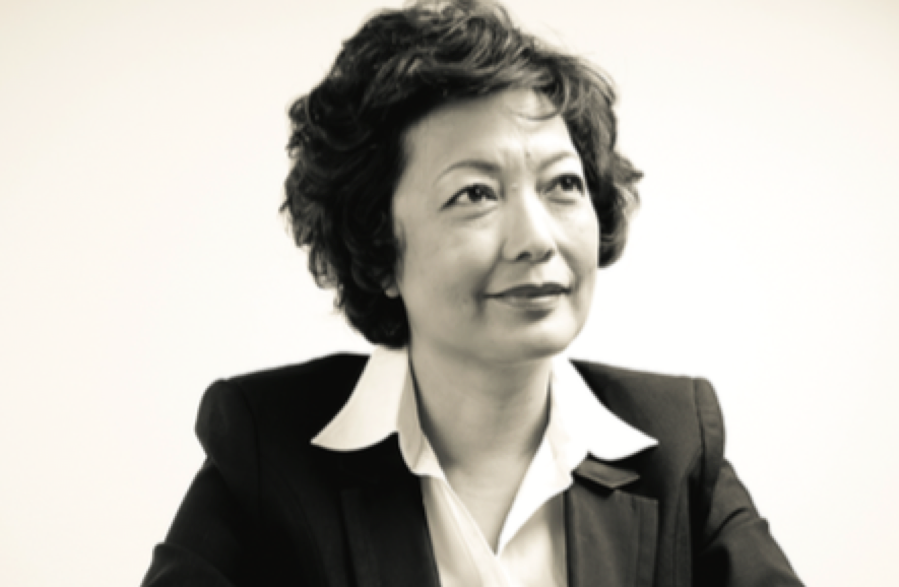
Standard Chartered: Pik Yee Foong, CEO Lebanon

Credit Agricole: Mario Jamhouri, General Manager

“[For private banking portfolios] in terms of investments, cash in 2011 was king and bonds and commodities were also part of clients’ allocation. In the middle of a crisis people look for real assets, as witnessed by the real estate boom we saw in the past years in Lebanon. We are seeing our clients invest in real estate in Europe as well, as part of their asset allocation.”

December 25, 2011 0 comments
0 FacebookTwitterPinterestEmail
Editorial

Pride, if nothing else

by Yasser Akkaoui December 25, 2011
written by Yasser Akkaoui

The year began with hope — it was contagious after seeing Tunisians rise up and send the tyrant Zine el-Abidine Ben Ali fleeing the presidential palace for exile in Saudi Arabia. Next came Egypt, where the awe-inspiring resolve of millions of Egyptians not to yield Tahrir Square to the regime’s security forces and thugs led to the removal of President Hosni Mubarak.

However, nations of people rising up for the freedom to claim their own destiny was a veneer that became sullied shortly after the beginning of the Libyan revolution. As the NATO bombing campaign ramped up and global powers began jockeying for position in anticipation of the post-Qadhafi era, the work of foreign hands pulling strings in Arab affairs again became apparent.

Given the strategic importance of Bahrain to Western powers, the Saudi decision to invade and crush the uprising there could not have been made in a vacuum; Ali Abdullah Saleh’s dubious cooperation with the West against Al Qaeda led to the continued support for his regime,  long after its brutality against protesters was exposed, while Syria, at the crossroads of a myriad of Middle Eastern conflicts, is a veritable playground for foreign interference from every direction.

But look around the world in 2011 and it is no longer clear that the global powers know what they are doing anymore. Currencies and economies are crumbling everywhere while mass public protests have taken hold throughout much of the West. There would seem to be a fundamental reordering of the global geopolitical and economic structures taking place, and with so many moving parts, where the world will settle in five years is beyond any plausible guess.

What is certain is only uncertainty. And, almost ironically, there are few people more schooled at adapting to, and thriving in, instability than the Lebanese — when the sky is falling, who else would think to begin exporting umbrellas?

Whatever the future of the uprisings across the Middle East and North Africa, however, and no matter how foreign influence contorts the counter revolutions, the one thing the Arabs have taken back in 2011, what will not be easily stolen again, is their pride.

December 25, 2011 0 comments
0 FacebookTwitterPinterestEmail
Economics & Policy

Clearing the smoke

by Executive Staff December 3, 2011
written by Executive Staff

Little has improved in Lebanon since Executive’s last year-end report on the environment in December 2010. Air quality continues to deteriorate, urbanization advances almost totally unchecked and water resources remain poorly managed; and these are only a few of the steadily growing ecological problems the country faces.

For years, one of the major problems present in addressing Lebanon’s many environmental issues has been the near total lack of reliable and current data.

It has been more than a decade since the last comprehensive report on the environment here was released, so perhaps the most substantial development of 2011 was not an innovative field project or the passing of new environmental regulations, but rather the publication of a 355-page report titled “State and Trends of the Lebanese Environment 2010”.

The report, released in July by the Lebanese development firm ECODIT, was compiled with the assistance of the Ministry of Environment (MoE) and the United Nations Development Program (UNDP). It includes data culled from the Central Administration of Statistics, local and international non-governmental organizations, as well as various news reports. Together, this will add to the ability to clearly analyze the successes, failures and neglected areas of the environment in Lebanon. It can also serve as a platform from which to promote the adoption of new environmental laws.

Environmental governance

Any substantial changes to existing environmental laws in Lebanon must ultimately gain approval from the top — no easy task considering the epic bureaucratic hurdles of government. Najib Saab, secretary general of the Arab Forum for Environment and Development (AFED), says Lebanon’s biggest environmental issues, “such as air pollution, land and water degradation and coastal zones’ deterioration, can be easily solved in the presence of adequate governance, professionalism and vision.” He adds that “environmental matters are managed by amateurs.”

And not only are government agencies highly inefficient — in the case of the MoE at least, they are also understaffed. More than two years ago, the MoE was given approval to hire an additional 23 staff members for various positions, and salaries for an additional 20 contracted technicians were to be paid in part by a grant from the Italian foreign ministry’s local outreach arm, Italian Cooperation for Development in Lebanon. With government bureaucracy a chronic problem in Lebanon, on the surface, adding more staff to a ministry seems like an unwise decision. But adding analysts, technicians and other specialists to a long neglected ministry could be of great benefit in the future. To date, most of these positions have not been filled. [See Q&A with Minister of Environment Nazem Khoury on page 216]

Another urgent problem is the lack of an environmental law enforcement body. Without one, the task of enforcing regulations, cracking down on violations and monitoring and carrying out court rulings falls on municipal police departments and the Internal Security Forces — both of which have other priorities. The addition of even a modest environmental police force in Lebanon could begin a process of changing people’s attitudes toward the environment. “If the government would enforce laws, say, against throwing trash on the side of the road, I think Lebanese people would stop doing this because they don’t want to pay fines,” says Capricia Chabarekh, an environmental and air quality specialist at ECODIT.

The MoE has sought assistance from a broad range of NGOs in Lebanon, as Rayan Makaram, Greenpeace Lebanon campaigner, says: “When the new minister of environment was brought in this summer, right away he asked for feedback from civil society, NGOs and the media. This push toward greater cooperation with the government was a good success. But, it’s just a first step.”

Shortsighted land management

According to Rita Stephan, environmental and land management specialist at ECODIT, one of Lebanon’s most pressing issues is the poor management of its land resources. Given the country’s size, having responsible policies that curb urbanization and regulate land use is all the more urgent.

“We don’t have land for public gardens; we only have land to build towers and big commercial centers,” she says. “We are destroying our land heritage.”

An October 2011 report from the AFED, ‘Arab Environment: Green Economy,’ offers a blunt assessment of the region’s overall disregard for environmental sustainability: “Arab economies continue to unsustainably deplete renewable natural resources, motivated by short-term profits, causing environmental impoverishment of scarce land and water resources while discounting the value of these resources of future generations.” While meant to address the region as a whole, this statement could be used to describe practices in Lebanon alone, too.

And the figures are staggering: “The average annual cost of environmental degradation in Arab countries has been estimated to be $95 billion, equivalent to 5 percent of their combined GDP in 2010,” the AFED report adds. The last time a thorough cost analysis of environmental degradation in Lebanon was performed — 12 years ago by the World Bank — estimates put the cost at roughly $500 million, or 3.4 percent of Lebanon’s GDP.

Seeing potential in solid waste

According to data from the MoE, solid waste management, or the lack thereof, is one of the fastest growing problems for Lebanon. One possible solution, supported by both the UNDP and ECODIT, is the construction of four waste-to-energy (WTE) incinerators in Lebanon. ECODIT’s Stephan points out the positives — increased energy production for Lebanon’s ailing power grid and less solid waste piling up in landfills, among others — but acknowledges some activists and NGOs are against it. Building and maintaining incinerators “is costly and they need to strictly regulate it,” she says. Among the problems is to dispose of the ash produced from burning waste, which can contain highly toxic chemicals and heavy metals that are dangerous to water supplies.

Beginning in 2006, the government was expected to begin the construction of treatment plants and landfills as part of its WTE “master plan”, but it has so far failed to act. And it is not just a matter of building WTE facilities, it is about changing people’s habits, as Stephan explains: “You have to sort the waste well before incinerating it. So we need to reorganize our waste. We should be separating it in our homes.” She adds that “there is no public awareness for separating waste, and this is a major problem in Lebanon.”

Government stalling will cost Lebanon dearly in the near future. According to the ECODIT report, “waste generation in Lebanon is expected to increase by 1.65 percent annually to reach 2.3 million tons by 2030, notwithstanding potential waste recovery from sorting and composting facilities.” It adds, “Waste disposal is particularly difficult in Lebanon because of its rugged terrain and limited surface area.”

According to Saab of AFED, “Waste-to-energy is just one possible component in an integrated solution to the waste management challenge. Until now, the principles of reduction and re-use are totally absent. It’s as if consumers are encouraged to generate more waste. In this context, waste-to-energy is one option. But what is being considered by the ministry is restricted to generating energy through incineration. When up to 80 percent of municipal solid waste is composed of organic material like in Lebanon, many doubts are raised on the efficiency of combustion, how much energy it produces and how many pollutants. High content of wet organic material is not good for burning, will need addition of fuel to blaze and generates minimal energy.”

“We haven’t seen a study of an option comprising generating energy from organic waste, utilizing digestion to obtain methane. This might be the better option in the Lebanese case. Environmental affairs, including waste, are run by pretentious amateurs or shrewd salesmen,” Saab says.

The issue of waste-to-energy incinerators is highly divisive, with NGOs and activists who are against incinerators pitted against the Ministry of Environment and UNDP who support their construction. According to Makaram of Greenpeace Lebanon, “Our stance is that incinerators are still incinerators — they encourage the production of waste rather than the reduction of waste. Around the world, countries are shutting these incinerators down, and now we want to build them in Lebanon? The global trend is to close down. If we build these in Lebanon, we’re going against science and global trends.”

Additionally, the AFED report estimates that “greening the waste management sector would save Arab countries $5.7 billion annually.”

On the horizon

While there were significant steps taken to improve the environment in 2011 (such as the passing of the National Water Sector Strategy in April), tangible improvements have yet to be seen.

With assistance from the UNDP and NGOs, the government has several major environmental projects on schedule to begin in 2012. Jihan Seoud, environment and energy program associate for UNDP in Lebanon, says that a program with the ministry that will work toward reducing ozone-depleting substances will start next year.

The water sector strategy will be looking at options for renewable sources of water for Lebanon, as well as studying the effects of climate change on supply. “It’s quite comprehensive,” Seoud says. “Of course, implementing the strategy and finding the funding to do the work required is another story.”

The World Bank, in its June 2011 Country Environmental Analysis states that Lebanon is set to meet five out of eight Millennium Development Goals (MDG) set out by the United Nations by 2015. Among the three that are predicted to fall short is the reversal of environmental degradation, or as the report calls it, the Ensure Environmental Sustainability MDG.

So, while there is always more that can be done to improve environmental conditions across Lebanon, 2011 could be looked back on as a turning point in the understanding of the most crucial issues. Now it is up to the policymakers to act.

December 3, 2011 0 comments
0 FacebookTwitterPinterestEmail
Finance

Performance of Lebanese banks in 2011

by Maya Sioufi December 3, 2011
written by Maya Sioufi

Lebanese banks had to prove their resilience once again in 2011, though instead of dodging a global financial crisis, this time around they had to navigate a five-month government stalemate, the undoing of Lebanese Canadian Bank (LCB) and the continuing Arab revolutions.

For the first nine months of 2011, assets, deposits and profits all grew, albeit at much lower rates than those enjoyed in previous years. The total assets of the Lebanese alpha banks — the 12 banks with deposits in excess of $2 billion — stood at $143 billion, a 6 percent year-to-date growth, but a slowdown on the 11 percent growth in 2010 and 22 percent growth in 2009.

In February, the United States Department of the Treasury designated LCB as a “financial institution of prime money laundering concern,” accusing the bank of laundering hundreds of millions of dollars for a Lebanese-Colombian drug baron with links to Hezbollah, which Washington has designated as a terrorist group.

LCB was eventually bought out by Société Générale de Banque au Liban (SGBL) for an undisclosed amount, although banking sources in Lebanon put the figure at around $500 million.

The ordeal shook Lebanon’s banking sector, but several leading industry officials with whom Executive spoke said they were optimistic that there would be no recurrence of incidents of this sort.

“Definitely LCB was a big event, which was a concern for the market, but it was handled and now hopefully it is behind us,” says Walid Raphael, general manager of Banque Libano-Française (BLF).

Indeed, the general consensus is that the LCB debacle has nurtured, by necessity, a new culture of accountability on the road to transparency. “I think it was an individual case, and I think most banks have learnt a lesson,” says Jean Riachi, chairman of FFA Private Bank. According to Freddie Baz, chief financial officer at Bank Audi, “Important banks in Lebanon know their responsibilities and duties in terms of compliance.”

“LCB is an event that triggered some kind of extra focus,” he adds. “These crises can happen and they can quickly be resolved without collateral damage.”

But the Lebanese banking sector remains on the fence with regards to Syria, where the outcome of the uprising is still far from certain. While most in the industry say the impact on Lebanese banks has been contained thus far, they remain concerned going into 2012.

The US is also monitoring the Lebanese banking sector’s cooperation with Syria, and its official warning came during the visit in November of Daniel Glaser, the treasury department’s assistant secretary focused on illicit financing. He cautioned the Lebanese monetary authorities that banks in Lebanon were at risk of being blacklisted if they helped Syria dodge international sanctions.

“I think in 2012 the predominant local theme will be the Syrian situation. The impact has been contained so far,” says Khaled Zeidan, general manager at MedSecurities. 

“The issue is you never know what might happen tomorrow in terms of sanctions,” BLF’s Raphael says with regards to Syria.

According to Baz, Bank Audi’s assets in Syria shrunk by one third due to withdrawals of deposits but he casts doubt on an assertion made in a November Financial Times article stating that a continuous flow of Syrian money is being smuggled into Lebanon. “Audi is the largest bank in Lebanon, with the largest deposit base, and we have not seen any material deposit from Syria over the last nine months,” he explains.

But aware of the potential for further sanctions, banks claim they are taking measures to protect themselves. Francois Pascal de Maricourt, chief executive officer of HSBC Lebanon, said: “When we can not have a proper assessment of the origin of the funds and when [they] could put the bank at risk, we have to turn down some business and I believe most of the banks in Lebanon are very careful and are doing the same.”

In fact, deposits, which stood at $118 billion at the end of September 2011, only grew by 5 percent year-to-date, compared to the 2010 rate of 12 percent and the 2009 rate of 24 percent. Profits grew by a marginal 1 percent to reach $1.2 billion, which fades in comparison to the staggering 25 percent increase in profits in 2010 and 18 percent in 2009.

The three largest Lebanese banks with branches in Syria — Banque BEMO Saudi Fransi, Bank of Syria and Overseas (member of BLOM Bank) and Bank Audi Syria — saw their assets fall by an average of 24 percent and deposits drop an average of 29 percent through the first three quarters of 2011.

Beyond the region

Looking beyond Syria and other regional turmoil, the European sovereign debt crisis has dominated headlines throughout the second half of the year and severely shaken the global markets. However, its impact on the Lebanese banking sector has been minimal. Banque du Liban (BDL), Lebanon’s central bank, has strict regulations on local banks which, “In normal times restrict our capacity to originate profitability but in difficult times act as important buffers,” says Bank Audi’s Baz. For example, banks are forbidden from investing more than 50 percent of their equity abroad and require that only investment grade fixed income be held in banks’ portfolios.

“Banks are very conservative when it comes to investing customer deposits. We do not speculate… so we didn’t see a major impact from the European debt crisis,” said Alain Wanna, deputy general manager and head of Group Financial Markets at Byblos Bank. In addition to imposing stringent restrictions to minimize volatility, BDL maintains stability through its stash of foreign currency reserves, $31.3 billion as of the end of July 2011, and its gold reserves, which reached $17 billion as of mid September, the second largest in the Middle East and North Africa region after Saudi Arabia. BDL governor Riad Salameh, whose term was renewed for a fourth time in July, has said he intends to keep the gold reserves to protect the economy from regional unrest.

“Lebanon is immune to what is happening in Syria and worldwide because of the model we have, which is a highly liquid, prudent approach to credit and low leverage,” said Salameh at a September meeting of Arab central bank governors in Doha, Qatar. Loans provided by banks in Lebanon still increased despite the challenges faced in 2011. In fact, lending at alpha banks increased by 13 percent year to date, a slowdown relative to the 25 percent increase in 2010 and 16 percent in 2009, but still a strong rate given the obstacles encountered this year. In spite of the continuous increase in lending, a survey completed in July by The Banker magazine revealed that Lebanese banks had the lowest loan to deposit ratio among the 1,000 commercial banks analyzed globally.  “Who would you lend [to] in the absence of growth in the economy and a real government program to promote entrepreneurship?” asks Zeidan.

According to Saad Azhari, chairman of BLOM Bank, the figure that should be looked at is loans to gross domestic product: “Usually in underdeveloped countries, the ratio of loans to gross domestic product varies from 40 to 60 percent. In developed countries, it is between 80 and 90 percent.” Lebanon’s loan-to-GDP ratio is just over 90 percent.  Furthermore, Byblos’ Wanna argues, loans to the public sector should be factored in to the loans-to-deposit ratio, noting that, “all banks have large portfolios on the government, whether in local or foreign currency.”  According to the most recent report by the Association of Banks in Lebanon, claims by commercial banks on the public sector as of the end of August stood at $28 billion and claims to the private sector at $39 billion.

Of potential consequence to deposit flows is a measure within the pending draft budget proposed by Finance Minister Mohamad Safadi in October, which calls for a raise in the tax rate from 5 percent to 8 percent on the interest of deposits. The probable impact is not clear but it has sparked heated debate within the banking sector.

FFA’s Riachi is not concerned about the proposal. “I don't think it will affect flows, and I think people will think in terms of net interest and see where their advantage is relative to other banks.” 

But some are worried about the measure’s timing. “We are [already] witnessing lower growth of deposits and lower capital inflows. It is not a disaster but it is not the right time,” says Azhari.

“I think fresh capital will remain hesitant for some time. You don't introduce something like this during difficult times, particularly when there appears to be many challenges ahead, and when investor and consumer confidence are in a period of retracement globally,” says Zeidan.

The road ahead in 2012

The International Monetary fund has projected 2011 growth in Lebanon to be 1.5 percent. The prospects for limited growth can be further reflected through low consumer confidence. Household spending accounts for 79 percent of Lebanon’s GDP, according to Byblos Bank, and a recent consumer confidence survey undertaken by Byblos and Olayan School of Business reveals that consumer confidence has been consistently falling since 2007 and reached a low in August 2011. 

Looking towards 2012, and with excess liquidity sitting idle on banks’ balance sheets, the banking sector is hungry for growth opportunities. The prospects of deploying further capital in Lebanon seem poor, as expectations for 2012’s GDP are dim. The IMF is forecasting a pick-up to 3.5 percent but banking experts are concerned as many obstacles still lay ahead, namely political uncertainties such as disputes over STL funding, approving the draft budget and unresolved turmoil in Syria. 

“The real issue for the banks will be how to continue on growing after the exceptional period they have been enjoying for the past years. Further expansion in other markets may be one of the solutions to be explored,” said Zeidan. Case in point: Bank Audi’s new license to operate in Turkey. According to Baz, it is the first bank in 14 years to acquire a banking license in Turkey.

Despite riding the challenges of 2011 relatively unscathed, it is critical for the banking sector in Lebanon, which still sits on big piles of cash, to hunt for future growth opportunities — a precarious task in an environment of political instability both locally and regionally. 

December 3, 2011 0 comments
0 FacebookTwitterPinterestEmail
Business

A name you can trust

by Executive Staff December 3, 2011
written by Executive Staff

The role of branding products to increase their value and profitability is given serious import in the commercial world. Building familiarity, trust and loyalty to brands is at the core of every marketing team’s role. But what value is there for producers in branding a whole economic sector or even a whole nation?

According to independent Policy Advisor Simon Anholt, it is “fundamental.” As a pioneer of the idea of nation branding, he now advises governments, civil society and private corporations on reputation, investment promotion and national identity. Talking about the importance of a nation’s image in attracting investment from abroad he says, “Even very serious, practical-minded professional investors are influenced by these so-called ‘soft factors’ to a considerable degree.”

Government and business both share responsibility in the quest for a more commerce-friendly countenance. Charles Arbid, president of the Lebanese Franchise Association, argues that Lebanese industrialists need to develop the concept of branding on an individual and collective level. “We cannot sell anymore in the local market or export if we don’t work on the quality assurance in our products, and this has to be done through branding,” he says. 

Government, meanwhile, is involved, both implicitly and explicitly, in promoting the image of Lebanon as a serious industrial player.

Diana Menhem, an economic officer with the United Nations Development Program in Lebanon says, “When you are dealing with the reputation of an entire industry it is very different than dealing with the reputation of a particular product… It is the responsibility of the government and the stakeholders to increase the visibility of the entire sector.”

Quality control

With this comes an understanding that it only takes one rotten apple to ruin the barrel. That is to say, if the respect and recognition of Lebanese industry is to be developed and maintained, there has to be quality assurance across the board.  It is incumbent upon organizations such as Libnor, the Lebanese standards institution, to ensure that the quality standards for Lebanese products are rigidly enforced. “If you have one product that is substandard, the reputation of the entire industry will go down with it,” says Menhem.  “It is the responsibility of producers to realize that if they don’t adhere to the quality standards, the reputation of their products will really go down and they won’t be able to export anymore.”

It is not just the reputation of an industry’s products but also the image of the whole country that determine both the allure of Lebanese industry as a viable investment destination and the desirability of its products in the marketplace. Anholt argues that expensive branding strategies are almost always a complete waste of money when it comes to developing a national image. The trends in his survey, the Anholt-GfK Roper Nation Brands Index, reveal that the inestimable billions of dollars spent by nations trying to change their global image have absolutely no correlation with the perceptions of ordinary people around the world.

“Grand strategy is infinitely more important than brand strategy: the country needs to know where it’s going in the world and how it’s going to get there,” says Anholt.

Lebanon’s failings in this regard are cause for considerable disquiet for Nassib Ghobril, head of economic research at Byblos Bank, who laments that the economy is subordinate to politics. “The economy has been suffering from the political challenges but [it] is secondary to the political crisis,” he gripes.

While Anholt is dismissive of branding campaigns as tools to enhance a nation’s image, he is emphatic on the importance of political and social stability. With upheavals ripping through the political and social fabric of several nations in the region, and not without significant economic consequence, his advice is particularly pertinent.

“Unstable countries should worry more about becoming more stable and less about how to convince people that they are stable,” Anholt says. “Unequal countries should think about how to create more equality, not how to persuade the world that they are equal.”

Industrialists and government-related agencies, such as IDAL and Libnor, share in the task of increasing visibility, improving standards and building trust in Lebanese products. As for the nation’s lawmakers, perhaps the best way they could support ‘Brand Lebanon’ would be to engage in a little less talk, a lot more action and dedicate themselves to some steady and stable governance.

December 3, 2011 0 comments
0 FacebookTwitterPinterestEmail
Economics & Policy

Theory of evolution

by Executive Staff December 3, 2011
written by Executive Staff

Telecommunications in Lebanon has come to embody the fault line along which Lebanese business and government split. While the people who use the communications networks try to progress and join the information age, the sector has lain dormant for years because of both publicly-owned, ineffective infrastructure, and political scuffles over who should control Lebanon’s most profitable public service. In 2011 the plates on either side of this fault shifted, sending economic shockwaves, both positive and negative, throughout the economy.

It all started in January when the then-caretaker Telecommunications Minister Charbel Nahas announced that third generation mobile Internet (3G) would be introduced to the country. 3G technology is a means of incorporating high-speed Internet with mobile devices such as smartphones or using a ‘dongle’ to enable users to access the service on their computers the way they currently use other wireless Internet products, such as the pervasive Mobi and Wise Box. In September, Nahas (by then labor minister) promised speeds averaging 7 megabits per second (Mbps) and up to 21 Mbps. That would equate to 27 times faster than the speed available at the time via a digital subscriber line (DSL), 70 times faster than those available using the general packet radio service and 500 times faster than those available to ordinary cell phone subscribers, according to Nahas.

The initial deadline set by the previous minister was missed. But by mid-November both of Lebanon’s mobile networks had introduced the service to the public. Even so, the average speed of 7 Mbps was not to be.

“It is a work in progress,” said Claude Bassil, general manager of MTC Touch, one of Lebanon’s two mobile telephone operators, owned by the Kuwaiti telecoms giant Zain. “I cannot promise you that the wireless transmission network, meaning the microwaves, will be capable of providing the maximum capacity [21 Mbps] that the sites can handle,” he said in an interview with Executive. Bassil admitted that it will take a year for the network to reach the promised speeds because the transmission networks between the cell towers that correspond with phones and the Internet network are not optimized. 

In the interim, mobile operators will have to connect to existing fiber-optic cables, a process that will take months, according to Bassil. Even when that happens, without a complete fiber-optic network installed in the country — something only the government is legally allowed to do — the full potential of 3G will not be reached.

Ogero and Ministry of Telecoms

The 3G project was made possible by an undersea Internet cable dubbed the ‘India-Middle East-Western Europe 3’ (IMEWE3), which has finally been opened up to Lebanon. It was originally been scheduled to come online in March 2010. 

The IMEWE3 cable has a total capacity, shared between the many countries connected, of 3.84 terabytes per second. Lebanon’s allocation is 120 gigabits per second (Gbps), up from around 2 Gbps before the IMEWE3 opened up, with the potential to be upgraded to some 300 Gbps at a later stage. The problem with the cable was, perhaps predictably, politics.

Abdulmenaim Youssef, the head of Lebanon’s publicly-owned fixed line operator Ogero, refused to hand over administration of the cable to Minister Nahas in 2011. Ogero is financially and administratively independent of the ministry and has, for the past several years, been at loggerheads with telecommunications ministers, who have been members of the Free Patriotic Movement, which opposes Youssef. Conveniently, Youssef also occupies the post in the ministry that is supposed to oversee Ogero, something also granted by a previous cabinet headed by the opposition. Speaking to Executive in September, he argued that this is not a conflict of interest because the ministry has annulled all contracts with the company because of a dispute over the way invoicing and receipts were conducted; this, however, was not always the case. 

According to Youssef, Ogero was appointed to carry out negotiations on the IMEWE3 project by the Council of Ministers. The ministry rejects this as they claim that ‘Ogero Telecom’ — the company listed on the contract with IMEWE3 consortium — was never a commercial company and thus control of the cable should have been returned to the ministry. Even so, Youssef said that while the cable may have been ready for operations in December 2010, a commercial agreement had to be worked out by Ogero in Marseille (where the cable ends) to transfer data from there to the rest of the world, something that was completed in May. 

Youssef, who in the past was close to the current opposition and is now believed to be supported by Prime Minister Najib Mikati, is in charge of doling out the necessary international capacity to companies such as service providers MIC1, MIC2, the digital signal processors (DSPs) and the Internet service providers (ISPs) at the telecom ministry. This is done by distributing 2 Mbps bandwidth packages to those who request them.

The ministry recently decreased the price of such packages from $2,700 to $420, ostensibly to facilitate the expected consumption increase and sell them to private sector providers. According to the current telecom minister’s advisor Firas Abi Nassif, 10 Gbps of extra capacity have already been opened up through the IMEWE3 cable. This freed up a major bottleneck in Lebanon’s Internet infrastructure and allowed for the telecom minister to announce a new pricing and capacity structure that would be implemented on October 1.

Fixed and constant problems

The date came with mixed results. Some people benefited from the increase while others were still waiting as Executive went to print. The reasons for the delay are many and technical, but the heart of the matter is that, while the ministry decides to implement, Ogero actually carries out the implementation. The ongoing row between the two government bodies has in effect left people waiting and the promises unfulfilled.

Habib Torbey, president of the private sector Lebanese Telecommunications Association (LTA), explained that many of the problems are related to the transmission network between cabinet offices   — equipment in each neighborhood that connects users to the system. “The users that the [Internet Service Provider] has put on the Ogero [infrastructure] have a problem and this is where things get stuck,” he said. “We see a huge delay in the upgrade and we don’t have a lot of visibility as to when this upgrade will occur. Even when it happens, it’s up to 1 Mbps. They are not giving us 2 Mbps and 4 Mbps.”

“Every few days they upgrade four or five [cabinet offices],” he said, adding that he estimated the upgrade to be around 25 percent complete.

Based on current rates, Torbey estimated it will take around six months for the private sector to be let into all the cabinet offices.  Private sector entities have only been allowed into more cabinet offices since November 2010. According to a statement issued by Minister of Telecommunications Nicholas Sehnaoui, the process aims “to break the grapple hold over the private sector by a political group represented by people in the [ministry’s] administration,” a clear reference to Ogero and Youssef, whom the minister has not met with since taking office.

The problems between the two sides also manifested themselves in a lack of modems for new Internet subscriptions and call cards for payphones because of the dispute over Ogero’s budget, which comes through the ministry. The minister has now found a way to issue both through the postal office but, if history is anything to go by, the row seems far from resolved. ­­

The structure

The telecoms industry is still the only public service that is partially privatized, but only on the retail end. This is because the law that is supposed to govern the sector is not fully applied, resulting in a market landscape where the regulator, the Telecom Regulatory Authority (TRA), cannot fulfill its prerogatives or be financially sustainable because it cannot sell the infrastructure licenses that the private sector seeks. Thus, at the end of the day, the TRA and the private sector remain dependent on the ministry, as do public finances. In February 2012 a new board of the TRA will have to be appointed by the cabinet, something that took five years the first (and last) time around.

Give me my cash cow

By August the revenues of the telecom ministry had reached $961 million and the finance ministry’s telecom revenues are predicted to hit $1.2 billion this year, even after it pays off all its contracts and dues. Making sure that the ministry keeps raking in the money for Lebanon’s cash-strapped government has been the driving force behind sky-high prices for telecom services.

Now there has been an agreement between the finance minister and the private sector to keep government revenue stable in order to decrease prices. “Basically what they agreed with us is that they can reduce their prices, and we are for it,” said Finance Minister Mohamad Safadi in an interview with Executive. “In the end we feel that the revenues are not going to be less and there is a very big chance that they will [rise]… because of increased usage. The intention is to open the market [to the private sector] at the end of the day.”

What that will require is that the minister issues his ‘general policy’ so that the TRA can exercise its right to issue long-term licenses to the private sector, which can then start investing in long-gestation infrastructure projects and bring prices down. The law also stipulates the formation of a corporatized company called Liban Telecom that would replace Ogero and would be able to set prices and standards according to business realities and circumstances.

If this does not happen, the progression of government-run 3G, the inclusion of a new fiber-optic backbone due to arrive in September 2012 and a large discrepancy in operating costs due to government-imposed measures (such as a 20 percent revenue share) will likely box-out the private sector because they will not be able to compete.

One company, Cedarcom, jointly owned by Minister of State Marwan Kheireddine and the son of a former telecom minister, has already submitted a case in Lebanon’s highest court over the government’s 3G project because they claim it will destroy their business. The court already ruled that the government had to stop 3G for one month in 2011 to adhere to a request for information. Now the 3G project is back on and the clock is ticking. Other private sector companies are also worried but are looking for a compromise in the form of a Mobile Virtual Network Operator (MVNO) contract, an industry term for a company in agreement with the owners of a telecom asset that performs services ranging from complete resale to merely offering back office services. LTA’s Torbey confirmed that he was still in negotiations but refused to comment on the level of progress. In the end, no matter what the outcome of the case or the MVNO, if the law is not applied, the direction the telecom industry takes in 2012 will likely remain subject to the political winds of change rather than any plotted economic course.

“I sincerely hope that we put new polices and regulations in place to allow the private sector to play,” said Bassil. “The private sector needs to play a lot in this area and the infrastructure is coming. We are not pretending it’s up to scratch, but it’s coming.”

December 3, 2011 0 comments
0 FacebookTwitterPinterestEmail
Economics & Policy

Q&A – Vrej Sabounjian

by Executive Staff December 3, 2011
written by Executive Staff

Vrej Sabounjian took the reins at the Ministry of Industry in June, taking his experience from the business boardroom to the political cabinet. It has been a bumpy ride for industrialists in 2011 and demands for government leadership and support are high. Executive sat with the minister to find out how he has dealt with his first months in office.

E  You told Executive back in July that you were confident that this government was pro industry, yet there was not a single mention of industry in the draft budget. What positive actions or proposals by the cabinet have shown support for industry?
I think we can say anything we have presented so far has not met any objection at all.  That’s sign enough for me that I have enough support from this government to push ahead with our industrial programs and we are going to sign a lot of bilateral agreements with other countries; it’s coming. We are going to make agreements with Sudan and Armenia and other countries and these agreements will help industry in Lebanon. 

E  The negotiations for these agreements are already underway?
Two are already ready… they will be signed very soon.  

E  With these agreements there will presumably be a decrease in trade barriers. Is this a trend you see developing?
The barriers to trade have already come down as we have moved into a global economy for some time. But the bilateral agreements help facilitate the relations between the two countries and their business people [with] measures such as visa agreements, more flights, accreditations and tax deals so there is no double taxation.

E  Is Lebanon still en route for accession to the World Trade Organization?
Yes.

E  Is that prudent in the troubled and uncertain global economic environment we are currently in?
Prudence is always good but I think we have also to understand we are living in an environment where all borders are opening and trade should be easy and accessible to all parties. But it has also to be fair in the sense that there are some countries which are bigger and stronger and others smaller and weaker, so we have to note those details in the agreements.

E  Can you provide details of the draft proposals you submitted to the minister of finance in relation to the tax exemption on exports?
The answer is very simple: if you manufacture a product in Lebanon and you export it you will be eligible to get a 50 percent tax credit on your profits, [depending] of course on whether the law passes the cabinet. Our tax rate is 15 percent so on your exports you would only pay 7.5 percent. 

E  Is there a time limit on this or would it be indefinite?
No.  It would be indefinite.

E  And how confident are you that this is going to get passed in the cabinet?
I’m pretty confident and I’m also relying on the support of our prime minister [Najib Mikati] and the minister of economy [Nicolas Nahas]. He’s my good friend and we have discussed this issue, and I am also sure the minister of finance [Mohamad Safadi] will not object.

E  Have the committees tasked with creating the nation’s industrial zones been created, as was promised in the ministerial statement?
We are almost finished. There are still some little details, and in a few weeks it will be ready.

E  The plan will be ready or the creation of the committee will be ready?
Both. On the plan we are doing some modifications and the committee is already under study.   

E  There is going to be a committee, or there is a committee?
There is going to be. There is not now. We are forming a committee. We will have a banker, an accountant, an engineer, an auditor and these kinds of people who can bring the maximum contribution for this project.

E  In the draft budget there was no mention of this project.  How do you envisage it being financed?
There are a few ideas which I don’t want to elaborate on now, but I would like to give a chance for the committee to come up with some ideas. We have ideas at the ministry and I have my ideas and I would like the committee to add on those ideas and bring their own.

E  Is the industrial sector able to absorb the blow of the proposed minimum wage increase?
I don’t think the industrial sector is waiting on the increase in minimum wage. I think all business people have already done the necessary adjustments related to inflation. 

E  But there are employees in the industrial sector whose pay would be affected by the proposals…
There are certainly people working close to the minimum wage, and that’s why it is the government’s responsibility to look at it, which we did in a responsible way. The increases are acceptable but I don’t want to elaborate on the percentages because there are differing views.

E  So in theory you support an increase in the minimum wage but not explicitly these figures?
I supported the increase in the minimum wage but I would also say I am not with the idea of increasing wages [other than] the minimum wage. It is the government’s duty to help minimum-wage workers but it should not get involved in any other kind of wages. However, this is my personal opinion and I will support my government whatever its decision is.

E  When you came into office you told Executive you were going to get an additional 25 percent added to your budget. Have you?
There is a problem in all of the ministries concerning their budgets. It’s a fact that we have a problem with the budget. So I guess we will still try to help the ministry of finance but at the same time we have to find a way to help our ministry because we really need the increase in budget.

E  But as of yet you have not received the 25 percent you were hoping for?
Not yet, no. The budget has been put to the cabinet and each minister is looking at it and is going to go back with his comments.

E  And yours will be?
I will stick to my plan. I will definitely ask for my 25 percent. 

E  How have the events across the border in Syria impacted Lebanese industrialists?
I’m sure some sectors or companies that had large business with Syria will have been impacted, but if that is the case then I advise them to take this opportunity to find new markets. They should not consider this as a setback but as an opportunity to find other markets.

E  With regards to the proposed electricity law, does it go far enough in addressing Lebanon’s energy infrastructure crisis and can industrialists be assured that there is the political will and ability for it to be delivered?
I think Lebanon has stability now. I think you could say we are one of the most stable countries in the Middle East. 

E  You’d hope so!
[Laughs] As for electricity, we have passed this law and, yes, we will have a much better electricity situation a year and a half from now.

E  You have encouraged industrialists to establish their businesses in the north, south and Bekaa, outside of the industrial heartlands. What incentives exist for them to do so?
If you move to the north or south the land is much cheaper and you can find lots of minimum-wage workers in those areas. You have more space…

E  Does the government have a role to play in the regionalization of industry or is it something that has to happen naturally?
It has to happen naturally. It is natural to expand.

E  How will the industrial sector have to adapt over the coming years if it is going to remain internationally competitive?
Governments don’t make companies competitive. I advise every chief executive officer or president or owner to have a good vision and be flexible. Times now benefit those who are flexible. Drop things that are not profitable, keep your ego away and be objective. I encourage Lebanese business people to be open-minded with regards to merging, which is still not much in the culture of the Arab world.

E  How would you sum up your first several months in office?
I am working hard but I will leave the assessment to others. I am working hard to finish my ideas. I am trying to finalize licenses and encourage people to come and do whatever they need from the ministry as soon as possible. We’re finishing their requests in a very short period of time… One more thing: we are planning to bring to the schools and the colleges [a program] which will give the students a chance to know more about industry in the country. I want the Lebanese to have trust in their industries and to have faith in a productive Lebanon and not just commerce. Look at some of the countries in Europe that depended too much on services and tourism. Shouldn’t we learn from that?

December 3, 2011 0 comments
1 FacebookTwitterPinterestEmail
Comment

A myriad of moving pieces

by Nicholas Blanford December 3, 2011
written by Nicholas Blanford

The tumultuous start to 2011 with the collapse of the Saad Hariri government in Lebanon and the establishment, after several months of hard bargaining, of a new administration headed by Najib Mikati did not bode well for stability and economic improvement. But as the year draws to a close, the Mikati government has fared better than its detractors predicted.

The Tripoli businessman took a gamble by accepting the premiership in January, something of a poisoned chalice for a Sunni given the acrimonious manner of the ousting of Hariri, the leader of Future Movement and the pre-eminent Sunni political leader. Although Hezbollah engineered the downfall of the Hariri government and remains the quiet power behind the current government, Mikati has shown that he is no puppet of the Shiite party.

He has a reputation and international contacts in his own right, which in some ways make him a more useful partner for Hezbollah than an obedient drone.

One example is the debate over Lebanon's share of the funding for the Special Tribunal for Lebanon (STL), which has dogged the political debate since the summer. Hezbollah has consistently said it opposes Lebanon paying its 49 percent share of the funding, a rejection echoed vociferously by the party's allies, especially Michel Aoun. Mikati, however, has assured the UN that Lebanon will honor its obligations and pay its share, going so far as to threaten resignation over the matter, and eventually fund it through a government body under his authority.

A Mikati who retains international credibility and is allowed to win some political tussles is not a threat to Hezbollah. On the contrary, Hezbollah is likely to pick its battles with the STL with care.  Hezbollah clearly will stick to its stance of rejecting the STL funding, but that does not mean the government will follow suit.

Still, the STL funding issue is a mere hiccup compared to the historic events roiling Syria. There is a feeling in Lebanon that if Syria continues its descent into violence, it will inevitably spill across the border into Lebanon. Barely a day goes by without the local press reporting rumors of assassinations or militants arriving in the Palestinian refugee camps plotting nefarious deeds. The government faces the dilemma of juggling its loyalty toward the Assad government and accepting the reality that the regime may well founder in the coming months. The former stance will spare the government Assad's wrath but the latter will reshuffle the political cards in Lebanon in potentially dangerous ways.

Generally, international and regional players recognize the dilemma facing the Lebanese government and cannot be surprised when Lebanon is one of only three countries to vote against an Arab League proposal to suspend Syria's membership in the organization. Burying one's head in the sand is an essentially Lebanese means of dealing with unpalatable problems. But the influx of Syrian refugees escaping the violence and the prospect that some Sunni-populated areas in Lebanon near the border could become small-scale staging grounds for Syrian opposition fighters and activists will complicate Lebanon's ability to distance itself from the upheaval next door.

It is inevitable that Lebanon will feel some of the shockwaves emanating from Syria in the coming months, particularly if the struggle develops further into a sectarian conflict. But the real earthquake for Lebanon could occur if and when Assad is toppled, especially if the next regime better reflects the Sunni majority in Syria and aligns itself further from Iran and closer to Saudi Arabia and Turkey. Such a development will give a boost of adrenaline to the March 14 movement, especially Future Movement. Would it sufficiently embolden them to make a fresh play at confronting Hezbollah, which, after all, will still remain Lebanon's strongest military and political player even without the strategic depth provided by an Assad-led Syria?

Hezbollah has a habit of reacting forcefully and decisively against any moves that threaten its resistance priority and the party will already have made plans to counter a reinvigorated March 14. Much depends on the tenacity of Assad to remain in power and how a deteriorating Syria will impact more broadly on the region. But 2012 appears to be shaping up to be a most interesting — and potentially unsettling — year.


NICHOLAS BLANFORD is Beirut correspondent for The Times of London and The Christian Science Monitor.

December 3, 2011 0 comments
0 FacebookTwitterPinterestEmail
Society

Fast rides on rocky terrain

by Executive Staff December 3, 2011
written by Executive Staff

Minimal economic growth and lower purchasing power have affected sales of luxury cars to a greater degree than the rest of the market, with the segment down by an estimated 30 percent to 40 percent on last year.

“The potential buyer of a BMW, Mercedes or Maserati isn’t buying, not because they don’t have cash but because they are not economically comfortable in the current situation,” said Nabil Bazerji, managing director of GA Bazerji and Sons, a Maserati dealer. Sales of the luxury Italian car are down roughly 25 percent from 26 cars in 2010 to 20 this year. BMW sales have dropped by more than 50 percent, from 816 units to 396 as of October 2011, while Jaguar had sold 99 units in the same time, compared to 200 at the end of 2010.

“We have demand but it has not been an exciting year,” said Michel Trad, Director of Saad & Trad, dealer for Fiat, Abarth, Jaguar, Bentley and Lamborghini. Only eight Bentleys were sold this year, compared to 22 in 2010, and just one Lamborghini. Trad is hoping a new convertible Bentley model will boost sales next year. The company is also the sole distributor for British super car McLaren, which launched its long-awaited new model, the MP4-12C, in Dubai in November. 

What made surprising inroads is a compact designer car, the Gucci Fiat 500. “Lebanon was the only place that got the Gucci 500 outside of Europe, as Fiat thought Lebanon was a trendy place to sell,” said Trad. “You won’t find 100 on the roads — only around 10 and a max will be 25.”

Warding off potential buyers of super cars is a tax of 63 percent, equivalent to a minimum of $150,000.

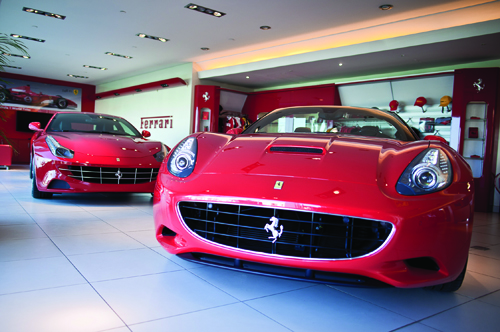
“With such high taxation, customers expect something in return, such as good roads free of pot holes,” said Marie-Claire Chammas, marketing manager of Sports Motor Group, exclusive distributor of Ferrari. “As a result, our main competitors are the Gulf countries, as tax is only 5 percent there.”

But this has not held sales back for Ferrari, which are up 200 percent since 2009, with the company selling around 40 cars per year.

“For us, the luxury segment is getting better. None of our competitors have even a third of our sales. There is a two year waiting list for the 458 Spider, and nine to 14 month waiting list for other models,” said Chammas.

Pushing sales has been the Ferrari California, a two-door, four seat sedan. “The California has attracted new clients,” she said. “Before, Ferrari drivers were all about racing, but the California is more about lifestyle and is more versatile. And there are more women drivers than before.”

Mana Automotive, dealer for Range Rover, Land Rover and Aston Martin, is hoping that the recently launched four-door Aston Martin Rapide will find similar popularity as the Ferrari California. “The Rapide will do well as Lebanon is a four-door market,” said Nadim Tewtel, president and managing director.

Bucking this year’s downward trend alongside Ferrari is Porsche, with similar sales as in 2010 at 285 units. “We should end the year with around 320 to 325 units, and in 2012 we’ll grow by 10 percent or more,” said Charles Tarazi, assistant general manager of the Porsche Center Lebanon. Sales were heavily skewed towards the Cayenne sports utility vehicle, whose share doubled to 68.8 percent of all Porsche units sold, from 33.3 percent in 2010. “Some of our sports car sales were down as new models will be out in 2012 — the 911 in February, which we’ve been waiting a year for now, the Cayenne GTS and the Panamera GTS.”

At least for some models, the belt-tightening can wait.

December 3, 2011 0 comments
0 FacebookTwitterPinterestEmail
  • 1
  • …
  • 352
  • 353
  • 354
  • 355
  • 356
  • …
  • 687

Latest Cover

About us

Since its first edition emerged on the newsstands in 1999, Executive Magazine has been dedicated to providing its readers with the most up-to-date local and regional business news. Executive is a monthly business magazine that offers readers in-depth analyses on the Lebanese world of commerce, covering all the major sectors – from banking, finance, and insurance to technology, tourism, hospitality, media, and retail.

  • Donate
  • Our Purpose
  • Contact Us

Sign up for our newsletter

    • Facebook
    • Twitter
    • Instagram
    • Linkedin
    • Youtube
    Executive Magazine
    • ISSUES
      • Current Issue
      • Past issues
    • BUSINESS
    • ECONOMICS & POLICY
    • OPINION
    • SPECIAL REPORTS
    • EXECUTIVE TALKS
    • MOVEMENTS
      • Change the image
      • Cannes lions
      • Transparency & accountability
      • ECONOMIC ROADMAP
      • Say No to Corruption
      • The Lebanon media development initiative
      • LPSN Policy Asks
      • Advocating the preservation of deposits
    • JOIN US
      • Join our movement
      • Attend our events
      • Receive updates
      • Connect with us
    • DONATE