• Donate
  • Our Purpose
  • Contact Us
Executive Magazine
  • ISSUES
    • Current Issue
    • Past issues
  • BUSINESS
  • ECONOMICS & POLICY
  • OPINION
  • SPECIAL REPORTS
  • EXECUTIVE TALKS
  • MOVEMENTS
    • Change the image
    • Cannes lions
    • Transparency & accountability
    • ECONOMIC ROADMAP
    • Say No to Corruption
    • The Lebanon media development initiative
    • LPSN Policy Asks
    • Advocating the preservation of deposits
  • JOIN US
    • Join our movement
    • Attend our events
    • Receive updates
    • Connect with us
  • DONATE
Banking & Finance

Markets review

by Executive Editors December 25, 2011
written by Executive Editors

Beirut SE  

Review period: Jan 1, 2011 to Nov 24, 2011

>  Closed at 728.99 points                  Period change: -25.01%

One has to wonder what is worse for the economically-minded living in the country once hailed as the Switzerland of the Middle East  — the muddled perspective on economic and fiscal policies by the national government, the slide of equity values on the Beirut Stock Exchange or the external risks of exposure to trade disruption and internal warfare in one neighboring country and to unabated dangers of intrusion and armed interferences from a second. Although there is a link between external risks to the reduction of total turnover on the BSE to $405 million in 47 weeks of 2011, from $1.4 billion in the same period in 2010, this is not the primary factor affecting the country economically.

Amman SE  

Review period: Jan 1, 2011 to Nov 24, 2011

>  Closed at 1,997.55 points   Period change: -16.63%

Sitting on fences is generally a disingenuous activity and Jordanian equities certainly did not benefit from the country trying to keep one leg on either side during the Arab spring. Whereas the market capitalization of the Amman Stock Exchange (ASE) has been ahead of GDP in better years, the $26.7 billion market cap reading on Nov 24 suggests that it will close the year below $30 billion for the first time since 2006. Arab Bank, while weakened considerably with a 23.5 drop, remained the ASE’s most valuable company. Industrial assets Arab Potash Co. and Jordanian Phosphate Mining Co. closed the period 9.9 and 24.2 percent lower respectively but the stock of Northern Cement Co., which debuted on the ASE in spring 2011, managed to defend its value and was best nominal performer, with a share price gain of over 200 percent when compared with its initial public offering.

Abu Dhabi SE  

Review period: Jan 1, 2011 to Nov 24, 2011

>  Closed at 2,418.13 points   Period change: -11.78%

Representing a drop of 28 percent from the same period in 2010, the Abu Dhabi Exchange’s (ADX) total 2011 traded value up to market close on Nov 24 reached $6.2 billion, according to data company Zawya. Compared with the hyperactive 2008 and the pre-crisis year 2007, traded values in 2011 were down about 90 and 84 percent respectively. The last time the ADX had hovered lower than this was in February 2009, when the index fell below 2,200 points. The finance sector indices fared better than the benchmark, while the consumer, construction and industry indices underperformed the market thoroughly. Market leader Etisalat dropped under pressure in the second half of the review period but the NBAD, the largest bank registered, stayed in positive territory despite sliding from September. A brief upward ADX index interlude in June on the back of hopes of UAE inclusion in the MSCI’s Emerging Markets proved an aberration.

Dubai FM  

Review period: Jan 1, 2011 to Nov 24, 2011

>  Closed at 1,348.59 points   Period change: -19.16%

Those who believed that the UAE was an island of stability in a sea of uncertainty need only have paid a little more attention to the downswing of the Dubai Financial Market (DFM) to realize that UAE exchanges are nowhere near immune from global and regional concerns. Although not suffering the worst index fall in either the Gulf Cooperation Council or North Africa, the DFM on Nov 24 had moved only a millimeter away from a seven-year bottom. The exchange’s market cap was lower than at the end of November 2009, when the Dubai debt crisis was rattling international financial markets. Among the few gainers on the DFM were market cap leader Emirates NBD, albeit they were unable to hold onto most of their intra-year gains. Developer Emaar Properties was less fortunate, registering a 30 percent drop in its share price.   

Kuwait SE  

Review period: Jan 1, 2011 to Nov 24, 2011

>  Closed at 7,782.00 points   Period change: -16.63%

Whatever Kuwaiti citizens did with the $4 billion in free cash the government gave them to celebrate 50 years of independence last January, there is no sign that any of it worked its way into the domestic stock market. The Kuwait Stock Exchange (KSE) market cap stood at $101.3 billion on Nov 24, down more than $20 billion from the end of 2010. When compared with the same period in 2010, total traded value from Jan 1 to Nov 24 dropped more than 50 percent. The National Bank of Kuwait, the KSE market cap leader, dropped 12.9 percent but the second largest, telecommunications firm Zain, weakened by 40 percent. Developers MENA Holding, troubled airline Wataniya Airways and investment bank Gulf Finance House were among the KSE’s worst losers but the budget flyer Jazeera Airways showed a steep ascent. The banking and food sector indices were among the market’s better performers.      

Saudi Arabia SE   

Review period: Jan 1, 2011 to Nov 24, 2011

>  Closed at 6,086.10 points   Period change: -8.54%

Unlike many other markets in the Middle East and North Africa, the Saudi Stock Exchange (SSE) sported a broad range of stocks that achieved substantial gains in the 47 weeks covered by this review. However, the most valuable companies on the SSE, chemicals giant Sabic, Banking group Al Rajhi and telecom operator STC, all experienced double-digit drops in share prices. On the positive side, a number of smallish insurers were among the fewer than 10 stocks that closed the period between 50 and 125 percent higher, with agro firm Jazan Development Co the only non-insurer among the five top advancers. While there was a deep v-shaped cut in the first-quarter performance of the TASI benchmark index, caused by the political jitters that affected the kingdom during the Arab Spring’s initial period, the index curve in following months appeared more reflective of global market volatility than of domestic dissent.  

Muscat SM  

Review period: Jan 1, 2011 to Nov 24, 2011

>  Closed at 5,428.52 points               Period change: -20.24%

The Muscat Securities Market (MSM) seems to be a case study in both contagions and fear, as the decline in its index appears to exceed any domestic threats, either economic or political. The total traded value on the MSM during the review period was down for the third year in a row. The only lines in Oman looking worse in 2011 than the MSM general index were those of the banking and industrial sector indices, which both underperformed this underperforming securities market. The services index was no anomaly, but it dropped a comparatively benign 12 percent from the start of 2011. Market heavies Bank Muscat, Omantel and Bank Dhofar were all trading down in the review period. However, unlike in Bahrain, there were also some strong gainers, led by leasing firm United Finance and by agricultural firm Salalah Mills. 

Bahrain SE  

Review period: Jan 1, 2011 to Nov 24, 2011

>  Closed at 1,161.34 points   Period change: -18.67%

One extremely hard political bump in February killed of any idea of a normal year on the Bahrain Bourse and sent the small market’s index sliding to a dismal close on Nov 24. Although it is not the year-to-date’s lowest point, having bottomed out another 17 points further down on Oct 20, the scale of the crisis is captured by the fact that the index has not stooped this low at any moment since September 2003. Notwithstanding the impact of global crises, the domestic political connotations of the Bahraini equity market’s depression cannot be denied; the best hope for the Bourse in 2012 may be that the insular Kingdom’s professed will to reform will prove to be genuine.

Doha SM 

Review period: Jan 1, 2011 to Nov 24, 2011

>  Closed at 8,564.59 points               Period change: -2.02%

With roughly 90 percent of the year’s trading sessions in the bag, Qatari investors will be thankful that by November 24, 2011 the market capitalization of the Qatar Exchange (QE) was actually $4.4 billion higher than a year ago, at $123.5 billion, while the exchange’s total traded value of $19.3 billion in the period also exceeded the corresponding 2010 figure. In total, the QE, despite its marginal drop for the review period, was the best of a bad bunch in terms of markets across the Middle East and North Africa. If there was a slight dampener it was in real estate, where Mazaya Qatar (-21.2 percent) and Barwa (-19.2) rolled downhill the most of QE-listed stocks. Except for the Commercial Bank of Qatar, lenders stayed on top and the banking sector index outperformed the QE index. 

Tunis SE 

Review period: Jan 1, 2011 to Nov 24, 2011

>  Closed at 4,722.67 points               Period change: -7.06%

The greatest relief currently available for any regional investor whose sentiments are torn between the profit motive of engaging in financial markets and enthusiasm for democratic change comes from the trading hall in Tunis. The Tunindex, pulled down 1,000 points or 20 percent in the hot revolutionary weeks from January through early March, has regained almost 700 points since March 7, displaying surprisingly little volatility during its steady rise in the past six months. While the remoteness and small dimension of the Tunis Stock Exchange (TSE) — market cap $9.6 billion on Nov 24 — do not lend themselves to extrapolating the local experience in the same way that Tunisia’s politics has influenced other countries, the rebound of the TSE demonstrates that good business, principled profits and freedom with dignity are indeed interconnected.

Casablanca SE  

Review period: Jan 1, 2011 to Nov 24, 2011

>  Closed at 10,909.13 points             Period change: -13.8%

While many stock market analysts had seen Morocco, before the start of the Middle East’s migration into the new and unknowable future, as the region’s best bet for investing in securities, the Casablanca Stock Exchange (CSE) has failed to meet expectations. Inverse to the trajectory in Tunisia, the MASI held relatively steady in the first five months, with a minimal net drop during that period, but has bowed to downward pressures in the six months since then. Speedier political reform in the country would have meant better performance for the CSE, though it is to be noted that Morocco’s bourse is presently the largest securities exchange in North Africa, with $60.65 billion in market capitalization versus the Egyptian Exchange’s $48.4 billion.  

Egypt SE  

Review period: Jan 1, 2011 to Nov 24, 2011

>  Closed at 3,332.87 points               Period change: -46.86%

In the country’s social and political storms of 2011, market buying emerged as the only upward impulse on the EGX, with two periods of gains in May/June and October paling in insignificance when compared to the overall erosion of financial value. The drops are indicative of the poisonous mix of factors that have marred the state since Mubarak fell, including political uncertainty, social unrest, international fears of extremism, unclear relations with global funders and lethal patterns of oppression. In 2011, $32.7 billion in market cap has been wiped out on the EGX and, with minimal exceptions, stocks were in the red. In international investor parlance, the time for buying is good when blood is pumping, but that adage gets exposed for its financial fallacy when the real red stuff is being shed.  

December 25, 2011 0 comments
0 FacebookTwitterPinterestEmail
Banking & Finance

Banking Talk

by Executive Editors December 25, 2011
written by Executive Editors

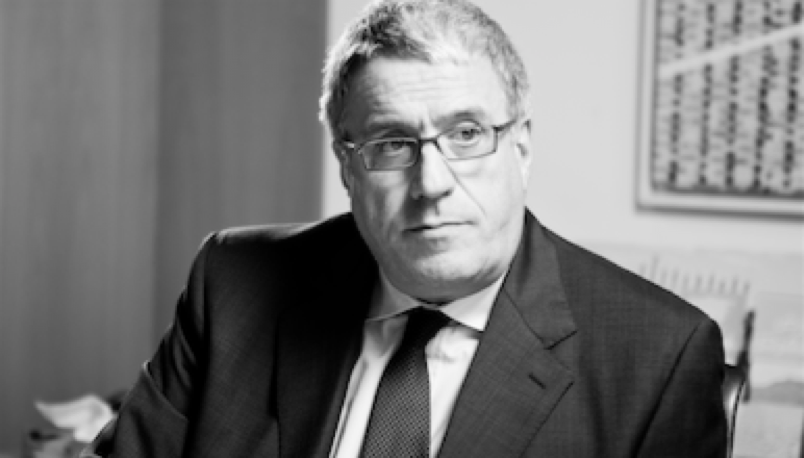
“The global picture is gloomy and the regional picture is not clear. Oil prices are still maintained but if the crisis persists there will not be enough global demand for oil. Syria is another question mark, and because of its historical and political ties to Lebanon there will be an impact on the local scene, whatever the outcome will be. These unclear issues lead me to believe that prospects for 2012 won’t be much better than 2011.”

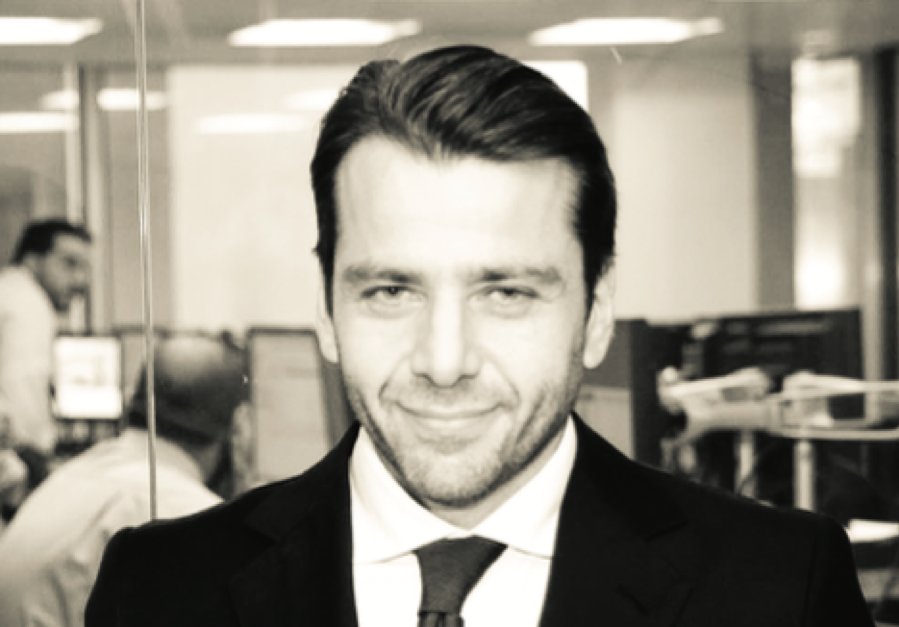
Bank Audi: Freddie Baz, CFO

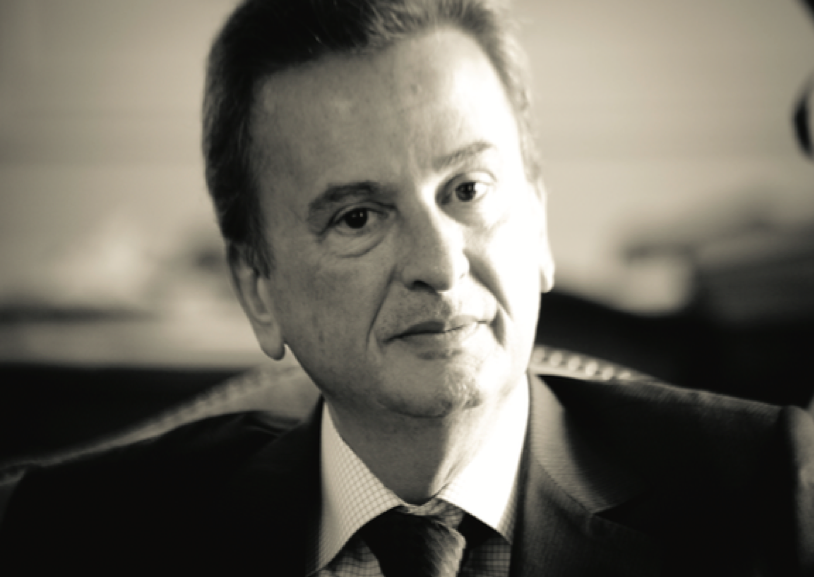
“Lebanon cannot afford a crisis. You have seen what happened to Greece. Greece being a European country, having a strong currency, not having political or security problems, saw interest rates at 40 percent and was on the brink of defaulting, despite all the backing it had from very strong countries and the IMF (International Monetary Fund). Lebanon doesn’t have these advantages so we have to work on building up a real economy, and we have to keep our tradition of commercial banking. We want to have investment bankers and capital markets, but let it be outside of the commercial banking.”

Banque du Liban: Riad Salameh, Governor

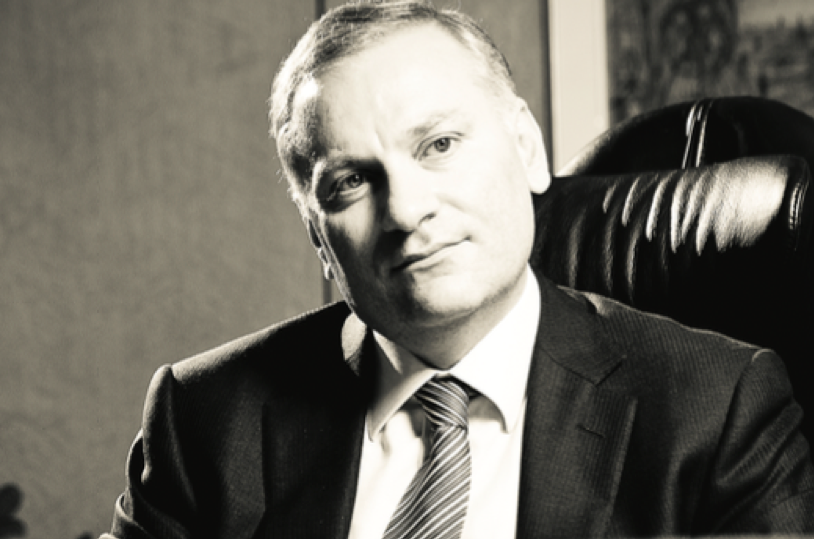
“We expect next year to witness a better growth than this year. Regionally, the situation is affecting us negatively, as the instability is leading to lower growth. However, over the medium to long term, as the situation improves, stability is regained and economies enjoy more openness, the impact on us will be positive. It may also open doors for us to expand in other countries.”

BLOM Bank: Saad Azhari, Chairman

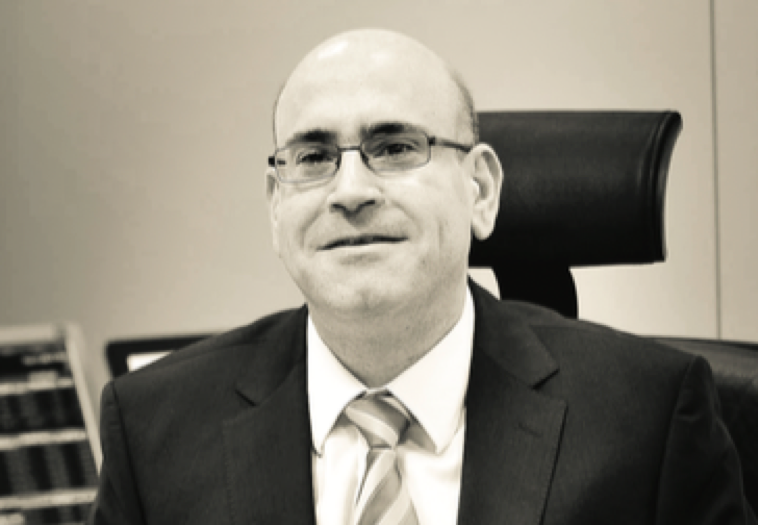
“Lebanese banks are proving to be resilient so far to what is happening in Lebanon, in the region and over the world. Going into 2012, we have a lot of concerns: how things will develop in Syria is very important and critical for the banks and how the Lebanese government will tackle the budget deficit and the issue of the Special Tribunal for Lebanon. Lebanese banks are already very conservative and will continue to be so next year.”

Byblos Bank: Alain Wanna, Deputy General Manager – Head of Group Financial Markets Division

“I think the banking sector will remain stable during 2012, and I don’t believe we will see very interesting local growth opportunities. The challenge for the banking sector will be how to continue the high pace of growth. ”

BankMed: Khaled Zeidan, General Manager of Securities & Structured Products at MedSecurities

“In the current situation it is very difficult to make a forecast and see exactly what will happen tomorrow in Lebanon and the region; 2012 will definitely be a tough year. The situation in Syria is a concern, elections are coming up in the United States and in France, and the European crisis will continue and will have a strong impact. With all this, one will have to be cautious.”

BLF: Walid Raphael, Chairman

“I think great companies as well as great banks are built during tough times, so for me these times present both an opportunity and a challenge for Lebanese banks. If they know how to weather the crisis, especially the banks exposed to countries such as Syria and Egypt, and even Jordan to a certain extent, they will emerge stronger. All these troubles will end, and when they do the banks will  probably be able to grab the opportunity.”

FFA: Jean Riachi, Chairman

“There is still an increase in deposits in the banking industry, which is a sign of confidence in Lebanon. If you look at the rates paid on the Eurobonds and the rate achieved on the latest Eurobond issued in May 2011, you can see the rate has dropped and not increased. That’s really a sign of confidence in Lebanon.”

HSBC: Francois Pascal de Maricourt, CEO Lebanon

“Going into 2012, I am quite optimistic about the banking sector in Lebanon, and I think economically Lebanon will fare much better next year. I am not worried about the outcome from Syria as I think we have already seen the worst and I only see things improving. The main opportunity looking forward will be the development of the capital market in Lebanon. The new law passed in August will definitely help.”

AFS: Sami Akhras, CEO

“I wish for economic prosperity and political stability so that Lebanon can continue to prosper and grow to the best of its ability. We have a strong banking sector and a strong regulatory environment; there are always opportunities for growth. Unfortunately, growth this year has been affected by lots of events but, I hope that we will go back to the growth momentum we enjoyed in previous years.”

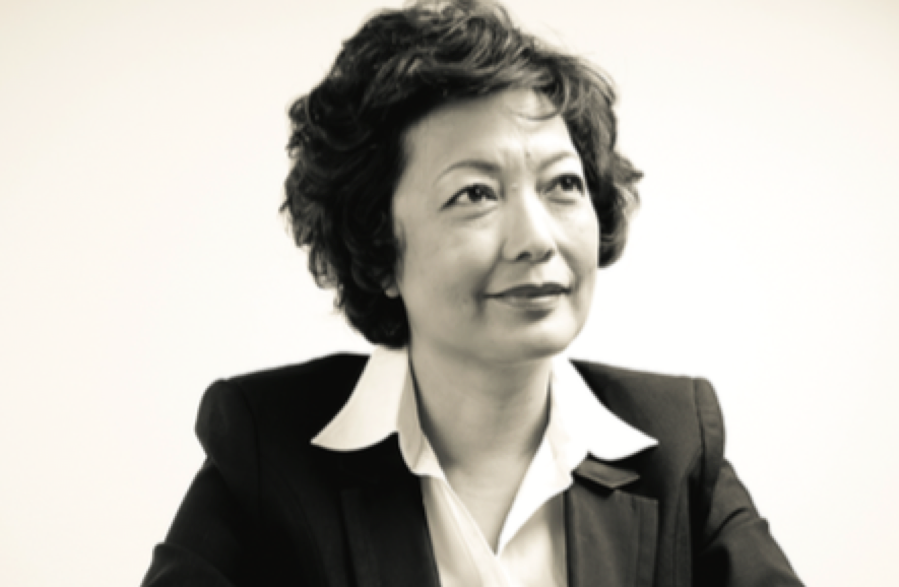
Standard Chartered: Pik Yee Foong, CEO Lebanon

Credit Agricole: Mario Jamhouri, General Manager

“[For private banking portfolios] in terms of investments, cash in 2011 was king and bonds and commodities were also part of clients’ allocation. In the middle of a crisis people look for real assets, as witnessed by the real estate boom we saw in the past years in Lebanon. We are seeing our clients invest in real estate in Europe as well, as part of their asset allocation.”

December 25, 2011 0 comments
0 FacebookTwitterPinterestEmail
Editorial

Pride, if nothing else

by Yasser Akkaoui December 25, 2011
written by Yasser Akkaoui

The year began with hope — it was contagious after seeing Tunisians rise up and send the tyrant Zine el-Abidine Ben Ali fleeing the presidential palace for exile in Saudi Arabia. Next came Egypt, where the awe-inspiring resolve of millions of Egyptians not to yield Tahrir Square to the regime’s security forces and thugs led to the removal of President Hosni Mubarak.

However, nations of people rising up for the freedom to claim their own destiny was a veneer that became sullied shortly after the beginning of the Libyan revolution. As the NATO bombing campaign ramped up and global powers began jockeying for position in anticipation of the post-Qadhafi era, the work of foreign hands pulling strings in Arab affairs again became apparent.

Given the strategic importance of Bahrain to Western powers, the Saudi decision to invade and crush the uprising there could not have been made in a vacuum; Ali Abdullah Saleh’s dubious cooperation with the West against Al Qaeda led to the continued support for his regime,  long after its brutality against protesters was exposed, while Syria, at the crossroads of a myriad of Middle Eastern conflicts, is a veritable playground for foreign interference from every direction.

But look around the world in 2011 and it is no longer clear that the global powers know what they are doing anymore. Currencies and economies are crumbling everywhere while mass public protests have taken hold throughout much of the West. There would seem to be a fundamental reordering of the global geopolitical and economic structures taking place, and with so many moving parts, where the world will settle in five years is beyond any plausible guess.

What is certain is only uncertainty. And, almost ironically, there are few people more schooled at adapting to, and thriving in, instability than the Lebanese — when the sky is falling, who else would think to begin exporting umbrellas?

Whatever the future of the uprisings across the Middle East and North Africa, however, and no matter how foreign influence contorts the counter revolutions, the one thing the Arabs have taken back in 2011, what will not be easily stolen again, is their pride.

December 25, 2011 0 comments
0 FacebookTwitterPinterestEmail
Economics & Policy

Q&A – Vrej Sabounjian

by Executive Staff December 3, 2011
written by Executive Staff

Vrej Sabounjian took the reins at the Ministry of Industry in June, taking his experience from the business boardroom to the political cabinet. It has been a bumpy ride for industrialists in 2011 and demands for government leadership and support are high. Executive sat with the minister to find out how he has dealt with his first months in office.

E  You told Executive back in July that you were confident that this government was pro industry, yet there was not a single mention of industry in the draft budget. What positive actions or proposals by the cabinet have shown support for industry?
I think we can say anything we have presented so far has not met any objection at all.  That’s sign enough for me that I have enough support from this government to push ahead with our industrial programs and we are going to sign a lot of bilateral agreements with other countries; it’s coming. We are going to make agreements with Sudan and Armenia and other countries and these agreements will help industry in Lebanon. 

E  The negotiations for these agreements are already underway?
Two are already ready… they will be signed very soon.  

E  With these agreements there will presumably be a decrease in trade barriers. Is this a trend you see developing?
The barriers to trade have already come down as we have moved into a global economy for some time. But the bilateral agreements help facilitate the relations between the two countries and their business people [with] measures such as visa agreements, more flights, accreditations and tax deals so there is no double taxation.

E  Is Lebanon still en route for accession to the World Trade Organization?
Yes.

E  Is that prudent in the troubled and uncertain global economic environment we are currently in?
Prudence is always good but I think we have also to understand we are living in an environment where all borders are opening and trade should be easy and accessible to all parties. But it has also to be fair in the sense that there are some countries which are bigger and stronger and others smaller and weaker, so we have to note those details in the agreements.

E  Can you provide details of the draft proposals you submitted to the minister of finance in relation to the tax exemption on exports?
The answer is very simple: if you manufacture a product in Lebanon and you export it you will be eligible to get a 50 percent tax credit on your profits, [depending] of course on whether the law passes the cabinet. Our tax rate is 15 percent so on your exports you would only pay 7.5 percent. 

E  Is there a time limit on this or would it be indefinite?
No.  It would be indefinite.

E  And how confident are you that this is going to get passed in the cabinet?
I’m pretty confident and I’m also relying on the support of our prime minister [Najib Mikati] and the minister of economy [Nicolas Nahas]. He’s my good friend and we have discussed this issue, and I am also sure the minister of finance [Mohamad Safadi] will not object.

E  Have the committees tasked with creating the nation’s industrial zones been created, as was promised in the ministerial statement?
We are almost finished. There are still some little details, and in a few weeks it will be ready.

E  The plan will be ready or the creation of the committee will be ready?
Both. On the plan we are doing some modifications and the committee is already under study.   

E  There is going to be a committee, or there is a committee?
There is going to be. There is not now. We are forming a committee. We will have a banker, an accountant, an engineer, an auditor and these kinds of people who can bring the maximum contribution for this project.

E  In the draft budget there was no mention of this project.  How do you envisage it being financed?
There are a few ideas which I don’t want to elaborate on now, but I would like to give a chance for the committee to come up with some ideas. We have ideas at the ministry and I have my ideas and I would like the committee to add on those ideas and bring their own.

E  Is the industrial sector able to absorb the blow of the proposed minimum wage increase?
I don’t think the industrial sector is waiting on the increase in minimum wage. I think all business people have already done the necessary adjustments related to inflation. 

E  But there are employees in the industrial sector whose pay would be affected by the proposals…
There are certainly people working close to the minimum wage, and that’s why it is the government’s responsibility to look at it, which we did in a responsible way. The increases are acceptable but I don’t want to elaborate on the percentages because there are differing views.

E  So in theory you support an increase in the minimum wage but not explicitly these figures?
I supported the increase in the minimum wage but I would also say I am not with the idea of increasing wages [other than] the minimum wage. It is the government’s duty to help minimum-wage workers but it should not get involved in any other kind of wages. However, this is my personal opinion and I will support my government whatever its decision is.

E  When you came into office you told Executive you were going to get an additional 25 percent added to your budget. Have you?
There is a problem in all of the ministries concerning their budgets. It’s a fact that we have a problem with the budget. So I guess we will still try to help the ministry of finance but at the same time we have to find a way to help our ministry because we really need the increase in budget.

E  But as of yet you have not received the 25 percent you were hoping for?
Not yet, no. The budget has been put to the cabinet and each minister is looking at it and is going to go back with his comments.

E  And yours will be?
I will stick to my plan. I will definitely ask for my 25 percent. 

E  How have the events across the border in Syria impacted Lebanese industrialists?
I’m sure some sectors or companies that had large business with Syria will have been impacted, but if that is the case then I advise them to take this opportunity to find new markets. They should not consider this as a setback but as an opportunity to find other markets.

E  With regards to the proposed electricity law, does it go far enough in addressing Lebanon’s energy infrastructure crisis and can industrialists be assured that there is the political will and ability for it to be delivered?
I think Lebanon has stability now. I think you could say we are one of the most stable countries in the Middle East. 

E  You’d hope so!
[Laughs] As for electricity, we have passed this law and, yes, we will have a much better electricity situation a year and a half from now.

E  You have encouraged industrialists to establish their businesses in the north, south and Bekaa, outside of the industrial heartlands. What incentives exist for them to do so?
If you move to the north or south the land is much cheaper and you can find lots of minimum-wage workers in those areas. You have more space…

E  Does the government have a role to play in the regionalization of industry or is it something that has to happen naturally?
It has to happen naturally. It is natural to expand.

E  How will the industrial sector have to adapt over the coming years if it is going to remain internationally competitive?
Governments don’t make companies competitive. I advise every chief executive officer or president or owner to have a good vision and be flexible. Times now benefit those who are flexible. Drop things that are not profitable, keep your ego away and be objective. I encourage Lebanese business people to be open-minded with regards to merging, which is still not much in the culture of the Arab world.

E  How would you sum up your first several months in office?
I am working hard but I will leave the assessment to others. I am working hard to finish my ideas. I am trying to finalize licenses and encourage people to come and do whatever they need from the ministry as soon as possible. We’re finishing their requests in a very short period of time… One more thing: we are planning to bring to the schools and the colleges [a program] which will give the students a chance to know more about industry in the country. I want the Lebanese to have trust in their industries and to have faith in a productive Lebanon and not just commerce. Look at some of the countries in Europe that depended too much on services and tourism. Shouldn’t we learn from that?

December 3, 2011 0 comments
1 FacebookTwitterPinterestEmail
Comment

A myriad of moving pieces

by Nicholas Blanford December 3, 2011
written by Nicholas Blanford

The tumultuous start to 2011 with the collapse of the Saad Hariri government in Lebanon and the establishment, after several months of hard bargaining, of a new administration headed by Najib Mikati did not bode well for stability and economic improvement. But as the year draws to a close, the Mikati government has fared better than its detractors predicted.

The Tripoli businessman took a gamble by accepting the premiership in January, something of a poisoned chalice for a Sunni given the acrimonious manner of the ousting of Hariri, the leader of Future Movement and the pre-eminent Sunni political leader. Although Hezbollah engineered the downfall of the Hariri government and remains the quiet power behind the current government, Mikati has shown that he is no puppet of the Shiite party.

He has a reputation and international contacts in his own right, which in some ways make him a more useful partner for Hezbollah than an obedient drone.

One example is the debate over Lebanon's share of the funding for the Special Tribunal for Lebanon (STL), which has dogged the political debate since the summer. Hezbollah has consistently said it opposes Lebanon paying its 49 percent share of the funding, a rejection echoed vociferously by the party's allies, especially Michel Aoun. Mikati, however, has assured the UN that Lebanon will honor its obligations and pay its share, going so far as to threaten resignation over the matter, and eventually fund it through a government body under his authority.

A Mikati who retains international credibility and is allowed to win some political tussles is not a threat to Hezbollah. On the contrary, Hezbollah is likely to pick its battles with the STL with care.  Hezbollah clearly will stick to its stance of rejecting the STL funding, but that does not mean the government will follow suit.

Still, the STL funding issue is a mere hiccup compared to the historic events roiling Syria. There is a feeling in Lebanon that if Syria continues its descent into violence, it will inevitably spill across the border into Lebanon. Barely a day goes by without the local press reporting rumors of assassinations or militants arriving in the Palestinian refugee camps plotting nefarious deeds. The government faces the dilemma of juggling its loyalty toward the Assad government and accepting the reality that the regime may well founder in the coming months. The former stance will spare the government Assad's wrath but the latter will reshuffle the political cards in Lebanon in potentially dangerous ways.

Generally, international and regional players recognize the dilemma facing the Lebanese government and cannot be surprised when Lebanon is one of only three countries to vote against an Arab League proposal to suspend Syria's membership in the organization. Burying one's head in the sand is an essentially Lebanese means of dealing with unpalatable problems. But the influx of Syrian refugees escaping the violence and the prospect that some Sunni-populated areas in Lebanon near the border could become small-scale staging grounds for Syrian opposition fighters and activists will complicate Lebanon's ability to distance itself from the upheaval next door.

It is inevitable that Lebanon will feel some of the shockwaves emanating from Syria in the coming months, particularly if the struggle develops further into a sectarian conflict. But the real earthquake for Lebanon could occur if and when Assad is toppled, especially if the next regime better reflects the Sunni majority in Syria and aligns itself further from Iran and closer to Saudi Arabia and Turkey. Such a development will give a boost of adrenaline to the March 14 movement, especially Future Movement. Would it sufficiently embolden them to make a fresh play at confronting Hezbollah, which, after all, will still remain Lebanon's strongest military and political player even without the strategic depth provided by an Assad-led Syria?

Hezbollah has a habit of reacting forcefully and decisively against any moves that threaten its resistance priority and the party will already have made plans to counter a reinvigorated March 14. Much depends on the tenacity of Assad to remain in power and how a deteriorating Syria will impact more broadly on the region. But 2012 appears to be shaping up to be a most interesting — and potentially unsettling — year.


NICHOLAS BLANFORD is Beirut correspondent for The Times of London and The Christian Science Monitor.

December 3, 2011 0 comments
0 FacebookTwitterPinterestEmail
Society

Fast rides on rocky terrain

by Executive Staff December 3, 2011
written by Executive Staff

Minimal economic growth and lower purchasing power have affected sales of luxury cars to a greater degree than the rest of the market, with the segment down by an estimated 30 percent to 40 percent on last year.

“The potential buyer of a BMW, Mercedes or Maserati isn’t buying, not because they don’t have cash but because they are not economically comfortable in the current situation,” said Nabil Bazerji, managing director of GA Bazerji and Sons, a Maserati dealer. Sales of the luxury Italian car are down roughly 25 percent from 26 cars in 2010 to 20 this year. BMW sales have dropped by more than 50 percent, from 816 units to 396 as of October 2011, while Jaguar had sold 99 units in the same time, compared to 200 at the end of 2010.

“We have demand but it has not been an exciting year,” said Michel Trad, Director of Saad & Trad, dealer for Fiat, Abarth, Jaguar, Bentley and Lamborghini. Only eight Bentleys were sold this year, compared to 22 in 2010, and just one Lamborghini. Trad is hoping a new convertible Bentley model will boost sales next year. The company is also the sole distributor for British super car McLaren, which launched its long-awaited new model, the MP4-12C, in Dubai in November. 

What made surprising inroads is a compact designer car, the Gucci Fiat 500. “Lebanon was the only place that got the Gucci 500 outside of Europe, as Fiat thought Lebanon was a trendy place to sell,” said Trad. “You won’t find 100 on the roads — only around 10 and a max will be 25.”

Warding off potential buyers of super cars is a tax of 63 percent, equivalent to a minimum of $150,000.

“With such high taxation, customers expect something in return, such as good roads free of pot holes,” said Marie-Claire Chammas, marketing manager of Sports Motor Group, exclusive distributor of Ferrari. “As a result, our main competitors are the Gulf countries, as tax is only 5 percent there.”

But this has not held sales back for Ferrari, which are up 200 percent since 2009, with the company selling around 40 cars per year.

“For us, the luxury segment is getting better. None of our competitors have even a third of our sales. There is a two year waiting list for the 458 Spider, and nine to 14 month waiting list for other models,” said Chammas.

Pushing sales has been the Ferrari California, a two-door, four seat sedan. “The California has attracted new clients,” she said. “Before, Ferrari drivers were all about racing, but the California is more about lifestyle and is more versatile. And there are more women drivers than before.”

Mana Automotive, dealer for Range Rover, Land Rover and Aston Martin, is hoping that the recently launched four-door Aston Martin Rapide will find similar popularity as the Ferrari California. “The Rapide will do well as Lebanon is a four-door market,” said Nadim Tewtel, president and managing director.

Bucking this year’s downward trend alongside Ferrari is Porsche, with similar sales as in 2010 at 285 units. “We should end the year with around 320 to 325 units, and in 2012 we’ll grow by 10 percent or more,” said Charles Tarazi, assistant general manager of the Porsche Center Lebanon. Sales were heavily skewed towards the Cayenne sports utility vehicle, whose share doubled to 68.8 percent of all Porsche units sold, from 33.3 percent in 2010. “Some of our sports car sales were down as new models will be out in 2012 — the 911 in February, which we’ve been waiting a year for now, the Cayenne GTS and the Panamera GTS.”

At least for some models, the belt-tightening can wait.

December 3, 2011 0 comments
0 FacebookTwitterPinterestEmail
Economics & Policy

Plugging the gaps

by Executive Staff December 3, 2011
written by Executive Staff

Every year the rain passes over in Lebanon, endowing it with a resource that much of the Middle East can only dream of. But even as those rains fall and the country’s roads turn to rivers, many Lebanese still look up at the sky and ask why their water tanks are empty and their faucets are spitting out nothing but air.

The reason is that since the end of the civil war little has been done to improve water reuse, although a lot of words have been spent. Only one large dam has been built in the Chabrouh area, 40 km outside the capital, holding a maximum of 15 million cubic meters (MCM). The only other major infrastructure project, the Qaraoun artificial lake, carries a maximum of 300 MCM of water and was built in 1959. Combined, their total storage capacity is less than 6 percent of renewable water resources, compared to 56 percent in Tunisia and 117 percent in Syria. 

Thus it is little wonder that the water balance, or the relationship between total supply and demand, is estimated at a deficit of around 420 MCM average per year, with Greater Beirut alone facing a daily shortage that ranges between 145,000 and 275,000 cubic meters.

In 2010 the Ministry of Energy and Water issued its National Water Sector Strategy, which gave an unprecedented look at the state of the country’s water sector. The strategy replaced an older document that explored the idea of building dams between 2000 and 2010. Of course, little of that ever happened.

“To me at least we have a kind of plan for once,” says Nadim Farajallah, professor of hydrology and water resources at the American University of Beirut. “At least we know what we have and how much it’s costing us; what we need to do is move forward.”

This time around the strategy is to build a series of dams, artificial lakes and other infrastructure elements to alleviate the entire water sector from shortages. In total it will cost the country around $7.9 billion (LL11.85 trillion) in capital expenditure and another $2 billion  (LL 3 trillion) in operational expenditure by 2020 to rectify the situation, not just in water supply, but also in wastewater and irrigation. And that’s if Lebanon’s notorious geological formations allow for the dams to be built at cost.

That will also require several initiatives on the financial, regulatory and legal fronts, of which none were started in 2011. To begin with the water establishments (WEs), the public sector administrations dealing with water in each region, will have to be staffed and restructured so they can exercise their prerogatives according to Law 221, which lays out how the sector should be organized. In theory the WEs should be financially and administratively independent, but they are far from it. They are also grossly understaffed, as is the Ministry of Energy and Water and the general directorates within it that are concerned with water management.

Regarding financing, the money for all the infrastructure looks like it will have to come from sources other than the national treasury. The Ministry of Finance has a proposed budget of only $46 million for dams and $4 million for consulting services in the 2012 budget proposal, and this is yet to be hacked away at by cabinet and Parliament. “Concerning the remaining allocations for dams, the Ministry of Finance finds it necessary to resort to donor countries and funds, given their willingness to extend soft loans at much lower interest rates than what it would cost if the projects were funded through budget allocations,” the proposed budget reads.

Conflicting messages

The minister in charge seems to disagree. “It appears that again and again the value of deposits in Lebanon are large and Lebanon secures larger funding than is required… hence all that remains is the decision to invest,” said Gebran Bassil, Lebanon’s minister of energy and water at a press conference in October. He also stated that investment should be “translated fully” in the upcoming budget (if it breaks the mold and passes) and was “awaiting discussions.” Previously, a similar debate over funding Lebanon’s decrepit energy sector almost brought down the cabinet. In the time it takes for the government to haggle over the budget — something that began to happen in November — there is no telling where the debate may take the sector or the country.

The problems with international loans are that they require long and extensive feasibility plans and environmental impact assessments, which take time. In March, Minister Bassil’s advisor Randa Nimer told Executive that the only project which was ready and had received approval was the Greater Beirut Water Supply Project (GBWSP), also known as the Awali project. It aims to provide constant water supply to Baabda, Aley, parts of the Metn/Mount Lebanon region, as well as to an estimated 350,000 low-income residents in Beirut’s  southern suburbs. The total cost would come to approximately $370 million, of which the World Bank would put up $200 million in loans, the Beirut and Mount Lebanon Water Establishment some $140 million and the Lebanese government the rest. It will take 50 MCM of water from the Qaraoun reservoir in the Western Bekaa, fed by the Litani River. The water will then be rerouted to the Awali River, treated and then conveyed to Greater Beirut, where, according to the Ministry of Energy and Water, a new network is currently being built that will distribute it to consumers whose homes are to be fitted with new meters.

The project has come under fire for reasons that range from polluted water in the Qaraoun (which was recently found to contain cancerous trace metals) to reportedly less expensive alternatives, which the ministry says will have to be built anyway. Nevertheless, Lebanon’s cabinet has signed off on a number of projects including the GBWSP and the completion of two major projects for irrigation out of the Qaraoun (Canal 800 and Canal 900).

Furthermore, Minister Bassil highlighted at the press conference that the proposed Bisri dam project between the Shouf and Saida is also an “inseparable and integrated” part of the GBWSP and that moving ahead with the larger project without first building the dam would be “an investment that is useless, resulting in paying a lot of money for a little bit of water.”

However, an official World Bank response to a complaint put in by around 50 residents against the project stated: “The Bisri Dam is not a component of the GBWSP nor is it relevant to, or necessary for, the achievement of the objectives of the GBWSP.” This obviously puts the whole issue in question and thus the only project due to start relieving Beirut of its water woes may just run dry before the tap is even turned on.


Sidebar: Wasting away

Lebanon is the country with the lowest amount of re-use in treated water in the region. Although the percentage of wastewater network coverage is 6 percent above the Middle East and North Africa average of 48 percent, the portion that actually gets treated is an abysmal 4 percent, according to the Ministry of Energy and Water’s estimations. Much has been done in the wastewater sector over the past few years, mostly because of international funding. Since the early 1990s investments in the sector have exceeded $1.4 billion, mostly through the Council for Development and Reconstruction (CDR).

However, the results are still far from palpable. Today the recently built wastewater treatment plants in Chekka, Tripoli, Nabatieh and Jieh are complete but not fully operational, some for over four years, because of a vicious combination of a lack of staff, money, maintenance and even connection to the sewage line. The prerogatives over the sector are also split between the municipalities, the CDR and the water establishments. A national strategy for the wastewater sector that was issued in December 2010 seeks to spend a total of $3.1 billion on the sector, none of which has yet been spent. So, if history repeats itself, the result will be ever more waste to accompany the wastewater down the drain.

December 3, 2011 0 comments
0 FacebookTwitterPinterestEmail
Society

Beating the hordes

by Executive Staff December 3, 2011
written by Executive Staff

With 434 cars per 1,000 people, Lebanon has one of the highest vehicle-per-capita ratios in the world, in large part due to an almost non-existent public transport system. The 1.6 million vehicles in the country are the primary contributor to air pollution in Beirut, with more than three quarters of the capital having nitrogen dioxide levels 95 percent above the World Heath Organization’s threshold limit, according to research by the American University of Beirut.

To improve congestion and pollution levels, motorbikes can provide the solution, believes Anthony Boukhater, General Manager of AN Boukhater, dealer for the Piaggio Group.

The fast lane

“The only solution for traffic today is for more motorbikes, as there’s no metro, and taxis and service taxis are expensive and unpredictable,” said Boukhater. “Many factors are making it more interesting to buy a bike, especially traffic, taking 1.5 hours in a car to drive 15 kilometers. The second factor is the price of gasoline is going up, and the third is the lack of parking space in town. All of this is pushing people to go for a two or three wheeler.”

AN Boukhater have witnessed a 25 percent spike in sales this year. Negib Debs, brand manager of Kawasaki at Rymco, said that while there are no statistics due to the lack of an import association, demand is on the rise. “Two years ago we sold 70 motorbikes per year, but this year we’ll go above 100 bikes,” he said. Anticipating increasing demand, Rymco is upping its range, adding four more models next year to its current 14.

Holding back sales, however, particularly of motorbikes with engines above 250cc, is the lack of bank loans, a primary factor in boosting car sales over the past five years. “Banks won’t lend as they think the risks are higher with a motorbike, so we are doing in-house loans and will work to promote safety,” said Debs.

Dealerships have worked with Kunhadi, an organization to promote safety on two-wheels, by giving away free helmets, for example, and have set up motorbike clubs for weekend rides, with bikers required to abide by traffic laws. Meanwhile, Boukhater has established a motorbike school to train prospective riders for Lebanese roads.

“We are trying to change the image of the motorcyclist in Lebanon. When you talk to old people they only see mopeds swerving through traffic or bikers doing wheelies on the highway. This is not motorbike riding but suicidal riding,” said Debs. “We all want to change this image. In discussions with the police they know it is a problem but say its something they cannot change.”

Changing perceptions

One problem are used scooters, with an estimated 5,000 entering the country every month that sell for between $50 to $100. “If the police stop such unregistered mopeds, they impound them. But to get the moped released is more expensive than it is worth, so the owners don’t care. Then the police sell it back to the market as the law forbids destroying them,” added Debs.

Boukhater thinks the mentality towards motorbikes is slowly changing, and within two or three years there will be a 100 percent increase in sales year-on-year. “Next year I think will be even better than 2011; we are moving in the right direction.”

December 3, 2011 0 comments
0 FacebookTwitterPinterestEmail
Economics & Policy

Q&A: Mohamad Safadi

by Executive Staff December 3, 2011
written by Executive Staff

Tasked with putting together a national budget, managing a crippling public debt, as well as paying for a bloated public sector rife with patronage and sectarianism, Finance Minister Mohamad Safadi sat down with Executive to assess how he has fared since taking the helm, and to get his outlook for the country in 2012.

On what basis are we assuming that gross domestic product growth next year will hit 4 percent in real terms considering the Syrian situation, delayed infrastructure reform, a global economic crisis and the fact that most economists do not agree with your projections?

The assessment is basically that we had, in the first six months of 2011, zero growth and the economic growth took place in the second six months [during which] we are enjoying 4 percent growth up until now. So in 2011, growth will not be more than 2 percent, at best. As such, we forecast that we should have growth of something like 4 percent in 2012, if things do not deteriorate further, based on the situation today. But later, who knows? In the best-case scenario, we are looking at 4 percent.

Without growth the whole logic behind the budget is thrown off. Why do you not use scenarios to look at growth and inflation?

Whatever scenario we use, in any case we do not wish to increase our deficit. We have an increase in wages that we are looking at that we have to give. So technically, on top of the 2012 proposed budget [spending], we are going to introduce extra expenditure of roughly $650 million, which should be accounted for. Basically we are revisiting the entire budget because we are not going to say that we had a deficit of $4 billion and then say that we are going to increase it by $650 million. The deficit is not going to increase so we have to find the $650 million from different sources. Whether you cut some expenditure and increase some taxation, or you do it all by cutting expenditures… it’s a work in progress.

If it is not done by January then you will have missed the constitutional deadline, in which case we go another year without a budget…

Not necessarily. We don’t have to go another year without a budget. Yes, it is supposed to be passed in January but even if you pass it a bit late it’s not a catastrophe.

You are giving yourself more time despite the constitutional deadline?

We are not giving ourselves more time. I know that it is going to take more time in the Council of Ministers and the Parliament. What I am saying is there is an expenditure list, and an income list and a deficit figure. The deficit figure is not open for debate; all the other items are. That’s what we are insisting: that the deficit item is not going to increase.

You said previously that a minimum wage increase would be approved based on three conditions: first of all that subsidies to the needy would be given out…

I did not say that. What I said was that it should be done.

Ok. The other two stipulations were that the competition law is passed and that inflation does not eat up the [wage] rise. What measures have we taken to get there?

Yes. Yet the competition law is not passed by parliament.

So there is no intent to do so? If we want to open the market and allow prices to fall we have to get rid of oligopolies, don’t we?

Yes. Unfortunately, it’s not on the books yet. The law is…

…Too sensitive

It’s not too sensitive. It should have been passed. It’s stopping us from joining the WTO [World Trade Organization]. It’s stopping us from really using the law to make sure that there are no cartels. If you look at the structure now — what we call the syndicate of this, or the syndicate of that — it’s basically cartels of this or cartels of that. So basically we need to pass this law, and there is a lot of work being done so it is not passed. We cannot keep on going down the same route we are.

But as finance minister you can say ‘I won’t accept that it is not passed’ before you sign the minimum wage increase…

Of course I won’t accept that it is not passed. People say that we need the Ministry of Economy and Trade to get involved to check prices and make sure they are not manipulated. But really, the ministry has no legal tools. You can go and say: ‘Ok fine. You are not supposed to raise the prices.’ He [the trader] says: ‘Ok, but what can you do about it?’ There is nothing you can do about it. There is no law. What can you do? Turn your back to him and that’s it.

But obviously inflation will be affected if you increase the minimum wage and even more if you increase value added tax [VAT] as well. This will make poor people more vulnerable.

This is absolute bull, if I may say that. The effect on the poor will not be more than half a percent, and the safety net that we are working on in the 2012 budget will not only compensate for half a percent, it will compensate by far, far more than anything that a VAT rise will produce.

But in principle the latest proposals show that the government has an over-reliance on indirect taxes. A progressive income tax would be fairer and probably garner more revenue. How far are we from this on an infrastructure level and in terms of political will?

It is not just a matter of infrastructure; it’s a matter of ethics. It’s a combination of ethics and infrastructure and unfortunately in certain areas we lack both.

Which one do we lack more?
[Laughs and shrugs shoulders]

We have seen the public-private partnership [PPP] law proposed ad nauseam as a way to decrease the burden of infrastructure investments on the treasury. Why is there so much resistance to this?

There is a misunderstanding about these things. There is a misunderstanding about privatization, and there is a misunderstanding about PPP, even though countries like Egypt and even Syria have passed it. There are a lot of countries that we have always claimed we are ahead of in our economic thinking, and we find out that, in reality, we are lacking in certain areas. The misunderstanding is, basically, that the private sector is going to create a monopoly. I agree that the private sector always has the tendency to create monopolies if we do not have the laws [to prevent that]. But a partnership between the public and private sector makes sure that the private sector cannot create a monopoly. It’s actually exactly the opposite.

Since the Egyptians cut off our gas supply, how much of an increase do you anticipate to the Électricité du Liban’s [EDL] subsidy? What was the reason for the cut? And is there a plan to resolve the issue?

A $2.2 billion [increase] this year. What is clear now is that we cannot rely on the Arab gas line. Egypt promised us a good quantity initially, then that was reduced to half, then to a quarter; they gave us that quarter for three to four months and then they stopped it. So basically, we have an empty gas line. Syria was continuing the Arab gas line from Homs all the way up to the Turkish borders and we were happy that we would be connected with Turkey so we could shop for our gas from sources other than Egypt. Unfortunately, with the events that are occurring in Syria they were stopped and we are not sure how long it will be before that gas line is ready to be used.

The idea is to put an LNG [Liquefied Natural Gas] plant in the south and keep the gas line input in the north. So when we have gas from the north it can go all the way to the south, and when we don’t have gas in the north we can actually feed from the south, or a combination of both — whatever makes economic sense. So basically if you look at this it’s the only scenario we can live with, and it’s an expensive one. That is why we have allocated LL255 billion [$170 million] in 2012 to continue the work of extending the gas line from the north to the south. If we increase production of electricity and do not lower the cost of that production it means the deficit is going to increase. It’s going to bite even more.

You are part of the committee looking at the amendments to the electricity law and have advocated for the Electricity Regulatory Authority (ERA). What prerogatives will the ERA have and what amendments are being discussed? 

We are not reinventing the engine but we know that there are things that do not work. Take for example that the law talks about restructuring the whole company [EDL] and unbundling it. Basically, it says, without saying it, that Électricité du Liban has got to do that work themselves. Well, they can hardly do their accounts. So basically it does not allow for anything else to be done. But what is really important today is to allow for the privatizing of management. Once you do that, you can do everything else.

But the energy minister is worried about the regulator taking over his authority. This is the crux of the issue, is it not?

Yes, but this can be worked out.

Do you have any specifics on how?

Not yet, but we are meeting and moving forward.

E  In the year to come what needs to be done for the economy to recover?
It’s not going to be an easy year. We have to be watchful on every level. We have to make sure that we do not overspend and that we invest as much as possible in improving our infrastructure.

December 3, 2011 0 comments
0 FacebookTwitterPinterestEmail
Economics & Policy

Lacking a spark

by Executive Staff December 3, 2011
written by Executive Staff

Uprisings in the region, financial tumult on the global markets and the ever-capricious dramas on the domestic political rostrum have not made life easy for Lebanon’s industrialists in 2011. Yet the sector has doggedly managed to hold ground on its shaky shores. Just. 

In the first eight months of the year, industrial exports — a good indicator of the sector’s competitive performance — were up 7.4 percent on the same period in 2010. If not quite cause to crack open the champagne, the figures may at least elicit a sigh of relief from Lebanon’s industrialists. 

Keen to tout the successes of his sector, Minister of Industry Vrej Sabounjian struck an upbeat note in November, glowing over the fact that 206 industrial licenses were issued in the first half of the year. However, a closer inspection of the figures blurs this rose-tinted depiction of the industrial landscape in Lebanon. Only 41 of the licenses are for new operations while 18 are for plants whose construction has been completed and are now ready for production — that is to say 59 are for genuinely new operations, while the rest included items such as license renewals and transfers of ownership. The ministry also provided no record for the number of factories that closed down in 2011.

Thus it is difficult to verify the facts when the minister declares: “With new industries — and I know there are from the licenses we have signed — come new jobs as these people are all in business now.”

The President of the Association of Lebanese Industrialists (ALI), Neemat Frem, offers a somewhat more muted assessment of the past year in industry: “2011 can be considered the year where growth stopped in the industrial sector. We have not started, to date, to enter into negative growth, but I am worried that is coming very quickly if we don’t do something.”

His concern seems justified. The 7.4 percent rise in exports from January to August pales in significance when compared to the 29.5 percent leap from 2009-2010, which was in step with previous years’ increases (apart from in 2008 when exports were shaken by the global financial crisis). What’s more, imports of industrial machinery, an index to the levels of investment in manufacturing, rose by a paltry $300,000 over the same eight-month period.

Sign of the times

Growth in the Lebanese economy has dwindled to 1.5 percent this year, according to the latest International Monetary Fund estimates, with foreign direct investment (FDI) levels plummeting. According to statistics compiled by the Financial Times, the industrial sector has been hit disproportionately hard. In 2010, 36.4 percent of FDI in Lebanon was to industrial activities, but in the first 5 months of 2011 that proportion fell to 24.7 percent.

Despite his confidence in the acumen of Lebanese business leaders, Charles Arbid, founder of Rectangle Jaune and president of the Lebanese Franchise Association (LFA), warns that the situation is very precarious. “Looking at the Gulf and the Mediterranean, 2011 has been a terrible year. We are in the middle of this crisis. What will happen in the future? We have to take [great care] now,” he warns.

Chartering a course out of these troubled waters will not be plain sailing and may involve tough calls from industrialists and policy-makers alike. Jad Chaaban, acting president of the Lebanese Economics Association and a professor of economics at the American University of Beirut (AUB), contends that the Lebanese industrial sector will have to focus on its comparative advantages if it is to remain internationally competitive.

“Something basic in economics is that if you have a product that is not competing well then perhaps you need to shut it down,” he says. “What we can do is to see which sectors and products we have a comparative advantage in and then we can compete.”

ALI’s Frem goes a step further, identifying the electromechanical, agro-food and jewelry sub-sectors as areas that proffer particular promise for growth. “With the adverse conditions, many sectors regressed, but these grew, which tells us they survived the test and we have a comparative advantage in these fields,” he reasons.

In the latest available study on Lebanese industry — published in 2010 — food products and beverages were identified as the biggest subsector, accounting for 25.7 percent of industrial output, contributing 26.9 percent to the total value added of Lebanese industry and employing 24.9 percent of the industrial workforce. In the first nine months of 2011 prepared foodstuffs accounted for 10.5 percent of Lebanon’s industrial exports.

In the same study, electrical machinery and related apparatus manufacturing were reported to have grown significantly over the previous decade. In 1998, this area accounted for less than 0.5 percent of the industrial establishments employing more than four workers, and produced just 2.8 percent of total industrial output. In 2007, the same type of establishments represented 2.1 percent of the total number of enterprises and produced 10.6 percent of industrial output. The study suggested electrical machinery was set to expand further, with 16.7 percent gross fixed capital formation over fixed assets — more than twice the ratio of all other industries combined.

A perusal of the most recent export statistics also lends credence to the argument that jewelry is a potential area of growth for Lebanese industry. In the first 8 months of this year, pearls, precious and semi-precious stones (excluding gold ingots) represented 24.47 percent of total industrial exports, rising steadily from $39.2 million in January to $99.3 million in August — where it topped the list as the number one export.

Exploiting the niche

Ramzi Cortas presides over the family business, Cortas Canning and Refrigeration Company, which first opened in 1927. Having weathered the vicissitudes of doing business in Lebanon for more than eight decades, Cortas argues that developing a niche is vital for individual industrialists and the sector as a whole.

“You cannot compete in mainstream items. There has to be know-how and niche markets that have a barrier to entry,” he says.  For Cortas one of his niches is high-end jams. “It took us years to develop the process and somebody starting in this area will not be able to produce this by just throwing money at it. You can compete [in areas such as this],” he says. 

Whilst the dictates of the markets will inevitably push Lebanese industrialists into areas where they are more able to maintain their competitive edge, concerted efforts in both the private and public spheres could help facilitate the process.

ALI’s Frem argues that, as well as more merging and greater consolidation within the sectors, you need “the right infrastructure around [the clusters], the right labs, the right packaging companies… you need to create a whole system that would be self-justifying.”

One of the first steps would be progress toward the development of the oft-promised, but as of yet undelivered, industrial zones. When the new cabinet was formed in June, it pledged “[the government] will also create a committee to administer industrial centers and look for industrial zones.”

It has been six months since the cabinet was formed and still there is no committee and hence no tangible developments with regards to the establishment of the zones.  

According to AUB’s Chaaban, the move to allow, or perhaps encourage, some areas of industry to flourish and others to wither would likely meet resistance from vested interest groups within the government and among industrial leaders. He believes the government is held captive by private interests that are dominant in certain sectors, while companies that have already established products lobby for protection.  

Chaaban reasons any structured approach to developing Lebanese industry will have to involve a mixture of public and private input. “A hybrid of entrepreneurs in the private sector and bankers and investors, along with academics and elements of the government; it has to be a broader alliance that drives this strategy, that is not confined to a single entity. No one can claim to have a magic wand to solve this.”  

An important element of the “holistic system” says ALI’s Frem is a greater emphasis on research and development (R&D). To incentivize spending on R&D he is lobbying the government to tweak an existing decree for tax credits on reinvestments. “If you reinvest you get a tax credit and we think it would be a great and creative idea to include R&D in this,” says Frem. “By just tweaking this law we can create a new momentum in R&D.”

As he envisages it, development in R&D goes hand in hand with his plans for the development of specific sub-sectors. “We have a cluster in Lebanon for sectors such as electromechanical or food, whereby with the universities we have, we can bridge a gap between them,” says Frem.

Chaaban agrees that there is too little spending in R&D, but also argues there is a mindset within the industrial establishment that has to be overcome if spending in the field is to increase. “[There] is risk aversion by companies not wanting to invest money given the whole uncertainty and also there is a culture of people not wanting to wait,” he says. “Research takes time, and many companies want quick solutions, especially in Lebanon, because of uncertainty; they can’t wait for the results of R&D.”

Pressure from piracy

For Nassib Ghobril, head of economic research at Byblos Bank, the development of more innovative and creative industries, and thereby the creation of niche products, not only necessitates developments in R&D, but also greater protection of intellectual property rights.

“Piracy and the losses from piracy are bad for the image of the country, deter FDI in the economy and prevent the development of parts of the economy that are dependent on [intellectual property rights] protections,” he reasons. The laws do exist, although many intellectual property rights advocates argue they should be strengthened, but they are not properly enforced.

Industrialist Charles Arbid lobbies in his capacity as the president of the LFA for the development of stringent intellectual property rights in Lebanon.

“We are working with WIPO [World Intellectual Property Association] and the Ministry of Economy to implement this culture. There is an education issue because unfortunately in this country we used to think we can just take any service or innovation,” he says, before adding, “There is also a lobbying issue. There are many laws stuck in the parliament itself because the political crisis makes the enactment of laws a very slow process.”

No help from the helm

The impotency of the political establishment in implementing the measures necessary for the evolution and development of Lebanese industry is a perennial gripe with industrialists.

“The Lebanese private sector has learnt to believe when it sees, so we have the right to be skeptical about promises and plans and so on,” says Ghobril. A particularly pertinent case in point for industrialists is the $1.2 billion electricity bill, which after ludicrous histrionics and political wrangling was passed in September. 

Although the Minister of Industry Vrej Sabounjian is confident that, based on these proposals, “we will have a much better electricity situation a year and a half from now,” the response from industrialists is tempered with caution.

“This [decree] will not give us confidence,” says Frem. “What will give us confidence is when we see how ideas, or decrees, are going to be physically implemented, because we have learned there is a major difference between the map and the territory in Lebanon.”

Lebanon’s debilitating high energy costs raise issues beyond the fate of the nation’s crumbling infrastructure. When Cortas grumbles that “the prices of [oil imports] are fixed so you have to pay the high price for fuel and this is not at all healthy for business,” he is echoing a widespread perception that the system is rigged in favor of those in power.

Economist Chaaban believes this has a most pernicious influence on Lebanon’s industries. “Most of the people in power have links to monopolies or oligopolies in the private sector, including industry,” he reasons, and oil imports is one of the areas where he argues this holds true. Furthermore, Chaaban argues that the prevalence of exclusive dealerships reinforces these power structures, driving prices up for industrialists.

“All of the petroleum imports have to go through the cartel that is in place… There are 11 companies that dominate the market and three of them have more than 60 percent of the market,” he explains.

It is debatable whether the absence of a coherent vision for Lebanese industry is due more to organizational and political incompetence or malevolent and duplicitous dealings, but what is clear is that without a concerted and viable plan, industry will flounder.

The economic forecast for Lebanon in 2012 is conservative at best; the tumult in Europe and Syria shows no sign of abating and the infrastructure deficits at home will not be put straight in the short term at least. If industry is to emerge from the maelstrom emboldened, then it is in need of responsible and transparent stewardship to guide it through.

December 3, 2011 0 comments
0 FacebookTwitterPinterestEmail
  • 1
  • …
  • 353
  • 354
  • 355
  • 356
  • 357
  • …
  • 701

Latest Cover

About us

Since its first edition emerged on the newsstands in 1999, Executive Magazine has been dedicated to providing its readers with the most up-to-date local and regional business news. Executive is a monthly business magazine that offers readers in-depth analyses on the Lebanese world of commerce, covering all the major sectors – from banking, finance, and insurance to technology, tourism, hospitality, media, and retail.

  • Donate
  • Our Purpose
  • Contact Us

Sign up for our newsletter

    • Facebook
    • Twitter
    • Instagram
    • Linkedin
    • Youtube
    Executive Magazine
    • ISSUES
      • Current Issue
      • Past issues
    • BUSINESS
    • ECONOMICS & POLICY
    • OPINION
    • SPECIAL REPORTS
    • EXECUTIVE TALKS
    • MOVEMENTS
      • Change the image
      • Cannes lions
      • Transparency & accountability
      • ECONOMIC ROADMAP
      • Say No to Corruption
      • The Lebanon media development initiative
      • LPSN Policy Asks
      • Advocating the preservation of deposits
    • JOIN US
      • Join our movement
      • Attend our events
      • Receive updates
      • Connect with us
    • DONATE